
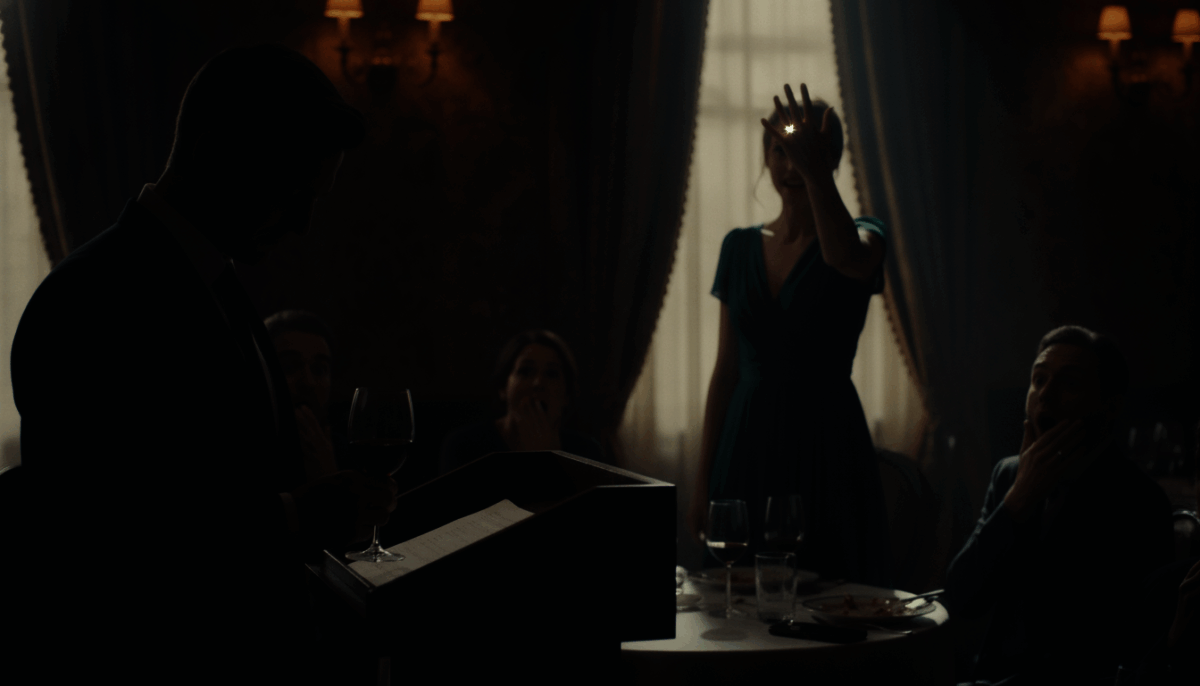
Grief is a delicate, fragile thing. When we lost my grandfather, Arthur, we didn’t just lose a family member; we lost the patriarch, the glue that held our chaotic lineage together. He was a man of quiet dignity, a retired history professor who valued substance over style and integrity over accolades. My sister, Clara, had always been the opposite—a whirlwind of performative energy who treated every family gathering as a stage for her own personal narrative. But I never expected her to sink to the depths she reached at his memorial.
We had spent months planning the reception. It was supposed to be a small, intimate affair at his favorite local bistro, a place filled with the smell of mahogany and old paper. The memorial was meant to be a celebration of his life, a space to share the stories that defined him. I had prepared my words for weeks, writing them on a scrap of paper that had become soft and frayed from my constant rereading. I wanted to honor the man who taught me how to fish and how to forgive.
The atmosphere was heavy with collective sadness but balanced by a profound sense of respect. The room was filled with his old colleagues, distant relatives, and the few neighbors who had become his surrogate family. The air felt thin, charged with the weight of unspoken goodbyes. I walked to the front of the room, my heart hammering against my ribs, feeling the gaze of everyone who loved him.
As I began to speak about his influence on my life, the silence in the room was absolute. It was the kind of quiet that you only experience when people are truly listening, absorbing the loss. I was halfway through a story about the summer we spent in the lake house, my voice thick with emotion, when everything shifted. The shift wasn’t subtle; it was a screeching halt to the mourning process, a jarring intrusion that felt like a physical blow to the chest.
Clara didn’t just stand up; she seized the moment. She didn’t wait for a lull, or for me to finish, or even for the room to exhale. She saw an audience, she saw a spotlight, and she decided that her life mattered more than our grandfather’s legacy. This is the story of how that single, selfish act dismantled a family bond, and why, for the first time in my life, I chose to walk away and never look back.
The Fragile Silence of the Eulogy
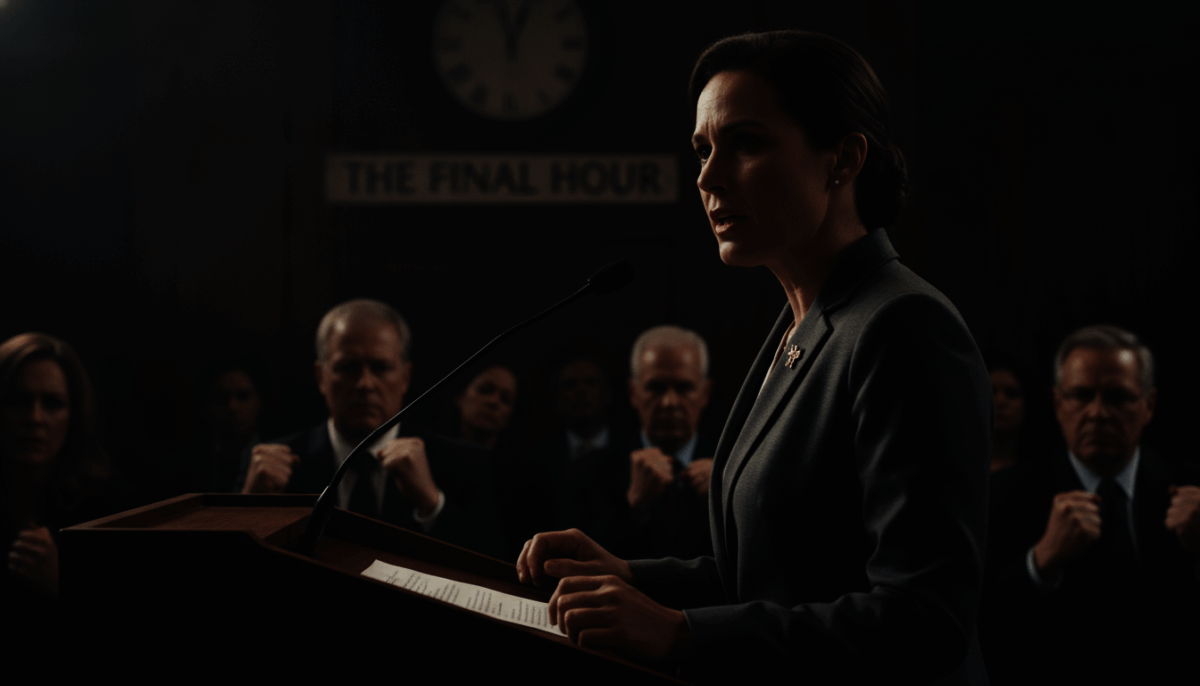
Standing at the podium, I felt Arthur’s presence in the room. I looked at the old man’s photo, his eyes crinkling in that familiar way they did when he was about to tell a joke. I began my toast, recounting the time he taught me to play chess, not by letting me win, but by showing me how to lose with grace. It was a poignant moment, and I could see tears in the eyes of my aunts and uncles.
I reached the part of my speech where I talked about his resilience during the war, his quiet service, and the way he treated everyone, from the gardener to the CEO, with the exact same level of respect. I felt the collective heartbeat of the room aligned with my own. It was a beautiful, necessary catharsis for everyone present, a release of the tension that had been building since we received the news of his passing.
“Grandpa always said that a person’s character is defined not by what they acquire, but by what they give away. Today, we aren’t just remembering him, we are trying to emulate the quiet, steady strength he provided to us all.”
The reception hall was perfectly still. I had prepared the speech for weeks, trimming the fat and focusing on the essence of the man. My mother was sitting in the front row, clutching a lace handkerchief, nodding as I spoke. Everything was unfolding exactly as it should have—until it wasn’t.
That’s when the scraping of a chair echoed across the floor, sharp and intrusive. I paused, assuming someone had dropped a fork or needed to step out for air. But then came the sound of a sharp gasp, followed by the metallic click of a ring being tapped against a glass, a sound that cut through the silence like a razor blade.
The Unscripted Interruption That Stopped Time
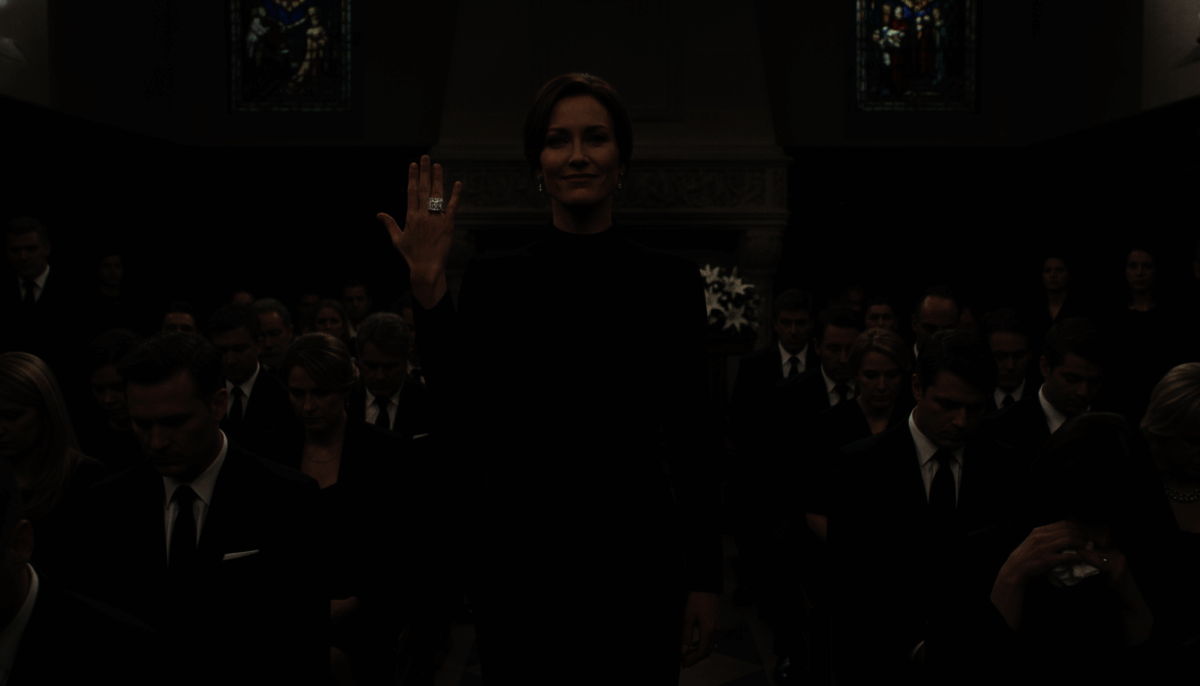
Clara had stood up. She didn’t wait for me to finish my sentence. She didn’t even look at the photo of our grandfather. She stood, beaming, and held her left hand up in the air, the light from the overhead chandelier glinting off a diamond that looked, in the dim light, both blindingly large and remarkably gaudy.
The room gasped, not in sympathy for the loss, but in sheer, confused shock. It was a theater of the absurd. She didn’t address the room; she simply stood there, turning her wrist back and forth, waiting for the murmurs of ‘congratulations’ to wash over her. She had essentially hijacked a wake to hold an impromptu press conference about her relationship status.
“Oh my god, everyone! Look! Mark finally asked! I couldn’t wait any longer to share the news, and what better place than with the whole family gathered together? Grandpa would have been so happy!”
The audacity was staggering. It wasn’t just that she did it; it was the way she had calculated the timing. She knew everyone was focused on me. She knew everyone was vulnerable. She weaponized that vulnerability to ensure she had the maximum number of eyes on her at once. The silence that followed her announcement wasn’t the silence of respect anymore; it was the silence of a funeral procession that had just realized it was being led in the wrong direction.
I stood at the podium, my hands gripping the wood until my knuckles turned white. My speech about integrity, about character, about grace—it all felt like a sick, twisted joke now. How do you talk about a man who gave everything away when the person standing next to you is so desperate to take the focus off him and onto herself?
The Walkout and the Weight of the Door
I didn’t yell. I didn’t cause a scene. I simply looked at her, then looked at the photo of my grandfather, and then I looked at the crowd. The shame on my mother’s face was the final straw. She looked small, defeated, and embarrassed by her own daughter. I realized that if I stayed, I would eventually lose my temper, and that would tarnish the day even further.
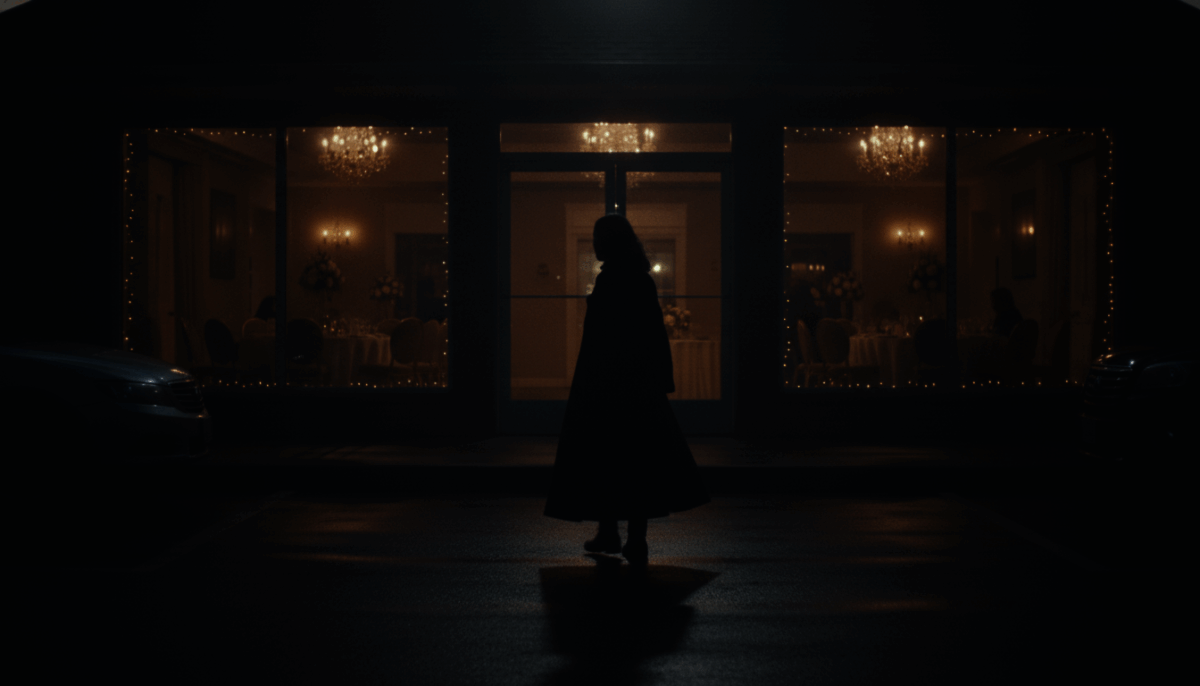
I folded my speech in half, slowly and deliberately. I walked down from the podium without looking at anyone. I could feel the heat radiating off Clara; she was still standing there, waiting for the applause that wasn’t coming. As I walked past her, I didn’t say a word. I just walked straight toward the heavy glass exit doors, the sound of my footsteps amplified by the unnerving, heavy silence of the room.
When I reached the door, I paused. I looked back one last time. My father was staring at his feet, his hands shaking. My aunt had stood up and was whispering something to Clara that looked suspiciously like a scolding, but Clara was already pouting, clearly feeling victimized by the lack of celebration.
“I just wanted to make people happy today. I thought this would be a nice surprise. Why are you all acting like I did something wrong? He loved me more than anyone!”
I pushed the door open and stepped out into the crisp, cold evening air. The transition from the warm, stifling room to the biting wind of the parking lot was jarring. I stood by my car for a long time, just breathing, trying to process the sheer, concentrated narcissism of what had just occurred. My phone vibrated in my pocket, but I didn’t even want to look at it. I knew exactly who it was, and I knew exactly what she would say.
The Digital Fallout: Messages from the Void
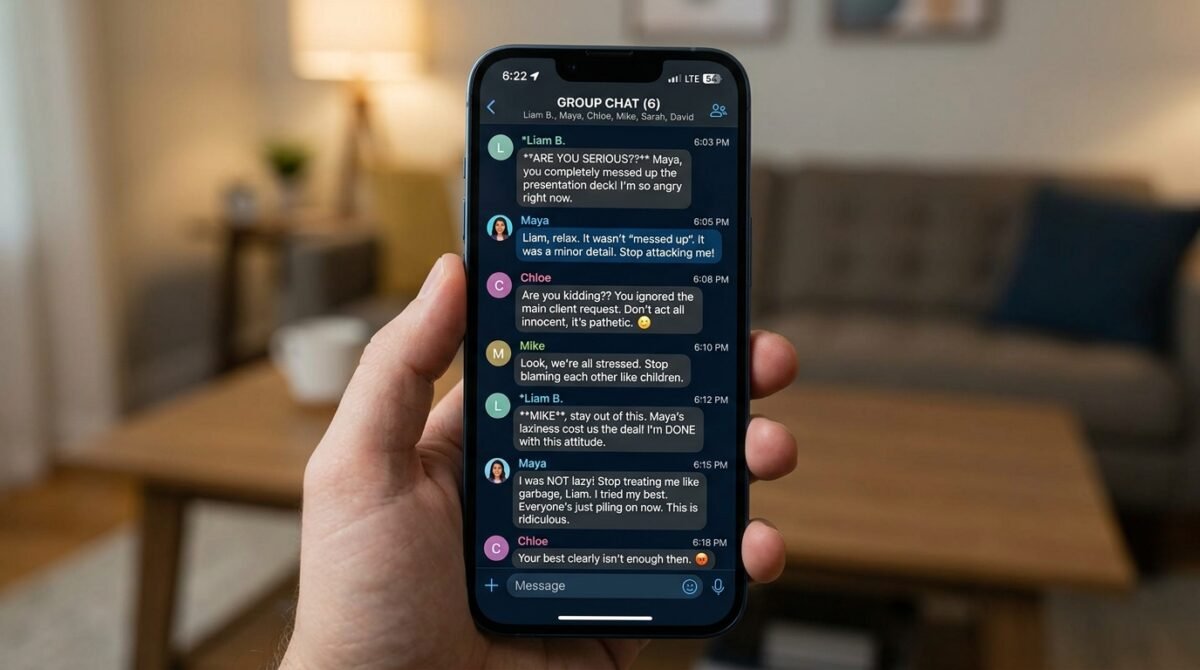
I didn’t answer my phone for three hours. By the time I finally checked it, I had twelve missed calls and twenty-four messages in the family group chat. The narrative had already been rewritten. Clara had gone from the ‘villain of the hour’ to the ‘misunderstood girl who just wanted to share love.’ It was a masterclass in gaslighting.
“I don’t know why everyone is so sensitive. Grandpa was all about love! I was just bringing some light into a dark day. [OP] leaving like that was so dramatic and rude. You ruined the mood, not me.”
— Clara (Family Group Chat)
The messages were a mix of enablers and people who were too tired to argue. My cousin Sarah, who had always been a peacekeeper, was trying to bridge the gap. My mother was sending messages that were clearly just trying to keep the peace at any cost. The sheer exhaustion I felt reading them was immense.
I sat on my couch, the glow of the phone screen illuminating the dark room. I realized that this wasn’t an isolated incident. This was the culmination of twenty-five years of Clara being the ‘special’ one, the one who was allowed to break the rules because she was ‘vibrant’ or ’emotional’ or ‘just Clara.’
I finally replied, but not to the group chat. I messaged my mother directly. I told her that I was done. Not with the family, but with the theater. I told her that I would no longer be participating in events where Clara felt entitled to the spotlight, regardless of the occasion. I was setting a boundary, and for the first time, it didn’t feel like a request; it felt like a survival tactic.
The Unraveling of Family Dynamics
The days following the memorial were a blur of cold shoulders and passive-aggressive phone calls. The family was split down the middle. Half of them thought Clara was a thoughtless brat, and the other half thought I was being ‘too harsh’ on a newly engaged woman. The irony was not lost on me: the woman who had just hijacked a funeral was now the victim of my ‘unnecessary drama.’
I had a long, painful conversation with my father. He admitted he was disappointed in Clara, but he was also terrified of confronting her. He didn’t want to spoil her joy, because he knew that if he did, she would cut him off. That, I realized, was her power. She had weaponized her presence, and as long as people were afraid of losing her, she would continue to do whatever she wanted.
I spent that week reflecting on my relationship with my grandfather. He wasn’t just a man; he was a standard. He was the person I looked to whenever I felt like I was losing my way. And I knew, with absolute certainty, that he would have been the one to walk out first. He wouldn’t have tolerated that kind of disrespect, not for one second. That thought gave me the validation I needed.
I started seeing a therapist to deal with the accumulated resentment. It wasn’t just about the memorial. It was about every birthday party, every holiday, every graduation where Clara had found a way to make it about her. The memorial had been the breaking point, but the foundation had been crumbling for years. I was finally starting to see the cracks for what they were: structural failures, not just bad behavior.
The Reddit Trial: How the Internet Reacted
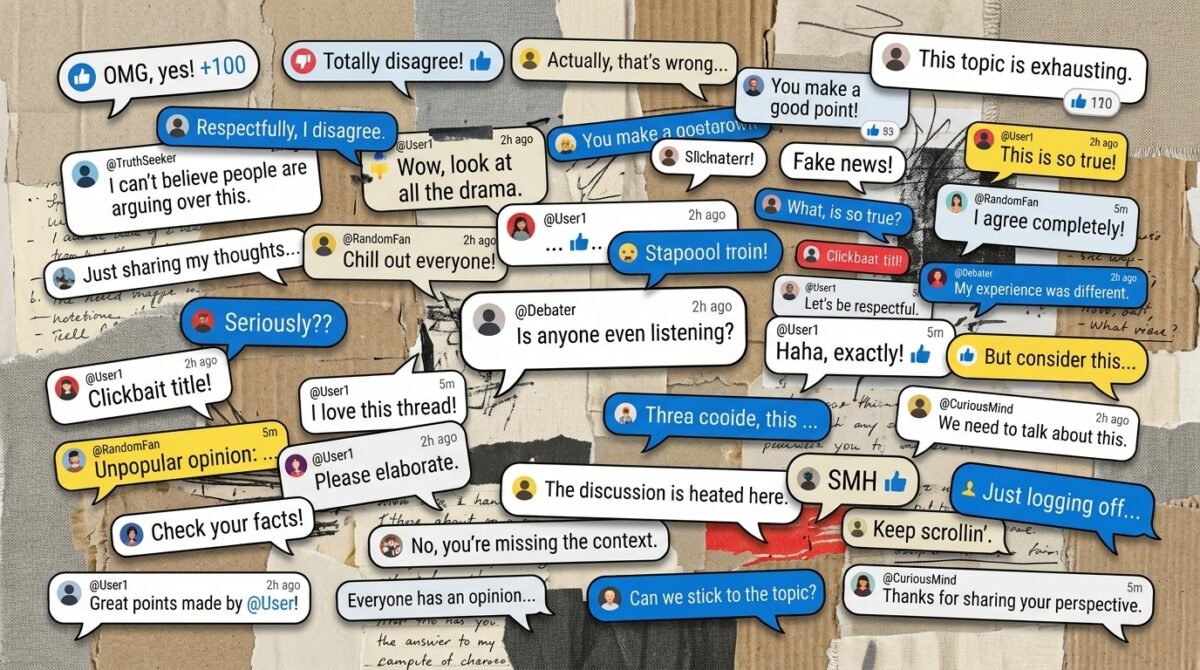
I finally posted my story on a popular forum. I needed to know if I was crazy. Was I really the jerk for walking out? Was I overreacting to a ‘happy’ moment? The response was immediate and overwhelming. Thousands of comments poured in, and the consensus was not what I expected. The internet, for all its flaws, was remarkably clear-sighted about this.
“NTA. Your sister is a narcissist who couldn’t stand the fact that she wasn’t the center of attention for five minutes. Hijacking a memorial to announce an engagement is sociopathic behavior. Walking out was the only power move you had.”
— u/ReasonableObserver (Top Comment, 32.5k upvotes)
It was validating to see so many people call it what it was: a lack of empathy, a cry for attention, and a profound disrespect for the dead. But there were others who warned me about the ‘Flying Monkeys’—the family members who would try to guilt-trip me into apologizing to keep the peace. They were right. Within hours, my aunt had sent me a long email about ‘family unity’ and ‘forgiveness.’
“INFO: Has she ever apologized for anything in her life? If the answer is no, stop waiting for it. She won’t. She views herself as the main character, and everyone else is just an extra in her movie.”
— u/RealityCheck99 (15.2k upvotes)
The debate was intense. Some argued that I should have stayed to maintain dignity, while others insisted that walking out was the most dignified thing I could have done. The sheer volume of people who had similar stories—siblings who stole their thunder, parents who enabled narcissism—was sobering. I wasn’t alone. This was a common, recurring tragedy in dysfunctional families.
The Confrontation That Didn’t Happen

Clara tried to reach out. She sent a barrage of texts that cycled between victimhood, aggression, and feigned sweetness. I didn’t reply to any of them. I knew that if I engaged, I would be dragged into her version of reality. She wanted an argument because an argument meant she was still relevant to me. Silence, I discovered, was the only thing she couldn’t handle.
“I just wanted to share my happiness with my family. I’m sorry you were too wrapped up in your own ego to be happy for your sister. I hope you realize how mean you are being.”
— Clara (Direct Message)
I read the message, felt a brief flicker of anger, and then deleted it. The ‘mean’ comment was hilarious in its lack of self-awareness. She had literally stolen the spotlight from a dead man, yet I was the one being ‘mean.’ It was the classic move of the gaslighter: accuse the person holding the boundary of being the aggressor.
I began to realize that by not responding, I was effectively ‘gray rocking’ her. I was becoming uninteresting to her. She wanted a reaction, and I was denying it to her. It felt like I was finally in control of my own emotional state. For years, I had been reactive to her actions; now, I was setting the pace.
My mother called me, crying, asking why I couldn’t just ‘smooth things over’ so we could have a nice Christmas. I told her I would be happy to have a nice Christmas, but that if Clara brought up her wedding or tried to dominate the conversation, I would leave. It wasn’t an ultimatum; it was a boundary. There was a big difference.
The Wedding Ultimatum
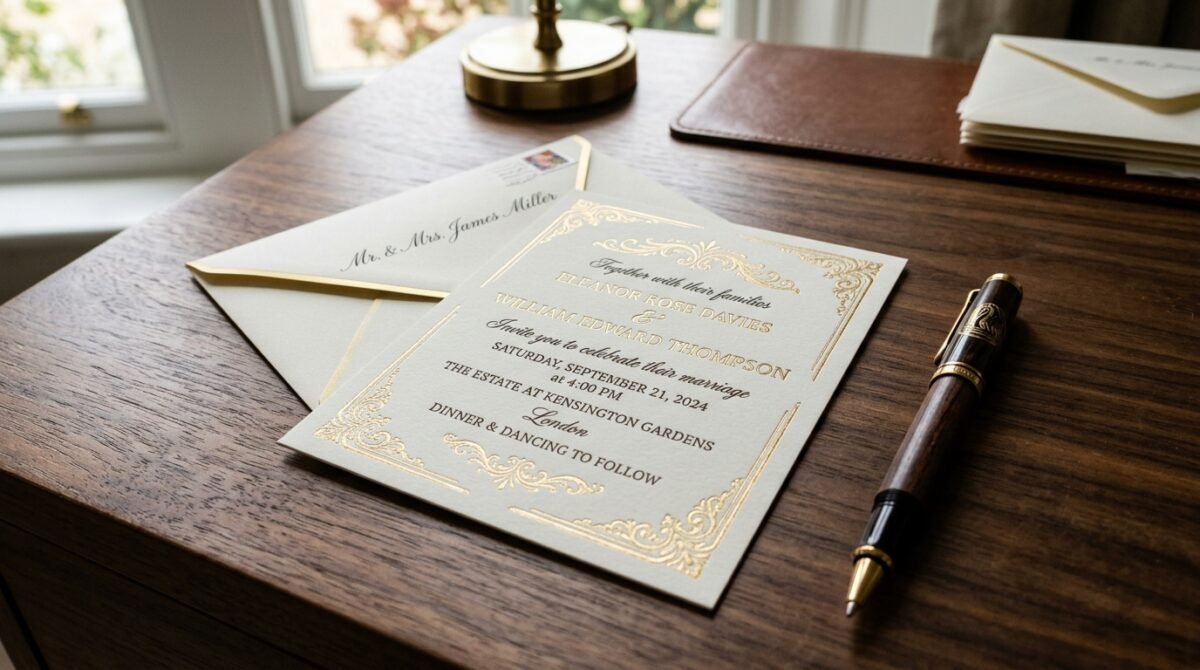
A month later, the wedding invitation arrived. It was embossed, expensive, and completely ignored the fact that our family was essentially in a cold war. It was as if the memorial incident had never happened. She was bulldozing forward, assuming that everyone would fall into line because, after all, it was her big day.
I sat down with the invitation and really looked at it. Did I want to go? Did I want to sit in a church and watch her walk down the aisle, knowing that she hadn’t learned a single lesson from the memorial? I thought about the stress, the performance, the pressure to act like everything was fine. I realized I didn’t owe her that.
I sent a simple, polite RSVP: ‘I will not be attending.’ No explanation, no drama, no list of grievances. Just a flat refusal. The fallout was immediate. The phone calls from my father, the angry texts from her fiancé, the social media posts about how ‘some people just can’t support family.’ It was exhausting, but it was also freeing.
“You’re really going to miss your sister’s wedding because of a misunderstanding at a funeral? You are being incredibly petty. Grow up.”
— Father (Phone Call)
I told him that it wasn’t a misunderstanding; it was a choice she made. And my choice was to not be a part of it. I wasn’t being petty; I was being consistent. If she couldn’t respect the dead, why would I trust her to respect the living? The conversation ended with a lot of shouting, but for the first time, I didn’t feel the need to justify myself.
Finding My Own Path to Grief

With the wedding behind me—or rather, without me—I finally had the space to truly grieve my grandfather. I took a weekend trip to the lake house we used to visit. It was quiet, empty, and perfectly peaceful. I spent my days fishing, reading his old books, and just sitting by the water, thinking about the lessons he taught me.
I realized that my grief had been hijacked, not just by the memorial incident, but by the pressure to perform it for the rest of the family. By stepping away from the chaos, I was finally able to have a genuine connection with his memory. I wrote him a letter, one I would never send, but it felt good to get the words out.
I saw a heron by the lake, standing completely still for an hour. It reminded me of Grandpa. He was a man who knew how to wait, how to observe, and how to be comfortable in silence. I had been so busy reacting to the noise of my sister that I had forgotten how to listen to the quiet.
The healing was slow, but it was real. I started to let go of the anger. I stopped checking my sister’s social media. I stopped asking my parents for updates on her life. It was like I was slowly unplugging from a machine that had been draining my energy for years. I was finally becoming the person I wanted to be, rather than the person I needed to be to survive her.
The Aftermath: A New Kind of Normal
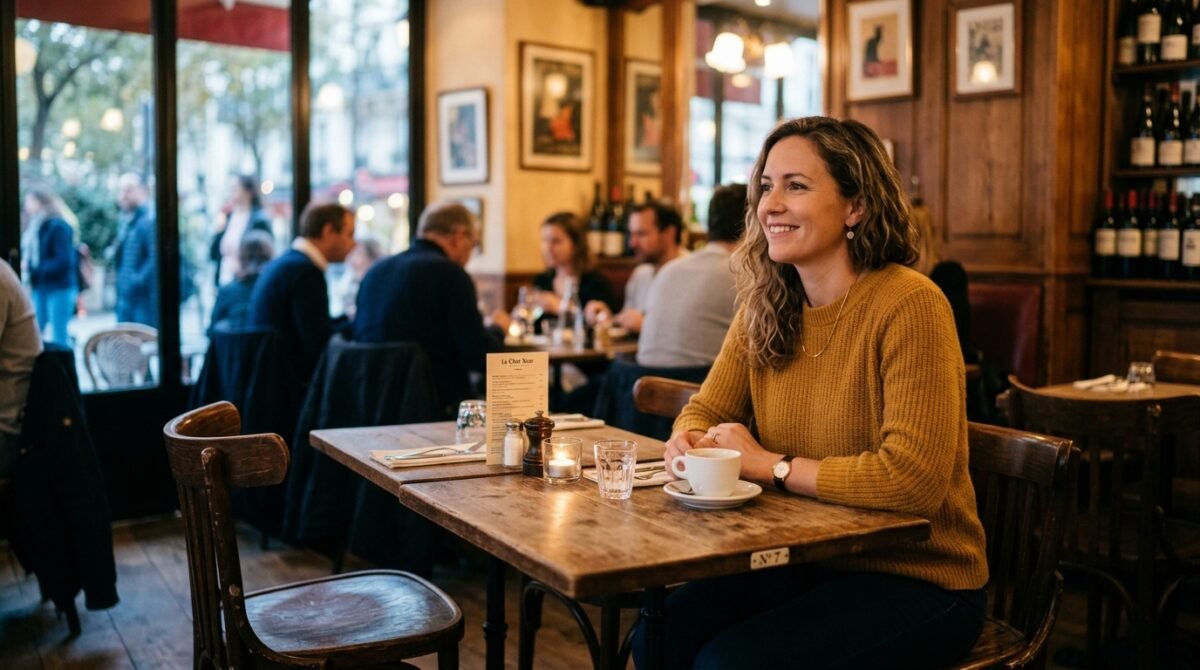
It has been six months now. The family has mostly stopped talking to me, which, honestly, has been the greatest gift. I only talk to the family members who understand why I did what I did. The rest of them have chosen their side, and I have chosen my peace. It is a quiet life, but it is mine.
Clara is married now. I see the photos on social media occasionally when someone tags the family. She looks happy, or at least she looks like she is having a great time performing happiness. It doesn’t trigger me anymore. I don’t feel the need to ‘expose’ her or ‘set the record straight.’ The truth exists, and that’s enough.
I still honor my grandfather in my own way. Every year on his birthday, I go to that same bistro, order his favorite meal, and leave an extra chair empty. I don’t give speeches, I don’t ask for attention, and I don’t care who is watching. It is just me, him, and the memory of a man who was everything she wasn’t.
“You know, you’re a lot like him. You have that same quiet strength. You don’t need to be the loudest person in the room to make your point. Sometimes, being the one who walks away is the loudest statement you can make.”
— My therapist
I finally understood what my therapist meant. The walkout wasn’t just about the ring; it was about reclaiming my right to my own life. It was about saying, ‘No more.’ And that has been the most empowering, liberating experience of my entire life.
Conclusion
Looking back, the memorial disaster was the catalyst for a total transformation in my life. By refusing to play the role of the ‘supportive sibling’ at the expense of my own integrity and the memory of my grandfather, I was forced to face the reality of my family’s dynamics. It was painful, yes, but it was also the birth of a new, authentic version of myself.
We often think that family loyalty means enduring the intolerable, but the truth is that loyalty must be earned. When boundaries are repeatedly violated, the only logical step is to step back. The silence that followed was not empty; it was filled with the clarity of my own values.
What about you? Have you ever had to walk away from a family event because someone else’s ego made it impossible to stay? Do you think blood is truly thicker than water, or is that just a phrase we use to justify bad behavior? Let me know in the comments below—let’s keep the discussion civil and honest.
What's your verdict on this dilemma?
Vote below to contribute to the official community consensus.

Have a Dilemma Keeping You Up at Night?
Share your real-life feud, wedding chaos, or relationship crossroads anonymously with our editorial team.
What do you think ?
0 Comments🛡️ Comments are moderated to protect community integrity. Your comment will appear once approved by the editorial team.