
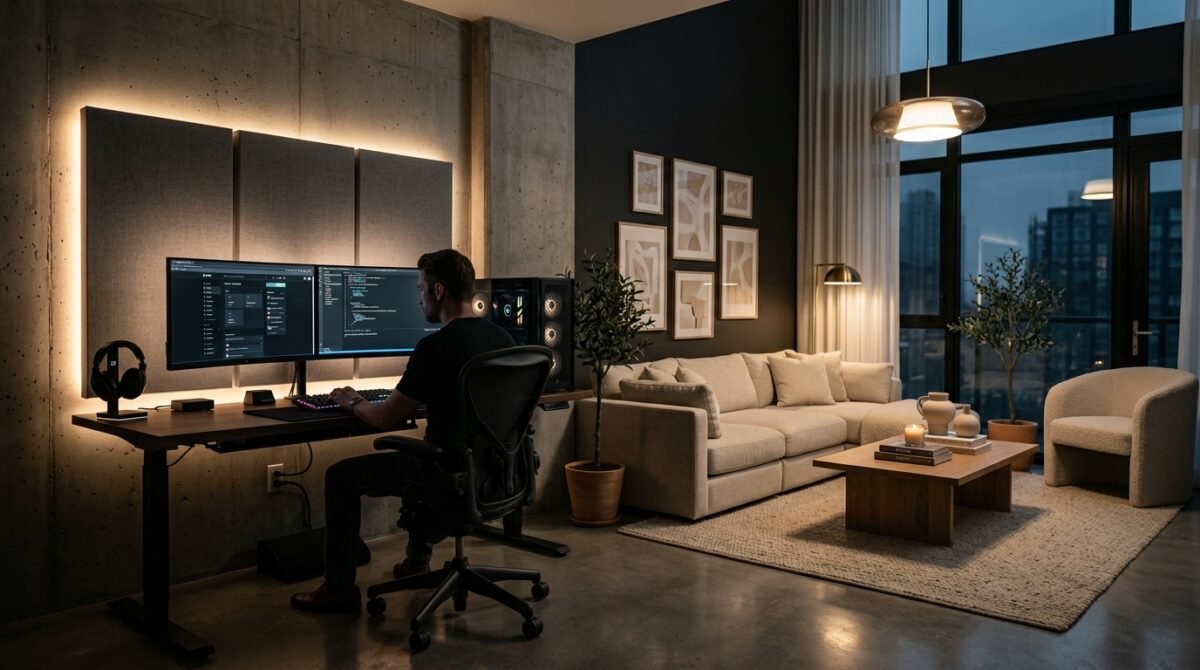
Relationships are often described as a delicate dance of compromise, but for Marcus and me, the dance had devolved into a high-stakes standoff over something as seemingly mundane as square footage and pixels. We had been living together for two years in a decent-sized apartment, and for the most part, our domestic life was harmonious. I worked as a senior data analyst, a job that required a robust, dual-monitor ergonomic setup to function effectively. Marcus, on the other hand, was an interior design enthusiast who viewed our living space as a curated gallery rather than a place to exist.
The trouble began on a rainy Tuesday evening when Marcus came home early, visibly agitated. He paced the living room, his eyes darting between the sleek, matte-black monitors, the mechanical keyboard, and the cable management tray I had painstakingly installed. He didn’t just dislike the aesthetic; he seemed to view the entire setup as a personal affront to his vision of ‘zen-like serenity.’ That night, the conversation shifted from design opinions to a cold, calculated demand that caught me completely off guard.
It wasn’t just about the monitors anymore. It was about the power dynamic. He looked at me, dead serious, and informed me that if I insisted on keeping my ‘clutter’ in the common area, I would need to compensate for the reduction in his enjoyment of the space. His solution? A massive rent hike—an 80/20 split—that he claimed was merely ‘fair market value’ for the space I was occupying. The air in the room grew heavy with the weight of his entitlement, and in that moment, the foundation of our partnership cracked.
This wasn’t just about furniture or decor; it was a fundamental clash of values. I realized then that my career tools were being framed as an inconvenience to be monetized. As I stood there, caught between the need for my professional equipment and the threat of financial leverage being held over my head, I knew I had to make a choice. Would I succumb to this bizarre rent-based ultimatum, or was this the sign I needed to re-evaluate who I was building a life with?
The Tuesday Night Ultimatum

The confrontation didn’t start with a scream; it started with a sigh. Marcus stood by the window, his back to me, staring at the sunset that bathed our living room in golden light. He turned around, his expression unreadable, and gestured vaguely toward my desk. The dual monitors were glowing with lines of code, a sight I usually found comforting, but which suddenly felt like a target.
He didn’t beat around the bush. ‘You know, I’ve been doing the math,’ he said, his voice clipped and precise. ‘Since your setup effectively takes over the visual aesthetic of the living room—something we pay a premium for—it’s only right that you pay a premium for that space. I think 80 percent of the rent is a fair starting point for the inconvenience you’re causing me.’
I sat frozen in my ergonomic chair. I had been paying 50 percent of the rent since day one. I blinked, trying to process the logic. ‘Wait, you’re suggesting a 30 percent increase in my rent because you don’t like the look of my monitors? That’s not how rent works, Marcus. That’s not how anything works.’
He crossed his arms, leaning against the wall. ‘It’s about space utilization, and frankly, I shouldn’t have to sacrifice my sanity every time I walk into the living room just so you can play with your gadgets. If you want a home office, you should pay for the office, not make me live in your cubicle.’
“If you want a home office, you should pay for the office, not make me live in your cubicle.”
The audacity of the statement left me speechless. I felt like I was being treated as a tenant in my own home, rather than a partner. The way he spoke—as if he were a landlord issuing a contract change—sent a shiver down my spine. It was the first time I realized that Marcus didn’t see our home as a shared sanctuary; he saw it as a domain he controlled, and I was just the squatter with too many wires.
The Spreadsheet of Resentment

By Wednesday morning, the ultimatum had been formalized into a spreadsheet. Marcus had sent it to my email, complete with columns for ‘Aesthetic Impact,’ ‘Utility Cost,’ and ‘Percentage of Living Room Floor Space Occupied.’ It was a masterclass in passive-aggressive administrative pettiness. He had calculated the square footage of my desk versus the rest of the room and concluded that I was ‘over-leveraging’ my presence.
I stared at the screen, my morning coffee growing cold. He had even deducted points for the ‘clutter’ of a charging cable that sometimes trailed across the baseboard. It was absurd, bordering on a mental health crisis, but he was dead serious. He had even included a note at the bottom: ‘Please let me know if you agree to these terms by Friday, or we will need to reconsider our living situation.’
I spent the afternoon at work trying to focus, but the spreadsheet loomed over my thoughts. My coworkers noticed my distraction. ‘Everything okay?’ Sarah, my lead, asked. I couldn’t bring myself to explain the sheer insanity of my situation, so I just nodded. How do you tell someone that your partner is trying to charge you for the aesthetic damage caused by a dual-monitor setup?
When I got home, the house was silent. Marcus hadn’t even looked up from his book when I walked in. The tension was thick enough to cut with a knife. I sat at my desk, feeling like a criminal in my own home. My monitors felt like looming monoliths of conflict. Every click of my keyboard felt like a deliberate act of defiance against his ‘vision.’
“I’ve updated the cost breakdown to include the emotional tax of the desk. Please review by EOD.”
— Marcus via Email
I realized then that this was never about the monitors. It was about control. It was about creating a scenario where he could exert power over me, using my professional tools as the excuse. The spreadsheet wasn’t a request; it was a trap.
The Reddit Trial: Part One

I did what any millennial facing an existential relationship crisis would do: I turned to the internet. I crafted a post on r/relationships, keeping it as objective as I could, though the frustration bled through the text. I didn’t mention his name, but I laid out the rent hike demand, the spreadsheet, and the ‘aesthetic’ argument in full detail. I hit ‘post’ and waited.
Within an hour, the notifications started pouring in. The consensus was swift and brutal. People were shocked. The term ‘financial abuse’ was tossed around like a hot potato. Users weren’t just criticizing the rent increase; they were dissecting the entire relationship dynamic. My phone wouldn’t stop vibrating with the weight of collective internet outrage.
One comment in particular caught my eye, pinned to the top of the thread. It was from a user who claimed to be a divorce attorney. They warned me about the slippery slope of such financial demands. ‘This is a red flag that screams control,’ the user wrote. ‘It starts with monitors, it ends with you having no say in your own life. Get out or stand your ground firmly.’
“Your partner is essentially trying to evict your personality from the home. This isn’t a dispute about monitors; it’s a dispute about whether you are allowed to have space in their life.”
— u/RelationshipGuru (Top Comment, 18.2k upvotes)
I sat in the dark, scrolling through thousands of comments. Reading the perspectives of strangers who saw the situation so clearly made me feel less insane. It wasn’t just me. The ‘vibe’ of the living room wasn’t worth the cost of my autonomy. I felt a surge of resolve that I hadn’t felt in months.
The Confrontation at the Dinner Table
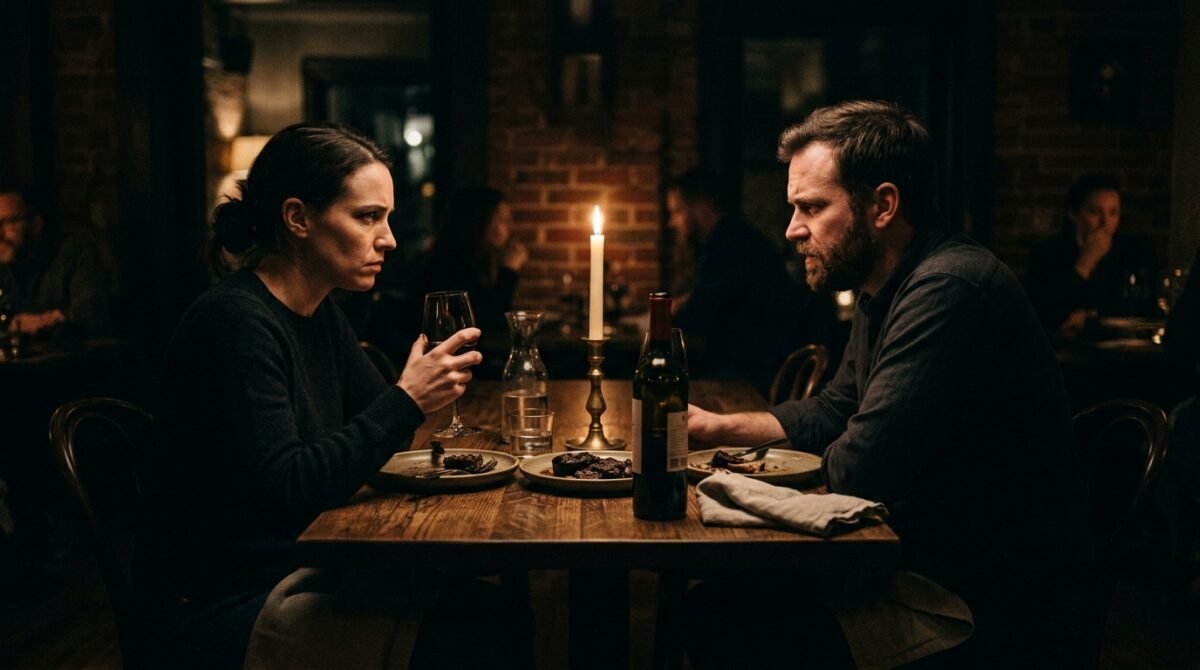
I waited until Friday night to address the ‘deadline.’ I had prepared a counter-proposal, but it wasn’t a financial one. I had spent the day deciding that I would not pay a single cent more. I set the table, made dinner, and waited for Marcus to emerge from his home office—which, ironically, he had decorated with an expensive, sprawling aesthetic that cost triple what my desk setup was worth.
When he sat down, he looked expectant. ‘So,’ he said, cutting into his steak with surgical precision. ‘Have you had time to think about the new rent structure? I assume you’ve processed the numbers I sent over.’
I put my fork down. ‘I’ve thought about it a lot, Marcus. And I’ve decided that I’m not paying an extra cent. In fact, I think we need to talk about why you feel entitled to charge your partner for existing in their own living space.’
He paused, his face turning a shade of red that I’d only seen once before. ‘Existing? You call that monstrosity existing? It’s an eyesore. It’s unprofessional. It’s ruining the vibe of our home. If you want to keep that trash, you pay for the privilege of keeping it in my living room.’
“It’s not my living room, Marcus. It’s our home. And if you think a monitor setup is more important than our partnership, then we have a much bigger problem.”
The silence that followed was absolute. He didn’t even argue back; he just stared at me, his eyes cold. He had expected me to fold. He had expected me to be the submissive partner who valued his comfort above my own dignity. The realization that he wasn’t going to apologize—that he truly believed he was in the right—was the final nail in the coffin of our relationship.
The ‘Vibe’ Defense

In the days that followed, the argument shifted to the abstract. Marcus began to justify his demands by framing them as ‘lifestyle management.’ He argued that my monitors were a ‘visual pollutant’ that affected his cortisol levels. He spoke as if he were a victim of my presence, detailing the ‘stress’ of seeing my work equipment every time he sat down to relax.
I tried to explain that I needed my setup for my livelihood, but he dismissed it as ‘unnecessary.’ He suggested I move to a bedroom corner or a closet, even though he knew there was no space for that. He wanted the equipment gone, or he wanted to be paid to tolerate it. It was a classic case of creating a problem to justify a power play.
I kept track of our conversations. I began recording notes on my phone, realizing that if this went to a breakup, I needed to protect myself. He started leaving sticky notes on my desk. ‘Too bright,’ one said. ‘Turn it off,’ said another. He was trying to make my home space so uncomfortable that I would willingly move my setup or pay the ‘fine.’
The absurdity was relentless. I felt like I was living with a stranger. His obsession with the ‘vibe’ of the room had become an obsession with erasing me from it. I started looking at apartments online, not because I wanted to leave, but because I knew that staying in a place where I was being monitored, taxed, and scrutinized was no longer an option.
“If you can’t see why this is unreasonable, then you aren’t living with a partner, you’re living with a roommate you’re trying to extort.”
I realized that he didn’t care about the aesthetic; he cared about the power. He wanted to see if he could break me down enough to make me pay for his ‘tolerance.’ It was a psychological game, and I was losing my patience for the rules he was making up as he went along.
The Silent Treatment
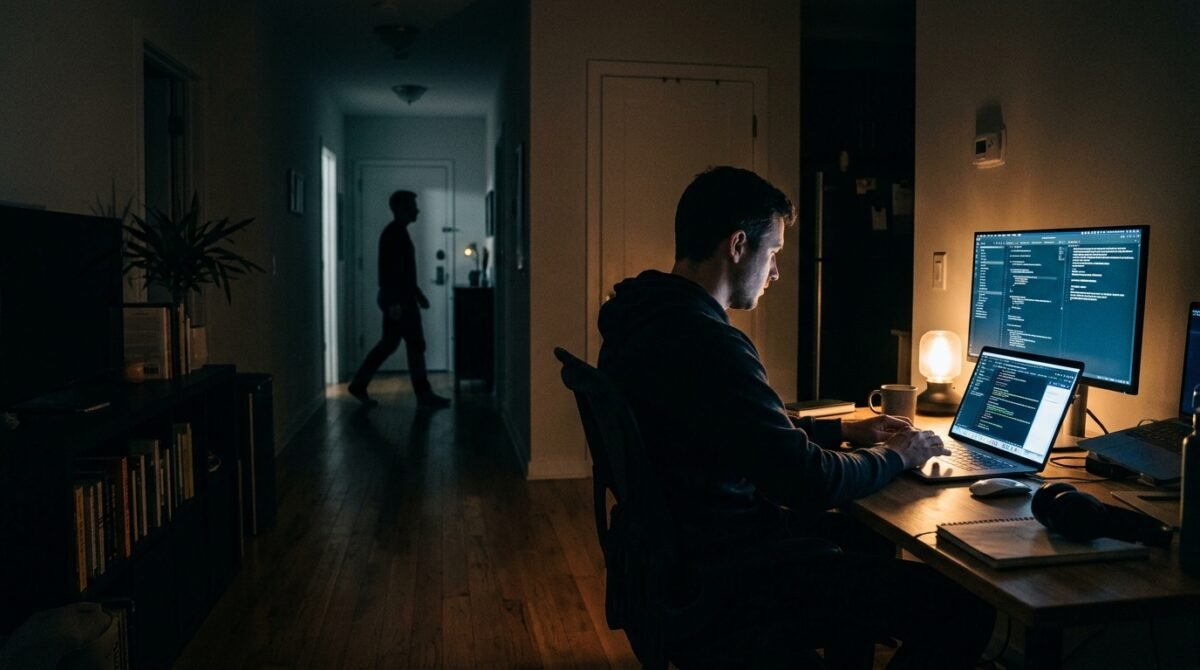
After the dinner conversation, the mood shifted to icy silence. Marcus began spending his time exclusively in the bedroom or the ‘office’ he had claimed for himself. He would walk through the living room, pointedly looking away from my monitors, as if they were toxic waste. It was a childish display of manipulation, but it was effective in creating a deeply uncomfortable home environment.
I kept working at my desk. I refused to move it. I refused to cover it with a cloth, which was his next ridiculous suggestion. I stood my ground, which seemed to only agitate him further. He would start playing music loudly in the other room when I was in a meeting, or turn off the lights in the living room while I was still working.
I felt a deep, hollow exhaustion. This was the person I had planned a future with, and now he was playing games because of a desk setup. The ‘vibe’ he was so worried about was completely shattered by his own behavior. He was the one creating the stress, not the monitors.
I realized that I was grieving the relationship even before it had ended. I missed the version of Marcus who didn’t care about interior design magazines and cared about us. That person seemed to have vanished, replaced by someone who prioritized the appearance of his home over the well-being of the person he lived with.
“The silence in this house is louder than any monitor noise you’re complaining about, Marcus.”
He didn’t even look up. He just walked to the kitchen, poured a glass of water, and returned to his room. It was clear that he wasn’t going to talk it out. He wanted me to break. He wanted me to apologize for being myself, and for having a career that didn’t fit into his perfectly curated, empty lifestyle.
The Breaking Point
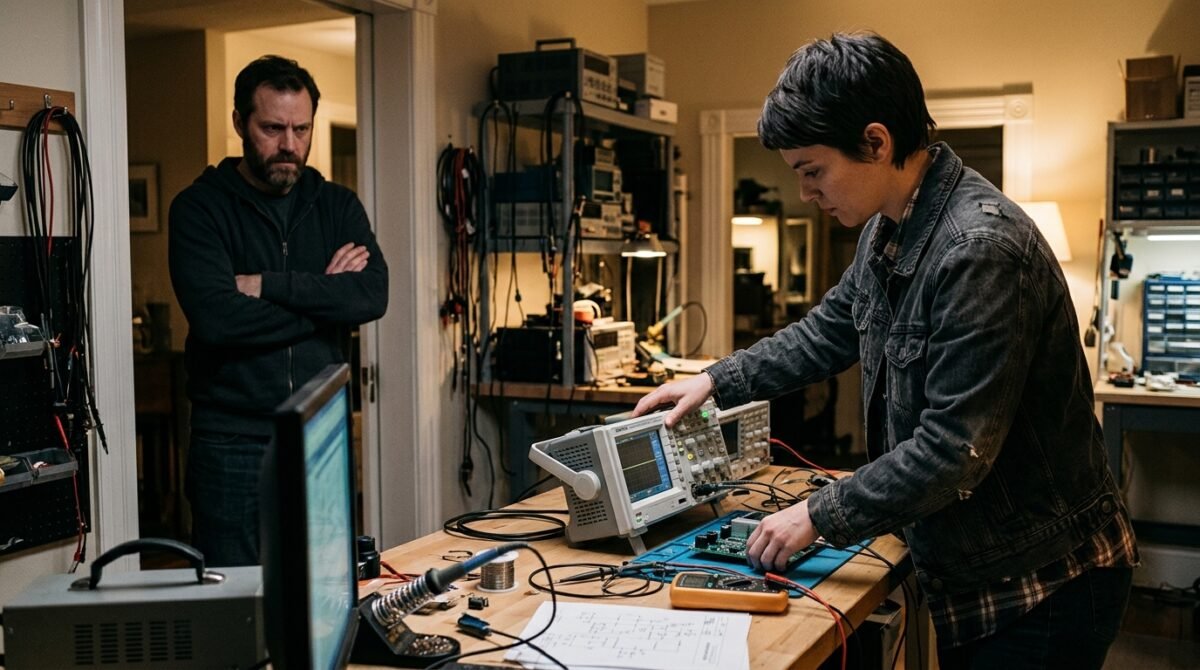
The final straw came on a Sunday afternoon. I returned home to find my desk clear. My monitors, my keyboard, my mouse—everything was sitting on the floor. In their place, Marcus had set up a decorative vase and a stack of coffee table books. I felt a surge of adrenaline that was cold and sharp.
I found Marcus in the kitchen, looking pleased with himself. ‘I moved your things,’ he said, his voice calm. ‘I decided it was time for a change. You can put your stuff in the guest closet. It’ll be much better for the room’s energy.’
I didn’t yell. I didn’t cry. I just walked over to the stack of books, swept them off the table, and set my monitors back in their place. I plugged them in, connected my laptop, and sat down. My hands were shaking, but my voice was steady. ‘Do not touch my things again, Marcus. If you touch my equipment one more time, I’m leaving.’
He looked shocked. He had expected me to be angry, to fight, to debate. He hadn’t expected me to be completely, coldly finished. He walked toward me, but I didn’t flinch. I kept my eyes fixed on my screen. I was done with the games. I was done with the ‘vibe’ and the ‘rent’ and the madness.
“This is the last time you try to control my life, Marcus. I’m not your tenant, and I’m definitely not your aesthetic prop.”
The look on his face shifted from confusion to anger, then to a realization of defeat. He knew he had pushed too far. He tried to speak, but I held up a hand. ‘I’m going to stay with my sister for a few days. We’re done.’
The Aftermath: Moving On
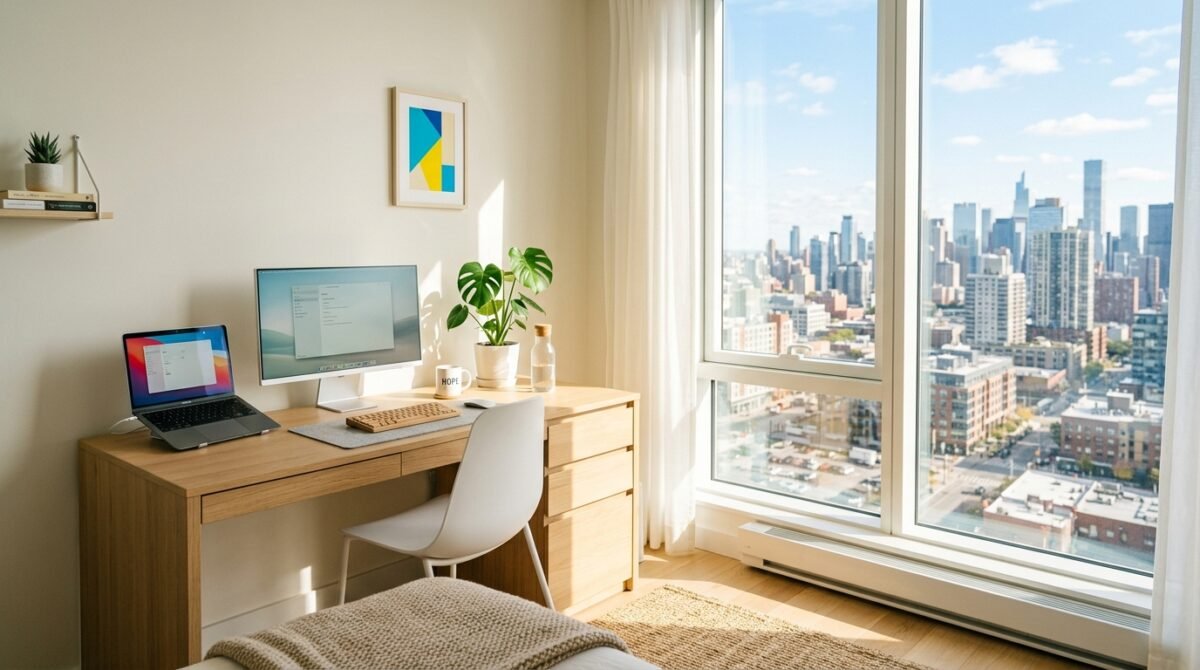
Moving out was the most liberating experience of my life. I packed my things, including my monitor setup, and didn’t look back. Marcus didn’t try to stop me. In fact, he barely spoke as I carried boxes out to the car. He stayed in the bedroom, likely fuming about the ‘disruption’ I was causing by packing my belongings.
Living at my sister’s was a wake-up call. The difference in my mental health was immediate. I realized that for months, I had been walking on eggshells, constantly worried that my mere presence was an annoyance. I had forgotten what it felt like to be in a space that was actually welcoming.
I eventually moved into my own place—a small studio where I could arrange my desk however I wanted. I didn’t have to worry about anyone else’s ‘vibe’ or ‘aesthetic.’ I had my dual monitors, my mechanical keyboard, and a space that was entirely my own. The silence in my new home was peaceful, not cold.
Looking back, I realize that the monitor setup was just the catalyst. If it hadn’t been that, it would have been something else—my clothes, my habits, my personality. He wanted a partner who was an accessory to his life, not an equal. I was glad I chose my autonomy over the rent-based ultimatum.
“My apartment might be smaller, but it feels infinitely larger now that I don’t have to pay to exist in it.”
The lessons learned were hard, but necessary. Never let someone put a price tag on your presence. Never allow someone to frame your professional tools as an inconvenience. And most importantly, never stay with someone who makes you feel like you are a burden in your own home.
The Internet Weighs In Again

When I posted an update on the original Reddit thread, the support was overwhelming. Thousands of people reached out to share their own experiences with controlling partners. The ‘rent dispute’ had become a symbol for a much wider issue of financial and emotional manipulation. It was heartening to see so many people validate my decision.
Some users shared stories about how their partners had tried to ‘fine’ them for everything from watching too much TV to having a hobby that ‘took up space.’ It was a disturbing pattern of behavior, but it helped me realize that I wasn’t alone. The community wasn’t just giving me advice; they were offering a space to process the trauma.
The thread became a hub for people discussing the importance of setting boundaries early in a relationship. People debated the nuances of shared space and how to communicate needs without resorting to ultimatums or financial threats. It was a productive, albeit painful, conversation.
“Leaving that toxic environment was the best decision you could have made. You set the boundary, and you stood by it. Well done.”
— u/SupportiveSoul (Top Comment, 15.4k upvotes)
The feedback wasn’t all just praise; there were some who questioned if I could have handled it differently, but the majority agreed that once a partner starts using money to control your environment, the relationship is effectively over. The ‘vibe’ was never going to be enough to save us.
Reflecting on the Red Flags

I spent a lot of time reflecting on the red flags I had ignored. The subtle comments about my clothes, the way he would ‘reorganize’ my personal items, the constant need for the apartment to look ‘catalog-perfect.’ I had brushed them off as quirks, not realizing that they were symptomatic of a deeper need for control.
I had been so focused on being a ‘good partner’ that I had stopped looking at the reality of how I was being treated. I had normalized the behavior until it felt like it was my fault. But looking back, it’s so clear. If you feel like you need to apologize for your own existence in your home, you’re in the wrong place.
I’ve learned to value my own space and my own professional needs. I no longer feel guilty for having a desk or for needing to work. I’ve found a partner now who loves my ‘nerdy’ setup, not because it fits an aesthetic, but because it’s part of who I am. We share our space, we negotiate our needs, and we never, ever talk about rent as a punishment.
The experience changed me, but it didn’t break me. It made me stronger and more aware of what I deserve. I’m no longer willing to sacrifice my autonomy for the sake of someone else’s ‘vibe.’ My home is my sanctuary, and I intend to keep it that way.
“The most important thing I learned? A partner should be a teammate, not a landlord who charges you for existing.”
If you’re in a similar situation, please, look at the signs. Don’t wait until you’re being charged for your own furniture. You deserve to be comfortable, you deserve to be valued, and you deserve a home that is truly yours, too.
Conclusion
The saga of the dual-monitor dispute taught me more about boundaries than any book on psychology ever could. It was a painful, expensive, and emotionally draining lesson, but one that ultimately led me to a much healthier place. When your personal space is weaponized against you, it’s rarely about the objects involved—it’s about the underlying power dynamic. I walked away, but I took my self-respect with me, and that was worth more than any rent agreement.
Looking back, the absurdity of the ‘aesthetic rent’ is clear, but in the moment, it was a suffocating pressure that threatened my professional life and my sense of self. The internet’s response was a reminder that we are not alone in our struggles, and that there is power in sharing our stories. I hope that by sharing this, someone else might recognize the signs of control before it escalates into a full-blown ultimatum.
Now, I leave the floor to you. Have you ever had a partner try to ‘monetize’ a disagreement or use household aesthetics as a tool for control? What was your breaking point? Let’s talk about it in the comments below, and please, take this as a sign that your space—and your professional needs—are non-negotiable.
What's your verdict on this dilemma?
Vote below to contribute to the official community consensus.

Have a Dilemma Keeping You Up at Night?
Share your real-life feud, wedding chaos, or relationship crossroads anonymously with our editorial team.
What do you think ?
0 Comments🛡️ Comments are moderated to protect community integrity. Your comment will appear once approved by the editorial team.