

When I married Mark, I believed we were partners in the truest sense of the word. We were building a life, saving for a home, and navigating the complexities of adulthood with a shared vision of the future. At least, that was the narrative I was fed. For three years, our kitchen was a battlefield of coupons, generic brands, and the crushing anxiety of the ‘fifty-dollar rule.’ Every Sunday, Mark would sit at the small pine table, pen in hand, auditing our weekly expenditures with the cold precision of a tax collector.
The rules were simple, yet suffocating. Fifty dollars for a household of two. If I dared to buy name-brand cereal or an extra carton of eggs, I was met with a lecture on the ‘dangers of lifestyle creep’ and the importance of ‘aggressive saving.’ I genuinely thought we were struggling. I thought we were one medical emergency away from total ruin. I cut my own hair, I stopped buying coffee, and I wore the same three outfits to work for months, all in the name of our supposed shared financial stability.
I lived in a constant state of mild, background-noise panic. Every time a bill arrived, I felt the phantom ache of our dwindling bank account. I scrutinized every price tag, feeling the judgmental weight of my husband’s gaze should I ever step out of line. I was a professional, working forty hours a week, yet I felt like a child begging for an allowance, tethered to a budget that barely covered the essentials.
The moral dilemma, however, wasn’t just the penny-pinching—it was the gaslighting. Mark framed his frugality as a noble pursuit of our future. He spoke of ‘the big picture’ with such conviction that I began to question my own worthiness. If I couldn’t manage a household on fifty dollars, was I really the failure he painted me to be? That was the question that haunted my nights, right up until the moment I discovered the truth.
It wasn’t a bank statement or a suspicious phone call that blew the doors off our marriage. It was a forgotten tablet, left open on the counter, displaying a dashboard of a private brokerage account I never knew existed. The number staring back at me wasn’t the modest savings I’d been led to believe in. It was a portfolio worth three hundred thousand dollars, grown in the shadows of my forced starvation.
The Sunday Audit and the Shame of a Can of Beans

Sundays were always the worst. The ritual was agonizingly repetitive. We would sit at the table, the receipt spread out like a crime scene map. Mark would go line by line, tapping his finger against the paper, his jaw tight. I would sit across from him, feeling my heart rate climb with every checkmark he made.
One particular Sunday, he stopped at a charge for five dollars and twelve cents. It was for a specific brand of organic black beans I had purchased because I was exhausted and hadn’t had the energy to soak dried ones. He looked at me, his eyes cold and devoid of any warmth, and sighed as if I had personally bankrupted us.
“Do you have any idea how much that adds up to over the course of a year? It’s not just the beans, it’s the lack of discipline. We are trying to build a foundation, and you are treating our life like a shopping spree.”
— Mark
I tried to explain that it was one purchase, one time, after a hellish week at the office. But my words were swallowed by his condescension. He didn’t want an explanation; he wanted compliance. He looked at me like I was a wayward child who needed a firm hand to keep me on the path of ‘right living.’ The shame was a physical weight, pressing down on my chest.
I remember sitting there, wondering how we would ever afford a house if five dollars of beans was considered a major setback. I felt so small. I apologized, promising to be better, to be more careful. I promised to sacrifice more if it meant we would finally reach that mythical goal of financial security he kept dangling in front of me.
Looking back, I realize that the lecture wasn’t about the money. It was about control. By keeping me focused on the fifty-dollar budget, he kept me too busy, too tired, and too insecure to look at the bigger picture. He needed me to be the ‘irresponsible’ one so that he could play the role of the ‘responsible’ provider, all while hoarding his true wealth in plain sight.
The Glow of the Tablet and the $300,000 Realization

It was a Tuesday night when the world shifted. Mark had gone to the gym, and I was cleaning the kitchen island, wiping away the remnants of a sparse dinner. His tablet was resting near the toaster, the screen glowing with an open window. I didn’t mean to look, but a notification banner caught my eye: ‘Portfolio Update: Gain of $1,240 Today.’
I froze. I thought it was a scam, or perhaps a work app he had for a client. I touched the screen, and the dashboard opened fully. I saw the brokerage name, the account history, and the total value. Three hundred and twelve thousand dollars. My hands began to tremble so violently that I almost dropped the device.
I spent the next hour scrolling. I saw the history of contributions—monthly deposits that exceeded my entire monthly salary for years. This wasn’t a secret inheritance or a lucky lottery win. This was money that had been systematically siphoned away, while he forced me to live on a poverty-line budget. The gaslighting, the lectures, the ‘savings’ talks—it was all a calculated performance.
I felt a strange, cold detachment. The anger didn’t hit me immediately. Instead, there was a profound sense of clarity. Every time I had skipped a meal to save money, every time I had worn threadbare clothes, every time I had cried over a grocery bill—it was entirely unnecessary. It was a choice he had made for me, a choice that had cost me years of peace and self-respect.
I took photos of the screen with my own phone. I didn’t know what I was going to do yet, but I knew I needed evidence. I knew that if I confronted him without proof, he would twist the narrative. He would call me paranoid, or unstable, or ungrateful. But the numbers on that screen were immutable. They were the truth he had tried to hide.
The Confrontation in the Living Room
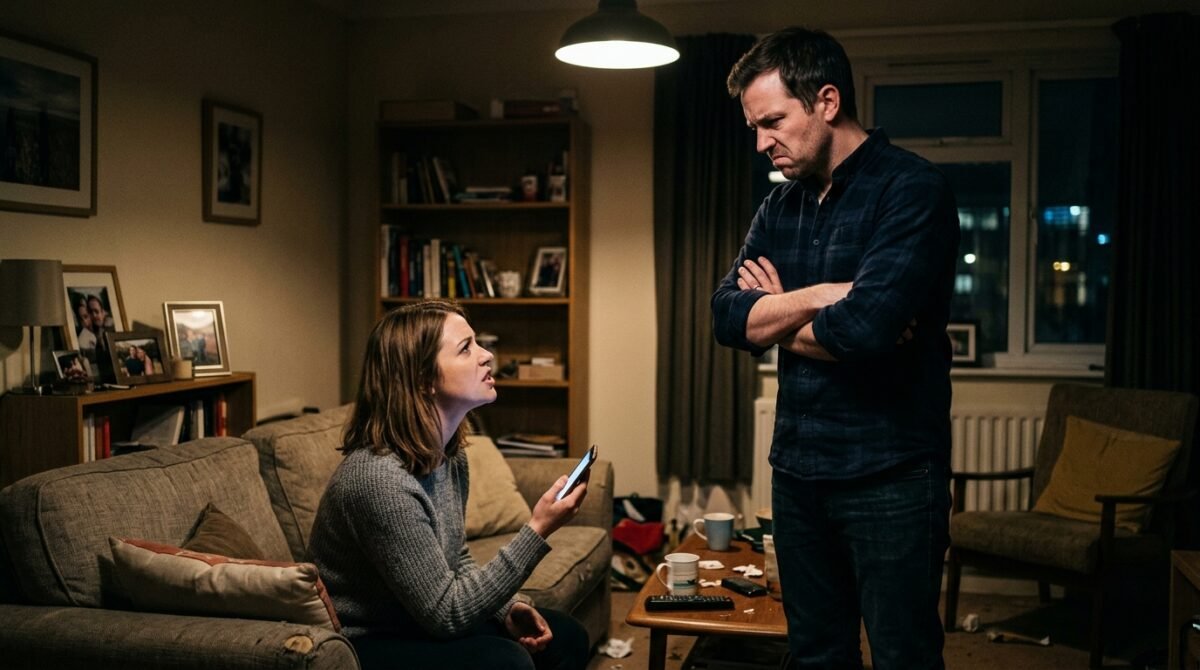
When Mark walked through the door, he was whistling. He had just finished a ‘hard’ workout, and he looked satisfied with the world. I was sitting on the sofa, the tablet exactly where he had left it. I didn’t say a word. I just waited for him to notice. He eventually walked over to the kitchen, reached for the tablet, and then stopped when he saw me watching him.
“Everything okay?” he asked, his tone still casual. I stood up and walked toward him, my heart hammering against my ribs. I held up my phone, which had the photos of his portfolio open. “I saw the account, Mark. The three hundred thousand dollars. Tell me why I’ve been living on fifty dollars a week.”
“You weren’t supposed to see that. It’s complicated, and you wouldn’t understand the long-term investment strategy. I was doing this for us, for our future. Why are you acting like this is a betrayal?”
— Mark
I laughed, a harsh, humorless sound. “You call it an investment strategy? I call it financial abuse. You didn’t invest in ‘us,’ Mark. You invested in your own hoard while you made me beg for groceries. You made me feel small. You made me think we were poor.” He started to stammer, trying to pivot to his usual lecture about financial maturity, but I was done.
He tried to take the phone from me, but I stepped back. The air in the room was electric. He wasn’t even embarrassed. He was annoyed that he had been caught. He looked at me as if I were a spoiled child who had stumbled upon a secret that was too big for my mind to grasp. It was the most condescending moment of my entire life.
I told him that I was going to stay at my sister’s house. I didn’t pack much—just the essentials. He stood in the doorway, crossing his arms, clearly expecting me to come crawling back once I realized I couldn’t survive on my own. But he didn’t realize that the woman who left that house was not the same woman who had entered it three years ago.
The Fallout and the Reddit Thread
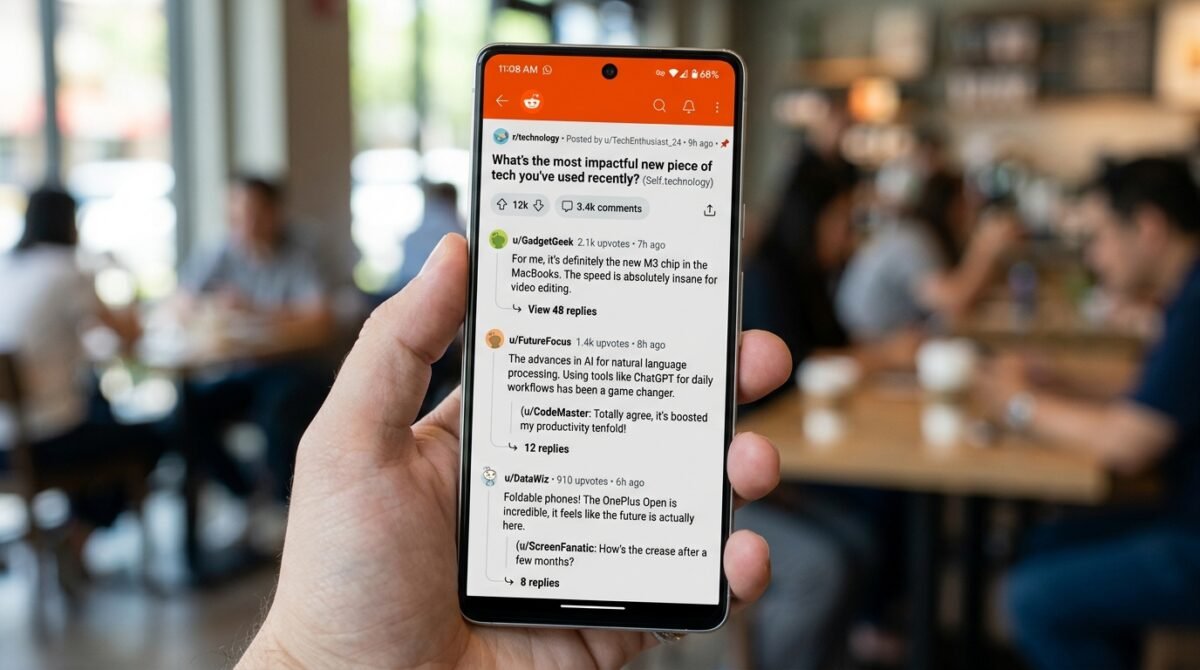
I didn’t tell anyone the full story immediately. I just told my friends that Mark and I were having issues and that I needed space. But the internet, as it often does, became my sounding board. I posted a sanitized version of the story on a popular subreddit, keeping the specific dollar amounts but removing names and identifiable details. I needed to know if I was crazy. I needed to know if this was standard marital behavior.
The response was overwhelming. Within hours, the post had thousands of comments. I sat in my sister’s guest room, reading them over and over, feeling a weird sense of validation. People weren’t telling me to ‘work it out.’ They were telling me to run. They were telling me that this wasn’t just a disagreement; it was a systemic issue of control and deception.
“This is not a budget. This is financial abuse, plain and simple. He has the means to provide for you but chooses to restrict your autonomy to keep you dependent. Get a lawyer, freeze the accounts, and do not go back until you have a plan.”
— u/FinanceExpert_Real (Top Comment, 32.5k upvotes)
Another user noted the psychological aspect: “He created a reality where you were constantly stressed, which ensures you have no mental energy to look into his finances. It’s a classic tactic of an abuser. He wanted you to be the submissive, broke spouse. Please, get out now.”
Reading these comments felt like a dam breaking inside me. I had spent so long trying to fix ‘my’ problem—my poor budgeting, my ‘need’ for name-brand items—that I never stopped to think that the problem was entirely external. The Reddit community didn’t just give me advice; they gave me permission to be angry. They gave me permission to stop apologizing.
I realized then that my marriage had been a prison cell with golden bars that I hadn’t even been allowed to touch. The support from complete strangers did more for my recovery than any conversation I’d ever had with Mark. It was the first time in years I felt seen, heard, and understood without any hidden agenda or manipulation.
The Solicitor’s First Meeting

I met with a solicitor three days after leaving. I was still shaking, still feeling like I was doing something ‘wrong’ by seeking legal counsel behind Mark’s back. The solicitor, a sharp-eyed woman named Sarah, looked at my documentation and didn’t blink. She had seen this before, though rarely with such a clear-cut contrast between the ‘poverty’ imposed on the spouse and the wealth held in reserve.
“This is significant,” she told me, tapping a pen against the printed screenshots of the portfolio. “We need to determine if this account was pre-marital, which part of it was grown during the marriage, and what his intent was regarding the marital assets. But more importantly, we need to address the control aspect. You have been living in a state of artificial scarcity.”
She laid out a plan. We weren’t just going to file for divorce; we were going to pursue a full audit of his finances. I had to disclose everything I knew, and she would handle the rest. I felt a sense of relief wash over me, a weight lifting that I hadn’t realized I was carrying. The power dynamic was shifting.
I spent the afternoon gathering every scrap of paper I could find: old grocery receipts, utility bills, emails where he questioned my spending habits. Every piece of paper was a brick in the wall I was building against him. I wasn’t just fighting for my share of the money; I was fighting for the truth of my existence over the last three years.
That night, I didn’t dream of budgets or beans. I dreamt of a house where I could buy whatever I wanted without fear. It was a small, silly dream, but for the first time in a long time, it felt like an actual possibility. I was no longer an accomplice to his lie; I was the architect of my own exit.
The Unannounced Visit and the Failed Ultimatum
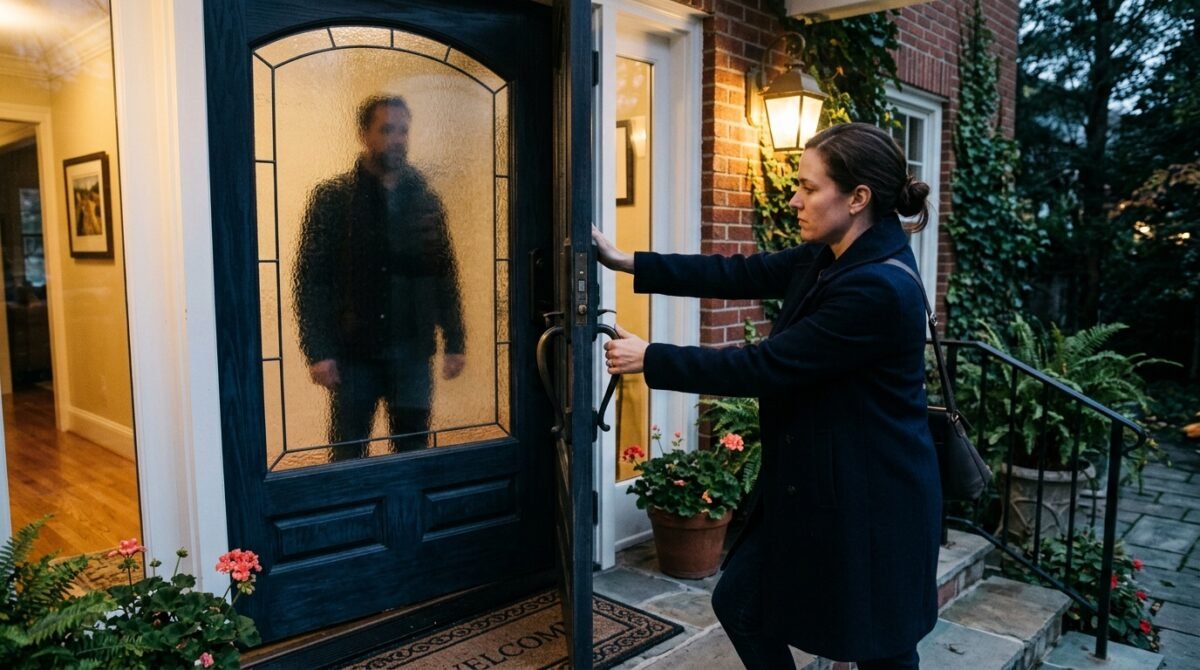
Two weeks into the separation, Mark showed up at my sister’s house. He didn’t call first. He just pounded on the front door, his face flushed with a mixture of anger and panic. When I opened the door, he didn’t apologize. He didn’t ask how I was doing. He started talking about the ‘inconvenience’ of the situation.
“You need to come home, Sarah. This is ridiculous. You’re making a scene, and my colleagues are starting to ask questions. If you come back, we can talk about the account. I’ll even let you have a say in the next few investments.” He spoke as if he were offering me a favor, a bone to a dog.
“You think this is about having a say in your investments? You think this is about money? I’m not coming back, Mark. I’m not coming back because I realized that I don’t love a man who makes me starve so he can feel powerful. You lost me the moment you prioritized your portfolio over my peace of mind.”
— The Author
He tried to argue, his voice rising, but my sister came to the door, and he backed down. He looked at me with such genuine confusion, as if he truly couldn’t fathom why I wouldn’t want to live with him. It was a chilling realization: he didn’t even understand what he had done wrong. He viewed our relationship as a transaction, and he was just upset that the ‘asset’—me—had decided to leave the portfolio.
That was the final confirmation I needed. There was no ‘saving’ this. There was no ‘meeting in the middle’ with someone who viewed human emotion as a variable in a spreadsheet. I closed the door on him, and for the first time, I didn’t feel afraid. I felt nothing but a deep, overwhelming sense of finality.
The Discovery of the Secret Group Chat

The discovery didn’t stop at the brokerage account. During the discovery process, I gained access to his old phone, which he had left in a box of ‘shared’ electronics. There, I found a group chat with his brother and a friend. It wasn’t just business talk. They were laughing about me. They were laughing about how ‘easy’ it was to keep me on a tight leash.
“She’s so worried about the price of eggs, she doesn’t even notice the offshore transfer. Keep her hungry, keep her humble. Works every time.”
— Mark (via Leaked Text)
Seeing those words written out, in his own hand, was a different kind of pain. It wasn’t just the money. It was the calculated, deliberate effort to dehumanize me. He wasn’t just a frugal man; he was a predator who enjoyed the power he held over me. I sat in my lawyer’s office and read those texts, and I cried for the first time since leaving.
The lawyer, Sarah, took the phone and made copies. She told me this would be invaluable in court. It proved premeditation. It proved that he knew exactly what he was doing and that it wasn’t a misunderstanding or a difference in ‘financial philosophy.’ It was a deliberate attempt to break my spirit.
I felt a strange sense of vindication. All those times I had doubted myself, all those times I had thought I was ‘too emotional’ or ‘too sensitive’—I had been right all along. My gut had been telling me something was off, and I had been ignoring it because I trusted him. I would never, ever make that mistake again.
The Financial Audit and the Hidden Transfers

The deeper we dug into the financial records, the more disturbing the picture became. It wasn’t just the $300,000 portfolio. There were accounts in his brother’s name that were funded with money from our joint account. There were ‘loans’ he had ‘repaid’ to shell companies he owned. It was a web of deceit that had been growing for years.
The forensic accountant we hired was shocked. He said he had never seen such a systematic effort to hide marital assets. Mark had been living a double life for the entire duration of our marriage. He was essentially laundering our ‘shared’ money into his private hoard while simultaneously starving our daily life. It was a level of betrayal that went beyond the personal.
I had to testify in a deposition, and for the first time, I looked him in the eye and told him everything. I didn’t stutter. I didn’t look down. I told them about the fifty-dollar grocery budget. I told them about the canned beans. I told them about the emotional toll. And he just sat there, looking at his hands, unable to meet my gaze.
The judge was clearly unimpressed with his defense of ‘investment strategy.’ The court ordered the freezing of all his accounts, including the ones in his brother’s name. The legal process was slow and expensive, but it was necessary. Every day that passed, I felt a little more of my old self returning. I was no longer the woman who worried about the price of eggs; I was a woman taking back her life.
The Final Settlement and the Taste of Freedom

The divorce settlement was a long time coming, but when it finally arrived, it was fair. Not just fair—it was a total victory. The court ruled that the assets he had hidden were indeed marital property, and I was entitled to a significant portion of them, plus damages for the emotional distress and the financial abuse.
The day the funds hit my account, I didn’t go buy a luxury car or a mansion. I went to the grocery store. I walked down the aisles, picking up the name-brand cereal, the organic produce, the things I had denied myself for years. I didn’t look at the prices. I didn’t calculate the total. I just filled the cart with whatever I wanted.
Standing at the checkout, I felt a wave of emotion so intense I had to step outside. It wasn’t about the food. It was about the choice. I was free to make my own choices. No one was going to audit my receipts. No one was going to lecture me on ‘discipline.’ I was, for the first time in my adult life, truly in control of my own destiny.
Mark tried to contact me after the settlement, wanting to ‘discuss the future’ or ‘reach a closure.’ I blocked his number, his email, and his social media. There was no need for closure. He had provided all the closure I needed through his own actions. I was moving on, and he was finally, permanently, a part of my past.
Reflecting on the Silence of the Dinner Table

I think back to the Sunday dinner table often. The silence was always so heavy, so suffocating. I realize now that it wasn’t just the lack of money; it was the lack of humanity. He didn’t want a partner; he wanted an asset he could manage, someone who would be so consumed by the struggle for survival that they would never look at the mountain of gold he was standing on.
I learned a lot about myself in those three years. I learned that I am capable of immense sacrifice, but I also learned that sacrifice must have a purpose. I learned that money is not just a currency; it is a tool for autonomy. And most importantly, I learned that I deserve to be with someone who celebrates my growth, not someone who shrinks me to fit into their own small, greedy box.
I’ve started a new life. I have a job I love, friends who respect me, and a partner who treats me with the equality I deserve. We don’t have a fifty-dollar budget. We have a shared vision, and it’s a vision built on trust, transparency, and mutual respect. We share everything, not because we have to, but because that’s what a partnership is.
The sting of the betrayal has faded, replaced by the warmth of my own independence. I don’t regret the marriage, because it taught me the value of my own worth. I don’t regret the struggle, because it showed me how strong I truly am. I only regret the time I spent doubting myself, but that is a price I am willing to pay for the clarity I have now.
Conclusion
Looking back, the $50 grocery budget was never about frugality; it was a weapon of mass deception. My husband didn’t just hide money; he hid his true nature behind a facade of shared responsibility. Finding that $300,000 wasn’t just a financial windfall; it was a mirror that forced me to see the reality of my marriage for what it was—a performance designed to keep me small.
Today, I stand on the other side of that experience with a sense of peace that I never thought possible. I’ve learned that the most important investment you can make is in yourself. If you are ever in a position where you feel like you are being rationed, monitored, or belittled, please know that you are not alone and that your intuition is likely spot on. Trust your gut, seek help, and don’t be afraid to blow up a lie to find your truth.
We are opening the floor to the community. Have you ever discovered a secret about your partner that fundamentally changed your relationship? How did you handle the betrayal, and what advice would you give to someone currently trapped in a situation of financial control? Let us know in the comments below.
What's your verdict on this dilemma?
Vote below to contribute to the official community consensus.

Have a Dilemma Keeping You Up at Night?
Share your real-life feud, wedding chaos, or relationship crossroads anonymously with our editorial team.
What do you think ?
0 Comments🛡️ Comments are moderated to protect community integrity. Your comment will appear once approved by the editorial team.