

It was supposed to be a simple Friday night out to celebrate Sarah’s promotion. We had been friends since college, sharing secrets, clothes, and enough life milestones to fill a library. But somewhere between the second round of cocktails and the high-energy atmosphere of the city square, the tone of our friendship shifted from mutual support to something toxic and unrecognizable.
The incident itself was absurd, almost cinematic in its stupidity. Sarah, fueled by liquid courage and the peer pressure of her own design, decided that the public fountain in the center of the plaza was the perfect stage for a late-night stunt. What started as a laugh turned into a frantic scramble when she slipped, plunging her prized, vintage Italian leather jacket straight into the chlorinated depths of the fountain.
As she emerged, dripping and furious, the shift in her demeanor was instantaneous. She didn’t blame herself for the lack of balance or the poor decision-making. Instead, she turned her gaze directly toward me, her eyes narrowing as she mentally calculated the cost of her own folly. Little did I know, that night would mark the beginning of a month-long standoff involving invoices, legal threats, and the complete unraveling of a ten-year friendship.
This is not just a story about a jacket. It is a story about the boundaries we draw, the entitlement of those closest to us, and the painful realization that sometimes, people change in ways that make them impossible to keep in your life. The aftermath of that night has forced me to look at my social circle through a lens I never wanted to use, revealing truths that were hiding just beneath the surface all along.
As I sit here, thousands of dollars in demands later, I am left questioning every single interaction I’ve had with her over the last decade. Was this always there, simmering beneath the surface? Or did the allure of a scapegoat simply become too tempting to pass up? I’m sharing this because I need to know if I’m the one losing my mind, or if this is the ultimate litmus test for a friendship gone wrong.
The Dare That Cost A Thousand Dollars
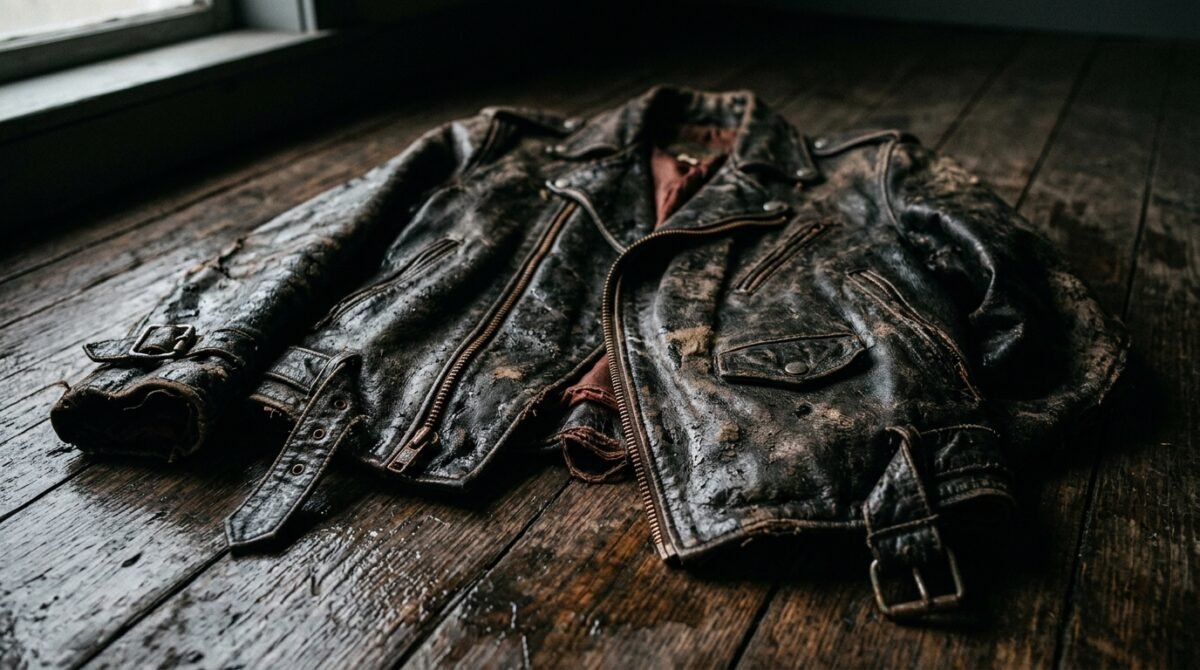
The night began with such promise. We were at a trendy downtown bar, the kind where the music is just loud enough to make you shout your drink orders. Sarah had just landed her dream job in marketing, and she was, in her own words, feeling ‘invincible.’ She had insisted on an elaborate outfit for the night, a vintage, buttery-soft leather jacket she’d spent months hunting down at high-end consignment shops. It was her signature piece, something she claimed defined her entire aesthetic.
By midnight, we were walking through the plaza. The fountain, a magnificent tiered structure, was lit up with shifting LED lights. Sarah, ever the performer, decided it would be a hilarious challenge to walk along the narrow, slick stone rim of the lower basin. She called it ‘her moment of glory.’ I stood on the sidewalk, filming with my phone, laughing at her theatrics until the laughter died in my throat.
She didn’t just stumble; she committed to a wide, sweeping gesture that defied gravity and physics simultaneously. Her heels caught on a slick patch of moss, and she went down hard, the leather jacket dragging through the stagnant, murky water of the fountain before she could even reach out to stop herself. She looked like a drowned rat, shivering and screaming profanities at the silent stones of the fountain.
“Oh my god, Sarah! Are you okay? Get up, you’re soaking!” I yelled, rushing over to help her pull herself out of the water, not even considering the jacket, just making sure she hadn’t broken an ankle.
She slapped my hand away, her face contorted in a mix of embarrassment and pure, unadulterated rage. She stood there, dripping, the jacket already losing its sheen as the water seeped into the pores of the leather. “You were supposed to be watching my back!” she shrieked, ignoring the onlookers who were staring at the spectacle. “You saw me going for it and you didn’t reach out to grab me. You just stood there filming. This is your fault.”
I was stunned into silence. I had been twenty feet away, filming at her request, laughing along with her. The shift from her being the architect of her own disaster to the victim of my ‘negligence’ was so fast I felt whiplash. We took an Uber home in total silence, the smell of damp, ruined leather filling the small car, a silent harbinger of the conflict to come.
The Inevitable Ping of the Invoice
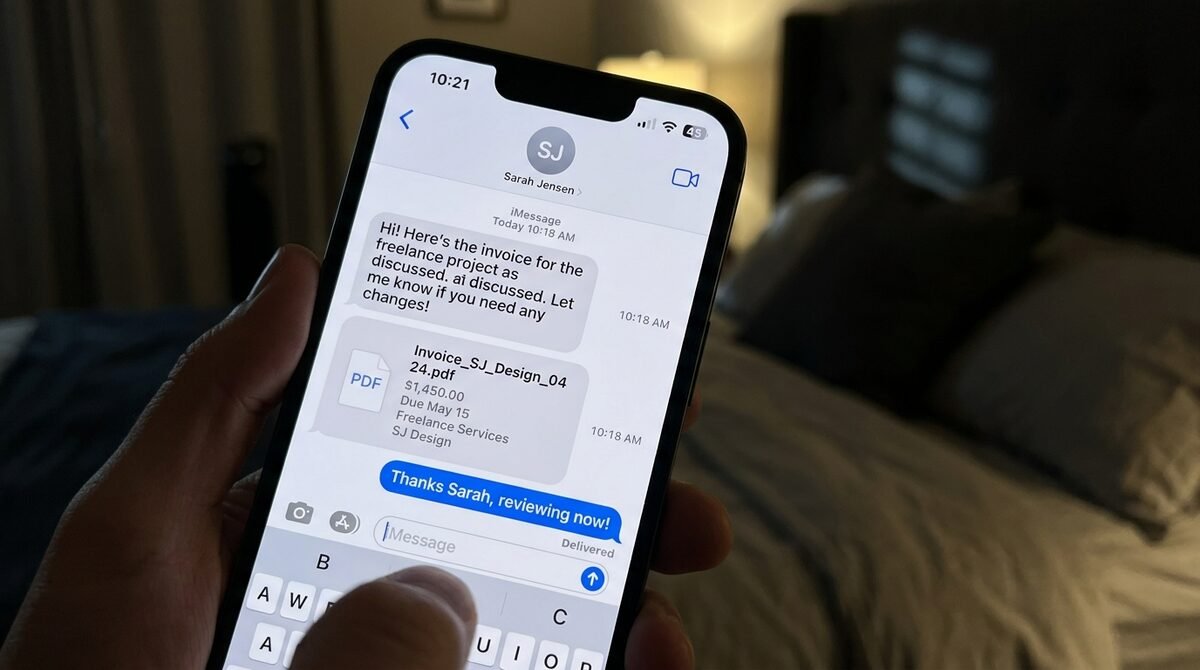
I didn’t hear from Sarah for three days. I assumed she was busy processing the loss of her favorite item or perhaps coming to the realization that she’d made a colossal fool of herself. I even sent a polite text, checking in to see if she had managed to get the leather professionally cleaned or if she was feeling any better about the whole ordeal. I was met with radio silence.
On the fourth morning, a notification popped up on my phone. It was an email from Sarah. Not a text, not a call, but a formal-looking document attached to an email with the subject line: ‘Reimbursement for damages.’ My stomach dropped as I opened the PDF. It was an itemized list, complete with the original purchase price of the jacket, the cost of a ‘specialized’ cleaning attempt, and a bizarre surcharge for ‘loss of sentimental value.’
The total demand was for $1,250. I sat on my couch, reading and re-reading the document, wondering if this was some kind of sick joke. She was actually asking me to pay for her decision to walk on a fountain rim while intoxicated. I felt a cold, hard knot form in my chest—the realization that the person I thought I knew was gone, replaced by someone who viewed our friendship as a transactional liability.
“Are you serious, Sarah? You want me to pay for a dare you came up with? You were the one on the fountain, not me. I’m not paying a cent.” I typed, my fingers shaking with a mix of anger and disbelief.
Her reply came within seconds, as if she had been waiting by her keyboard. “If you hadn’t been filming and had actually helped me, I wouldn’t have fallen. You are responsible for the outcome of the night because you were the one encouraging the reckless behavior. If you don’t pay, I’ll tell everyone we know that you pushed me into the fountain to embarrass me.”
The threat was chilling. It wasn’t just about the money; it was about the social sabotage. She knew that in our circle, perception was everything. She was banking on my need to look like a ‘good friend’ to bully me into submission. It was a cold, calculated move that made me realize I hadn’t just lost a friend; I was being targeted by someone I’d once trusted with my life.
The Escalation of the Social War

The next week was a blur of passive-aggressive interactions. Sarah began posting cryptic messages on social media, implying that ‘some people don’t take responsibility for their actions’ and ‘true friends show up when it matters.’ It was transparent, pathetic, and infuriating. Every time I opened Instagram, there was a new barb directed at me, hidden behind the guise of vague life lessons.
Then came the phone calls from mutual friends. ‘Hey, I heard about the fountain incident,’ they’d say, their voices thick with concern that felt more like curiosity. ‘Sarah is really upset. Maybe just pay it to keep the peace?’ The enablers were coming out of the woodwork. They didn’t want to hear the truth; they just wanted the drama to go away so they could go back to brunch without feeling the tension of our falling out.
I realized then that Sarah had already started her campaign. She had told her version of the story to anyone who would listen, framing herself as the victim of my ‘negligence’ and ‘lack of support.’ It was an incredibly effective way to isolate me. If I didn’t pay, I was the heartless friend. If I did pay, I was admitting fault for something I hadn’t done. It was a trap, and she had spent a lot of time constructing it.
“I’m not the one who needs to apologize here. She chose to walk on that ledge. I’m tired of people acting like I’m responsible for her poor choices just because I was holding a camera.” I told our mutual friend, Mark, during an exhausting lunch.
Mark sighed, swirling his coffee. “Look, she’s really hurt. She loved that jacket. Can’t you just offer to pay half? It’s not worth losing the friendship over a grand, is it?” That was the question that haunted me. Was it worth it? But the more I thought about it, the more I realized it wasn’t about the money. It was about the principle of the matter. If I paid, I was validating her delusions.
I spent hours drafting responses to her, deleting them, and writing them again. I felt like I was losing my mind, caught in a cycle of gaslighting that felt so real I sometimes wondered if I *had* done something wrong. Maybe I should have reached out. Maybe I should have been closer. But then I’d remember the image of her, laughing, eyes bright with excitement, stepping onto that ledge, and I’d know that nothing I could have done would have stopped her.
The Reddit Trial: A Community Weighs In
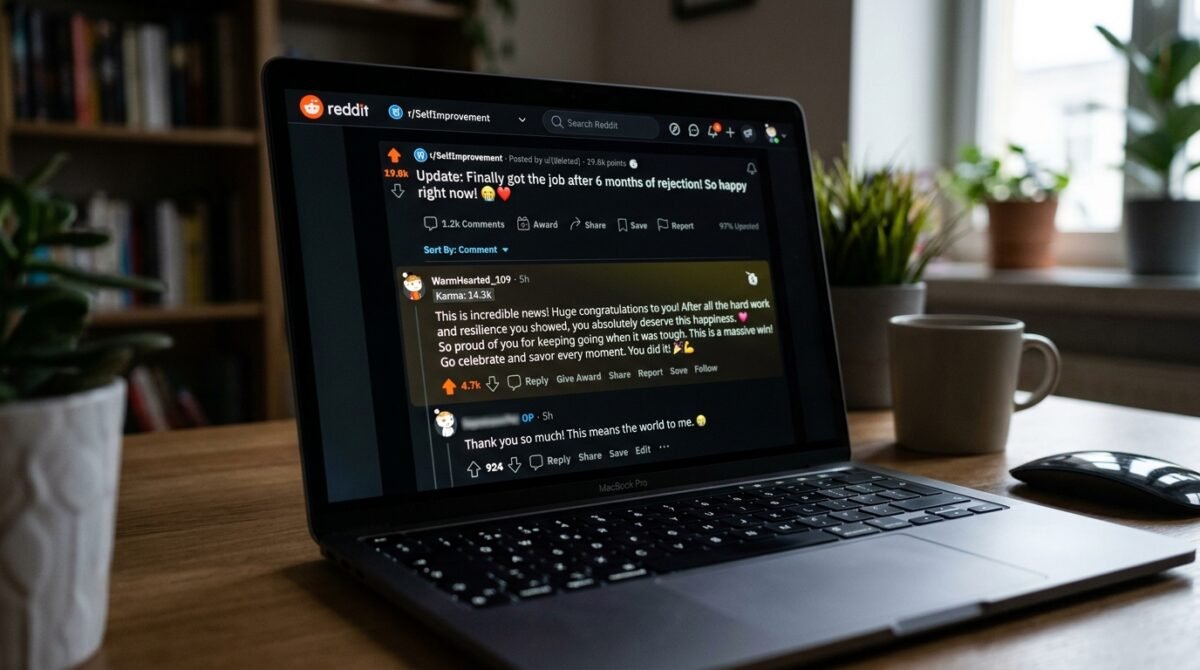
In a moment of desperation, I turned to the internet. I posted my story on a popular forum, keeping the details as objective as possible, though the anger seeped into every sentence. Within minutes, the comments started flooding in. I was bracing myself for a wave of hate, but what I got was something entirely different. The support was overwhelming, and it gave me the clarity I desperately needed.
People from all over the world were weighing in, dissecting the situation with the kind of cold, hard logic I was unable to muster for myself. They saw the manipulation for what it was. They pointed out the absurdity of the demand, the gaslighting, and the blatant attempt to use social pressure to extort me. It was like a weight lifted off my shoulders.
“NTA. Your friend is a disaster waiting to happen and she’s trying to make you the bank for her personal recklessness. Do not pay a single cent. If she threatens to ruin your reputation, let her. Anyone who believes her version of events isn’t worth having as a friend anyway.”— u/ReasonableObserver (Top Comment, 24.3k upvotes)
Reading those comments, I felt a surge of righteous vindication. I wasn’t crazy. I wasn’t being a bad friend. I was being held hostage by someone who didn’t respect me. The community didn’t just support me; they provided advice on how to handle the social fallout, how to shut down the rumors, and how to protect myself legally if she decided to take it further.
The consensus was clear: Sarah was the one in the wrong, and her behavior was textbook manipulation. Several commenters even shared their own horror stories of friends who had tried similar stunts, creating a sense of solidarity that made me feel less alone. I realized then that my worth as a friend wasn’t tied to how much money I was willing to throw at Sarah to make her stop her temper tantrum.
I saved the thread, took screenshots of the most supportive comments, and felt a newfound resolve. I wasn’t going to fold. I wasn’t going to be the victim of her entitlement. I was going to stand my ground, even if it meant the end of our friendship—which, at this point, felt more like a relief than a loss.
The Breaking Point: A Confrontation in Public

It all came to a head at a mutual friend’s birthday dinner. I hadn’t expected Sarah to be there, or perhaps I had, and I just hadn’t wanted to face the possibility. When she walked in, the entire room went silent. She spotted me immediately, her eyes narrowing, and she made a beeline for my table. The tension in the air was thick enough to cut with a knife.
She didn’t start with pleasantries. She leaned over my chair, her voice low and venomous. “Are you enjoying yourself? Must be nice to spend the money you owe me on fancy dinners and drinks.” The audacity was staggering. My friends were watching, their faces pale, waiting to see how I would react. I could feel my heart racing, but I refused to look down.
“Sarah, we are not doing this here. You made a choice to walk on a fountain. You fell. That is not my financial burden. If you want to talk about this, we can do it outside, but keep the drama out of this dinner.” I said, my voice steady, surprising even myself.
She let out a sharp, incredulous laugh. “You are unbelievable. Everyone knows you’re the reason I’m out twelve hundred dollars. Everyone knows you pushed me.” The room gasped. It was the moment of truth. My friends were looking at me, waiting for a denial, waiting for a counter-attack. I stood up, feeling a strange sense of calm wash over me.
I looked at the group, then back at Sarah. “I didn’t push you. You know it, I know it, and the video proves it. Stop lying to people. I’m done with this conversation, and I’m done with this friendship.” I picked up my bag and walked out. I didn’t look back to see her face, but I could hear the murmurs starting behind me. I knew the social war was about to escalate, but for the first time in weeks, I didn’t care.
I walked out into the cool night air, feeling a lightness I hadn’t experienced since the night of the fountain. I had set a boundary, held it, and walked away from a situation that was clearly draining my soul. The cost of my integrity was apparently the end of this friendship, and as I walked to my car, I realized it was a bargain.
The Aftermath: Truth vs. Perception

The next few days were intense. My phone didn’t stop buzzing with messages, calls, and notifications. Some people were siding with Sarah, demanding I explain myself; others were reaching out, telling me they’d seen the look on her face when I called her out and finally understood that something was off. It was a chaotic mix of support and vitriol.
I decided to take the high road. I posted a single, neutral message on my social media: ‘To those asking, I am not responsible for the accident at the fountain. I wish Sarah the best, but I will not be participating in any more drama regarding this issue.’ It was short, clear, and left no room for debate. I blocked Sarah on everything, effectively cutting the cord.
The fallout was, surprisingly, not as bad as I feared. Once the initial shock wore off, people began to realize that Sarah’s version of events didn’t hold water. When asked for the ‘proof’ of my negligence, she had nothing to offer but her own hurt feelings. The lack of evidence, combined with her increasingly erratic behavior, did more to clear my name than any argument I could have made.
“I thought she was being dramatic, but when she started demanding money from everyone to ‘help me out,’ I realized she was just using the situation to see who would give her cash. I’m glad you stood up to her.”— A text from a mutual friend
It turned out I wasn’t her only target. She had been asking other friends for ‘contributions’ to cover her losses, framing it as a community effort to support her through a tough time. The realization that she had been grifting our friend group left me feeling both disgusted and relieved. I was the one who had finally stopped the cycle, and in doing so, I had exposed her true colors.
Healing from the situation took time. I had to unlearn the habit of checking my phone for notifications from her, and I had to deal with the awkwardness of navigating social circles where she was still present. But the more distance I put between myself and the situation, the more I realized that the drama had been a distraction from the fact that we had outgrown each other long before that night at the fountain.
The True Cost of Entitlement

When I look back at the whole ordeal, the jacket feels like a symbol for something much larger. It wasn’t just a piece of vintage leather; it was a representation of her lifestyle, her values, and her expectations of me. She expected me to support her, even when she was wrong. She expected me to be the safety net for her reckless choices, and she expected me to pay for the privilege of being in her life.
I realize now that I had been enabling this behavior for years. I had always been the one to fix things, to smooth over the awkwardness, to apologize when I hadn’t done anything wrong just to keep the peace. The fountain incident was just the breaking point. It was the moment I realized that peace at any price is not peace at all; it’s a slow, painful erosion of your own self-respect.
I’ve learned a lot about boundaries since then. I’ve learned that saying ‘no’ is not an act of hostility, but an act of self-preservation. I’ve learned that true friends don’t demand payment for their own mistakes, and they certainly don’t use their friends as props in a game of manipulation. It’s been a harsh lesson, but one I’m grateful for.
“The most expensive thing I ever bought wasn’t a jacket, but the clarity I gained from losing a friendship that was never as real as I thought.”
Moving forward, I’m being much more selective about who I spend my time with. I’m looking for relationships built on mutual respect and accountability, not on the convenience of having someone to blame for your own missteps. The void that Sarah left in my life has been filled by people who actually care about my well-being, and it’s a much more peaceful, fulfilling life.
As for the jacket? I hear she eventually got it cleaned, though it was never the same. Maybe that’s a fitting end to the whole thing. Everything that happened, all the anger and the drama, left a permanent stain on the memory of our friendship, and no amount of professional cleaning can fix that. And that’s okay. Some things are better left in the past.
Community Perspectives: The Reddit Verdict

The Reddit thread didn’t just end with the first wave of comments. It evolved into a complex, multi-day discussion about friendship, debt, and the nature of accountability. People started sharing their own ‘friendship invoice’ stories, revealing just how common this kind of toxic behavior is. It was a fascinating, if sometimes depressing, look at human dynamics.
The thread became a repository of advice for anyone else dealing with entitled friends. People were sharing templates for setting boundaries, tips on how to handle gaslighting, and stories of their own ‘great escapes’ from toxic social circles. It was a masterclass in emotional intelligence, and it helped solidify my decision to stay the course.
“I had a friend try to charge me for a drink I spilled on her carpet years ago. It’s never about the money. It’s about control. You did the right thing by cutting her off entirely.”— u/VintageVictim (5.2k upvotes)
Some users even played devil’s advocate, suggesting that maybe she was acting out of genuine distress, but they were quickly corrected by others who pointed out that distress doesn’t excuse manipulation. The community was firm: you can be upset, but you cannot be abusive. The distinction was important to me, as it helped me frame my own internal narrative about the situation.
The thread is still active, occasionally getting new comments from people who stumble upon it. It’s become a sort of touchstone for me, a reminder of the thousands of strangers who validated my experience when I felt entirely alone. It’s a powerful thing, knowing that even in your darkest moments, there’s a collective wisdom out there that can pull you back from the edge.
I check it once in a while, not to relive the drama, but to see the advice that’s being shared. It’s a testament to the power of community, and it gives me hope that even in a world where people can be so entitled, there are still plenty of people who value honesty and integrity above all else.
Reflections on Friendship and Growth

Looking back, the entire experience was a catalyst for a major period of personal growth. It forced me to examine why I stayed in a friendship that was clearly unbalanced for so long. Was it out of habit? Fear of being alone? A misplaced sense of loyalty to a version of Sarah that no longer existed? I suspect it was a bit of all three.
I’ve started therapy, which has been an eye-opening journey. I’m learning to spot the red flags much earlier, to set boundaries with confidence, and to understand that I don’t need to earn my place in someone’s life through subservience. The confidence I’ve gained is worth a lot more than $1,250, and it’s something that Sarah can never take away from me.
I’m also much more mindful of the dynamics in my other friendships. I notice when someone is consistently asking for favors without reciprocating, or when the energy in a conversation is always focused on them. I’m not saying I’m perfect, but I’m definitely more conscious of the balance of give and take. It’s made my relationships deeper and more meaningful.
“You are the average of the five people you spend the most time with. Choose them wisely. It’s better to be alone than to be surrounded by people who don’t have your back.”
I’ve realized that friendship is a two-way street. It requires effort from both sides, and when one side stops showing up, the road ends. That’s not a failure on my part; it’s a reality of life. We grow, we change, and sometimes we drift apart. What’s important is that we do so with grace and without compromising our own values.
I don’t hold a grudge against Sarah anymore. I feel a sort of pity for her, really. She’s trapped in a cycle of her own making, unable to see how her behavior is pushing away the people who actually care about her. But that’s her journey, not mine. I’ve moved on, and I’m in a much better place for it.
A Final Word to the Reader

If you’re reading this and you’re in a similar situation, please know that you are not alone. It’s easy to feel like you’re the one in the wrong when someone you trust turns the tables on you. It’s easy to doubt your own reality when they’re so convinced of their own victimhood. But trust your gut. If something feels off, it probably is.
Don’t be afraid to set boundaries. Don’t be afraid to walk away from people who demand more than they give. Your integrity, your mental health, and your self-respect are worth more than any friendship, no matter how long it has lasted. You deserve to be surrounded by people who lift you up, not people who drag you down into their own drama.
Remember that you are not responsible for other people’s choices. You are responsible for your own, and if those choices involve holding your ground and protecting your peace, then you have nothing to apologize for. Stay strong, stay true to yourself, and don’t let anyone make you feel like you owe them anything other than common decency.
“Boundaries aren’t about being mean. They’re about being healthy. They are the fence around your life that keeps the wrong people out and the right people in.”
Thank you for listening to my story. Writing it down has been a therapeutic part of my healing process, and I hope it helps someone else find the courage to stand up for themselves. We’re all in this together, and sometimes the best way to support each other is by sharing our truths, even when they’re difficult to tell.
Life is too short to spend it walking on eggshells around people who don’t deserve your time. Focus on your own growth, cherish the friends who show up for you, and never, ever compromise your values for the sake of a fake peace. You are worth more than that.
Conclusion
The story of the fountain and the jacket is, in the end, a story about the transition from being a people-pleaser to someone who knows their worth. It wasn’t an easy transition, and it certainly wasn’t without its costs, but it was a necessary one. I’ve learned that the people who get angry when you set a boundary are the exact people who needed you to have one in the first place.
I am curious, though, to hear your thoughts. Have you ever had a friend try to make you pay for a disaster they caused? How did you handle it? Did you fold, or did you hold your ground? Let me know in the comments below. Your stories might just help someone else who is currently in the middle of their own ‘fountain incident.’
If you found this story helpful, consider sharing it with someone who needs a reminder that they aren’t alone. And remember: sometimes, the most important step you can take is the one that leads you away from people who don’t value you. Stay strong, and keep setting those boundaries!
What's your verdict on this dilemma?
Vote below to contribute to the official community consensus.

Have a Dilemma Keeping You Up at Night?
Share your real-life feud, wedding chaos, or relationship crossroads anonymously with our editorial team.
What do you think ?
0 Comments🛡️ Comments are moderated to protect community integrity. Your comment will appear once approved by the editorial team.