
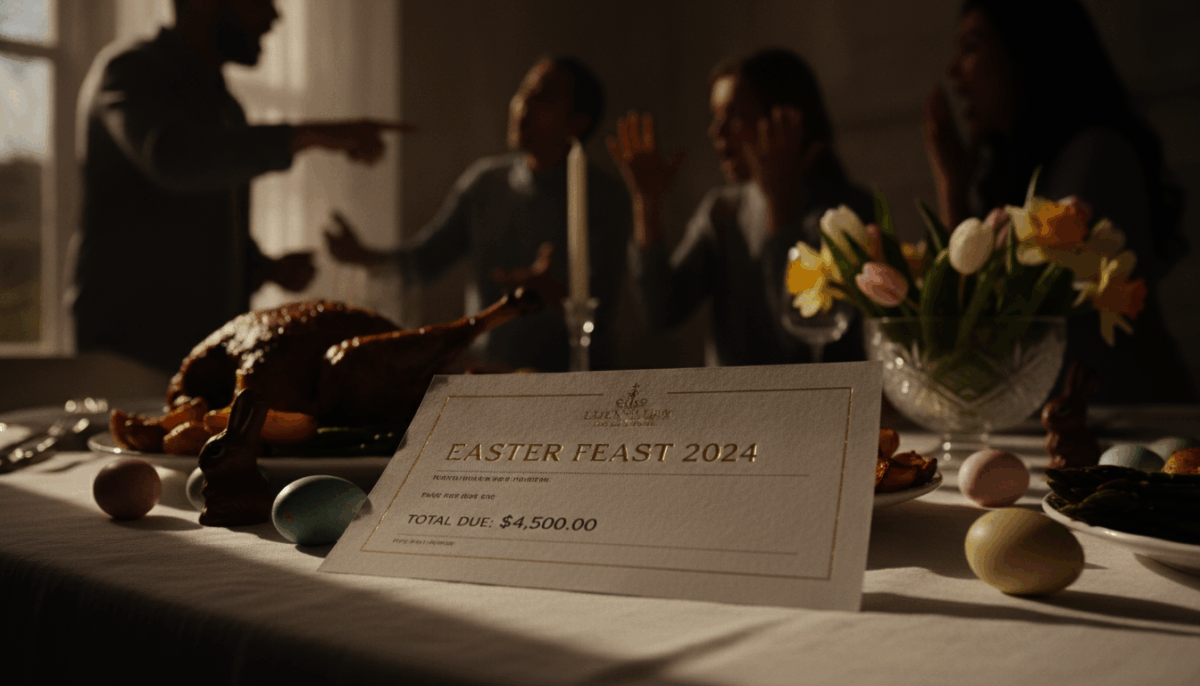
Growing up, Easter was always a modest affair—a quiet Sunday morning, perhaps a light lunch, and the comfort of my own home. After my wife, Sarah, and I purchased our first home, we looked forward to hosting her parents for a small, intimate roast. I am a trained chef, a fact that my in-laws have always treated less like a profession and more like a convenient service they are entitled to utilize whenever their own social calendar feels a bit empty.
The trouble began when Sarah mentioned that her parents wanted to come over for Easter. We agreed on a party of four: us and her parents. I spent the better part of three days meticulously sourcing ingredients, dry-aging a prime rib, and preparing a series of seasonal sides that would have cost a fortune at any high-end restaurant. It was a labor of love, or at least it was until the doorbell rang an hour earlier than expected.
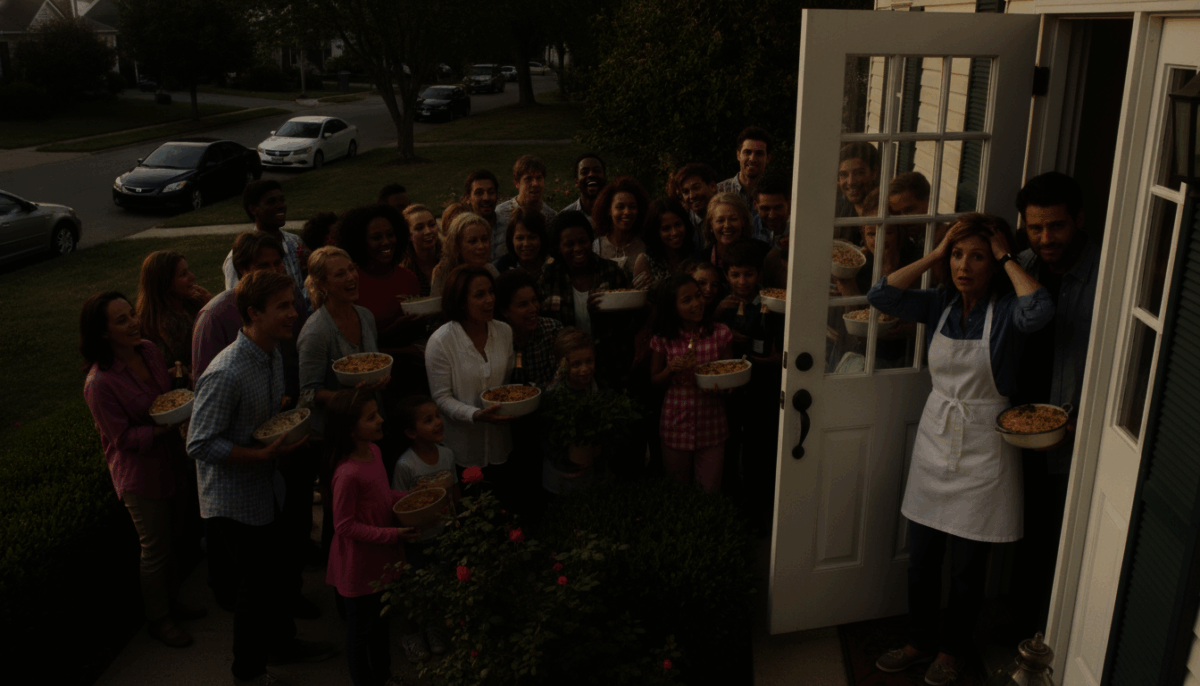
When I opened the door, I wasn’t greeted by just my in-laws. Standing on my porch was the entire extended family—a total of eighteen people, including cousins I hadn’t seen in years and a few children I didn’t recognize. They didn’t even apologize for the surprise; they simply marched into my home, coats flying onto my furniture, and began demanding drinks. The look of panic on Sarah’s face told me she was as blindsided as I was.
The moral dilemma here wasn’t just about the food. It was about the utter lack of respect for our space, our time, and the boundaries of our household. As I retreated to my kitchen, the smell of burnt toast and the cacophony of eighteen people fighting over seating arrangements ringing in my ears, I realized that I had two choices: I could play the ‘gracious host’ and swallow my resentment, or I could treat this exactly like what it was—a commercial catering job that I never agreed to perform.
What followed was an evening of tension, passive-aggressive comments about the portion sizes, and a total disregard for the prep work I had done. By the time the last guest left, my kitchen was a disaster zone. The next morning, fueled by a mixture of exhaustion and cold-blooded fury, I opened my laptop and started calculating. It was time to show them exactly what their ‘family dinner’ was actually worth.
The Morning Of The Unannounced Invasion
The morning of Easter Sunday started with the precision of a military operation. My kitchen was clean, the prime rib was perfectly seasoned, and the ambient jazz was playing softly as I prepped the final stages of a spring vegetable medley. Sarah was helping with the table settings, blissfully unaware that her father had decided to turn our living room into a public park for their extended relatives.
At 10:30 AM, the doorbell didn’t just ring; it buzzed incessantly. I assumed it was my father-in-law, Arthur, dropping off a bottle of wine. When I swung the door open, the sight before me felt like a fever dream. A line of cars was idling in our driveway, and a small army of people was already walking up the path, carrying folding chairs and coolers of beer.
“Surprise!” Arthur bellowed, completely ignoring the stunned expression on my face. “We decided it was too much work for you to cook for just four people, so we invited the whole crew! Everyone was so excited to see the new house.” I looked past him to see his sister-in-law, Brenda, already heading toward our patio with a cooler that looked like it had been sitting in a trunk for a week.
“Arthur, we agreed on four people. I have a three-pound roast. There are eighteen of you. This isn’t a barbecue, it’s a dinner party, and I don’t have the space or the food for this.”
— Me, attempting to maintain sanity
The conversation was short-lived. Arthur waved me off as if I were a complaining waiter. “Don’t be so dramatic! We brought our own beer. Just pull some more chairs from the garage and throw a few more potatoes in the oven. It’s Easter, for heaven’s sake. Don’t be a grinch.”
I watched helplessly as eighteen people filled my living room. My couches were being sat upon by people I barely knew, and the children were already touching the glass display cases in the dining room. Sarah was cornered in the kitchen by her mother, who was busy critiquing the lack of appetizers. The boundary of our home had been breached, and the power dynamic had shifted entirely into the hands of the invaders.
The Great Roast Shortage of Easter
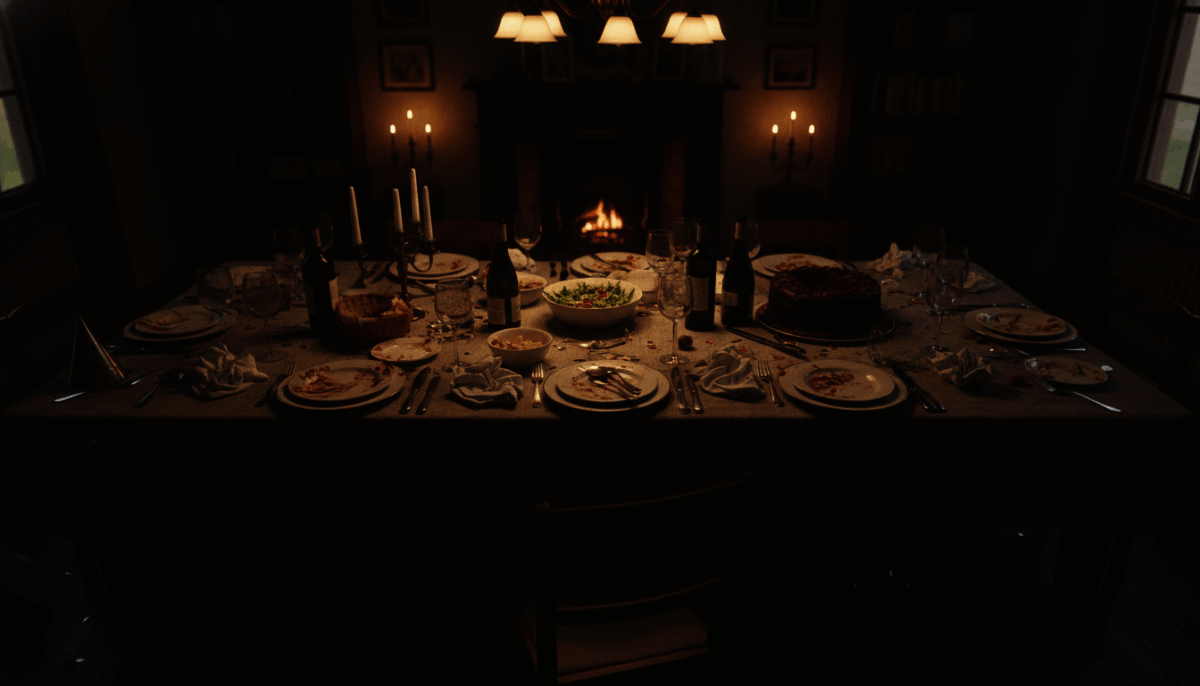
By 2:00 PM, the atmosphere in the dining room had turned toxic. I had managed to stretch the meal by boiling every box of pasta I had in the pantry and roasting bags of frozen vegetables, but the main event—the prime rib—was being carved into paper-thin slices to accommodate the sheer volume of people. It was humiliating to watch my carefully curated meal be decimated by people who didn’t even notice the quality of the ingredients.
“Is this it?” my aunt-in-law, Karen, asked loudly, pointing at the meager serving of beef on her plate. “I thought you were a professional chef. I expected a bit more, you know, flair. This is just a slice of meat and some noodles.” The room went silent for a heartbeat, and I felt the heat rising in my neck. I looked over at Sarah, who was staring at her plate, her knuckles white from gripping her fork.
I didn’t argue. I didn’t defend the quality of the beef or the fact that I had prepared the meal for four people. Instead, I stood up and cleared a few plates, my movements cold and calculated. I knew then that I wasn’t going to let this slide. If they wanted a restaurant experience, they were going to get one, just not the one they expected.
“I apologize for the portions, Karen. Clearly, I didn’t account for such an expansive guest list. If only someone had told me we were catering for an army, I could have prepared a different menu.”
— My response to the criticism
The dinner continued with the sounds of loud chewing and arguments about politics. Every time I walked through the living room, I heard people complaining about the house being ‘cramped’ or the air conditioning not being cold enough. It was clear that none of them felt like guests; they felt like patrons who had been slighted by a subpar establishment.
As the guests finally began to leave around 7:00 PM, they didn’t thank me. They left behind a trail of crushed napkins, empty beer cans, and a house that smelled like a locker room. I stood in the doorway as the last of them shuffled out, waving a casual hand at me. I closed the door, locked it, and turned to Sarah. She started to apologize, but I held up a hand. The time for apologies had passed.
The Calculus of Cold Revenge

Monday morning arrived with a headache and a sense of clarity I hadn’t felt in years. I spent the morning documenting everything. I pulled up the receipts for the food, the gas, the cleaning supplies, and even the cost of the wine I had kept in reserve for special occasions. I then logged into my business account and opened an invoice template. I wasn’t just charging them for the food; I was charging for my labor.
I calculated the cost of the prime rib, the artisanal sides, and the high-end wine. Then, I added an ‘Event Fee’ for the catering services, a ‘Cleaning Surcharge’ for the inevitable mess, and a ‘Late Booking Fee’ for the lack of notice. The total came out to a figure that, while fair for a professional private chef, was undoubtedly going to cause a meltdown in the family group chat.
I printed the invoice on professional letterhead, placed it in a formal envelope, and drove it over to my in-laws’ house. I didn’t wait for them to open it. I dropped it in their mailbox and sent a text to the family group. I wanted them to know that their actions had a cost, and that cost was now due. The feeling of power as I hit ‘send’ was intoxicating.
“I hope you all enjoyed the meal yesterday. Since it seems like we’ve moved to a catering model for family holidays, I’ve attached the final invoice for the services provided. Please arrange payment by the end of the week.”
— The text I sent to the 18-person group chat
I knew this would blow up. I expected the phone calls, the screeching, and the inevitable intervention from my wife’s sisters. But I was past the point of caring about family harmony. The harmony had been broken the moment eighteen people invaded my home without a word. They had treated me like a servant, and now, they were going to be treated like clients.
By noon, my phone was vibrating off the hook. I didn’t answer a single call. I simply watched the notifications pile up. The family group chat was a stream of outrage, shock, and personal attacks, but underneath all that, there was a quiet realization that I had drawn a line in the sand. They weren’t just angry; they were confused as to how I had the nerve to demand compensation for ‘family’ time.
The Group Chat Meltdown
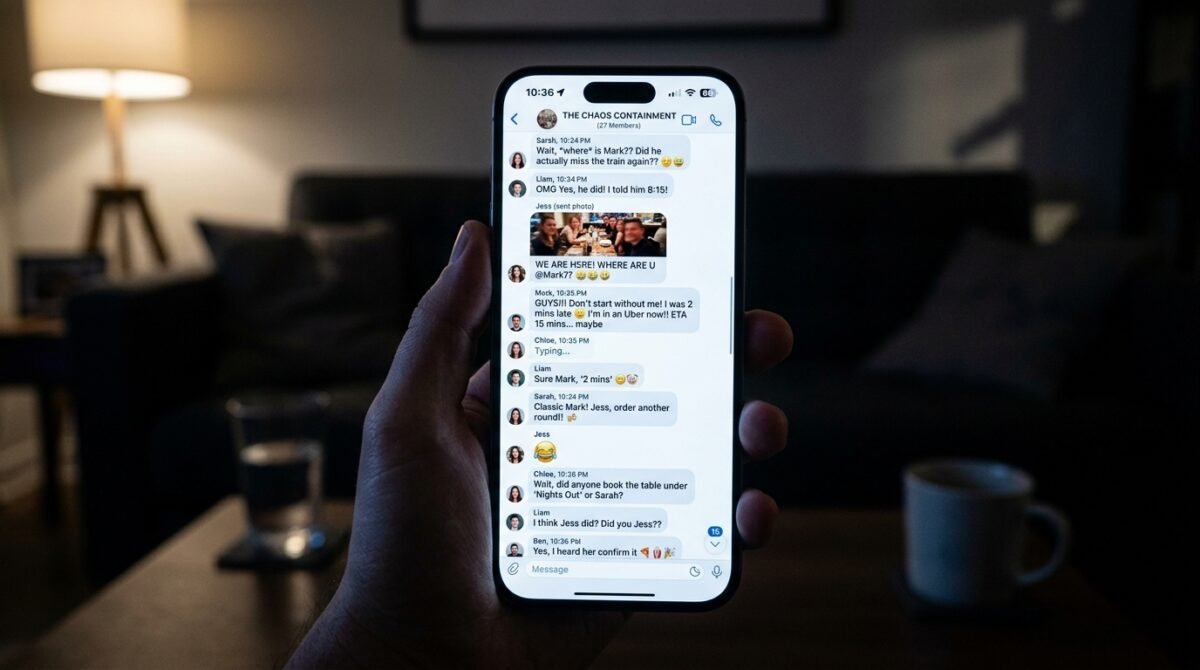
The group chat turned into a war zone within twenty minutes of my message. Arthur was the first to chime in, calling me ‘disrespectful’ and ‘insane.’ Then came the aunt-in-law who had complained about the roast, followed by a string of cousins calling me ‘petty.’ It was a masterclass in gaslighting, with everyone insisting that family is ‘supposed’ to do things for each other without question.
I sat on my sofa, reading the messages with a bowl of popcorn. It was fascinating to see how they framed their invasion as a ‘sweet gesture of family bonding,’ completely ignoring the fact that they had forced their way into my home, eaten my food, and left me with a mess to clean up. They were genuinely upset that I had attached a dollar value to their ‘company.’
“Are you joking? We are family! Since when do you invoice your own in-laws for a roast dinner? This is the most pathetic display of greed I’ve ever seen. You’re lucky we even came over.”
— Arthur, in the family group chat
I finally decided to respond, not with an apology, but with a breakdown. I sent a long, detailed message explaining exactly why the invoice was necessary. I didn’t yell; I didn’t use caps. I laid it out like a business owner explaining a contract dispute. I pointed out the difference between a dinner party for four and a banquet for eighteen, and the total lack of consideration for our home.
The chat went silent for a few minutes after my response. I think they were waiting for someone else to step in and handle it, but nobody wanted to touch the logic I had just laid out. It was a cold, hard dose of reality, and it was clear that none of them had ever been forced to confront the actual cost of their entitlement. They were used to people rolling over for them, and I had simply refused to play the game.
Eventually, one of the cousins, who I knew had been embarrassed by the whole ordeal, posted a message suggesting that maybe, just maybe, they should have asked before bringing so many people. That one message shifted the tide. The group chat quickly dissolved into smaller, separate conversations, and the outrage turned into a defensive scramble. They weren’t just mad at me anymore; they were starting to realize they looked like the villains.
The Professional Stand

When my mother-in-law finally called, she wasn’t yelling. She was crying. She tried the classic ‘I’m so disappointed in you’ approach, hoping to manipulate my sense of guilt. But I had moved past guilt. I told her that if she wanted to maintain a relationship with us, she needed to understand that our home is not a banquet hall, and we are not a free catering service.
“You’ve caused such a rift in the family, you know,” she sobbed. “Everyone is talking about how heartless you were to send a bill. You’ve ruined the whole holiday for everyone.” I listened, unimpressed. I reminded her that it wasn’t the bill that ruined the holiday; it was the blatant disregard for our boundaries that had already done the damage.
I didn’t back down. I insisted that the invoice was not just about the money, but about the principle of the matter. I told her that if they wanted to host a gathering of eighteen people, they had the means to rent a venue or book a restaurant. Instead, they had chosen the path of least resistance, which just happened to be my kitchen.
“I am not heartless, Eleanor. I am a business owner who values my time and my work. If you value family, you would have respected our home. Since you didn’t, this is the logical outcome.”
— My conversation with my mother-in-law
The conversation ended with her hanging up on me, which was a relief. I knew that the battle was far from over, but the initial confrontation had been won. I had set a boundary, and I had stuck to it. The financial aspect of the invoice was secondary to the psychological victory of not letting them dictate the terms of my life.
Later that evening, Sarah and I sat down to talk. She was initially worried about the fallout, but after I walked her through the math and the sheer disrespect of the situation, she began to see it my way. She had been just as overwhelmed by the invasion as I was, but she had been conditioned to keep the peace. Seeing me take a stand empowered her to finally speak up to her parents, too.
Reddit Weighs In
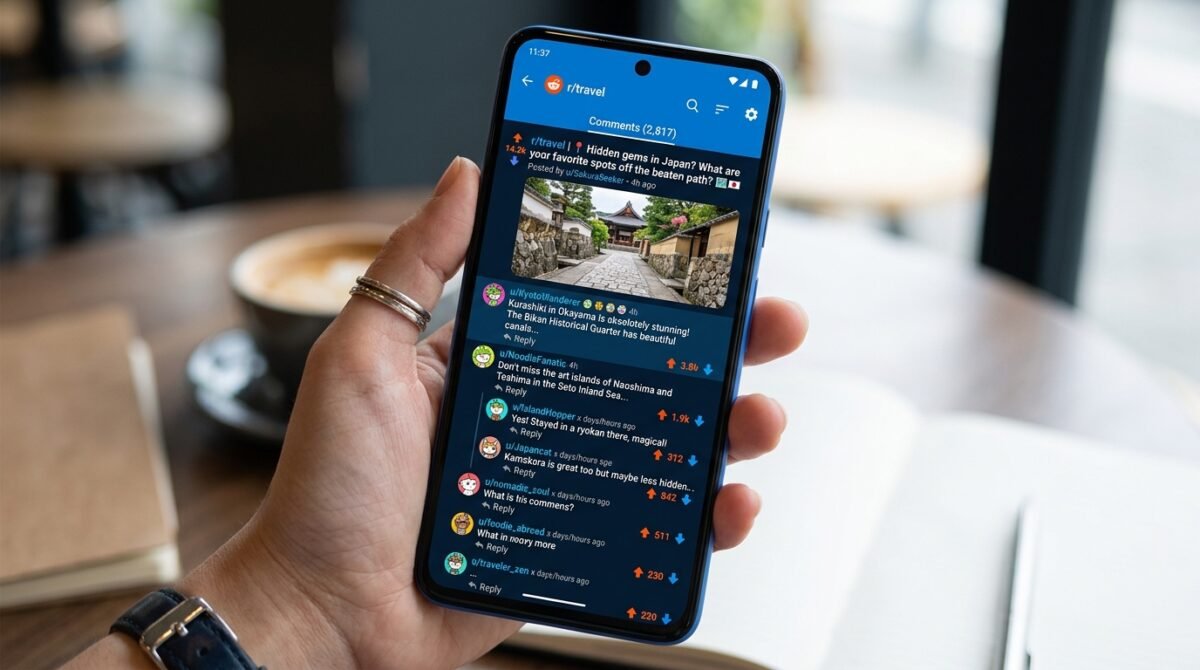
I decided to post the story on a popular forum to see if I was losing my mind. I laid out the details clearly: the original plan for four, the surprise arrival of eighteen, the lack of notice, and the resulting invoice. I wanted an objective perspective. Was I the jerk for charging them, or were they the jerks for the invasion?
The response was immediate and overwhelming. Within hours, the thread had thousands of upvotes and hundreds of comments. The consensus was surprisingly supportive. Most people were horrified by the idea of an uninvited party of eighteen, noting that it was a massive breach of etiquette and a significant financial burden.
“NTA. This isn’t even about the money, it’s about the boundary violation. 18 people is a catering job, not a dinner party. You didn’t just charge them, you gave them a lesson in respect. The audacity of your in-laws is staggering.”
— u/KitchenConfidential (Top Comment, 32.1k upvotes)
There were some dissenting voices, of course. A few people argued that family is ‘priceless’ and that I should have just ‘sucked it up’ for the sake of the holiday. But those comments were quickly buried by others pointing out that family doesn’t give you the right to treat someone’s home like a hotel or a restaurant.
Reading the comments was therapeutic. It made me realize that I wasn’t being ‘petty’ or ‘greedy.’ I was reacting to a situation that most people would find completely unacceptable. The validation from strangers gave me the confidence to stand my ground, even as my in-laws continued to pressure me to ‘drop the act’ and apologize.
Some users even provided advice on how to handle the inevitable fallout with the extended family. They suggested I stand firm, keep the invoice active, and not allow myself to be drawn into any more guilt-tripping sessions. It was the reinforcement I needed to ensure I wouldn’t backtrack when the next family event rolled around.
The Financial Breakdown

For those who wanted to know the details, I laid out exactly how I came to the figure. It wasn’t just ‘make believe’ numbers. I broke down the costs of the food, the labor, and the overhead. I created a small table to show the community what the breakdown looked like, as it helped illustrate the absurdity of the situation.
| Category | Details | Cost (USD) |
|---|---|---|
| Ingredients | Prime rib, sides, wine | $850 |
| Labor | 6 hours of professional prep | $600 |
| Cleanup | Deep cleaning service | $300 |
| Late Fee | Unannounced guest penalty | $250 |
| Total | Final Invoice | $2,000 |
The numbers were high, yes, but they were reflective of a professional catering service. If they had hired a local catering company to come into their home and serve eighteen people on an Easter Sunday, they would have paid significantly more. This was a ‘family discount,’ if they only knew it.
Sharing these numbers further solidified the community’s support. It turned the conversation from an emotional ‘who is the jerk’ debate into a practical discussion about value and expectations. It showed that I had treated this as a professional transaction, which was exactly what they had forced me to do.
The transparency of the numbers seemed to shut down most of the criticism from the family as well. It’s hard to argue that you’re being ‘overcharged’ when the math is laid out in front of you. It shifted the narrative from ‘he’s being mean’ to ‘maybe we actually owe him for what we did.’ It was a small but significant shift in their thinking.
The Aftermath and The New Boundaries

A few weeks have passed since the ‘Great Easter Invasion.’ Things are different now. We don’t speak to Arthur or Eleanor as often, and when we do, the conversations are polite but distant. We haven’t hosted a family event since, and frankly, I don’t think we will for a very long time. The trust has been broken, and it’s going to take much more than an apology to rebuild it.
Sarah and I have had many long talks about boundaries. We’ve agreed that from now on, any family event hosted at our house will be strictly invite-only, with a clear RSVP list. If anyone shows up uninvited, they will be turned away at the door, no questions asked. We are no longer the ‘go-to’ location for family gatherings unless we explicitly say so.
It’s a sad state of affairs, but it’s the reality of the situation. We’ve had to cut off some of the more toxic members of the family who were still calling me names, and we’ve set clear expectations for the rest. It feels like a weight has been lifted off our shoulders. We’re no longer living our lives to accommodate other people’s needs or whims.
“I learned that saying ‘no’ is a complete sentence. And if they don’t like it, that’s their problem, not mine. My house is my sanctuary, not a public utility.”
— My closing thought on the situation
I’ve also started doing more private chef work, which has been a great distraction. It’s funny how I enjoy cooking for strangers who pay me, but I have absolutely no interest in cooking for family who think my work is a favor. It’s a strange irony, but it’s a healthy one.
Sarah has become a lot more assertive as well. She’s learned that her family’s disappointment is not her responsibility to fix. It’s been a growth process for both of us, and I think we’re stronger for it. We’ve learned to prioritize our own peace over the comfort of people who don’t respect our boundaries.
Reflecting on the Fallout

Looking back, I don’t regret sending the invoice. It was the only way to make them realize the severity of their actions. Sometimes, in order to get people to understand the impact of their entitlement, you have to hit them with a reality check that they can’t ignore. The invoice was that check. It wasn’t about the money; it was about the principle.
I’ve had a few family members approach me since, trying to smooth things over, but I’ve kept my distance. I’m not interested in ‘smoothing things over’ if it means returning to the status quo where my time and space are undervalued. I want a relationship built on mutual respect, not on service and convenience.
It’s interesting to see who in the family stepped up and who didn’t. The ones who offered to apologize and understand were the ones I’m now closer to. The ones who continued to act entitled are the ones who are no longer part of our circle. It’s been a natural filtering process, and I’m quite happy with the results.
I know some people might still think I’m the jerk, and that’s fine. I didn’t write this to get validation from them; I wrote it to share what happened and to show that you have the right to protect your own home. If you’re ever in a situation where your boundaries are being trampled, don’t be afraid to take a stand. You might lose some people along the way, but you’ll keep your sanity.
I’m focusing now on the things that matter—our careers, our home, and our actual friends who treat us with respect. The ‘Easter Incident’ is just a memory now, a lesson learned in the hardest way possible. It’s a part of our story, but it doesn’t define us. We are moving forward, and we’re doing it on our own terms.
Community Analysis: The Cost of Entitlement

The Reddit thread is still active, with people sharing their own stories of boundary-stomping relatives. It’s clear that this is a widespread issue. People are tired of being used as free labor by their families, and they are finding ways to assert their worth. My story seems to have struck a chord, and I’m glad to see that others are finding the courage to set their own boundaries.
One commenter shared a story about how they started charging their family ‘rental fees’ for their pool, and another told a tale of invoicing their parents for a home renovation project that they were forced to manage. It’s a trend, I think—the ‘millennial boundary revolution.’ We are no longer willing to let family ties be used as an excuse for exploitation.
“I love how you turned their entitlement against them. By treating them like customers, you removed the ‘family’ shield and exposed their behavior for what it really was: rude. Keep the invoice active!”
— u/BoundariesMatter (Top Comment, 15.2k upvotes)
The lessons here are simple: treat your host with respect, ask before you bring extra people, and never assume that your presence is a gift. If you can’t follow those basic rules, you shouldn’t be surprised when you’re treated like a customer rather than a guest. It’s common sense, yet so many people seem to lack it.
I’m grateful for the community support. It’s been an incredible experience to see so many people stand up for what’s right. It proves that there’s a whole community out there who values respect and integrity, and that’s a group I’m proud to be a part of. The future looks bright, and I’m ready for whatever comes next.
So, here’s to boundaries. Here’s to saying ‘no.’ And here’s to never, ever hosting eighteen uninvited guests for a roast dinner again. The lessons were tough, but they were worth it. I’m stronger, smarter, and definitely more selective about who I let into my home.
Conclusion
In the end, the invoice was never paid. My in-laws took it as a final insult, and we are currently in a period of ‘low-contact.’ But the goal was achieved. They know now that I am not a person to be trifled with, and that our home has firm, unshakeable boundaries. The silence in our house on the following holidays has been the most peaceful, luxurious gift I could have ever asked for.
The moral of this story isn’t just about the money. It’s about the fact that your worth as a person, a professional, and a host is not up for negotiation. When we allow others to trample over our boundaries under the guise of ‘family,’ we lose a piece of ourselves. Reclaiming that space is the best thing you can do for your mental health and your relationships.
What about you? Have you ever had a situation where you had to charge a family member or set a firm boundary that caused a rift? Would you have gone as far as I did, or would you have just swallowed the frustration to keep the peace? Let me know in the comments below—I’m curious to see how many of you have faced this exact dilemma.
What's your verdict on this dilemma?
Vote below to contribute to the official community consensus.

Have a Dilemma Keeping You Up at Night?
Share your real-life feud, wedding chaos, or relationship crossroads anonymously with our editorial team.
What do you think ?
0 Comments🛡️ Comments are moderated to protect community integrity. Your comment will appear once approved by the editorial team.