
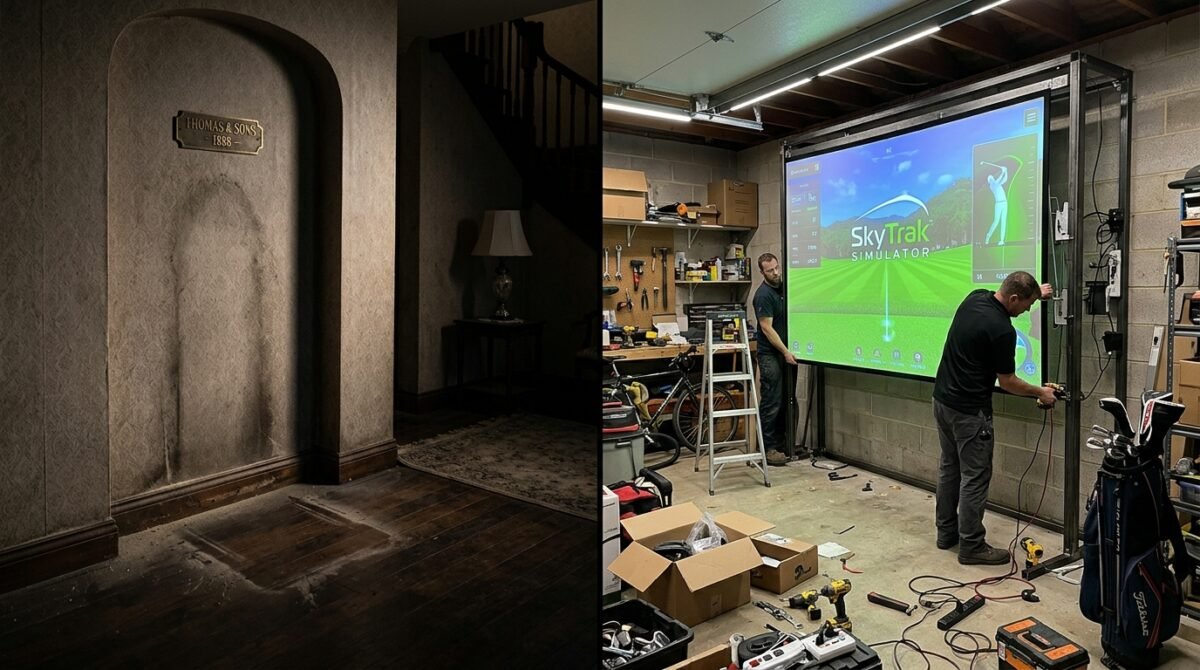
Marriage is often described as a partnership of equals, a union where two people navigate the complexities of life, finances, and shared history. But for some, the concept of ‘shared’ becomes a convenient mask for unilateral decision-making. My husband, Mark, has always had a penchant for expensive hobbies, but I never imagined he would trade a literal piece of my ancestry for a digital distraction. When I came home last Tuesday to find the foyer feeling strangely vacant, I knew something was wrong.
My great-grandfather’s 1800s hand-carved grandfather clock wasn’t just furniture; it was the silent witness to four generations of my family’s joys and tragedies. It stood as a towering sentinel of mahogany and brass, its rhythmic ticking providing the soundtrack to my entire childhood. I had spent years maintaining its intricate gears, treating it with a reverence that Mark clearly never understood. When I realized it was gone, a cold, hollow dread settled in my stomach.
The search didn’t take long. By the time I reached the garage, the mechanical hum of a state-of-the-art virtual golf simulator filled the space. Mark was already swinging a club, his eyes glued to a projection of a digital fairway. The betrayal wasn’t just in the theft of an heirloom; it was in the casual dismissal of my heritage for a frivolous toy. He didn’t ask. He didn’t suggest. He simply erased my history to play a game.
Standing in the doorway, I felt something snap. It wasn’t the explosive rage I expected, but a cold, crystalline clarity that often precedes the end of a relationship. The trust I had placed in him for eight years had been liquidated for a high-definition screen. I didn’t scream. I didn’t cry. I simply walked out, went to the local hardware store, and bought a set of heavy-duty padlocks for the garage doors. The golf season, as it turned out, was over before it even began.
The Empty Foyer and the Missing Chimes
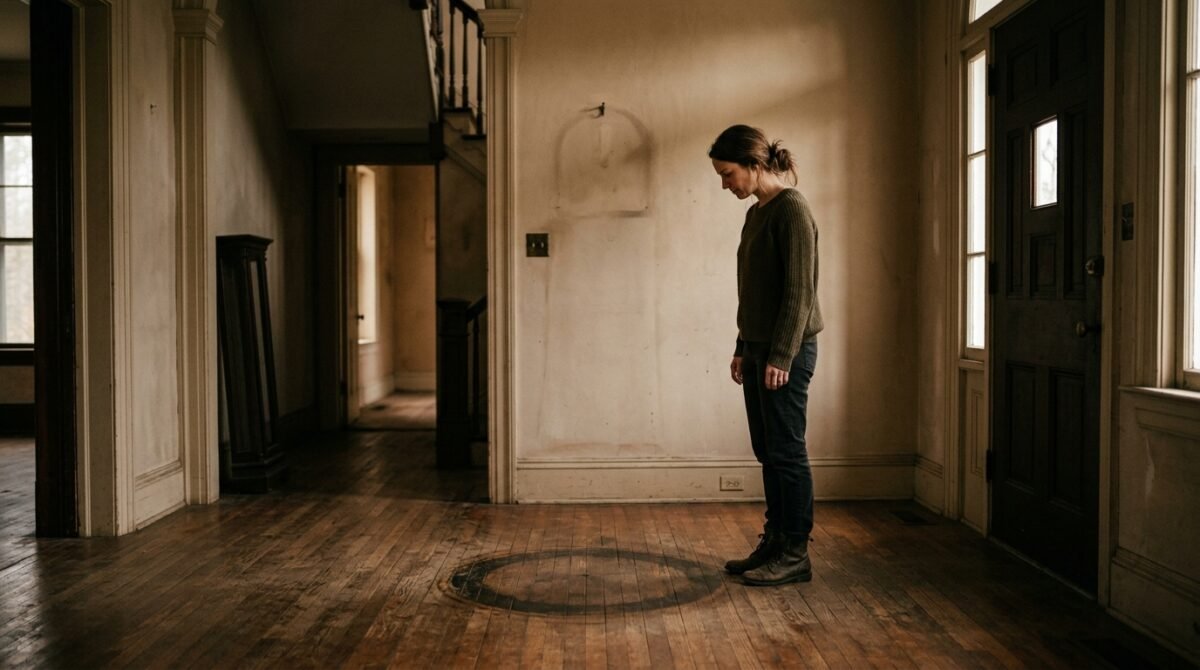
The silence was the first thing that hit me. Usually, the grandfather clock produced a deep, resonating hum every hour that served as the heartbeat of our home. As I walked through the front door, the heavy, comforting presence was replaced by a sterile, echoing void against the wall. I dropped my keys, the metallic clatter sounding unnaturally loud in the sudden absence of that rhythmic tick-tock.
I walked over to the spot, touching the floor where the mahogany feet had rested for years. There was a faint indentation in the hardwood, a ghost of an impression left by the weight of history. I immediately dialed Mark, my hands shaking. When he didn’t pick up, a frantic anxiety blossomed into a sickening realization. I checked the home security logs, my fingers dancing across the screen with a speed born of pure panic.
The feed showed Mark and two strangers moving the clock out at 10:00 AM. It was gone. Not stolen by a burglar, but liquidated by the man I swore to love and honor. I felt my pulse thrumming in my ears as I realized the scale of the violation. He hadn’t just sold an antique; he had sold my connection to a man I had looked up to my entire life, a man whose hands had carved that clock to provide for his family during the Great Depression.
“Where is the clock, Mark? I am looking at the empty space in the foyer right now. Answer me.”
— Text sent at 5:14 PM
I waited for a reply, pacing the floor of our living room. Every minute felt like an hour. When he finally messaged back, his tone was so casual, so utterly devoid of remorse, that I felt physically ill. He spoke about the clock like it was a piece of junk taking up space, a relic that had no place in our modern, minimalist aesthetic. He viewed our life through the lens of what could be traded, not what should be cherished.
The High-Definition Betrayal

I didn’t wait for him to come home. I knew where he was going to be. The garage had been his project for months, a space he kept obsessively locked and off-limits to me. I marched out there, my keys clutched in my hand like a weapon. The door was unlocked, and the sight that greeted me was almost absurd in its lack of self-awareness. He was wearing his golf shoes, practicing his swing in front of a massive, glowing screen.
He didn’t even hear me enter. The hum of the simulator and his own self-satisfied grunts drowned out my footsteps. I watched him for a full minute, observing the man who had decided his hobby was worth more than my soul. When he finally noticed me, he didn’t look guilty. He looked annoyed, as if I were interrupting a professional golf tournament rather than standing in the middle of a domestic catastrophe.
“You’re home early. Look at this, honey! The resolution is insane. I got it for a steal—well, technically, I traded the clock to a collector who had been eyeing it for years. It was just gathering dust, and this? This is an investment in my mental health.”
— Mark, while still holding his club
I looked at him, really looked at him, and realized I didn’t know this man. I saw a stranger who prioritized a virtual reality over the tangible history of his wife’s family. The audacity was breathtaking. He had negotiated the price of my ancestors to fund his leisure, acting as if he had done me a favor by ‘clearing out the clutter.’ The narcissism required to make that decision without even a hint of a discussion was a revelation I wasn’t prepared for.
I didn’t argue. Arguing would imply that his logic had any merit, that there was a debate to be had about the value of the clock versus the value of a golf simulator. There was no debate. There was only the act of theft and the subsequent violation of my boundaries. I turned around, walked out, and slammed the garage door behind me, already planning the next phase of this nightmare.
Locking Down the Perimeter

I went straight to the hardware store. It was one of those small, local shops where the staff recognizes you. I didn’t explain the full story; I just told them I needed the most secure locks they had for a residential garage door. They probably thought I was being paranoid, but when I walked back into that garage with a heavy-duty padlock and a new, high-security deadbolt for the side door, I felt a sense of control I hadn’t possessed in years.
I removed his access. I changed the codes, I secured the latches, and I made sure that the person who thought he could treat my home like a pawn shop was effectively barred from his prized possession. It felt petty, sure, but it was also the only tangible power I had left. If he wanted to play golf, he could find a public course. He was no longer going to inhabit the space he violated.
When he returned from his ‘shopping’ trip—presumably to buy more accessories for his toy—he found himself locked out. I watched from the kitchen window as he tried his key, then his phone, then the keypad. He looked confused, then angry, then frantic. He eventually started banging on the door, but I didn’t flinch. I sat at the kitchen island with a cup of tea and my phone, documenting every single attempt to regain entry.
“Are you kidding me? Open the door! This isn’t funny. I have my clubs in there, and the system is still calibrating. Stop being dramatic and let me in.”
— Text from Mark, 8:42 PM
I didn’t answer. I simply blocked his messages for the night. I needed the silence. I needed to process the fact that my home, the place where I was supposed to be safest, had been compromised by the man I married. That night, I slept in the guest room, clutching a photo of the clock, feeling like a widow mourning a living man.
The Fallout: Family Reactions and False Narratives

By the next morning, the story had morphed. Mark had clearly reached out to his family, painting me as the ‘unhinged, controlling wife’ who was throwing a tantrum over an ‘old piece of junk.’ His mother called me before I had even finished my coffee, her voice dripping with that specific brand of condescension that only mothers-in-law can master. She told me I was being unreasonable and that Mark was just trying to update our home.
I didn’t engage in a shouting match. I calmly told her that her son had sold an heirloom that didn’t belong to him to fund a toy, and that the marriage was currently undergoing a significant reassessment. The silence on the other end was telling. She hadn’t known about the clock. She thought he had ‘cleared out some old furniture’ to make room for his hobby. When I clarified that it was an 1800s piece of family history, even she went quiet.
But the damage was done. Mark was busy telling his friends that I was ‘holding his property hostage.’ He didn’t mention the clock. He didn’t mention the theft. He only focused on the fact that he was locked out of his garage. It was a classic projection tactic, turning the victim into the villain so he didn’t have to face the moral bankruptcy of his actions.
“I don’t care if it was old. It was taking up space! You’re acting like I sold a kidney. It’s just wood and metal. Get over yourself and open the damn garage.”
— A later text message from Mark, sent after he heard I spoke to his mom
I realized then that this wasn’t just about a clock. This was about a fundamental misalignment of values. To him, the world was a collection of things to be traded for personal gratification. To me, the world was defined by the legacy we leave behind and the respect we hold for those who came before us. We were speaking two different languages, and his was the language of greed.
The Reddit Trial: Seeking Validation in the Void

I turned to the only place where I felt I could get an objective, if brutally honest, opinion. I posted the story on a popular relationship subreddit, expecting a mix of support and skepticism. Within an hour, the post had blown up. Thousands of people were weighing in, and for the first time, I felt like I wasn’t just screaming into the wind. The consensus was overwhelming, but the nuances were what really helped me see the situation clearly.
People weren’t just talking about the clock. They were talking about the ‘financial infidelity’ and the ‘erosion of boundaries.’ One commenter pointed out that selling an heirloom is often a precursor to selling other assets without permission. It was a terrifying thought, but it resonated. If he could sell my great-grandfather’s legacy, what would he sell next? Our savings? The house? My security?
“This is not about a clock. This is about a fundamental lack of respect. He didn’t just sell a piece of furniture; he sold your heritage for a golf screen. This is a massive red flag that he doesn’t value your feelings or your history. Run, don’t walk.”
— u/RelationshipGuru99 (Top Comment, 32.4k upvotes)
I spent the entire day reading the comments. Some people were telling me to get a lawyer immediately, while others were suggesting I sell his golf equipment to recoup the value of the clock. It was dark, it was messy, and it was exactly the validation I needed to stop feeling like I was the crazy one for being upset. The internet, for all its toxicity, was providing me with a mirror to my own situation.
I realized I needed to stop hiding behind the locks and start taking legal action. The clock was gone, sold to a ‘collector,’ but the financial and emotional damage was something I could quantify. I started saving every text, every timestamped photo, and every bit of correspondence. I was no longer a wife dealing with a difficult husband; I was a person preparing for the dissolution of a contract that had been breached.
A Lawyer’s Perspective on Marital Theft

I met with a lawyer, a sharp-tongued woman who didn’t waste time with pleasantries. She looked at the photos of the clock, the receipts for its appraisal I had luckily kept, and the messages where Mark admitted to selling it. She leaned back in her chair and gave me a look that was both sympathetic and cold. ‘He committed theft,’ she said flatly. ‘In many jurisdictions, even if you are married, you cannot unilaterally liquidate separate property, especially heirlooms.’
She explained that because the clock was a family heirloom, it likely wasn’t considered ‘marital property’ in the traditional sense, but even if it were, the way he sold it—behind my back, without my consent, to fund a personal hobby—constituted a breach of fiduciary duty. I felt a surge of relief. For days, I had been worrying if I was overreacting, but the law, it seemed, was firmly on my side.
We discussed the implications. If I moved forward with a divorce, the clock would be a major sticking point in the asset division. If I wanted to stay, I would need a massive change in his behavior, and likely a pre- or post-nuptial agreement that protected my future assets from his impulsive decisions. But as I sat there, the idea of staying felt increasingly like a prison sentence.
“You have a strong case for financial abuse. The question isn’t whether you can get the money back, but whether you want to continue living with someone who operates with such a total disregard for your autonomy. Think long and hard about that.”
— My Attorney, during our first consultation
I left her office feeling heavier, yet more grounded. The reality of the situation wasn’t just about the clock anymore; it was about the path I was choosing for my life. I realized that my fear of being ‘the divorced woman’ was far less than my fear of spending the next thirty years wondering what else Mark would sell out from under me. The clock was a symbol, yes, but it was also a catalyst for a necessary exit.
The Confrontation: A Marriage on the Brink
Mark finally stopped banging on the door when I told him I had filed for a legal separation and that the garage was officially off-limits until the lawyers sorted it out. He showed up at the house, looking disheveled and frantic. He didn’t look like a man who cared about his golf game; he looked like a man who had suddenly realized the consequences were actually coming for him. He tried to force his way in, but I stood my ground.
We talked through the glass of the kitchen door. He was pleading now, talking about how he ‘didn’t know it was that serious’ and how he could ‘buy the clock back.’ He thought everything had a price, that he could just pay his way out of the betrayal. He didn’t understand that the clock wasn’t just an object, and that my trust wasn’t something that could be repurchased with a check or a phone call.
“I can find it! I have the contact information for the guy I sold it to! I’ll get it back, I promise. Just open the door and let’s talk about this like adults. You’re destroying our life over a piece of furniture!”
— Mark, begging through the glass
I looked at him with a detachment that surprised even me. He was still trying to negotiate, still trying to minimize the damage. He wasn’t sorry for what he did; he was sorry that he was facing the fallout. The realization that he truly didn’t comprehend the depth of his actions was the final nail in the coffin of our marriage. I didn’t open the door. I told him he had to leave or I would call the police.
He left, but not before screaming that I was the one who was ‘ruining everything.’ I watched his car pull out of the driveway, the dust settling in his wake. I went back inside, locked the house, and started packing my bags. I didn’t need to be in that house anymore. I didn’t need to be around the ghost of a clock or the presence of a man who didn’t know the value of a heart.
Recovering the Past: The Search for the Heirloom
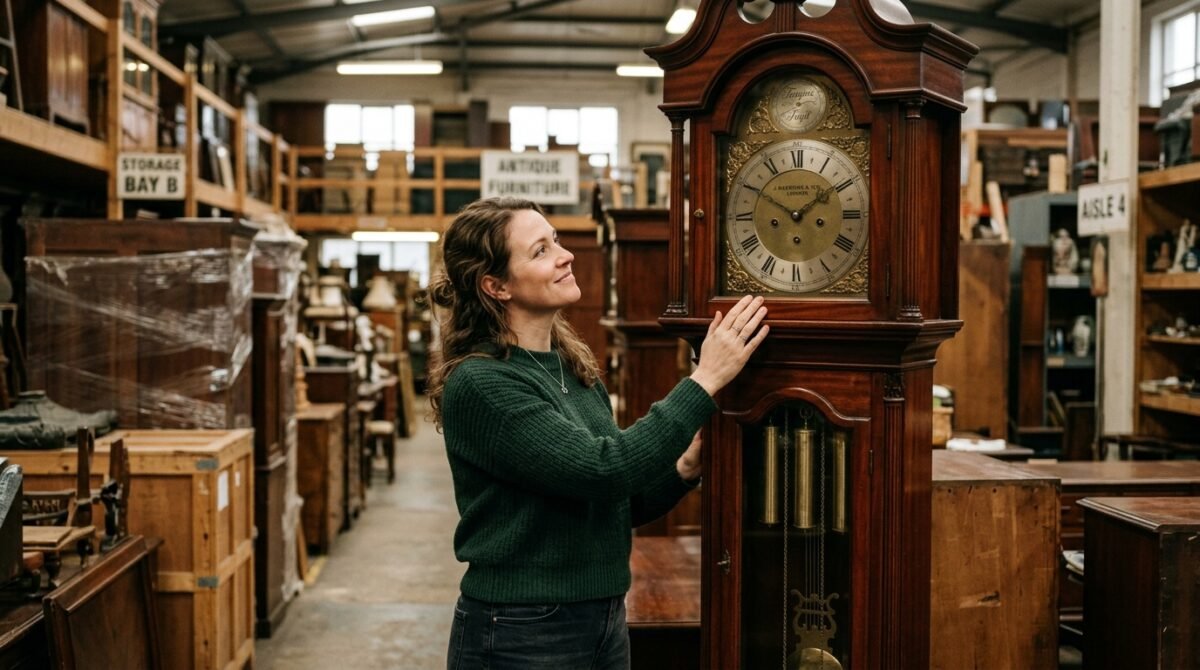
While the lawyers were working on the separation, I took it upon myself to find the clock. I tracked down the ‘collector’ Mark had sold it to. It turned out he was a local dealer who specialized in antique furniture, and when I showed up at his shop with the original appraisal documents and a copy of the police report I had filed for the unauthorized sale, his attitude shifted quickly. He hadn’t known it was stolen; Mark had told him he was the sole owner.
The dealer was terrified of the legal implications. He agreed to return the clock if I dropped the threat of legal action against him, provided I kept his name out of the divorce proceedings. It was a trade I was happy to make. Seeing that clock again, standing in the dealer’s warehouse, felt like a reunion with a long-lost friend. My eyes welled up as I touched the mahogany, the wood still warm despite the months of being in a stranger’s shop.
Getting it home was a logistical nightmare. I had to hire professional movers to carefully transport it to a climate-controlled storage unit. I couldn’t bear to put it back in that house. It was safe, it was accounted for, and it was mine again. The relief was overwhelming. I had lost a husband, but I had reclaimed my family’s legacy. It was a lopsided trade, but one that I would make every single time.
“I am so sorry. I had no idea this was a stolen item. Please, take it. I don’t want any part of this legal trouble. I just want it out of my shop.”
— The Antique Dealer, upon realizing the clock was an heirloom
This process taught me more about my own strength than I had ever known. I navigated the legal system, handled a difficult dealer, and protected my own interests without needing Mark’s permission or his help. I was becoming the person I had always hoped to be, and I didn’t need a husband to validate that. The clock was safe, and for the first time in a long time, so was I.
The Final Settlement: Closing the Chapter

The divorce proceedings were grueling, but they were necessary. Mark tried to argue that the simulator was a joint asset, that I was ‘stealing’ his property by locking the garage, and that I was the one at fault for the breakdown of the marriage. My lawyer had a field day with his claims. We presented the evidence of his unilateral financial decisions, his history of hidden spending, and the theft of the heirloom.
He lost the house, he lost the golf simulator (which was sold to pay for the legal fees), and he lost any claim to the clock. The court saw him for what he was: an impulsive, irresponsible man who couldn’t respect the boundaries of his marriage. By the end of it, he was left with very little, while I was left with my family history and the freedom to build a life on my own terms. It was a expensive lesson for both of us.
I remember the last day I saw him. We were in the parking lot of the courthouse. He looked older, tired, and defeated. He didn’t yell. He just asked if I would have done things differently if he had asked me before selling the clock. I looked at him and told him the truth: I would have said no, and that would have been the end of it. The problem wasn’t just the clock; it was his inability to accept ‘no’ from me.
“You never wanted a partner, Mark. You wanted an audience. And when I stopped applauding your choices, you decided to liquidate the stage.”
— My final words to Mark in the courthouse parking lot
I walked away from him and didn’t look back. I drove home, to a quiet apartment that I had leased for myself. It didn’t have a foyer big enough for a grandfather clock yet, but it was filled with my own things, my own choices, and a peace that I hadn’t known for years. I was finally, truly alone, and for the first time in my life, that felt like the greatest victory of all.
Life After the Clock: Moving Forward
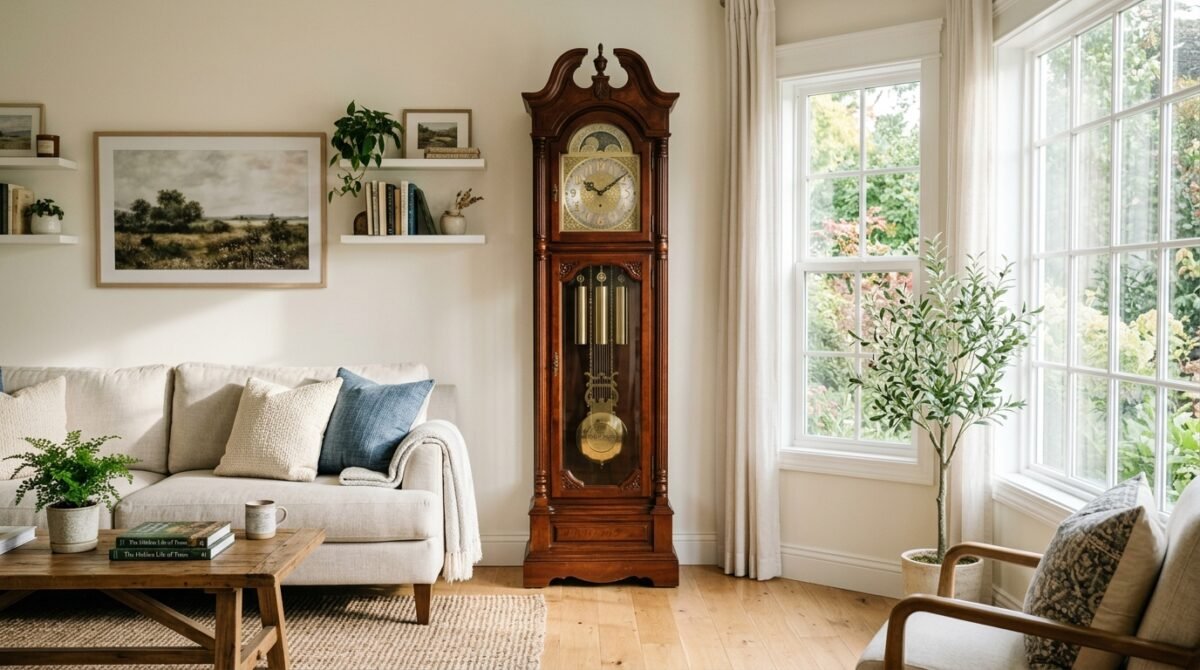
It has been six months since the divorce was finalized. I have moved into a new place, a beautiful cottage with high ceilings where the clock now stands, ticking away with the same rhythmic, comforting pulse it has had for generations. Every time I hear it chime, I am reminded not of the betrayal, but of the resilience it took to get it back. I am not the woman who was afraid of a husband’s temper; I am a woman who knows her worth.
My social circle has changed. I’ve leaned into my own interests, traveled to places I had always wanted to see but was told were ‘too expensive’ by Mark, and I’ve reconnected with friends I had neglected during my marriage. I’ve even started a small blog about protecting your assets and setting boundaries in relationships, hoping that my story can help someone else who feels like they’re losing their history to a partner’s greed.
I still occasionally get messages from Mark’s family, but I’ve stopped engaging. They don’t understand that the bridge isn’t just burnt; it’s gone. I’ve found a new rhythm to my life, one that isn’t dictated by the whims of another person. It’s a quiet life, but it’s mine. And for the first time, I wouldn’t trade it for anything in the world, not even the most expensive toy in existence.
“I never thought I could be this happy on my own. But when you stop being the support beam for someone else’s fragile ego, you find out just how strong you really are.”
— My personal reflection, written in my journal
To anyone out there who feels like their boundaries are being eroded, listen to that gut feeling. It’s not just a hunch; it’s your survival instinct. Your heritage, your finances, and your self-respect are not bargaining chips in a relationship. Protect them with everything you have. Don’t wait until the foyer is empty to realize that the person you’re with doesn’t value the things that make you, well, you.
Conclusion
My journey from the betrayal of a sold heirloom to the peace of my own independence was neither easy nor linear. It required me to confront uncomfortable truths about my marriage and to take radical, sometimes frightening steps to secure my future. The grandfather clock was the catalyst, but the real transformation happened within me as I reclaimed my agency and realized that my value is not defined by anyone else’s estimation.
When we allow our boundaries to be consistently pushed, we teach others how to treat us. It is a hard lesson, but one that is absolutely essential for long-term health and happiness. Today, I stand as a testament to the fact that you can recover from the loss of an heirloom—and a partner—and come out stronger on the other side. My life is no longer a series of negotiations; it is a life of my own design, ticked off, second by second, by the steady beat of my great-grandfather’s clock.
What about you? Have you ever had to choose between a partner’s demands and your own family legacy or values? How did you draw the line? Let’s discuss in the comments below—your experiences might be the wake-up call someone else desperately needs today.
What's your verdict on this dilemma?
Vote below to contribute to the official community consensus.

Have a Dilemma Keeping You Up at Night?
Share your real-life feud, wedding chaos, or relationship crossroads anonymously with our editorial team.
What do you think ?
0 Comments🛡️ Comments are moderated to protect community integrity. Your comment will appear once approved by the editorial team.