
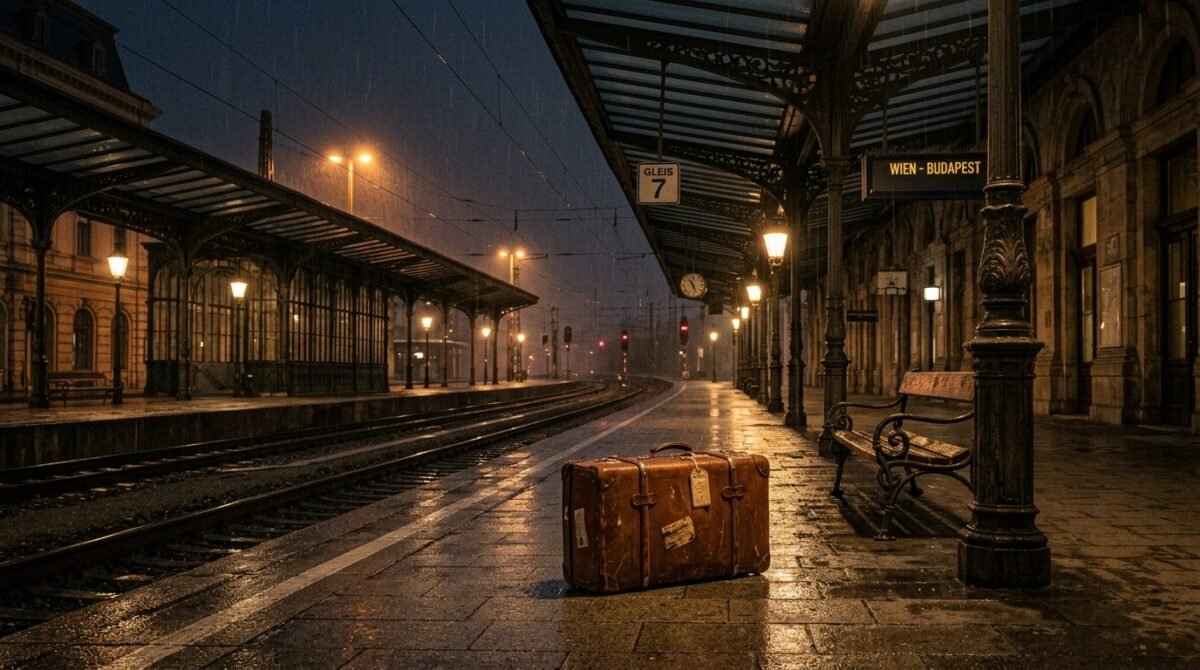
The vision of the trip was simple: a romantic three-week trek through the hidden gems of Central Europe. It was supposed to be a bonding experience, a way to solidify a relationship that had shown some cracks but still felt worth saving. Mark and I had been dating for eighteen months, and while he had a tendency to be demanding about logistics, I believed that love meant compromise and teamwork. I never expected that my refusal to carry a piece of luggage would result in being left behind in a foreign country, in the dead of night, with nothing but my passport and a shattered sense of reality.
It wasn’t just about the weight of the bag—a massive, cumbersome hiking pack that weighed nearly seventy pounds. It was about the expectation that I, someone half his size and significantly less athletic, would bear the burden of his poor planning and sheer stubbornness. When he told me that he had ‘overpacked’ and expected me to ‘step up and be a partner,’ the air in the small train station waiting room turned freezing. The moral dilemma wasn’t just about the backpack; it was about the fundamental way he viewed me: as an accessory to his life rather than an equal partner in it.
As the conflict escalated, the facade of our romantic getaway crumbled. Mark wasn’t just stressed; he was entitled. He believed that his convenience outweighed my physical comfort and safety. When I put my foot down, the reaction wasn’t one of negotiation or understanding. It was a cold, calculated ultimatum that left me reeling. I found myself facing a choice: submit to his demands and carry a weight that would have caused me genuine physical harm, or stand my ground and face the unknown consequences of his temper.
This narrative isn’t just about a train station; it’s about the breaking point that inevitably arrives when one person in a relationship stops seeing the other as a human being. It’s a story of survival, the realization of what true support looks like, and the moment I decided that I was worth more than being a secondary carrier for someone else’s ego. The following events reflect the raw, unfiltered reality of how quickly a life can change when you finally decide to stop being someone’s emotional and physical pack mule.
The Packing List That Should Have Been A Red Flag
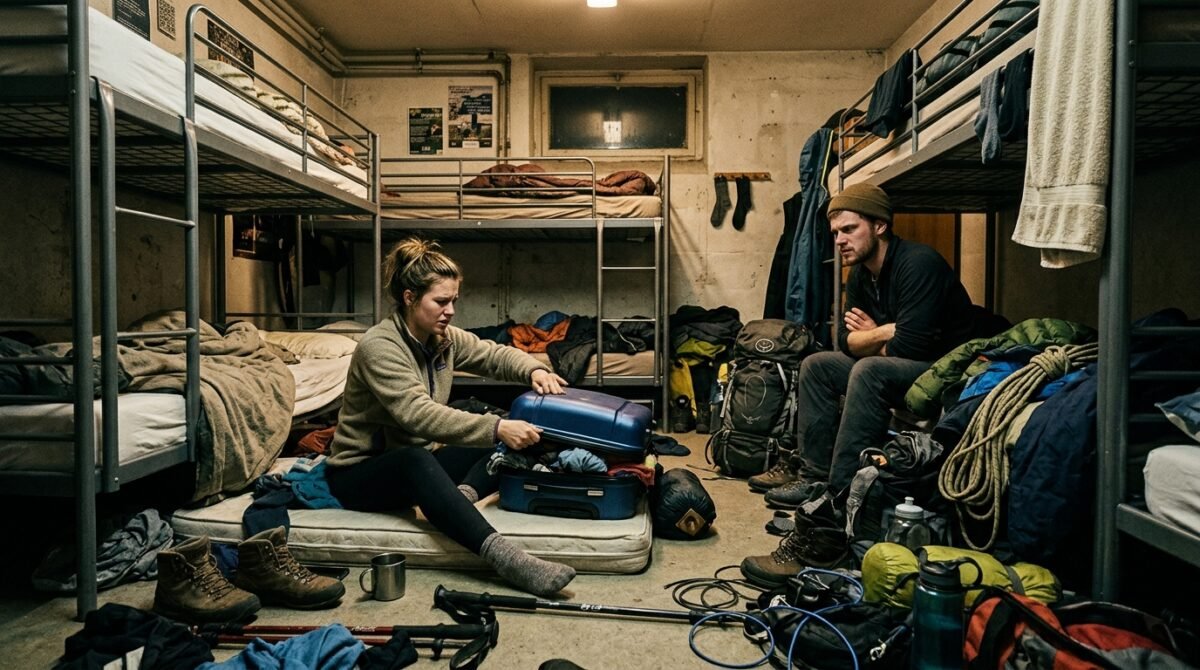
The preparation for this trip had been marked by a series of strange, small demands that I had initially brushed off as Mark’s ‘perfectionist’ nature. We were supposed to be traveling light, but Mark insisted on bringing a massive hiking pack that he claimed was ‘essential gear’ for our urban trek. I watched as he packed everything from redundant emergency tools to multiple pairs of heavy-duty boots, telling me that we had to be prepared for every conceivable scenario.
When I questioned the weight, he laughed it off, suggesting that I was simply not used to ‘serious travel.’ At the time, I didn’t see the underlying implication that he expected me to act as a secondary storage unit for his excess items. I had my own gear, which was carefully calculated to fit into a carry-on, leaving me with enough space for my personal items and daily essentials. I was proud of my efficiency, not knowing that my organization was being weaponized against me.
The tension began to bubble over during our second day. While I was struggling to navigate a set of stairs with my reasonable-sized bag, Mark stood by, watching me struggle, while his own massive pack towered over his head. When I finally asked for a quick hand, he offered to swap bags, but his tone was laced with condescension, as if he were doing me a favor that I hadn’t earned. It was a power dynamic shift that I failed to address early enough.
“I thought we agreed on a weight limit for our luggage. You’re lugging around a small apartment on your back, Mark. It’s making it impossible for us to move through these train stations efficiently.”
— Me, expressing initial concern
Mark’s response was a classic deflection. He argued that he was ‘carrying the weight for both of us’ in case of emergencies, a claim that made little sense in the context of a European city tour. He made it clear that he felt he was doing the heavy lifting, both metaphorically and literally, and that I was lucky to be accompanied by someone so ‘prepared.’ This was the first time I felt a chill run down my spine, a realization that his preparedness was actually an excuse for his lack of consideration.
By the time we reached the mid-way point of the trip, the ‘gear’ had become a wedge between us. Every time we moved from one hostel to another, the process became an ordeal. I was constantly being asked to ‘just take this one small item’ out of his bag and put it in mine, because his was supposedly ‘too heavy to keep balanced.’ The erosion of my boundaries was slow, methodical, and incredibly effective.
The Escalation At The Remote Junction
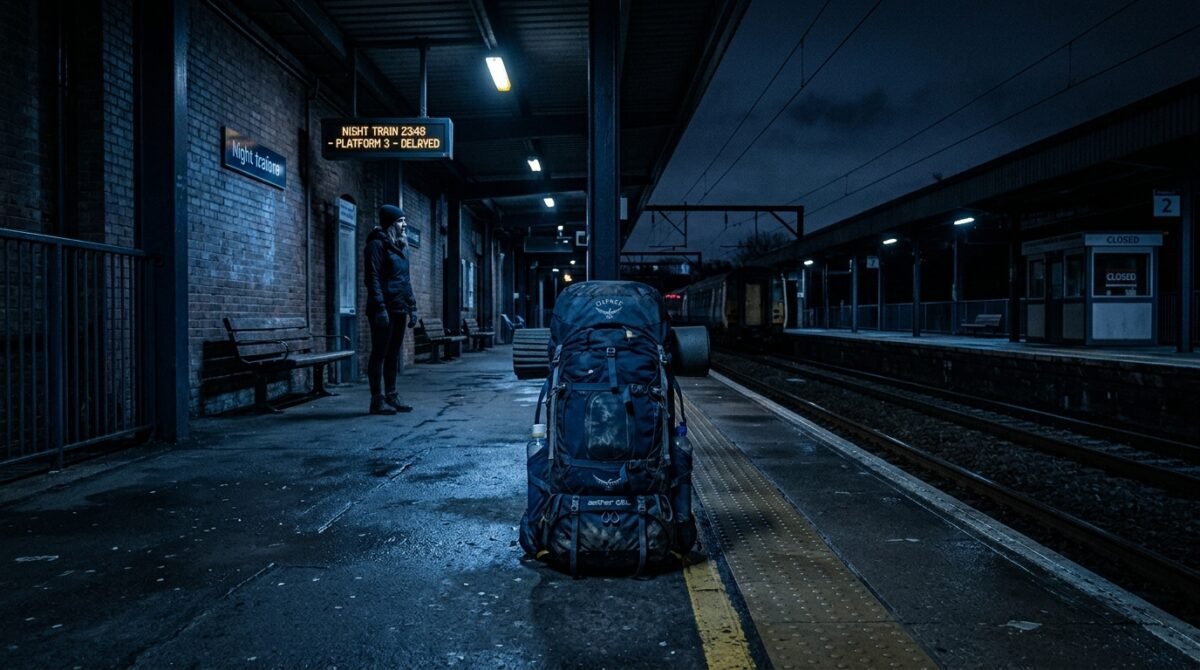
The station was small, located in a quiet, mountainous region that offered little more than a vending machine and a flickering neon sign. It was late, and the last train was delayed by over two hours. We were exhausted, our patience frayed, and the cold air of the station building felt like a physical weight. That was when the final demand came down. Mark decided that the internal frame of his bag was digging into his back, and he wanted me to swap his heaviest gear into my suitcase.
I looked at my suitcase, which was already at capacity and barely zipped. I looked at his bag—a monstrosity that literally took up two seats in the waiting area. I told him no. I told him that I had already taken on as much as I could, and that his insistence on bringing these items was entirely his responsibility. The silence that followed was heavy and suffocating. He didn’t yell; instead, he stared at me with a look of pure, unadulterated disappointment.
The conversation quickly devolved into an interrogation of my ‘loyalty’ and ‘partnership.’ He kept circling back to the idea that if I truly loved him, I would do anything to make his life easier. He ignored the fact that he was making mine significantly harder. The absurdity of the situation hit me—we were arguing about a backpack while stranded in a foreign country, and he was acting as if I had committed a grave moral transgression.
“If you can’t help me with this, then what are you even here for? You’re dead weight. I’m doing all the planning, all the heavy lifting, and you won’t even help me distribute the load.”
— Mark during the station confrontation
I felt a sudden, sharp clarity. This wasn’t about the bag. This was about him needing to control the narrative of our relationship. He wanted me to exist as an extension of his needs, and when I finally exerted my own agency, he couldn’t handle it. I sat on the wooden bench, my hands trembling, knowing that if I gave in this time, I would never be able to reclaim my autonomy in this relationship.
He stood up and started walking toward the platform, leaving his bag sitting right in front of me as if daring me to move it. I didn’t move. I stayed rooted to my spot, watching him walk away, expecting him to come back and apologize. But he didn’t. He walked to the edge of the platform and started pacing, staring into the dark tunnel, waiting for me to come to him with his bag in my hands. I watched the clock tick down, my heart pounding in my chest.
The Moment He Walked Away
When the announcement came that the train was arriving, the platform was still empty of other passengers. Mark walked back toward the waiting room, his face set in a grim line. He didn’t look at me. He walked straight to his bag, hoisted it onto his shoulders with a grunt, and looked down at me with eyes that were colder than the winter air outside. He didn’t ask me if I was coming. He just turned around and walked out the door toward the tracks.
I stood up, my suitcase in hand, and followed him to the platform. I fully expected him to stop. I thought he was just testing me, trying to see if I would panic and rush to his side. But he didn’t stop. He boarded the train as soon as the doors opened, leaving me standing on the platform. The train pulled away, and for a few seconds, I thought he might be waiting for me in the next car. I ran to the glass, looking for him, but I only saw his back through the window as he settled into a seat.
The realization hit me with the force of a physical blow. He wasn’t waiting. He had left me. He had decided that if I wasn’t going to be useful to him, I was no longer worth the effort of traveling with. The panic that I had been fighting off all night finally took hold, but it was replaced quickly by a strange, cold anger. I was alone, at midnight, in a foreign town, and the person I trusted most in the world had just abandoned me because I wouldn’t carry his weight.
I sat back down on the bench. I pulled out my phone and looked for a signal. I had just enough data to look up a hotel nearby. I wasn’t going to chase him. I wasn’t going to follow him to our next destination. I was done. The feeling of liberation was terrifying, but it was also the most honest thing I had felt in months. I walked out of the station into the dark street, headed toward the only hotel that showed a vacancy on the map.
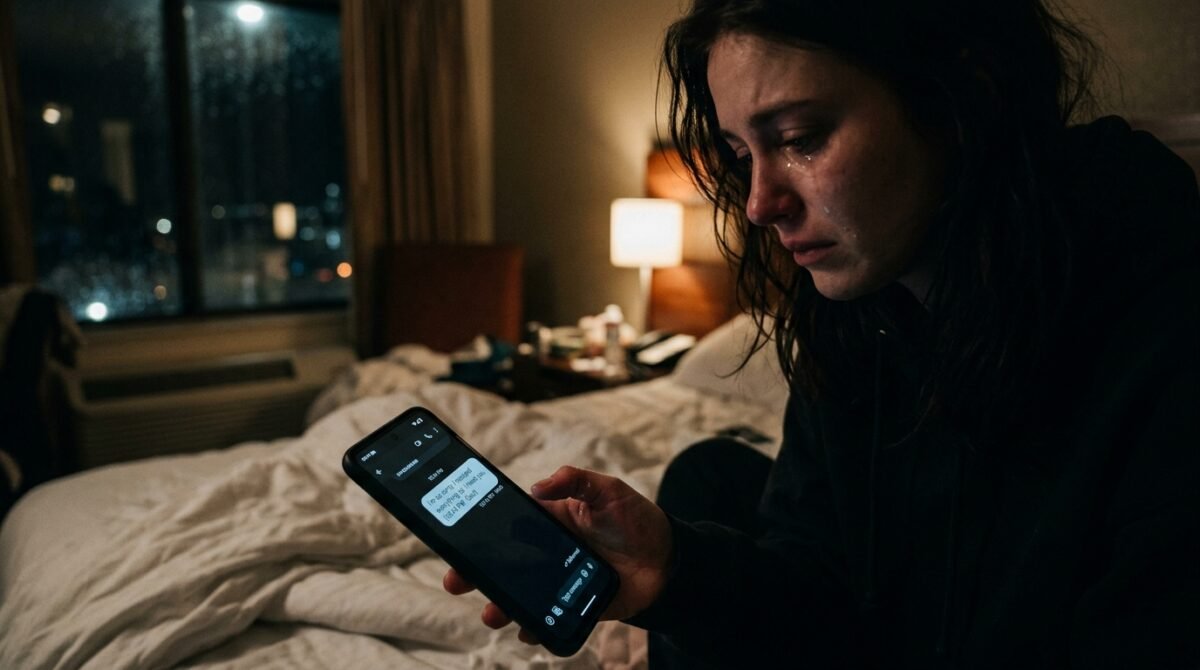
“I’m at the station. I’m not coming with you. You left me here, and that tells me everything I need to know about us. Do not call me.”
— The text message I sent as the train disappeared into the distance
The hotel was small, family-owned, and incredibly kind. The woman at the front desk didn’t ask questions when she saw my tear-streaked face. She just handed me a key and a bottle of water. I locked the door behind me and collapsed onto the bed. For the first time in eighteen months, I felt entirely, completely, and peacefully alone. The weight of the backpack—and the weight of the relationship—was finally off my shoulders.
The Fallout: A Lesson In Gaslighting
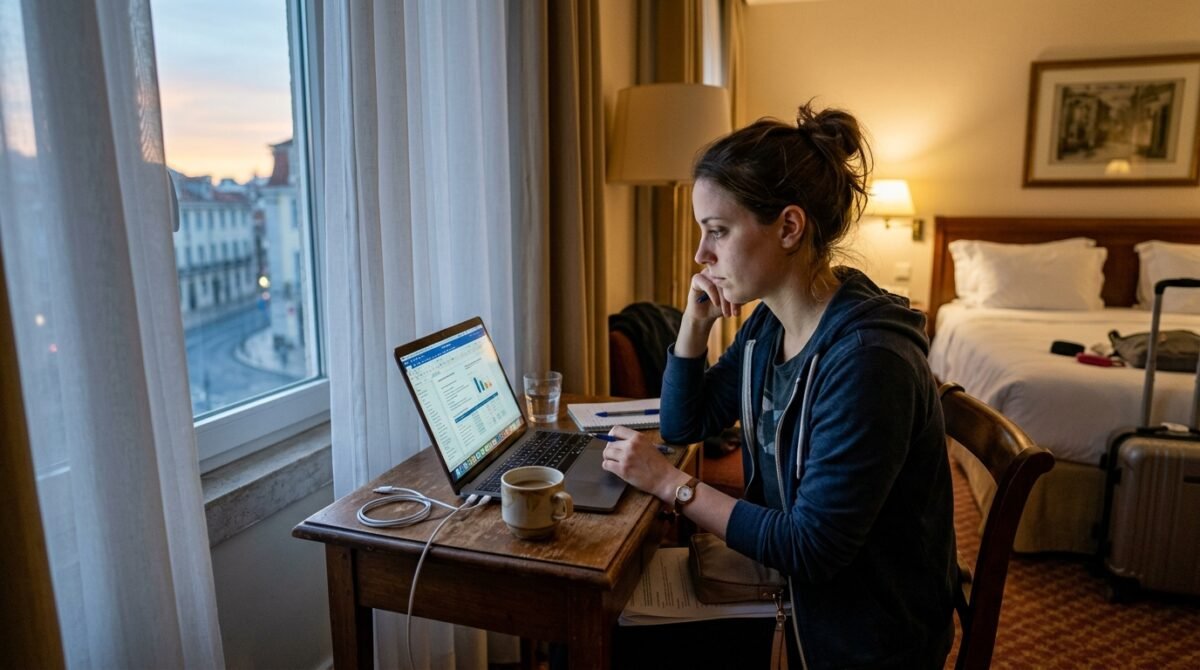
The next morning, my phone was flooded with messages. At first, they were angry, blaming me for ‘ruining the trip’ and ‘abandoning him’ at the station. He claimed he had only gone to the next car to find a seat for us and that I had ‘refused to follow.’ The audacity of the lie was breathtaking. He had watched me standing on the platform, seen me through the window as the train pulled away, and he had chosen to stay seated.
I didn’t engage in the back-and-forth. I simply blocked him. But before I did, I took screenshots of every single message. I knew that he would eventually try to spin the story to our friends and family, painting himself as the victim who was ‘left behind by his unreasonable girlfriend.’ I needed proof. I needed the truth to be documented, not just for my own sanity, but for the inevitable moment when he would try to rewrite history.
The emotional toll of the gaslighting was significant. For hours, I sat in that hotel room questioning my own memory. Did I miss a signal? Was he really just trying to find a seat? But then I remembered the way he looked at me—the cold indifference, the deliberate speed with which he moved away from me. No, I hadn’t imagined it. He had wanted to punish me for my defiance, and he had used the chaos of a train departure to do it.
“You’re being irrational. I was securing our spot. You chose to stay behind. This is all on you. You need to grow up and stop acting like a child when things get a little difficult.”
— Mark’s gaslighting text after the incident
The realization that he was trying to shift the blame onto me was the final nail in the coffin of our relationship. It wasn’t enough that he had left me; he needed to make sure that I believed it was my fault. By labeling my refusal to carry his bag as ‘childish’ and ‘irrational,’ he was trying to strip away my confidence and make me apologize for his own toxic behavior.
I spent the day researching flight paths back home. I didn’t care about the cost. I didn’t care about the lost vacation days. I wanted out. I wanted to be in my own apartment, in my own space, away from the influence of his manipulation. I booked a flight for the following morning, and as I clicked ‘Confirm,’ I felt the last of the fear dissipate, replaced by a steely resolve to never let anyone treat me that way again.
The Reddit Trial: How The Internet Reacted
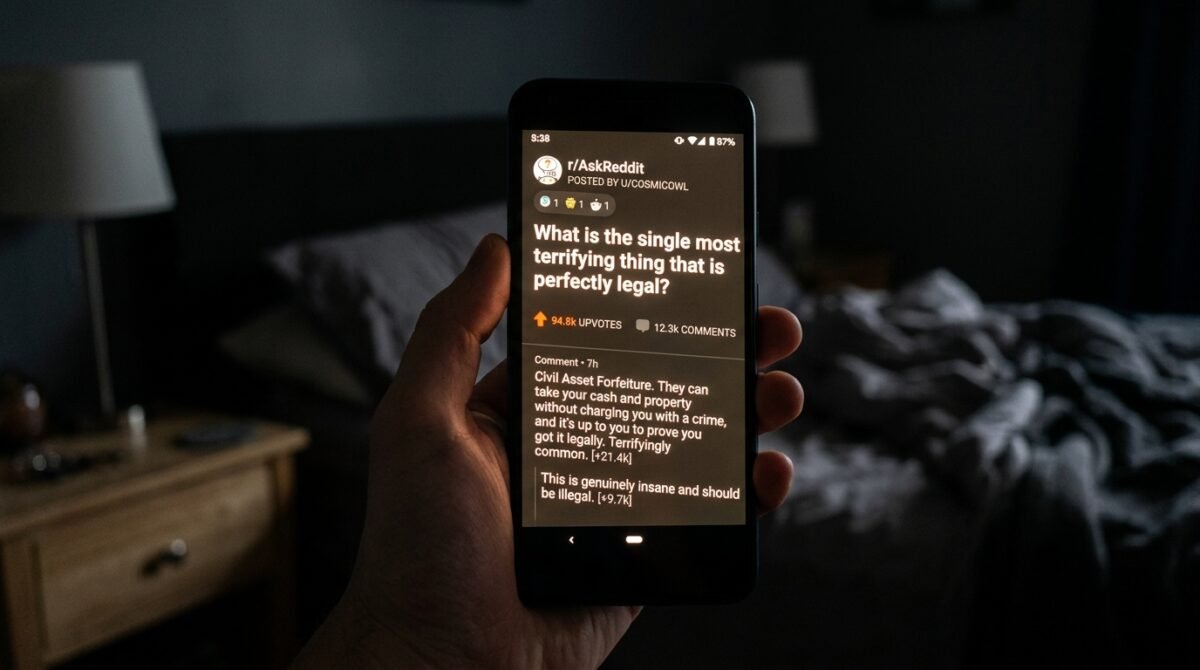
I decided to post my story on a popular subreddit for relationship dilemmas. I didn’t use names, and I kept the details focused on the events at the station. I needed an outside perspective. Was I crazy? Was I overreacting to a partner who was just stressed out? I was fully prepared for the internet to tear me apart, to tell me that I was the one who was wrong for leaving my partner in a moment of frustration.
The response was immediate and overwhelming. Thousands of people commented, and the support was almost unanimous. They saw the pattern immediately—the entitlement, the subtle manipulation, the abandonment. They didn’t see me as a partner who failed to help; they saw me as someone who had escaped a dangerous and controlling person. The validation was profound. It helped me realize that I hadn’t just ‘had a fight’; I had survived a toxic dynamic.
“This isn’t about a backpack. This is about a man who views you as a pack mule and then punished you when you set a boundary. You didn’t leave him; he abandoned you. You are NTA (Not The Asshole) a thousand times over.”
— u/TravelSafetyExpert (Top Comment, 32.1k upvotes)
Reading the comments felt like reading a manual for my own life. People shared their own stories of being left behind by partners, of being forced to carry too much weight, and of the long, slow realization that they were being used. The community was an unexpected anchor. They provided legal advice on how to handle the inevitable fallout of our shared living situation and shared tips on how to rebuild my self-esteem after the breakup.
Of course, there were the contrarians. There were those who argued that ‘in a relationship, you share the load’ and that I should have just ‘sucked it up’ for the sake of the trip. But their arguments fell flat against the reality of the situation. The consensus was clear: partnership is a two-way street, and when one person decides to stop walking, it’s not the other’s job to carry them to the finish line.
The impact of the viral post was unexpected. It didn’t just give me validation; it gave me the strength to handle the inevitable confrontation when I got home. I was no longer afraid of his version of the story. I knew that the truth was documented, supported by the opinions of thousands of strangers who could see exactly what he was doing. I was ready to face him, not as a victim, but as someone who knew exactly who he was.
Returning To An Empty Apartment
The flight home was long and quiet. I spent most of the time staring out the window, processing the last eighteen months of my life. I thought about the moments I had overlooked, the times I had apologized for things I didn’t do, and the times I had ignored my own needs to appease his. It was a painful reflection, but it was necessary. I needed to see the full picture of the relationship to ensure I didn’t repeat the same mistakes.
When I arrived home, my apartment felt different. It was cleaner, quieter, and entirely mine. Mark had kept a key, but I had already changed the locks while I was in the hotel. I felt a surge of relief as I turned the new key and stepped inside. I was safe. I was home. I spent the next few hours simply sitting in my living room, enjoying the silence and the lack of tension. There was no one to please, no one to carry, and no one to walk on eggshells around.
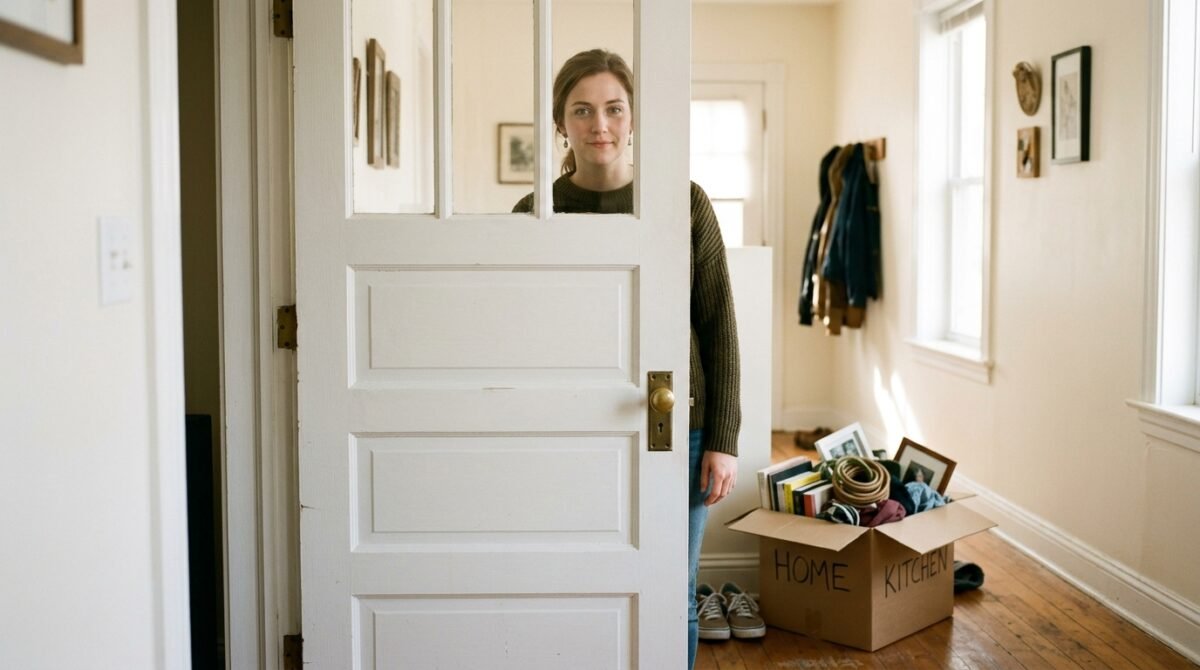
I knew he would eventually come back. He would expect me to be there, waiting for him with an apology and a plan for how to make it up to him. I had already prepared a box for his belongings. It was sitting by the door, neatly taped and labeled. I didn’t want him in my space, and I didn’t want any more of his ‘gear’ cluttering up my life. I wanted a clean break, a total reset.
“I’ve changed the locks. Your things are in a box outside the door. Do not try to contact me again. The relationship is over, and I am not interested in your excuses.”
— The final message I sent before blocking his number permanently
The anticipation of his return was the only thing that kept me on edge. I had a friend on standby to come over if he started making a scene. I had documented everything—our travel expenses, our text messages, and the timeline of the abandonment. I was prepared for a fight, but I hoped it wouldn’t come to that. I just wanted to be done with it all.
He arrived two days later, looking disheveled and frantic. He didn’t expect me to be so firm. He started in with his usual routine—the guilt trips, the promises to change, the accusations of me being ‘dramatic.’ But it didn’t work. I watched him through the door, my voice steady, my heart surprisingly calm. I saw him for exactly what he was: a man who had lost his leverage and was desperate to regain it.
The Final Confrontation
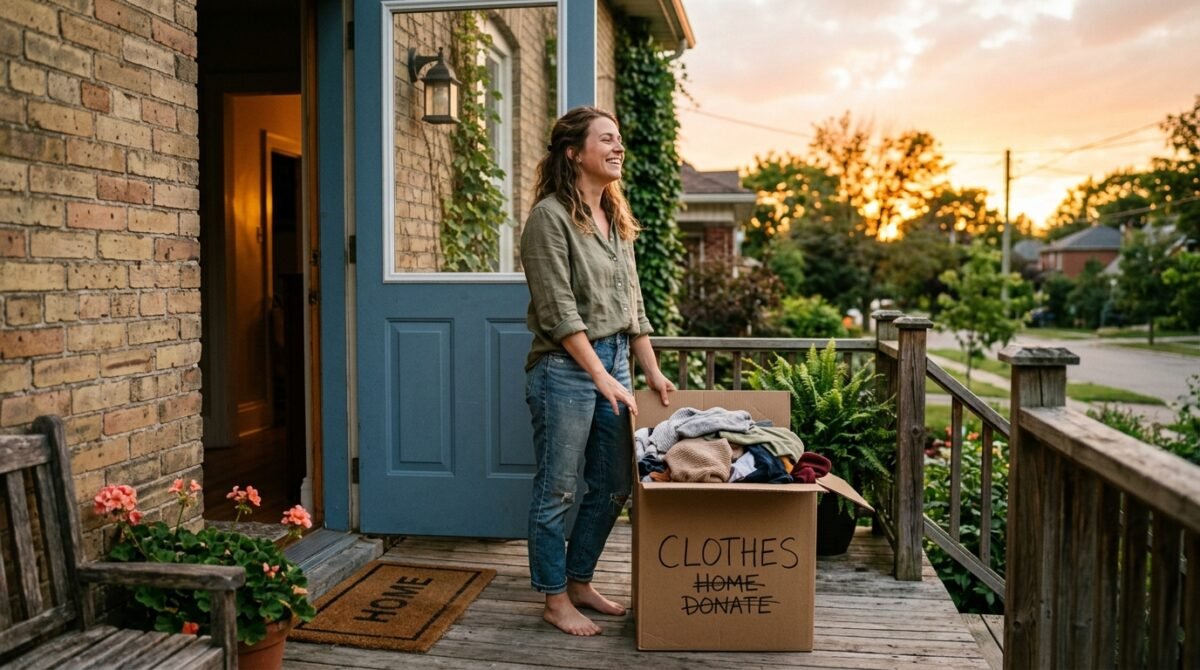
When he finally realized that I wasn’t opening the door, his demeanor shifted from pleading to aggressive. He started pounding on the wood, shouting that he deserved an explanation for why I was ‘ruining everything.’ It was a scene I had witnessed in my nightmares, but in reality, it was just sad. He looked desperate, his hair messy, his clothes rumpled. He was a man who had relied so heavily on my support that he was completely unmoored without it.
I didn’t open the door. I spoke through the wood, my voice clear and unwavering. I told him that the relationship had been over the moment he left me at that station. I told him that I was no longer willing to carry his burdens, literally or figuratively. I heard him stop, the silence following his last outburst lasting for several seconds. For a moment, I wondered if he would apologize, but he just laughed—a bitter, hollow sound that told me everything I needed to know.
He walked away eventually, leaving the box on the porch. He didn’t try to call again. He didn’t send any more messages. It was as if he realized that the game was up, that I was no longer a participant in his world of entitlement. The feeling of closure was instantaneous. I opened the door, looked at the box, and felt nothing but pity. I had expected to feel rage, but I was past that. I was just done.
“You’re pathetic. You think you can just dump me and move on? You’ll be begging me to take you back in a week.”
— Mark’s final words before walking away from my apartment
His prediction was wrong, of course. I didn’t beg. I didn’t call. I didn’t even think about him for more than a few minutes a day. I spent the next month focusing on myself, on my career, and on rebuilding my social circle. I took up hiking, but I did it on my own terms, with a light pack and a sense of freedom that I had never experienced before. I discovered that I was perfectly capable, strong, and independent.
The lesson I learned was that boundaries are not just suggestions; they are the foundation of any healthy relationship. By refusing to carry his weight, I had set the most important boundary of my life. I had reclaimed my worth, and in doing so, I had lost someone who never really valued me in the first place. It was the best trade I had ever made.
A Life Reclaimed

Looking back, I see the trip not as a failure, but as the turning point of my life. It was the crucible that burned away the pretenses of my relationship and revealed the core of who I was. I wasn’t the secondary character in someone else’s story; I was the protagonist of my own. I had taken the time to listen to my own needs, to trust my own instincts, and to act on my own behalf, even when it was difficult.
I still travel, but I travel differently now. I choose destinations that I want to see, and I pack only what I can carry. I no longer feel the need to justify my choices to anyone, and I certainly don’t feel the need to carry someone else’s baggage—physical or emotional. The freedom I feel is intoxicating, and it’s a feeling I intend to keep for the rest of my life. I am no longer a pack mule; I am an explorer.
My friends have noticed the change, too. They tell me I seem lighter, more confident, and more like the person they knew before I met Mark. It’s a transformation that started at that lonely train station, and it’s a transformation that I am incredibly proud of. I learned that it’s better to be alone than to be with someone who makes you feel lonely, and that’s a truth I’ll carry with me forever.
“I finally realized that my life is for me. I don’t have to sacrifice my happiness, my physical comfort, or my sanity for anyone. I am finally free.”
— My personal reflection in my journal
I hope that if anyone is currently in a situation where they feel like they are carrying too much, they realize that they have the power to put the bag down. You don’t have to carry the weight of someone else’s choices. You don’t have to sacrifice your life to save theirs. You are enough, just as you are, and you deserve a partner who sees you as an equal, not as an accessory.
My journey didn’t end at that station; it began there. I am still learning, still growing, and still discovering new ways to be the best version of myself. And most importantly, I am doing it all on my own terms. The backpack is gone, the man is gone, and I am finally, truly, moving forward.
Conclusion
This story is a reminder that the smallest incidents can often reveal the deepest truths about our relationships. The choice to leave a heavy bag behind was, in reality, a choice to leave behind a person who had stopped valuing me as a partner. It was a terrifying moment, but it was also the moment I realized that my self-worth was not tied to my ability to accommodate others. I hope this account serves as a wake-up call to anyone currently feeling burdened in their own relationships.
We often stay in situations that are toxic because we are afraid of the unknown or the judgment of others. But the freedom that comes from setting a firm boundary is worth every bit of uncertainty. Have you ever had a ‘train station moment’—a time when you realized you had to choose between your own happiness and the expectations of a partner? Did you make the right choice? I’d love to hear your stories in the comments below.
Discussion Poll:
1. Have you ever ended a relationship because of a ‘small’ event that highlighted a major character flaw? (Yes/No)
2. Do you believe in ‘sharing the load’ regardless of physical ability in a relationship? (Always/It depends on the context)
3. Would you have left the station alone, or tried to work it out on the train? (Leave/Work it out)
What's your verdict on this dilemma?
Vote below to contribute to the official community consensus.

Have a Dilemma Keeping You Up at Night?
Share your real-life feud, wedding chaos, or relationship crossroads anonymously with our editorial team.
What do you think ?
0 Comments🛡️ Comments are moderated to protect community integrity. Your comment will appear once approved by the editorial team.