
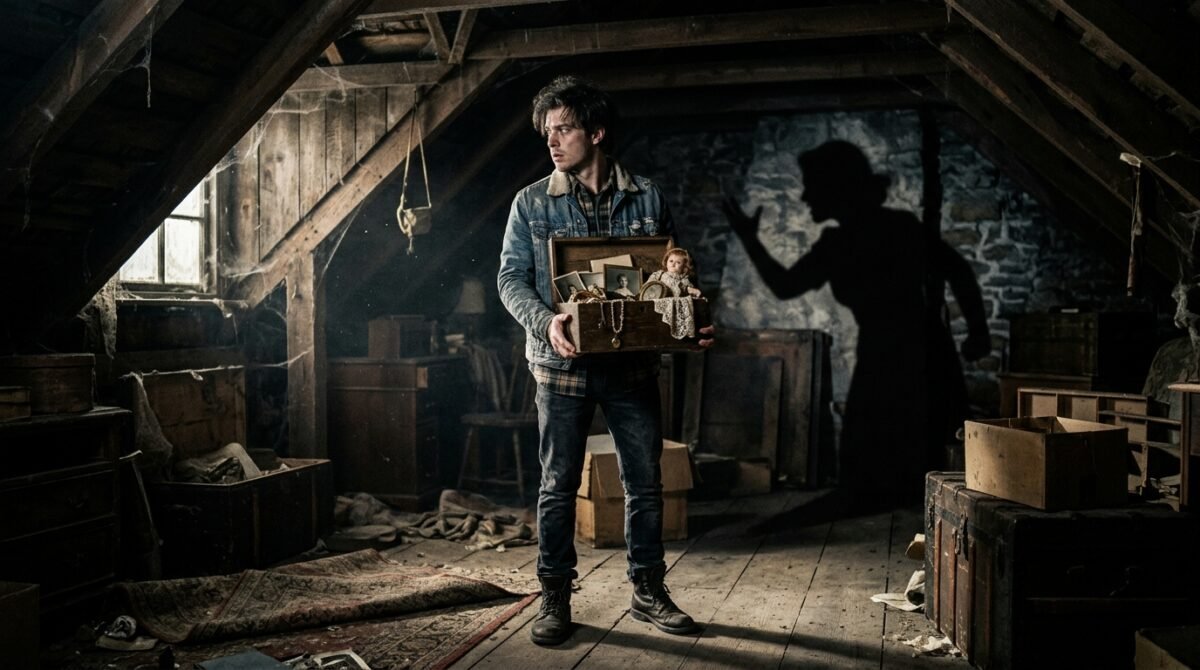
Growing up, I didn’t care for video games or sports. My sanctuary was the dirt—literally. From the age of seven to seventeen, I spent my weekends crawling through riverbeds and shale deposits, meticulously cleaning, cataloging, and displaying my collection of fossils. It wasn’t just a hobby; it was a museum of my youth, representing thousands of hours of patience and curiosity. When my father remarried, my stepmother, Diane, saw my collection not as an intellectual pursuit, but as ‘dust-collecting garbage’ that ruined the aesthetic of her curated home.
Diane had always been the type to prioritize appearances over people. Our relationship was a long, slow burn of microaggressions, but I never expected her to cross the line into outright theft. The day I came home from college to find my display cases empty, replaced by sterile, mass-produced ceramic vases, I felt a piece of my identity vanish. She told me, with a flick of her manicured hand, that she had ‘donated’ the collection to a local antique dealer because they were eyesores.
What Diane didn’t know—and what I had kept hidden—was that my father had signed over his storage locker full of her mother’s estate to me years ago as a form of financial insurance, a detail she had conveniently ignored or forgotten. The moment she laughed off my anger, a cold, calculated realization washed over me. If my treasures were gone because she deemed them valueless, then perhaps her ‘priceless’ heirlooms were just as expendable.
This is the story of how I turned the tables, the legal battle that followed, and the moment the silence in the living room became loud enough to break a marriage. It is a cautionary tale about what happens when you treat a stepchild’s passions like trash and forget that ownership is a legal, not an emotional, construct.
The Day the Riverbed Went Silent
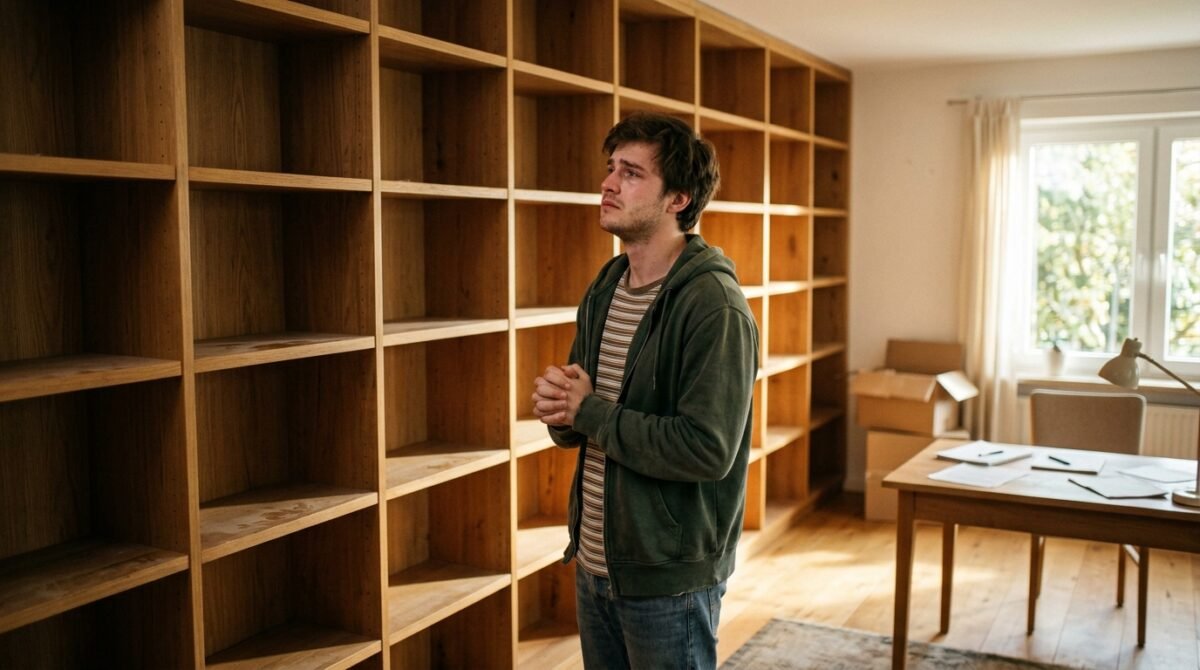
I arrived home for summer break, my mind full of academic stress and the simple comfort of knowing my ammonites and trilobites were waiting for me in the study. I walked through the door, bags in hand, and headed straight for the room that had been my sanctuary for over a decade. When I opened the door, the air felt thin. The mahogany shelves, once lined with carefully labeled fossils, were now filled with generic, beige home decor.
My heart hammered against my ribs. I walked to the nearest shelf, touching the empty space where my favorite Cretaceous-era display had sat for years. I spun around, finding Diane in the kitchen, casually sipping tea as if nothing in the world had changed. The sheer audacity of her calm expression felt like a physical blow.
“Where are my things, Diane? Where is the cabinet?” I asked, my voice shaking with a mix of fury and disbelief. She didn’t even look up from her magazine. “I cleared out that clutter. It was an eyesore, and we needed the space for my new staging equipment. I dropped them off at the antique shop down the road. They were practically trash anyway.”
I stood frozen, the reality sinking in. She hadn’t just moved them; she had disposed of them. She treated my childhood, my dedication, and my life’s work as a bag of refuse to be discarded. The silence between us stretched, heavy and suffocating, until the sound of her turning a page in her magazine snapped me back to reality.
I didn’t scream. I didn’t cry. In that moment, the anger crystallized into something much colder. I realized that my father had enabled this behavior for too long, viewing his wife’s comfort as the ultimate goal. I turned and walked out of the room, my mind already racing through the legal documents I knew were sitting in my fireproof box upstairs.
The antique shop owner was a man I knew well; he was the one who had appraised many of my finds over the years. I knew exactly where he would have placed them. But more importantly, I knew that if I was going to play this game, I had to be smarter, faster, and much more ruthless than she ever expected her ‘step-problem’ to be.
The Forgotten Ledger of Ownership
That evening, I retreated to my room and pulled out the dusty manila folder. My father had always been somewhat scatterbrained about his assets, but he was also incredibly protective of my future. When my grandmother passed, she left behind a massive collection of antiques—mostly jewelry, silver, and vintage furniture—that Diane had always coveted but never officially owned. My father, in an attempt to protect the estate from potential creditors during a rough business patch, had transferred the title of that specific storage unit to me.
I opened the document, the ink still crisp despite the years. It was legally binding, notarized, and entirely in my name. Diane had spent the last three years paying the storage fees, blissfully unaware that she was essentially renting a space to house items that she no longer had any legal claim to. It was a secret my father had asked me to keep, a ‘just in case’ measure that had suddenly become my ultimate leverage.
I checked my phone, seeing a text from my father asking me to ‘be nice’ to Diane. He had no idea what she had done, or perhaps he chose not to know. The hypocrisy was staggering. They both expected me to bow to her whims, to accommodate her desire for a ‘clean’ house, while they treated my property as if it were community assets for her to distribute as she pleased.
“I’m not being nice tonight, Dad. She destroyed my property. She donated it to a shop. I’m handling it my way.” I typed out the reply, then turned off my phone. I didn’t want to hear his excuses. I wanted justice, and I had the paperwork to ensure it.
I began to map out the logistics. The storage unit was in a neighboring county, and the facility had a strict policy: the person on the contract held the keys. I checked the access logs online. Diane had been visiting every Tuesday to dust and rearrange, clearly obsessed with items she didn’t own. Tomorrow was Tuesday.
The plan was simple, yet risky. I would arrive at the storage facility just before she did, revoke her secondary access, and claim the contents. It wasn’t about the money—though the items were worth a fortune—it was about the principle of ownership. If she wanted to treat my life’s work as garbage, she would learn exactly how it felt to lose everything she valued.
The 9:00 AM Storage Facility Showdown
I pulled into the storage facility at 8:45 AM, my heart racing. The morning air was crisp, and the silence of the industrial park felt like a precursor to a storm. I walked into the main office, where the manager—a man named Mr. Henderson who had known my family for years—was just unlocking the doors. He looked up, his brow furrowing as he recognized me.
“Long time, no see,” he said, reaching for the ledger. I didn’t waste time with pleasantries. I placed the original notarized transfer documents on his counter. “Mr. Henderson, I’m here to enforce the ownership rights on unit 402. I need to revoke all secondary access immediately and change the locks. I have the legal paperwork right here.”
He scanned the documents, his eyes widening. He had been dealing with Diane’s frequent visits for years, and he knew how much she loved to treat that unit as her own personal museum. He looked at me, then at the paperwork, and nodded slowly. “I understand. Let’s get this done before she arrives.” Within ten minutes, the access codes were changed, and a new, heavy-duty padlock was installed.
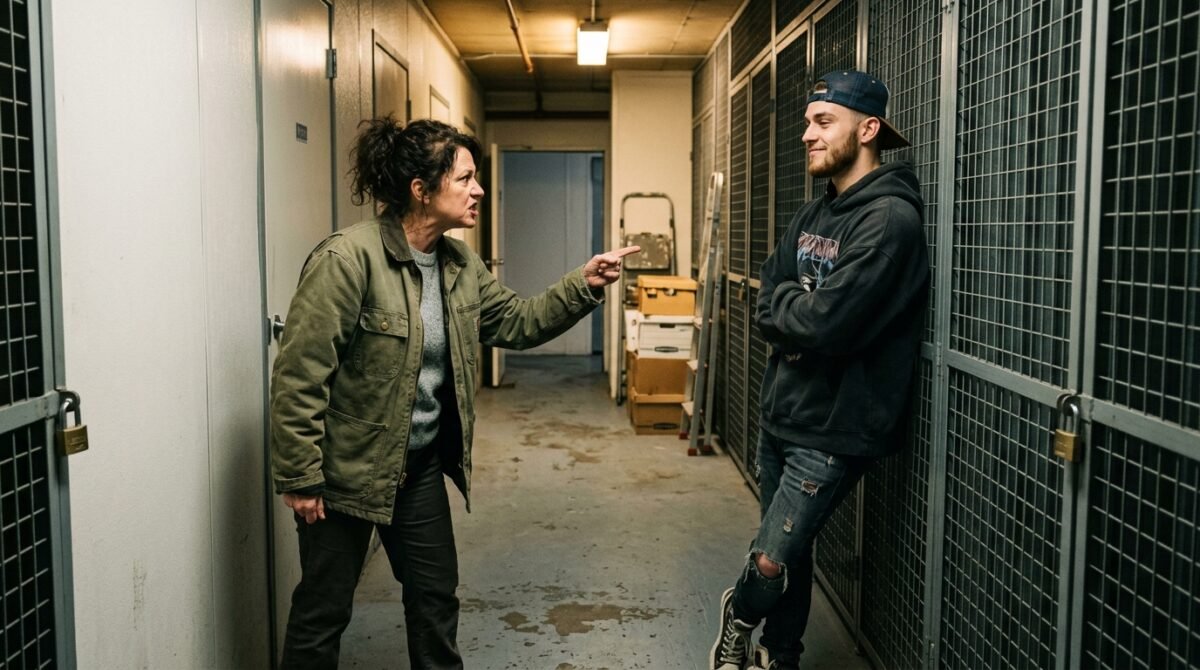
“Wait, what are you doing?” a shrill voice cut through the air. Diane stood at the entrance, her designer bag clutched tightly in her hand, her face a mask of pure indignation. “That’s my unit. You can’t just change the locks on my things!”
I stepped out of the office, meeting her gaze with a calmness that clearly unnerved her. “Actually, Diane, they aren’t your things. They never were. You’ve been paying the rent, which I appreciate, but the title has been in my name since I turned eighteen. I’m taking possession of the contents effective immediately. You have no legal standing here.”
Her face went through a rapid series of transformations—from shock to rage to a desperate attempt at negotiation. She looked at Mr. Henderson, expecting him to back her up, but he simply turned away to attend to another client. She was alone, and for the first time in years, she had absolutely no control over the situation.
The Group Chat Explosion

By the time I got home, my phone was vibrating incessantly. The family group chat, which usually consisted of holiday plans and passive-aggressive memes, had become a war zone. Diane had clearly been busy painting me as the villain who had ‘stolen’ her inheritance. My father was demanding to know what I was thinking, and my aunts were chiming in with their unsolicited opinions.
“You’ve gone too far. Your stepmother is in tears, and you’re acting like a common thief! Give back the keys to the storage unit immediately or don’t bother coming home for the holidays.” — Dad (Group Chat)
“Actually, Dad, Diane donated my fossil collection to a shop without asking. She called it trash. I’m just reclaiming my own assets that were held in that unit. Funny how ‘theft’ is only a problem when it’s her property, right?” — Me (Group Chat)
The silence that followed was deafening. I imagined them all staring at their screens, the realization dawning that I wasn’t just a child to be scolded anymore. I had receipts, I had legal standing, and I had the moral high ground, even if they refused to acknowledge it. I didn’t care about their approval. I cared about the fact that they had enabled her for so long that she felt untouchable.
My aunts started private messaging me, trying to ‘mediate’—which was code for telling me to give in to keep the peace. I blocked them one by one. I was done with the performative harmony of the family. If they wanted to stand by a woman who destroyed things that didn’t belong to her, they could suffer the consequences of that alliance.
That night, I didn’t sleep. I spent the hours going through the inventory of the storage unit in my head. I knew the value of the silver, the paintings, and the jewelry. It was worth well over six figures. Diane had been using it as a status symbol, but I was going to liquidate it to fund a cross-country move and get away from this house forever.
I felt a strange sense of liberation. The ‘family drama’ was no longer something I had to endure; it was something I was finally actively dismantling. I knew the next few days would be difficult, but I had already crossed the Rubicon. There was no going back to the way things were.
The Auction Block Reality

Two weeks later, the contents of the storage unit were being evaluated by an auction house. I watched as the experts cataloged everything—the crystal, the rare vintage silverware, the antique portraits. Diane showed up with my father, trying to stop the process, but the lawyer I had consulted early on was already there, holding a cease-and-desist order to keep them from interfering.
Watching Diane watch her treasures be tagged for sale was the most satisfying moment of my life. She looked small, diminished, and utterly powerless. My father looked confused, clearly caught between his wife’s demands and the reality of the legal situation. He tried to speak to me, but I kept my distance, focused entirely on the appraiser.
“How can you do this to your own family? She loved those things!” my father whispered, his voice cracking. I turned to him, my expression stoic. “She didn’t love them, Dad. She loved having them. And she loved trashing what I loved even more. This isn’t about the objects. It’s about the fact that she thought she could erase me.”
The appraiser pulled me aside, nodding toward a velvet-lined case. “These pieces are exceptional. You’re looking at a significant return here. Are you sure you want to proceed with the total liquidation?” I nodded without hesitation. I didn’t want a single reminder of that house or that life. I wanted a clean slate.
As the auctioneer began his work, I walked out of the gallery. I didn’t need to stay to see the final bids. I had already won the most important battle: the battle for my own agency. I had taken back the power to define my own worth, and I had proven that I wouldn’t be a doormat for someone else’s vanity.
I drove back to the house one last time to collect my remaining clothes. The place felt empty, hollowed out by the same greed that had destroyed my collection. I didn’t say goodbye to Diane, and I barely acknowledged my father as I packed the last of my things. The transition was swift, clean, and final.
Reddit Weighs In: The Verdict of the Internet

I decided to post my story on a popular forum, expecting a mix of sympathy and criticism. I wasn’t prepared for the sheer volume of support. The post blew up within hours, reaching the front page. People from all over the world were weighing in on the situation, many of them sharing their own stories of step-parental betrayal and the importance of setting boundaries.
“NTA. The fact that she destroyed your collection and then expected you to just hand over her ‘heirlooms’ is the definition of gaslighting. You didn’t steal anything; you reclaimed your legal property. Keep the money and move on with your life.” — u/JusticeSeeker (Top Comment, 32.4k upvotes)
“This is a masterclass in ‘play stupid games, win stupid prizes.’ She thought she was the queen of the castle until the castle turned out to be yours. Don’t let your father guilt-trip you into giving back a single cent.” — u/Realist101 (15.2k upvotes)
Reading the comments was therapeutic. For years, I had internalized the feeling that I was the problem, that I was too sensitive or too difficult. Seeing thousands of strangers affirm that my reaction was reasonable and my actions were justified helped me heal in ways I hadn’t expected. It wasn’t just about the fossils or the heirlooms; it was about the validation that I deserved to be respected.
There were some dissenting voices, of course—people who argued that I should have been ‘the bigger person’—but they were quickly shouted down by the community. The consensus was clear: when someone crosses a line as egregious as destroying your life’s work, the social contract is void. You are not obligated to maintain peace with someone who is actively waging war on your identity.
I spent the night replying to comments, offering advice to others in similar situations. It turned into a support group of sorts. I realized that my story wasn’t unique, but it was a powerful example of how standing your ground can lead to genuine transformation. I felt less alone than I had in years.
The Aftermath: Finding the Fossils
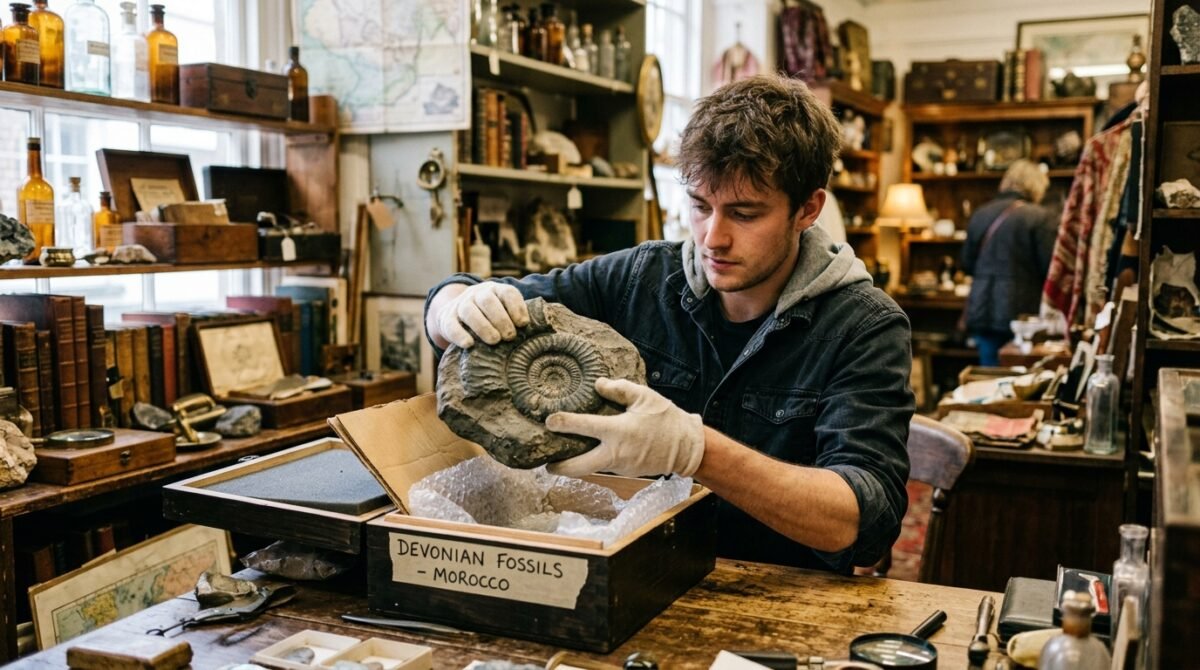
Three weeks later, I received a call from the antique shop owner. He had been following the news of the auction, and when he realized the situation, he had set aside my entire collection in the back room. He hadn’t put it out on the floor; he knew how much those pieces meant to me. I drove over, my heart heavy with anticipation.
When I walked into the shop, he brought out the boxes. Every single specimen was there. Not one had been sold. Not one had been damaged. They were exactly as I had left them—perfectly preserved, perfectly cataloged. I felt tears prick my eyes. It was like reuniting with an old friend I thought I had lost forever.
“I knew you’d come for them,” he said, smiling. “Diane tried to sell them for peanuts, but I told her I needed time to assess them. I just kept them here waiting for the real owner to show up. You should have seen her face when I told her I couldn’t sell them because the provenance was ‘unclear’.”
I paid him a fair price for the ‘storage’ he had provided and packed my collection into my car. It was the most precious cargo I had ever transported. I realized then that while I had been ready to walk away from everything, having these pieces back felt like the final piece of my own recovery. I wasn’t just moving on; I was moving forward with my history intact.
I drove to my new apartment, the sunlight hitting the boxes in the back seat. I wasn’t going to be the person I was in that house—the person who had to hide their passions to keep the peace. I was going to be the person who built a life around what I loved, unapologetically and with total control.
A New Chapter Without the Baggage
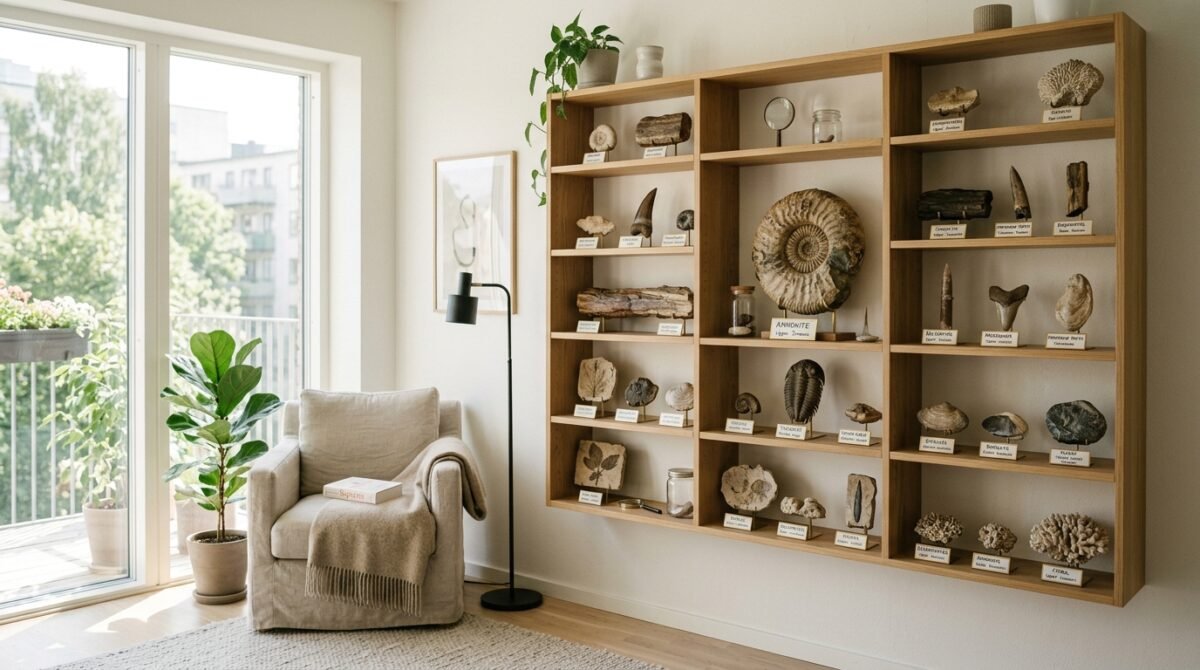
My life has changed significantly since that summer. I’m living in a city I chose, surrounded by people who respect my boundaries and value my interests. I still get the occasional text from my father, checking in or trying to get me to ‘forgive and forget’ for the sake of the family, but I’ve learned to set firm, non-negotiable boundaries. We talk, but we don’t talk about Diane, and we certainly don’t talk about the storage unit.
I’ve invested the money from the auction into my education and my future. It wasn’t about the wealth; it was about the security of knowing that I was the one who controlled my destiny. The heirlooms are gone, sold to people who appreciate them, and the fossils are displayed in my new study, a testament to the fact that you can reclaim your past even when someone tries to bury it.
Looking back, I don’t feel anger toward Diane anymore. I feel a sense of pity. She lived her life in such a small, narrow way, obsessed with objects and control, never realizing that true power comes from the connections you build and the authenticity you maintain. She lost the battle because she didn’t understand the rules of the game.
“You’re so cold,” she had said to me in our last confrontation. “I just wanted a clean house.” And I had replied, “It’s clean now, Diane. Enjoy the emptiness.”
I’m happy. For the first time in my life, I don’t feel like a guest in my own existence. I’m the owner of my time, my space, and my story. And that, more than any fossil or antique, is the greatest treasure I could have ever found.
Reflecting on the Cost of Conflict

The cost of this conflict was high—it effectively ended my relationship with my father and severed any ties I had to my stepmother’s side of the family. People often ask me if it was worth it. They wonder if I would have done things differently if I had known it would lead to a total breakdown of my family dynamic. My answer is always the same: it wasn’t my choice to destroy the relationship; it was the result of a boundary being crossed that couldn’t be uncrossed.
Family is supposed to be a support system, not a hostage situation. When you are forced to choose between your dignity and your family, and you choose your family, you aren’t choosing family—you’re choosing servitude. I chose myself. And in doing so, I found a version of myself that I didn’t know existed, a person who could stand in the face of adversity and not back down.
I think about the younger version of me, the one who spent all those hours in the riverbed, and I think he would be proud. He wouldn’t care about the money or the drama; he would just be happy that his fossils were safe. He would be happy that his voice was finally heard, even if it took an earthquake to make it happen.
This experience taught me that we have to be the guardians of our own stories. We can’t wait for others to respect us; we have to demand it, and we have to be willing to walk away when that demand isn’t met. It’s a hard lesson, but it’s a necessary one if you want to live a life that is truly your own.
The Final Lesson: Boundaries are Not Optional

If there is one thing I want people to take away from this story, it is that you are never ‘just a kid’ when it comes to your own life and your own property. Your boundaries are the foundation of your self-respect. If you let people trample them, you are teaching them that you have no value. Don’t let anyone—family, step-family, or friends—treat your passions as if they are disposable.
My advice to anyone facing a similar situation is to document everything. Know your legal standing. Don’t engage in emotional arguments that you can’t win. Take the high road, stay calm, and let the facts speak for themselves. You don’t have to be loud to be heard; you just have to be right, and you have to be ready to act when the time is right.
I’ve moved on, but I carry the memory of that summer with me. It reminds me of who I am, what I value, and the strength it took to stand up for myself. I’m not the same person I was before the storage unit incident, and I’m grateful for that. I’m stronger, I’m wiser, and I’m finally, truly free.
“Boundaries aren’t walls to keep people out; they’re the doors that ensure people respect the space you’ve built for yourself.”
Thank you to everyone who supported me through this journey. Your comments, your stories, and your encouragement meant the world to me. We’re all in this together, navigating the complicated, often messy reality of modern family life, and it’s heartening to know that we don’t have to do it alone.
Conclusion
The story of my fossil collection and the storage unit debacle is, at its heart, about the struggle for agency in a world that often demands we prioritize other people’s comfort over our own. By standing up for what was rightfully mine, I didn’t just reclaim my property; I reclaimed my autonomy. It was a difficult journey, filled with conflict and heartache, but it ultimately led to a place of peace and authenticity.
Reflecting on this, I realize that the most important thing we can do for ourselves is to recognize when a relationship has become toxic and to take the steps necessary to protect our own well-being. Whether it’s setting firm boundaries or walking away entirely, we have the right to define our own lives. I encourage all of you to evaluate your own boundaries and ask yourself: are you living for yourself, or are you living to keep someone else happy?
What would you have done in my situation? Would you have taken the legal route, or would you have tried to reach a compromise? Share your thoughts and stories in the comments below—I’d love to hear how you’ve handled boundary violations in your own families.
What's your verdict on this dilemma?
Vote below to contribute to the official community consensus.

Have a Dilemma Keeping You Up at Night?
Share your real-life feud, wedding chaos, or relationship crossroads anonymously with our editorial team.
What do you think ?
0 Comments🛡️ Comments are moderated to protect community integrity. Your comment will appear once approved by the editorial team.