
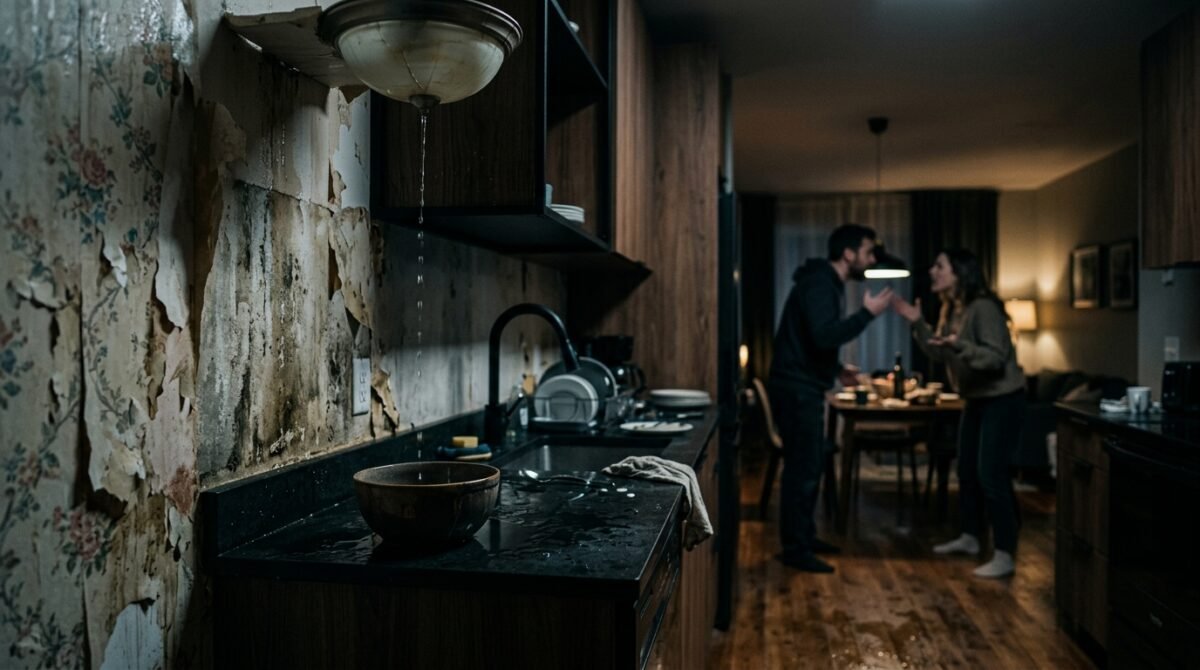
Marriage is supposed to be a partnership, a shared foundation built on trust and mutual goals. For five years, my husband, Mark, and I had been working toward a singular vision: transforming our fixer-upper into a dream home. Every paycheck, every bonus, and every tax return was meticulously funneled into a high-yield savings account we labeled ‘The Foundation.’ It wasn’t just money; it was the promise of a nursery, a remodeled kitchen, and a future that felt secure.
The dream shattered on a Tuesday afternoon. I was at the bank, attempting to withdraw the funds for our long-awaited roof replacement, only to be met with a cold, hollow silence from the teller. My account balance, which should have held sixty-five thousand dollars, was hovering at a pathetic three hundred and twelve dollars. The breath left my lungs as the reality set in: this wasn’t a bank error. It was a betrayal.
I didn’t wait for him to come home. I sat in my car, shaking, watching the minutes tick by on my phone as I scrolled through his recent banking activity. There, in a series of frantic, rapid-fire transfers, were the transactions. They were all routed to ‘Hop & Barley Craft Works,’ the failing microbrewery owned by Mark’s lifelong best friend, Kevin. A man who had already burned through three businesses and was now, apparently, consuming my life’s work.
The moral dilemma here isn’t just about the money; it’s about the absolute erasure of my autonomy. I felt like a stranger in my own life. I realized that while I was planning for a future, my husband was betting our survival on a pipe dream that had been failing for years. The trust hadn’t just been chipped away—it had been liquidated and served on tap to a group of strangers.
As I sat there, staring at the empty account, the decision crystallized. If he wanted to act like a single man with no responsibilities, I would treat him like one. I wouldn’t fight for a roof over a house that felt like a prison. I would put the house on the market, reclaim what was left of my sanity, and leave him to manage his brewery fantasy without the safety net I had spent years weaving.
The Tuesday Afternoon Revelation

Walking into the bank, I had been feeling productive. The roofers were scheduled for the following week, and the estimate was sitting in my purse. I had envisioned the sigh of relief I’d feel once the deposit was paid. Instead, the teller’s face went pale as she tapped her keyboard repeatedly, her eyes flickering toward me with a mixture of pity and professional detachment.
When she told me the balance, I thought I had misheard. I asked her to check again, convinced there was a glitch. When she printed the transaction history, the ink was still dark and fresh, documenting the systematic drainage of our life savings over a period of three weeks. Every transfer was labeled ‘Business Investment.’ My heart hammered against my ribs like a trapped bird.
I walked out to my car and didn’t start the engine. I just sat there, the heat of the afternoon sun baking the interior, while I stared at the paper. It felt like I was reading an obituary for my marriage. I called Mark, but he didn’t answer. He was probably at the brewery, drinking away the money that was supposed to keep the rain out of our bedroom.
“You have access to the joint account, right? Did you see the balance?” I typed this into our text thread, my fingers trembling so hard I almost dropped the phone. I knew the answer, but I needed to see his reaction.
Ten minutes passed. Then twenty. Finally, the bubbles appeared, danced for a moment, and vanished. He wasn’t answering. The realization hit me then: he knew exactly what I was looking at. He hadn’t just forgotten to tell me; he had been hiding it, hoping I wouldn’t check until the money was gone and the business was somehow, miraculously, in the black.
The silence from his end spoke volumes. It was the silence of a guilty man who had already rationalized his theft. I started my car and drove home, but I didn’t go inside. I drove to the local real estate office I had frequented years ago. If the house was all we had left, then it was time to turn it into cash.
The Confrontation At The Dinner Table
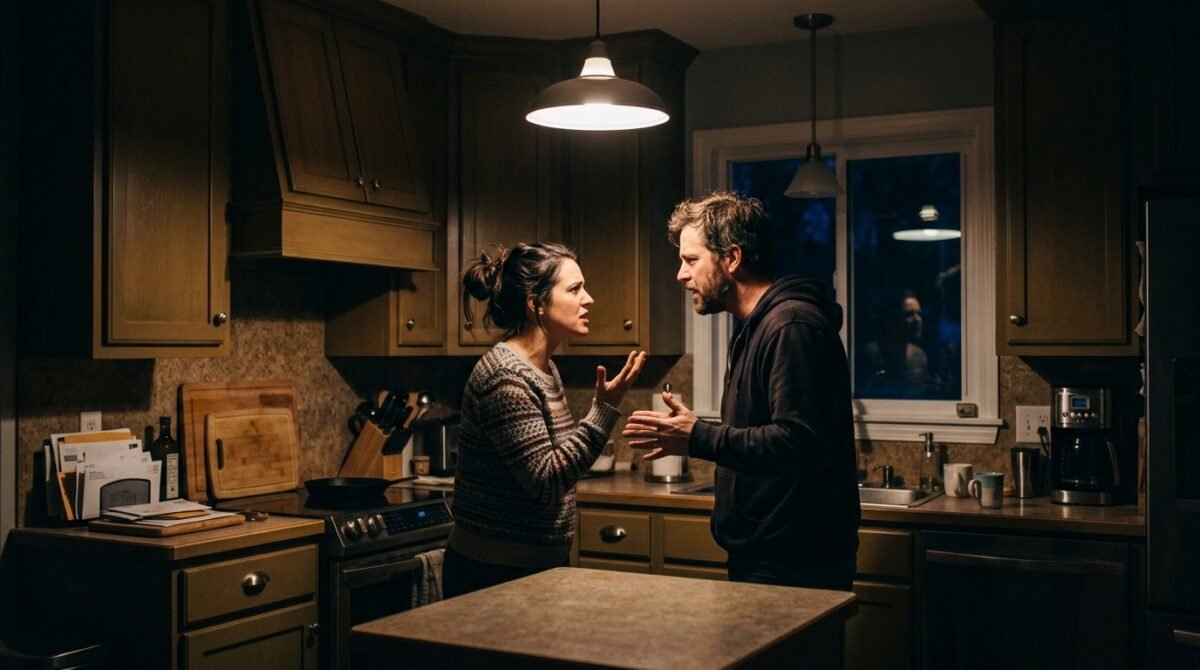
Mark arrived home at 8:00 PM, reeking of hops and stale beer. He walked into the kitchen, humming a tune, clearly expecting the same warm greeting he usually received. He stopped short when he saw me sitting at the kitchen island, the printed bank statements spread out like a fan of cards. The air in the room grew heavy and suffocating.
“I hope you have a really good explanation for why our roof money is in Kevin’s failing brewery,” I said, my voice eerily calm. I had spent the last four hours crying, and I had no tears left. Mark’s face cycled through shock, defensiveness, and finally, a pathetic, boyish pout. He sat down heavily, avoiding my gaze.
“It’s a bridge loan, babe. Just a bridge loan! Kevin is on the verge of a massive distribution deal. If I didn’t step in, the bank would have foreclosed on his equipment. It’s an investment, not a loss. We’re going to get it back with interest!”
— Mark, moments after being confronted
I laughed. It was a sharp, jagged sound that seemed to startle him. “A bridge loan? You didn’t loan him money, Mark. You gave him our security. You gambled on a man who has failed three times in five years. And you did it behind my back. You didn’t even ask me if we could afford to lose everything.”
Mark stood up, his face reddening. “It’s my money too! I work just as hard as you do. I thought we were a team, but you’re treating me like a child who needs permission to spend his own paycheck. I was trying to help a brother out. You’re being incredibly selfish right now.”
I looked at him, truly seeing him for the first time. He wasn’t a partner; he was an enabler. He valued his ego and his friend’s approval over his wife’s stability. I realized then that there was no point in arguing about budgets or ROI. He didn’t see the money as our future; he saw it as his personal slush fund for his social life.
The Realtor’s Prompt Arrival

The next morning, I called Sarah, the best real estate agent in town. I didn’t explain the full scope of the marriage drama; I simply told her I wanted to list the house immediately. She arrived within two hours, her clipboard ready, looking professional and efficient. She walked through the house, taking notes on the unfinished projects that Mark had promised to finish years ago.
When we reached the kitchen, she pointed out the water damage on the ceiling. I just shrugged. “It won’t be fixed. We’re listing it as-is. I want it on the market by Friday.” She blinked, surprised by the urgency, but she didn’t question me. She understood that when a woman is done, she doesn’t wait for a sign—she creates one.
Mark came home early that day to find Sarah taking photographs of the living room. He looked confused, then horrified. He pulled me into the hallway, his face twisted with genuine panic. “What are you doing? Are you serious? You’re selling our home because of a disagreement?”
“It’s not a disagreement, Mark. It’s a liquidation. You liquidated our assets for a beer company, so I’m liquidating the house. We’re divorcing, and I’m taking my half of the equity before you find a way to invest it into Kevin’s next brilliant idea.”
— My response to Mark
He started shouting, calling me irrational and emotional. He told me I was ‘throwing away our life’ for a mistake that could be fixed. I just walked past him and handed Sarah the keys to the garage. He stood there, paralyzed, while the woman who had tolerated his ‘projects’ for half a decade systematically dismantled his world.
He tried to stop me, he tried to call his mother, and he even tried to call Kevin to come over and ‘mediate.’ I told him that if he touched me or blocked my way, I would call the police. The look of disbelief on his face was almost worth the heartache. He had never imagined that I had a breaking point, and he certainly never imagined I would be the one to choose the exit.
The Group Chat Explosion
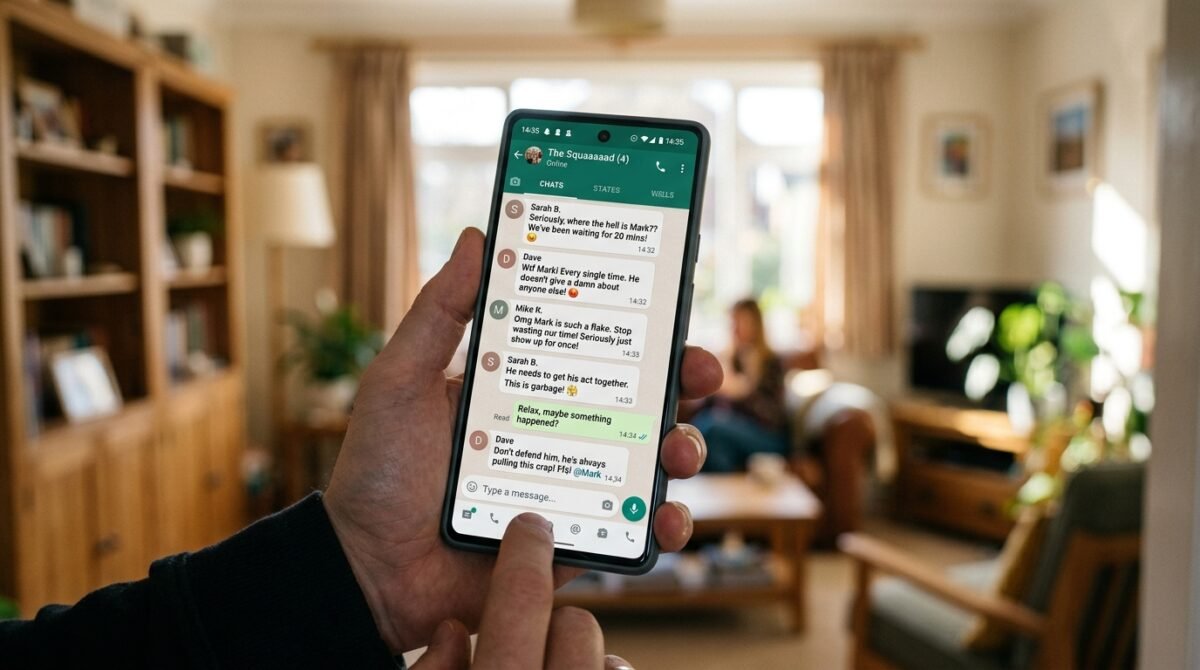
By Wednesday, the news had leaked to the ‘boys.’ I was added to a group chat titled ‘Brewery Bros’ by Kevin himself. The notifications started pinging my phone incessantly. At first, I ignored them, but then curiosity got the better of me. They weren’t just talking about the business; they were talking about me.
Kevin was leading the charge, calling me ‘unsupportive’ and ‘controlling.’ He claimed I was ’emasculating’ Mark by not supporting his ‘entrepreneurial vision.’ I read through the messages, my thumb hovering over the screenshot button. They were discussing how they could ‘get me back on board’ by having Mark fake a reconciliation.
“She’s just having a tantrum because she doesn’t understand the growth potential of the IPA line. Mark, tell her you’ll pay her back once the investors sign. She’s too soft to actually go through with a divorce.”
— Kevin, in the group chat
I didn’t reply to the group. Instead, I screenshotted every single message, including the ones where Mark admitted he hadn’t told me about the transfers because he knew I’d say no. I sent them all to my lawyer and then, just for good measure, I posted them to our private family group chat, tagging his mother and his sister.
The fallout was instantaneous. My phone lit up with calls from his mother, frantic and disappointed. Mark came home to find his mother waiting on our porch. The sight of her stern face was the first time I felt a flicker of vindication. She wasn’t there to defend him; she was there to see if the rumors were true.
Mark looked like a cornered animal. He had been playing the hero in front of his friends, but he couldn’t maintain the facade in front of the people who actually knew the value of a dollar. He tried to explain, but his voice cracked. His mother didn’t say a word. She just walked inside and started looking at the ‘For Sale’ sign that had just been planted in the yard.
Reddit Weighs In: The Verdict of the Internet

I posted my story on r/relationship_advice that night, needing a reality check. I felt like I was losing my mind, caught between the anger of the betrayal and the guilt of destroying our marriage. The response was overwhelming. Within an hour, I had hundreds of comments, and by morning, the post had reached the front page.
“Financial infidelity is just as damaging as physical infidelity. He didn’t just spend money; he stole your security and your agency. Selling the house is the only logical step to protect your assets before he finds a way to sink more of your credit into his friend’s black hole of a business. NTA.”
— u/MoneySmartMama (Top Comment, 32.4k upvotes)
The community support was validating. Thousands of strangers were telling me that I wasn’t crazy, that I wasn’t ‘controlling,’ and that I was actually showing immense restraint by not having him evicted sooner. There were also stories of people who had stayed, only to end up in debt and heartbreak years later.
Some comments were brutal. They warned me about his potential to hide assets or try to sabotage the house sale. One user, a paralegal, gave me a step-by-step guide on how to secure my finances and ensure the equity from the house sale went directly into an account he couldn’t touch. I followed every single piece of advice.
The contrast between the ‘Brewery Bros’ group chat and the Reddit thread was stark. One was a circle of enablers; the other was a group of people who had been through the same hell and were now standing on the other side, stronger and wiser. I started to see my situation not as a tragedy, but as a turning point.
I read the comments until the sun came up, feeling a strange sense of peace. I wasn’t alone. Millions of women had faced this exact betrayal, and they had survived. If they could rebuild their lives after being left with nothing, I could certainly handle the process of selling a house and filing for divorce.
The Real Estate Showing Nightmare
The first weekend of showings was a circus. Mark insisted on staying in the house, pacing around like a caged tiger while potential buyers walked through. He would follow them around, making passive-aggressive comments about how the house was ‘in a transition period’ and how he ‘really wanted to fix the ceiling.’ It was humiliating.
I finally had enough. I hired a professional staging company, and I forced him to leave for the day. I told him he could stay at Kevin’s house if he wanted to be near his investment so badly. He actually went. He spent the entire day at the brewery, likely drinking and complaining about his ‘tyrannical wife.’
When I returned, the house was empty, but the energy felt heavy. I walked through the rooms, remembering every promise we had made in each one. The living room where we’d planned to host holidays, the office where we’d imagined working on our future together. It all felt like a movie set for a life that wasn’t mine anymore.
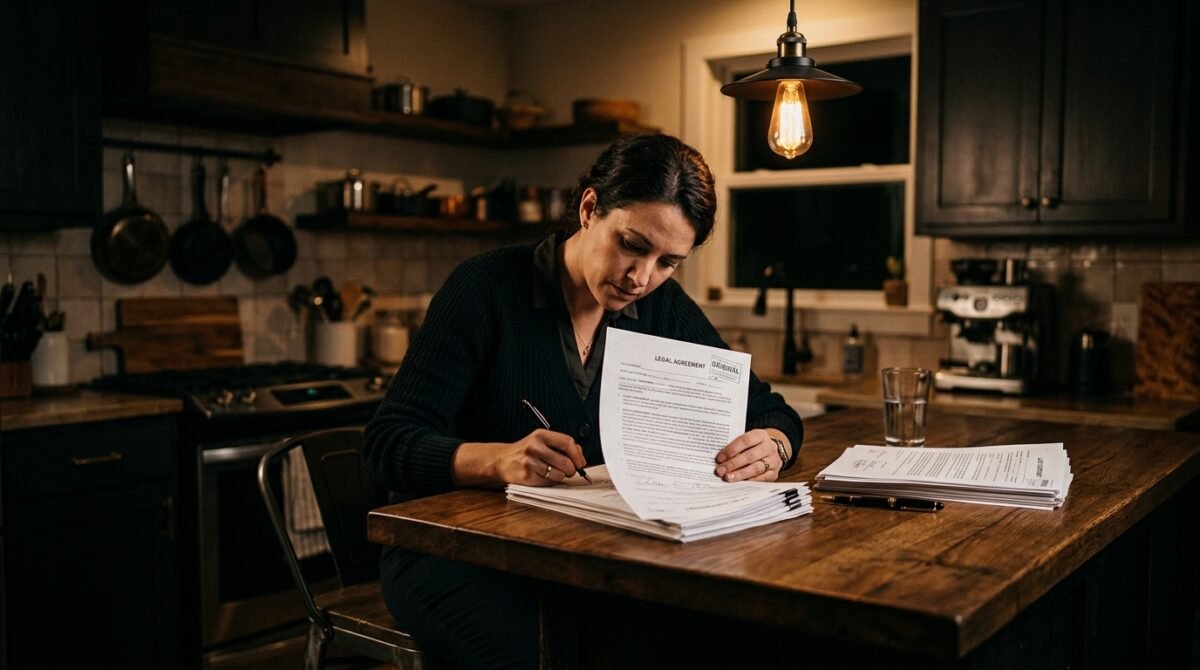
“I just got an offer. It’s below asking, but it’s a cash offer with no contingencies. If we accept, we can close in two weeks. Mark, I need you to sign these papers. Don’t fight me on this. If you fight, I’ll just get a court order, and it will cost us both more.”
— My text to Mark
He didn’t reply immediately, but he showed up an hour later, looking disheveled and defeated. He sat at the kitchen island, his hands shaking as he read the offer. He didn’t even look at the price; he just looked at me. He looked older, tired, and finally, completely aware of what he had done.
He signed the papers without a word. There was no grand apology, no dramatic confession. Just the scratching of a pen on paper, signifying the end of our life together. He stood up, grabbed a box of his things, and walked out of the house for the last time. I didn’t cry. I just closed the door and locked it.
The Financial Fallout

The closing process was a blur of paperwork, bank meetings, and legal filings. My lawyer ensured that every cent of the equity was divided exactly as it should be, and that Mark was held responsible for his portion of the debts he had incurred in our name. The bank account was frozen, and the remaining funds were transferred to my private account.
I found out later that Kevin’s brewery had folded a week after I put the house on the market. Without Mark’s ‘bridge loans,’ the business couldn’t survive the payroll cycle. The irony wasn’t lost on me. Mark had sacrificed our home for a dream that lasted seven more days. It was a pathetic, small-minded sacrifice.
I moved into a small, clean apartment in the city. It didn’t have a fixer-upper list, it didn’t have a leaking ceiling, and most importantly, it didn’t have any reminders of Mark’s bad decisions. For the first time in years, I could wake up on a Saturday morning and do absolutely nothing without feeling guilty.
“I’m sorry. I was an idiot. I thought I was doing something great, something that would make you proud of me. I never wanted to hurt you.”
— A voicemail from Mark, three weeks after the move
I listened to the voicemail once and deleted it. He was sorry he got caught, sorry he lost his best friend’s business, and sorry he didn’t have a place to live. He wasn’t sorry he betrayed me. The distinction was important. I realized that my anger had completely evaporated, replaced by a cold, clear-eyed indifference.
My bank account was growing again. I wasn’t saving for a house or a dream; I was saving for my freedom. I started taking classes, traveling, and reconnecting with friends I had neglected while trying to keep our ‘dream home’ afloat. The financial loss was a hard lesson, but it was the price of admission for my new, independent life.
The Legal Reality Check

The divorce proceedings were surprisingly straightforward. Because I had documented the financial drain and the lack of transparency, the judge was unimpressed by Mark’s claims of ‘investment.’ My lawyer argued that the funds were marital assets misappropriated without consent, and the court agreed. I was granted a significant portion of the remaining business assets as part of the settlement.
Mark tried to argue that I was responsible for the debts he had incurred to ‘support the household,’ but my records showed exactly how much he had transferred. The judge looked at him over her glasses, a look that said she had seen this exact scenario a hundred times before. It was a routine, boring end to a dramatic chapter.
I sat in the courtroom, listening to the lawyers trade numbers, and I felt nothing but relief. The weight of his irresponsibility was finally being lifted from my shoulders. He was responsible for his choices, and for the first time, he was actually paying the price. He looked smaller in the courtroom, stripped of his bravado.
“This court finds that the defendant exercised poor financial judgment and failed to act in good faith regarding marital assets. The settlement stands as proposed.”
— The judge, finalizing the divorce decree
When the gavel came down, I walked out of the courthouse and into the bright sunlight. I felt like I could breathe for the first time in years. I didn’t need a house, I didn’t need a partner who didn’t respect me, and I didn’t need to fix anything except my own future. The chapter was closed.
I met my sister for lunch afterward. We didn’t talk about the divorce or the money. We talked about her new job, my upcoming trip to Italy, and the simple, quiet joy of a life that was finally, truly mine. I wasn’t just a survivor of a bad marriage; I was the architect of my own recovery.
Reflecting on the ‘Dream Home’ Myth

Looking back, I realize that the ‘dream home’ was just a symbol of the life I thought I was supposed to have. I wanted the picket fence, the renovations, the stability. I didn’t realize that the foundation wasn’t the house; it was the person I was building it with. And that foundation had been made of sand.
I’ve learned that a home isn’t a structure. It’s a place where you feel safe, heard, and respected. In my old house, I was constantly stressed, watching my bank account, fixing leaks, and waiting for Mark to be the man I thought he was. In my new life, I don’t have a yard, but I have peace. I don’t have a home improvement list, but I have a bucket list.
The lessons were expensive, but they were necessary. I learned to never trust anyone blindly with my financial future. I learned that my intuition is always right, even when I try to talk myself out of it. And most importantly, I learned that I am capable of walking away from anything that isn’t serving my growth.
“The most important investment you will ever make is the one in yourself. Everything else—businesses, houses, relationships—can be lost. But your own stability and self-respect are assets that no one can ever take from you.”
— My advice to my younger self
I still see the house sometimes when I drive through the old neighborhood. It looks different now. The new owners have painted the front door a bright, cheerful yellow, and there’s a swing on the porch. I don’t feel jealous. I feel happy that it’s finally being lived in, not as a project, but as a home. And I’m finally living in mine.
The financial scars are fading. I’ve rebuilt my savings, not through ‘investments’ or ‘bridge loans,’ but through steady, honest work. I’m not rich, but I’m secure. And that, I’ve found, is worth more than any brewery or any fixer-upper in the world.
Lessons Learned and Moving Forward

So, where am I now? I’m in a place of radical self-reliance. I’ve started a small consulting firm, helping others manage their finances, and I’ve become an advocate for financial transparency in relationships. I tell my clients that if they can’t talk about their money, they can’t talk about their future.
I haven’t spoken to Mark in over a year. I hear from mutual friends that he’s working a steady job, living in a small studio, and finally starting to pay off the debts he accumulated. I don’t wish him ill, but I don’t wish to be part of his life, either. We were a lesson, not a destiny.
I’ve found that the best way to move forward is to stop looking back. I don’t dwell on the money lost or the time wasted. I look at it as a tuition payment for the most important education of my life. I’m a better, stronger, and more discerning person because of what happened.
“You don’t need a partner to complete you. You need a partner to complement you. If they’re taking more than they’re giving, it’s not a partnership—it’s a drain.”
— Closing thoughts from my journal
I’m planning my next trip to Italy, and I’m going alone. For the first time, I don’t have to compromise on the itinerary, the budget, or the pace. I get to experience the world exactly as I want to. And that, I’ve discovered, is the greatest luxury of all.
To anyone out there who feels like they’re trapped in a similar situation: you have the power to change your circumstances. You have the right to protect your assets and your sanity. Don’t wait for a sign. Don’t wait for permission. Just start building your own foundation. You are worth it.
Conclusion
My journey from a shattered marriage and a drained bank account to true, independent freedom was not easy. It required me to confront uncomfortable truths about my husband and my own role in tolerating his behavior. But in the end, it was the best decision I ever made. The house was just wood and nails; my future was the real prize.
If you have ever felt your financial boundaries being violated or your trust being eroded, know that you are not alone. It is never too late to reclaim your life and set the boundaries you deserve. You are the architect of your own happiness, and you have the power to walk away from any situation that compromises your worth.
I would love to hear your thoughts. Have you ever had to walk away from a shared dream because it was built on a broken foundation? How did you handle the financial and emotional fallout? Share your stories below—let’s start a conversation about rebuilding our lives after the dust settles.
What's your verdict on this dilemma?
Vote below to contribute to the official community consensus.

Have a Dilemma Keeping You Up at Night?
Share your real-life feud, wedding chaos, or relationship crossroads anonymously with our editorial team.
What do you think ?
0 Comments🛡️ Comments are moderated to protect community integrity. Your comment will appear once approved by the editorial team.