

Friendship is often defined by the memories we create together, the secrets we share, and the unwavering support we provide during life’s most challenging moments. However, beneath the veneer of shared experiences and late-night laughter, there often hides a unspoken dynamic of financial expectation that can shatter even the closest bonds. My relationship with Elena had always been defined by a mutual understanding—or so I thought. We were college roommates who navigated the transition into adulthood together, celebrating promotions and commiserating over bad dates. Yet, the night that changed everything began with a celebratory dinner that was meant to be a simple toast to our professional successes.
The venue was ‘L’Artiste,’ a high-end bistro known for its exorbitant prices and opulent atmosphere. I went into the evening with a budget in mind, having recently committed to saving for a down payment on a modest apartment. Elena, however, had recently received a significant bonus and seemed to view the restaurant as her personal playground. I barely blinked when she ordered the vintage Krug champagne and the premium Osetra caviar service, assuming she was treating herself—and perhaps feeling generous enough to share—but the reality of the situation was far more calculated than I realized at the time.
As the evening progressed, the disparity between our orders grew increasingly stark. I felt a subtle, mounting tension as she glided through the menu without glancing at the prices, her enthusiasm for the decadence of the evening reaching a fever pitch. I kept my order simple, choosing a light garden salad and a glass of house wine, intentionally keeping my side of the ledger lean. I had no idea that the bill would serve as the ultimate litmus test for our friendship, revealing a level of entitlement that left me reeling in the dim, candlelight of that expensive restaurant.
When the waiter finally dropped the leather-bound check folder onto the white linen tablecloth, the total was astronomical. My heart sank as I opened it, seeing the sum total of $600 staring back at me. Elena didn’t even pick up the receipt. She simply reached for her clutch, looked at me with a serene smile, and waited for me to pull out my phone to calculate the split. It was then that the silence at our table became heavy, suffocating, and impossible to ignore. The moral dilemma wasn’t just about the money; it was about the fundamental disrespect for boundaries that had been festering for years.
The Illusion of Shared Celebration

The night started with such promise. We were at that stage in our careers where we felt invincible, finally hitting our stride in our respective industries. Elena was riding high on a massive quarterly bonus, and I was just happy to be out of the apartment. I had suggested a mid-range Italian place, but she insisted on L’Artiste, claiming she wanted a ‘real’ experience. I should have seen the red flags then, but I was blinded by our history.
When we sat down, the atmosphere was thick with the scent of truffle oil and expensive cologne. Elena immediately took charge of the wine list, ignoring the sommelier’s suggestions in favor of the most expensive bottle available. I tried to interject, suggesting we stick to a glass, but she laughed it off, waving her hand dismissively as if money were an abstract concept that didn’t apply to her current mood.
“Don’t be so boring, Sarah. We’re celebrating! I’m paying for the wine, so just pick something delicious for yourself. You only live once.”
I felt a twinge of guilt, but I rationalized it as her being generous. I chose a simple salad, not wanting to overstep my own budget. I assumed if she wanted the expensive items, she had already factored that into her personal expenditure. I didn’t realize that in her mind, the ‘split’ was a preordained conclusion, a ritual she had performed countless times with others without ever facing a challenge. The stage was set, not for a shared meal, but for an extraction.
The Moment the Receipt Hit the Table
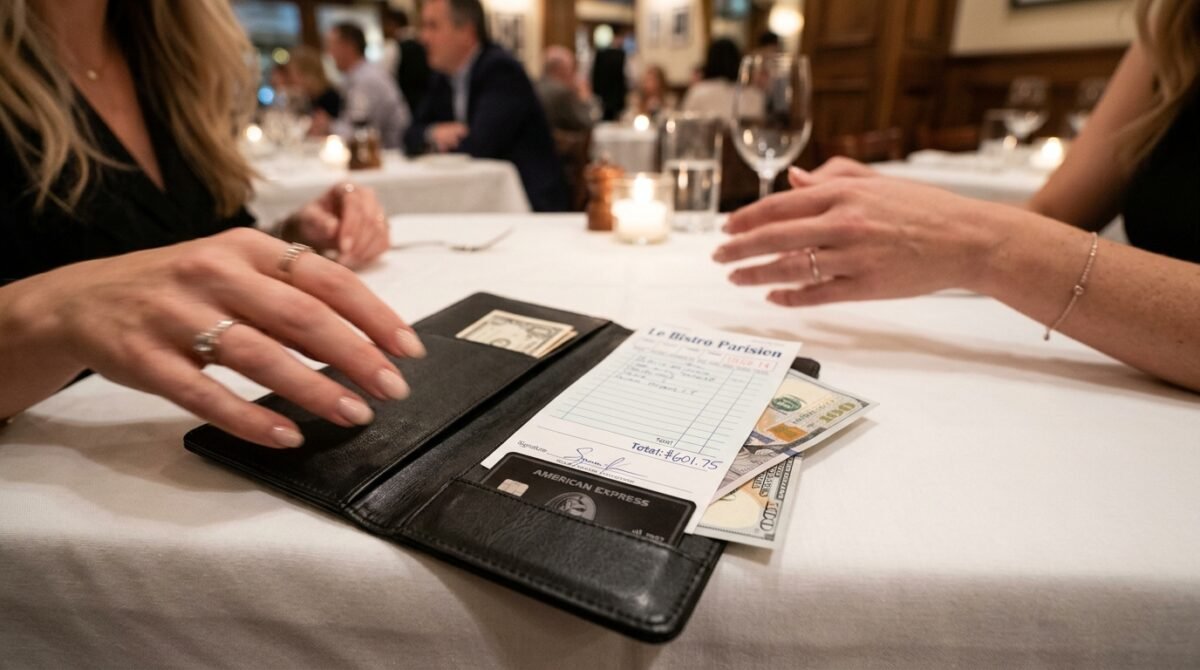
The meal itself was a blur of caviar and sharp, witty conversation that felt increasingly one-sided. Every time the waiter returned, Elena ordered another delicacy, barely touching the food she had already requested. I sat there, nursing my single glass of wine, watching the bill grow like a mounting debt I hadn’t agreed to incur. I was mentally calculating my rent, my car insurance, and my grocery budget, trying to justify how I would handle an extra fifty or sixty dollars, assuming that was my fair share.
Then came the leather folder. It landed with a soft, expensive thud. Elena didn’t even glance at the total. She was busy checking her reflection in her phone, adjusting her lipstick with a calm precision that contrasted sharply with the rising panic in my chest. When I finally opened the folder, the number $600 stood out like a siren. My head swam. I looked at her, waiting for her to offer to cover the difference, or at least acknowledge that the bill was heavily skewed toward her choices.
“Wow, that’s a bit higher than I anticipated. Let’s see, half would be three hundred each, right? Does that work for you?”
The words left her mouth as if she were asking to borrow a pen. She didn’t even wait for my response before she started typing on her phone, as if the transaction were already completed. The sheer audacity of the demand stunned me into silence. I had spent maybe $30 of the total bill. Expecting me to pay for her caviar and vintage champagne wasn’t just an oversight—it was a total dismissal of my financial reality.
The Confrontation in the Bistro Booth

I knew if I didn’t speak up then, I would never be able to forgive myself. The air in the restaurant suddenly felt thin, and the chatter around us faded into a low, muffled hum. I took a deep breath, trying to keep my voice steady, but the tremor in my hands was impossible to hide. I wasn’t going to let her walk over me like this, not tonight, and certainly not with this kind of money on the line.
I looked her straight in the eyes, holding her gaze until she stopped smiling. The shift in her expression was immediate—confusion turned into a cold, hard defensive wall. She looked at me like I had insulted her integrity, rather than me simply asking for a fair accounting of what we had consumed. It was the classic move of the entitled: turn the person who sets a boundary into the villain.
“Elena, I am not paying three hundred dollars. I ordered a salad and one glass of wine. Your share of the food and the champagne is yours. I will pay for exactly what I ordered, plus tax and tip, but I’m not subsidizing your dinner.”
She laughed, but it was a brittle, sharp sound that made the people at the neighboring table glance over. Her facade of elegance was cracking. She leaned in closer, her voice dropping to a harsh whisper. She didn’t want to have this conversation in public, but she also didn’t want to lose the argument. The battle lines were drawn right there between the half-empty bottle of vintage champagne and the discarded salad plate.
The Text Message Fallout
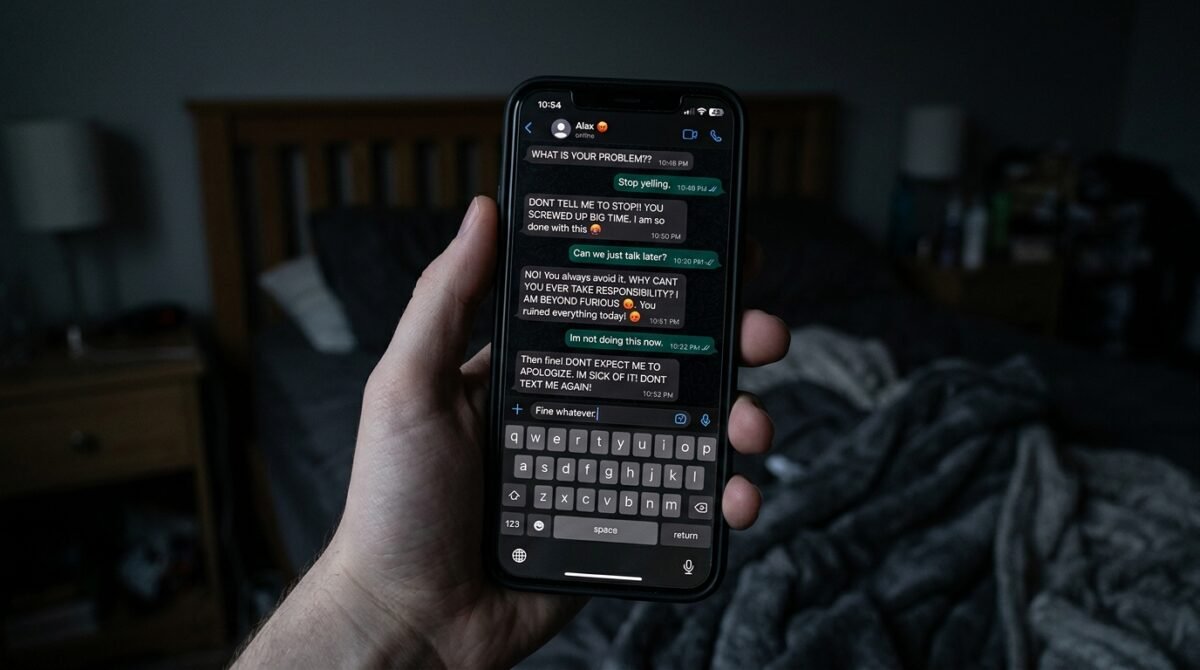
The ride home was deathly silent. I didn’t speak, and she stared out the window with an expression of performative martyrdom. The moment I walked through my front door, my phone pinged. Then again. And again. It was a barrage of text messages, each one more aggressive than the last, attempting to rewrite the reality of what had just happened at the restaurant. She was trying to pin the social awkwardness on me, claiming I was ‘ruining the vibe’ of our night.
“I can’t believe you humiliated me like that in front of the waiter. It’s just money, Sarah. I thought we were friends, but clearly, you’re just cheap. I paid for the bill because I was embarrassed, but I expect you to Venmo me your half by morning.”— Elena, sent at 11:42 PM
I stared at the screen, my thumb hovering over the reply button. I had a choice: apologize, pay the three hundred dollars, and keep the peace, or draw the line in the sand and accept that this friendship might be over. I thought about all the times I had let her get her way, all the ‘small’ concessions I had made over the years that she clearly took for granted. This wasn’t about the three hundred dollars; it was about whether or not she actually respected me as a person.
The Group Chat Explosion
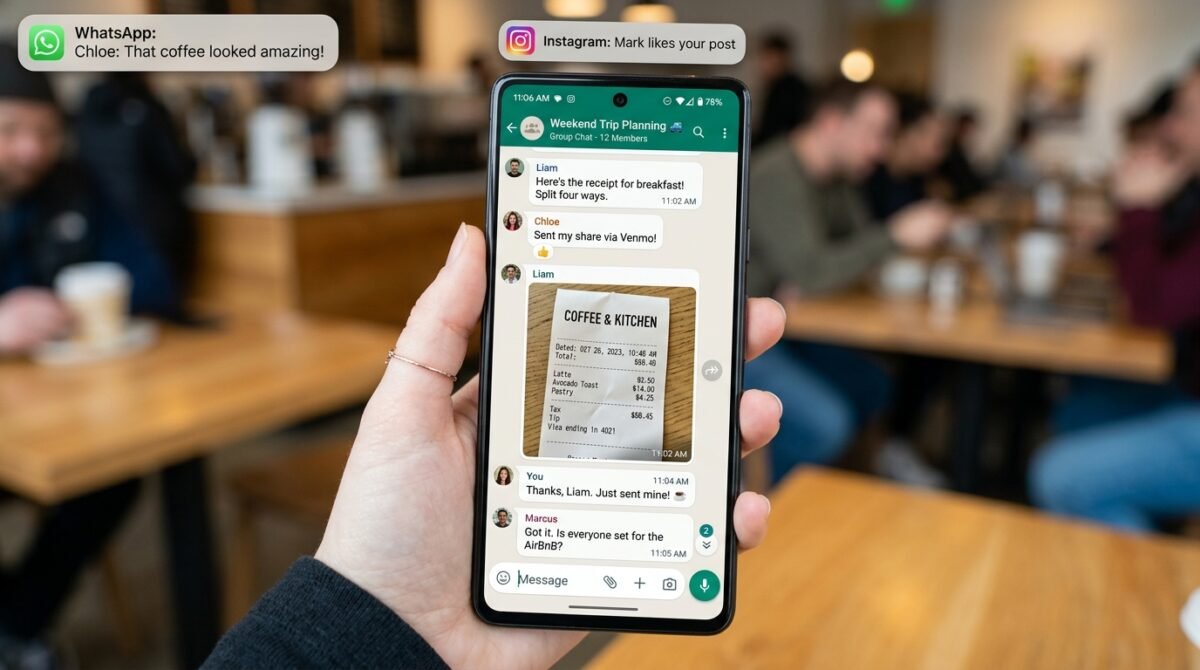
By the next morning, I realized she hadn’t stopped at just messaging me. She had taken our drama to our mutual friends, framing the story in a way that made me look like the stingy, difficult one. My phone was buzzing with notifications from our group chat, where people were chiming in with their unsolicited opinions. It was a nightmare. I hadn’t even had my coffee, and I was already being put on trial by people who didn’t know the full story.
I watched as she spun the narrative. She didn’t mention the caviar or the champagne. She simply said we went out, had a great time, and then I refused to pay my share of the bill. The manipulation was masterful, and for a few minutes, I almost doubted my own memory of the night. Then, I remembered the itemized receipt I had kept. I snapped a photo of it and sent it to the group, showing exactly what I had ordered compared to her. The silence that followed was deafening.
“I’m not paying for your $400 in champagne and caviar just because you want to play rich. Here is the receipt. Check the itemized list, everyone.”— Sarah, Group Chat
The tide began to turn. Some of our friends were horrified by the level of entitlement, while others tried to play the role of peacemakers, suggesting we just ‘split it down the middle’ to save the friendship. The pressure to conform was immense, but I stood my ground. If a friendship relies on me paying for someone else’s extravagance, then it isn’t much of a friendship at all.
The Financial Ledger of Resentment

I decided to get systematic about this. I spent the afternoon putting together a spreadsheet, not to send to her, but to clear my own head. I looked back at the last year of outings, dinners, and trips. The pattern was undeniable. Whenever we went out, she chose the venue, she chose the drinks, and she expected me to split the bill, ignoring the fact that my consumption was always a fraction of hers. I had been subsidizing her lifestyle for months, and I hadn’t even realized it.
| Occasion | My Order | Her Order | The ‘Split’ |
|---|---|---|---|
| Birthday Dinner | Pasta ($20) | Steak + Drinks ($150) | $85/each |
| Girls Weekend | Light Breakfast ($15) | Room Service/Drinks ($200) | $107/each |
| The Bistro Night | Salad ($25) | Caviar/Champagne ($550) | $300/each |
The data was sobering. Seeing it in black and white made me feel like an absolute fool. I had been so eager to maintain the image of the ‘fun’ friend that I had allowed myself to be taken advantage of financially. It wasn’t just that she was inconsiderate; she was actively using me to offset the costs of her own vanity. I realized that my own financial stability had been secondary to her comfort, and that realization was the final nail in the coffin of our relationship.
The Unannounced 6:00 AM Visit

I thought the drama would die down after I stood my ground, but Elena wasn’t the type to let a grudge fade. At 6:00 AM on a Tuesday, my doorbell rang. I opened it to find her standing on my porch, looking disheveled and furious. She didn’t wait for an invitation; she pushed past me into my living room, her eyes darting around as if she were looking for the money I owed her. I was still in my robe, completely unprepared for this level of unhinged behavior.
“Are you kidding me? You really posted the receipt in the group chat? You’ve ruined my reputation over a few hundred dollars. Pay me, or I’m going to make sure everyone knows exactly how pathetic you are.”
I felt a sudden, cold clarity. This wasn’t about the money anymore; it was about power. She wanted to see me cower, to see me reach for my wallet to silence her. I didn’t reach for my wallet. I walked over to the door and opened it wide. I told her to leave, and if she didn’t, I would call the police. The look of genuine shock on her face was worth more than the $300 she claimed I owed her. She left, but she didn’t go quietly.
Why the Sunday Dinner Table Went Silent

The fallout extended to our wider social circle. We had a joint birthday celebration for another friend that weekend, and the awkwardness was palpable. Everyone knew what had happened. Elena sat at the other end of the table, whispering to anyone who would listen, while I sat with the friends who had actually taken the time to look at the numbers. The atmosphere was stifling; nobody wanted to bring up the elephant in the room, yet it was the only thing anyone was thinking about.
When it came time to order, the tension peaked. The waiter approached, and for a moment, nobody spoke. Then, someone else suggested we just get separate checks. It was a small gesture, but it felt like a triumph. Elena was livid. She wanted the collective pool, the shared expense, the communal feeling that allowed her to hide her spending habits. By forcing the separation, we had stripped her of her favorite tool. The night went on, but the dynamic had shifted forever.
I realized then that I wasn’t the only one who had been feeling the pressure. Other friends had also felt the sting of her ‘equal split’ mentality, but they had been too afraid to speak up. My refusal to pay had acted as a catalyst. By breaking the cycle, I had given others the permission to set their own boundaries. It wasn’t a confrontation; it was a quiet, collective rejection of her entitlement. The Sunday dinner didn’t explode in fireworks, but it effectively ended her reign of financial terror.
The Reddit Community Weighs In
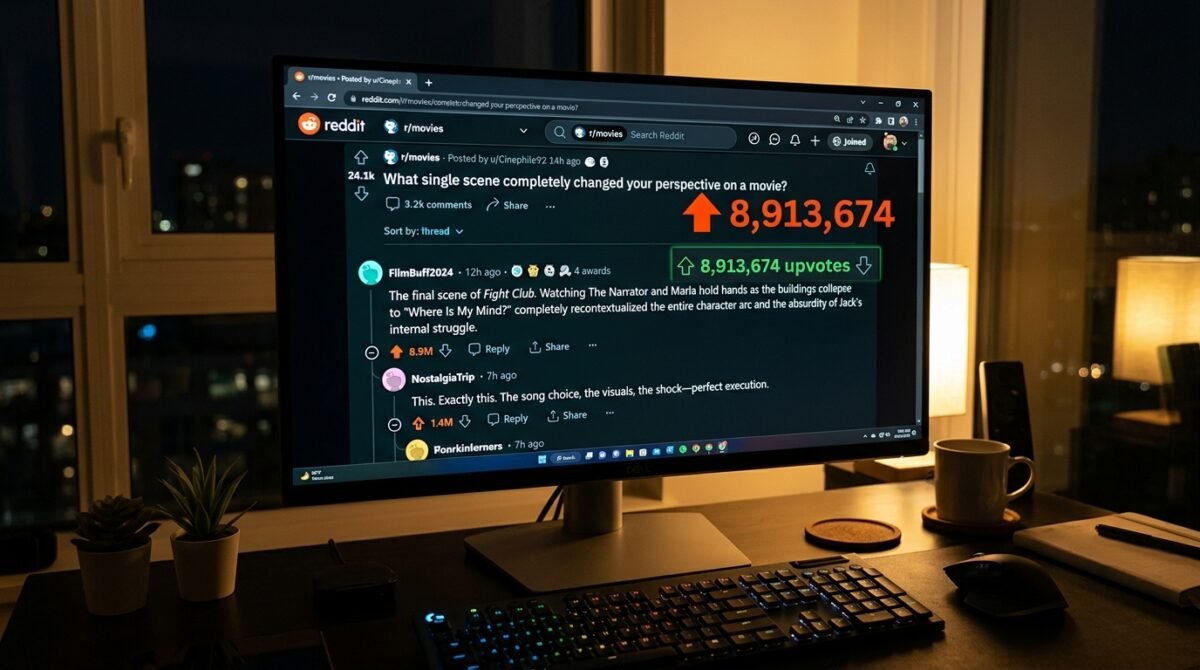
I took to the internet, needing to know if I was truly the villain in this story. I posted my dilemma on a popular subreddit, expecting a mix of reactions. I laid out the facts: the items ordered, the total cost, and the expectation of the split. The response was immediate and overwhelming. Thousands of people commented, and the general consensus was clear: I was absolutely in the right. The validation was almost dizzying.
“The ‘equal split’ rule only applies when everyone orders roughly the same amount of food and drinks. When one person orders caviar and champagne and the other orders a salad, you pay your own bill. She isn’t your friend; she’s a leach.”— u/BudgetMaster (Top Comment, 32.4k upvotes)
Another user brought up a perspective I hadn’t considered: the psychological manipulation involved. It wasn’t just about the money, but about the social leverage she gained by creating a debt that I couldn’t afford to pay. By making me feel ‘cheap,’ she was keeping me in a submissive position. The community didn’t just back me up; they analyzed the situation with a surgical precision that helped me see the entire friendship for what it truly was: a transaction designed to benefit only one person.
The Final Severing of Ties

I knew I couldn’t keep her in my life. The trust was gone, replaced by a cold, hard resentment that I didn’t want to carry around anymore. I sent her a final message, not an angry one, but a firm one. I told her that I would be paying for my portion of the meal, and if she wanted the rest, she would have to cover it herself. I blocked her on all platforms before she could respond with more vitriol. The act of hitting ‘block’ felt like lifting a heavy weight off my chest.
I didn’t lose my entire social circle, but the landscape definitely changed. Some people stood by her, either out of habit or because they enjoyed the luxury she provided. I let them go without a fight. The friends who stayed were the ones who understood the value of boundaries, the ones who didn’t view me as a prop for their social standing. I realized that my circle had become smaller, but it was also significantly stronger and more authentic.
The healing process took time. There were moments when I felt the ghost of our friendship, the lingering desire to call her and share a joke or a story. But then I would remember the look on her face when I refused to pay, the way she had invaded my home at 6:00 AM, and the way she had tried to paint me as the villain. Those memories were the anchor that kept me from drifting back into a dynamic that had caused me so much unnecessary stress.
Reflecting on the Cost of Authenticity

Looking back, I don’t regret the scene I caused. I regret that it took me so long to see the pattern. We often confuse ‘friendship’ with ‘tolerance,’ believing that being a good friend means putting up with whatever behavior is thrown our way. But that’s not friendship; that’s just being a doormat. By saying ‘no,’ I wasn’t just saving three hundred dollars; I was asserting my right to be treated with respect and consideration.
Financial boundaries are just as important as emotional ones. If you can’t be honest about what you can afford, or if someone expects you to sacrifice your goals to fund their desires, then the foundation of the relationship is already flawed. I am now much more transparent about my budget when I make plans. It’s liberating to say, ‘I can’t afford that,’ and see who stays and who leaves. The ones who stay are the ones who truly care about the person, not the potential for a shared, subsidized lifestyle.
Today, I am in a better place. My finances are stable, my social life is drama-free, and I have a much clearer understanding of what a healthy, reciprocal relationship looks like. I learned that you don’t owe anyone an explanation for why you aren’t paying for their champagne, and you certainly don’t owe them your sanity. I am no longer interested in the ‘vibe’ of an expensive restaurant if it comes at the price of my self-respect.
Conclusion
The story of the $600 dinner bill serves as a cautionary tale about the intersection of friendship and financial entitlement. What started as a simple outing transformed into a crucible of self-respect, forcing me to confront the reality of a lopsided relationship. In the end, the price of the meal was a small cost compared to the value of reclaiming my boundaries and surrounding myself with people who truly value me as an equal.
We have to ask ourselves: how many times have we ignored our gut feelings to maintain an illusion of harmony? How many times have we allowed our own needs to be sidelined for the sake of someone else’s comfort? The lesson here is simple: never let your bank account—or your sense of self—be held hostage by someone else’s definition of a ‘good time.’ Authenticity is the ultimate currency, and it’s one that no amount of caviar can buy.
What about you? Have you ever had a friend expect you to subsidize their expensive taste? How did you handle the situation, and did it end the friendship? Let us know in the comments below—your experiences might just help someone else find the courage to set their own boundaries.
What's your verdict on this dilemma?
Vote below to contribute to the official community consensus.

Have a Dilemma Keeping You Up at Night?
Share your real-life feud, wedding chaos, or relationship crossroads anonymously with our editorial team.
What do you think ?
0 Comments🛡️ Comments are moderated to protect community integrity. Your comment will appear once approved by the editorial team.