
I had spent weeks planning the perfect evening to celebrate my promotion to Senior Creative Director. It wasn’t just about the title; it was about the grueling eighteen months of late nights, missed weekends, and the quiet burnout that comes from climbing the corporate ladder. I decided on ‘Le Bernardin,’ a place that demanded a reservation months in advance and held a strict code of decorum. It was supposed to be just me and my best friend, Sarah, toasting to the future. I hadn’t seen her in three months, and I genuinely missed the version of her that existed before she decided she wanted to be a full-time ‘lifestyle brand.’
The trouble began with a simple text message. Sarah asked if she could bring ‘a couple of industry friends’ who were looking to network. I was hesitant, but knowing Sarah’s penchant for over-promising, I assumed it meant maybe one colleague. I explicitly told her it was a reservation for two, and the restaurant was notoriously firm about capacity. She brushed it off with a casual, ‘Don’t be such a stick-in-the-mud, it’ll be good for your personal branding,’ a phrase that would eventually become the soundtrack to my biggest nightmare.
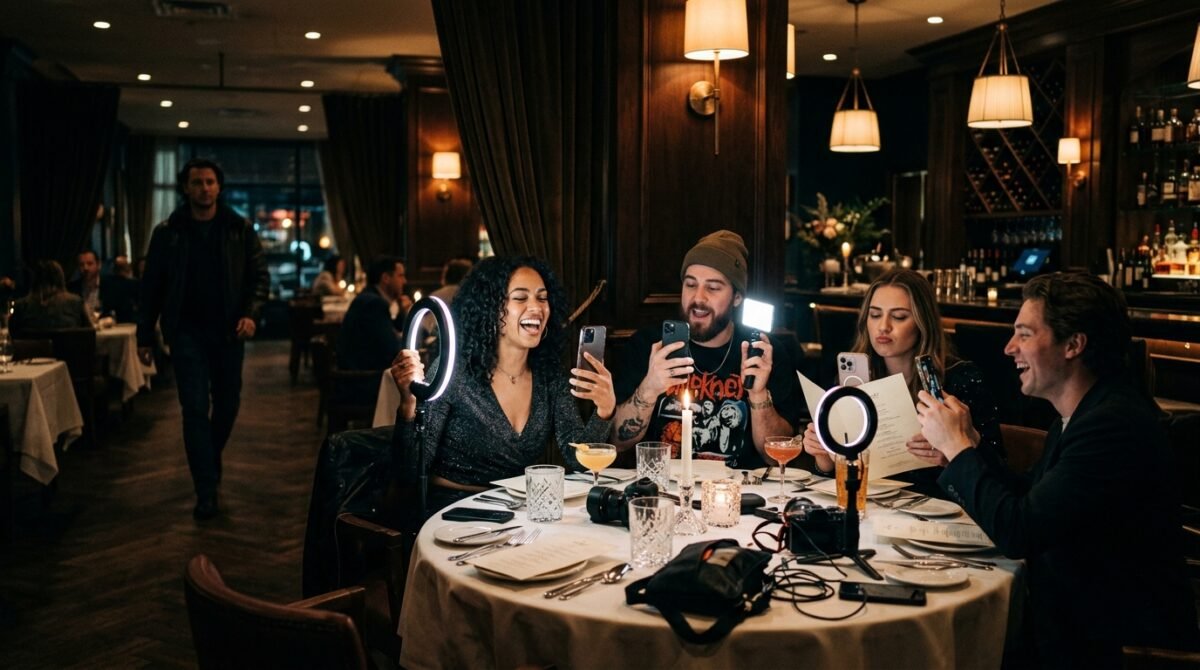
When I arrived at the restaurant, the maître d’ looked at me with a mixture of pity and confusion. I stood by the door, scanning the room for Sarah, when I saw a commotion in the corner. There, occupying a table meant for four that had been aggressively pushed together with two others, were five people I had never seen in my life, all holding expensive cameras, gimbal stabilizers, and portable lighting kits. They were busy rearranging the centerpieces for better ‘aesthetic lighting’ while the waitstaff hovered, looking visibly distressed.
The moral dilemma hit me instantly. Should I force them to leave and ruin the scene, or just sit down and accept that my hard-earned night was going to be hijacked? I looked at my reflection in the window—tired, proud, and completely disrespected. That was the moment I realized that some friendships aren’t built on mutual respect; they are built on how much value one person can extract from the other. I didn’t want to be the villain, but I refused to be the victim of someone else’s content machine.
This story isn’t just about a dinner; it’s about the erosion of boundaries in an age where everything is ‘content.’ It is about the audacity of people who view human connection as a background for their follower count. As I stood there, watching Sarah command a ring light to be moved closer to her appetizers, I made a decision that would end a decade-long friendship but save my sanity. This is how the night fell apart, and how I eventually walked away from it all.
The Illusion of a Networking Opportunity
When Sarah first texted me about the dinner, she painted it as a professional necessity. She claimed that these ‘creators’ were actually high-level consultants who could help me leverage my new title into a consulting side-hustle. I’m naturally ambitious, so the bait felt logical. I thought, maybe this is her way of being supportive, even if it was a bit boundary-blurring. I confirmed the reservation for two, thinking the others would just be stopping by for a quick drink.
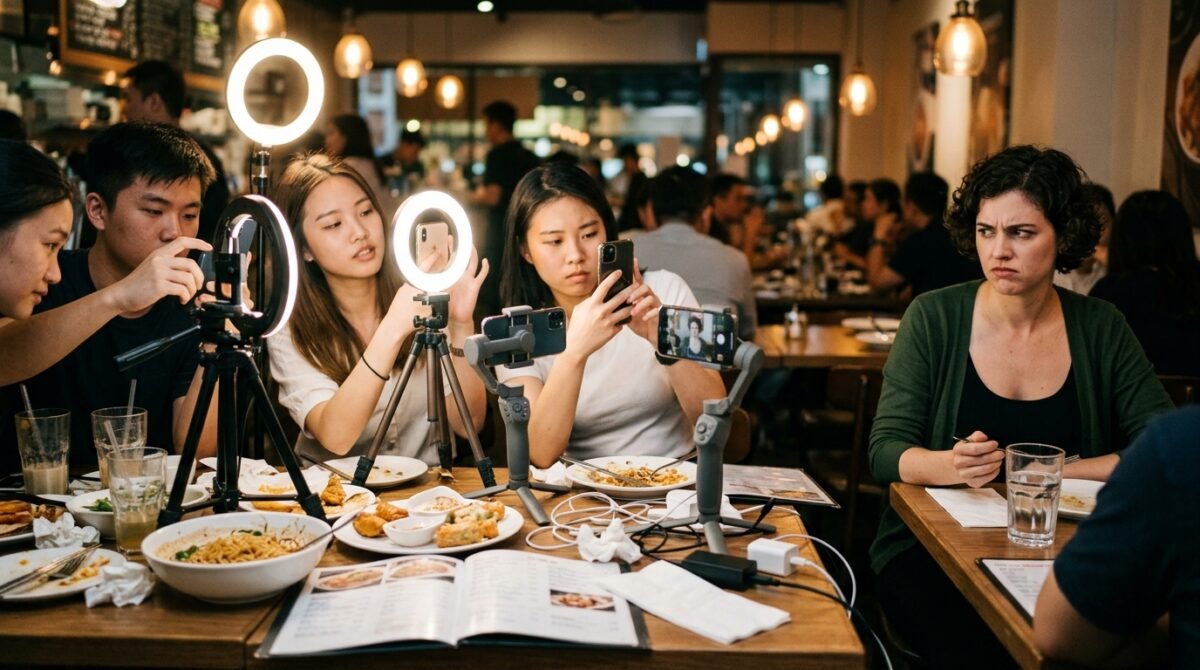
The reality, however, was starkly different. I arrived at the restaurant wearing a dress that cost more than my first car, feeling like the star of my own little celebration. I was looking forward to a menu I’d memorized and a conversation that didn’t revolve around hashtags. Instead, I walked into a frantic scene of shifting furniture and aggressive tripod placement that felt more like a low-budget movie set than a fine dining experience.
“I thought you said this was a private, celebratory dinner, Sarah? Who are these people, and why is there a ring light in the bread basket?”
— Me, witnessing the chaos.
Sarah didn’t even stand up to greet me. She was too busy checking her monitor on her phone, adjusting her hair for the camera. She looked at me with a strained, performative smile that didn’t reach her eyes. She didn’t see a friend; she saw a lighting test.
The group was loud. They were shouting over each other, discussing ‘engagement rates’ and ‘optics’ while the other patrons in the restaurant tried to enjoy their meals. The host stood nearby, clearly waiting for me to intervene. I felt a surge of embarrassment, not for myself, but for the utter lack of self-awareness being displayed by my closest friend.
I realized then that the ‘networking’ excuse was a complete fabrication. These people were influencers, or rather, wannabe influencers, and they were using my table as their rented studio. They hadn’t even ordered yet; they were just taking photos of the menu and the table settings. It was a parasitic takeover of my evening.
The Escalation of the Uninvited Guest

I approached the table, my heels clicking sharply on the hardwood floor. Sarah looked up, her expression shifting from annoyance to a practiced, fake warmth. She waved me over, acting as if I were a late arrival to a party she had hosted. The other five people didn’t even bother to look up; one of them was busy recording a ‘get ready with me’ video while complaining about the restaurant’s ‘lack of soft lighting.’
I didn’t sit down. I stood there, arms crossed, waiting for an explanation. Sarah laughed, a high-pitched, nervous sound that echoed in the quiet, sophisticated room. She tried to play it off as a ‘surprise,’ claiming that she knew I was a fan of ‘collaborative growth.’ The absurdity of the statement was almost impressive. She had turned a milestone in my career into a marketing pitch for her own mediocre aesthetic.
“You have exactly five minutes to explain why my promotion dinner looks like an infomercial set. These people are not staying, Sarah. Tell them to pack up.”
— My demand to Sarah.
She rolled her eyes, clearly annoyed that I wasn’t playing along with her script. She whispered that I was being ‘extremely difficult’ and that these people were ‘important contacts.’ She truly believed that because she had curated this disaster, I should be grateful for the exposure.
The leader of the ‘content crew,’ a guy with a bleached buzzcut and a designer vest, finally looked at me. He didn’t offer an apology. Instead, he asked if I would mind moving my chair to ‘block the glare from the window.’ The sheer entitlement was breathtaking. I had paid for the reservation, I had planned the meal, and they were telling me how to occupy my own seat.
I looked at the waiter, who was hovering about ten feet away. He caught my eye and gave a subtle, almost imperceptible nod of support. I knew then that if I didn’t put my foot down, the night would be a total loss. I wasn’t just losing my dinner; I was losing my dignity in a public space.
The Breaking Point at the Appetizer Stage
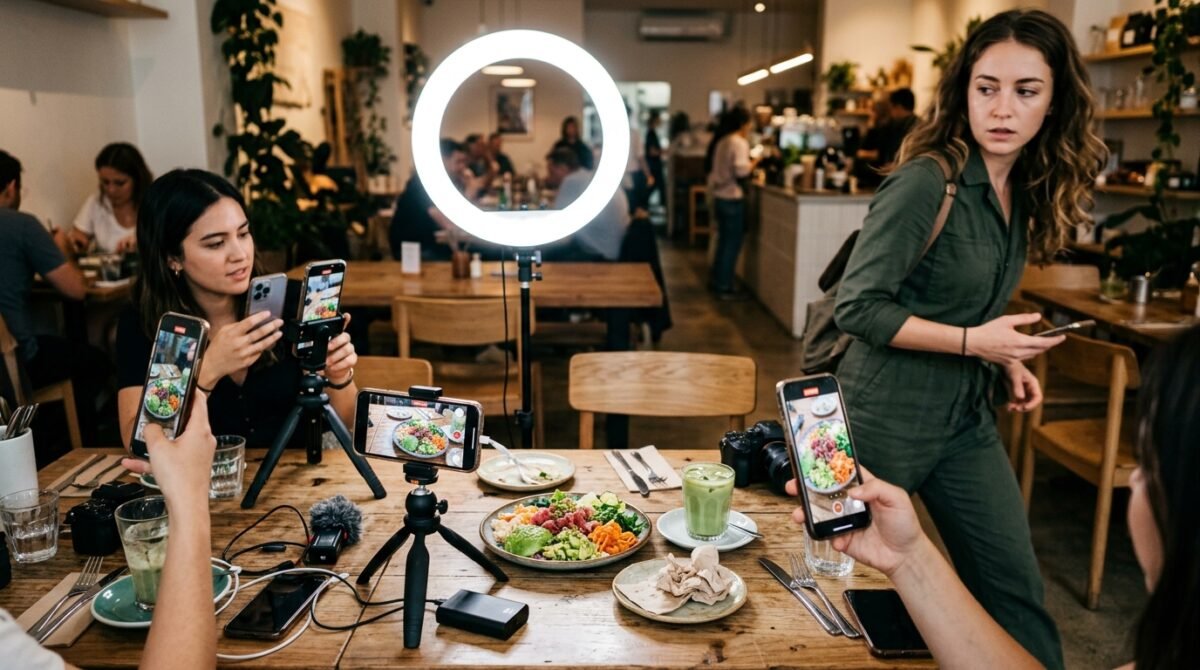
The tipping point didn’t happen with a shout or a dramatic scene; it happened with a plate of sea urchin. As the appetizer arrived, the group descended upon it like vultures. Before anyone could eat, they were all standing up, holding their phones over the food to capture the ‘perfect angle.’ They spent ten minutes debating which filter to use while the food sat there, cooling, becoming unpalatable.
I watched in silence, my hunger replaced by a cold, hard resolve. Sarah was in the middle of it, narrating to her camera about ‘exclusive culinary experiences’ and ‘surrounding yourself with driven people.’ She didn’t even acknowledge my presence. I was a prop in her content, a silent extra in her manufactured lifestyle.
“Are you going to eat, or are we just going to photograph the decay of this meal until the restaurant kicks us out?”
— My final attempt at sarcasm.
Sarah looked at me, genuinely shocked by my tone. She whispered that I was ‘ruining the vibe’ and that her followers expected high-quality content. It was the moment I realized the chasm between our realities was unbridgeable. To her, this wasn’t a friendship; it was an asset management strategy.
I realized I was essentially paying for their dinner. The reservation was under my name, and I knew how these things worked—the bill would inevitably land in my lap, or I’d be expected to cover the ‘friends’ who hadn’t brought their wallets. It wasn’t about the money; it was about the principle of being used as a doormat.
I stood up, smoothed my dress, and looked at the group. They were still arguing about the lighting, completely oblivious to the fact that they were on the verge of being humiliated. I didn’t owe them anything. I didn’t owe Sarah anything. My promotion was my own, and this dinner was supposed to be about me, not her brand.
The Silent Departure and the Bill
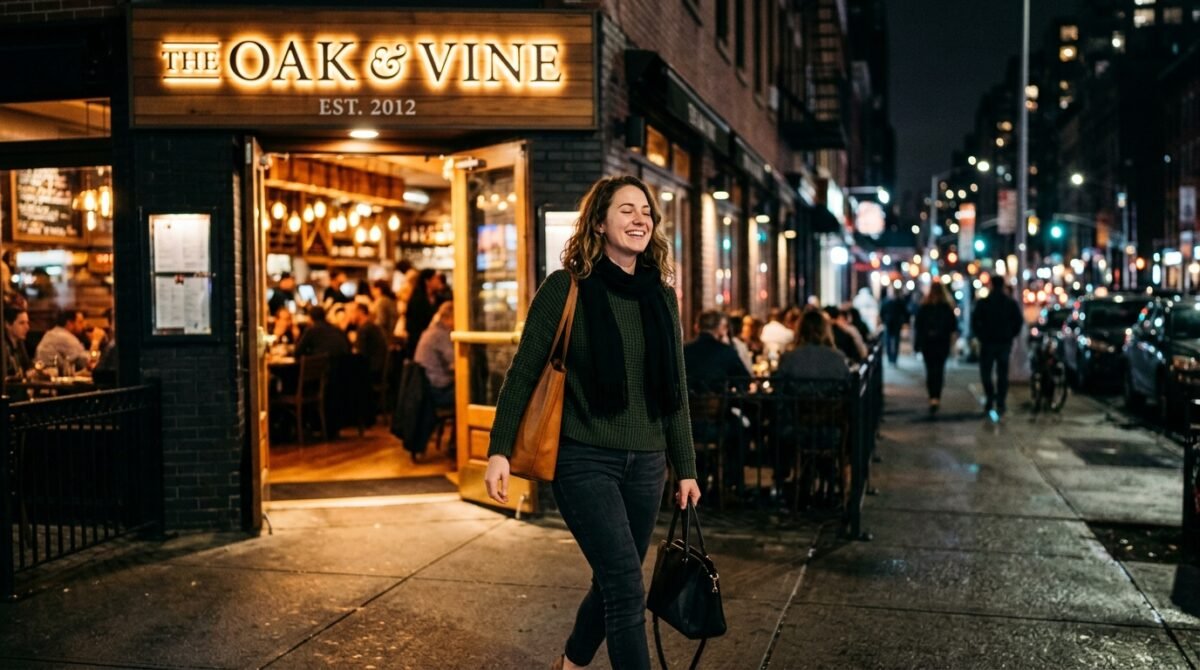
I walked to the host stand. My heart was pounding, but my mind was clear. I asked for the bill for the drinks we had ordered and the single appetizer that had been ruined by the photo shoot. The host looked at me, relieved. He understood exactly what was happening. He didn’t even ask for a credit card; he just handed me the check for the appetizers and the two cocktails.
I didn’t go back to the table. I didn’t say goodbye. I walked out of the restaurant, the cool night air hitting my face like a liberation. As I walked toward my car, I could see them through the window. They were still there, pointing their lights at the empty chairs, completely unaware that their host had vanished. It was the most satisfying thing I had experienced in years.
“I hope the photos were worth it. Enjoy the bill.”
— A text message I sent before blocking her.
The realization of what I had done didn’t hit me until I was halfway home. I had burned the bridge, but the bridge was made of straw and vanity. I felt lighter, more myself than I had in years. I went home, ordered a pizza, and finally enjoyed the celebration of my own success, on my own terms.
My phone started buzzing incessantly. It was Sarah, then the ‘content crew,’ then mutual friends who had clearly been coached to tell me I was being ‘petty’ and ‘unprofessional.’ I silenced them all. I didn’t want to hear their justifications. I didn’t want to be part of the narrative they were undoubtedly crafting.
The next morning, I checked my social media. Sarah had posted a story with the caption: ‘Some people just aren’t meant for the high-life. Learning to prune the garden.’ She was trying to frame it as a victory, as if I had been the one excluded. It was the final laugh. She had lost her best friend, and all she had to show for it was a few filtered photos of cold food.
The Digital Fallout and the Group Chat
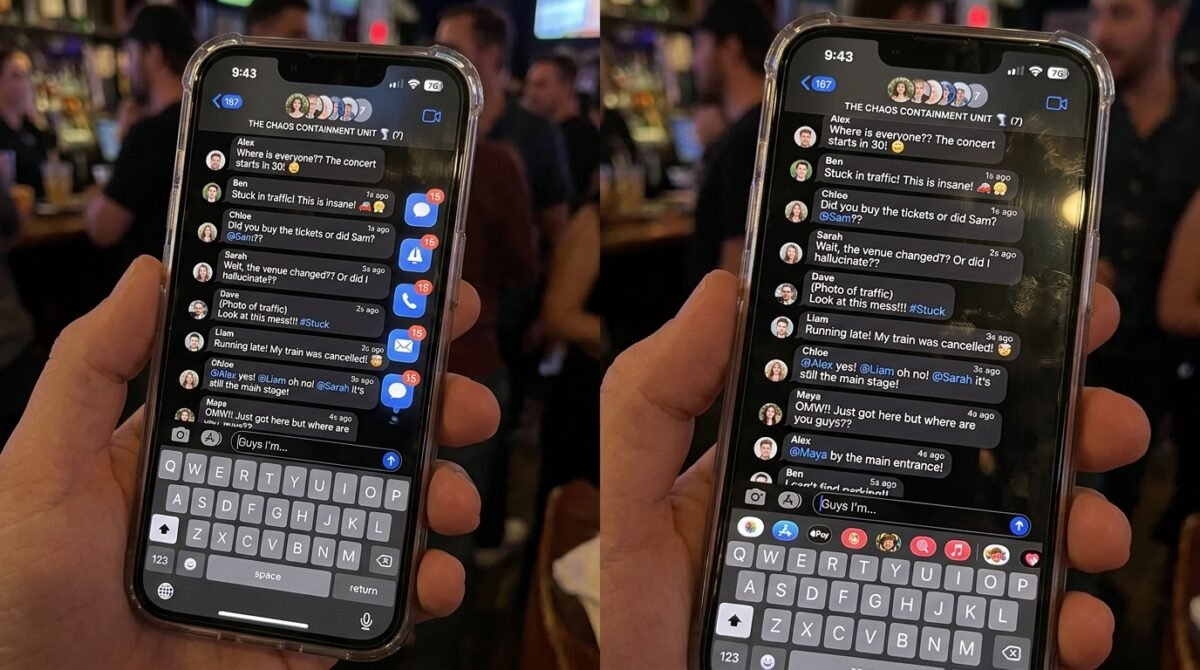
By the following afternoon, the fallout was in full swing. My phone was a graveyard of notifications. Sarah had taken to our mutual friend group chat to paint me as the ‘jealous, toxic friend’ who couldn’t handle her success. She claimed I had invited them and then had a ‘bizarre, unhinged breakdown’ because I couldn’t handle the attention they were getting. It was a masterclass in gaslighting.
“I honestly feel bad for her. She was so insecure about the promotion that she just lashed out at everyone. We were just trying to help her network.”
— Sarah’s message in the mutual friend group chat.
I took screenshots of everything. I didn’t respond to her directly; I didn’t want to engage in the game. Instead, I sent the receipts to the two friends in the group who I actually trusted—the ones who knew the full context of my promotion and my long history with Sarah. They were horrified. They hadn’t heard her version, but once they saw the evidence, the tide turned quickly.
The ‘content creators’ also tried to get in on the action. One of them, the guy with the bleached buzzcut, messaged me on LinkedIn, accusing me of ‘sabotaging their brand collaboration’ and threatening to report my ‘unprofessional behavior’ to my new company. It was laughable. My company didn’t care about a dinner party dispute, but the audacity of him trying to involve my professional life was the last straw.
I sent a firm, professional message to him, documenting that I had made the reservation, I had paid for my portion, and that any further contact would be considered harassment. He stopped messaging immediately. They were all bark and no bite, just people hiding behind their screens, hoping that intimidation would get them what they wanted.
The group chat began to fracture. Some people defended Sarah, citing her ‘hustle culture,’ while others started questioning why she felt entitled to hijack someone else’s celebration. It was a fascinating study in social dynamics. I realized that my friends were either people who valued actual connection or people who were just waiting for their own turn to be in the spotlight.
The Reddit Trial: Community Verdict
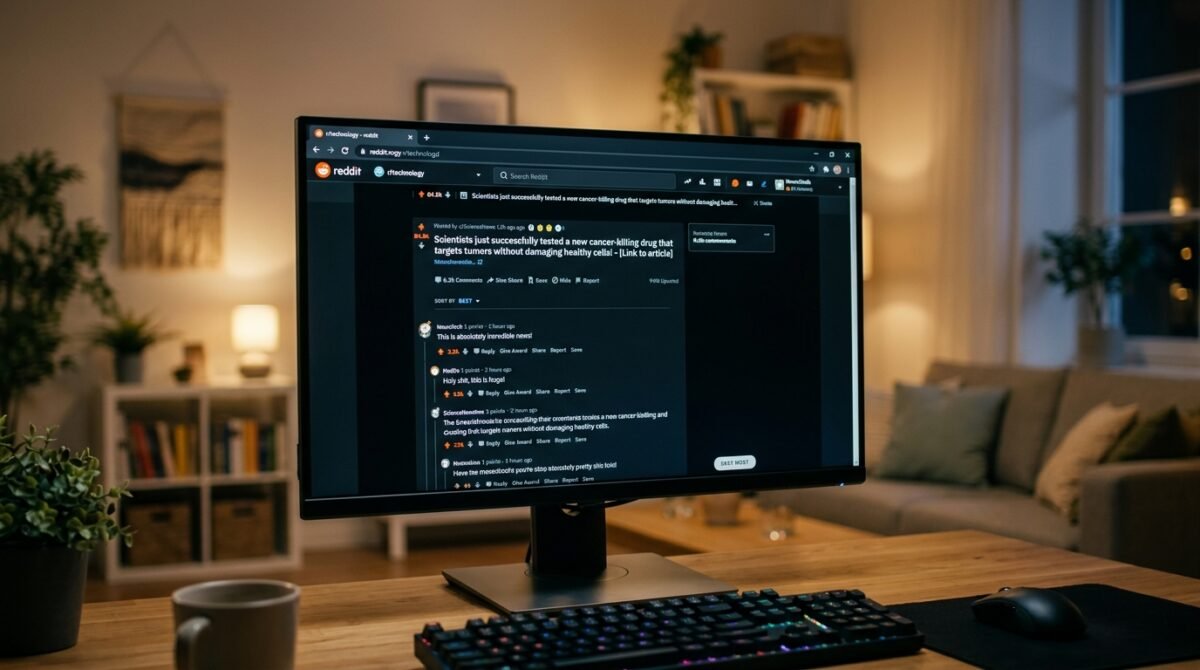
I posted a condensed version of the story on a popular subreddit, mainly to see if I was actually the one in the wrong. I wasn’t looking for validation, just a reality check. The response was overwhelming. Within hours, the thread had thousands of comments, most of them fiercely defending my choice to walk away.
“NTA. You didn’t leave a dinner; you escaped a hostage situation. These people aren’t your friends; they’re parasites who feed on your social capital. Good for you for drawing a hard line.”
— u/AssertiveBoundary, 18.2k upvotes.
There were, of course, the contrarians. Some argued that I should have been more ‘gracious’ and that a ‘real friend’ would have accommodated the influencers. Those comments were quickly downvoted into oblivion by people who recognized the toxic entitlement for what it was. It felt good to have the community confirm that I wasn’t going crazy.
The thread became a repository for similar stories. People shared their own experiences with friends who had turned into ‘content obsessed’ zombies, ruining weddings, funerals, and graduations for the sake of a post. It made me realize that this was a systemic issue, not just a problem with Sarah. The pressure to live a ‘curated’ life is destroying real-world relationships.
I read through the advice, the warnings, and the support. It gave me the perspective I needed to move forward. The consensus was clear: I had set a boundary, and when it was violated, I had enforced the consequence. That is the essence of self-respect. Everything else—the drama, the lies, the social media posturing—was just background noise.
The community also provided some practical advice on how to handle the professional fallout. Several people suggested that I document the threats from the ‘content creator’ just in case he tried to actually contact my firm. It was a level of foresight I hadn’t considered, but it made sense. I wasn’t just defending my friendship; I was defending my reputation.
Reflecting on the ‘Hustle Culture’ Poison

Looking back, I can see the signs of Sarah’s transformation over the last few years. It started small—a photo of a coffee cup here, a long-winded caption about ‘manifesting’ there. It slowly escalated until her entire life became a performance. Our hangouts stopped being about catching up and started being about where we could go to get the best pictures.
I had been ignoring it because I felt guilty. I felt like I was being judgmental, that I was ‘hating’ on her success. But there’s a difference between success and performance. Success is building something real; performance is just pretending to have something worth showing off. And in this case, her performance was being subsidized by my time, my money, and my patience.
It’s a dangerous kind of poison, this ‘hustle culture.’ It tells you that your worth is tied to your audience, that your experiences are only valid if they are documented and approved by strangers. It strips away the intimacy of human connection and replaces it with a cold, transactional dynamic. I was tired of being a transaction.
“I didn’t lose a friend; I lost a branding consultant I never hired. The space she occupied is now filled with people who actually care about me, not my follower count.”
— My internal monologue on the train to work.
I started noticing how many people are falling into this trap. Everyone is so busy trying to look like they’re having a good time that they forget to actually have a good time. It’s an exhausting way to live, and I wanted no part of it. I wanted to go back to being present, to enjoying a meal without feeling the need to photograph it.
This realization changed how I look at my own professional life as well. I’m a Creative Director; I know a thing or two about optics and marketing. But there is a line where art becomes manipulation. I want to build things that matter, not things that just look good on a feed. That’s the kind of work I want to do, and that’s the kind of life I want to live.
The Aftermath: Rebuilding Boundaries

The weeks following the dinner were difficult but clarifying. I had to navigate the awkwardness of mutual acquaintances and the occasional snide comment on social media. But I found that by simply ignoring the noise, the drama eventually died down. People move on, and they found a new target to focus their attention on.
I started focusing on myself. I took up hobbies that had nothing to do with being ‘aesthetic’—gardening, reading physical books, hiking without taking a single photo. It was incredibly grounding. I realized how much of my life had been spent unconsciously following the trends Sarah pushed on me.
I also reached out to the friends I had neglected during our friendship. It was amazing how much more authentic those connections were. We talked, we laughed, and we shared real moments that weren’t captured on camera. It reinforced that the loss of the toxic friendship was actually a net gain for my personal growth.
“Boundaries aren’t walls; they’re gates. They keep the wrong things out and let the right things in. I’m much happier with who I’ve let back in.”
— A journal entry from two months after the incident.
I also had to have a frank conversation with myself about why I let it go on for so long. I think I was afraid of being alone, of losing the history we shared. But history isn’t a reason to stay in a situation that is actively draining you. Once I accepted that, the guilt vanished.
I’m more careful now about who I invite into my inner circle. I value people who are present, people who aren’t constantly looking for the next photo op. I want friends who are interested in the substance, not the surface. And surprisingly, those people are much easier to find when you stop trying to curate your life for an audience.
The Final Lesson: Why We Walk Away

If there’s one lesson I’ve learned, it’s that it is never too late to reclaim your life. You are the architect of your own experience, and you have every right to decide who gets to be a part of it. If someone is consistently making you feel like a guest at your own party, they don’t deserve a seat at your table.
I don’t regret walking out. It was the most empowering moment of my professional life. I stood up for myself, and in doing so, I proved that I value my own dignity more than I value the approval of someone who doesn’t respect me. It was a hard lesson to learn, but it was worth every bit of the discomfort.
“Don’t ever let someone turn your life into their content. You are the main character; don’t let anyone else write your script.”
— My advice to anyone dealing with similar boundary-pushing friends.
I still see Sarah’s posts occasionally. They look the same as they always did—highly filtered, carefully staged, and fundamentally hollow. And that’s okay. That’s her journey, not mine. I have no ill will toward her; I just have no place for her in my life.
I’m happy. I’m successful in my career, and I’m surrounded by people who love me for who I am, not what I can do for them. And honestly, that’s all I ever wanted. The dinner was a disaster, but it was the catalyst for a much better life.
So, the next time you feel that sinking feeling in your gut—the one that tells you something is wrong, even when everyone else is smiling—listen to it. Walk away. Your peace of mind is worth more than any dinner, any event, or any friendship that demands you sacrifice yourself for its own sake.
Conclusion
In the end, this experience wasn’t about the money, the restaurant, or the influencers. It was about the fundamental right to protect your peace. We live in an era where the boundary between public persona and private reality is increasingly blurred, and it’s up to us to draw those lines in the sand. When Sarah brought those people to my dinner, she wasn’t just being rude—she was testing the limits of my boundaries, and I finally passed the test by leaving.
This story has sparked a massive debate in my social circles and online. Some think I was too harsh, while others think I was overdue for a cleanup. It’s a classic dilemma: do you owe your friends infinite patience, or do you owe yourself the respect of walking away when a line is crossed? I’ve chosen the latter, and for the first time in a long time, I feel completely in control of my own life.
I’d love to hear what you think. Have you ever had to walk away from a toxic friend who prioritized their ‘brand’ or their ‘content’ over your actual friendship? What was your breaking point? Let’s discuss in the comments below.
What's your verdict on this dilemma?
Vote below to contribute to the official community consensus.

Have a Dilemma Keeping You Up at Night?
Share your real-life feud, wedding chaos, or relationship crossroads anonymously with our editorial team.
What do you think ?
0 Comments🛡️ Comments are moderated to protect community integrity. Your comment will appear once approved by the editorial team.