
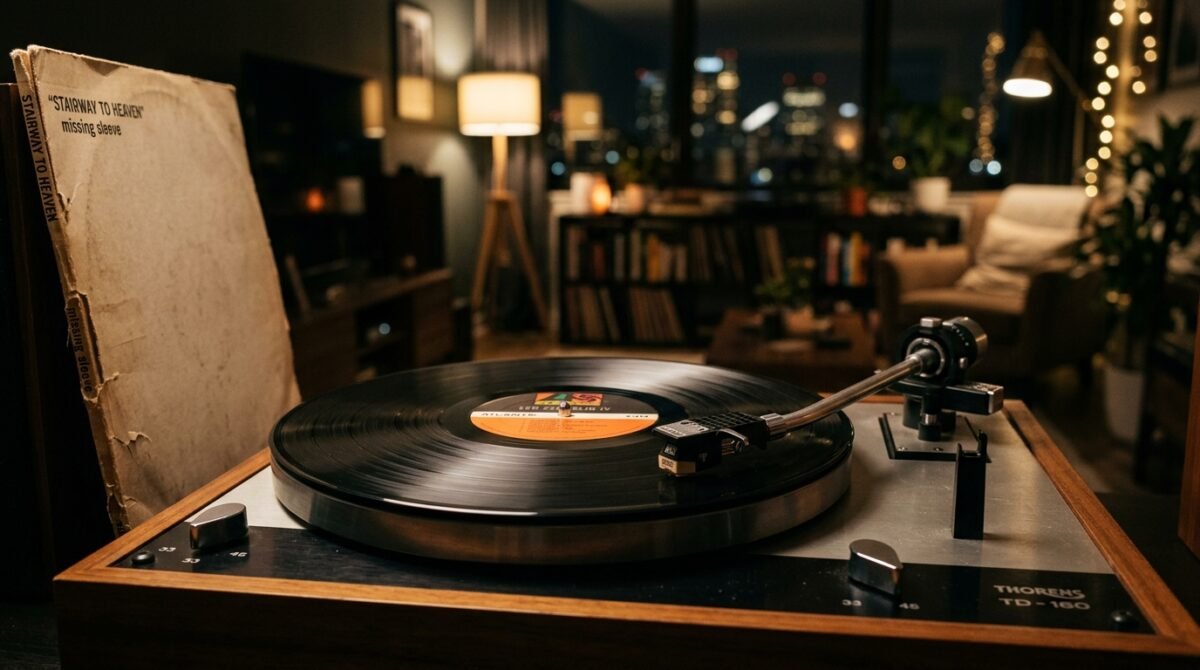
I have spent the better part of a decade hunting through dusty basement bins and navigating obscure online forums to curate my collection. My vinyl records aren’t just plastic discs; they are history, investment, and a deeply personal map of my life’s soundtrack. When I moved in with Sarah, I made it crystal clear: the office was off-limits, and the shelves were strictly ‘look, don’t touch.’ For a while, it worked. We split the bills, we kept the common areas clean, and I lived in a state of naive comfort, believing that mutual respect was the foundation of our living arrangement.
But financial stress has a way of stripping away the veneer of civility. When Sarah lost her freelance gig and the utility bills started piling up, the tension in our apartment became thick enough to cut with a knife. I was working overtime to cover my end, and I assumed she was doing the same. I never imagined she would look at my prized, first-pressing jazz collection—some of which I’d paid hundreds of dollars for—and see nothing more than quick, liquid cash.
The realization didn’t come with a confession. It came with an empty shelf and a lingering sense of dread. When I confronted her, she didn’t even have the decency to look ashamed. She treated it as a matter of survival, a utilitarian equation where my property was simply an asset to be liquidated to keep the lights on. That cold, calculated entitlement was the moment I realized our friendship was dead and my path to justice would be paved with legal filings.
This is the story of how I stopped being the ‘accommodating roommate’ and became a plaintiff. It’s a story about boundaries, the arrogance of people who feel entitled to your labor and your possessions, and the harsh, satisfying reality of small claims court. When someone steals your peace, sometimes the only way to get it back is to demand a refund—in front of a judge.
The Morning the Silence Felt Too Loud
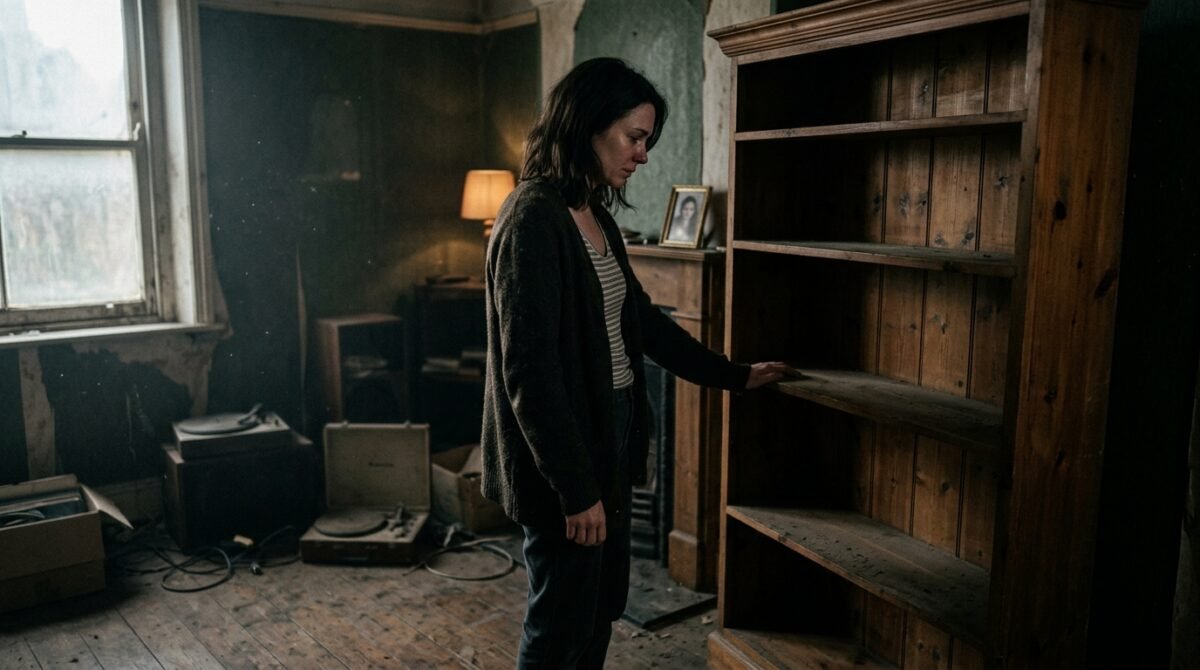
It was a Tuesday morning when the silence in the house felt fundamentally different. I walked into the office, coffee in hand, ready to spin a Miles Davis record to wake up properly, only to find the dedicated section of my shelf barren. It wasn’t just one record; it was a curated set of original pressings I had spent years acquiring. My heart dropped into my stomach. I stood there, staring at the empty space, feeling a physical ache in my chest that defied logic.
I texted Sarah immediately, my fingers trembling as I typed. I assumed it was a prank, or perhaps she had moved them for cleaning. I was so desperate for a reasonable explanation that I was prepared to laugh off the intrusion if she just told me she’d moved them. But the response I got back was brief, detached, and utterly terrifying in its implications.
“I had to take care of the electric bill and the internet was getting cut off today. I took a few things to that record store downtown. I’ll replace them when I get paid next month. Chill out, it’s just music.”
— Text from Sarah, 9:14 AM
I read the message three times before the reality settled in. She hadn’t just ‘borrowed’ them; she had sold them. Without my knowledge, without my permission, she had walked into a shop and traded my history for her utilities. The sheer audacity of her tone—the ‘chill out’—sent a surge of adrenaline through my veins that I haven’t felt since childhood. This wasn’t a roommate emergency; this was a fundamental violation of my space and my autonomy.
I didn’t reply to the text. I didn’t want to engage in a back-and-forth that would inevitably result in her gaslighting me about ‘priorities.’ Instead, I started documenting. I took photos of the empty shelves, I pulled up my receipts from Discogs and eBay, and I began calculating the market value of the missing pressings. By noon, I wasn’t just angry; I was preparing a dossier.
I remember sitting on the floor of that office, surrounded by the rest of my collection, wondering how I had let someone this entitled into my life. The betrayal wasn’t just the money; it was the total lack of respect for the time and passion I had invested in those items. She looked at those records and saw a bill payment; I looked at them and saw my identity. The divide between us was now an unbridgeable canyon.
The Kitchen Confrontation
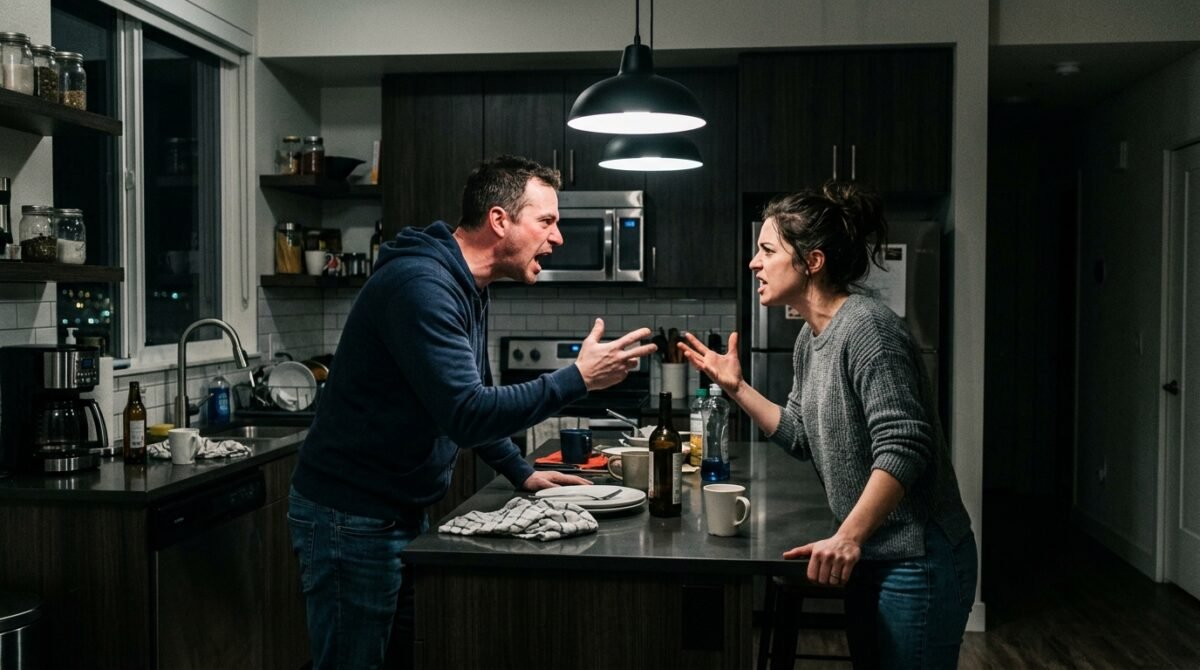
When Sarah returned home that evening, she walked through the door with a smug, self-satisfied look on her face. She’d paid the bills, she’d ‘solved’ our problem, and in her mind, she was the hero of the day. She didn’t expect to find me waiting for her in the kitchen, a stack of papers in my hand and a look on my face that she later described in a text to her mother as ‘unhinged.’
I didn’t yell. I kept my voice terrifyingly calm. I asked her exactly which store she went to, and exactly how much they had given her for the records. Her smile faltered. She tried to deflect, claiming that she was doing what any ‘good roommate’ would do to keep our living situation stable. She kept trying to pivot the conversation to the electricity, as if the utility company somehow entitled her to my property.
“You don’t get it, do you? You sold items worth over four figures to pay a two-hundred-dollar bill! You stole from me to cover your own financial incompetence. That is not being a good roommate; that is being a thief.”
— Me, during the kitchen confrontation
She exploded then. She started listing all the times she’d bought household supplies or covered the extra cost of cleaning services. She was building a narrative where she was the long-suffering martyr who had finally reached a breaking point. She even had the gall to tell me that my ‘obsessive collection’ was taking up space that she could have used for her own things. The sheer, warped logic of her argument was dizzying.
I stood my ground, my arms crossed. I told her that if she didn’t get my records back—or pay the full market value of the ones sold—I would be filing a police report and taking her to small claims court. She laughed at me, telling me that nobody would take a case about ‘old records’ seriously. She clearly underestimated the depth of my resolve and the extent of my documentation.
The conversation ended with her slamming her bedroom door and me sitting at the kitchen table, finalizing the list of every single record she had taken. The damage was done. The trust was gone. And I realized that for all her bluster, she was terrified of what would happen if I actually followed through. I didn’t sleep that night; I was too busy researching legal precedents for conversion of property.
The Digital Breadcrumb Trail
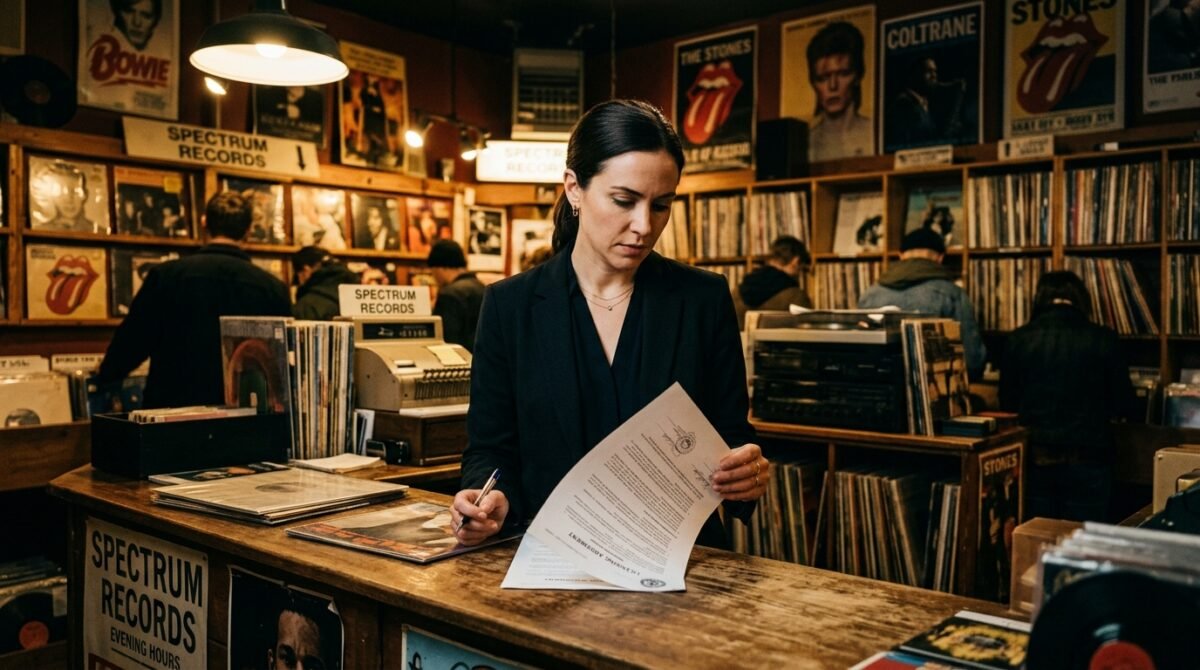
The next morning, I drove down to the record shop she had mentioned. I had a printout of the specific records, their catalog numbers, and my receipts. The owner was a nice guy who clearly felt uncomfortable when I explained what had happened. He pulled up the transaction history. Sarah had sold them for a fraction of their worth, clearly just looking for the fastest payout possible.
He informed me that he had already sold two of the records to a collector who had come in an hour after she left. My stomach turned. Those two records were rare Japanese pressings I had spent years searching for. I felt a wave of nausea, but I kept my composure. I asked him to pull the security footage and provide a signed statement confirming the sale, noting that I was reporting the items as stolen property.
The shop owner was cooperative, mostly because he didn’t want the legal headache of dealing with stolen goods in his inventory. He gave me the records he still had on hand and a document detailing the transaction. With that paper in my hand, I had everything I needed. I didn’t need to yell at Sarah again; I had the proof of the crime, the value of the missing items, and a witness.
“Hey, I have the store owner’s statement and the receipts for the ones you sold. I’m giving you 24 hours to pay me the full market value of the missing records, or I’m filing the lawsuit. Your choice.”
— My text to Sarah, 11:30 AM
She didn’t reply for hours. I knew she was scrambling, checking her bank account, calling her friends, trying to find a way out of the hole she had dug for herself. I felt a cold sense of satisfaction. She had spent weeks treating me like I was the one who was lucky to have her as a roommate, and now the tables had turned completely.
When she did reply, it was a pathetic attempt at manipulation. She tried to offer me ‘installments’ and suggested that we just ‘move past this.’ She had no idea what ‘moving past this’ looked like to me. I had already printed out the forms for small claims court. My life had become a mission of calculated, righteous, and entirely legal retribution.
Reddit Weighs In: The Community Verdict

I decided to post the situation on a popular subreddit for legal and personal dilemmas, leaving out the specific location but detailing the timeline and the texts. I needed to know if I was being too harsh, or if my anger was justified. The response was immediate and overwhelming. Thousands of people chimed in, and the consensus was as cold as my resolve.
“This is not a ‘roommate dispute.’ This is a crime. She committed theft. You need to file a police report immediately and sue her for every cent. Do not let her talk you into ‘installments.’ She is a liability.”
— u/LegalEagle99, 14.2k upvotes
The thread became a repository of people sharing their own horror stories about roommates, many of which involved stolen valuables. The sheer volume of people telling me to ‘get out’ and ‘sue her’ provided the validation I needed. I wasn’t being ‘petty’ for wanting to be made whole. I was being a victim of someone who had decided my property was her piggy bank.
“The audacity of people who think they can sell someone else’s stuff to pay their own bills is mind-boggling. She didn’t sell them because she had to; she sold them because she didn’t respect you enough to ask for a loan. Sue her. Small claims court is specifically designed for people like her.”
— u/PropertyRightsMatter, 8.9k upvotes
Reading the comments allowed me to see the situation from a distance. I saw that her behavior was a pattern, not a mistake. She had been pushing boundaries for months—eating my food, using my laundry detergent, ‘borrowing’ my clothes—and I had let it slide because I hate conflict. This wasn’t just about the records; it was about the years of accumulated resentment that she had ignored.
I felt a weight lift off my shoulders. I wasn’t alone in this. The internet told me that I was right to be furious, and more importantly, they gave me the confidence to stop trying to reason with her. I stopped checking the thread after the first day; I had my path, and I didn’t need any more advice to know that the right thing to do was to hold her accountable.
The Certified Letter of Doom
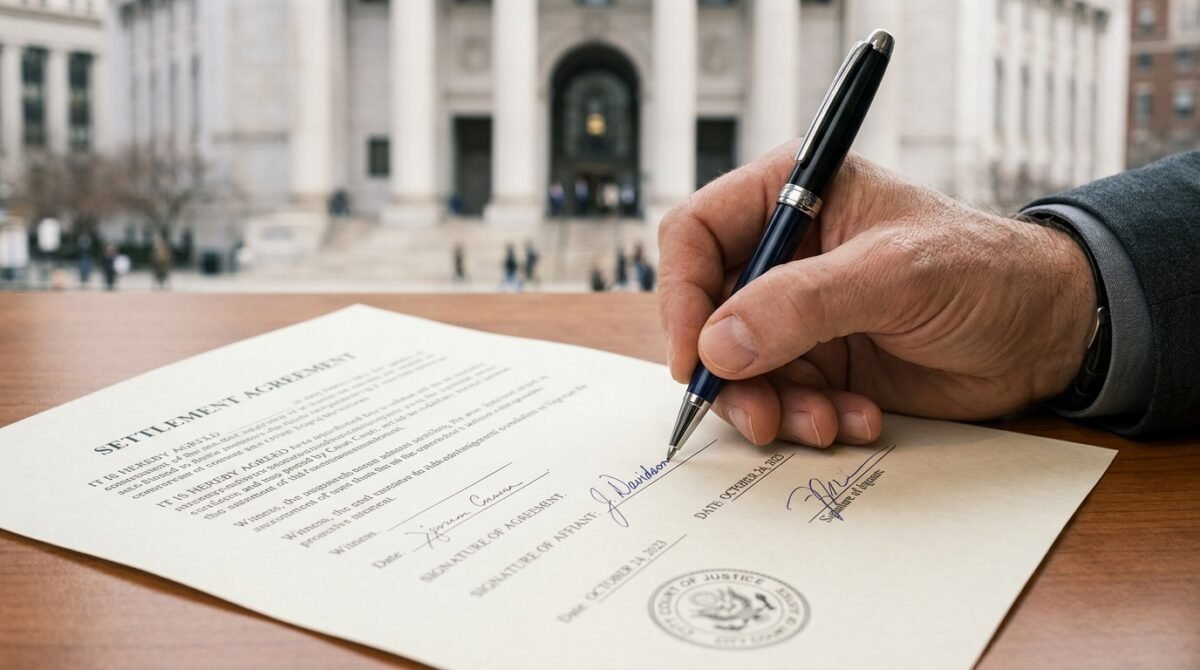
I decided to make it official. I didn’t want any more ‘he-said-she-said’ nonsense. I drafted a formal demand letter, detailing the itemized list of records, their current market value, and the evidence of the transaction from the record store. I had it notarized and sent it via certified mail, return receipt requested. It was a move that felt both ceremonial and essential.
When she received the letter, the dynamic in the house shifted from ‘tense’ to ‘toxic.’ She refused to speak to me, leaving notes on the fridge and slamming doors whenever I entered a room. It was a pathetic display of immaturity, but it didn’t bother me. I was past the point of wanting a conversation. I wanted a check.
“I don’t want to talk. I don’t want to ‘resolve’ this over coffee. You have until Friday to pay the amount specified in the letter. If I don’t have the funds, you will be served at your place of work.”
— My final note on the fridge
The Friday deadline came and went with no money. She had ignored the letter, thinking that I was just posturing. She still believed that because we were ‘friends’—or at least, lived together—I wouldn’t take the final step. She thought our relationship shielded her from the consequences of her actions.
I spent that weekend gathering my final exhibits: the receipts, the shop owner’s statement, the text messages, and the record of the certified letter. I was ready. I walked into the courthouse on Monday morning, feeling a strange sense of clarity. For the first time in months, I felt in control of my life.
As I filled out the paperwork for the small claims filing, I looked around the room. I saw other people there for similar disputes, and I realized that everyone had a story like mine. It wasn’t ‘petty.’ It was the system working the way it was supposed to. I paid the filing fee, received my court date, and felt the immense satisfaction of knowing that the end was finally in sight.
The Day in Court

The courtroom was small, beige, and smelled faintly of floor wax. I arrived early, dressed professionally, clutching my folder of evidence. Sarah showed up ten minutes late, looking disheveled and frantic. She had clearly expected me to bail out at the last minute, and seeing me sitting there, ready to present, seemed to finally break through her wall of denial.
When the judge called our case, I stood up and presented my evidence with the precision of a surgeon. I didn’t get emotional. I didn’t bring up the fights, the laundry, or the food. I focused entirely on the facts: the records were mine, they were taken without permission, they were sold for a specific amount, and I had the proof of the transaction.
“Your Honor, I am seeking compensation for the market value of the missing property. The defendant admitted to the sale in writing, and the local store has confirmed the transaction. I have the receipts to prove the original value.”
— Me, presenting to the judge
Sarah tried to argue that it was a ‘shared household’ and that she felt ‘entitled’ to sell items to keep our utilities on, but the judge shut her down quickly. The law, as it turns out, is remarkably clear on the matter of personal property theft, even among roommates. The judge looked at her over his spectacles and asked if she had any evidence that I had authorized the sale.
She had nothing. She just stood there, stammering about how hard it was to find a job and how I should have been more understanding. The judge didn’t care about her job prospects; he cared about the contract of our living arrangement and the sanctity of my property. I watched her face fall as the judge issued the ruling in my favor.
It wasn’t a million-dollar lawsuit, but it was enough to cover the replacement cost and the court fees. Seeing the judge sign the order was the most satisfying moment of my year. I didn’t look at her as I walked out. I didn’t need an apology. I had the judgment, and that was worth more than any words she could offer.
The Aftermath and The Move-Out

The weeks following the court case were a slow, grinding process of disentangling our lives. Sarah moved out, which was the best possible outcome. I didn’t want to live with someone I had successfully sued; it would have been an unending cycle of passive-aggressive notes and stolen peace. She left in a huff, accusing me of ‘ruining our friendship’ over ‘some plastic,’ which I found almost laughable.
I took the time to reorganize my collection, placing the ones she had sold back into their rightful spots as I replaced them. Each record I re-purchased felt like a reclamation of my space. I wasn’t just buying music; I was buying back my sense of order. The house was quiet, and for the first time in a year, it felt like a home rather than a war zone.
“I hope you’re happy. You really nuked everything for nothing. I hope the money was worth it.”
— Final text from Sarah, while moving her boxes out
I didn’t reply to that text either. I had already realized that her perspective on the world was fundamentally incompatible with mine. To her, everything was negotiable if the circumstances were dire enough. To me, integrity was exactly what mattered most when the circumstances were dire. There was no point in trying to explain that to her.
I started inviting friends over, people who respected my space and understood why my collection mattered. The house filled up with laughter and music, and the bad energy she had brought into the place seemed to evaporate. I learned a valuable lesson about the importance of vetting roommates and, more importantly, the necessity of standing up for myself early on.
I also kept the court document—not as a trophy, but as a reminder. It serves as a physical representation of the fact that I don’t have to be a doormat. It reminds me that I have the right to protect what I value, and that sometimes, the only way to get people to respect your boundaries is to show them exactly what happens when they cross them.
Reflecting on the Cost of Betrayal

Looking back, I realize that the actual monetary value of the records was only a small part of the story. The real cost was the erosion of trust and the time I spent feeling like a hostage in my own apartment. I had allowed her to slowly encroach on my life because I wanted to be seen as the ‘accommodating’ person. That desire to be liked, to avoid friction, is what led to the disaster.
I think about how many people stay in toxic living arrangements because they are afraid of the legal or social fallout of standing up for themselves. We are taught to be ‘polite,’ to ‘work things out,’ to ‘let it go’ for the sake of peace. But sometimes, peace is just another word for submission. By taking her to court, I broke the cycle of submission and reclaimed my autonomy.
“People always say ‘don’t be petty.’ But there’s a difference between being petty and being firm. You didn’t sue her for being annoying; you sued her for being a criminal. That’s not petty; that’s responsible.”
— My friend, over dinner
The experience changed the way I interact with everyone in my life. I’m much more direct about boundaries now. If someone asks to borrow something, I’m quick to say no. If someone suggests a financial arrangement that feels shaky, I insist on a written agreement. I don’t feel guilty about it anymore. I’ve seen what happens when you leave the doors to your life wide open.
I’ve even started a small blog about protecting your personal property in shared living spaces. It’s been surprisingly popular, with people from all walks of life sharing their own horror stories. It turns out, I’m not the only one who has had to learn the hard way that ‘roommate’ doesn’t mean ‘family’ and that respect isn’t something that’s given—it’s something that’s enforced.
I still love my records. Every time I drop the needle on a record that she tried to sell, I feel a sense of pride. I kept them. I kept my sanity. And most importantly, I kept my self-respect. That, in the end, is worth more than any price tag.
Lessons Learned the Hard Way

The biggest takeaway from this entire ordeal is that you cannot change people. Sarah viewed the world through the lens of her own convenience, and no amount of ‘talking it out’ was going to change her core values. I spent so much time trying to make her understand why her actions were hurtful, but I was wasting my breath on someone who only understood the language of consequences.
I’ve also learned that documentation is your best friend. Had I not kept the receipts, the online records, and the text messages, I would have been in a much weaker position in court. Documentation is the difference between a ‘dispute’ and a ‘fact.’ Always keep records, always take photos, and always have a paper trail for any significant financial or property-based interaction.
“The most important thing I learned? Never assume that just because someone is your roommate, they have your best interests at heart. Protect your stuff like a fortress, because you never know when you’ll need the evidence.”
— My closing thought
I also learned that it is okay to be ‘the bad guy’ in someone else’s story. Sarah certainly paints me as the villain who sued her over ‘some plastic.’ She probably tells everyone she meets that I was unreasonable and cruel. And that is perfectly fine with me. Her opinion of me is no longer my business, and the fact that I’m the villain in her narrative doesn’t change the reality of what she did.
I’ve become much more selective about who I spend my time with. I value people who respect boundaries, not people who test them. I’ve realized that a healthy relationship—whether it’s with a partner, a friend, or a roommate—is built on mutual respect and a lack of entitlement. If someone doesn’t have that, they don’t deserve a place in my life.
So, to anyone currently dealing with a nightmare roommate, know this: you have options. You don’t have to be a victim. Document everything, understand your rights, and don’t be afraid to take the steps necessary to protect your property and your peace. Sometimes, the courtroom is the only place where justice is served, and there is absolutely no shame in seeking it.
Looking Forward: Rebuilding and Protecting

Today, my life is vastly different. I live alone, by choice, and I have never been happier. The extra cost of rent is a price I am more than willing to pay for the absolute privacy and security of my home. My records are safe, my space is my own, and the stress of ‘roommate dynamics’ is a thing of the past. I’ve found that the peace of mind is worth every single penny.
I’ve also started building a new part of my collection, focusing on artists that I discovered during this tumultuous time. It’s a way of turning the page, of associating my love for music with the strength I found in myself rather than the betrayal I suffered. Every time I bring home a new record, I feel a sense of triumph. I am building a life that I love, one that is firmly within my control.
“I am no longer the person who lets things slide. I am the person who sets the boundary and holds it. And that is a version of me that I am finally proud of.”
— Me, reflecting on my growth
I’ve had a few friends ask if I miss the ‘friendship’ I had with Sarah. The truth is, I don’t. A friendship that can be traded for a utility bill isn’t a friendship; it’s a transaction. And since I’ve stopped engaging in that transaction, I’ve found that my life has become much richer and more authentic. I’ve surrounded myself with people who value me, and I’ve learned to value myself.
I hope that sharing this story helps at least one person realize that they don’t have to tolerate being treated with disrespect. Whether it’s a stolen record, a broken promise, or a boundary violation, you have the power to stop it. You don’t need permission to defend your life. You have the right to stand up, to say ‘enough,’ and to take the steps necessary to be whole again.
Life is too short to spend it in a defensive crouch. I am finally standing tall, surrounded by the things I love, and looking forward to a future where my boundaries are clear and my peace is undisturbed. I’ve learned the hard way, but I’ve learned well. And I wouldn’t trade that knowledge for anything.
Conclusion
The story of my records and my former roommate is ultimately about the courage to define what is yours. Whether it is physical property, your emotional labor, or your personal boundaries, you are the final arbiter of what you will accept. When the line is crossed, you don’t have to be the martyr. You have the right to demand fairness.
I hope this journey serves as a reminder that integrity is not a suggestion, and that accountability is the bedrock of any healthy society. If you find yourself in a situation where your boundaries are being ignored, don’t wait for the other person to grow a conscience. Take the steps to protect yourself, document the reality, and don’t hesitate to seek the justice you deserve.
Community Debate Poll: Have you ever had to take a roommate or friend to small claims court, or did you ‘let it go’ to save the relationship? Share your thoughts below!
What's your verdict on this dilemma?
Vote below to contribute to the official community consensus.

Have a Dilemma Keeping You Up at Night?
Share your real-life feud, wedding chaos, or relationship crossroads anonymously with our editorial team.
What do you think ?
0 Comments🛡️ Comments are moderated to protect community integrity. Your comment will appear once approved by the editorial team.