
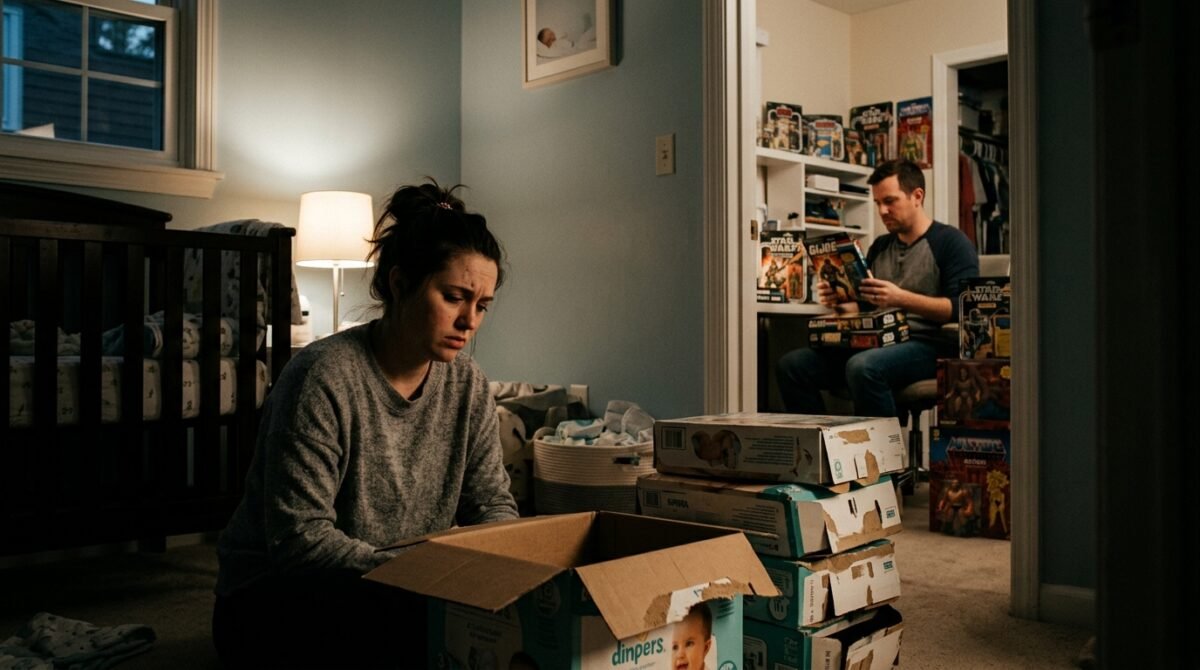
Marriage is supposed to be a partnership, a shared foundation built on trust, mutual support, and the collective navigation of life’s mundane and monumental challenges. For most, this means sharing the burden of household chores and prioritizing the needs of the children above all else. But for me, the reality of my marriage has curdled into something much darker and far more transactional.
It started with small things—a forgotten errand here, a ‘forgetful’ slip there. But over the last two years, it has escalated into a systematic pattern of neglect and financial manipulation that I could no longer ignore. The breaking point arrived on a Tuesday evening, a day that should have been utterly forgettable, but instead became the defining moment of my realization that I was raising a child with a man who refused to grow up.
We were down to our last three diapers. The baby was restless, and the house felt colder than usual. When I asked him to pick up a pack on his way home from work, he didn’t just decline; he launched into a lecture about ‘fairness’ and ‘division of labor’ that made my skin crawl. Little did I know, the reason for his sudden fiscal conservatism had just been delivered to our doorstep in a reinforced shipping crate.
This is the story of how a $3,000 purchase of plastic nostalgia shattered the illusion of our domestic bliss. It is a story about the intersection of weaponized incompetence and financial betrayal, and the painful, quiet realization that I had been carrying the weight of a family on my back while he treated our joint savings account like his own personal playground.
The Tuesday Night Ultimatum

It was 6:45 PM. The rain was lashing against the kitchen window, and the baby was wailing with that specific, high-pitched urgency that signals a blowout is imminent. I checked the diaper bag. Three diapers left. Not enough for the night, certainly not enough for the morning.
I texted Mark. He was supposedly on his way home from his office downtown. The request was simple: ‘Hey, we are completely out of diapers. Please stop at the pharmacy on your way home. It’s urgent.’
The reply didn’t come for twenty minutes. When it did, it wasn’t a confirmation. It was a manifesto. He claimed that because he had done the grocery shopping on Sunday, he was ‘off the clock’ for all household errands for the remainder of the week. He insisted that I needed to respect the boundary he had set, regardless of the baby’s immediate physical needs.
“I don’t know why you act like I’m your servant. Sunday was my day. You agreed to the chore split. I’m not stopping. Figure it out yourself.”
— Mark, via Text Message
I stared at the screen, my thumb hovering over the keypad. How could a man who saw his daughter’s discomfort every morning prioritize a ‘chore chart’ over her basic hygiene? It wasn’t about the diapers. It was about his desperate need to assert control in a household he felt was encroaching on his ‘me-time.’
I didn’t argue. I knew that arguing with Mark when he was in his ‘victim’ phase was like talking to a brick wall. I just grabbed my coat, buckled the crying baby into the car seat, and drove to the store myself, feeling a cold, hard knot of resentment settle in my stomach.
The Delivery at the Front Door
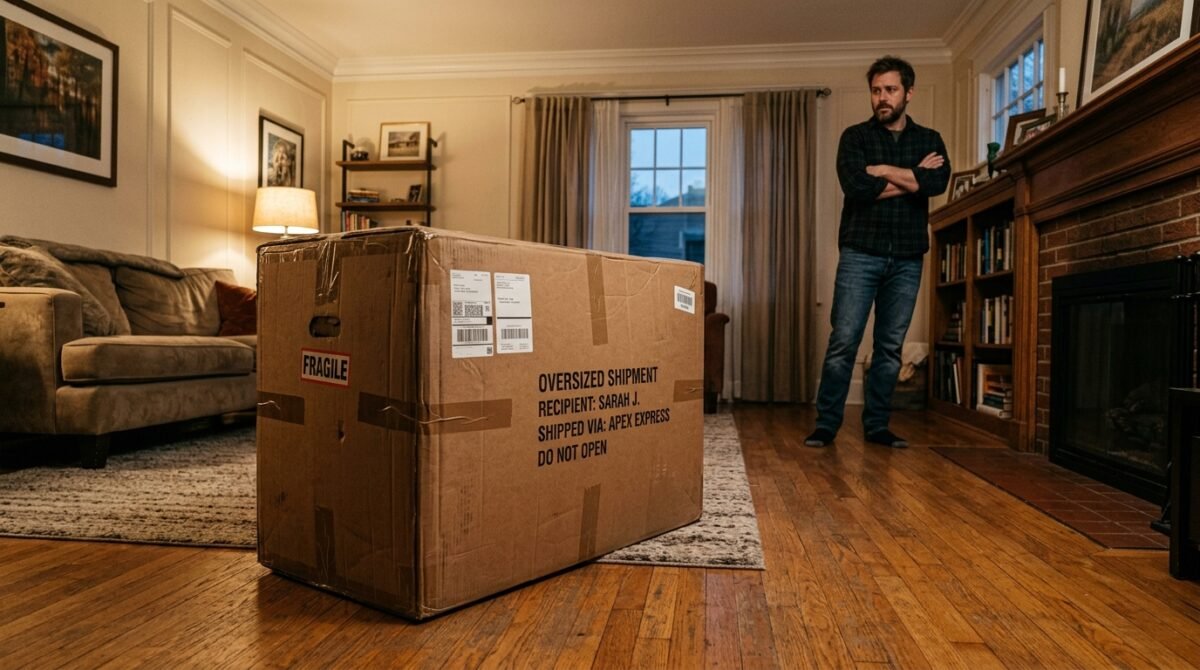
When I returned home, wet and exhausted, there was a massive cardboard box sitting on our porch. It was heavy, taped shut with industrial-grade plastic, and plastered with ‘Fragile’ stickers. I recognized the branding immediately. It was from an exclusive, high-end collector’s site that Mark had been ‘browsing’ for months.
I hauled the box inside, struggling with the baby on my hip. Mark was sitting at the dining room table, his face lit by the blue glow of his laptop. He didn’t offer to help. He didn’t even look up as I dragged the heavy package into the mudroom. I walked into the kitchen, dropped the diaper bag, and set the package down right in front of his line of sight.
“You didn’t stop for the baby,” I said, my voice dangerously calm. “But you had time to arrange for this to be delivered? How much was this, Mark?”
He finally looked up, his expression shifting from annoyance to defensive posturing. He stammered, trying to justify the purchase as an ‘investment opportunity’ that would appreciate in value over the next decade. He didn’t see the irony. He didn’t see the betrayal. He only saw his new toy.
“It’s a limited edition run! They only made five hundred of these. If I didn’t buy it now, the price would triple by next month. It’s about the future, not just some stupid toy.”
— Mark, defending his purchase
I felt a strange sense of detachment. The anger had burned itself out, replaced by a crystalline clarity. This wasn’t a marriage; it was a slow-motion car crash. I walked to the kitchen island, opened my banking app, and looked at the ‘Shared Savings’ account. It was hollowed out. There was barely enough for next month’s mortgage payment.
The Financial Audit of a Marriage

That night, after the baby finally fell asleep, I didn’t go to bed. I sat at the kitchen table with a legal pad, meticulously documenting every transaction from our joint account over the last six months. The numbers were staggering. It wasn’t just this one box. It was hundreds of small, ‘insignificant’ charges that had bled our finances dry.
Every time I had asked for a budget increase for groceries, he had claimed we were ‘tight.’ Every time I had mentioned needing new shoes for the baby or an oil change for my car, he had reminded me of our ‘fiscal responsibility.’ Meanwhile, he was spending thousands on obscure collectibles that sat in his office, gathering dust in their pristine boxes.
I began to realize that his insistence on ‘fairness’ and ‘chore splits’ was a brilliant, sociopathic diversion. By forcing me to focus on who did the dishes or who bought the diapers, he kept me too busy and too exhausted to ever look at the bank statements. It was a masterclass in gaslighting.
I took photos of the statements. I took photos of his ‘collection.’ I knew that if I confronted him again, he would tell me I was being ‘hysterical’ or ‘irrational.’ I needed to prepare for the inevitable explosion. I wasn’t just a wife anymore; I was an investigator building a case against my own husband.
The Morning After the Storm

The next morning, the air in the house was thick with unspoken tension. Mark walked into the kitchen, poured a cup of coffee, and acted as if nothing had happened. He even had the audacity to ask if I had made his favorite breakfast. I stood there, looking at him, and for the first time, I felt nothing but pity.
“The bank account is empty, Mark,” I said. No yelling. No crying. Just the facts. “I went through the records. You’ve spent over three thousand dollars on toys in the last three months alone. We don’t have enough for the mortgage, let alone the baby’s needs.”
He scoffed, taking a slow sip of his coffee. “You’re exaggerating. That money was my bonus. I earned it. Why are you digging through my accounts? You have your own job, your own money. Why are you so obsessed with what I do with mine?”
“My money is our money when it comes to the bills, but your money is your money when it comes to your hobby? That’s not how a partnership works, Mark. That’s how a predator works.”
— My response to Mark
He slammed his mug down. The porcelain chipped against the granite. He started shouting about how I was ‘controlling’ and ‘unsupportive.’ He accused me of trying to stifle his passions. It was the same script he had used every time I challenged his selfishness. But this time, I didn’t back down. I just walked away.
The Reddit Disclosure

I didn’t have anyone to talk to. My friends thought Mark was the ‘fun, quirky’ husband. My mother-in-law thought I was the ‘lucky one.’ I felt like I was losing my mind, so I went to the one place where people don’t care about social pleasantries: Reddit. I posted the full story on an anonymous account, detailing the diapers, the spending, and the gaslighting.
I went to sleep feeling vulnerable, expecting to be told I was overreacting or that I should ‘communicate better.’ When I woke up, my notifications were exploding. Thousands of people had read my post. The consensus was immediate, visceral, and overwhelming. I wasn’t crazy. I was being financially abused.
“This isn’t a hobby, this is financial infidelity. He is prioritizing his ‘investments’ over his child’s basic needs. Please secure your assets and get a lawyer. This is a pattern of behavior that will only get worse.”
— u/FinanceTruthSeeker (Top Comment, 32.1k upvotes)
Reading those comments felt like taking a bucket of cold water to the face. The validation was both a relief and a terrifying wake-up call. I realized that my desire to ‘save the marriage’ was based on a version of him that didn’t exist. The reality was a man who saw me as an obstacle to his own gratification.
The Intervention That Failed
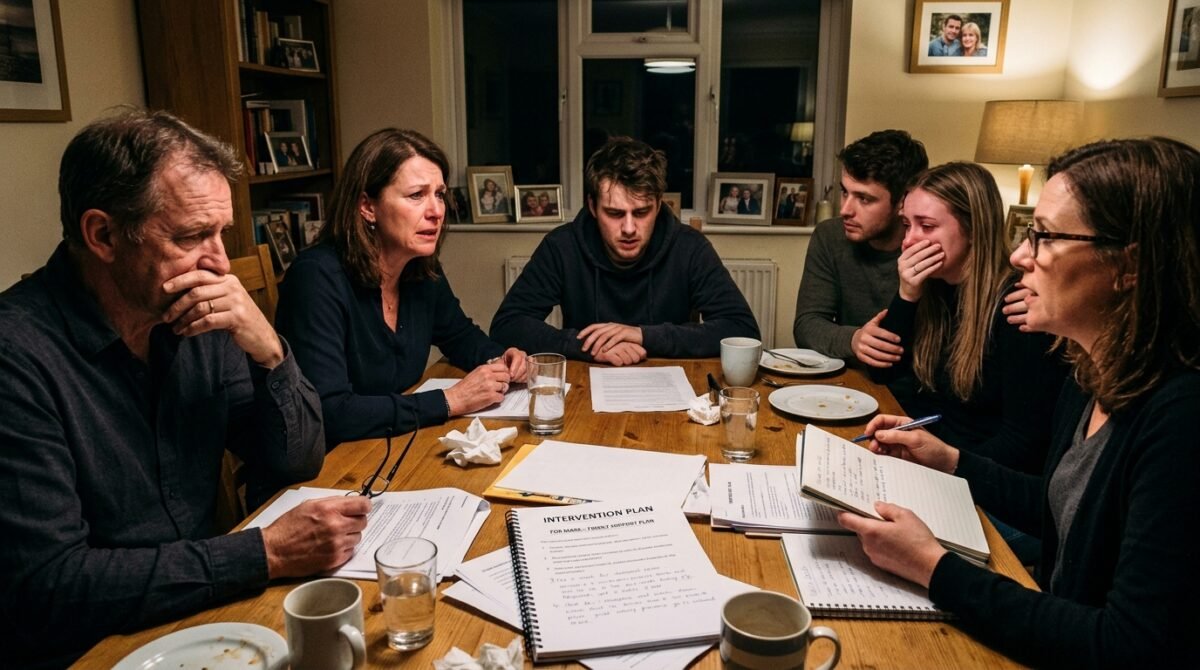
I tried one more time, but I did it differently. I invited his parents over. They were the only people whose opinion he seemed to value, even if he didn’t respect them. I laid out the financial documents on the dining room table, a visual representation of his neglect.
His mother was horrified. His father was silent, just staring at the list of luxury items Mark had purchased while claiming we couldn’t afford to fix the furnace. Mark, meanwhile, was turning a shade of purple I hadn’t seen before. He wasn’t ashamed. He was furious that I had ’embarrassed’ him.
“You’re really going to bring my parents into this? This is our private business! You are trying to destroy my reputation because you’re jealous of my collection!”
— Mark, during the family intervention
“It’s not jealousy, Mark,” I said, looking at his parents. “It’s about survival. Our daughter needs security. We need a home. You are choosing plastic figures over your family.” His parents tried to intercede, but Mark just grabbed his keys and left the house, slamming the door so hard a picture fell off the wall.
That was the end of the intervention. It was also the end of my attempts to fix him. I realized then that I couldn’t save someone who was fully committed to their own self-destruction. The house felt empty, not because he was gone, but because I finally saw how empty our relationship had been for a very long time.
The Secret Group Chat

Two days later, Mark left his iPad unlocked on the counter. He had been getting notifications incessantly. I didn’t want to snoop, but I felt like my life was falling apart, and I needed to know who was feeding his delusions. I opened the messaging app. It was a group chat with his ‘collector’ friends.
The messages were worse than I imagined. They were bragging about how they ‘outsmarted’ their wives, how they hid purchases in different rooms, and how they used the ‘chore split’ argument to keep their partners from questioning their spending. It was a support group for financial abusers.
“If she asks about the money, just say it’s a long-term investment for the kid’s college fund. Works every time. My wife hasn’t checked the statements in months.”
— From the ‘Collector Kings’ private group chat
Reading those messages was the final nail in the coffin. It wasn’t just Mark. He was part of a culture of entitlement that saw women as nothing more than household managers whose job was to facilitate their fun. I took screenshots of everything. I knew I would need this for the divorce proceedings.
I felt a strange sense of calm as I closed the iPad. The betrayal was so absolute, so systematic, that it removed any doubt I had left. I wasn’t just leaving a husband; I was escaping a toxic environment that had been designed to keep me small, tired, and broke.
Moving Out and Moving On

I didn’t tell him I was leaving. I waited until he was at work. I had already moved important documents and family heirlooms to my mother’s house over the course of the week. When I left, I only took the things that belonged to me and our daughter. I left his precious collectibles exactly where they were.
I left a letter on the kitchen island. It wasn’t an emotional plea. It was a summary of what had happened, the financial evidence attached, and a notice that I had already spoken to a lawyer. I told him he could have the collection, but he would be responsible for the debt he had accrued.
Driving away from that house felt like shedding a skin. The baby was asleep in the back, oblivious to the fact that her life had just changed forever. I felt a surge of adrenaline mixed with terror, but beneath it all, there was a profound sense of peace. I was no longer responsible for his choices.
I checked into a small apartment near my job. It was modest, clean, and entirely mine. There were no ‘chore charts,’ no secret spending, and no one to tell me I was being ‘irrational’ for wanting to provide for my child. For the first time in years, I could breathe.
The Aftermath and the Lawyers

The divorce proceedings were brutal. Mark tried to argue that the ‘investments’ were marital assets that should be split 50/50, even though they were bought with money he had hidden from me. My lawyer, armed with the screenshots from the group chat and the bank records, had a field day.
He was forced to sell the entire collection to cover his half of the debts he had incurred. It was poetic justice. He had to stand there and watch as the things he valued more than his marriage were auctioned off to pay for the ‘fairness’ he had preached so loudly about.
He tried to reach out multiple times, sending long, rambling emails about how he ‘had changed’ and how we could ‘make it work’ if I just came back. I didn’t respond to a single one. His parents, to their credit, apologized for not seeing it sooner, but I kept my distance. My priority was my daughter.
“The hardest part wasn’t the divorce. It was the realization that I had spent the best years of my life trying to prove my worth to someone who was never capable of seeing it.”
— My reflection during the court proceedings
I realized that the ‘financial infidelity’ was just the symptom. The real disease was his profound lack of empathy. By detaching myself, I allowed myself to heal in ways I hadn’t thought possible. I started investing in my own future, building a life that was stable, secure, and entirely mine.
Reflecting on the Lesson

Looking back, I see the warning signs I chose to ignore because I was too afraid to admit that my marriage was a lie. I thought that by being the ‘responsible one,’ I could balance out his irresponsibility. I thought that if I worked hard enough, he would eventually see the value of our family.
But you cannot build a healthy partnership with someone who treats their life as a solo game. Financial abuse is a subtle, corrosive force. It erodes your self-esteem, your security, and your ability to trust your own judgment. It is designed to make you feel like you are the problem, so you don’t look at the real issues.
If you find yourself in a situation where you are counting diapers and checking bank balances while your partner is indulging in luxury, stop. Look at the patterns. Don’t let yourself be gaslit into believing that your concerns are ‘petty’ or ‘controlling.’ Your financial stability is a part of your security, and it is a non-negotiable part of a healthy marriage.
I am in a better place now. My daughter is happy, healthy, and secure. We are building a life defined by love, not by chores or secret debts. And most importantly, I finally know who I am again—a woman who is capable, strong, and entirely in control of her own destiny.
Conclusion
My life has transformed from a cycle of resentment and financial anxiety to one of autonomy and peace. Escaping the shadow of my ex-husband’s entitlement wasn’t easy, but it was the most important decision I ever made for myself and my daughter. The lesson is clear: true partnership cannot exist where there is a lack of transparency and a fundamental disregard for the other person’s wellbeing.
We have all heard the phrase ‘money can’t buy happiness,’ but it is equally true that financial manipulation can destroy it. I encourage anyone currently feeling silenced or diminished in their relationship to trust their instincts. You are not ‘crazy,’ and your desire for a fair, transparent, and supportive partnership is not too much to ask. It is the bare minimum.
I would love to hear from you. Have you ever experienced a partner who used ‘chore splits’ or ‘personal funds’ to hide financial abuse or neglect? How did you recognize the pattern, and what steps did you take to protect your own future? Let’s keep this conversation open in the comments below.
What's your verdict on this dilemma?
Vote below to contribute to the official community consensus.

Have a Dilemma Keeping You Up at Night?
Share your real-life feud, wedding chaos, or relationship crossroads anonymously with our editorial team.
What do you think ?
0 Comments🛡️ Comments are moderated to protect community integrity. Your comment will appear once approved by the editorial team.