
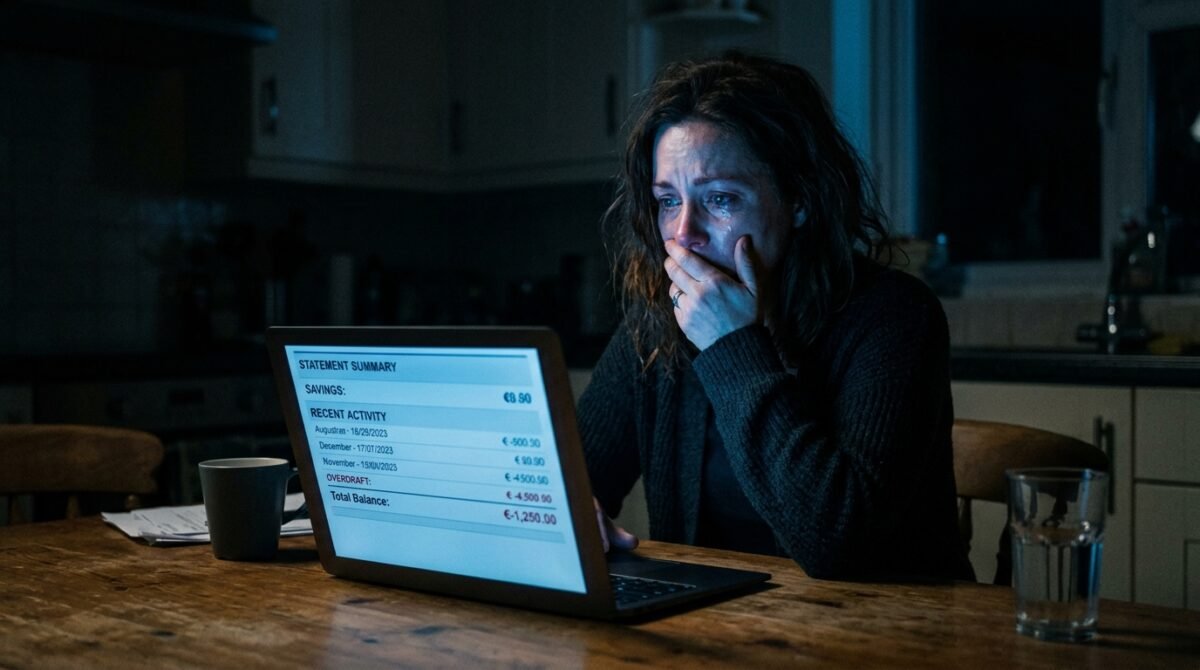
Marriage is built on the bedrock of shared vulnerability, but what happens when that foundation is eroded by a secret vault of lies? My life changed the moment I tripped on the stairs, shattering my ankle and requiring a complex surgery that would leave me bedridden and dependent for months. The physical pain was nothing compared to the emotional agony of watching my husband, Mark, count pennies while I struggled to recover.
For six months, Mark played the role of the devoted, albeit stressed, caretaker. He complained about the mounting medical bills, the ‘extortionate’ cost of my physical therapy, and the necessity of us living on rice and beans. I believed him. I felt guilty for the burden I had become, apologizing every time I needed a refill on my pain medication or a session with a therapist who was supposed to get me walking again.
I was so consumed by my own physical limitations that I never questioned his narrative. I trusted him with our finances, our savings, and our future. I thought we were in the trenches together, fighting for my mobility. It turns out, I was in the trench, and he was standing on the ridge with a hidden stash of cash, watching me struggle to climb out.
The revelation didn’t come with a dramatic confession. It came in the form of a push notification on a shared tablet I wasn’t even supposed to be using. One accidental swipe revealed a transfer that shattered my reality. As the numbers solidified in my vision, the past six months of ‘financial hardship’ suddenly transformed into a calculated, cold-hearted deception.
This is not just a story about money; it is a story about the death of trust. It is about the realization that the person I swore to love and honor was actively choosing to let me suffer to maintain his own private safety net. Here is the account of how I discovered the truth, the confrontation that followed, and the fallout of living with a stranger.
The Sacrifice of the Physical Therapist
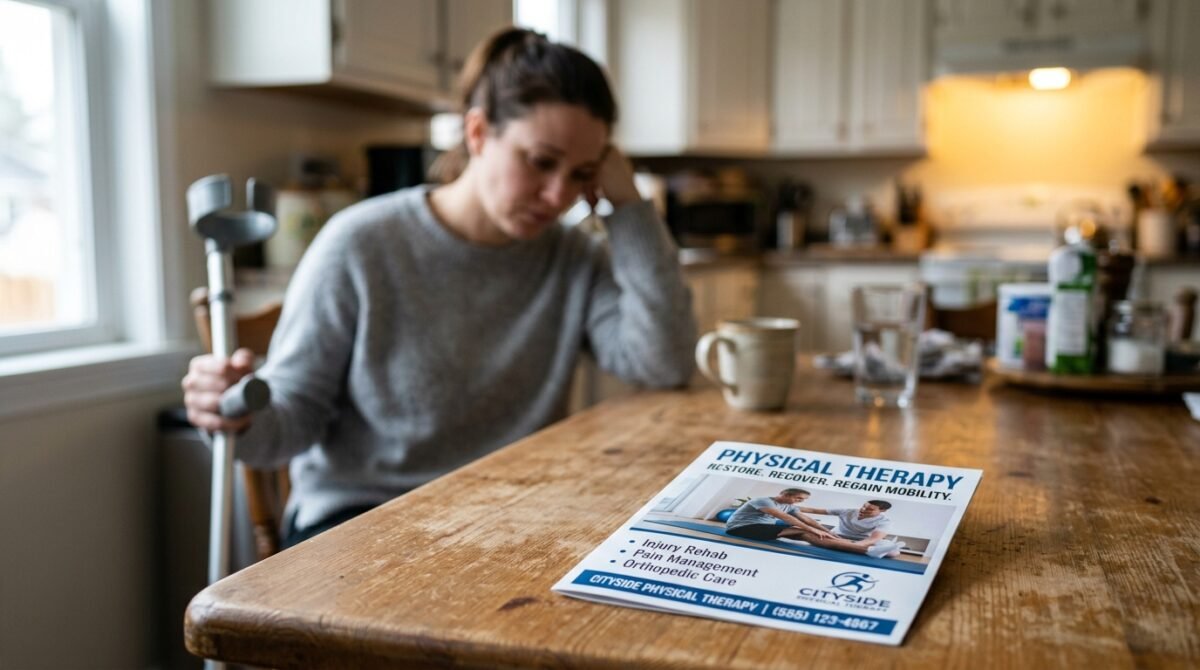
When the doctor recommended three sessions of physical therapy a week, the air in our living room turned heavy. Mark sat on the edge of the couch, his face buried in his hands, sighing with a weight that seemed to crush the very oxygen out of the room. He told me that our insurance had hit a ceiling and that the out-of-pocket costs were simply not sustainable.
‘Sarah, I want you to get better, you know that,’ he said, his voice thick with performative exhaustion. ‘But we are literally down to our last few hundred dollars. If we pay for these sessions, we won’t have money for the mortgage. We have to make a choice.’
“I don’t want to be a burden, Mark, but I can’t walk without this help. Is there any way we can cut back elsewhere?”
— Me, during the height of the crisis
I remember the look he gave me then—a mix of pity and frustration that made me feel like an ungrateful child. He convinced me that we were a team facing a crisis, and that my recovery was secondary to the survival of our household. I reduced my sessions to once every two weeks, forcing myself to do exercises at home that left me in tears of agony.
My progress stalled. My surgeon was concerned, noting that my range of motion was not improving at the rate he expected. Each check-up felt like a failure on my part. I told the doctor that I was just being ‘careful with our finances,’ and I saw the disappointment in his eyes. I felt like I was failing my own body because I trusted my partner.
Mark would come home, look at the medical bills on the counter, and throw them in a drawer with a grunt of annoyance. He talked about how he was picking up extra shifts at work just to keep us afloat. I believed every word. I was so grateful for his ‘sacrifices’ that I didn’t even notice the new watch he bought or the expensive coffee he started bringing home every morning.
Looking back, the signs were there. The way he guarded his phone, the way he would suddenly leave the room when I asked about our savings account, the way he seemed strangely upbeat despite our ‘financial ruin.’ I ignored it all because the alternative—that my husband was lying to me—was too terrifying to consider.
The Accidental Notification That Changed Everything

It was a Tuesday evening, and Mark was in the shower. I had reached for his iPad to check an email, only to see a notification banner pop up from a banking app I didn’t recognize. It was a transfer confirmation. My heart sank, not because of the money, but because the account name was something I had never seen before: ‘Bonus Allocation – Discretionary’.
Curiosity, a dangerous thing, took hold. I unlocked the device—he often used our shared birthday as a passcode—and opened the app. There it was: a deposit from his company dated four months ago, totaling $40,000. It wasn’t just a bonus; it was a life-changing sum of money that he had completely hidden from me.
I sat there, my breath hitching in my throat, scrolling through the transaction history. I saw transfers to a personal investment account, payments for a high-end gaming setup, and even a withdrawal for a weekend trip he had told me was a ‘business conference’ that I couldn’t attend due to my injury.
“You said we were broke. You told me we couldn’t afford the PT. You watched me cry in pain for months. And this whole time, this was sitting here?”
— My internal monologue as I stared at the screen
I felt a cold shiver run down my spine. The betrayal wasn’t just the money; it was the active, conscious decision to let me suffer. He could have paid for a private physical therapist to come to our home. He could have hired someone to help me with chores. Instead, he watched me struggle to crawl to the bathroom while he sat on $40,000.
I didn’t scream. I didn’t cry. I was in a state of absolute, icy shock. I took pictures of the account balances and the transfer history, my hands shaking so hard I almost dropped the tablet. When I heard the water turn off in the shower, I set the device back exactly where I found it and closed my eyes, waiting for him to walk out.
The man who walked into the bedroom was the same man I had married, but the image was permanently distorted. I realized then that I didn’t know who he was. I had been living with a stranger who viewed my recovery as an expense to be minimized, rather than a priority to be supported.
The Dinner Table Confrontation
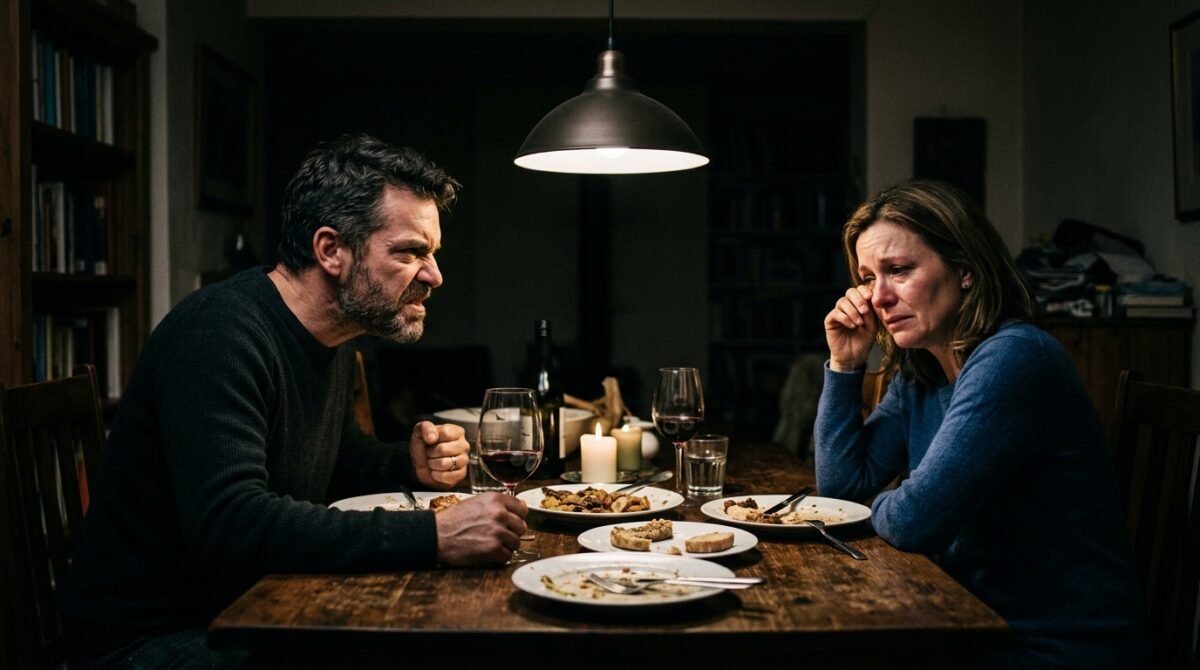
Dinner was a silent affair. Mark was humming a tune, oblivious to the fact that his secret world had imploded. I sat across from him, staring at my plate of pasta, trying to control the surge of adrenaline coursing through my veins. I waited until he finished his wine before I dropped the hammer.
‘How was your day at work, Mark?’ I asked, my voice dangerously calm. He looked up, smiling, and started complaining about a project. I let him speak for a full five minutes, listening to the lies roll off his tongue with such ease that it made me nauseous.
“Mark, why didn’t you tell me about the bonus? The $40,000 you got months ago?”
— The moment everything changed
His face went pale, then red. He stuttered, his fork clattering against the plate. ‘I… I don’t know what you’re talking about. Where did you get that idea? You’ve been looking through my phone again, haven’t you?’
He didn’t even deny it; he attacked the method of discovery. That was the first red flag. Instead of explaining or apologizing, he went on the defensive. He started rambling about how it was a ‘performance bonus’ that he wanted to save for our ‘future.’ He claimed that if he had told me, I would have ‘blown it’ on unnecessary luxuries.
‘I was watching you suffer!’ I shouted, standing up despite the pain in my ankle. ‘I was crying in bed because I couldn’t afford to get my leg working again, and you were sitting on thousands of dollars? That isn’t about saving for the future, Mark. That is about control. That is about you not wanting to spend money on me.’
He stood up and tried to grab my arm, but I recoiled as if he had burned me. The look in his eyes wasn’t regret; it was anger. He was angry that he had been caught, and that his comfortable little charade had been dismantled. The argument lasted for hours, a blur of accusations, tears, and cold, hard truths.
The Gaslighting Begins

In the days that followed, the gaslighting hit a fever pitch. Mark insisted that he had ‘intended’ to tell me about the money once the medical bills were ‘settled,’ claiming he was just protecting me from stress. He painted himself as the hero who was making tough financial decisions for our long-term stability.
‘You’re being hysterical, Sarah,’ he said, his voice dripping with condescension. ‘It’s a marital asset, yes, but we are a team. I was just managing our resources. You wouldn’t have understood the tax implications of withdrawing that money early.’
“You didn’t manage resources, Mark. You managed my pain. You decided that my ability to walk was worth less than your secret savings account.”
— My response to his gaslighting
He tried to isolate me, telling our families that I was ‘struggling with the medication’ and having ‘episodes of paranoia.’ He was actively rewriting the narrative to make me look like the unstable one, a tactic I didn’t realize until my sister called me, asking if I was doing okay and whether I should be in a facility.
I started documenting everything. I kept a ledger of every time he told me we couldn’t afford something, compared against the dates he was moving money into his secret account. The level of detail he had gone into to hide his tracks was staggering. He had even opened a separate credit card to pay for his ‘business’ trips, making sure the main statements looked clean.
I felt trapped in my own home. I couldn’t move easily, and he was the one providing my meals and transportation. He knew he had the upper hand, and he used it. He would ‘forget’ to pick up my prescriptions, claiming he was too busy, or he’d ‘accidentally’ delete my therapy appointment reminders. It was a slow, agonizing campaign to make me feel small and dependent.
The Reddit Community Weighs In
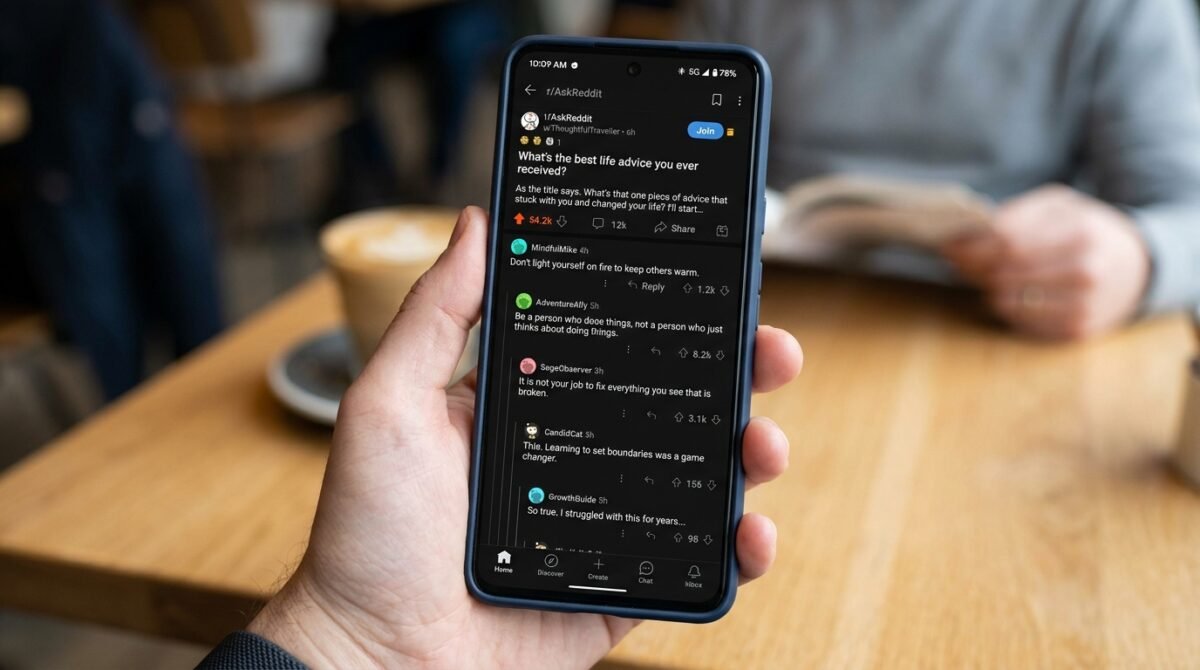
I finally broke down and posted my story on a popular subreddit. I needed to know if I was crazy. The response was overwhelming. Within hours, the post had thousands of comments, and the consensus was not just supportive—it was furious.
“This is not just financial infidelity; this is physical and emotional abuse. He watched you suffer, denied you medical care, and gaslit you into believing you were the problem. Get a lawyer, freeze those accounts, and get out. Now.”
— u/LegalEagleEye, 32.4k upvotes
The comments were a revelation. People pointed out that what he did was a form of financial abuse. They provided resources for legal aid and tips on how to protect my assets. Reading through the stories of other women who had been in similar positions gave me the courage I needed to start planning my exit.
One user, a financial advisor, gave me a step-by-step guide on how to secure my legal standing before he realized what was happening. I followed the advice to the letter. I contacted a divorce attorney, secured my important documents, and started moving my own small personal savings into a separate account that he couldn’t access.
The community support was a lifeline. For months, I had been convinced that I was the one who was failing in the marriage. Seeing thousands of people validate my pain and call out his behavior for what it was—cruelty—helped me reclaim my sense of self-worth. I wasn’t an ungrateful, hysterical wife; I was a victim of a calculated betrayal.
The threads continued to grow, with people sharing their own experiences of financial abuse. It became clear that this was a far more common issue than I had realized. The collective wisdom of the internet gave me the ammunition I needed to stop apologizing and start fighting for my own future.
The Secret Group Chat Revelation
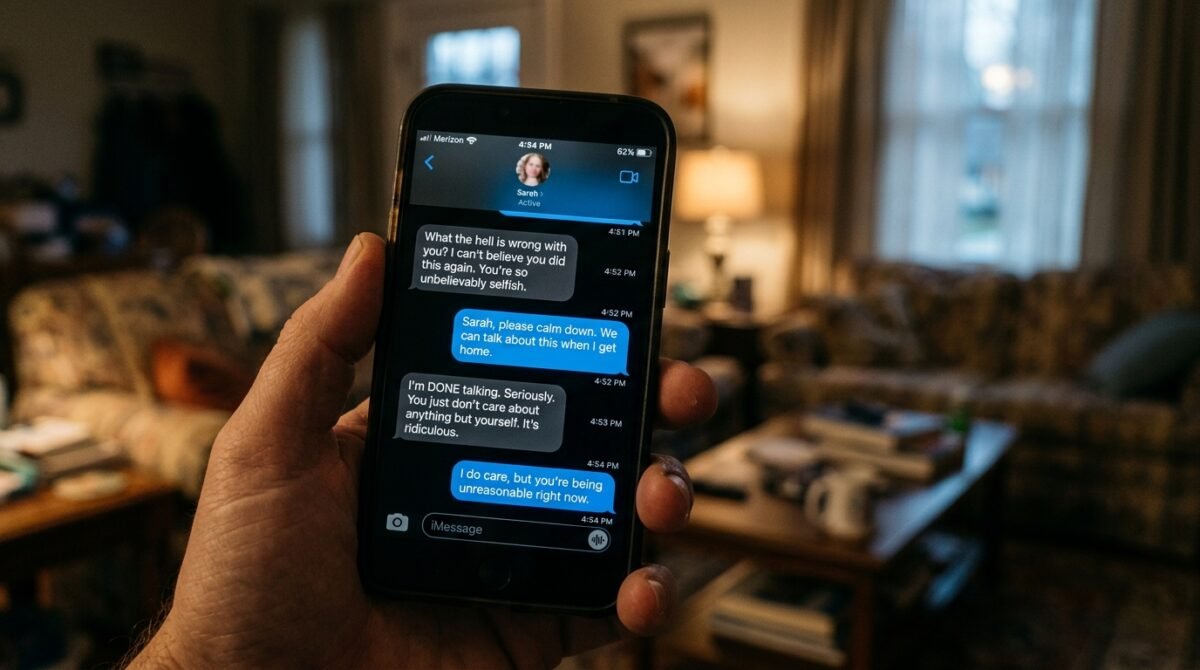
The final straw didn’t come from the bank. It came from a group chat I wasn’t supposed to see. Mark left his phone unlocked while he was out on one of his ‘urgent errands.’ A notification popped up—a message from his brother, Dave. Curiosity won again, and I looked.
“Did you finally tell her about the bonus? She’s still crying about her leg, and it’s getting pretty pathetic. Just tell her you lost it in a bad investment or something.”
— Leaked Message from Brother-in-Law
My stomach turned. It wasn’t just Mark. His entire family knew, or at least his brother did. They had been laughing about my pain, calling it ‘pathetic.’ My husband wasn’t just hiding money; he was sharing the joke with his sibling. The dehumanization was complete.
I felt a strange sense of clarity. There was no going back. There was no ‘working it out’ or ‘couples therapy’ that could fix a dynamic where my husband and his family treated my physical suffering as a punchline. I took screenshots of the entire thread, documenting their mockery and the confirmation of the secret bonus.
I realized then that this wasn’t just a financial dispute. It was a fundamental lack of respect. I had been married to a man who didn’t view me as an equal, but as an obstacle to his own happiness. The humiliation I felt was replaced by a cold, hard resolve to leave.
I didn’t confront him about the message. I simply forwarded the screenshots to my own email and deleted the notifications. I needed him to think I was still the same clueless, injured wife until I was physically and legally prepared to disappear from his life entirely.
The Quiet Exit Strategy

I began to move in silence. I contacted a lawyer, and we filed for a temporary separation order. I needed to ensure that he couldn’t hide any more assets before the divorce proceedings began. My attorney was shocked by the evidence I presented, calling it a ‘textbook case of financial malfeasance.’
I started packing, slowly, one box at a time, hiding them in the back of my closet or moving them to a storage unit when Mark was at work. I felt like a spy in my own home, watching his every move, anticipating his reactions, and staying one step ahead of the disaster I knew was coming.
My physical therapy became the focal point of my new life. I found a private practice that offered sliding-scale payments, and I started going twice a week. My recovery accelerated, not just because of the therapy, but because I finally had hope. I was taking control, one step at a time, literally.
Mark remained oblivious, still playing the role of the beleaguered, hardworking husband. He would come home, complain about his day, and go to his ‘private’ office to work on his investments. I would watch him, feeling a sense of detached pity. He thought he was the winner of this game, but he was losing everything that actually mattered.
The day of the move, I waited until he was at work. I had movers come and take everything that was mine. I left behind nothing but the furniture that came with the house and a note on the kitchen table. It was the most satisfying thing I have ever done.
The Fallout and The Divorce Papers
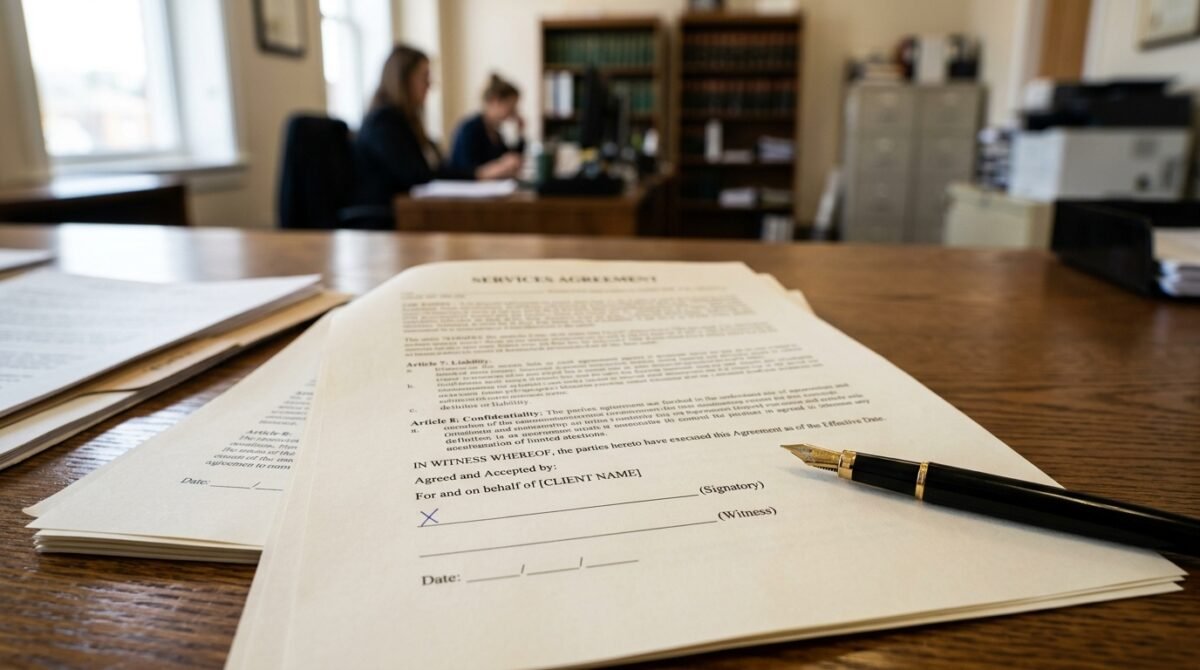
When Mark returned home to an empty house, he didn’t call to ask if I was okay. He didn’t call to check on my physical therapy. He called to scream about the furniture. He was furious that I had taken the appliances that I had paid for with my own pre-marital savings.
The divorce process was brutal. He tried to hide the bonus money, claiming it was spent on ‘shared household expenses’ that never existed. But my attorney had the bank records, the texts, and the evidence of his secret accounts. The judge was not amused by his attempts to lie under oath.
‘You kept $40,000 from your wife while she was undergoing surgery?’ the judge asked during the first hearing. Mark had no answer. The look on his face was one of absolute panic. He realized for the first time that his actions had real-world consequences that his charisma couldn’t fix.
“I thought we were a team. I was wrong. I was just an accessory to your ego.”
— My statement in court
The divorce settlement was heavily in my favor. The court saw through his manipulations, and he was forced to pay back the full amount of the bonus, plus interest and my legal fees. It wasn’t about the money anymore—it was about justice. I had my freedom, and that was worth more than any amount of cash.
My family was horrified when they learned the truth. They had liked Mark, and they were shocked to see the extent of his deception. They rallied around me, supporting my recovery and helping me rebuild my life. I finally had the support system I had been lacking for years.
The aftermath was messy, but it was mine. I was no longer defined by his lies or my injury. I was a person who had survived, moved on, and come out stronger on the other side. The marriage was dead, but I was finally alive again.
Reflecting on the Red Flags

Looking back, the red flags were everywhere. The way he made me feel guilty for existing, the way he controlled our finances, the way he isolated me from my support system. I had ignored them because I wanted to believe in the fairy tale of the ‘perfect marriage.’
I learned that love is not just a feeling; it is an action. It is the action of caring for your partner when they are at their most vulnerable. It is the action of honesty, even when it is uncomfortable. Mark was incapable of either, and I was naive to think I could change him.
I am now in a place where I can look back at the past with clarity, not shame. I don’t blame myself for trusting him. I blame him for breaking that trust. I am a better person for having gone through this, even if the price was my marriage and my physical health for a time.
I am still in physical therapy, but now, I walk into the room with my head held high. I have my own money, my own apartment, and my own agency. I don’t have to apologize for my recovery or explain my expenses to anyone. I am free, and that is a feeling I will never take for granted again.
My message to anyone going through something similar is this: Listen to your gut. If something feels off, it probably is. Don’t be afraid to look, to ask questions, and to protect yourself. You are your own best advocate, and you deserve a partner who values you as much as you value them.
Moving Forward: The Final Lesson

As I stand at the threshold of my new life, I realize that the most important thing I gained was my own voice. For years, I had silenced myself to keep the peace. I had prioritized his comfort over my health, his secret accounts over our shared future. That ended the moment I saw that notification on the tablet.
I have started a new career, one that gives me the flexibility I need for my ongoing recovery. I have reconnected with old friends and made new ones who respect me. I am finally living the life I want to live, not the one that was designed for me by someone who didn’t love me.
The $40,000 is gone—it went into my savings, my legal fees, and my therapy—but the lesson remains. Financial infidelity is a silent killer of marriages. It is a betrayal that cuts deeper than physical cheating because it strikes at the very foundation of trust and safety in a partnership.
I don’t hate Mark anymore. I feel a sort of detached pity for him. He will always be the man who put his own comfort above the woman he married. That is a weight he will carry for the rest of his life, regardless of how much money he has in his accounts. I am free of that weight, and that is the true victory.
Thank you to everyone who supported me through this journey. Your words, your advice, and your encouragement gave me the strength to walk away. I am still here, I am still standing, and I am stronger than I ever was before.
Conclusion
The story of my marriage is one of deception, but it is also a story of awakening. Discovering that my husband had prioritized his own greed over my physical recovery was the most painful experience of my life, but it was also the catalyst for my liberation. By exposing the truth, I was able to reclaim my autonomy and build a future that is truly my own.
Financial infidelity is far too common, and it often hides in the shadows of ‘managing the budget’ or ‘protecting the future.’ My advice to anyone reading this is simple: trust your instincts, document your finances, and never allow yourself to feel like a burden in your own life. You are a partner, not a dependent, and you deserve transparency and respect.
Where do you stand? Have you ever discovered a secret that fundamentally changed your view of your partner? Or have you been on the other side, hiding something for what you believed were the ‘right’ reasons? Let’s discuss in the comments below.
What's your verdict on this dilemma?
Vote below to contribute to the official community consensus.

Have a Dilemma Keeping You Up at Night?
Share your real-life feud, wedding chaos, or relationship crossroads anonymously with our editorial team.
What do you think ?
0 Comments🛡️ Comments are moderated to protect community integrity. Your comment will appear once approved by the editorial team.