
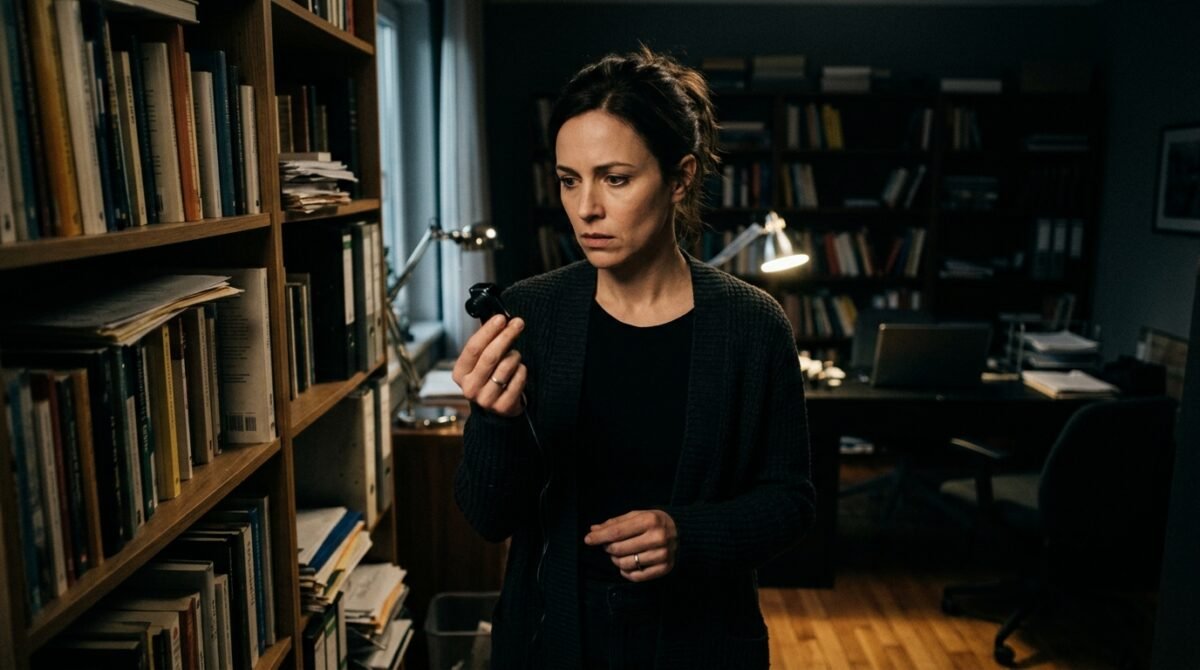
Marriage is built on the bedrock of trust, but sometimes that foundation is built on sand. For three years, I believed I was in a partnership of equals. My husband, Mark, was the supportive, tech-savvy guy who encouraged my consulting business, often helping me set up my ‘home office’ to ensure I had the best equipment. It all seemed perfect until the day a flickering light on a bookshelf behind my desk caught my eye during a Zoom call.
I never imagined the person I slept next to would turn my sanctuary into a surveillance hub. When I pulled the small, black, pinhole device from behind a row of leather-bound books, the world didn’t just stop; it fractured. The realization wasn’t just about the camera—it was about the calculated, systemic violation of my autonomy. Every late-night email, every confidential client call, every moment of vulnerability I had expressed in that room was recorded, stored, and potentially weaponized.
I didn’t scream. I didn’t confront him in a fit of rage. That would have given him the opportunity to gaslight me, to claim it was for ‘security’ or ‘safety.’ Instead, I felt a chilling clarity wash over me. I unplugged the device, placed it in a secure bag, and went straight to my laptop to do the one thing I never thought I’d do: search for a high-end divorce attorney specializing in complex, tech-involved separations.
The next few weeks were a masterclass in controlled detachment. I played the role of the devoted wife while systematically documenting his digital footprints, his access logs, and the chilling reality that he had been watching me for months. This wasn’t just a security breach; it was the end of the line. The following account details how I reclaimed my life, piece by piece, from someone who thought he owned every corner of my world.
The Discovery Behind the Leather-Bound Classics
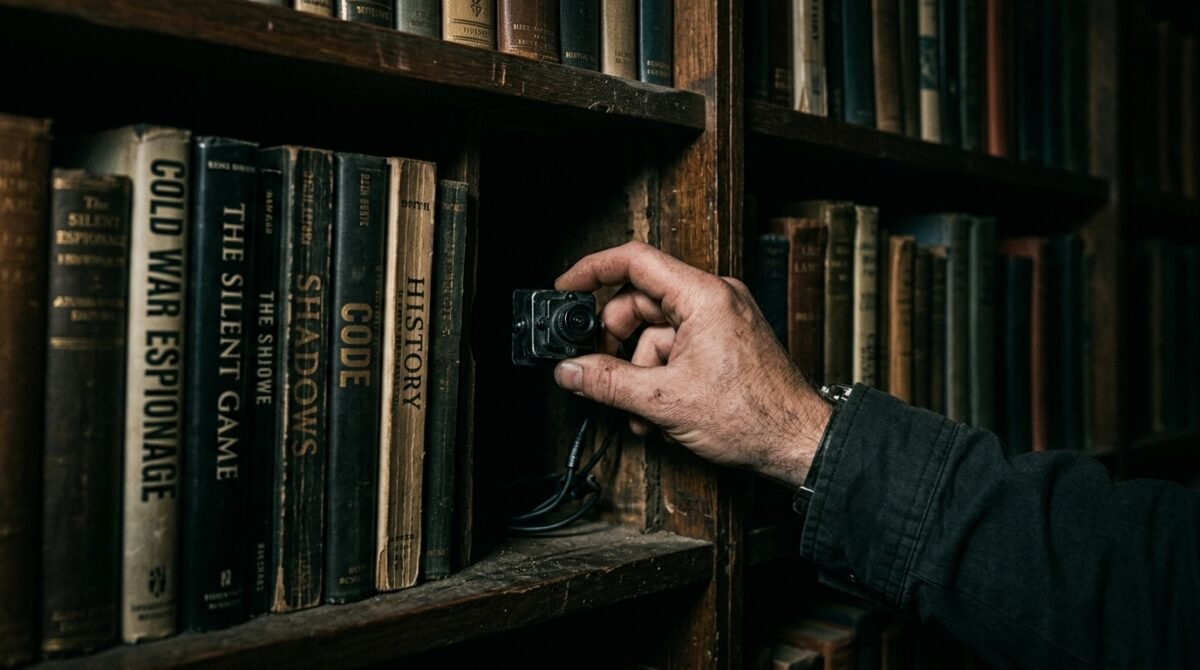
It was a standard Tuesday afternoon. I was deep into a sensitive client strategy session, the kind that required total focus and absolute confidentiality. As I leaned back in my ergonomic chair to stretch, my eyes drifted toward the bookshelf I’d spent months curating. A tiny, rhythmic pulse of blue light, barely visible, flickered between a copy of Moby Dick and a collection of essays.
My heart skipped a beat. I stood up slowly, feigning a need to grab a reference book. My hands trembled as I reached behind the volumes. My fingers met cold, hard plastic that didn’t belong. It was a high-end, motion-activated micro-camera, the kind that streams directly to an encrypted cloud server. It was angled perfectly to capture my monitor and my face.
“My blood went ice cold. My first thought wasn’t anger; it was a terrifying, hollow confusion. I felt like a stranger in my own home, exposed to an audience of one who had been hiding in plain sight.”
I didn’t pull it out immediately. I let it be, my mind racing through every private conversation, every tearful phone call to my sister, every moment I had let my guard down in that office. The violation felt physical, a violation of the space I considered my last bastion of independence. I walked out of the room, closed the door, and locked it—for the first time ever.
I spent the next two hours sitting in the living room, staring at the wall. Mark was at the office. I realized then that my house wasn’t a home anymore; it was a laboratory where I was the subject. I needed proof, not just of the camera, but of the intent. I grabbed a pair of latex gloves and a small screwdriver. The act of removing the device felt like surgery; I was cutting a tumor out of my life.
Once the device was in my hand, I felt a strange sense of liberation. The silence of the house was no longer comforting; it was heavy with the weight of the coming storm. I didn’t call him. I didn’t text him. I realized that if I confronted him, he would have the chance to scrub his data. I had to be smarter than him, and for the first time in our marriage, I was playing for keeps.
The Initial Consultation: Building the Strategy

I didn’t head to a local lawyer who would handle a simple split. I found a firm that specialized in ‘high-conflict digital asset cases.’ When I sat across from Sarah, the lead attorney, I laid the camera on the desk like a bomb. She didn’t look surprised; she looked professional and ready. Her office was sterile, cold, and exactly what I needed to ground myself.
‘This is a felony in this state, depending on how it was used,’ she said, her voice devoid of judgment. She explained that his access to my business data might constitute corporate espionage if I was a consultant for clients with NDAs. The stakes weren’t just personal anymore; they were professional. My livelihood was on the line.
“I don’t want a fair split, Sarah. I want to be safe. I want to ensure he never has access to my intellectual property or my private life ever again. Can we destroy him legally?”
She outlined a plan that involved forensic digital analysis of our home router, checking for other devices, and preparing a protective order. We discussed the timeline of our marriage—the ‘happy’ years—and how we could frame the discovery to ensure I held the leverage. It was a cold, transactional approach to a life I thought was built on love.
I left her office feeling heavier but more grounded. I had a path. I had a team. I walked to my car, breathed in the crisp evening air, and looked at my phone. There were five missed calls from Mark. I didn’t answer. I sent a simple, detached text: ‘In a meeting. Will be home late.’ It was the first time I lied to him with a purpose.
The drive home felt like a scene from a movie I hadn’t yet seen the ending to. I realized that the ‘good husband’ persona was a carefully constructed mask. Everything I knew about him—his habits, his preferences, his ‘loving’ gestures—was now a potential clue to his surveillance. I was entering a war, and the enemy was sitting at my dinner table.
The Dinner Table of False Calm
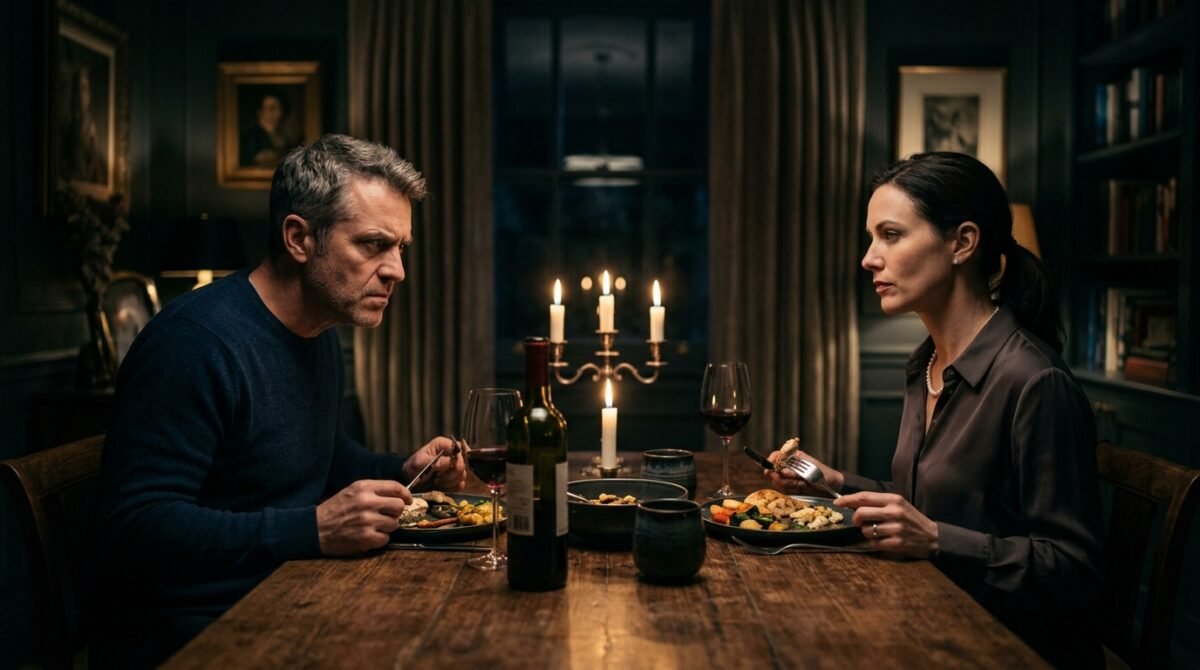
Mark was waiting in the kitchen when I arrived home. He had that look—the one where he tries to appear concerned but his eyes are darting around, looking for information. He had made dinner, his signature pasta dish. He stood there, apron on, acting like the perfect, doting husband. It made me want to scream, but I kept my face as blank as a sheet of glass.
‘You’re late,’ he said, pouring me a glass of wine. He didn’t ask how the meeting went, which was a red flag. A normal partner would have asked about the client. He was fishing for something else, something he couldn’t see because his camera was now offline. The thought gave me a rush of power.
“Everything okay? You seem a bit distant today, honey. The office is really stressing you out, isn’t it?”
I sipped the wine, careful not to let my hand shake. ‘Just a long day, Mark. A lot of back-and-forth with the legal team regarding a client contract. It was exhausting.’ He flinched at the word ‘legal,’ but masked it quickly. He started talking about his day, the mundane details of his job, but I was barely listening. I was watching him, searching for the tell-tale signs of his deception.
He went into the office later that night, likely to see why his stream was dead. I stood by the door, listening to the silence. A minute later, he came back out, his face pale. ‘The internet in the office is acting up again,’ he muttered, not making eye contact. ‘I’m going to have to check the router tomorrow.’
I smiled, a thin, tight expression. ‘That’s a shame. It was working fine for me earlier.’ I watched him struggle to maintain his composure. He was trapped in his own web of lies, and I was the one pulling the strings. It was the most satisfying moment of my life, a dark, twisted victory in a game he didn’t even know he was losing.
The Digital Breadcrumbs and the Hidden Cloud

The next morning, I took my laptop to the local library. I needed a clean connection. My attorney had sent me a list of things to look for—logs of traffic coming from our home IP address, hidden folders on our shared cloud drive, and access points for the camera’s software. I felt like a detective in my own life.
What I found was sickening. He hadn’t just been recording me; he had been archiving me. There were folders labeled by date, complete with screenshots of my work-in-progress, notes I had taken, and even recorded audio of me talking to myself while I worked. It wasn’t just jealousy; it was an attempt to control my narrative, to know exactly what I was doing and thinking at all times.
“He wasn’t just watching my work. He was documenting my internal monologue. He had transcripts of me venting about our marriage. He knew I was unhappy, and instead of talking to me, he decided to gather intelligence.”
I realized then that he had been insecure for years. The surveillance wasn’t a snap decision; it was a long-term plan to ensure he held the upper hand in the relationship. Every time I had asked him for more space, he had just created more ways to intrude. It was a cycle of abuse that I had been blind to, masked by his ‘supportive’ exterior.
I copied every single file to an encrypted hard drive. This was my leverage, my ‘get out of jail free’ card. I wasn’t just leaving; I was going to leave him with nothing. I felt no guilt as I hit the ‘copy’ button. The betrayal was total, and the response would be proportional.
As I sat in the quiet library, I felt the walls of my life shifting. I wasn’t the wife I had been twenty-four hours ago. I was someone else, someone colder, sharper, and ready for whatever came next. I closed the laptop, put it in my bag, and walked out into the bright afternoon sun, feeling like a ghost haunting my own life.
The Confrontation: A Scripted Exit
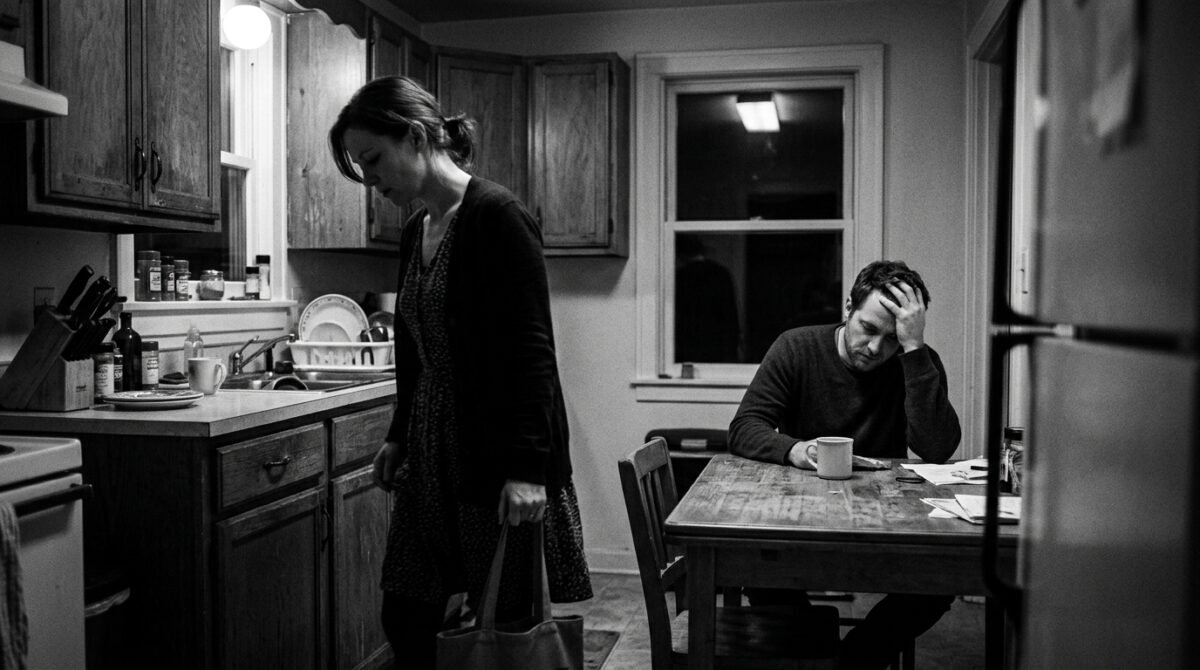
The end came on a Saturday morning. I had my bags packed, hidden in the trunk of my car. I had the divorce papers, the evidence, and the support of my family already on speed dial. I walked into the kitchen where Mark was having his coffee. The air felt thick, charged with the energy of the coming explosion.
‘I know about the camera, Mark,’ I said, my voice steady, resonant. He dropped his spoon. It clattered on the tile, a jarring sound that echoed in the quiet room. He didn’t try to deny it. He didn’t even try to look shocked. He just looked deflated, like a balloon losing its air. It was pathetic.
“I don’t need your explanations. I don’t need your excuses. I have everything I need. I’ve already spoken to a lawyer. You’re done, Mark. We’re done.”
He tried to stand up, to reach for me, but I stepped back, holding up a hand. ‘Don’t touch me. Don’t come near me. The police are aware of the situation, and if you follow me, I will have you arrested before you even reach the driveway.’ His face turned a deep, ugly red, the mask of the doting husband finally cracking to reveal the rage beneath.
He didn’t scream, which surprised me. He just sat there, his eyes cold and dead. ‘You have no idea what you’re doing,’ he hissed. ‘You’re throwing away a good life because of a little bit of curiosity. You’re overreacting, and you’re going to regret this.’ It was the classic gaslighter’s final stand, the attempt to make me feel small and hysterical.
I didn’t answer. I just walked out the front door, the keys to my new apartment in my pocket. I didn’t look back at the house, the books, or the life I had built. I just kept walking toward the future. It was the most difficult thing I’d ever done, and yet, it felt as light as breathing.
The Aftermath: Legal Warfare

The weeks that followed were a blur of meetings, court dates, and the cold, mechanical process of dismantling a life. My lawyer was brilliant. She used the evidence I had collected—the logs, the screenshots, the archived audio—to force a settlement that left Mark with nothing but his clothes and his pride. He tried to fight back, claiming I had been ‘unstable,’ but the digital paper trail was undeniable.
The court wasn’t sympathetic to a man who had turned his spouse’s home office into a surveillance state. The judge’s look of utter disdain when the evidence was presented was the highlight of the proceedings. Mark looked diminished, smaller than I had ever seen him. He was a man who had tried to control everything, only to lose everything because of his own paranoia.
“The most shocking part was how little he fought for the relationship, and how much he fought for the narrative. He wanted to be the victim. He wanted the world to think I had just snapped. He failed at both.”
My friends were shocked, of course. They had seen the same ‘perfect’ couple I had, but once they saw the evidence, the mood shifted instantly. I lost some acquaintances, people who thought I was ‘cold’ for leaving so abruptly, but I gained a circle of support that I hadn’t realized I had. My family was furious, protective, and relieved that I was out.
I moved into a small, modern apartment that I decorated exactly how I wanted. No cameras, no hidden devices, just a space that was entirely mine. I found a new, better firm to consult for, one that prioritized ethics and privacy. I was thriving, but the shadow of the experience remained, a constant reminder of how thin the line is between love and obsession.
I often think about the ‘me’ that lived in that house. She was naive, trusting, and blind. I don’t miss her. I like the person I’ve become—someone who isn’t afraid to look behind the bookshelf, someone who knows that when the vibe feels wrong, it usually is. I am finally, truly free.
Reddit’s Verdict: The Community Reacts
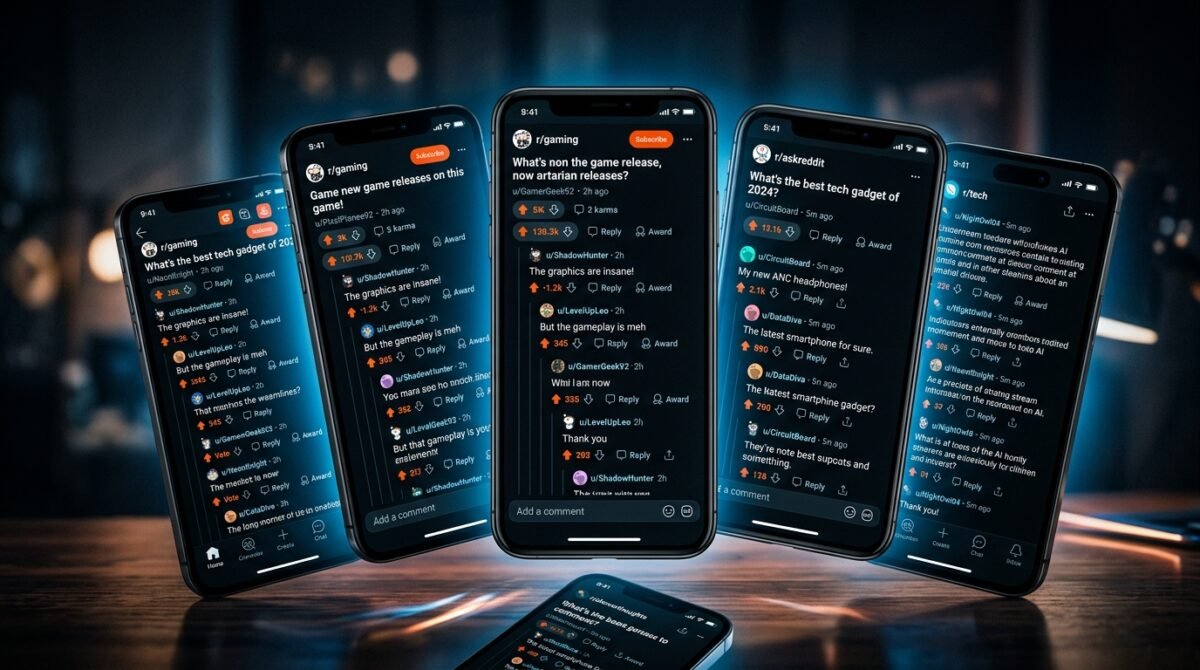
When I finally posted the update on the support subreddits, the response was overwhelming. Thousands of people reached out, sharing their own stories of privacy violations, digital abuse, and the sheer audacity of partners who think they have the right to monitor our every move. The validation was a balm for the trauma I had been carrying.
“OP, you are a literal legend. The way you gathered the evidence without tipping him off? That’s not ‘snapping,’ that’s high-level strategy. Stay safe and keep the locks changed. He sounds like the type to escalate when he realizes he’s lost all control.”— u/DigitalSurvivor, 34.2k upvotes
There were hundreds of comments like that. People warned me about the ‘extinction burst,’ the phase where the abuser realizes the manipulation is over and tries to get back the control through threats or harassment. I had already installed a high-end security system, but the warnings were a good reminder to stay vigilant. I wasn’t alone in this; I was part of a community of people who had been through the fire and come out the other side.
Some people, of course, tried to play devil’s advocate. ‘Maybe he was just worried about you?’ one user asked, to which they were immediately downvoted into oblivion by a chorus of people who understood that there is never a valid reason to spy on your spouse. It was a fascinating look into the collective consciousness of a generation that values privacy above all else.
The best advice I got was to focus on my own healing. ‘You didn’t just escape a bad marriage; you escaped a security risk,’ one therapist-turned-user wrote. They were right. I hadn’t just been in an unhappy relationship; I had been in a toxic, dangerous environment. And I had survived it.
I read every comment, or as many as I could. It made me feel less like a freak, less like a person who had ‘failed’ at marriage, and more like a person who had successfully defended their boundaries. The internet can be a toxic place, but in this instance, it was the sanctuary I needed to see that I was not the one in the wrong.
The Lessons in the Digital Ruins
Looking back, the most profound lesson wasn’t about the camera, but about the lack of communication that preceded it. Why did he feel the need to watch me? What was he so afraid of that he had to see my every move? The answer, I realized, was that he was fundamentally incapable of trust because he was fundamentally incapable of being honest with himself.
I used to think that marriage was about knowing everything about your partner. I was wrong. Marriage is about respecting the parts of your partner that you *don’t* know. It’s about letting them have their own space, their own thoughts, and their own private lives. By trying to own every part of me, Mark destroyed the very thing he wanted to possess.
“The irony of it all is that the moment he planted the camera, he killed the intimacy he was trying to protect. He didn’t want a partner; he wanted a captive. I refused to be that.”
I’ve learned to be much more intentional about my boundaries. I don’t share passwords, I don’t give people unfettered access to my digital space, and I trust my gut when something feels off. It’s not about being paranoid; it’s about being responsible for my own safety and autonomy. I am a better, stronger person for the experience.
I also learned the importance of having a plan. If I hadn’t gone to that lawyer immediately, if I hadn’t documented the evidence, I would have been at his mercy. Having a roadmap for when things go wrong—even when you think they never will—is the most important thing a person can do for themselves. It’s not pessimistic; it’s realistic.
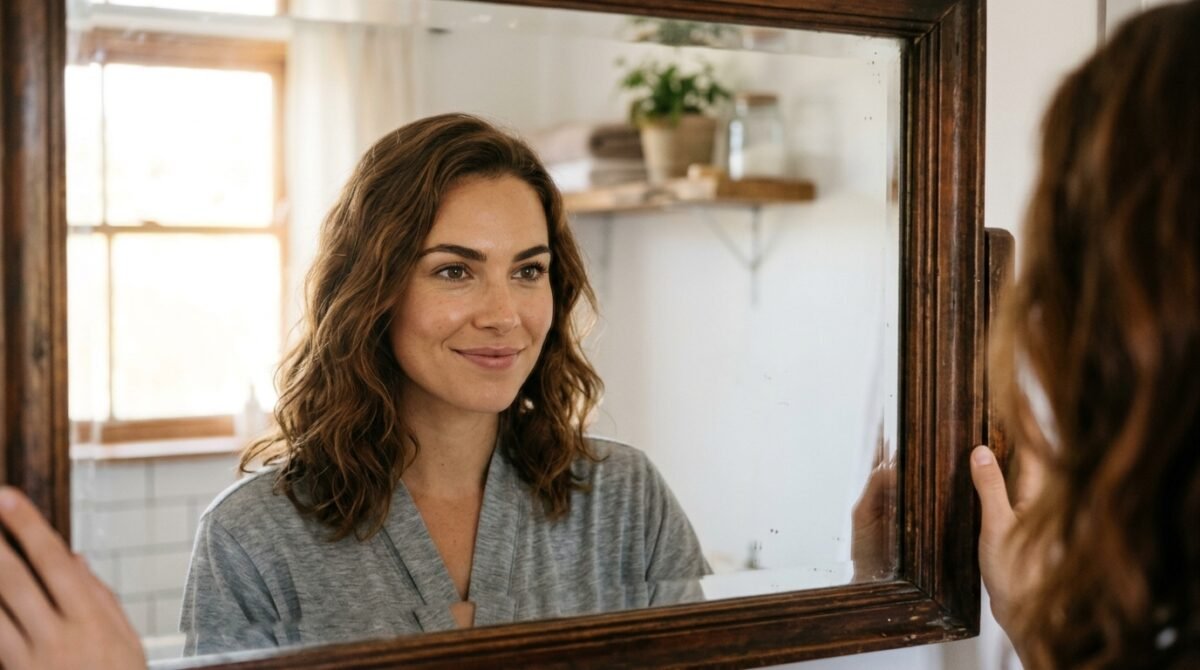
I am finally in a place where I can say I am happy. Not the ‘perfect’ happy of the early marriage years, but a real, grounded, earned happiness. I have a life that is truly mine, and for the first time in a long time, I am excited about the future. I am no longer looking over my shoulder, because I know that the person I need to trust most is the one looking back in the mirror.
Reflections on the Modern Marital Landscape

We live in an age where technology has blurred the lines of privacy to an unprecedented degree. We share passwords, we sync our devices, we track our locations. It’s all framed as ‘convenience’ or ‘transparency,’ but it’s a slippery slope. When does sharing become spying? When does transparency become surveillance? It’s a question every couple needs to answer for themselves.
I believe that the ease of digital access has made it easier for people with narcissistic or controlling tendencies to act on their impulses. They can hide a camera in a bookshelf for a few dollars. They can install keyloggers on shared computers. They can track your movements with a single app. The tools of control are everywhere, and we often invite them into our homes.
“We need to have the conversation about digital privacy in our relationships just as clearly as we have the conversations about finances or kids. It’s not just tech support; it’s about setting the foundation for mutual respect.”
I hope that by sharing my story, I’ve given someone else the courage to check their own bookshelves. To listen to that nagging suspicion, that feeling that something isn’t quite right. It’s better to be wrong and end up with a slightly awkward conversation than to be right and wake up to a reality you never wanted to inhabit.
The community support I’ve received has been nothing short of life-changing. It’s shown me that I’m not the only one who has faced this, and that there is a path forward. We are not defined by the people who betray us; we are defined by how we handle that betrayal and how we rebuild our lives from the ashes.
If you take anything from this, let it be this: your privacy is a non-negotiable human right, even within a marriage. If someone takes that from you, they don’t deserve the privilege of your presence. Walk away. Build something better. You are worth more than the data they are trying to steal from you.
Moving Forward: The Final Update

It has been six months since I walked out that door. The divorce is finalized, the house is sold, and the records of the case are sealed. Mark has tried to reach out a few times—apologies, excuses, the usual cycle of behavior—but I have him blocked everywhere. I don’t care about his ‘explanation’ anymore. It doesn’t change the fact that he was a stranger, and it certainly doesn’t bring back the time I lost.
I am currently working on a project that helps other women navigate the legal complexities of digital abuse. It’s my way of turning that dark chapter into something constructive. I’ve found that helping others process their own experiences is the most effective way to process my own. It’s a work in progress, but it’s a beautiful one.
“I am finally at peace. The cameras are gone, the fear is gone, and for the first time in years, I can sit in my office and just work, without the haunting feeling that someone is watching me. That freedom is worth every dollar I spent on lawyers.”
My life isn’t perfect, but it’s authentic. I’ve reconnected with old friends, traveled to places I had put off visiting, and found a rhythm that works for me. I am no longer a ‘wife’ to a man I didn’t know; I am just me. And that is enough.
I look forward to the future with a sense of optimism I hadn’t felt in a long time. I know there will be challenges, but I’ve proven to myself that I can handle them. I’ve survived the worst, and I’m ready for the best. To anyone reading this who is currently in a situation that feels ‘off’: trust your gut. It’s the best tool you have.
Thank you for listening to my story. Thank you for the support, the advice, and the community. We are all in this together, and by shining a light on the dark corners, we make it safer for everyone else. Stay vigilant, stay true to yourself, and never, ever compromise your own dignity for the sake of a relationship.
Conclusion
The story of my betrayal, while painful, has served as a powerful catalyst for growth. My journey from discovering a hidden lens in my sanctuary to legally severing ties with a man who chose surveillance over trust was not just about winning a divorce—it was about reclaiming my own narrative and personal agency. The digital age provides the tools for control, but it also provides the tools for evidence and, ultimately, liberation.
I want to hear from you. Have you ever felt that your privacy was being compromised in a way that felt subtle but deeply wrong? How did you address the boundaries of trust in your own relationships? Let’s discuss in the comments below. Your experiences, whether similar or entirely different, help build a stronger understanding of what true partnership looks like in the modern world.
Poll: If you discovered your spouse had installed a hidden monitoring device without your consent, would you confront them immediately, or would you gather evidence first to protect your legal interests?
What's your verdict on this dilemma?
Vote below to contribute to the official community consensus.

Have a Dilemma Keeping You Up at Night?
Share your real-life feud, wedding chaos, or relationship crossroads anonymously with our editorial team.
What do you think ?
0 Comments🛡️ Comments are moderated to protect community integrity. Your comment will appear once approved by the editorial team.