
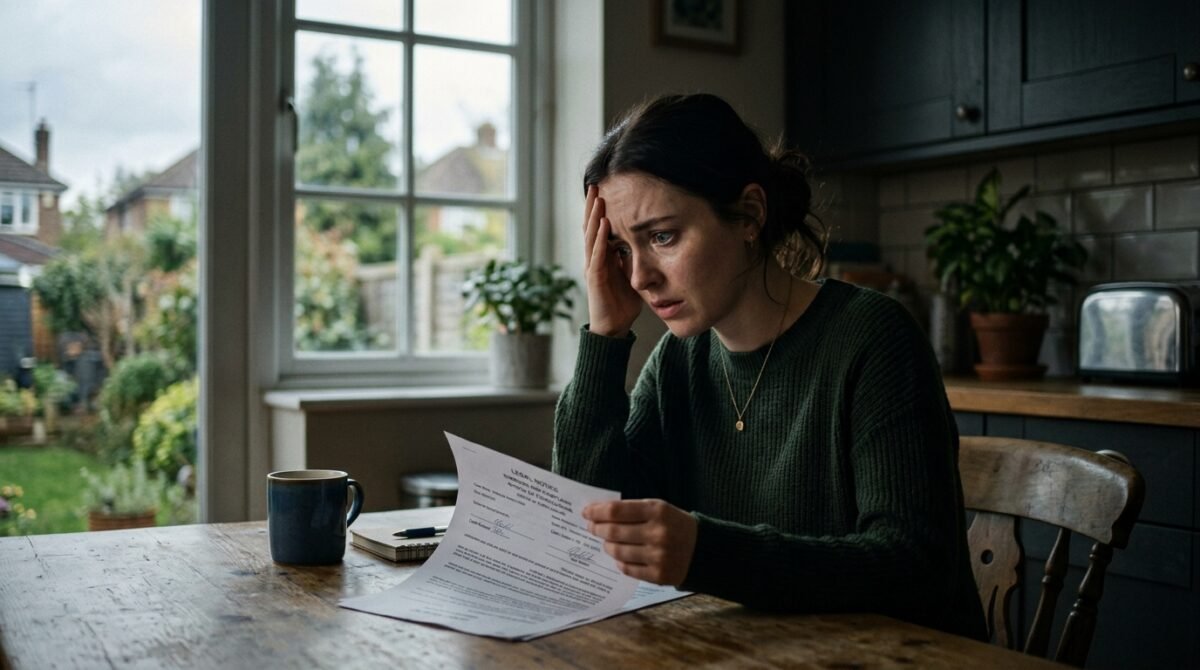
When people tell you that marriage is about merging two families, they usually mean holiday schedules and the occasional Sunday dinner. They rarely, if ever, mean that your future mother-in-law intends to maintain a permanent, legally protected right to witness your private life in the most intimate sanctuary of your home. I met Mark three years ago, and for the first two, he was the picture of a supportive, independent partner. We shared a vision for our future: a quiet life, a dog, and a home that served as our personal haven.
However, the mask began to slip the moment we started talking about buying a property. It wasn’t about the interest rates or the square footage. It was about ‘The Arrangement.’ Mark insisted that his mother, a woman who had been a fixture in his daily life for nearly thirty years, needed a guaranteed way to check on our well-being. At first, I assumed he meant a spare key for emergencies—a common enough practice for families who are close. I was wrong.
The reality was far more clinical, far more invasive, and, frankly, utterly bizarre. Last Tuesday, Mark sat me down with a manila envelope and a pen, asking me to sign a document that would grant his mother ‘unrestricted access to the master suite for the purpose of daily maintenance and wellness checks.’ I felt the blood drain from my face as I read the fine print. This wasn’t just a request; it was a demand for a permanent audience in our bedroom.
This story isn’t just about a controlling mother-in-law; it’s about a partner who has been conditioned to view his own autonomy—and mine—as a resource to be managed by his matriarch. As I sit here writing this, the house is silent, but the tension is deafening. I have to decide if I’m marrying a man or signing up to be a permanent guest in a museum of his mother’s design.
The Tuesday Morning Legal Ambush

I remember the smell of the coffee that morning—burnt, bitter, and entirely inconsistent with the calm atmosphere I thought we were enjoying. Mark had prepared a ‘breakfast of champions,’ which in hindsight was clearly a tactical bribe to lower my defenses. He looked nervous, his leg bouncing beneath the table, but I attributed it to the stress of our upcoming mortgage application.
He didn’t start with the document. He started with a long, circular speech about ‘intergenerational support’ and ‘respecting the village.’ I nodded along, thinking he was talking about us eventually having children or perhaps inviting his mother over for more frequent visits. It sounded sweet, if a bit clingy. Then, he slid the manila envelope across the table.
“I want us to be transparent, honey. Mom has always been there for me, and she worries. She just wants to make sure we’re keeping the house in order, and this document… it just makes it official so there are no arguments later.”
— Mark, during the breakfast ambush
I pulled out the paper. It was printed on heavy cream cardstock, drafted by a paralegal he’d hired without my knowledge. It looked like a contract. It smelled like a trap. As I read the clauses, my mind struggled to process the legal terminology. It wasn’t a standard ‘visitation’ clause; it was an ‘access waiver’ for the master bedroom. The wording was specific: 7:00 AM to 9:00 AM daily. It claimed the right to ensure the space remained ‘sanitary and structurally sound.’
I looked up at him, waiting for the punchline. I expected him to laugh, to tell me he’d found this on a joke website or that he was testing my loyalty. He didn’t blink. He just stared at me, his eyes wide and expectant. The silence in the kitchen grew heavy, pressing against my eardrums like deep water. I realized then that he wasn’t joking. He was terrified of his mother, and he was trying to use me as a shield to satisfy her.
I asked him, ‘Mark, do you realize how insane this sounds?’ He just shook his head, looking down at his plate. He told me that his mother had ‘sacrificed everything’ for him, and that this was the only way she would feel comfortable contributing to our down payment. The financial strings weren’t just attached; they were a noose. I sat there, realizing that the house I dreamed of owning was already occupied by a ghost of his past, and she wanted a key to the bedroom.
The Price Tag of Autonomy
The realization that the down payment was contingent on this waiver hit me like a physical blow. We had been saving for years, but with the market being what it is, we were still short of the 20% mark for the house he wanted. Mark’s mother had offered to bridge the gap—an offer that seemed generous at the time, bordering on a miracle. Now, I saw the price tag clearly: my dignity and my privacy.
I spent the afternoon doing some digging, and the amount she was putting in was exactly 15% of the total cost. It was a massive sum, one that would make our monthly payments incredibly comfortable. But at what cost? I tried to explain to Mark that we could just wait another year, save more, and buy something smaller. His reaction was visceral. He became agitated, pacing the living room like a caged animal.
“We can’t wait! The market isn’t going to hold for us, and I’m not losing this house because you’re being stubborn about a little privacy. It’s my mother! She’s not going to be staring at us; she’s going to be cleaning. She loves to clean!”
— Mark, escalating the situation
I tried to counter his logic. I pointed out that if she wanted to clean, she could clean the living room, the kitchen, or the garage. Why the master bedroom? Why the specific morning hours? The logic didn’t hold up, and he knew it. He started gaslighting me, telling me that I was being ‘unusually sensitive’ and that I was ‘demonizing a kind old woman.’ It was a classic deflection, designed to make me feel like the villain for wanting a private space to sleep and change clothes.
I began to wonder if this had been happening all along, just in smaller ways. Had she been dictating our furniture choices? Our vacation spots? The way we spent our holidays? The more I thought about it, the more the pieces clicked into place. I had been living in a curated version of our relationship, one where Mark’s mother was the invisible director behind the scenes. This document was just the first time she had demanded a speaking role.
I took a walk that evening, just to get out of the suffocating atmosphere of our apartment. I called my sister, who didn’t even let me finish the story before she started shouting. Hearing her reaction validated my own gut feeling, but it also made the reality of the situation more painful. I wasn’t just dealing with a boundary-crossing mother; I was dealing with a partner who had zero intention of enforcing boundaries on my behalf.
The Secret Group Chat Revelation

Late that night, after Mark had finally fallen asleep, I did something I had never done before. I checked his phone. I felt a pang of guilt, but it was quickly overshadowed by the sickening feeling that I was being kept in the dark. I navigated to his messages, specifically looking for his mother. The thread was long, filled with mundane updates, but then I found it—the conversation about the house and the waiver.
The messages were chilling. His mother wasn’t just asking for access; she was demanding it as a way to ‘ensure the woman you chose doesn’t lead you astray.’ She had been monitoring our spending, our habits, and even our recent arguments. She had a detailed log of when we were home, when we left, and what we had for dinner. It felt like I was reading a report from a private investigator.
“Make sure she signs the paper, Mark. If she refuses, we know she isn’t committed to the family values we hold. Do not let her manipulate you into thinking your mother is a burden. She is the foundation of your success.”
— Mark’s mother, in a leaked text message
I scrolled further back, finding messages from months ago where they discussed our wedding. They had been planning to invite people I explicitly said I didn’t want there, and they had been making decisions about our future children’s education. It was all there, in black and white. My life, my choices, my future—none of it was mine. It was being negotiated in a thread I was never meant to see.
The betrayal wasn’t just about the waiver; it was about the fundamental lack of trust. Mark had been playing two roles: the loving fiancé to me and the obedient son to her. He was lying to both of us, or rather, he was letting us both believe whatever version of the truth made his life easiest. I felt a cold numbness settle into my bones. This wasn’t a misunderstanding; it was a conspiracy against my autonomy.
I took screenshots of everything. I didn’t know what I would do with them yet, but I knew I couldn’t unsee them. As I sat there in the dark, the glow of the phone screen casting long shadows on the walls, I realized that I wasn’t fighting for a house. I was fighting for my identity. If I signed that paper, I would be agreeing to be an employee in my own home, supervised by a woman who clearly despised the independence I represented.
The Sunday Dinner Silence

Sunday dinner was a weekly ritual I had grown to tolerate, but this time, it felt like entering a lion’s den. Mark’s mother, Linda, was waiting for us with a smile that didn’t reach her eyes. She was wearing an apron that looked far too clean for someone who had allegedly been ‘cleaning’ all day. Mark kept glancing at me, his eyes pleading for me to ‘just play along.’
The dinner was a masterclass in passive-aggression. Linda talked about the house, about how ‘spacious’ it would be and how she had already picked out the wallpaper for the guest room and the layout for the master suite. She spoke as if I were a ghost, someone who was lucky to be included in the planning at all. Every time I tried to interject, Mark would steer the conversation back to her.
“Linda, I’m not sure about the paint choices yet. We haven’t even signed the papers on the house. Maybe we should focus on the budget first before we decide on the interior design.”
— My attempt to steer the conversation, followed by a tense silence
The table went silent. Linda put down her fork with a metallic click that echoed through the room. She looked at Mark, and then at me, her expression hardening. She didn’t respond to me directly. Instead, she turned to Mark and asked, ‘Does she not understand the timeline? I told you this required a sense of urgency. Why is she still confused?’
Mark immediately apologized, telling her that we were just ‘working through a few details.’ I watched him crumble. He didn’t defend me. He didn’t even acknowledge that I had a valid point. He just wanted the tension to dissipate so he could go back to the comfort of her approval. It was pathetic. Watching him apologize for my boundary-setting was the final nail in the coffin of my respect for him.
I didn’t say another word during dinner. I ate my food, which tasted like ash, and waited for the moment we could leave. As we walked to the car, Mark sighed with relief, telling me how ‘well’ it had gone. I looked at him, really looked at him, and realized that we were living in completely different realities. He thought we had navigated a tricky social situation; I knew I had just witnessed the blueprint of my future misery.
The Internet Weighs In

I did what anyone in the modern age does when they feel trapped: I went to Reddit. I created a throwaway account and posted the entire situation, sparing no detail. I didn’t expect much—maybe a few people telling me to run—but the response was immediate and overwhelming. Within hours, the post had thousands of upvotes and hundreds of comments, all echoing the same sentiment: leave.
“This is not a ‘wellness check.’ This is a control mechanism. If you sign that paper, you are legally signing away your privacy and your marriage. Mark is not your partner; he is his mother’s proxy. Run, don’t walk, away from this engagement.”
— u/BoundariesExpert (Top Comment, 32.5k upvotes)
The comments section became a space for me to see the absurdity of the situation through the eyes of others. People shared similar stories of ‘overbearing in-laws’ and ‘spineless partners,’ and it helped me realize that I wasn’t crazy. I wasn’t being dramatic. I was being subjected to something that was objectively invasive and wrong. The sheer number of people telling me to end the engagement was staggering, but it gave me a strange sense of clarity.
Some comments were brutal. They pointed out the financial red flags—how the mother was using money as a weapon, how the ‘waiver’ was a legally binding document that could potentially lead to harassment charges if I tried to stop her from entering. I hadn’t even thought about the legal implications beyond the social ones. The advice was unanimous: do not sign, do not take the money, and do not buy the house.
I read through the comments late into the night, feeling a sense of community I hadn’t felt in months. I wasn’t alone. Other people had survived this. Other people had walked away from seemingly perfect lives because they realized their worth was more important than a house or a wedding. The collective wisdom of the internet was a mirror, reflecting back the truth I had been trying to ignore.
I made a decision that night. I wasn’t going to have a calm conversation with Mark. I wasn’t going to try to convince him anymore. I was going to set a hard boundary, and I was going to prepare for the fallout. The Reddit community had taught me that when someone shows you who they are, you should believe them. Mark had shown me he was his mother’s son, and that would never change.
The Final Confrontation

I chose a neutral ground: a coffee shop, public enough to prevent a screaming match, but quiet enough to be heard. I arrived early, my heart hammering against my ribs. When Mark walked in, he looked annoyed. He clearly thought I was going to apologize for the ‘dinner incident’ and finally agree to sign the paperwork. He sat down and ordered a coffee, his tone casual and dismissive.
“Look, I hope you’re ready to get this over with. My mom is expecting the signed document by tonight. Let’s just sign it and get back to the fun stuff, like picking out the furniture.”
— Mark, before the realization hit
I didn’t pull out the document. I pulled out my phone and slid it across the table, showing him the screenshots of the text messages between him and his mother. His face went pale, then red, then a shade of gray I’ve never seen on a human being. He didn’t even try to deny it. He just stared at the screen, his hands trembling as he realized his private world had been exposed.
‘How did you see these?’ he whispered, his voice barely audible over the hum of the coffee machine. I told him it didn’t matter how I saw them, only that I had. I told him that I wasn’t signing the waiver, I wasn’t buying the house, and I was re-evaluating our entire relationship. He tried to backtrack, saying it was all just ‘venting’ and that his mother didn’t mean any of it. But the damage was done.
The conversation was short. There was no room for negotiation. When I told him that he was choosing his mother’s comfort over my boundaries, he tried to turn it around on me, calling me ‘selfish’ and ‘unsupportive.’ I stood up, left my half-finished drink on the table, and walked out. I didn’t look back. I felt a weight lift off my chest that I hadn’t realized I was carrying.
He followed me for a bit, pleading with me to come back and talk it out, but I kept walking until I reached my car. I knew that if I stayed, I would cave. I knew his manipulation tactics, and I knew how much I still loved him. But I also knew that if I stayed, I would lose the only version of myself that mattered—the one who refused to be controlled by anyone else’s expectations.
The Aftermath and the Move

The next few weeks were a blur of boxes, tears, and a strange, quiet sense of relief. I moved out of our shared apartment, leaving behind the furniture we had bought together. It was a small price to pay for my peace of mind. Mark tried to contact me dozens of times—calls, texts, emails—all of them filled with a mix of apologies, anger, and finally, threats. He claimed I was ‘ruining his life’ and that I had ‘betrayed’ his family.
I didn’t respond to any of it. I blocked his number, his email, and his social media. I reached out to a lawyer just to be safe, especially given the ‘waiver’ he had tried to force on me. They confirmed that if I had signed it, it could have been a nightmare to get out of, depending on the state laws. The feeling of narrow escape was intense. I had almost signed away my life because I was too afraid to hurt someone’s feelings.
My friends and family were incredibly supportive. They helped me pack, they listened to me cry, and they reminded me of who I was before I met Mark. It’s funny how you lose yourself in a relationship like that, bit by bit, until you’re just a shell of who you used to be. Slowly, I started to feel like me again. I started going to the gym, I started seeing my friends, and I started rediscovering the hobbies I had set aside to appease his mother’s schedule.
It wasn’t easy. There were nights when I missed him, or when I wondered if I had overreacted. But then I would look at the screenshots I had saved—the evidence of their conspiracy—and the doubt would vanish. I had made the right choice. I wasn’t just avoiding a bad marriage; I was choosing a life where I was the primary authority, not a footnote in someone else’s.
The house he eventually bought? I don’t know the details, and I don’t care. I hope he’s happy. I hope he and his mother are as close as they want to be. As for me, I’m living in a small apartment that is entirely, wonderfully my own. No one has a key except me, and no one is allowed to check on my ‘wellness’ unless I ask them to. It’s the best feeling in the world.
Reflecting on the Red Flags

Looking back, the red flags were everywhere, but I chose to ignore them. I saw his mother’s constant presence as ‘closeness’ rather than ‘enmeshment.’ I saw his lack of boundaries as ‘being a good son’ rather than ‘being a puppet.’ I convinced myself that if I just did enough, if I was ‘perfect’ enough, she would eventually accept me and back off. I was wrong. People like that don’t back off; they just keep moving the goalposts.
The lesson I learned is that you cannot negotiate boundaries with people who don’t respect your autonomy. You either have them, or you don’t. And if your partner isn’t willing to stand with you against the people who are encroaching on your life, then they are not your partner. They are just another part of the problem. It’s a hard lesson, but it’s one that has saved me from a lifetime of unhappiness.
“Boundaries aren’t about keeping people out; they’re about keeping your own soul protected. Never sign away your autonomy for the sake of ‘keeping the peace.’”
— A piece of advice I wish I had learned years ago
I’ve started therapy to understand why I was so willing to put up with it for as long as I did. It’s not just about Mark; it’s about my own tendencies to people-please and my fear of conflict. It’s a journey, but it’s a necessary one. I’m learning to listen to my gut, to prioritize my own needs, and to say ‘no’ without feeling the need to apologize for it. It’s a skill that I’m still developing, but it’s the most valuable thing I’ve ever learned.
If you find yourself in a similar situation—if someone is asking you to sign away your privacy, or if they’re constantly prioritizing someone else’s wishes over your needs—please, take a step back. Look at the situation objectively. Ask yourself if this is the life you want for the next fifty years. Because if you say ‘yes’ to the small things today, you’re saying ‘yes’ to the big things tomorrow. Don’t be afraid to walk away.
I’m finally in a place where I’m happy. It’s not the life I planned, but it’s a life that belongs entirely to me. I’m no longer waiting for permission to be myself, and I’m no longer living in a house that doesn’t feel like home. The experience was painful, but it was the catalyst I needed to wake up. And for that, I suppose, I should be grateful.
Community Reflection: The Verdict

The response from the Reddit community didn’t stop after I left Mark. People kept commenting, sharing their own stories and offering encouragement. It’s amazing to see how many people have dealt with similar issues. It’s not just a ‘mother-in-law’ problem; it’s a ‘respect’ problem. The community has become a space where we can all share our experiences and support each other, and it’s been a lifeline for me.
“You didn’t just save your marriage from becoming a prison; you saved your future self from a lifetime of resentment. Well done, OP. You are a role model for setting boundaries.”
— u/SupportiveSoul (15.2k upvotes)
I’ve seen comments from people who didn’t set boundaries, and their stories are heartbreaking. They talk about divorces after decades of misery, about losing their own identities, and about the deep regret they feel for not speaking up sooner. Reading those stories makes me feel even more grateful for the strength I found that day in the coffee shop. I may have lost a fiancé, but I found myself.
There were some who disagreed, of course. Some people said I should have tried ‘family counseling’ or that I was ‘throwing away a good man’ over a ‘silly misunderstanding.’ But those comments were few and far between. The vast majority of people understood that this wasn’t about a ‘misunderstanding.’ It was about a fundamental difference in values—and a fundamental lack of respect.
I want to thank everyone who commented, who supported me, and who shared their own experiences. You helped me realize that I wasn’t alone, and you gave me the confidence to stand by my decision. It’s a strange thing to find comfort in a community of strangers, but in this case, it’s exactly what I needed. I’m hopeful for the future, for the first time in a long time.
I’ll continue to update the thread as I go. Maybe I’ll share some tips on how to set boundaries early, or how to spot the red flags in a partner before they become a problem. For now, I’m just enjoying the peace. I’m enjoying the silence of my own home, the freedom of my own schedule, and the knowledge that I am the only one who has a key to my life.
Moving Forward: A Life Reclaimed

It has been six months since I walked out, and my life has transformed in ways I couldn’t have imagined. I have a new job, a new group of friends, and a sense of self-worth that I never had when I was with Mark. I’m not saying it was easy—there were days when I wanted to reach out, days when the loneliness felt overwhelming—but I stayed the course. I kept my boundaries firm, and I kept moving forward.
I’ve learned that the most important relationship you will ever have is the one you have with yourself. If you don’t respect your own boundaries, nobody else will. I’ve stopped trying to please everyone and started focusing on what makes me truly happy. And you know what? Most of the people in my life respect me more for it. They see that I have standards, and they treat me accordingly.
I’m not looking for a new relationship right now. I’m enjoying being alone, learning who I am outside of the context of a couple. It’s liberating. I’ve picked up painting, I’ve started traveling, and I’ve finally started working on the projects I was always ‘too busy’ to do when I was with Mark. I’m living for me, and it’s the most fulfilling thing I’ve ever done.
To anyone out there who is feeling trapped or who is being pressured into giving up their privacy, please listen to me: you have a choice. You don’t have to accept the way things are. You have the right to set boundaries, and you have the right to leave if those boundaries aren’t respected. Don’t let someone else’s expectations dictate your happiness. You deserve better.
Life is too short to be a guest in your own home. Take control, stand your ground, and don’t be afraid to choose yourself. It might be the hardest thing you ever do, but I promise you, it will be the most worth it. You are enough, exactly as you are, and you don’t need anyone’s permission—least of all a mother-in-law’s—to live your life on your own terms.
Conclusion
My journey from a trapped, confused fiancé to an independent, empowered individual has been the most transformative experience of my life. The legal waiver was the turning point, the moment where the absurdity of the situation became impossible to ignore. But it was just the symptom of a much larger issue: a lack of respect for personal boundaries and a partner who was unable to prioritize our relationship over his family’s demands.
By sharing my story, I hope to empower others to recognize the red flags in their own lives and to have the courage to set their own boundaries. It’s not always easy, and it’s not always popular, but it’s essential for your own well-being. Don’t let anyone convince you that your autonomy is negotiable. It’s not.
What about you? Have you ever had to draw a hard line with a partner’s family, or have you found yourself in a situation where your boundaries were ignored? I’d love to hear your experiences and the lessons you’ve learned along the way. Let’s start a conversation in the comments below.
Discussion Poll:
If you were in my shoes, at what point would you have walked away? (A) The moment he mentioned his mother’s ‘wellness checks’, (B) When he first presented the legal waiver, (C) After reading the secret group chat messages, or (D) You would have tried to negotiate, even if it seemed hopeless.
What's your verdict on this dilemma?
Vote below to contribute to the official community consensus.

Have a Dilemma Keeping You Up at Night?
Share your real-life feud, wedding chaos, or relationship crossroads anonymously with our editorial team.
What do you think ?
0 Comments🛡️ Comments are moderated to protect community integrity. Your comment will appear once approved by the editorial team.