

Success, I have learned, is a double-edged sword. When I landed my dream role as a senior consultant in the tech sector, I expected to feel the weight of accomplishment. I didn’t expect to feel the weight of a dozen hands reaching into my pockets. It started small—a dinner bill here, a birthday gift there—but it quickly spiraled into a level of entitlement that left me reeling.
My best friend, Sarah, and I had been inseparable since college. We navigated the trials of entry-level jobs and cramped apartments together. But when I finally reached a point where I could breathe financially, Sarah saw my bank balance as a communal resource. The tension hit a breaking point when she proposed a luxury yacht charter in the Greek Islands, assuming I would foot the entire bill.
This wasn’t just a request; it was a demand wrapped in the language of ‘fairness’ and ‘loyalty.’ She believed that because I had ‘made it,’ I owed it to our friendship to elevate her lifestyle as well. This article explores the unraveling of a decade-long friendship, the toxic expectation of financial dependency, and the moment I finally had to draw a line in the sand.
We are going to dissect the text messages, the uncomfortable silences at dinner parties, and the eventual blowout that cost me my best friend. It is a cautionary tale about how money changes the dynamics of even the strongest bonds, and why sometimes, protecting your own peace means saying ‘no’ to the people you love the most.
The Champagne Dreams of Someone Else’s Bank Account

It began with a casual link sent to my phone on a Tuesday afternoon. Sarah sent me a brochure for a high-end yacht charter company based in Athens, accompanied by a string of heart-eye emojis. At the time, I thought she was just dreaming, the way we used to scroll through real estate listings we couldn’t afford during our twenties.
“Isn’t this place absolute heaven?” she messaged me. “I was thinking we finally do that girls’ trip we’ve been talking about for years. I found the perfect boat, it’s only $25,000 for the week. I’m so excited that you can finally afford to treat us to a real vacation!”
“I’ve been checking the dates. If you book it by the end of the month, we get a discount. I’ve already told my boss I’m taking the second week of July off. So proud of you for working so hard to make this happen for us!”
— Sarah, via Text Message
I stared at the screen, my heart sinking. I had worked hard, yes, but that money was earmarked for my mortgage and my retirement savings. Sarah’s tone wasn’t one of asking; it was the tone of someone confirming a reservation. She had made plans using my labor as the foundation.
I remember sitting at my desk, looking at the spreadsheet of my monthly expenses, and feeling a strange, cold distance forming between Sarah and me. It wasn’t just about the money; it was the complete lack of regard for my boundaries. She had decided what I should do with my life, and she was clearly excited to spend my future earnings before they even hit my account.
I tried to be delicate. I didn’t want to start a fight. I spent an hour drafting a reply that acknowledged her excitement while trying to steer the ship back to reality. I was still naive enough to think that a simple, honest conversation would be enough to resolve the misunderstanding.
The First Crack in the Facade

When I finally told Sarah that I couldn’t fund the trip, the response was immediate and icy. She didn’t call me to talk about it; she sent a voice note that sounded like she was talking to a child who had just dropped an ice cream cone. The condescension in her voice was palpable.
“I think you’re being a little short-sighted,” she said. “We’ve been friends for ten years. You know my financial situation isn’t great right now, but I’ve been there for you through every single career move. Isn’t this what friends are for? To share in the success?”
“Honestly, it’s not about the money. It’s about how you’re choosing to treat me now that you have a title and a salary. I expected more loyalty from you than this.”
— Sarah, via Voice Message
I felt a knot form in my stomach. She was reframing my financial prudence as a betrayal of our friendship. It was a classic move: guilt-tripping me into compliance. I realized then that she wasn’t interested in a compromise; she was interested in a benefactor.
The next few days were filled with a series of passive-aggressive social media posts. She would post photos of us from years ago with captions like, “When friends actually cared about each other,” or “True friends don’t let money change their hearts.” It was childish, but it hurt nonetheless.
I found myself obsessively checking her stories, wondering what she was saying to our mutual friends. I felt isolated, trapped in a narrative that painted me as the villain just because I chose not to empty my savings account for a yacht trip I didn’t even want to take.
The Unannounced Kitchen Intrusion

Two weeks after the initial fight, I came home from a long day of meetings to find Sarah sitting on my porch steps. She hadn’t called. She hadn’t texted. She just waited, looking expectantly at the front door. The look on her face was one of righteous anger, as if she were the one who had been wronged.
“We need to talk,” she said, standing up as I fumbled for my keys. “I can’t believe you’re still ignoring my messages. I’ve been sitting here for an hour, and my phone is dying. You really are going to be like this?”
“I didn’t invite you over, Sarah. And I told you, I’m not spending twenty-five thousand dollars on a trip. It’s not happening. You need to respect that.”
— The Conversation at My Front Door
I unlocked the door and walked inside, leaving her on the porch. I didn’t want to invite her in. I felt a sense of violation—that she thought she could just show up and force a confrontation. It was the ultimate display of entitlement, ignoring the boundaries I had set and assuming her presence alone would make me cave.
She followed me in anyway, uninvited. She sat at my kitchen island as if she lived there, looking around my home with a mix of jealousy and entitlement. “You have all of this,” she gestured to the kitchen. “And you’re going to let us miss out on this experience because you’re being greedy?”
I felt my pulse quicken. I stood my ground, my voice steady despite the adrenaline. I explained again, clearly, that I had financial goals, that I had saved for years, and that my career was not a charity for her lifestyle. She didn’t listen to a word. She just kept repeating that I had ‘changed.’ The gaslighting was absolute.
The Secret Group Chat Revelation
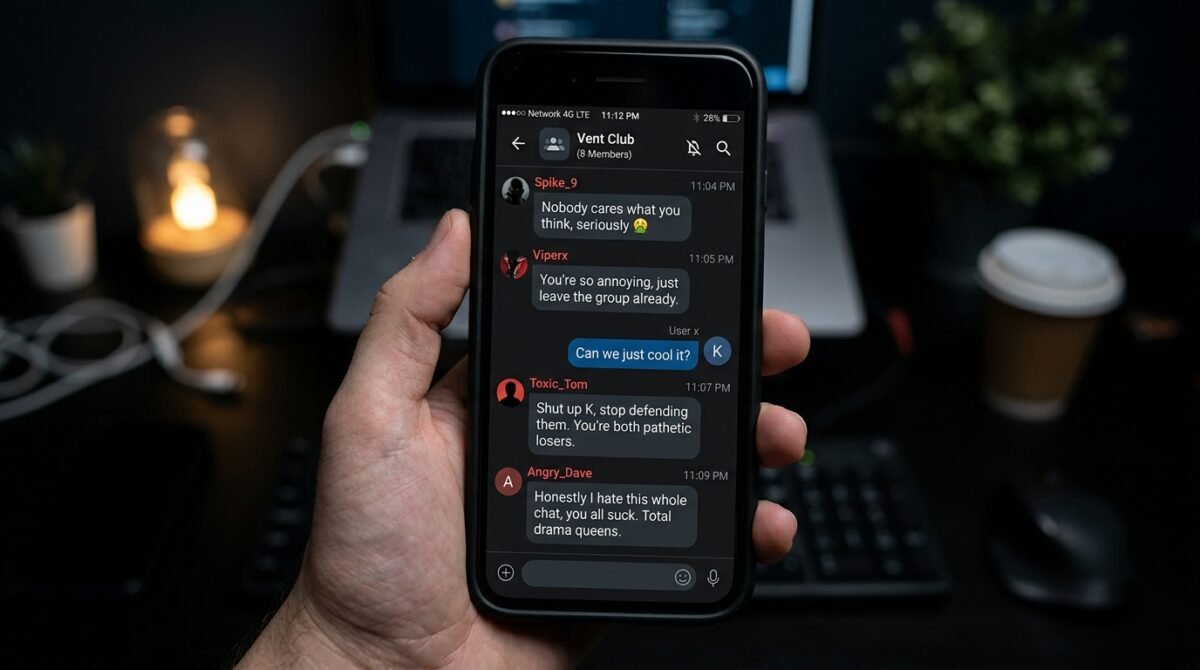
The tipping point came a few days later when a mutual friend, who was clearly uncomfortable with the situation, sent me a screenshot of a group chat I wasn’t part of. It was Sarah and three other friends, discussing how to ‘convince’ me to change my mind.
The messages were vicious. They weren’t just planning the trip; they were planning how to manipulate me. They suggested staging a ‘girls’ night’ where they would get me drunk and then present the booking as a surprise that I had already agreed to. They were treating me like a mark.
“She’s loaded now, she won’t even miss the money. We just need to make her feel guilty enough that she doesn’t want to look like the bad guy in front of everyone. Keep pushing the ‘loyalty’ angle.”
— Sarah, from the Leaked Group Chat
I felt physically sick. These were people I considered family. To see them plotting to exploit me, to see Sarah—my best friend—orchestrating it, was a betrayal that cut deeper than any argument could. It wasn’t just about a yacht; it was about the fact that they didn’t respect me enough to be honest.
I didn’t confront them immediately. I took the time to process the anger. I realized that my friendship with Sarah had been one-sided for a long time; I had just been too invested in the history of the relationship to notice the present reality. It was a painful realization, but one that was necessary for me to move on.
I decided then and there that the friendship was over. Not just because of the money, but because of the character flaws that had been exposed. The mask had slipped, and I couldn’t unsee what was underneath.
The Sunday Dinner Silence

We had a standing tradition of Sunday dinner with a small group of friends. I debated whether to go, but I decided that I wouldn’t let them exile me from my own social circle. I walked into the restaurant feeling like I was walking into a war zone. The silence that greeted me was heavy, uncomfortable, and entirely of their making.
Sarah didn’t even look up from her menu. The others glanced at me and then quickly looked away, their body language stiff and defensive. I sat down and ordered a glass of wine, refusing to acknowledge the elephant in the room. I wanted to see if they would actually have the nerve to bring it up.
“So, are we doing this trip or not? We’re all waiting to hear what you’ve decided, after all the drama you’ve been causing lately.”
— Sarah, at the Sunday Dinner Table
The table went silent. Everyone looked at me, waiting for the performance. I looked Sarah dead in the eye and said, “There is no trip. And if you keep bringing this up, I’m going to leave.” The reaction was immediate—a flurry of whispers, looks of shock, and Sarah’s face turning bright red with indignation.
I didn’t stay for the appetizers. I stood up, put my napkin on the table, and walked out. I didn’t look back. I heard Sarah shouting my name, but I kept walking until I was out of the restaurant and into the cool evening air. I felt lighter than I had in months. The power she held over me—the guilt, the obligation—was gone.
It was the most liberating moment of my life. I had stood up for myself, and for the first time, I didn’t care what they thought of me. I had finally realized that my worth was not tied to their approval, and certainly not to their bank accounts.
The Aftermath of the Great Severing

The week following the dinner was a blur of blocked numbers and deleted social media connections. I knew there would be fallout, and there was. I received a barrage of messages from various friends, some sympathetic, some critical, all of them caught in the middle of a conflict they didn’t fully understand.
I chose to be honest. I sent a message to the group, outlining exactly what had happened, including the leaked texts from the planning chat. I didn’t do it to be petty; I did it to reclaim the truth. I was tired of being the villain in their stories, so I laid the facts out plainly for everyone to see.
“I am not an ATM. I value my friends, but I value my boundaries more. I won’t be funding anyone’s vacation, and I won’t be part of a group that plots behind my back.”
— My message to the group
The response was telling. Those who were true friends reached out to apologize for not standing up sooner. Those who were enablers, or who were just there for the party, faded away. It was a brutal cull of my social circle, but looking back, it was the best thing that could have happened to me.
I spent that weekend clearing out the last of Sarah’s things from my apartment. It was a cathartic process. Every item—the borrowed book, the spare key, the leftover makeup—was a reminder of a dynamic that no longer existed. I felt a sense of peace that I hadn’t felt in years.
I learned that when you start setting boundaries, you lose people. But the people you lose are the ones who were only there because they were benefiting from your lack of boundaries. And that, I realized, was a trade I was more than willing to make.
Community Verdict: The Reddit Perspective

When I finally posted my story on a popular forum, I expected some pushback. I know how the internet loves to play devil’s advocate. But the response was overwhelmingly supportive, which was a relief. It was a reminder that I wasn’t crazy, and that my reaction was justified.
“This isn’t just about money, OP. This is about a person who stopped seeing you as a human being and started seeing you as a utility. You did the right thing by cutting the cord. Don’t look back.”
— u/SupportiveSoul (Top Comment, 32.5k upvotes)
There were some dissenting voices, of course. A few people argued that if I had the money, I should have helped my friend out. But they were quickly shouted down by the community. The consensus was clear: money does not entitle anyone to your labor or your resources, regardless of the history.
“I had a friend like this. They don’t stop at the yacht. If you pay for this, next year it’s a house, or a car, or a wedding. Entitlement is a bottomless pit. You made the right call.”
— u/LifeExperience (15.2k upvotes)
The discussion taught me a lot about the nature of friendship and the importance of financial independence. It was heartening to see so many people sharing their own stories of breaking free from toxic, parasitic relationships. It made me realize that I wasn’t alone in this experience.
The community also offered a lot of practical advice for the future—how to keep my finances private, how to set boundaries early, and how to spot the red flags before they turn into full-blown crises. It was an education in self-preservation that I wouldn’t have traded for anything.
Ultimately, the support of the community validated my decision and gave me the strength to stay firm. I knew that if I had stayed, I would have been miserable. By walking away, I gave myself a chance to start fresh, and that was worth more than any yacht trip.
The Financial Reality Check

I decided to sit down and actually calculate what Sarah’s ‘request’ would have cost me, not just in dollars, but in time and opportunity. It was an eye-opening exercise that solidified my decision. I put it all into a table, just to see the stark contrast between what she wanted and what I had to work for.
| Category | Demand | The Reality |
|---|---|---|
| Yacht Charter | $25,000 | $0 |
| Flights & Expenses | $5,000 | $0 |
| Total Financial Loss | $30,000 | $0 |
| My Mental Health | Catastrophic | Immeasurable Peace |
The $30,000 wasn’t just a number; it was a year of contributions to my retirement fund, it was a down payment on a new car, or it was the security of a six-month emergency cushion. To Sarah, it was just ‘play money’ that I ‘had’ because of my job. She didn’t see the years of late nights, the stress, or the sacrifice.
This is the problem with success: people see the fruits of your labor but never the labor itself. They see the vacation, but not the burnout. They see the salary, but not the student loans. By asking for that money, Sarah was essentially asking me to sacrifice my own future for her temporary enjoyment.
I realize now that she never understood the value of my work because she never had to do it. She lived in a world where she expected things to be given to her, rather than earned. That mindset is dangerous, and I’m glad I’m no longer in its orbit.
The financial reality check was the final nail in the coffin. I was able to take that $30,000 and invest it in a way that actually benefits my life, and that has brought me more satisfaction than any trip to the Greek Islands ever could.
Reframing Loyalty and Friendship

The entire ordeal forced me to rethink what I look for in a friend. For a long time, I thought that loyalty meant staying by someone’s side no matter what, even when it hurt. But I’ve learned that true loyalty is mutual. It’s about respect, boundaries, and a shared commitment to each other’s well-being.
Sarah was never loyal to me; she was loyal to the version of me that served her needs. When I started to act in my own self-interest, that ‘loyalty’ vanished. It was never a real friendship; it was an arrangement that only worked as long as I was the one giving and she was the one taking.
I’ve started to build a new circle of friends, people who are supportive of my career and my life goals, and who never ask me to sacrifice my security for their fun. It’s a different kind of relationship, one built on mutual respect rather than shared history and dependency.
I’ve also learned to be much more guarded about my financial life. I don’t talk about my salary or my savings anymore. I don’t feel the need to show off or to prove that I’ve ‘made it.’ I’ve realized that the people who need to know aren’t the ones who truly matter.
This entire experience has been a painful but necessary growth process. I’m stronger now, more discerning, and much more protective of my own boundaries. I’ve learned that it’s okay to say ‘no,’ and that the right people will always respect that.
Moving Forward Without the Guilt

It has been six months since I cut Sarah out of my life, and I haven’t looked back. I still get the occasional message from mutual friends asking if we’ve ‘made up’ yet, but I just smile and tell them that we’re in different places in our lives. I don’t need to explain myself to anyone.
I’ve reached a point where I don’t feel guilty about my success anymore. I earned it, and I deserve to enjoy it. I don’t need to apologize for my bank account, and I certainly don’t need to fund someone else’s lifestyle to prove that I’m still the same person I was ten years ago.
My career is going better than ever, and I’m finally able to focus on the things that actually make me happy. I’ve taken a few small, quiet trips on my own—trips that I planned and paid for myself—and they have been some of the most rewarding experiences of my life.
I’ve learned that the only person you have to answer to is yourself. If you’re living in a way that aligns with your values, then you’re on the right path. Don’t let anyone, no matter how long you’ve known them, tell you otherwise.
I hope that if you’re reading this and you’re in a similar situation, you realize that it’s okay to draw a line. Your friends should be the people who cheer you on, not the ones who reach into your pockets. Protect your peace, protect your assets, and never, ever apologize for your success.
Conclusion
The story of my friendship with Sarah is, at its heart, a story about the changing tides of life and the difficulty of letting go of the past. We evolve, our circumstances change, and sometimes, the people we once relied on can no longer keep pace with our growth. It is a painful realization, but one that is essential for a life lived authentically.
I didn’t lose a friend; I lost a burden. By standing up for my boundaries, I allowed myself the space to grow into the person I was always meant to be—someone who values their own labor, their own security, and their own peace of mind above the fleeting approval of others.
I encourage you to reflect on your own relationships. Are there people in your life who are draining you, financially or emotionally? Are you staying out of obligation or out of genuine connection? It’s a hard question, but it’s one that we all need to answer at some point.
What about you? Have you ever had a friend whose idea of ‘fairness’ felt more like exploitation? How did you handle the situation, and what did you learn from it? Let’s keep the conversation going in the comments below.
What's your verdict on this dilemma?
Vote below to contribute to the official community consensus.

Have a Dilemma Keeping You Up at Night?
Share your real-life feud, wedding chaos, or relationship crossroads anonymously with our editorial team.
What do you think ?
0 Comments🛡️ Comments are moderated to protect community integrity. Your comment will appear once approved by the editorial team.