
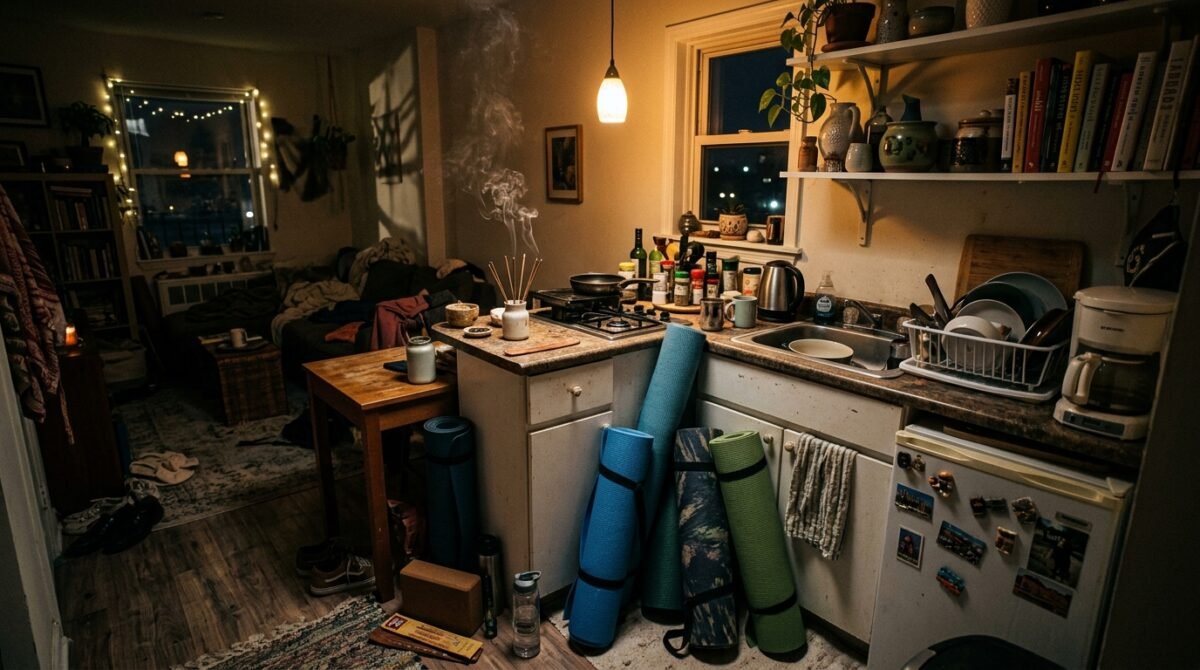
Living in a studio apartment is a test of patience, endurance, and spatial awareness that most people underestimate. When I signed the lease with my roommate, Chloe, we established a set of ground rules that felt rock-solid at the time. We agreed on quiet hours, shared pantry space, and a strict ‘no professional hosting’ policy. For six months, the arrangement was peaceful, if a bit crowded. Then, Chloe discovered the ‘wellness entrepreneur’ circuit on social media, and our kitchen—the very heart of our tiny, shared existence—became the stage for something I never signed up for.
It started innocuously enough: a few friends coming over for a stretching session on a Tuesday evening. I was lenient, keeping to my bedroom with my noise-canceling headphones, trying to ignore the rhythmic thudding of bodies against the hardwood. But the expansion was rapid and aggressive. Within three weeks, Chloe was charging twenty dollars a head for ‘Midnight Moon-Cycle Vinyasa,’ a practice that somehow required our kitchen to be lit only by flickering LED candles and pulsating with high-tempo ambient trance music while strangers rearranged our stove and counters to create floor space.
The moral dilemma began to gnaw at me when I realized my living space had become a public utility. I was paying half the rent for a sanctuary that was being invaded by sweaty strangers at 1:00 AM, all while Chloe pocketed the cash and left behind a trail of incense ash and spilled green juice. I tried to reason with her. I tried to implement a booking fee for my inconvenience. Nothing worked. She called me ‘unsupportive’ and ‘stifling her flow.’ The breaking point was not a dramatic argument, but a quiet, calculated decision: the main circuit breaker box, located inside our closet, was the only remaining leverage I possessed.
This is the story of how I reached my limit, the events leading up to the final blackout, and the chaotic aftermath that turned our friendship into a full-blown civil war. It is a tale of entitlement, the blurred lines of the gig economy, and the sudden, jarring darkness that falls when someone finally decides that enough is truly enough.
The Slow Creep of the Studio Takeover
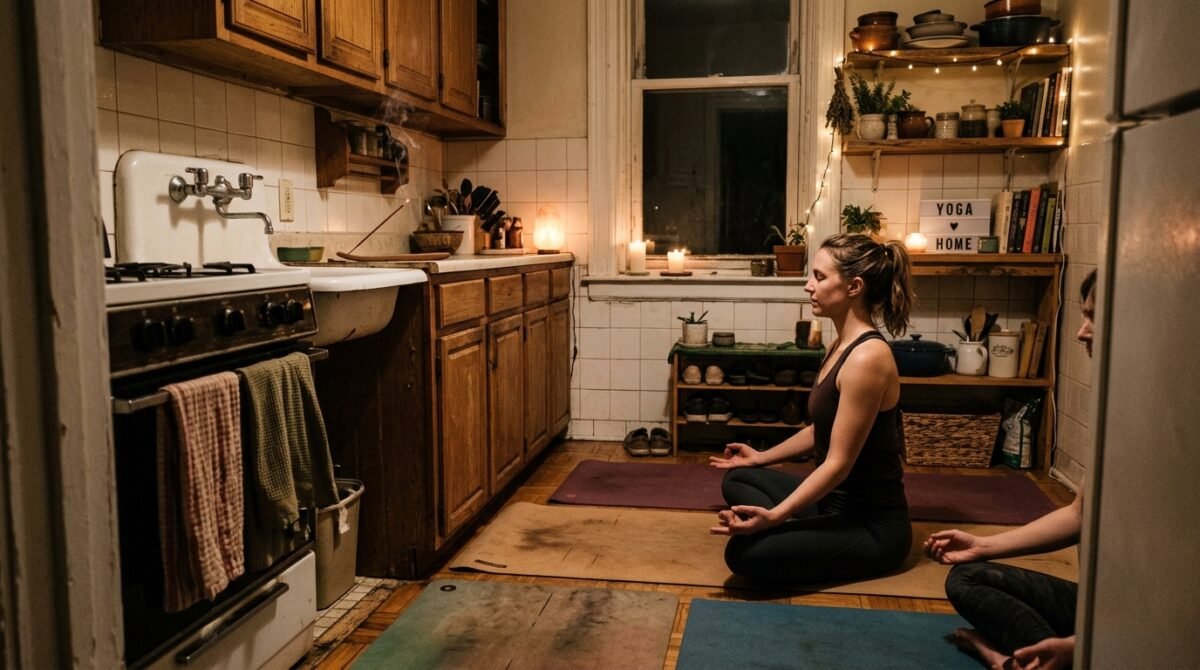
The transformation of our home did not happen overnight; it was a slow, agonizing erosion of boundaries. At first, it was just Chloe and a friend practicing poses in the living room area while I was at work. I figured, fine, it’s our space. But as she leaned harder into her ‘brand,’ the kitchen became the primary hub. She claimed the lighting was better, the floor tiles were ‘more grounding,’ and the proximity to the sink for post-workout smoothies made it ‘essential’ for her business model.
I remember coming home from a long shift at the hospital to find my kitchen island covered in expensive, imported yoga mats and a basket of sage bundles that smelled like a burning forest. When I asked her to move them, she simply laughed and said she was in the middle of a private consultation. The audacity was layered with a thick, syrupy layer of ‘positivity’ that made it impossible to argue without looking like the neighborhood villain.
“You’re really going to interrupt my energy right now, Sarah? My client is paying sixty dollars for this session. Just go to your room and practice some mindfulness while we finish.”
— Chloe, during our first major confrontation
I stood there, still in my scrubs, watching a stranger drink tea from my favorite mug, feeling the walls of the studio physically closing in on me. The kitchen—my kitchen—was no longer a place for cooking. It was an extension of Chloe’s ego. She started moving my cookware into the lower cabinets to make room for her ‘spiritual supplies,’ and when I protested, she told me that the energy in the lower cabinets was ‘more stagnant’ and needed to be cleared out anyway.
The subtle encroachment was calculated. She would place her phone on a tripod right in front of the refrigerator, ensuring that if I wanted a glass of water, I had to walk into the frame of her livestream. It was a constant, low-level harassment that she disguised as ‘creating community.’ I began staying at the library until late at night, not because I had work to do, but because the mere thought of entering my apartment made my chest tighten with anxiety.
By the time I realized I was losing control, the furniture had been completely rearranged. The dining table was pushed against the wall to create a ‘meditation altar,’ and our shared workspace was overflowing with promotional flyers for her ‘Midnight Soul Classes.’ I was a tenant in my own home, paying for the privilege of being an unwanted ghost in my own kitchen. The resentment was a living thing, and it was getting hungry.
The Midnight Moon-Cycle Disruption
The final straw was the ‘Midnight Moon-Cycle’ event. Chloe had decided that the full moon was the perfect time to host a group session. She didn’t ask me; she informed me by leaving a post-it note on my door that read: ‘We have a full house tonight, please keep the noise down in your room.’ I counted seven people in our kitchen at 12:30 AM, their bodies contorted in the cramped space, breathing heavy and rhythmic while I was trying to sleep before a 6:00 AM shift.
The heat was unbearable. With seven people moving, the air conditioner—which was already struggling—was struggling even more. The smell of sweat, incense, and herbal tea was nauseating. I could hear them whispering about the ‘vibrational frequency’ of the apartment. I lay in bed, staring at the ceiling, my hands trembling with a mix of fury and exhaustion. I had reached a point where negotiation was no longer a possibility.
“I don’t care if it’s a full moon, Chloe. It’s a Tuesday, it’s past midnight, and there are seven strangers in our kitchen. This isn’t a studio anymore, it’s a commercial space. I am calling the landlord if this doesn’t stop right now.”
— My text to Chloe at 12:45 AM
Chloe didn’t even respond to the text. Instead, I heard the sound of her laughing, followed by the clinking of glasses. The entitlement was absolute. She honestly believed that her ‘hustle’ superseded my right to shelter, rest, and sanity. The audacity of assuming I would just tolerate this—that I would be the quiet, invisible roommate who pays the rent and stays out of the way—is what really pushed me over the edge.
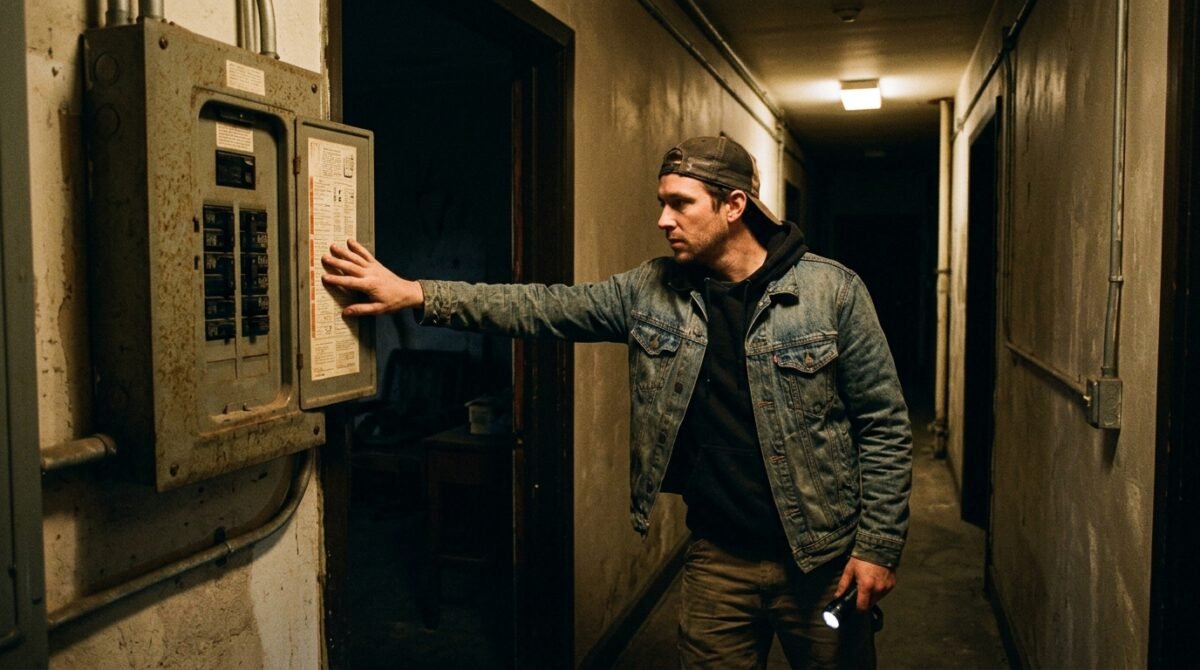
I got out of bed, wrapped in my bathrobe, and walked into the living area. The sight of it was absurd: seven grown adults in leggings, sitting in a circle in my kitchen, eating raw almonds and talking about ‘manifestation.’ I didn’t say a word. I just walked past them, went to the hallway closet, and opened the panel to the circuit breaker. My heart was pounding so hard I could feel it in my ears. I knew what I was about to do, and I knew there was no going back once the power cut.
I looked at the breakers. The kitchen and living room were on the same main switch. I hesitated for a split second, thinking about the consequences, but then I remembered the previous month’s electricity bill, which had doubled because of her extra equipment and lighting. I reached out, my fingers trembling, and flipped the switch. The entire apartment plunged into absolute, deafening darkness and silence.
The Blackout and the Immediate Fallout

The sound that followed was a chorus of gasps, followed by the inevitable, panicked confusion. The music cut out mid-beat, and the glowing LED candles were the only things providing a ghostly, flickering light in the sudden pitch-black. I stood in the closet for a moment, letting the silence wash over me. It was the most satisfying moment of my life. For the first time in months, the apartment was truly, perfectly quiet.
Then, the screaming started. Chloe was shouting, demanding to know who touched the box, her voice thick with panic because her ‘live stream’ had been interrupted. She was worried about her followers, her brand, her precious ‘flow.’ She didn’t care that her roommate was standing right there in the dark. She was frantic, stumbling over yoga mats and bumping into her guests as she scrambled to find her phone to use as a flashlight.
“Who did this? Who cut the power? Do you have any idea how much money I’m losing right now? This is sabotage! I have people here!”
— Chloe, screaming into the dark
I stepped out of the closet just as she turned on her phone’s flashlight. The harsh, clinical white light illuminated the chaos of the room—seven stunned people, all looking terrified, and Chloe, her face twisted in pure, unadulterated rage. I didn’t flinch. I stood my ground, my arms crossed, watching her realize exactly what had happened. The look on her face when she saw me standing by the closet was a mixture of shock and betrayal that was almost comical.
She lunged toward me, but stopped short, realizing she had an audience. She tried to maintain her ‘enlightened’ persona, but the mask was slipping fast. She started berating me in front of everyone, calling me a ‘toxic energy-vampire’ and a ‘control freak.’ I just listened, waiting for her to finish. I didn’t offer an excuse. I didn’t offer an apology. I simply stated that the breaker would stay off until the kitchen was cleared of strangers.
The guests, sensing the immense awkwardness, began packing up their things in the dark, fumbling with their mats and bags. One of them actually had the nerve to ask me if I was ‘grounded,’ to which I didn’t even respond. It was a mass exodus of ‘wellness seekers,’ and within ten minutes, the apartment was empty, leaving only Chloe and me in the cold, dark silence of our shared home.
The Morning After the Cold War

The next morning, the silence was still heavy. I woke up, went to the kitchen, and flipped the breaker back on before Chloe even emerged from her room. I wanted her to know that I was in control of the infrastructure, not her. When she finally walked out, she didn’t look at me. She went straight to her room and locked the door. I could hear her on the phone, likely venting to her friends or her ‘community’ about the ‘abusive’ roommate who ruined her career.
I checked my phone and saw a barrage of messages. She had posted about the ‘incident’ on her Instagram story, framing it as a ‘spiritual test’ and a ‘demonstration of darkness trying to dim her light.’ The irony was so thick you could cut it with a knife. She was painting herself as the victim, failing to mention that she was running a commercial business out of a shared studio apartment without my consent or a share of the profits.
“My space was violated by a person who doesn’t understand the sanctity of practice. The darkness is trying to stop us, but we will rise again. Light always wins. #MidnightYoga #SpiritualWarfare”
— Chloe’s Instagram Story, posted at 8:00 AM
I spent the morning documenting everything. I took photos of the kitchen damage, the scuff marks on the walls from the mats, and the pile of trash left behind. I also went through our original lease agreement, highlighting the clause that prohibited subletting or conducting commercial business from the property. I knew I had the upper hand legally, but the emotional cost was starting to settle in. My home no longer felt like mine.
By noon, I had drafted a formal letter to the landlord. I wasn’t trying to get her evicted immediately, but I wanted a paper trail. I was tired of being the ‘reasonable’ one. I realized that my desire to keep the peace had only empowered her to take more. She was banking on my conflict avoidance, and that was the biggest mistake she ever made.
When she finally came out of her room, she acted as if nothing had happened. She started making a smoothie in the blender, completely ignoring the fact that the kitchen was still a mess. I stood in the doorway and watched her for a moment, then calmly told her that the next time she hosted a class, I would be calling the police to report an unauthorized commercial business operating in a residential unit. She stopped, looked at me, and asked, ‘Are you really that bitter?’”
The Legal Threat and the Shift in Power
The conversation that followed was the most honest one we’d had in months. She tried to gaslight me, telling me that I was being ‘unreasonable’ and that she was ‘just trying to make ends meet.’ When I pointed out that she was charging twenty dollars a head and hosting sessions four nights a week, the math didn’t add up to ‘barely making ends meet.’ She was making a profit, and she was doing it entirely on my dime, using my space, my electricity, and my sanity.
I handed her a printed copy of our lease and pointed to the clause about commercial activity. Her face went pale. She had clearly never read it, or she had ignored it thinking she could talk her way out of any trouble. She started backpedaling, saying she would ‘scale back,’ but I cut her off. There was no ‘scaling back.’ The business was over. The kitchen was for cooking, not for meditation, and if she wanted to be a yoga instructor, she could rent a studio like a real professional.
“You have until the end of the week to remove your business materials from the common area. If I see a single yoga mat, a single incense stick, or a single stranger in this kitchen after Friday, I am contacting the management company. I don’t care what your ‘community’ thinks. I care about my rent and my peace.”
— My ultimatum to Chloe
She tried to play the emotional card again, talking about how this was her ‘dream,’ but I didn’t care. Your dream is not my responsibility. Your dream does not grant you the right to occupy my home with strangers. She looked at me with genuine hatred, realizing that I wasn’t just a quiet, passive roommate anymore. I was the person holding the key to the electrical panel, and I wasn’t afraid to use it.
The shift in power was palpable. For the first time, she looked at me with something other than condescension. She looked at me with fear—the fear of someone who realized they had pushed too far and had no backup plan. She retreated to her room, slammed the door, and I went back to the kitchen, finally able to breathe. The air felt cleaner, the space felt lighter, and for the first time in months, I felt like I was in control of my own life.
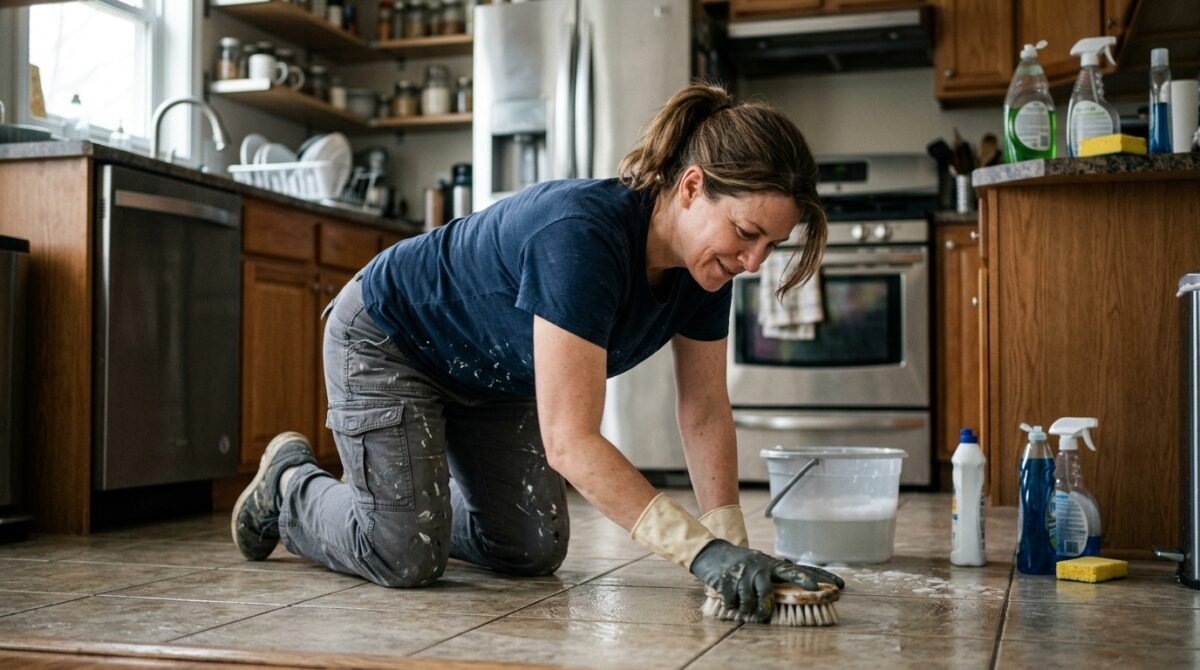
I spent the afternoon cleaning the kitchen, scrubbing the floors until they sparkled, and reclaiming the space that was rightfully mine. Every time I put away a piece of her equipment, I felt a weight lifting off my shoulders. I was reclaiming my identity, my home, and my dignity. It was a long, slow process, but by the end of the day, the kitchen was finally, gloriously, just a kitchen again.
The Reddit Community Weighs In
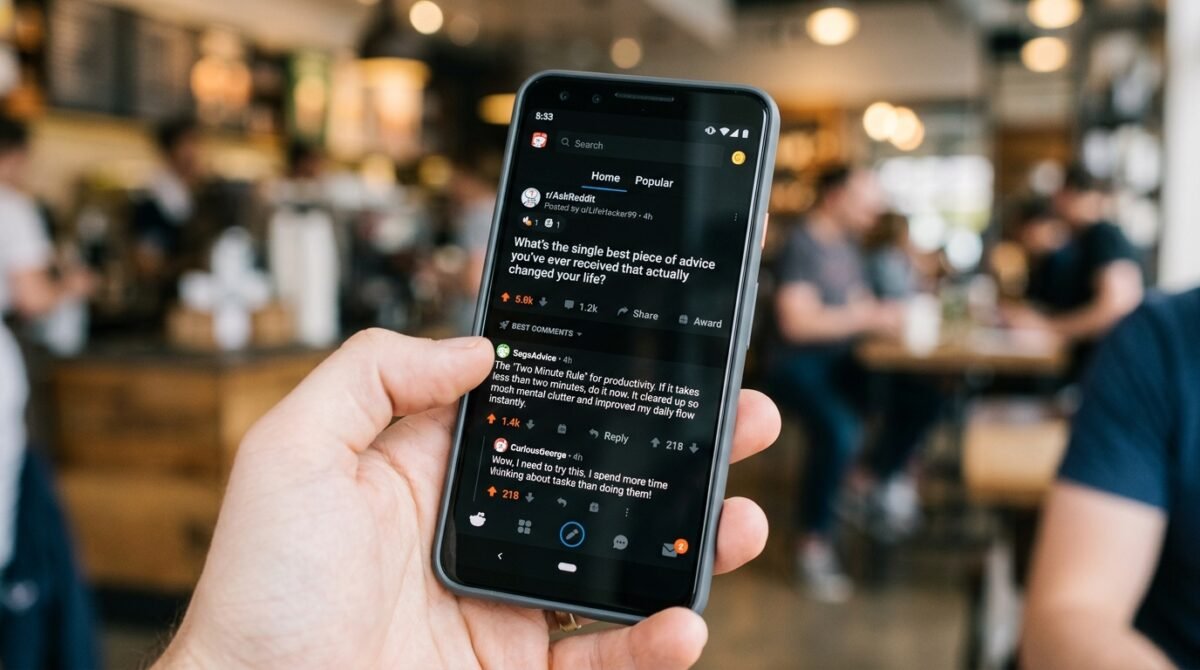
I decided to post about the ordeal on a popular subreddit for roommate drama. I didn’t expect much, but within an hour, the post had exploded. Thousands of people were weighing in, and the consensus was overwhelming. Most people were horrified at the lack of boundaries and were applauding my decision to cut the power. It was validating to hear from so many people who had dealt with similar ‘entrepreneurial’ roommates who think the world is their office.
“NTA. You are the MVP. People like this think they are ‘hustling’ when in reality they are just parasites. Cutting the power was a stroke of genius. It’s the only way to get through to someone who thinks they are the main character in their own reality show.”
— u/RoommateRelief (Top Comment, 32.5k upvotes)
There were, of course, a few people who thought I was being too ‘aggressive’ or ‘petty.’ They argued that I should have tried to ‘collaborate’ or ‘negotiate a split.’ To those people, I replied that I had tried. I had tried for three months, and all I got in return was more incense, more strangers, and more exhaustion. There is only so much negotiation you can do with someone who has no respect for your basic rights as a human being.
The community support was a huge boost for my morale. It helped me realize that what I was feeling wasn’t ‘bitterness’ or ‘toxicity.’ It was a standard, healthy reaction to being mistreated and exploited. Seeing the stories of other people who had been through the same thing made me feel less alone. It reminded me that I wasn’t the one who was wrong; I was the one who had finally decided to stand up for myself.
The thread became a repository for advice on how to handle similar situations in the future. I learned about renter’s rights, the importance of having ironclad agreements, and the necessity of setting boundaries early and often. It was a masterclass in conflict resolution, and I felt like I had gained a whole community of supporters who were cheering me on from behind their keyboards. It was a strange, modern way of finding solidarity, but it worked.
As the comments piled up, I felt a sense of closure that I hadn’t expected. I had shared my story, I had been heard, and I had been validated. The drama didn’t feel so heavy anymore. It felt like a story, a lesson, and a reminder of why boundaries are so important. I was ready to move on, to heal, and to reclaim the life I had before the midnight yoga takeover.
The Final Confrontation and Departure

Friday came, and I waited. I didn’t know if she would actually move her things, or if she would try to push the boundary one last time. I came home from work and, to my surprise, the kitchen was empty. All of her yoga equipment was gone. The incense was gone. The flyers were gone. It was just a clean, quiet kitchen. I felt a surge of relief that was almost overwhelming.
She came out of her room, carrying a box of her remaining ‘spiritual supplies.’ She didn’t look at me. She didn’t say a word. She just walked out of the apartment, and I knew that was the end. She had decided to find somewhere else, somewhere where the ‘energy’ was more ‘supportive’—which was code for ‘somewhere where I can do whatever I want without consequences.’
“I’m leaving. This place has too much negative energy for my path. I hope you find the peace you’re looking for in your empty, quiet kitchen.”
— Chloe, as she walked out the door for the final time
I didn’t answer. I didn’t need to. I watched her go, and for the first time in months, I felt completely at peace. She was gone, and the apartment was mine again. I spent the rest of the evening cleaning, organizing, and reclaiming every inch of the space. I put my own things back where they belonged, and I made myself a cup of tea, sitting at the kitchen table in the quiet, undisturbed silence.
It was a strange, bittersweet ending. I had lost a roommate, and in a way, I had lost a friendship. But it was a friendship that had been dead for months, buried under the weight of her entitlement and my resentment. I felt no regret. I had done what I had to do to protect my home, and in doing so, I had learned a valuable lesson about the importance of standing up for myself.
The next day, I started looking for a new roommate—someone who understood the value of a shared space, someone who respected boundaries, and someone who didn’t want to turn our kitchen into a yoga studio. I was more careful this time, and I made sure that the expectations were crystal clear from the start. I had been through the fire, and I had come out on the other side, stronger and more resilient than before.
Reflecting on the Boundaries of Our Shared Lives
Looking back, the whole situation feels like a fever dream. How did it get that far? How did I let her walk all over me for so long? The answer, I think, lies in our culture of ‘niceness.’ We are taught to be polite, to be accommodating, to be ‘supportive’ of our friends, even when it comes at the expense of our own well-being. We are afraid of being the ‘bad guy,’ of causing conflict, of being the one who ‘ruined the vibe.’
But the truth is, conflict is sometimes necessary. Boundaries are not just suggestions; they are the foundation of any healthy relationship. When we fail to set boundaries, we are not being ‘nice.’ We are being dishonest. We are allowing ourselves to be mistreated, and we are enabling the other person to continue their harmful behavior. It is a lose-lose situation that only leads to resentment and, eventually, a total breakdown of the relationship.
“Boundaries aren’t about being mean. They’re about protecting your own energy. If someone gets angry when you set a boundary, that’s exactly why you needed it in the first place.”
— A piece of advice I read during the aftermath
I realized that my ‘niceness’ was actually a form of avoidance. I was avoiding the difficult conversation, the confrontation, the awkwardness. And in doing so, I was actually making things worse. I was letting the problem grow until it became an explosion. If I had spoken up early on, if I had said ‘no’ the first time she brought a mat into the kitchen, maybe things wouldn’t have gone so far.
But I also know that I cannot change the past. I can only learn from it. I have become much more comfortable with saying ‘no.’ I have learned that I don’t need to explain myself, I don’t need to apologize for my boundaries, and I don’t need to make sure everyone is happy with my decisions. My home is my sanctuary, and I have the right to curate it in a way that serves me.
I am now in a much better place. I have a new roommate, we have clear and open communication, and we have established boundaries that work for both of us. The kitchen is once again a place for cooking, and the apartment is once again a place for rest. It is a simple, quiet life, and I wouldn’t have it any other way.
The Financial Toll of the Experiment
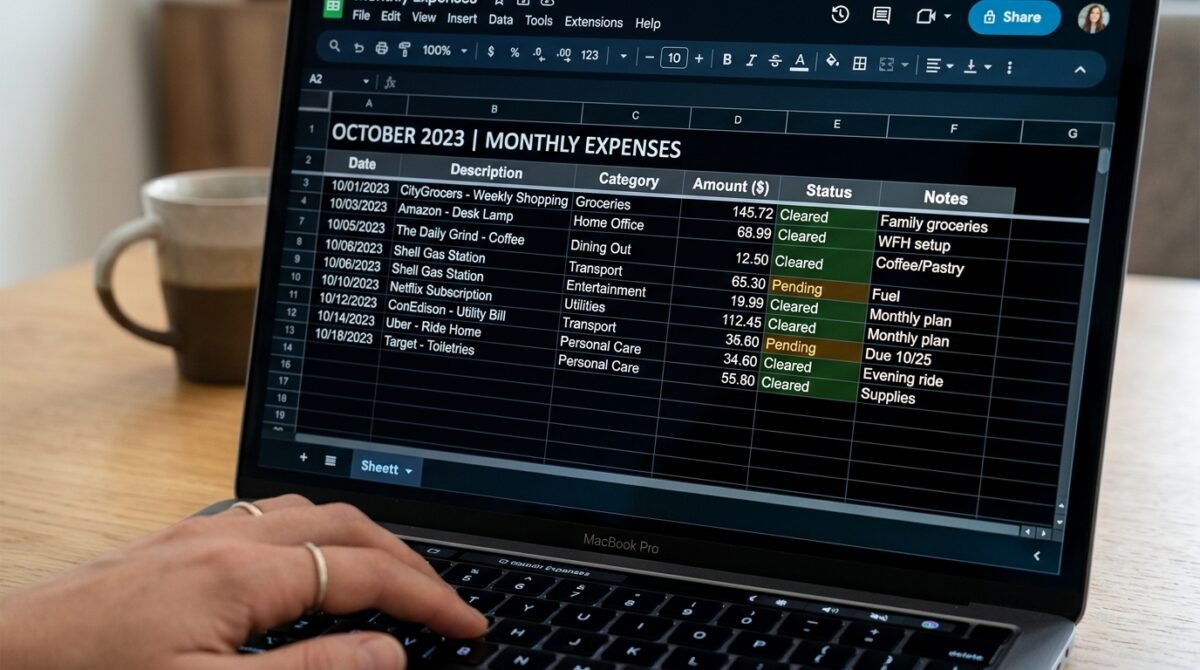
When I finally sat down to calculate the costs of Chloe’s ‘business,’ the numbers were staggering. Between the inflated electricity bills, the wear and tear on the flooring, and the cleaning supplies I had to buy to remove the residue of her incense and sweat, I had spent hundreds of dollars on her hobby. I hadn’t realized it at the time, because I was so focused on the loss of my peace of mind, but the financial exploitation was very real.
| Category | Estimated Cost | The Reality |
|---|---|---|
| Electricity | $180.00 | Increased due to extra equipment/lighting |
| Floor Repairs | $150.00 | Deep cleaning and minor scuff repair |
| Personal Supplies | $75.00 | Replacing items lost or damaged |
| Total | $405.00 | A steep price for a bad roommate |
The table above doesn’t even account for the cost of my mental health days, the time I spent at the library to avoid being home, or the sheer stress of living in a constant state of agitation. When I look at it in black and white, it’s even more infuriating. She was making a profit off of my living space, and she didn’t even have the decency to cover the utility costs she was running up.
It’s easy to dismiss these things as ‘petty’ when they are happening, but when you look at the cumulative effect, it’s clear that this was a significant, recurring financial drain. I have since learned to be much more proactive about utility splits and shared costs. I keep a detailed spreadsheet, I communicate clearly about expenses, and I never assume that someone else is going to be ‘fair.’
The financial aspect was just one more layer of the betrayal. It wasn’t just about the money; it was about the lack of respect for my resources. It was about the assumption that she could take whatever she wanted without consequence. And that, more than anything, is what I have learned to protect myself from in the future.
I have moved on from the financial loss, viewing it as a tuition fee for the lesson I learned about setting boundaries and protecting my resources. It is a small price to pay for the clarity and peace I have now. I am much more vigilant, much more assertive, and much more in control of my own financial and emotional life.
Life After the Blackout

Life today is drastically different. I wake up in a quiet apartment. I go to the kitchen to make my morning coffee, and it is a peaceful, orderly space. No yoga mats, no incense, no strangers. I have a new roommate who respects the shared areas, and we have a relationship built on mutual respect and open communication. We both work full-time, we both value our downtime, and we both understand the importance of keeping our home a sanctuary.
The ‘midnight yoga incident’ has become a sort of legend among my friends—a cautionary tale that I tell at parties to warn others about the dangers of the ‘wellness’ scam. People always ask me if I regret it, if I feel bad about the way it ended, and my answer is always the same: no. I did what I had to do, and I am proud of myself for it.
I have realized that my worth is not determined by my ‘niceness.’ It is determined by the way I treat myself, the boundaries I set, and the way I protect my own peace. I am a better person, a better roommate, and a better friend because of what I went through. I am more resilient, more confident, and more grounded.
If you take anything away from this story, I hope it is this: your home is your own. You have the right to feel safe, comfortable, and at peace in your own space. Do not let anyone, no matter how ‘enlightened’ or ‘successful’ they claim to be, take that away from you. Stand your ground, set your boundaries, and don’t be afraid to pull the plug if things get out of hand.
The darkness I created that night was the beginning of my own personal light. It was the moment I realized that I was in control of my own destiny, and that nobody else had the power to dim it unless I let them. I am now living a life that is truly my own, and it is a beautiful, peaceful, and wonderfully quiet existence.
Conclusion
The saga of the midnight yoga classes taught me more about human nature, entitlement, and the power of boundaries than any self-help book could have. It was a chaotic, frustrating, and ultimately transformative experience that forced me to reclaim my autonomy. My advice to anyone currently living through a similar roommate nightmare is simple: don’t wait for the situation to resolve itself. The ‘nice’ approach only works on reasonable people, and entitlement rarely responds to anything other than a firm, non-negotiable boundary.
We live in an age where the gig economy and social media can make anyone feel like they have the right to monetize any space, but that ends the moment it violates the peace of another person. My decision to flip that circuit breaker was not an act of malice; it was an act of restoration. It brought balance back to a system that had been tipped entirely in favor of one person’s ego. It was the ultimate boundary, and it was effective.
I’d love to hear what the community thinks. Have you ever had to take drastic measures to reclaim your space from an entitled roommate? Or are you the type who would have tried to talk it out until the bitter end? Let’s keep the conversation going in the comments below—I’m curious to know if you think I went too far, or if you would have pulled the plug even earlier than I did.
What's your verdict on this dilemma?
Vote below to contribute to the official community consensus.

Have a Dilemma Keeping You Up at Night?
Share your real-life feud, wedding chaos, or relationship crossroads anonymously with our editorial team.
What do you think ?
0 Comments🛡️ Comments are moderated to protect community integrity. Your comment will appear once approved by the editorial team.