
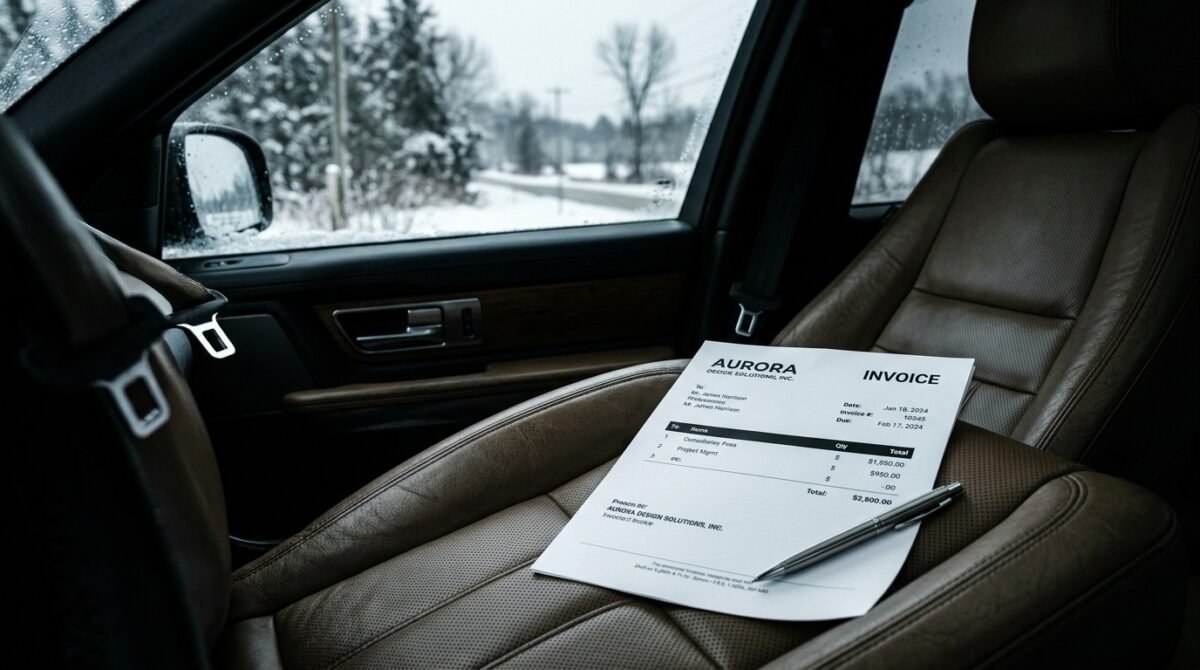
Relationships are built on trust, shared experiences, and the small, unspoken compromises that make living with another person possible. We share our space, our time, and often, our resources. But what happens when the lines of ‘what is mine’ and ‘what is yours’ are drawn with such sharp, clinical precision that love becomes a transactional arrangement? For Sarah, a 28-year-old graphic designer, the reality of her two-year relationship shifted overnight when she discovered an itemized bill waiting in her inbox—not from a landlord or a utility company, but from her boyfriend, Mark.
The inciting incident seemed trivial enough: a biting cold Tuesday in mid-January. With her own car in the shop for repairs, Sarah relied on Mark to drive her to the office. It was a twenty-minute commute, and the sub-zero temperatures prompted her to flip on the seat heater for comfort. She thought nothing of it. It was a courtesy between partners, a small comfort in a harsh season. Yet, when she arrived home that evening, the peace of their shared apartment was shattered by a ping from her phone. A PDF attachment labeled ‘Vehicle Usage Reimbursement’ sat in her inbox.
The breakdown was meticulous. There was a charge for fuel, a charge for ‘opportunity cost’ regarding his time, and the most baffling of all: a $120 line item for ‘Battery and Heating Element Depreciation.’ It wasn’t just a joke; Mark was entirely serious, citing his obsessive need to keep his vehicle in pristine condition. As Sarah stared at the screen, the warmth of the seat heater in her memory felt like a cold, heavy stone in her stomach. This wasn’t just about a car; it was about the fundamental way Mark viewed their partnership.
In the following sections, we peel back the layers of this bizarre financial entitlement. We explore the history of a relationship where generosity was replaced by a ledger, examine the explosive confrontation that occurred in their kitchen, and look at how the internet reacted when Sarah finally reached her breaking point. This is a story about the intersection of love and extreme, weaponized frugality—and the moment one woman realized she was no longer a partner, but a line item on an expense report.
The Morning Commute of Contention

It started as a typical, albeit freezing, Tuesday morning. The thermometer outside read five degrees, and the air in the apartment felt thin and brittle. Sarah, still half-asleep and clutching her lukewarm coffee, was grateful when Mark offered to drop her off at her downtown studio since her own car was still sitting at the mechanic’s with a transmission issue. The car in question was Mark’s pride and joy—a high-end German sedan that he treated more like a museum artifact than a daily driver.
As she slid into the passenger seat, the leather felt like ice against her coat. Without thinking, Sarah reached for the climate control panel and toggled the heated seat setting to level three. She sighed as the warmth began to seep into her back, finally shaking off the chill of the walk from the front door. Mark was focused on the road, tapping his fingers rhythmically on the steering wheel, seemingly oblivious to her comfort level. The drive was quiet, punctuated only by the occasional update on traffic patterns.
“You know, those heating elements draw quite a bit of power when it’s this cold,” Mark remarked, his eyes fixed firmly on the lanes ahead. Sarah laughed, thinking he was making a dry joke about the efficiency of his vehicle. She replied that it was a lifesaver given the temperature, but Mark didn’t laugh back. He merely nodded, a tight, grim expression etched onto his face that should have been a red flag but, at the time, felt like just another one of his quirks.
“I don’t mind the drive, Sarah, but I’d appreciate it if you didn’t drain the battery unnecessarily. These components are expensive to replace, and it adds significant stress to the alternator during a cold start.”
— Mark, during the morning drive
Sarah didn’t argue. She turned the seat heater off, feeling a strange wave of guilt for having enjoyed the warmth. She sat on the cold leather for the remainder of the trip, wondering why a simple amenity could cause such visible tension in a partner. It wasn’t the first time he had mentioned ‘wear and tear’ regarding the car, but this felt different. It felt like a warning shot, though she couldn’t have guessed just how literal that warning would become by the end of the day.
Looking back, she realizes that the silence in the car wasn’t just about the vehicle. It was about control. Mark had cultivated an environment where his property was superior to their shared comfort. While she sat there, wrapped in her scarf and shivering slightly, she wasn’t just feeling the cold from the seat—she was feeling the early onset of a dynamic that would eventually force her to reevaluate everything she thought she knew about him.
The Spreadsheet That Ended the Evening

Sarah walked through the front door at 6:00 PM, exhausted and ready for a glass of wine and some mindless television. Mark was already home, seated at the kitchen island with his laptop open, his brow furrowed in deep concentration. He barely looked up as she set her bag down, merely offering a curt nod. She went to the fridge to grab a snack, oblivious to the fact that an ‘administrative’ act was taking place that would change the trajectory of their evening.
Her phone buzzed. It was an email notification. When she opened it, she expected a newsletter or a work update. Instead, it was a PDF document from Mark. The title, ‘Transportation Services Invoice – January 14th,’ made her pause. She assumed it was some sort of weird, passive-aggressive joke, the kind he liked to pull when he felt she had inconvenienced him. She opened the file, her eyes scanning the itemized list, and the laughter died in her throat as she read the line items.
The invoice was structured perfectly: total distance, cost per mile, current market fuel prices, and then the kicker. A $120 charge for ‘Excessive Electrical Load/Battery Depreciation.’ He had calculated the cost based on the maximum amperage the seat heaters drew, factored in the lifespan of the battery, and applied a ‘convenience fee’ for the interruption to his morning routine. It was a document of such clinical insanity that Sarah found herself shaking as she scrolled through it.
“Did you send me an invoice? Are you actually joking right now, Mark? I’m standing five feet away from you!”
— Sarah, upon reading the email
Mark finally looked up, his expression completely blank. He explained that he kept a ‘log’ of all vehicle maintenance costs and that since Sarah had used his car three times in the last week, it was only fair that she contributed to the ‘operational deficit’ she was causing. He insisted that he wasn’t being mean; he was being ‘transparent and fair’ about the financial impact of their shared living arrangements. He truly believed he was being the reasonable one.
The air in the kitchen felt heavy. This wasn’t about money—they both had stable, well-paying jobs. This was about the way he viewed their relationship: as a ledger where every kindness was a liability to be balanced. As she looked at him, she didn’t see the man she had fallen in love with; she saw a stranger who prioritized the health of a car battery over the comfort of his girlfriend. The realization was colder than the car seat ever was.
The Kitchen Confrontation

The confrontation that followed was not a shouting match. It was worse. It was a cold, methodical dissection of their relationship’s value system. Sarah stood over the island, the phone still in her hand, her thumb hovering over the delete button for the email. She asked him if he had ever considered how insulting it was to receive a bill for a favor he had volunteered to perform. Mark responded by pulling up a second spreadsheet—a master document of all their shared expenses.
He began to walk her through the ‘logic’ of his system. He showed her how he calculated the ‘cost of living’ in their apartment, including the wear and tear on the appliances. He pointed to a tab labeled ‘Personal Consumption,’ which tracked everything from paper towels to dish soap. It was a map of his psyche—a world where every human action had a measurable cost. He genuinely couldn’t grasp why Sarah was offended, viewing his meticulousness as a virtue rather than a symptom of a deeply transactional mindset.
“You’re acting like this is a business transaction, Mark. We live together. We’re in a relationship. I don’t bill you when you eat the groceries I buy, and I certainly don’t charge you for ‘fridge shelf depreciation’ when you put your beer in there.”
— Sarah, arguing with Mark
Mark’s retort was chilling in its calm delivery. He argued that groceries were ‘consumables’ and therefore different from ‘capital assets’ like his car. He claimed that because she wasn’t as careful with his things as he was, he had to charge her to offset the risk. He spoke as if she were a renter and he was her landlord, ignoring the fact that they had been planning a future together. Every word he spoke seemed to drive a deeper wedge between them, turning a petty argument into an existential realization.
The tension peaked when he brought up the ‘interest’ on the money he had ‘fronted’ for the car’s fuel. He was serious. He was calculating interest on a few gallons of gasoline. Sarah watched him, realizing that his obsession with money was a shield he used to keep intimacy at bay. By quantifying everything, he ensured that he never had to rely on anyone, and more importantly, he never had to be truly generous. She felt a profound sense of sadness as she realized she had been trying to build a home with someone who was merely managing an asset portfolio.
Leaked Conversations and Family Shock
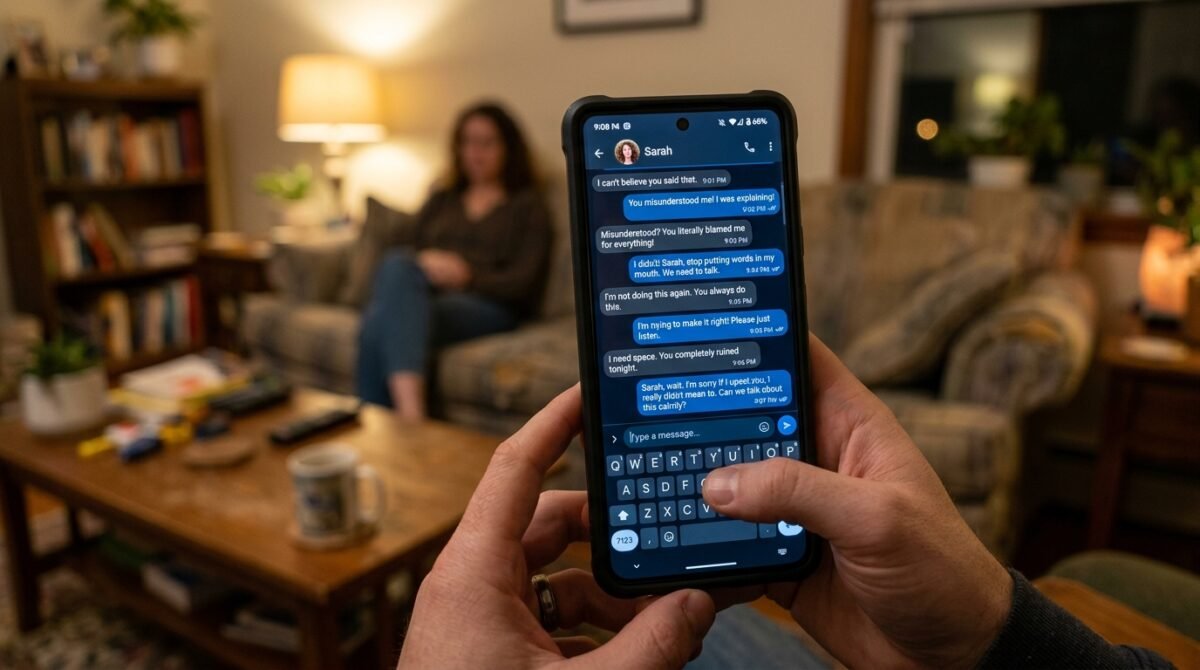
The next day, Sarah found herself in a state of shock, venting to her sister in a series of rapid-fire text messages. She sent screenshots of the invoice and the ‘master spreadsheet’ Mark had so proudly displayed. Her sister’s response was immediate and visceral—calling it ‘financial abuse’ and ‘psychological control.’ The conversation quickly spilled over into the family group chat, where her mother and brother weighed in, expressing their absolute horror at the level of pettiness involved.
As the news spread, Mark found himself increasingly isolated. His own friends, when confronted with the situation by an irate Sarah, were largely divided. Some tried to defend his ‘frugality’ as just being ‘an engineer’s mind,’ while others were genuinely embarrassed. The group chats became a battlefield where the definition of partnership was debated in real-time. It was no longer just about the $120; it was about the culture of entitlement that Mark had fostered.
“I just checked his shared expenses sheet. He’s charging me for the water I used to wash my hair? Are you kidding me? This is a level of insanity I can’t even comprehend.”
— Text from Sarah to her sister
Mark, sensing the tide turning against him, doubled down. He started sending messages to Sarah’s family members, trying to explain the ‘rationale’ behind his bookkeeping. He sent long, rambling paragraphs about ‘financial maturity’ and ‘accountability.’ Instead of fixing the situation, he only managed to alienate everyone involved. The group chats were filled with screenshots of his defensive justifications, each one more absurd than the last.
The toxicity reached a fever pitch when Mark demanded that Sarah ‘apologize’ for making their private financial arrangements a ‘public spectacle.’ He seemed more concerned with his reputation among her family than with the fact that he had deeply hurt his partner. It was the final nail in the coffin for Sarah. She realized that even if he stopped the billing, the mindset—that cold, calculated perspective—would always be there, lurking in the background of their life together.
The Internet Weighs In
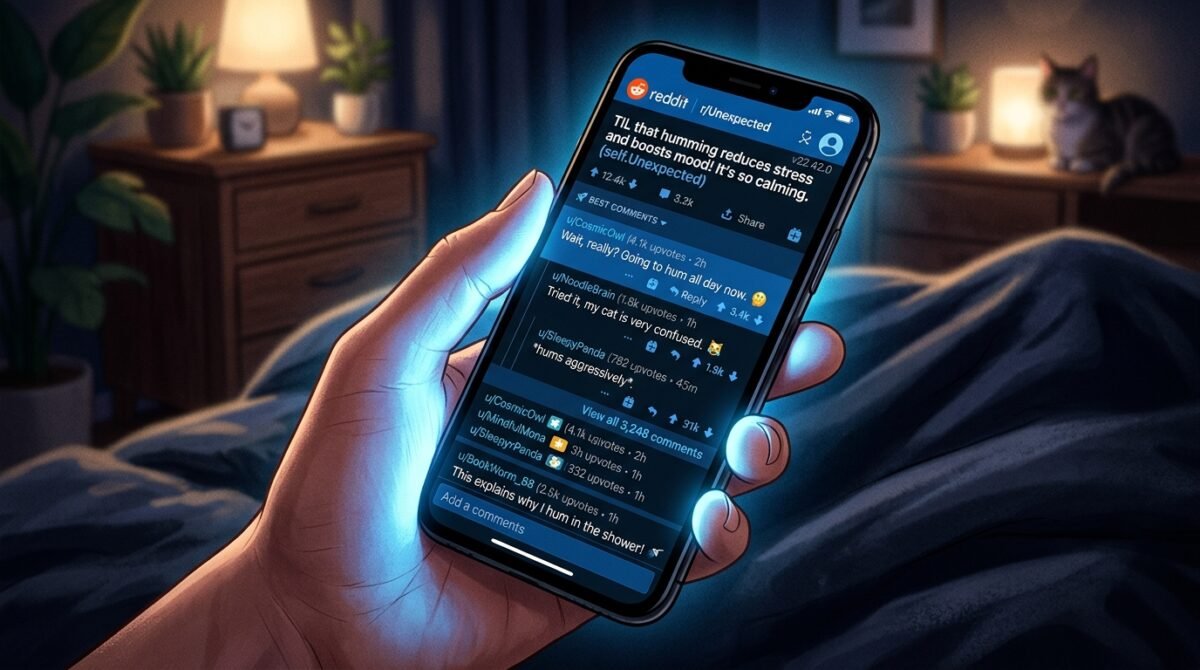
When Sarah finally posted the story to a popular relationship advice subreddit, the reaction was instantaneous. Thousands of people chimed in, almost all of them in shock. The thread quickly became one of the most commented-on posts of the week. Reddit users, known for their brutally honest, no-nonsense approach to relationship drama, didn’t hold back. The consensus was overwhelming: this wasn’t just a quirk; it was a major red flag.
Commenters pointed out that this type of financial behavior is often a precursor to more severe forms of control. They analyzed the invoice as a power move, a way to keep Sarah in a state of ‘debt’ to ensure her compliance. The term ‘financial abuse’ was thrown around frequently, with many users sharing their own stories of partners who had tried to monetize their affection in similar, albeit less explicit, ways.
“This isn’t about the money. This is about establishing a hierarchy where you are the ‘user’ and he is the ‘provider,’ and he wants to make sure you never forget it. Leave, and leave fast. This won’t get better; it will only become more complex.”
— u/RelationshipGuru88 (Top Comment, 32.5k upvotes)
Some users tried to play devil’s advocate, suggesting that Mark might have ‘autistic traits’ or a ‘need for order,’ but even those comments were quickly buried under the weight of the majority. The sheer absurdity of charging for ‘battery depreciation’ for a heated seat was enough to make most people laugh in disbelief, but the underlying implication—that a partner’s comfort is a cost that must be minimized—was what really resonated with the community.
The thread became a repository of advice, with users providing legal and financial tips on how to untangle their lives. Sarah spent hours reading through the comments, feeling a strange sense of validation. She wasn’t crazy. She wasn’t being overly sensitive. She was in a relationship with someone who had replaced love with a balance sheet, and the internet had confirmed that she deserved better.
The Breaking Point

The decision to leave didn’t happen in a grand, cinematic moment. It happened on a Tuesday, exactly one week after the invoice incident. Sarah had spent the week sleeping on the couch, unable to bring herself to share a bed with someone who viewed her existence as a series of expenses. Mark, for his part, had continued to act as if everything was normal, occasionally asking her to ‘review’ the spreadsheet to ensure the accuracy of his calculations.
The breaking point came when he asked her to pay the $120 invoice, plus interest. He had actually added interest. As she stood in the living room, looking at the man she had spent two years with, she felt a profound, quiet clarity. There was no rage, no shouting—only the realization that this was the rest of her life if she stayed. She would spend her days negotiating the price of her own existence, always trying to justify her presence in his world.
“I’m not paying the invoice, Mark. And I’m not paying for the ‘depreciation’ of this relationship either. I’m done. I’m moving out.”
— Sarah, initiating the breakup
Mark’s reaction was not one of sorrow, but of indignation. He immediately started talking about the ‘lease agreement’ and how they would need to calculate the ‘prorated costs’ of the remaining rent. He was already drafting a spreadsheet for their separation. He couldn’t even process a breakup without turning it into an administrative task. That, more than anything, confirmed that she was making the right decision.
As she packed her bags, he stood in the doorway, complaining about the ‘wear and tear’ on the hallway carpet caused by her suitcases. She didn’t respond. She just kept packing. She realized that his obsession was so all-consuming that he had lost the ability to feel human emotion. She left the apartment that night, leaving behind the man, the spreadsheet, and the invoice, and she never looked back.
The Aftermath: Rebuilding Boundaries

The weeks following the breakup were a blur of logistics and emotional recalibration. Sarah moved into a small, simple apartment, far from the sterile, calculated environment she had shared with Mark. She found that the most challenging part wasn’t the loss of the relationship, but the lingering habit of questioning her own needs. She had spent two years apologizing for taking up space, and it took time to unlearn that behavior.
She started therapy, where she delved into why she had tolerated such treatment for so long. She realized that she had been so focused on being a ‘low-maintenance’ partner that she had allowed her boundaries to be eroded completely. She had mistaken his stinginess for ‘responsibility’ and his control for ‘organization.’ The therapy sessions were difficult, but they were essential for her to regain a sense of self-worth.
“I spent so much time trying to be the perfect, affordable roommate that I forgot to be a human being. The biggest lesson was learning that my comfort isn’t something I need to pay for.”
— Sarah, reflecting on her healing journey
Her friends and family were incredibly supportive, helping her move and providing a safe space for her to process everything. They would often joke about the ‘heated seat’ incident, turning it into a dark comedy to help her cope with the absurdity of it all. It became a shorthand for ‘when someone shows you who they are, believe them.’ She realized that the experience had taught her a valuable lesson about what she would and would not tolerate in the future.
She also received an email from Mark a month after the move. It was an ‘exit invoice’ for the cleaning fees for the apartment. She didn’t even open it. She just blocked his email address, her phone number, and his social media accounts. The silence that followed was the most peaceful thing she had experienced in years. She was free, and she had never felt more relieved.
The Cost of Emotional Stinginess

When we look at Sarah and Mark’s story, it’s easy to focus on the absurdity of the $120 invoice. It’s a hilarious, infuriating anecdote that sounds like something out of a sitcom. But beneath the surface, there is a serious conversation to be had about the cost of emotional stinginess. A relationship isn’t a business; it isn’t an asset to be managed or a ledger to be balanced. It is a space for vulnerability, generosity, and mutual support.
When someone is so obsessed with the cost of everything that they cannot see the value of anything, they create a prison for their partner. They demand that the other person be as cold and calculated as they are, which eventually kills the intimacy that keeps a relationship alive. Mark didn’t just want a girlfriend; he wanted an auditor. He wanted someone to share the costs, not someone to share his life with.
“Emotional generosity is the currency of a healthy relationship. If you’re busy counting pennies, you’re missing out on the wealth of human connection.”
— Relationship psychologist perspective
Sarah’s experience serves as a stark reminder that we should never sacrifice our own comfort or dignity for the sake of ‘keeping the peace’ with someone who doesn’t value us. Financial transparency is good, but when it becomes a tool for control, it’s a red flag that cannot be ignored. We should all strive to be with people who see us as partners, not as expenses on a balance sheet.
The story also highlights the importance of recognizing the ‘death by a thousand cuts’ that occurs in toxic relationships. It wasn’t just the invoice; it was the months of small, subtle comments about usage, the ‘logs,’ and the constant pressure to be more efficient. It’s important to look at the pattern, not just the individual events. When someone treats every interaction as a transaction, it’s time to close the account.
Why We Are Obsessed With Transactional Love

In our modern world, we are increasingly obsessed with optimization. We track our steps, our calories, our productivity, and our sleep. It was perhaps inevitable that this desire for optimization would bleed into our relationships. We see it in the rise of ‘lifestyle design’ and the way we ‘audit’ our partners’ contributions to household chores. But there is a danger in applying these tools to the delicate, messy, and illogical business of love.
When we treat love like an optimization problem, we lose the magic of the unexpected, the spontaneous, and the irrational. Love is inherently inefficient. It’s messy. It’s expensive in terms of time, energy, and sometimes, even literal money. But that inefficiency is what makes it meaningful. It’s the act of doing something for someone else just because you want to see them happy, without expecting a return on investment.
“We need to stop trying to make relationships ‘efficient’ and start making them ‘meaningful.’ A partnership isn’t a tech startup; it doesn’t need to scale, and it doesn’t need to be optimized for maximum output.”
— Modern dating culture critique
Mark’s obsession with his car’s battery was a metaphor for his entire life. He was so worried about ‘depreciation’ that he never actually used the thing he was protecting. He kept it in a garage, kept it clean, and kept it ‘perfect,’ but he never actually enjoyed the experience of driving it. He lived the same way with Sarah. He was so worried about the costs that he never actually experienced the joy of being in a relationship.
We have to ask ourselves: are we living, or are we just maintaining? Are we loving, or are we just accounting? If our relationships feel like a job, it’s time to quit. We deserve to be with people who see our presence as a gift, not a burden, and who are willing to spend a little extra on the heated seats, knowing that the warmth is worth the price.
Moving Forward: Lessons in Worth

As Sarah moves forward, she carries the lessons of the ‘Heated Seat Saga’ with her. She is more confident in her boundaries and less likely to apologize for having basic needs. She has learned that true partnership involves a mutual willingness to give, not a contractual obligation to balance the books. She is now dating someone who—thankfully—doesn’t own a spreadsheet for their shared groceries.
The story has become a cornerstone of her group of friends, a funny, cautionary tale that they bring up whenever someone starts acting a bit too ‘economical’ with their kindness. It serves as a reminder of how far she has come and how much she has grown. She often thinks about the woman who stood in that kitchen, feeling small, and she realizes how much she has changed since that night.
“Never apologize for your warmth. If someone tries to bill you for it, that’s your sign to pack your bags and find someone who doesn’t mind a little extra heat.”
— Sarah, sharing her final thoughts
The experience has also made her more appreciative of the small, unquantifiable acts of love in her life. She treasures the spontaneous gifts, the random acts of kindness, and the moments of shared comfort that don’t need a receipt. She has learned that these things are what make life worth living, and they are the things that no amount of ‘depreciation’ can ever truly touch.
She hopes that by sharing her story, others might realize that they, too, are worth more than a line item on a spreadsheet. She wants people to know that it’s okay to demand to be treated with love, not just fairness. And if someone ever tries to invoice them for a heated seat, she hopes they have the strength to laugh in their face, turn the heat up to the max, and walk away.
Conclusion
The story of the $120 heated seat invoice is more than just a viral tale of petty behavior; it is a profound reflection on the transactional nature of modern relationships. When we prioritize ledgers over people, we lose the very essence of what makes human connection meaningful. Sarah’s journey from a relationship defined by costs to a life defined by freedom is a testament to the importance of self-respect and the power of walking away.
We want to hear from you. Have you ever been in a relationship where someone tried to monetize your presence, or have you ever seen a partnership crumble under the weight of excessive ‘accounting’? Is there a line between financial responsibility and emotional coldness, and where do you draw it? Share your stories in the comments below, and let’s discuss the price we should—or shouldn’t—place on love.
What's your verdict on this dilemma?
Vote below to contribute to the official community consensus.

Have a Dilemma Keeping You Up at Night?
Share your real-life feud, wedding chaos, or relationship crossroads anonymously with our editorial team.
What do you think ?
0 Comments🛡️ Comments are moderated to protect community integrity. Your comment will appear once approved by the editorial team.