
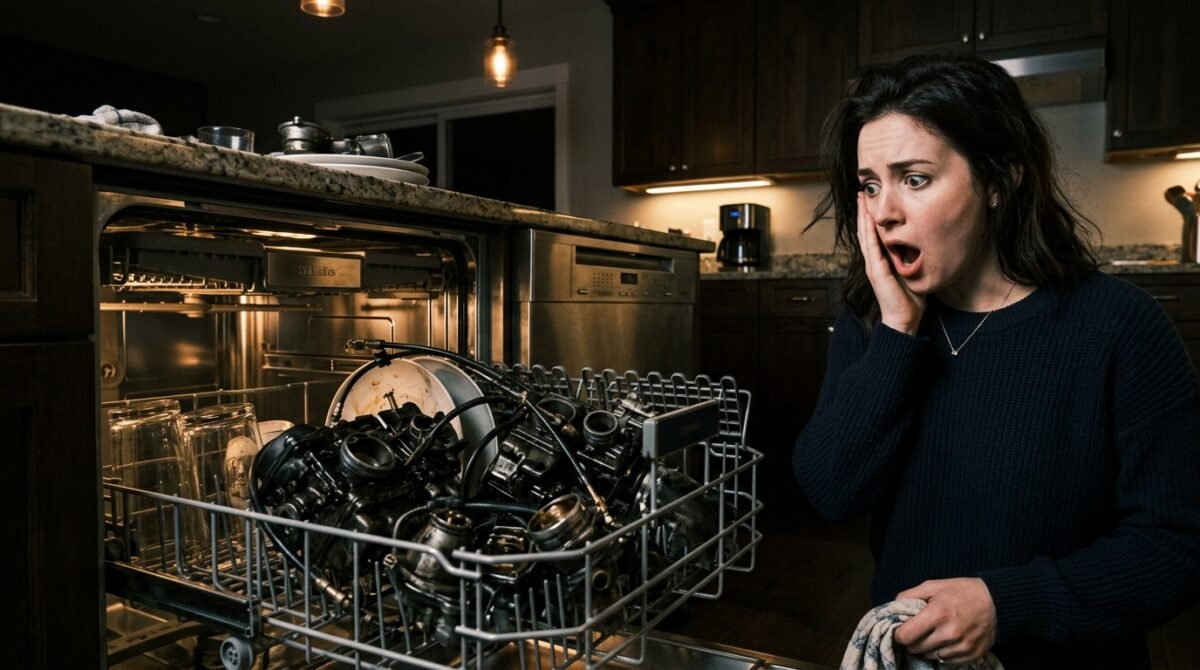
Living with a roommate is often a gamble, a delicate negotiation of boundaries, cleanliness, and mutual respect. For most, the worst-case scenario involves unwashed dishes left in the sink or a stolen carton of milk. My reality, however, took a turn into the absurdly destructive when I walked into my kitchen on a Tuesday evening to find the scent of gasoline and industrial degreaser replacing the familiar hum of my home.
My roommate, Chloe, had always been ‘adventurous,’ a mechanic-in-training who spent her weekends covered in grease. I admired her passion, but I never expected it to infiltrate the sanctity of my kitchen. As I stood there, watching the cycle of my high-end Bosch dishwasher complete its final rinse, a cold realization washed over me. This wasn’t just a simple mistake; it was a total violation of property and hygiene.
The moral dilemma here isn’t just about the appliance itself, but the utter lack of regard for someone else’s space. When I confronted her, she didn’t apologize; she laughed it off as a ‘hack’ she saw online. That laugh was the catalyst for a conflict that would eventually wind its way into small claims court, testing the limits of what a security deposit—and a friendship—could actually cover.
This story isn’t just about a ruined dishwasher. It’s about the entitlement that comes when boundaries are repeatedly trampled. It’s about the moment you realize that your home is no longer a sanctuary, but a battlefield where common sense goes to die. Join me as I recount the events leading up to the day I decided that legal action was the only language my roommate understood.
The Hum of a Mechanical Nightmare
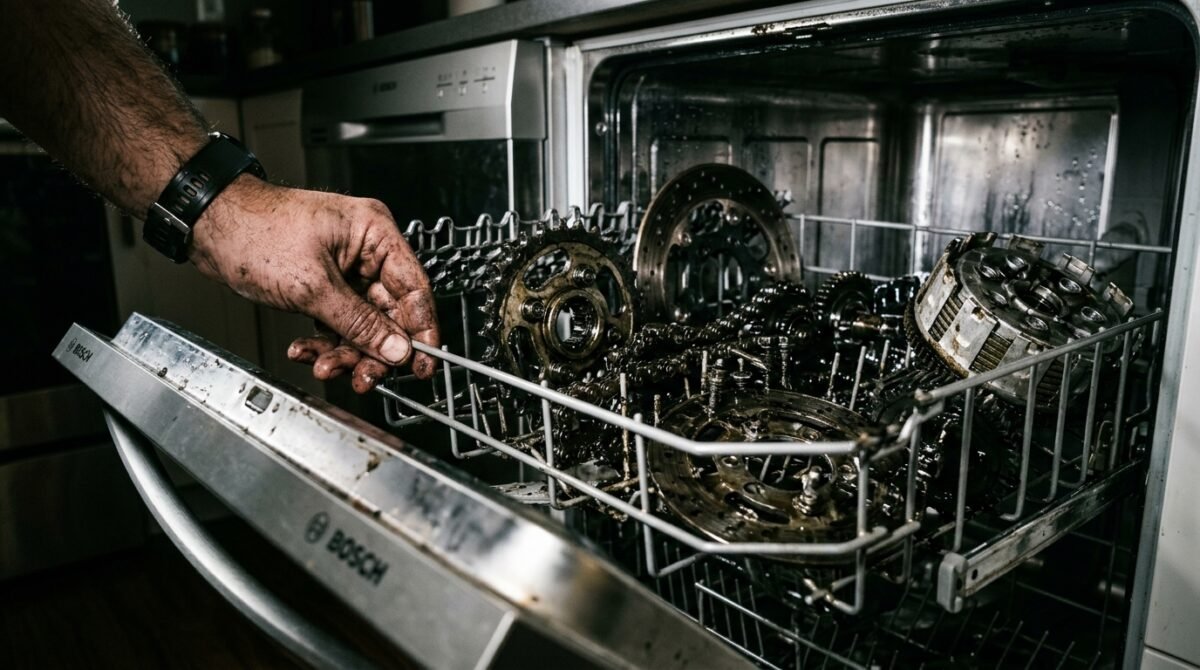
It was 7:30 PM. I had just returned from a long shift at the office, looking forward to a quiet meal and perhaps an episode of my favorite show. As I walked past the kitchen, I noticed a strange, acrid smell lingering in the air. It wasn’t the usual smell of lavender soap or even my recent attempt at cooking pasta; it was sharp, chemical, and undeniably industrial.
I approached the kitchen island, thinking perhaps a candle had fallen over or a cleaning product had leaked under the sink. Then, I heard it. The rhythmic, heavy clunking of metal on metal coming from inside the dishwasher. My stomach dropped. I had only purchased that machine six months ago, investing in a high-end model because I value convenience and efficiency.
I pulled the handle, expecting to see dirty dinner plates. Instead, I was met with a cloud of toxic-smelling steam and a sight that defied logic. Sitting on the top rack, tangled in the cutlery basket, were several intricate metal assemblies—carburetors, caked in black, viscous gunk that was now being melted into the internal heating element of my appliance.
“Are you kidding me? Chloe, get in here right now! Why are there greasy metal parts inside my kitchen appliance?”
I didn’t even have time to process the sheer stupidity of the act before Chloe strolled into the kitchen, wiping her hands on a rag. She looked at the open dishwasher, then at me, with a look of mild annoyance rather than genuine guilt. The disconnect between our realities was instantaneous and profound.
The ‘Life Hack’ Defense

Chloe’s explanation was delivered with the casual confidence of someone who had never considered the consequences of their actions. She explained that she had been reading a forum for vintage motorcycle enthusiasts and saw that a high-temperature dishwasher cycle was a ‘pro-tip’ for stripping hardened carbon deposits off delicate engine parts.
I stood there, mouth agape, as she continued to lecture me on the efficiency of the machine’s water jets. She seemed to genuinely believe that because I had a high-end model, it was essentially an industrial parts cleaner. The fact that I used this same machine to clean the plates I ate off of for dinner every night seemed to completely escape her.
“You’re acting like I put hazardous waste in there. It’s just oil. The soap will clean it, and the heat will sanitize the metal. It’s basically the same as washing a roasting pan after a greasy chicken dinner, right?”
I realized in that moment that we weren’t just living in different rooms; we were living in different moral universes. I tried to explain that the grease from a chicken dinner is biodegradable and meant for consumption, whereas motor oil and carburetor cleaner are toxic chemicals that have no place in a food preparation environment.
She just rolled her eyes, telling me I was being ‘dramatic’ and that she would just run a second cycle with extra detergent to ‘clear the pipes.’ Her inability to take accountability for the permanent damage to the gaskets and seals was the first sign that this situation was headed for a much uglier conclusion.
The Lingering Toxic Fallout
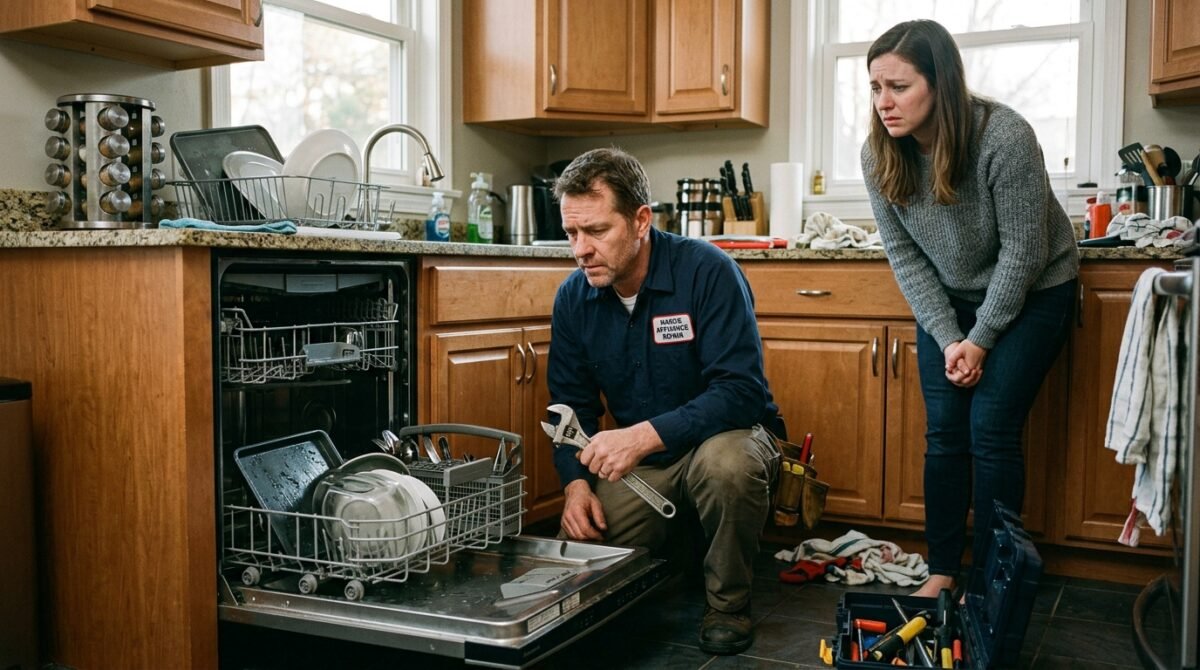
The next morning, the kitchen was a disaster. Even after running the cycle twice—once with a commercial cleaner—the smell of gasoline was still thick in the air. Worse, the dishwasher wouldn’t drain properly. The fine particulate matter from the engine parts had clogged the drain pump, and the internal sensors were throwing error codes that indicated a total system failure.
I spent the entire morning researching the cost of repairs. The technician, who arrived three days later, gave me a look of pure pity when I opened the door to show him the state of the machine. He pointed out that the rubber seals had begun to degrade because of the solvent-heavy residue, meaning the machine was not just clogged; it was chemically compromised.
“Ma’am, I can replace the pump, but I can’t guarantee the internal lines will ever be food-safe again. The chemicals used in these parts can linger in the porous plastic components. Honestly? I’d replace the whole unit.”
The cost was over twelve hundred dollars for a comparable replacement, not including the labor and disposal fees for the contaminated machine. When I presented this information to Chloe, the tone of our interactions shifted from awkward to openly hostile. She refused to acknowledge that she was responsible for the total replacement cost.
She argued that the machine was ‘already old’ (it was six months old) and that she should only be liable for the cost of a basic repair. It became clear that she expected me to subsidize her hobby, and when I refused, the gloves finally came off.
The Group Chat Betrayal

The situation turned public when I decided to reach out to our mutual friends to explain why I was kicking Chloe out. I thought I was being reasonable, but Chloe had already spun the narrative. She had posted in our shared group chat, framing me as the ‘uptight, money-obsessed roommate’ who was trying to ‘scam’ her out of money for a repair she didn’t cause.
“Seriously, just ignore her. She’s trying to make me pay for a brand new dishwasher because she thinks she’s entitled to a remodel on my dime. Don’t believe her lies.”— Chloe, in the group chat
I was shocked. I had saved every text, every photo of the grease, and the receipt for the dishwasher. I didn’t engage in the chat; I simply took screenshots and waited. It was a calculated move, but I knew that if this went to small claims court, I needed a paper trail of her admitted negligence and her subsequent denial of responsibility.
The group chat exploded. Some people were on my side, confused by her behavior. Others, who didn’t understand the chemistry of the situation, thought I was indeed being too harsh. The social pressure was intense, but I held my ground. I realized that my circle of friends was going to change, and I was okay with that.
The isolation I felt at home was amplified by the realization that Chloe was actively poisoning my social life. Every time I walked into the common area, I felt like I was being watched, judged for a conflict that was entirely of her making. I started spending most of my time in my bedroom, counting down the days until my lease allowed me to legally evict her.
The Formal Notice of Liability
I didn’t want to go to court, so I tried one last time to settle this amicably. I drafted a formal letter, outlining the costs of the repairs, the loss of use of the kitchen, and the professional cleaning required to rid the house of the toxic fumes. I gave her 48 hours to pay up or face legal action. I left it on her pillow, knowing she would find it.
She didn’t come to me. Instead, she left a note on the fridge saying she was moving out at the end of the month and that I could keep her security deposit if I was ‘that desperate for cash.’ The deposit was only five hundred dollars—nowhere near the cost of the damages.
“Fine, take the deposit. That’s all you’re getting. If you want more, go ahead and try to get a judge to agree with your ridiculous demands. See you in court, maybe.”
That note was all the confirmation I needed. She wasn’t just careless; she was malicious. She had no intention of making things right, and she was betting on the fact that I wouldn’t go through the effort of a court filing. She underestimated my resolve and my ability to document every single cent lost in this debacle.
I spent the next two weeks gathering evidence. I went to the appliance store and got a written statement about the contamination. I photographed the residue in the dishwasher. I compiled a timeline of every conversation we had. I wasn’t just angry anymore; I was methodical, turning my frustration into a legal project.
The Small Claims Court Showdown

The day of the court hearing was surprisingly mundane. There was no gavel-banging drama, just a cramped room with a judge who looked like she had seen a thousand roommate disputes before. Chloe showed up wearing a hoodie, looking completely unprepared, while I had a binder neatly organized with every piece of evidence I had collected.
When the judge asked Chloe to explain her side, she started in with the same ‘it’s just a life hack’ defense. She tried to downplay the severity of the damage, claiming the machine ‘worked fine’ and that I was just being petty. The judge looked over her glasses, clearly unimpressed by the lack of logic in her argument.
“Ms. Smith, you are telling this court that you utilized a residential dishwasher to clean engine parts containing petroleum-based lubricants and solvents? Are you aware of the manufacturer’s warranty specifications for this appliance?”
Chloe stumbled, unable to answer. She tried to pivot to how I was a ‘difficult roommate,’ bringing up random grievances like the time I asked her to turn her music down. The judge cut her off, reminding her that we were here to discuss the damage to the property, not the state of our friendship.
Watching her crumble under the pressure of actual authority was satisfying, but it was also sad. It highlighted the lack of maturity that had led to this point. The judge didn’t take long to deliberate, realizing that the damage was clearly a result of misuse beyond normal wear and tear.
The Verdict and the Aftermath

The judgment was in my favor. The court ordered Chloe to pay the full cost of the dishwasher, the professional cleaning fees for the kitchen, and the court filing costs. She was stunned. She had expected to walk away with a slap on the wrist, but the financial reality of her actions had finally caught up to her.
Leaving the courthouse, she tried to talk to me, offering a half-hearted apology that focused on how she ‘didn’t mean for it to get this far.’ I didn’t stop. I kept walking. There was no sense in prolonging the interaction. The court had settled the debt, and my emotional energy was better spent elsewhere.
“I hope you’re happy. You really ruined everything over a stupid dishwasher. I hope you enjoy your clean plates.”
I didn’t answer. I just walked to my car. The feeling of victory was tempered by the exhaustion of the entire ordeal. I realized that while I had won the legal battle, the true prize was the peace of mind that came with no longer living with someone who didn’t respect my boundaries.
I replaced the dishwasher the following weekend. The first time I ran a cycle, I stood there for a second, listening. No clunking. No smell of gasoline. Just the quiet sound of a machine doing exactly what it was designed to do. It was the most expensive dish-washing lesson of my life, but it was worth every penny.
Community Reaction: The Reddit Verdict

When I posted my story on a popular subreddit, I expected a mix of responses. What I got was a landslide of validation. Thousands of users weighed in on the absurdity of the situation, with many sharing their own horror stories of roommate negligence. The sheer scale of the engagement served as a reminder that I wasn’t alone in dealing with entitled people.
“OP, you are NTA (Not The Asshole). Anyone who thinks putting automotive grease in a kitchen appliance is a ‘hack’ needs to be banned from owning a dishwasher. Good on you for taking her to court. People like that only learn when their wallet gets hit.”— u/MechanicMike99, 15.2k upvotes
“Honestly, the fact that she tried to turn it on the judge and talk about your music preferences is classic deflection. She knew she was wrong, she just didn’t want to pay for it. You handled this perfectly.”— u/LegalEagleEye, 8.4k upvotes
There were, of course, a few dissenting voices who argued that I should have been more forgiving, but they were quickly drowned out by the majority who understood the health risks of contaminated appliances. The community support helped me process the finality of the situation.
It was validating to see that my assessment of the situation—that this was about respect and property damage, not just a petty grudge—was the consensus. The advice I received on how to handle the judgment collection process was also invaluable, proving that sometimes, the internet actually does provide helpful, real-world solutions.
Lessons in Boundaries and Self-Respect

Reflecting on the last year, I’ve learned a lot about what I’m willing to tolerate. Living alone was the best decision I ever made. It gave me the space to recover from the stress of that year and to rebuild my home into the sanctuary I wanted it to be.
I’ve also become much more selective about who I bring into my life. I now view boundary-testing as a red flag rather than a quirk. When someone doesn’t respect a small request, it’s usually a sign that they won’t respect a large one either. Chloe taught me the importance of being firm, even when it feels uncomfortable.
“Boundaries aren’t walls to keep people out; they’re gates to let the right people in, and to keep the ones who don’t respect you firmly on the outside.”
I still think about the dishwasher sometimes when I hear a weird noise in the kitchen, but the anxiety is gone. I replaced the machine, I paid the debt, and I moved on. The financial loss was a hard pill to swallow, but the emotional clarity I gained in return was priceless.
If you find yourself in a situation where someone is trampling on your boundaries, don’t wait for them to change. Protect yourself, document everything, and don’t be afraid to use the legal system if necessary. Sometimes, the only way to get through to someone is to let the law do the talking.
Moving Forward: The New Normal

Today, my kitchen is quiet, clean, and entirely free of engine parts. I’ve started hosting small dinner parties again, finding joy in the simple act of cooking for friends who respect my home as much as I do. The trauma of the ‘carburetor incident’ has faded, replaced by a sense of accomplishment in having handled a difficult situation with grace and persistence.
I’ve even started a small savings account specifically for ‘household emergencies,’ a habit I picked up from the ordeal. It’s a small, tangible way to ensure that I’m always prepared, no matter what surprises life—or a bad roommate—might throw my way next.
The friendship with Chloe is long over, and I don’t regret it. We weren’t compatible, and it took a drastic event to make that clear. Sometimes, a bridge has to be burned to clear the path for something better. I’m happy, I’m safe, and most importantly, I have a working dishwasher.
As I look back, I realize that this story isn’t really about a machine. It’s about the resilience we have to find when our trust is violated. It’s about knowing your worth and ensuring that those around you respect the boundaries you set, whether it’s a kitchen appliance or your mental peace.
Conclusion
My journey from a kitchen nightmare to a legal victory has been exhausting but ultimately empowering. It’s a story about the intersection of property, respect, and the inevitable consequences of entitlement. If there’s one thing to take away, it’s that your home is your own, and you are never in the wrong for protecting it with everything you have.
I’m curious, have you ever had to draw a hard line with a roommate or friend? What was the moment you realized the situation had crossed a point of no return? Let’s talk about it in the comments below—I’d love to hear your experiences with boundary-crossing and how you handled them.
What's your verdict on this dilemma?
Vote below to contribute to the official community consensus.

Have a Dilemma Keeping You Up at Night?
Share your real-life feud, wedding chaos, or relationship crossroads anonymously with our editorial team.
What do you think ?
0 Comments🛡️ Comments are moderated to protect community integrity. Your comment will appear once approved by the editorial team.