
We have all heard the horror stories about roommates who leave dishes in the sink or forget to pay the electric bill on time. It is a rite of passage for many of us navigating the rental market, a series of small, manageable annoyances that we learn to live with for the sake of cheaper rent. But there is a line, a thin, greasy line, that exists between being messy and being a complete and utter menace to someone else’s property.
My story begins in a pristine, newly renovated apartment that I had carefully curated to be my sanctuary. Everything was brand new, including the state-of-the-art kitchen appliances I had personally selected. My roommate, Greg, had always been a bit of a tinkerer, but I assumed his hobbies were confined to his garage workspace. I never once considered that he would view my high-end dishwasher as a legitimate tool for his automotive repair side hustle.
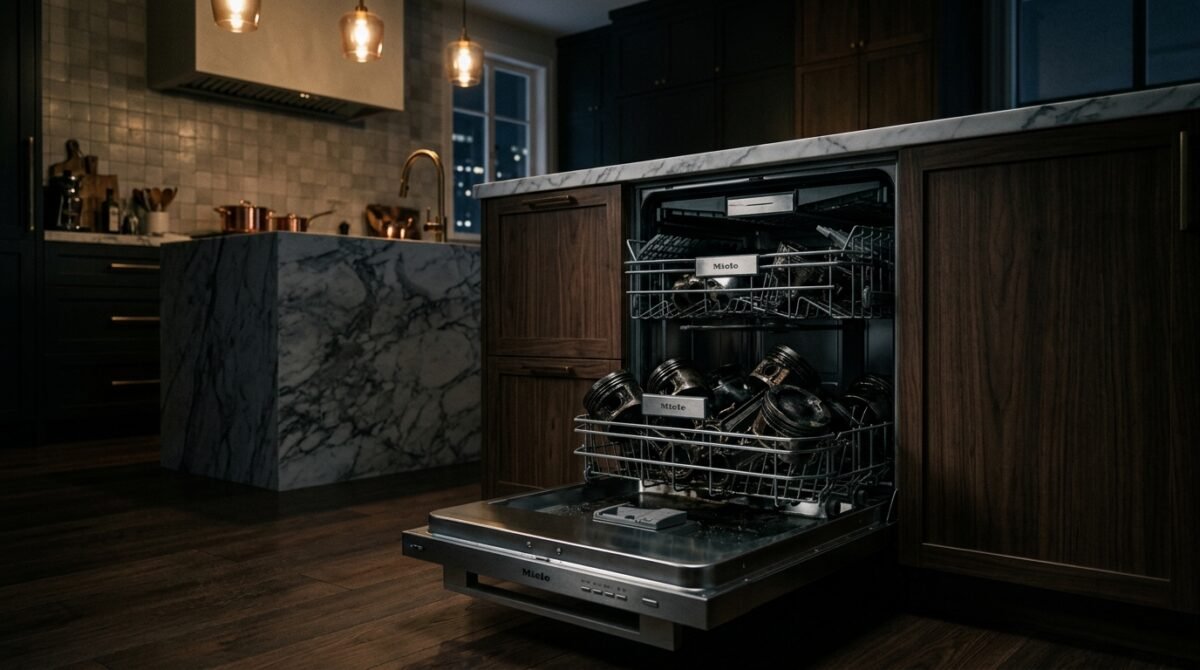
The day I walked through the door and smelled the acrid, metallic stench of burning oil and chemicals, I knew something was fundamentally wrong with my life. Nothing could have prepared me for the sight of my pristine appliance filled with black, sludge-covered motorcycle pistons. It wasn’t just a cleaning mishap; it was a total violation of my home, my boundaries, and my financial security.
This is the chronicle of how I turned a disastrous roommate incident into a masterclass in holding people accountable. From the initial explosion of rage to the tactical, calculated move to withhold his security deposit for a full kitchen overhaul, this is a story about what happens when you decide you are finished playing the role of the patient, understanding roommate.
The Acrid Stench of Mechanical Betrayal
I had been working a twelve-hour shift at the firm, dreaming of nothing but a glass of wine and the quiet hum of my new apartment. As soon as I put my key in the lock, the scent hit me. It wasn’t a normal cooking smell; it was heavy, industrial, and distinctly chemical. It smelled like a mechanic’s shop had exploded in my living room. I dropped my bag and walked straight toward the kitchen, my heart sinking with every step.
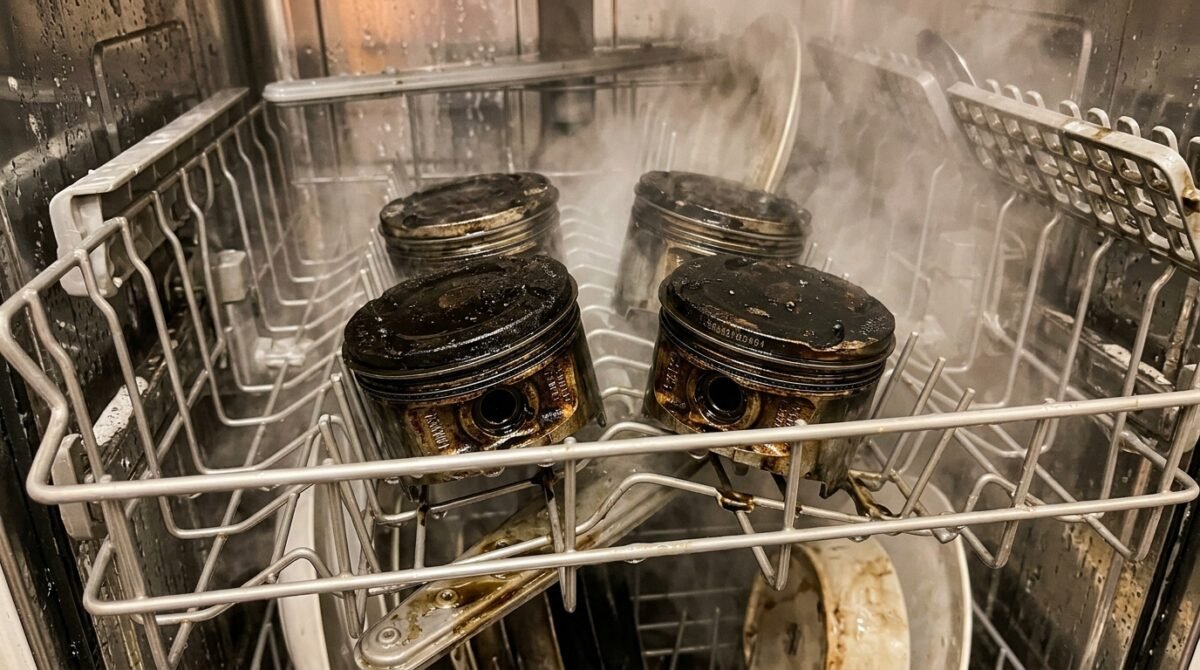
The dishwasher was running. It was making a sound that no dishwasher should ever make—a grinding, metallic thud that vibrated through the floorboards. I pulled the handle, and the machine hissed, releasing a plume of hot, oily steam that coated my face. Inside, glistening with a mixture of dish soap and thick, black sludge, were three motorcycle pistons.
I stood there for a full minute, unable to process the sheer audacity of what I was looking at. These weren’t even dirty dishes; they were heavy-duty engine parts caked in years of road grime and burnt motor oil. The racks were bent from the weight, and the interior walls of the machine were already stained with a permanent, greasy film that looked impossible to clean.
“What in the actual hell are you doing to my kitchen, Greg? Are you seriously using my dishwasher to degrease your engine parts?”
Greg walked out from the living room, holding a wrench and looking completely unbothered. He didn’t even have the decency to look guilty. He just blinked at me, wiping his greasy hands on his pants, and sighed as if I were the one being irrational. “It’s just a degreaser, man. The water pressure is better than anything I have in the garage. Don’t be so dramatic; it’s just metal.”
I couldn’t breathe. The sheer lack of respect for my property was suffocating. This wasn’t just a roommate disagreement; it was a complete and utter disregard for the investment I had made in our living space. As he tried to explain how he thought he was ‘saving me time’ by ‘multi-tasking,’ I realized that I wasn’t dealing with a roommate anymore; I was dealing with a vandal.
A Tactical Assessment of the Damage

After the initial shouting match, which ended with Greg retreating to his room to ‘cool off,’ I decided to get an objective look at the damage. I pulled the racks out one by one. The residue was everywhere. The heating element was coated in a thick, waxy substance that smelled like burnt rubber. I knew, with absolute certainty, that no amount of scrubbing or commercial cleaning solution would ever get this machine food-safe again.
I grabbed my phone and started taking pictures. Every angle, every stain, every bent wire in the dishwasher rack. I even recorded a video of the machine running, capturing the sickening grinding noise that suggested the pump had already been compromised by the grit from the engine oil. This was documentation for the war that I knew was coming.
I spent the next two hours on the phone with the appliance manufacturer. After being passed around to three different departments, the verdict was clear: ‘Using industrial degreasers or automotive parts in this unit voids the warranty entirely and poses a significant fire hazard.’ That was the golden ticket I needed. It wasn’t just a ‘mess’ I could clean; it was a ruined asset.
“Ma’am, if that oil has entered the drainage lines or the motor housing, you are looking at a total unit failure. We strongly advise against running it again. You essentially have a biohazard in your kitchen now.”
I sat on the kitchen floor, staring at the ruined machine. My mind raced. Greg had always been the type to deflect, to blame ‘bad luck’ or ‘misunderstandings’ whenever his actions led to consequences. But this time, I had the receipts. I had the manufacturer’s assessment, the photos, and the absolute clarity that he had cost me a significant amount of money.
I checked our lease agreement one more time. The security deposit was held in a joint account we had established for utility padding and damages. I had contributed 70% of it, while he had contributed 30%. I realized then that I had the power to make sure he paid for every single cent of the replacement, even if it meant scorched-earth tactics. The professional cleaner I called next gave me an estimate that confirmed my worst fears: the damage was irreparable.
The Morning After: A Text Message Confrontation

I woke up early the next morning, my mind still racing with the events of the previous night. I had barely slept, listening to the silence of the apartment, waiting for the sound of Greg trying to ‘clean up’ his mess. Instead, I saw a text notification on my phone screen before I even got out of bed. It was a message that perfectly encapsulated his entire approach to life.
“Hey, I’m sorry about last night. I didn’t realize you were going to freak out like that. I already wiped down the inside of the dishwasher and ran a hot cycle with some dish soap. It should be fine now. Can you let me know when you’re home? I need to use the kitchen to finish up the last few parts.”
— Greg, 7:15 AM
I felt a cold, hard resolve settle in my chest. He actually thought a quick wipe-down and a cycle with dish soap was enough to fix the damage he had caused. He didn’t understand, or he didn’t care, that the machine was now a liability. I typed out a response, my fingers steady despite the rage bubbling underneath.
I didn’t argue. I didn’t beg him to understand. I simply laid out the facts. I told him that the dishwasher was officially unusable and that I had already contacted a professional to replace the entire unit. I informed him that I would be deducting the full cost of the new appliance and the professional installation from his portion of the security deposit.
“Greg, the dishwasher is contaminated with industrial oil. It is a health hazard and a fire risk. It is not ‘fine.’ I have already ordered a replacement. The total cost is being taken from your security deposit, as per our agreement on property damage. Do not touch the machine again.”
The blue bubbles on my screen sat there, unread for nearly two hours. When he finally responded, it was with a barrage of defensive nonsense. He claimed I was being ‘petty’ and ‘vindictive,’ and that he would ‘never pay’ for a brand-new appliance because of a simple mistake. He threatened to go to the landlord himself, not realizing that doing so would only expose his own violation of our lease agreement.
The Escalation: When Passive Aggression Becomes Real

The next few days were a masterclass in psychological warfare. Greg decided that if I was going to be ‘difficult’ about the dishwasher, he would be ‘difficult’ about everything else. He stopped cleaning up his dishes, left his gym gear in the common space, and started playing his music at full volume at three in the morning. It was clear that he thought he could bully me into reversing my decision.
I didn’t rise to the bait. I simply documented everything. I took photos of the overflowing trash, the dirty pans in the sink, and the clutter in the hallway. I kept a log of every time he violated our roommate agreement. I was building a case not just for the dishwasher, but for the inevitable eviction conversation that was coming.
He tried to enlist our other friends to take his side, painting me as a ‘crazy roommate’ who was obsessed with a clean kitchen. I saw the messages they were sending in our shared group chat, wondering why things had suddenly gotten so ‘tense.’ I didn’t defend myself; I simply posted a single photo of the black sludge inside the dishwasher in the group chat and said nothing else.
“Oh. Okay. I see why you’re mad. That is absolutely disgusting, Greg. Why would you ever think that was okay?”
— Sarah, our mutual friend, in the Group Chat
The silence in the group chat was deafening. Greg realized that his attempt to gaslight me had failed spectacularly. He tried to backtrack, claiming it was an ‘experiment’ or that he didn’t know it would be that bad, but the damage to his reputation was done. Even his best friends couldn’t defend the fact that he had turned our home into his personal workshop.
He finally cornered me in the kitchen that night. He wasn’t yelling, which was almost worse. He was calm, almost patronizing, trying to use ‘logic’ to make me see that I was ‘overreacting’ to a financial burden that he could ‘easily’ fix if I just gave him a chance. He offered to buy a ‘refurbished’ dishwasher from some sketchy guy he knew on Facebook Marketplace.
The Professional Intervention
I knew I couldn’t trust him to do anything correctly. I bypassed his ‘refurbished’ offer entirely and scheduled a professional installation for a high-end, reliable replacement unit. I made sure to get an itemized invoice that specifically listed the cost of removal, disposal of the contaminated machine, and the installation of the new one. This was a document I could present to anyone—the landlord, a judge, or a mediator.
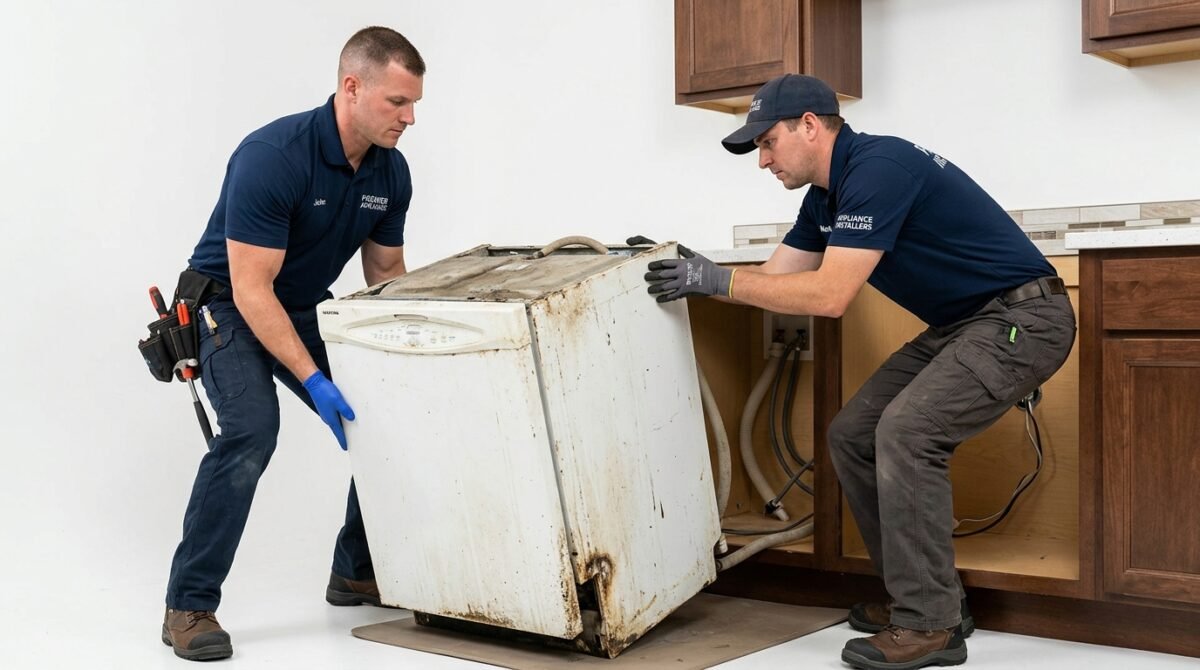
When the installers arrived, Greg tried to block them from entering. He stood in the doorway, his arms crossed, demanding to know who authorized this. I didn’t even look at him. I just walked past him, opened the door, and welcomed the installers inside. The look on his face was a mix of disbelief and sheer, unadulterated shock.
The installer, a veteran of appliance repair, took one look at the old dishwasher and visibly recoiled. He didn’t even want to touch it with his bare hands. He explained to Greg, right in front of me, that the pump was completely seized and that the interior seals were degraded by the chemical solvents. He confirmed that the machine was, in every legal and practical sense, a total loss.
“Sir, I’ve been doing this for fifteen years. I have never seen someone try to clean engine parts in a residential unit. This isn’t just broken; it’s a fire hazard. You’re lucky this didn’t catch fire while you were sleeping.”
Hearing a professional expert validate my concerns was incredibly cathartic. Greg didn’t say a word as the installer pulled the unit out, revealing the disgusting mess of sludge and grime that had been hidden behind the panel. It was a moment of absolute vindication. The truth was laid bare in the middle of our kitchen, and there was no way to spin it into a ‘simple misunderstanding.’
Once the old unit was hauled away, the house felt immediately lighter. I watched them slide the new, pristine dishwasher into place. It was a beautiful, quiet piece of technology that represented the restoration of my sanity. I looked over at Greg, who was still standing in the corner, staring at the empty space where the old unit had been. He looked small, and for the first time, he realized that he had completely lost control of the situation.
The Financial Reckoning
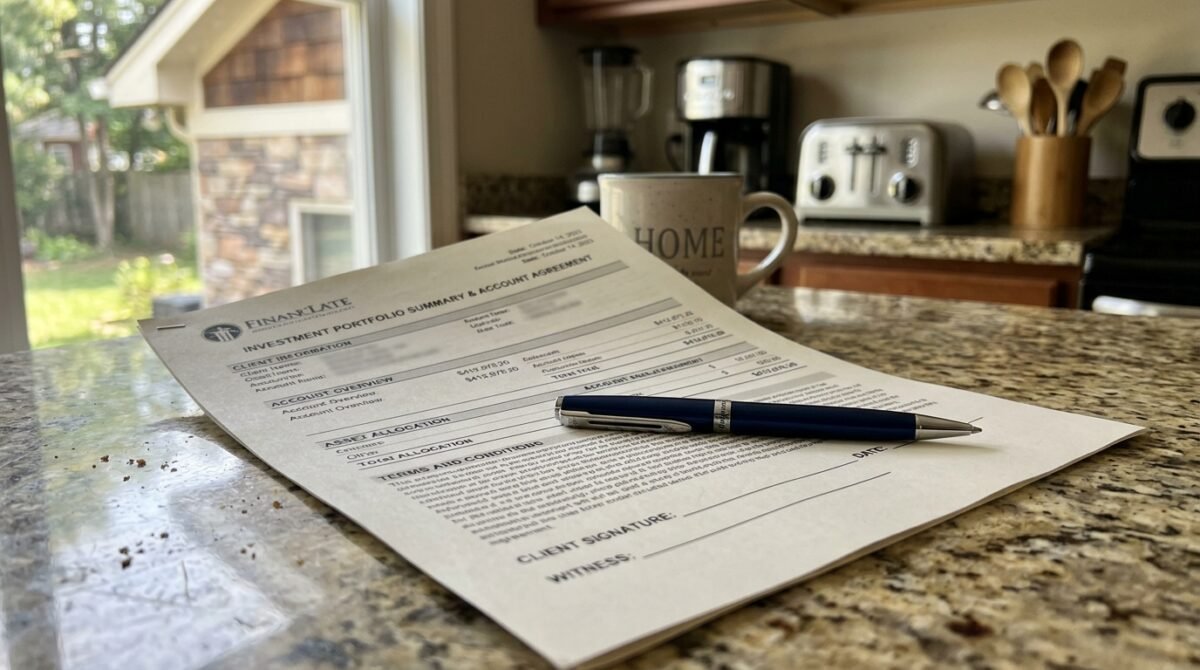
Now came the part that I had been preparing for since the first day. The invoice was delivered. It was a significant amount, covering not just the cost of the dishwasher but the premium for the expedited installation and the biohazard disposal fee. I took a copy of the invoice, attached it to a formal notice, and placed it on the kitchen counter for Greg to find.
I wasn’t asking for his permission anymore. I had already notified our landlord that I was handling a ‘necessary repair’ to the kitchen and that the cost would be deducted from the security deposit fund, which was legally permissible under our ‘Damage and Maintenance’ clause. I had already set up the bank transfer for the remainder of the funds, effectively locking his portion in place until the cost of the dishwasher was fully settled.
When he saw the notice, he didn’t even try to talk to me. He went straight to his room and locked the door. I could hear him pacing, making phone calls, and slamming drawers. He was clearly looking for a way out, a loophole, or someone to tell him he was right. He wasn’t going to find one. The facts were entirely against him.
“I’ve reviewed our lease. You cannot just deduct this from the security deposit without a court order. I’m going to contest this and take you to small claims court.”
I laughed when I read his note. Small claims court? He would have to pay a filing fee, present his case in front of a judge, and explain why he thought using a dishwasher as a degreaser was a reasonable use of property. I looked forward to the prospect of him trying to explain that to a judge. It would be the most humiliating day of his life.
I wrote back a simple, concise note. I attached the manufacturer’s email, the repair technician’s statement, and the photos of the engine parts. I told him that if he wanted to go to court, he was more than welcome to, but that I would be countersuing for the additional legal fees and the cost of the professional cleaning services I had to hire for the rest of the kitchen that he had managed to get grease on as well.
Community Perspectives: The Reddit Verdict

I decided to share my story on a popular forum, curious if I was being as ‘vindictive’ as Greg had claimed. I expected a mix of responses, but I was overwhelmed by the sheer support I received. Thousands of people chimed in, almost all of them agreeing that I was completely in the right to hold him accountable for the destruction of my property.
“NTA. Your roommate sounds like a complete nightmare. Using a dishwasher for engine parts isn’t just a ‘mistake,’ it’s a total lack of basic life skills and respect. You are perfectly within your rights to withhold that money.”
— u/HomeownerHero, 15.2k upvotes
It was validating to see so many people emphasize that a home is meant to be a place of respect, not a dumping ground for someone else’s chaos. Many users shared their own ‘roommate horror stories,’ which helped me realize that I wasn’t alone in dealing with people who treated property like it was disposable. The consensus was overwhelmingly in my favor, with many people suggesting I take further steps to protect myself.
“I used to be a landlord. If I found out a tenant did this to one of my units, I would have evicted them on the spot for property damage. You are being generous by just deducting it from the deposit.”
— u/RealEstateLawyer, 8.4k upvotes
Some users even pointed out that by allowing this behavior to continue, I would have only invited more of it. Setting a hard, financial boundary was the only way to get him to understand the weight of his actions. The advice to keep all my documentation and prepare for a potential legal fight was invaluable, as it gave me the confidence to stand my ground even as he continued to be difficult.
Reading the comments, I felt a weight lift off my shoulders. I realized that my anger wasn’t ‘crazy’—it was a logical response to a violation. I wasn’t a bad person for wanting to be treated with respect in my own home. I was just someone who finally decided to stop accepting ‘sorry’ as a currency for damage.
The Final Cleanup and Moving On

The final stage of this saga was the process of moving out. Our lease was up for renewal in two months, and it was clear that there was no way we could continue to live together. I had already begun looking for a new place, a smaller, quieter apartment where I could live on my own. The thought of coming home to a peaceful, clean, and grease-free environment was the only thing keeping me going.
Greg didn’t take the news of me leaving well. He tried to claim that I was ‘abandoning’ him, which was hilarious given the state he had left our home in. He wanted to stay in the apartment but clearly couldn’t afford it on his own. That wasn’t my problem. I had fulfilled my obligations, paid my share, and I was leaving the place better than I had found it—even with his ‘contributions’ to the kitchen.
When the landlord came for the final walkthrough, I was there. I pointed out every single improvement I had made, including the brand-new dishwasher. The landlord was impressed and even commented on how much better the kitchen looked than at the start of our lease. Greg tried to interject, to say that the dishwasher was ‘unnecessary,’ but the landlord just shushed him and complimented me on my initiative.
“I’ve seen a lot of tenants, but you’re the first one to actually improve the property at their own expense after a disaster. Your security deposit will be returned in full, minus the standard cleaning fee. I’ll be dealing with Mr. Greg separately regarding his portion of the damages.”
That was the cherry on top. The landlord had already seen the photos I sent, and he was livid. He had already issued a formal warning to Greg regarding the damage and was planning to charge him for the additional deep cleaning required for the kitchen cabinets and the flooring. I had been vindicated on every single level.
Packing my boxes was a therapeutic experience. I was discarding not just my belongings, but the memories of the stress, the fighting, and the absolute absurdity of the last few months. As I walked out of the apartment for the last time, I didn’t look back. I had my security deposit back, I had my peace of mind, and I had learned exactly how much my own sanity was worth.
Reflecting on Boundaries and Respect

Looking back, I realize that the dishwasher incident was just the breaking point of a much larger issue: a fundamental incompatibility in how we viewed respect and shared space. Greg had always been someone who believed that ‘good enough’ was the standard, whereas I believed that a home is a place that needs to be maintained, respected, and kept safe.
I learned that you cannot change people. You can only set boundaries and hold them accountable when those boundaries are crossed. I spent too much time trying to be the ‘nice’ roommate, the one who looked the other way, the one who cleaned up the little messes to avoid a fight. All that did was teach him that he could get away with anything.
The financial cost was high, but the lesson was worth every penny. I now know that I am capable of standing up for myself, even in the face of pressure, gaslighting, and the threat of conflict. I am no longer afraid of being ‘difficult’ if it means protecting my property and my peace of mind. It’s a powerful realization that I will carry into every future living situation.
“You deserve to live in a home where you feel respected. Don’t ever apologize for wanting that, and don’t ever feel guilty for holding people accountable for their actions.”
I hope that anyone reading this learns the same lesson. If you are living with someone who doesn’t respect your boundaries, who treats your property like garbage, or who thinks that ‘sorry’ is enough to cover thousands of dollars in damage, you need to make a change. Don’t wait for a disaster to happen. Take control of your situation, set your boundaries, and don’t let anyone make you feel like you are the problem for wanting to live in a clean, safe, and respectful environment.
Conclusion
My life today is significantly quieter and much cleaner. I live alone, and every time I open my dishwasher to put away a clean plate, I smile. It’s a small, quiet victory that reminds me of the day I stood my ground and reclaimed my sanctuary. The drama with Greg is a distant memory, a cautionary tale that I sometimes share with friends over a drink, just to remind myself of how far I’ve come.
We have all encountered people who think the rules of life don’t apply to them, but we have the power to decide how much of that we are willing to tolerate. It wasn’t easy to demand the money, to deal with the confrontation, or to endure the cold war that followed. But it was necessary. I didn’t just replace a dishwasher; I replaced a life of compromises with a life of clarity.
What about you? Have you ever had a roommate who crossed the line in a way that left you speechless? Did you hold them accountable, or did you just walk away? I’m curious to hear your stories of boundary-setting, disastrous roommates, and the moment you finally decided enough was enough. Let’s discuss it in the comments below.
What's your verdict on this dilemma?
Vote below to contribute to the official community consensus.

Have a Dilemma Keeping You Up at Night?
Share your real-life feud, wedding chaos, or relationship crossroads anonymously with our editorial team.
What do you think ?
0 Comments🛡️ Comments are moderated to protect community integrity. Your comment will appear once approved by the editorial team.