

I grew up in a house where the concept of fairness was treated as a suggestion rather than a rule. My brother, Julian, was the sun around which our parents orbited. While I spent my teenage years working at the local diner to save for college, Julian was given a luxury car for his sixteenth birthday and a ‘stipend’ that lasted well into his thirties. He never held a job, never pursued a degree, and never once paid a utility bill. I, on the other hand, climbed the corporate ladder, built a comfortable life, and maintained a healthy distance from the chaotic orbit of my family’s enabling.
When my parents passed away within a year of each other, I wasn’t surprised that the will was heavily skewed. What shocked me was the sheer audacity of it. Everything—the family home, the investments, the vacation cottage—went to Julian. I was left a symbolic, insulting $5,000, which barely covered the funeral flowers and the estate attorney’s initial retainer. I accepted it with a cold, hollow sense of relief, thinking that the cord had finally been cut. I had my career, my savings, and my independence. I didn’t need their blood money.
But the universe, or perhaps just my brother’s insatiable incompetence, had other plans. Last week, I received a phone call that shattered the peace I had cultivated. It wasn’t a call to reminisce or to share grief; it was a demand. Julian, having burned through the liquid assets and faced with a massive, looming tax bill for the property he was gifted, decided he was entitled to a bailout. His logic? Since I was the ‘successful’ one, it was my moral duty to ensure his lifestyle remained intact.
This story isn’t just about money; it’s about the crushing weight of legacy expectations and the toxic belief that the high-achiever in the family is a walking ATM for the failures. It is about the moment you realize that ‘family’ is often just a weaponized term used to exploit your hard work. I am writing this to process the absurdity of the last few days, and to see if the world agrees that there is a limit to how much a sibling can demand before the final bridge is burned to ashes.
The Late Night Call from the Estranged Prince

It was 11:30 PM on a Tuesday when my phone buzzed with a name I hadn’t seen on my caller ID in months. I assumed it was an emergency, perhaps a final complication with the house sale or a notification from the probate court. Instead, it was Julian, his voice slurred, sounding less like a grieving brother and more like a man who had just hit a brick wall he didn’t know existed.
He didn’t ask how I was doing. He didn’t ask about my kids or my job. He went straight into a rant about how the IRS was ‘trying to ruin his life’ and how the probate laws were fundamentally unfair to someone in his position. He claimed he didn’t realize that inheriting a multimillion-dollar estate came with such ‘punitive’ tax obligations. He sounded like a child complaining about homework, entirely oblivious to the reality that a house is an asset, not a free pass to spend without consequence.
“Look, I’ve done the math, and I’m short about $120,000 for the back taxes and the capital gains hit. I know you’ve been socking money away for years. I need you to liquidate that brokerage account you’re always talking about. It’s only fair that you help me keep the house, since you’re the only one with actual liquid cash.”
— Julian, over the phone
I sat on the edge of my bed, the room feeling suddenly very cold. The audacity was breathtaking. He had the house, the car, the family heirlooms, and the prestige, yet he was looking at my savings—money I had earned through eighteen years of eighty-hour work weeks—to subsidize his failure to prepare for the inevitable.
I asked him why he hadn’t sold any of the peripheral assets or looked into a bridge loan. His response was chillingly simple: he didn’t want to sell anything because he considered the entire estate to be his ‘birthright’ and selling even a piece of it felt like a betrayal of our parents’ wishes. He literally argued that my contribution would allow him to honor their legacy properly.
I hung up on him. I didn’t even say goodbye. I just stared at the ceiling, wondering how someone could reach the age of thirty-four with the financial literacy of a toddler. My husband walked into the room, saw my face, and knew immediately that the ‘Golden Child’ had finally run out of runway.
The Inevitable Escalation in the Group Chat
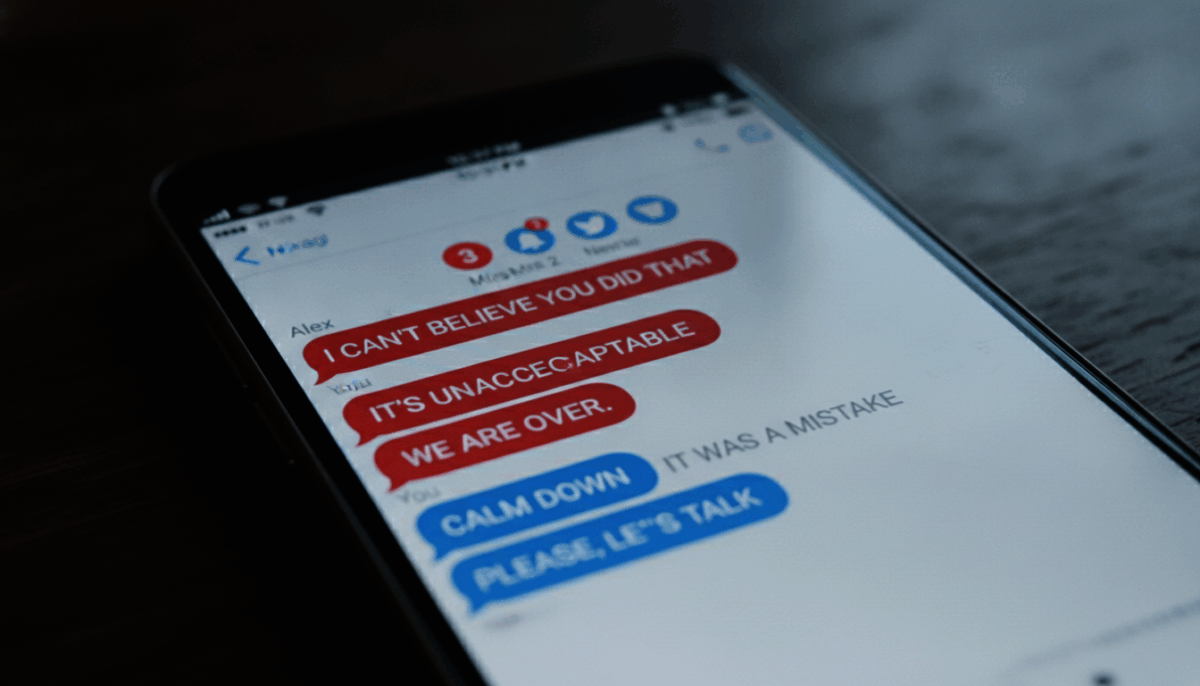
By the next morning, the fallout had moved from the private phone call to the family group chat—the one where my aunt and cousins still linger, watching the chaos like it’s a high-stakes reality show. Julian, clearly having not sobered up or developed a shred of self-awareness, decided to air his grievances publicly. He portrayed himself as the victim of a ‘heartless’ sister who preferred to see him homeless than help him pay a measly tax bill.
He screenshotted a part of our conversation, omitting the part where he demanded $120,000, and replaced it with a vague plea about ‘needing a little help from the family.’ The response from the extended family was mixed, but the enabling was strong. My Aunt Linda, who always viewed Julian as the ‘sensitive’ one, chimed in immediately, suggesting that we should ‘all pull together’ to support him.
“It is truly heartbreaking to see siblings fighting over money after such a tragic loss. Julian is clearly struggling, and he’s only asking for support to keep the family home in the family. Why be so rigid when there’s so much potential for reconciliation? Surely you can spare enough to help him out?”
— Aunt Linda, in the family group chat
I didn’t take the bait. I knew that if I engaged, I would be dragged down to his level of dysfunction. I simply replied with a single message, stating that my finances were private and that I had no intention of funding anyone’s tax liabilities, especially not someone who was left 99% of the estate. The silence that followed was heavy, broken only by a few ‘thumbs up’ reactions from cousins who clearly knew better than to get involved.
The group chat then devolved into a series of passive-aggressive memes and comments about ‘family loyalty.’ It was a masterclass in manipulation. Every time I tried to steer the conversation back to the legal realities of the situation, someone would jump in to remind me how much our parents loved Julian and how he was ‘never meant to handle grown-up stress.’ It was infuriating. I was being punished for being responsible, while he was being coddled for being incompetent.
I eventually muted the chat, but not before seeing a message from Julian that made my blood run cold. He threatened to contest the small cash gift I was left, claiming that I had somehow ‘unduly influenced’ our parents to give me anything at all. It was a bluff, and a stupid one, but it showed exactly how far he was willing to go to force my hand.
An Attorney’s Blunt Reality Check
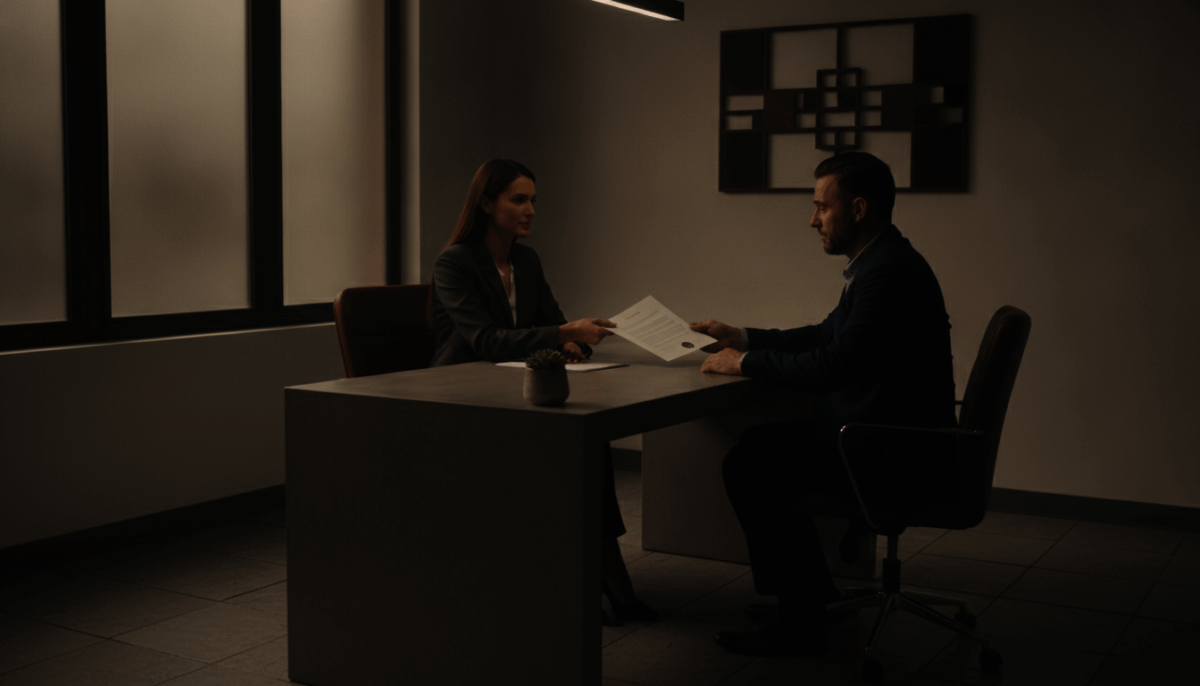
I didn’t wait for his threats to manifest into actual legal action. I contacted the estate attorney, Mr. Henderson, who had managed the process from the beginning. I needed to know exactly what kind of danger I was in, and whether there was any legal loophole that could actually force me to pay Julian’s tax debt. The meeting was short, professional, and entirely reassuring in the way only a man charging $500 an hour can be.
Mr. Henderson looked over my file, sighed, and then laughed—a dry, humorless sound. He confirmed that there was absolutely no mechanism, legal or otherwise, that could force me to pay taxes on an inheritance I didn’t receive. He explained that the estate tax liability was entirely the responsibility of the executor, which, unsurprisingly, was Julian himself. He had been given the keys to the kingdom, and with those keys came the responsibility of managing the kingdom’s debts.
“Your brother is essentially asking you to pay for the privilege of him owning property he cannot afford to maintain. There is no legal avenue for him to compel you to contribute. If he threatens a lawsuit, it will be thrown out of court within forty-eight hours. He is trying to leverage your sense of familial obligation because he knows he’s incompetent.”
— Mr. Henderson, Estate Attorney
The relief I felt was physical. I felt my shoulders drop and the tightness in my chest begin to loosen. Mr. Henderson went on to explain that Julian was likely facing these taxes because he had already liquidated several high-yield investments to fund his lifestyle, leaving him with only the illiquid assets—the house and the cottage—that required cash for tax payments. He had spent the cash he should have set aside for the IRS.
I asked Mr. Henderson if he had heard from Julian. He nodded grimly. Julian had apparently called the office three times in the last week, demanding to know if there were any ‘undiscovered’ assets or if he could somehow charge the estate’s attorney fees back to my portion of the inheritance. Mr. Henderson had told him no, and Julian had responded by calling him a ‘thief’ and an ‘enabler of greed.’
I left the office feeling a strange sense of vindication. For years, I had been told that I wasn’t the ‘talented’ one, that I wasn’t the ‘favorite,’ and that I was ‘too cold’ to truly understand family dynamics. Standing on the sidewalk, watching the city traffic, I realized that my coldness was actually just boundaries. And boundaries, I decided, were the only thing that was going to keep me sane.
The Unexpected Ally at the Sunday Dinner
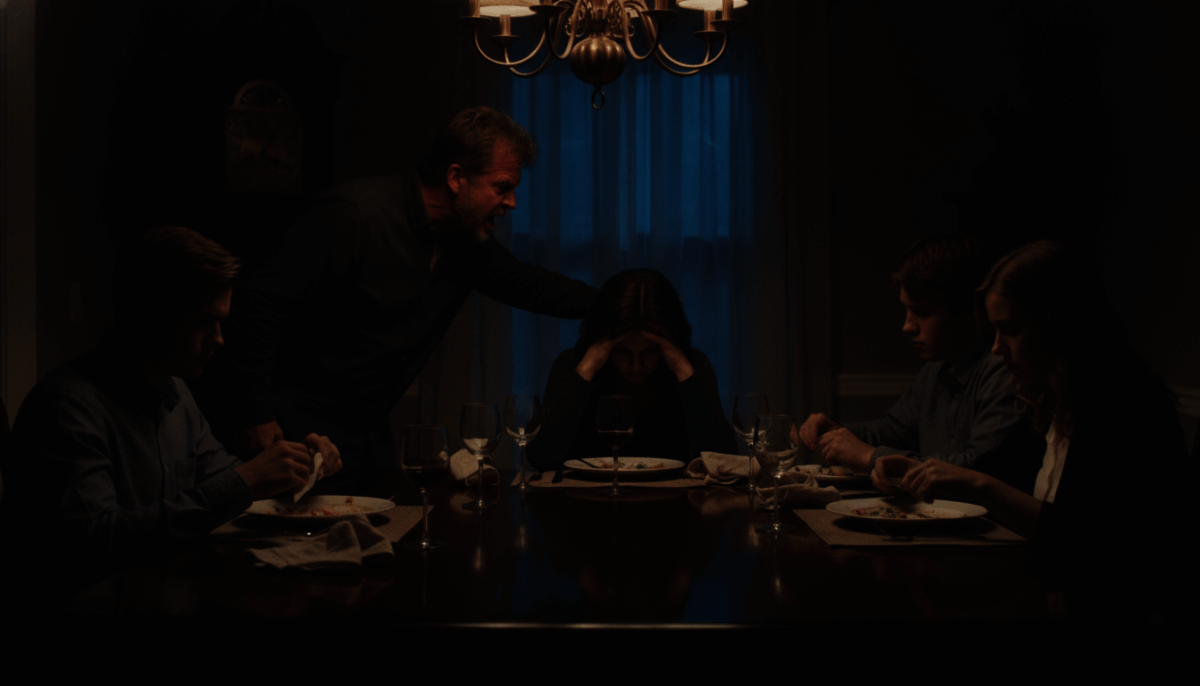
I almost didn’t go to my cousin Sarah’s Sunday dinner, fearing that Julian would show up and try to make a scene. But Sarah was one of the few people who had never bought into the ‘Golden Child’ narrative, and I owed it to her to show up. When I arrived, the atmosphere was thick with tension. Julian was there, nursing a beer, looking disheveled and frantic. He didn’t look at me when I entered, but I could feel his eyes burning into me.
Dinner was an exercise in performative normalcy. We talked about the weather, the local sports teams, and the rising cost of groceries. Everyone was walking on eggshells, terrified that the ‘Inheritance Talk’ would erupt. I focused entirely on my plate, eating Sarah’s excellent roast chicken and trying to ignore the way Julian was tapping his foot aggressively.
Then, my uncle, who had been suspiciously quiet for the entire meal, leaned over and spoke to Julian. He didn’t ask how the taxes were going. He asked when Julian was planning to put the house on the market. The room went silent. You could hear the silverware clinking on the china. Julian’s face turned bright red, and he stood up, his chair screeching against the floorboards.
“Why does everyone keep asking me about selling? This is my home! This is where I belong! Why should I have to give up my childhood because of some arbitrary, unfair tax code? My sister has the money, but she’s choosing to be spiteful. She’s watching me drown and she’s just standing there with her arms crossed!”
— Julian, at the dinner table
I didn’t yell. I didn’t cry. I looked him dead in the eyes and said, ‘Julian, you had the biggest head start in this family. You had everything handed to you on a silver platter. The fact that you’re drowning now is not a reflection of my spite, but of your own inability to manage anything for yourself.’ The table went silent again, but this time, it was a different kind of silence. It was the silence of people who had finally heard the truth spoken out loud.
My cousin Sarah then stood up, cleared her throat, and said, ‘Julian, if you can’t pay the taxes, the house isn’t yours. It belongs to the government until you pay them. Stop asking your sister for money. It’s embarrassing for you, and it’s exhausting for all of us.’ That was the moment. The power dynamic shifted. He wasn’t the wounded golden boy anymore; he was just a guy throwing a tantrum at a dinner party.
The Online Court of Public Opinion

I took the advice of a friend and posted a sanitized, anonymous version of this dilemma on a popular subreddit to see if I was losing my mind. The response was overwhelming. Within three hours, the post had reached the front page, and I spent the better part of the night reading through thousands of comments. The validation was both comforting and slightly terrifying.
The general consensus was not just ‘NTA’ (Not the Asshole), but a resounding, collective ‘Run.’ Hundreds of people shared their own stories of being the ‘responsible sibling’ who was treated as an infinite resource by the ‘golden child.’ It made me realize that this was not a unique tragedy, but a systemic issue in many families where boundaries are treated as acts of aggression.
“OP, you are witnessing the death throes of a parasite. He has been fed his entire life, and now that the food source is gone, he expects you to be the next host. Do not give him a single cent. Not for taxes, not for ’emergency’ repairs, not for anything. If he loses the house, he loses the house. That is a consequence of his own life choices.”
— u/StoicSurvivor (Top Comment, 28.5k upvotes)
Some users even provided advice on how to protect myself from further harassment. They suggested changing my phone number, blocking him on all social media, and even sending a formal ‘cease and desist’ letter if his threats about contesting the will continued. I realized that while I wanted to be the ‘bigger person,’ being the bigger person in this situation was just another way to get trampled.
I also saw comments from people who had been in Julian’s position—people who had realized too late that they lacked the skills to survive as adults. Some of them spoke of the pain of having to sell everything and start over at forty, but they also spoke of the liberation that came with actually having to earn their own way. It gave me a small shred of hope that maybe, just maybe, Julian would eventually grow up.
But the most impactful comments were the ones about ‘the cost of enabling.’ They warned that if I gave him the money, it would never be enough. He would be back in six months, then a year, then every time he had a minor inconvenience. They reminded me that money given to a person who refuses to change is money set on fire. It was the reality check I desperately needed.
The Certified Letter of No Contact

Following the advice of the community and my attorney, I decided that the time for dialogue had passed. I wrote a formal, cold, and final letter to Julian. I sent it via certified mail so that there could be no doubt he received it. In the letter, I clearly stated that I would not be providing any financial assistance, now or ever. I also explicitly told him that any further attempts to contact me, harass me, or threaten me would result in a block on all communication and, if necessary, legal intervention.
I felt a strange sense of grief as I dropped the envelope at the post office. It wasn’t grief for the money or the house; it was grief for the brother I wished I had. I wanted a brother who would call me to talk about life, who would be there when things got hard, and who would be a partner in our shared history. But that person didn’t exist. The person who existed was a stranger who shared my DNA and wanted to destroy my stability for his own convenience.
A week later, I saw the notification that the letter had been signed for. I didn’t wait to see if he would respond. I proactively blocked him on my phone, my email, and all social media platforms. I did the same for my Aunt Linda, who had been pushing for me to ‘be reasonable.’ I was officially out of the loop, and for the first time in my life, the quiet was absolute.
“This is to inform you that all requests for financial support are officially denied. Please do not contact me again regarding the estate, your personal tax liabilities, or any other financial matters. My decision is final and non-negotiable. Any further attempts to reach me will be treated as harassment.”
— Excerpt from my letter to Julian
My husband and I spent the weekend cleaning out the garage, something we had been putting off for months. We didn’t talk about Julian. We didn’t talk about the house or the taxes. We just worked, sweated, and enjoyed the fact that we were building something of our own. It was a small, mundane victory, but it felt monumental. I was no longer an actor in Julian’s drama; I was the architect of my own life.
I realized then that ‘family’ is not a blood contract that forces you to be a martyr. It is a relationship, and like any other relationship, it requires mutual respect and boundaries. When those things disappear, the relationship has to disappear too. I wasn’t abandoning my brother; I was protecting my life from someone who had no intention of respecting it.
The Quiet After the Storm

It has been two months since the final communication. The silence has been the most profound gift I have ever received. I don’t get the midnight texts about his ‘unfair life.’ I don’t get the passive-aggressive updates from relatives about how ‘struggling’ he is. I don’t feel the constant, nagging pressure to defend my choices. I am just living.
I heard through the grapevine that Julian has indeed put the property on the market. It wasn’t the triumphant story of him pulling himself up by his bootstraps; it was a desperate, fire-sale listing that was snatched up by a developer within days. He’s moved into a small apartment, and by all accounts, he is bitter, angry, and convinced that the world is a cruel place. But he is also, for the first time in his life, living within his means.
There’s no joy in his struggle. I don’t wish for him to be homeless or miserable, but I do recognize that this is the natural trajectory of his life. He is learning, albeit in the most painful way possible, that the world doesn’t orbit him. He is discovering what the rest of us learned in our early twenties: that you have to work to eat, pay your own bills, and manage your own disasters.
“He’s just so angry all the time. He talks about how the system failed him, as if he expected the system to just hand him everything forever. I don’t think he’ll ever really get it, but at least he’s not calling me anymore. That’s enough for me.”
— My conversation with my husband
I have started to focus on the things that actually matter. My kids, my husband, and my own long-term goals. I’ve realized that the ‘inheritance’ I received wasn’t just the small amount of money in my account; it was the realization of my own self-worth. I don’t need my parents’ approval, and I certainly don’t need my brother’s validation.
There are days when the guilt creeps in, whispering that I could have helped, that I could have been the ‘bigger person.’ But then I look at the balance of my life—the peace, the stability, the lack of toxicity—and I know I made the right choice. Boundaries are not acts of cruelty; they are the foundation of healthy living. And for the first time, I am building a foundation that is entirely my own.
The Lessons of Inheritance and Entitlement

If there is one thing I’ve learned from this entire ordeal, it’s that inheritance—or the lack thereof—is a profound test of character. It strips away the pretense and reveals who people truly are. Julian revealed himself to be a person who values entitlement over relationships, and I revealed myself to be a person who values integrity over blood ties. It wasn’t a pretty revelation, but it was a necessary one.
We talk so much about the benefits of wealth, but we rarely talk about the corrosive effects of unearned privilege. Julian was a casualty of that privilege, wrapped in the protective layers of our parents’ enabling. By trying to spare him the consequences of life, they actually prevented him from living it. Now that the layers have been peeled away, he’s left with the raw, uncomfortable reality of his own choices.
“The greatest gift my parents ever gave me, even if they didn’t mean to, was the inheritance I didn’t get. It forced me to find my own path, to earn my own way, and to respect the value of hard work. I wouldn’t trade that for all the mansions in the world.”
— My closing thoughts in my journal
I think about the people who are currently in the middle of their own family dramas, wondering if they should give in just to keep the peace. My advice? Don’t. Peace bought with your own self-respect is not peace; it is a down payment on future misery. The people who demand the most from you are rarely the ones who will be there when you need them.
As for the future, I plan to stay the course. No contact, no updates, no curiosity about what he’s doing. I’ve deleted his number from my phone, and I have no intention of ever seeing him again. The chapter is closed. I’m moving forward, and for the first time in my life, I’m not looking back at the golden child in the rearview mirror.
Reflecting on the Community’s Verdict

Reading back through the Reddit comments, I find myself struck by how much people needed to hear this story. It wasn’t just about my brother; it was about the collective trauma of people who have been squeezed dry by family members who think they are entitled to everything. The community was a mirror, reflecting not just my situation, but a common struggle that many of us face in silence.
I want to thank everyone who commented, whether they offered support or provided a harsh reality check. The process of sharing this, and seeing it validated, has been a significant part of my healing. It’s hard to admit that your own blood is a source of toxicity, but once it’s out in the open, it’s much harder to ignore. We are not obligated to set ourselves on fire just to keep our entitled relatives warm.
“The fact that thousands of strangers could instantly see the absurdity of my situation was the most validating thing I’ve ever experienced. It reminded me that I’m not crazy, and I’m not alone. It’s given me the strength to stand my ground and not look back.”
— My response to the community
Some of the most touching comments came from people who had gone no-contact with their families years ago. They spoke of the initial pain of the decision, but also of the long-term rewards: the ability to build a family of choice, the peace of mind, and the rediscovery of themselves outside of the family narrative. They confirmed that the ‘guilt’ eventually fades, replaced by a sense of profound relief.
I hope that if anyone reading this is currently in a similar position, they see that there is a way out. You don’t have to be the ATM. You don’t have to be the martyr. You are entitled to your own life, your own money, and your own peace. And sometimes, the most loving thing you can do for a family member is to let them face the consequences of their own actions.
Final Thoughts: The Cost of Peace

When I look at my life now, I see it as a collection of choices I’ve made for myself. I chose my career, I chose my partner, and I chose to walk away from a dynamic that was destroying me. Every one of those choices was a small brick in the wall of my own happiness. Yes, the wall has some gaps where family should have been, but it is sturdy, and it is mine.
The financial cost of the last few months has been minimal compared to the emotional cost of the years I spent trying to be the ‘good’ sibling. I’ve realized that being the ‘good’ sibling was just another way of being controlled. Now that I’m ‘bad’ in their eyes, I’m finally free. And let me tell you, it’s a wonderful place to be.
“I’m done being the person who fixes everything. I’m done being the one who pays for everyone else’s mistakes. From here on out, I’m only responsible for one person: myself. And that is exactly how it should be.”
— Final takeaway
I hope you enjoyed this narrative, even though it was born out of a painful reality. If you have a story of your own, or if you’ve faced similar challenges with entitled family members, please share your thoughts. The conversation is what helps us all learn and grow. We’re all in this together, and sometimes, the best way to move forward is to share the burden of our experiences with others who understand.
Thank you for being part of this journey. It’s been a long, difficult road, but I’m finally walking on solid ground. And I’m not stopping now. There’s too much life to live, and I’m finally living it for me.
Conclusion
In the end, Julian’s entitlement was the catalyst for my liberation. It forced me to confront the reality that I was not the responsible sibling by choice, but by manipulation. The weight I was carrying wasn’t mine to bear, and letting it go was the most empowering decision of my life. This journey has taught me that boundaries are not just barriers to others; they are the walls of the home I’ve built for my own soul.
We all have to decide what our peace is worth. Is it worth the money we’ve earned? Is it worth the time we’ve spent? Is it worth the potential for conflict? For me, the answer is an unequivocal yes. I am no longer interested in funding someone else’s life at the expense of my own, and I hope this story gives you the strength to do the same.
What about you? Have you ever had to draw a line in the sand with a family member who felt entitled to your success? Do you believe that family ties have an expiration date, or are we bound by them forever, no matter the cost? Share your stories and your take on the ‘Golden Child’ dynamic in the comments below. Let’s keep the conversation going.
What's your verdict on this dilemma?
Vote below to contribute to the official community consensus.

Have a Dilemma Keeping You Up at Night?
Share your real-life feud, wedding chaos, or relationship crossroads anonymously with our editorial team.
What do you think ?
0 Comments🛡️ Comments are moderated to protect community integrity. Your comment will appear once approved by the editorial team.