
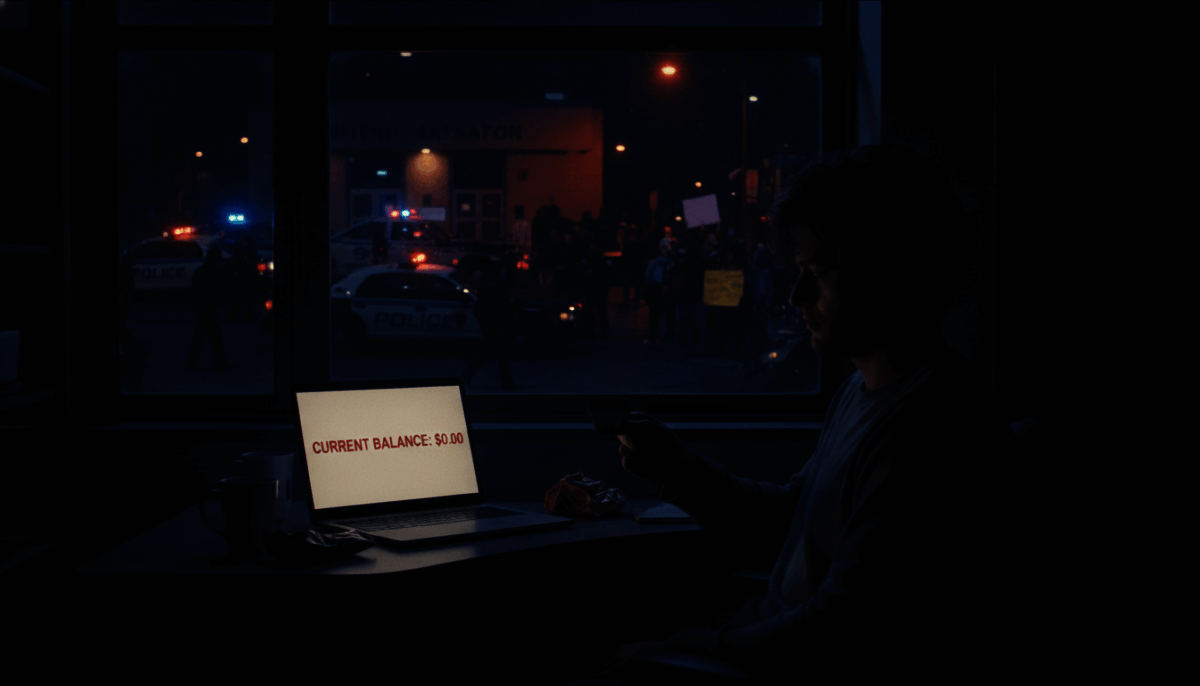
Growing up, I was the invisible child. While my older brother, Jason, was the star of the family—the varsity athlete, the charming extrovert, and the perpetual magnet for trouble—I was the one with my head buried in textbooks. My parents had a clear hierarchy, but I didn’t mind. I had a dream. Through sheer academic rigor, I secured a full-ride scholarship to a prestigious university, and my parents had set up an escrow account for my living expenses and miscellaneous fees, funded by my own part-time jobs and a small inheritance from my grandmother.
It was a quiet, stable life until the night of the incident. Jason, true to form, ended up in a drunken brawl at a high-end lounge that resulted in a felony assault charge. The victim was a well-connected local businessman, and suddenly, the reputation my parents clung to so desperately was at stake. They didn’t just need a lawyer; they needed a ‘fixer,’ a celebrity attorney known for making high-profile problems vanish into thin air.
The cost of such representation was astronomical. I first realized something was wrong when my debit card was declined at a campus bookstore. Assuming it was a technical glitch, I checked my banking portal, expecting to see my steady savings balance. Instead, I saw a void. A series of large, outbound wire transfers to a law firm, dated just 48 hours after Jason’s arrest, stared back at me in cold, digital ink.
When I confronted my parents, the reality was even more jarring than the theft itself. They didn’t see it as stealing; they saw it as a family investment. To them, my future was flexible, but Jason’s freedom was a non-negotiable crisis. That night, the illusion of parental support shattered, leaving me to navigate the fallout of a choice I never made, standing at the precipice of losing the very future I had worked my entire adolescence to secure.
The Late-Night Bank Notification That Changed Everything

I was in the middle of a frantic study session for my Organic Chemistry final when my phone buzzed with an automated alert from the bank. It was an ‘insufficient funds’ notice for a small monthly subscription fee I had set to autopay. I stared at the screen, confused. That account was my sanctuary, the place where I had meticulously funneled my earnings from three years of tutoring and my grandmother’s college fund.
I logged into the portal, my heart hammering against my ribs. The balance showed zero. Not just low, but zero. I clicked on the transaction history, and my breath hitched. There were three massive wire transfers labeled ‘Legal Retainer – J. Miller.’ My stomach turned. I knew that name—it was the high-priced attorney my parents had once joked about hiring if they ever got into ‘serious trouble.’
I didn’t wait. I called my mother immediately, my hands trembling so hard I dropped my phone twice. She picked up on the third ring, her voice tight and weary, sounding as though she hadn’t slept in days. I didn’t bother with small talk. I demanded to know why she had accessed my private account without my permission, my voice cracking under the weight of the betrayal.
“Mom, please tell me this is a mistake. There’s a wire transfer for fifty thousand dollars to a law firm. My account is empty. Tell me you didn’t touch my scholarship money.”
— Me to my Mother
There was a long, suffocating silence on the other end. I could hear her sharp intake of breath, a sound that confirmed my worst fears before she even spoke a word. She tried to steady her voice, attempting to frame the theft as a temporary necessity for the sake of the family unit, but the cold, hard logic of her response felt like a physical blow.
The Rationalization of the Unjust

When she finally spoke, it wasn’t an apology. It was a lecture on sacrifice and the hierarchy of needs. She claimed that the lawyer was the only person who could save Jason from a prison sentence, and since the firm required a massive upfront retainer, they had dipped into the ‘family pot.’ When I pointed out that it wasn’t a family pot—it was my legally segregated escrow account—she scoffed.
She argued that because they had paid for my room and board during my first semester, the money in that account belonged to them by proxy. It was the kind of mental gymnastics that felt designed to make me question my own sanity. They saw my hard work as an asset to be liquidated for their preferred child, and they didn’t see a problem with it.
I felt the rage bubbling up, a hot, sharp sensation that cut through the fear. My father got on the line then, his voice booming with the kind of performative authority he used to shut down disagreements at the dinner table. He told me to ‘stop being selfish’ and focus on the fact that my brother’s life was on the line while I was just worried about a few textbooks and a dorm room.
“You’re an honor student. You’ll find a way to make it work. Your brother is facing five years in a cell because of a misunderstanding. Do you really want to be the reason he ruins his life?”
— My Father
The audacity of his words hit me like a physical weight. He wasn’t just stealing from me; he was moralizing the theft, positioning my academic future as a secondary concern compared to Jason’s reckless, violent behavior. I realized then that I wasn’t their child; I was their contingency plan, and I had just been drafted against my will.
Leaked Texts from the Family Group Chat
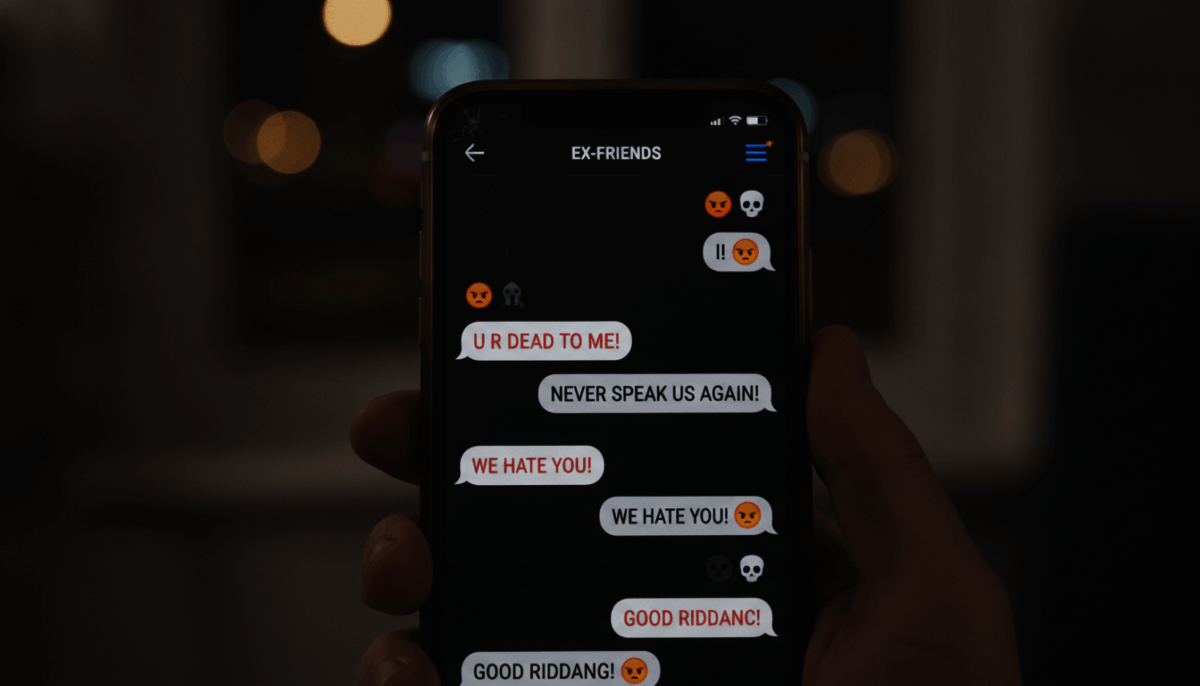
The day after our phone call, I was still shaking, unable to focus on my classes. I checked the family group chat, which had been silent for days. I saw a series of messages that I wasn’t supposed to see, or perhaps, they didn’t care if I saw them anymore. My parents were discussing the ‘success’ of the lawyer hire as if it were a business transaction, completely ignoring the fact that I was actively losing my housing.
My aunt, who had always been the golden child’s enabler, chimed in with encouragement, validating my parents’ decision to ‘take care of their own.’ It was a masterclass in gaslighting. They spoke about me as if I were a child throwing a tantrum over a lost toy, rather than someone whose entire financial security had just been vaporized in the name of a bar fight.
“She’ll get over it once the heat dies down. Besides, she has a scholarship for tuition. The money in that account was just for her ‘lifestyle’ expenses anyway. Jason needs this lawyer more than she needs extra cash.”
— My Mother, in the family group chat
Seeing my struggle reduced to ‘lifestyle expenses’ made me want to scream. I had worked two jobs during the summer and taken every extra credit hour I could handle just to ensure I wouldn’t have to borrow a dime. To see it dismissed so callously by the very people who were supposed to support my ambition was the final straw. I took screenshots of every message, a digital trail of their disregard that I knew I would eventually need.
The Campus Financial Aid Office Confrontation

I went to the university’s financial aid office the next morning, my eyes bloodshot from lack of sleep. I spoke to a counselor named Marcus, a kind man who had helped me navigate the scholarship application process three years ago. I laid out the situation as calmly as I could, showing him the bank statements and the messages. His expression shifted from professional courtesy to genuine concern.
He explained that while the scholarship covered tuition, the escrow account was intended to bridge the gap for essential costs like books, lab fees, and emergency travel. Without it, I was effectively stranded. He told me that there were emergency grants for students in crisis, but the criteria were strict, and my parents’ income levels technically disqualified me from most of them.
The irony wasn’t lost on me. My parents were ‘wealthy enough’ on paper for me to be ineligible for aid, but they were ‘desperate enough’ to steal my savings to pay for a high-profile criminal defense. I felt sickened by the bureaucracy of it all. I was a victim of a crime, yet the system saw me as a student who simply needed to ‘tighten her belt’ a bit more.
“I’m sorry, but we can’t hold your parents accountable for funds that are technically under their guardianship in a custodial account. Legally, they had the right to move those funds. There’s very little the university can do here.”
— Marcus, Financial Aid Counselor
That sentence was the death knell of my hope. I had assumed that because the money was ‘mine,’ there were legal protections. I was wrong. The account had been set up as a joint custodial account, a relic of my teenage years that I hadn’t thought to convert to a sole account when I turned eighteen. My parents had played the long game, waiting until the funds were substantial before pulling the rug out from under me.
The Sunday Dinner Where Everything Burned

I returned home that weekend, not to reconcile, but to retrieve the rest of my belongings and cut the final strings. The atmosphere in the kitchen was suffocating. My brother, Jason, was there, looking surprisingly composed, as if the legal drama wasn’t costing his sister her future. He didn’t even have the decency to look guilty; he was eating as if everything was normal.
I watched them for a while, feeling like an alien in my own childhood home. The house was spotless, the dinner was perfectly prepared, and the conversation was centered around Jason’s ‘legal strategy’ and how they were going to spin the story to the neighborhood gossips. They were actively constructing a reality where they were the victims, and I was just an inconvenient obstacle.
I finally spoke up, my voice cold and steady. I told them that I was moving my remaining bank accounts to a new bank, that I was changing my contact information, and that I would no longer be attending family events. My father slammed his fork down, his face reddening with a familiar, explosive anger. He told me that I was being ‘dramatic’ and that I owed it to the family to support my brother.
“You’re walking away from your family because of money? You have no loyalty. If you walk out that door, don’t expect a single cent from us ever again. You’ll be on your own.”
— My Father, mid-argument
I looked at him, truly looked at him, and realized I felt absolutely nothing. No anger, no sadness, just a profound sense of relief. I told him that I had been on my own since the day they decided my future was worth less than Jason’s bar fight. I gathered my bag, walked out the front door, and didn’t look back.
The Reddit Verdict: Echoes of Solidarity
I posted my story on Reddit that night, feeling desperate for some perspective—or just needing to vent. Within hours, the thread had exploded. Thousands of users were commenting, their outrage mirroring my own. It was a bizarre, cathartic experience, reading thousands of strangers tell me that I wasn’t crazy, that what had happened was a betrayal of the highest order.
Many users shared similar stories of financial abuse, or warned me of the legal avenues I might have overlooked. I sat there for hours, refreshing the page, reading the advice, and finding a strange kind of comfort in the collective anger of the internet. It wasn’t just about the money; it was about the validation that my boundaries were justified.
“NTA. Your parents are financial abusers. They didn’t just ‘borrow’ money; they stole your future to cover for their golden child’s criminal behavior. Keep the evidence, lock your credit, and go NC. You owe them nothing.”
— u/LegalEagle99, 15.2k upvotes
Seeing that top comment, with its thousands of upvotes, was the first time I felt like I could breathe properly in weeks. It wasn’t just my perspective; it was a clear, objective assessment of the situation. I wasn’t being ‘selfish’ or ‘unloyal.’ I was a victim of a crime, and I had every right to cut those people out of my life permanently.
The Financial Fallout and The Hard Pivot

Reality set in the following Monday. Without the escrow, I had to make drastic changes. I dropped two of my non-essential courses, picked up an extra shift at the library, and looked into private student loans. It was humiliating, and every time I had to sign a document for a loan, I thought of my parents and their ‘investment’ in Jason’s freedom.
I spent my weekends researching ways to earn extra cash, from freelance writing to campus research assistantships. It was exhausting, and there were days when I just wanted to quit everything and go hide. But every time I felt that urge, I remembered the sound of my father’s voice, dismissing my future as ‘lifestyle expenses,’ and the drive returned ten-fold.
I also took the advice of the commenters and froze my credit. I wanted to make sure they couldn’t cause any more damage. I moved all my accounts to a completely different bank, one that had no connection to my parents or their associates. I was building a new life, one brick at a time, and I was going to make sure that no one could ever touch my foundation again.
“I’m not working this hard to pay for your failures. I’m working this hard to make sure I never have to rely on you for anything ever again.”
— My internal mantra during the hardest shifts
It was a lonely process, but there was a quiet strength in it. I wasn’t just surviving; I was learning what I was capable of. I was learning that my resilience was worth more than the money they had stolen, and that my success would be the best revenge I could possibly achieve.
The Unexpected Legal Twist

A month later, I received a letter in the mail that stopped my heart. It was from a law firm, but not the one my parents had hired. It was a firm specializing in inheritance and custodial account disputes. A distant cousin, having heard whispers of the drama through the family grapevine, had decided to look into the legality of the transfer.
Apparently, the custodial account had specific stipulations about its usage, and my parents had violated the fiduciary duty they held as custodians. While I had been told by the university counselor that there was little to be done, this firm argued otherwise. They believed that because the money was explicitly designated for educational purposes, the use of those funds for a criminal defense was an illegal misappropriation of assets.
I felt a surge of hope, though I tried to remain cautious. The prospect of legal action was daunting, but the idea of holding them accountable was intoxicating. I scheduled a consultation, my head buzzing with the possibilities. Even if I didn’t get the money back, the act of fighting back felt like the closure I had been craving.
“We believe we have a strong case for breach of fiduciary duty. The documentation you have—the texts, the bank transfers, the intent—it’s all very compelling. We can pursue this aggressively.”
— Attorney Sarah Jenkins
The realization that I wasn’t powerless changed the entire dynamic of my situation. I wasn’t just a victim of a crime anymore; I was a litigant, a person with rights and a path toward justice. I knew it wouldn’t be easy, but for the first time since the theft, I felt like I was in control of my own narrative.
The Final Severance

I sent one final email to my parents, keeping it professional and cold. I informed them that I was aware of the legal implications of their actions and that I had secured legal counsel. I didn’t ask for the money back; I didn’t ask for an apology. I simply stated that all future communication would be handled through my attorney, and that any attempts to contact me directly would be considered harassment.
The response was immediate and frantic. My mother called me twelve times in one hour, and my father sent a series of threatening texts, calling me ‘ungrateful’ and a ‘traitor to the family.’ I blocked them all, one by one, watching the notifications pile up and then vanish. It was the most satisfying moment of my entire life.
I had finally crossed the line into complete independence. I had lost the money, but I had gained my own autonomy. The financial struggle was still there, but the emotional drain of worrying about their approval and their expectations was gone. I was finally, truly, on my own terms.
“You chose your priority. Now you have to live with the consequences of that choice. We are done.”
— My final message to my parents
Looking back, I realize that the theft of my scholarship money was the best thing that ever happened to me. It forced me to see my family for who they really were, and it pushed me to build a strength that I never knew I possessed. I wasn’t just a student anymore; I was a woman who knew her worth, and who would never let anyone set the price of her future again.
Reflecting on the Price of Loyalty

It has been six months since I walked away. My life is harder in many ways, but it is infinitely more peaceful. I’m still working my extra shifts, and I’m still navigating the maze of student loans, but I wake up every morning with a sense of pride that I never had before. I own my choices, my failures, and my successes.
I haven’t spoken to my brother, my parents, or any of the enablers in my family. I’ve heard through the grapevine that Jason’s case is still dragging on, and that the ‘celebrity lawyer’ is charging them even more than the initial retainer. My parents are apparently selling off some family heirlooms to keep up with the costs. It’s a bitter irony, but it’s not my concern.
I’ve learned that loyalty shouldn’t be a one-way street, and that family is not just a biological connection—it’s a group of people who support you when the world gets dark. My new ‘family’ consists of the friends I’ve made who stood by me, the professors who have become mentors, and the community of strangers who offered support when I was at my lowest.
“Sometimes the most important bridge you can burn is the one to your own past. It’s the only way to ensure you never walk back into the fire.”
— My personal reflection
I hope that by sharing my story, others who are trapped in toxic family dynamics will see that there is a way out. It’s not easy, and it’s often incredibly painful, but it is possible. You are worth more than the expectations of others, and your future belongs only to you.
Conclusion
The story of my family’s betrayal has become more than just a personal grievance; it has become a reminder of the fragility of trust and the importance of financial literacy. I share this not for sympathy, but for awareness. When the people you are supposed to trust most weaponize your own hard work against you, the only logical response is to take your future back into your own hands.
I remain in a state of low-to-no contact, focusing entirely on my academic goals. The legal process is ongoing, but the outcome is no longer my primary focus. My focus is on the degree I am earning, the life I am building, and the boundaries I have erected to protect my peace. I am, for the first time, the primary architect of my own destiny.
If you have ever faced a similar situation—where family has prioritized one member’s reckless behavior over another’s academic or personal future—I urge you to seek legal counsel, protect your assets, and prioritize your own well-being. It is not an act of malice to demand basic respect for your labor and your future.
What is your take on this dilemma? Should family ever come before personal financial independence, or is there a line that should never be crossed? Let’s debate in the comments below.
What's your verdict on this dilemma?
Vote below to contribute to the official community consensus.

Have a Dilemma Keeping You Up at Night?
Share your real-life feud, wedding chaos, or relationship crossroads anonymously with our editorial team.
What do you think ?
0 Comments🛡️ Comments are moderated to protect community integrity. Your comment will appear once approved by the editorial team.