

Growing up, the word ‘contribution’ in my family always meant ‘sacrifice’—specifically, mine. My parents, successful in their own right, operated under the unspoken assumption that my hard-earned assets were communal property while their favorite child, my stepbrother Jason, remained a perpetual project. I bought my condo at twenty-four, working three jobs and living on ramen to secure a mortgage I paid off in record time. It was my sanctuary, my investment, and my hard-won independence.
The trouble began on a Tuesday, during a dinner that felt far too orchestrated. My stepmother, usually cool and composed, cleared her throat before dropping the bomb: Jason, after his latest failed business venture and a messy eviction, needed a place to ‘reset.’ And since my condo was ‘sitting empty’—a flat-out lie, as I lived there—I was expected to host him indefinitely. They didn’t ask; they told.
The moral dilemma they presented was framed as family loyalty. ‘He’s family,’ my father argued, his voice dripping with the condescension of a man who hasn’t had to worry about rent in decades. ‘You’re selfish for wanting a private space while your brother sleeps on a couch.’ They didn’t see a woman protecting her property; they saw a resource waiting to be reallocated.
I realized then that reasoning was a fool’s errand. They didn’t want a compromise; they wanted compliance. So, I nodded, smiled, and played the part of the obedient daughter while mentally drafting a contingency plan that would render their ultimatum entirely moot.
This is the story of how I turned their entitlement against them, the legal maneuvers that left them speechless, and the firestorm that ensued when the ‘official’ lease agreement hit their inbox. It’s a story about what happens when you decide that blood is not, in fact, thicker than your own peace of mind.
The Tuesday Night Ambush

The dinner table was set with fine china, the kind we only used when my parents wanted something expensive. I felt the tension before the salad was even finished. My father kept glancing at my stepmother, a nervous tick I had learned to identify years ago. When the topic finally turned to Jason, the air in the dining room became heavy and suffocating.
Jason, who had spent the last three years burning through inheritance money and starting ‘startups’ that sold nothing but hot air, was apparently at rock bottom again. The plan, as my stepmother laid it out, was simple: I would move back home to their guest room, and Jason would take over my condo in the city. They promised to ‘cover’ my utilities, as if that were a generous concession for stealing my home.
“It’s only temporary, dear. Jason needs stability to find his footing, and your condo is just too big for one person anyway. It’s the responsible thing for family to do.”
— Stepmother during dinner
I looked at them, truly looked at them, and saw the entitlement radiating off their faces. They didn’t see my condo as a home; they saw it as a storage locker for their failed son. I stayed calm, sipping my wine, knowing that if I erupted, I would be the ‘unreasonable’ one. I needed time to make sure they couldn’t force my hand.
I asked questions. I feigned interest in the timeline. I asked about the lease, about the duration, about the ‘logistics.’ They were so delighted by my perceived compliance that they didn’t notice the cold, calculated distance in my eyes. I was already miles ahead of them, mentally drafting the contract that would save my life.
By the time I left their house that night, they were beaming with a self-satisfied glow. They thought they had won. They thought I was the same girl who had given up her childhood bedroom for guests, the same girl who had always been the ‘flexible’ one. They had no idea that the girl had left the building years ago.
The Legal Pivot

The next morning, I didn’t go to work. I went to a property lawyer. I had three years of documentation regarding the condo: proof of purchase, tax records, and a detailed list of every major repair I had funded out of pocket. My goal was simple: ensure the property was shielded from any claim my parents might think they had, and create a iron-clad barrier that no amount of family guilt could penetrate.
I knew my father’s patterns. He would try to force a ‘gentleman’s agreement.’ He would try to talk me out of a lease because ‘family shouldn’t have contracts.’ I needed a tenant, and I needed one fast. I didn’t just want anyone; I wanted a corporate housing agency that specialized in long-term executive rentals. They were professional, they paid on time, and they didn’t care about my family’s drama.
I found a firm that specialized in long-term corporate leases. The terms were non-negotiable: five years, paid up front for the first year, with strict penalties for early termination. It was the antithesis of a ‘family favor.’ It was business. By noon, the contract was ready for my signature. My hands didn’t shake once.
“You understand that once this is signed, you are legally obligated to provide the premises to these tenants? There is no backing out, even for family.”
— My Attorney
I signed the paper with a flourish. It was the most satisfying thing I had ever done. The condo was no longer ’empty’ space they could occupy; it was a legally encumbered asset managed by a third party. I felt a weight lift off my chest that I hadn’t realized I was carrying.
I sent the notice of the lease to my parents via email, not a text. I wanted it documented. I wanted there to be no ambiguity about my decision. I was ‘so sorry’ that I hadn’t been able to facilitate their request, but as it turned out, I had already finalized a long-term agreement that was currently in the processing phase. The lie was necessary, and in that moment, it felt like a survival tactic.
The Group Chat Explosion
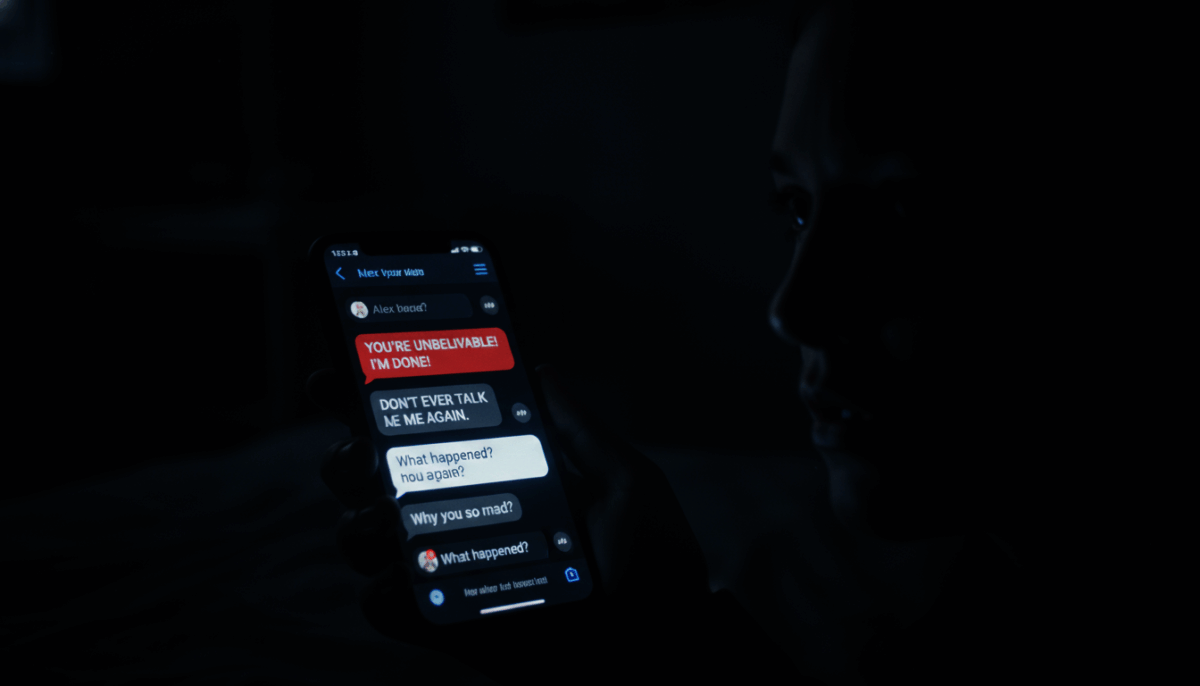
The fallout was instantaneous. My phone lit up with notifications, the family group chat vibrating on my desk like an angry insect. My stepmother was the first to comment, her tone shifting from ‘sweet’ to ‘furious’ in the span of a single message. The accusations of betrayal and selfishness flew fast and heavy, filling the screen with a cascade of red-faced emojis.
“Are you kidding me? You signed a lease behind our backs? You would choose strangers over your own brother? This is a level of cold-blooded selfishness I never expected from you.”
— Stepmother via WhatsApp
My father chimed in shortly after, his tone more ‘disappointed patriarch’ than aggressive. He talked about ‘legacy’ and ‘family values,’ as if those concepts applied only when they benefited him. I didn’t respond to the emotional bait. I kept my replies short, professional, and detached. I was no longer a participant in their melodrama; I was a bystander observing their tantrum.
They threatened to ‘do something’ about it. They threatened to involve lawyers, as if they had a legal leg to stand on regarding a property they didn’t own. It was laughable. My father even called my workplace to try and track me down, which only cemented my decision to go low-contact. The boundary had been set, and their reaction only proved why it was necessary.
My friends were stunned, then supportive. One of them, who had seen me struggle through those three jobs to buy the place, told me I was a hero. Others warned me about the ‘nuclear’ option. I knew the risk. I knew that by setting this boundary, I was likely forfeiting my ‘good daughter’ status for the foreseeable future. But the trade-off was my autonomy.
I spent the night blocking their numbers and silencing the group chat. Every buzz of the phone was a reminder of why I had to do this. The, as the night grew quiet, I felt a sense of peace that had been absent for months. I had won the battle, but I knew the war was just beginning.
The Unannounced 6:00 AM Intrusion

Three days later, I was woken by a relentless banging on my front door. It was six in the morning, and the gray light of dawn was just starting to filter through the blinds. I looked through the peephole to see my father, looking disheveled and frantic, with Jason standing behind him, looking like he had just rolled out of a gutter. I didn’t open the door.
I spoke through the wood, my voice steady. I told them that if they didn’t leave, I would call the police. My father was shouting, claiming he had a ‘right’ to be there because he was my father. He talked about how I was ‘ruining’ Jason’s future. It was pathetic, watching a grown man beg for a space that wasn’t his, using his son as an excuse for his own entitlement.
“Open the door! This is ridiculous! We just want to talk about how to fix this mess. Don’t be a child!”
— Father shouting through the front door
I called the police, not because I was terrified, but because I needed a paper trail. When the officers arrived, they were professional but clearly annoyed at the early morning drama. They listened to my father’s blustering and then calmly informed him that he was trespassing and needed to leave. Seeing my father escorted away by an officer was a moment of profound, bitter clarity.
Jason didn’t say a word. He just stood there, his shoulders hunched, looking at the floor. He was a man-child who had been enabled into a state of total helplessness, and for the first time, I felt a flicker of genuine pity for him. But that pity didn’t change the locks, and it didn’t change the lease. The condo was no longer accessible.
After they left, I sat on my kitchen floor, drinking coffee and watching the sun rise properly. The house was silent, safe, and entirely mine. The trauma of the encounter was real, but so was the relief. I knew they would try again, but they would find the walls were much thicker than they anticipated. I was done being the family doormat.
The $1,400 Restaurant Bill Left on the Table

A week later, I received an invitation to a ‘family reconciliation’ dinner at an upscale restaurant downtown. I should have declined. I should have known better. But part of me, a small, foolish part of me, wondered if they had actually processed the reality of the situation. I went, dressed in my best, prepared for a conversation, not a fight.
The dinner was a disaster from the moment I sat down. The atmosphere was brittle, like thin ice over a deep, dark lake. My parents had invited a family friend—someone they assumed would act as a mediator—but who turned out to be an audience for their performance of victimhood. They spent the entire appetizer course listing all the ways I had ‘failed’ the family.
When the bill came, my father made a grand show of it. He didn’t just ask for the bill; he made a spectacle of paying for it, sliding the $1,400 check across the table toward me, then pulling it back at the last second, smirking. It was a power move, a pathetic attempt to show me that he still controlled the resources I supposedly lacked.
“You think you’re so independent, but you’re still sitting at our table. You still need us, even if you’re too proud to admit it. Let’s make a deal: you void the lease, and we pay your student loans. Simple.”
— Father during dinner
I didn’t blink. I stood up, left the money for my own meal on the table, and walked out. I didn’t look back to see their faces. I felt no anger, only a crushing sense of disappointment. They couldn’t negotiate because they didn’t know how to see me as an equal. They only saw a child to be bribed or punished.
Walking out of that restaurant felt like shedding an old skin. The walk to my car was cool and refreshing. I drove home, played my favorite music, and realized that for the first time, I didn’t care what they thought. The $1,400 they spent on the meal was a small price to pay for the confirmation that I would never, ever go back to their version of ‘family.’
That night, I sent a final email. It wasn’t angry. It was clinical. I told them that I would be taking a hiatus from all family contact until further notice. I didn’t ask for permission. I didn’t ask for understanding. I just closed the door on the relationship, knowing it was the only way to heal.
Reddit Weighs In: The Verdict of the Internet

I posted my story on a popular forum, expecting to be told I was overreacting. I needed a sanity check. Within minutes, the post blew up. The sheer volume of comments was overwhelming. The internet, for all its flaws, was surprisingly clear about where the moral lines were drawn. The consensus was overwhelming: I was in the right.
“You didn’t just protect a condo; you protected your future. Your parents have been training you to be a doormat since birth, and you finally stopped the cycle. NTA, all the way.”
— u/ReasonableObserver (Top Comment, 32.1k upvotes)
It was fascinating to read the perspectives. Some people shared similar stories of entitled parents and the trauma of growing up in a house where your needs were always secondary. Others provided legal insights into why my decision to sign the lease was the most effective protection I could have chosen. It validated every choice I had made, even the ones I had doubted.
Of course, there were the contrarians. There were those who argued that ‘family is everything’ and that I was being cruel to my brother. Those comments were quickly downvoted by the community. It felt good to see the shift in cultural attitude—the recognition that children do not owe their parents or siblings their own stability, especially when that ‘family’ is exploitative.
I spent hours reading through the replies. Some were funny, some were deeply moving, and some were just plain angry on my behalf. It was a strange, collective hug from thousands of strangers who understood exactly what I was going through. It reminded me that while my family was toxic, I was not alone in my experiences.
The discussion also helped me identify the patterns of manipulation I had been living with. By seeing them laid out in the comments of others, I could finally name them: ‘guilt-tripping,’ ‘gaslighting,’ ‘financial abuse.’ It was like looking at a map of a place I had been lost in for years. I finally had the vocabulary to describe my trauma, which was the first step toward moving past it.
The Certified Letter That Changed Everything
A month of silence later, a certified letter arrived. It was from my father’s attorney. They were threatening to sue me for ‘breach of verbal agreement’—a laughable concept—and claiming that I had defrauded them by signing the lease. It was a desperate, thrashing attempt to regain control. I read it, laughed, and handed it to my own lawyer.
My attorney drafted a response that essentially told them to pound sand. It pointed out that their claims were baseless and that any further harassment would result in a formal restraining order. It was the legal equivalent of a closed door, and it was glorious. The letter went out, and the silence that followed was heavy and final.
I imagine my father throwing the letter across the room. I imagine the frustration of a man who has spent his life getting his way, only to find that his ‘assets’ had finally stood up to him. He was dealing with a version of me that he hadn’t created and couldn’t control. It was the most empowering realization of my entire adult life.
“We have reviewed the letter from your council. Please be advised that any further communication should be directed through this office. Any attempts at direct contact will be documented for legal purposes.”
— Response letter draft from my attorney
The incident also brought Jason out of the woodwork one last time. He sent me a text, not asking for the condo, but asking for money. He claimed he was ‘homeless’ and that it was all my fault. I didn’t reply. I just screenshotted the message, added it to the folder of evidence for my lawyer, and blocked the number again.
The certified letter was the last time they tried to use the law against me. They realized, perhaps, that I was no longer a child to be bullied, but an adult with resources and a will to protect myself. The power dynamic had shifted, and there was no going back.
Finding My Own Sanctuary

With the legal threats behind me, I moved into a smaller, quieter apartment across town. It wasn’t the condo I had worked so hard for, but it was mine in a way that the condo had never been. The condo was an investment, a symbol of my success, but this new place was a home—a place where I could breathe, relax, and be myself without fear of intrusion.
I started a new hobby: gardening. I filled the balcony with plants, creating a small, green oasis that was entirely for me. It was a metaphor for my life: I was cultivating, nurturing, and protecting my own growth, away from the weeds of my family’s expectations. I was happy, and for the first time, I wasn’t waiting for the other shoe to drop.
I reconnected with friends I had pushed away during the height of the drama. I started traveling, taking the money I had once earmarked for ‘family emergencies’ and spending it on experiences that enriched my life. I was becoming the person I had always wanted to be, free from the shadow of my parents’ disappointment.
The silence of my family was still there, but it no longer felt like a void. It felt like space. It was the space to be myself, to make my own mistakes, and to own my own successes. I wasn’t just surviving; I was thriving. And every day, I thanked the version of me that had the guts to sign that lease.
Looking back, I realize that the conflict wasn’t about the condo. It was about autonomy. They wanted me to be a part of their narrative, a supporting character in their story. By signing that lease, I had started writing my own, and it was a story where I was the protagonist, the owner, and the final decision-maker.
Reflecting on the Cost of Boundaries

Setting boundaries with family is never easy. It comes with a price—the loss of the idealized version of them, the grief of a relationship that never truly existed, and the social stigma of being the ‘difficult one.’ But as I sit here now, I know that the cost of *not* setting those boundaries was far higher. It would have cost me my home, my sanity, and my self-respect.
I learned that family is not a status that entitles someone to your resources. It’s a relationship that requires mutual respect and boundaries. When those are violated, the title ‘family’ becomes nothing more than a label. I stopped trying to ‘fix’ my parents, and in doing so, I finally fixed myself.
The process was grueling, but it was necessary. It taught me that I am capable of standing up to the people who hold the most power over my life, and that I can survive the consequences. It taught me that my needs are not ‘selfish’ and that my boundaries are not ‘unreasonable.’ They are the foundation of my life.
“Boundaries aren’t walls to keep people out. They’re gates to protect what’s sacred. You did the right thing by locking your gate.”
— A comment from a fellow reader
I still feel a pang of sadness when I think about what could have been, but it’s a healthy, grieving kind of sadness, not the sharp, agonizing pain of betrayal. I’ve accepted them for who they are: people who are incapable of seeing me as anything other than a resource. And that’s okay. They don’t have to be in my life for me to be whole.
I am grateful for the journey, for the hard lessons, and for the strength I found within myself. I am the owner of my life, the gatekeeper of my sanctuary, and the author of my story. And that is enough.
Lessons in Radical Self-Preservation

If there is one thing I want others to take away from my story, it is this: do not wait for permission to protect your peace. You don’t need your parents’ or siblings’ approval to make decisions about your own property, your own money, or your own time. If you find yourself in a position where you are being coerced, manipulated, or exploited, know that you have the right to say no—and you have the right to enforce that ‘no’ with whatever means necessary.
Don’t be afraid to be the ‘villain’ in their version of the story. If being the villain means you get to keep your home, your money, and your sanity, then wear that label with pride. Their version of the story is just a projection of their own insecurities and failures. It has nothing to do with who you actually are.
Trust your instincts. If something feels wrong, if you feel pressured, if you feel like you’re losing yourself, listen to that feeling. It’s your inner voice telling you that the boundary is being crossed. Don’t rationalize, don’t bargain, and don’t try to explain yourself to people who have already decided they don’t care about your perspective.
Invest in your own legal and financial security. Know your rights. Keep your documentation. Have a plan for when the people you love decide to turn against you. It sounds cynical, but it’s just being prepared for the reality of human nature. You are the only person who is going to look out for you, so make sure you are doing it effectively.
Finally, remember that you are not alone. There is a whole community of people who have been through the same things, who have felt the same guilt, and who have come out the other side stronger and happier. Reach out, find your tribe, and know that your story, no matter how difficult, is a story worth telling.
Conclusion
Looking back, the decision to lease my condo to strangers wasn’t just a business move—it was a declaration of war against the expectation that my success was a family commodity. By choosing to prioritize my own future, I was forced to face the harsh reality that my family valued their convenience over my security. While the fallout was painful, it provided the clarity I needed to cut the ties that had been anchoring me to a cycle of exploitation.
Today, I am thriving in a new space, one that is entirely mine. My parents have reached out, but I have remained firm in my boundaries. I am no longer interested in the ‘family reconciliation’ theater. I have found my own path, and it is paved with the peace of mind that comes from knowing I am in control of my own life.
What about you? Have you ever had to make a ‘cold-blooded’ decision to protect your boundaries, only to be branded the villain? Do you believe blood ties should ever override personal property rights, or is a boundary always a boundary, regardless of the relationship? Share your stories below—the comment section is the safest place to vent about those family members who don’t know the meaning of the word ‘no.’
What's your verdict on this dilemma?
Vote below to contribute to the official community consensus.

Have a Dilemma Keeping You Up at Night?
Share your real-life feud, wedding chaos, or relationship crossroads anonymously with our editorial team.
What do you think ?
0 Comments🛡️ Comments are moderated to protect community integrity. Your comment will appear once approved by the editorial team.