
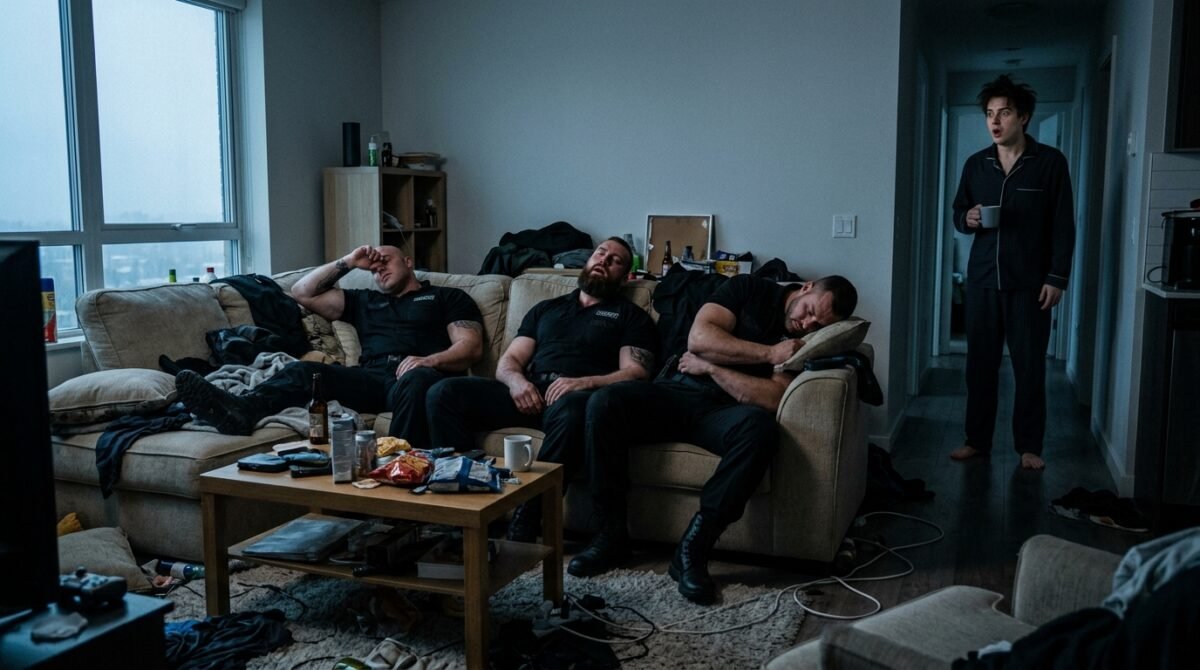
When I signed the lease with Marcus, I thought I was securing a quiet, professional living situation. We were both working full-time jobs, and the apartment was a standard two-bedroom setup in a respectable part of the city. For the first six months, everything was unremarkable. We split the bills, cleaned the kitchen on rotating Saturdays, and exchanged polite pleasantries before retreating to our respective rooms. I had no idea that beneath this veneer of normalcy, Marcus was harboring a desperate, greedy secret that would eventually turn my sanctuary into a revolving door of absolute chaos.
It started with subtle changes. Marcus began leaving the front door unlocked, claiming he was ‘expecting a package’ or ‘just running out to grab a coffee.’ I noticed small items disappearing—my spare set of kitchen knives, a decorative throw blanket, and eventually, the subtle smell of stale beer and cheap cologne clinging to the upholstery in our shared living room every morning. I chalked it up to his social life, thinking he was just having friends over when I was asleep. I was completely wrong.
The moral dilemma here isn’t just about the lack of respect for my living space; it is about the fundamental violation of safety and trust. When you share a home, the walls that separate your private life from the public sphere are sacrosanct. By turning our living room into an unlicensed, dangerous hostel for strangers he met at the nightclub where he worked security, Marcus didn’t just break our lease agreement—he endangered my physical wellbeing.
This is the story of how I went from being a naive roommate to a detective in my own home, tracking the movements of three hulking nightclub bouncers I discovered sleeping on my living room sofa at 4:00 AM. It is a story of gaslighting, financial exploitation, and the eventual, explosive confrontation that tore our living situation apart. If you think your roommate situation is bad, wait until you hear about the ‘Guest Rental Program’ I never signed up for.
The Morning I Found Three Strangers in My Living Room
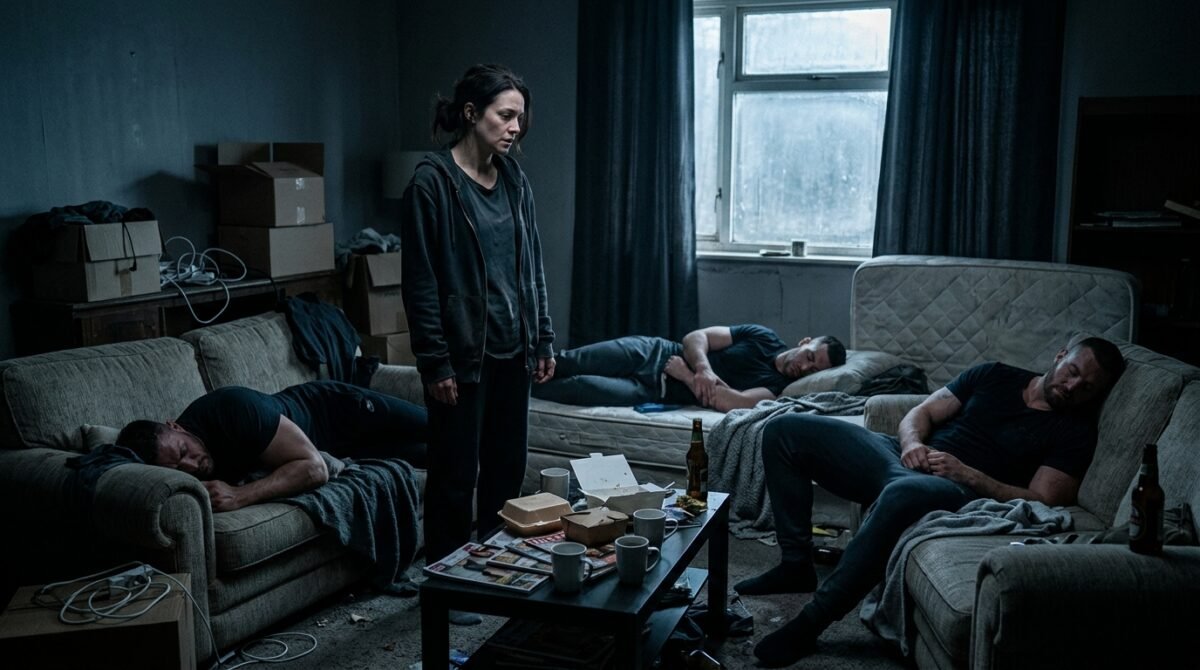
It was a Tuesday morning, typically the quietest day of the week, when I stumbled out of my bedroom at 5:30 AM to grab a glass of water. The hallway was dark, but as I turned the corner into the living room, I stopped dead in my tracks. The sight was surreal: three massive, hulking men, all wearing tight black t-shirts and heavy boots, were splayed across our L-shaped sofa and the floor in front of it. The smell of sweat and cigarette smoke was overpowering, a sharp contrast to the air purifier I usually kept running.
I didn’t scream, but my heart was pounding so hard I could hear the thumping in my ears. I retreated to my room and locked the door, my hands trembling as I pulled out my phone. I saw a text from Marcus sent at 11:00 PM the previous night: ‘Hey, some work friends are crashing on the couch. Don’t mind them.’ That was the entire message. It felt casual, almost dismissive, but the sight of these men—men who looked like they spent their nights breaking up bar fights—made my blood run cold.
“Marcus, I just walked into the living room. Who are these people? There are three grown men sleeping on our couch. This is absolutely not okay. You didn’t ask me if I was comfortable with this.”
— Sent by OP to Marcus, 5:45 AM
I sat on the edge of my bed for an hour, listening to the muffled snoring coming from the next room. I felt a surge of rage, not just at the intrusion, but at the audacity of the assumption. Marcus didn’t treat me like a roommate; he treated me like an inconvenience that could be bypassed for extra cash. I realized then that this wasn’t just a one-off party occurrence. The way these men had laid out their gear—duffel bags tucked neatly, shoes aligned—suggested this was a routine operation.
When the sun finally began to rise, I heard the men stirring. They didn’t even try to be quiet. I heard one of them complaining about the ‘lumpiness of the couch’ and another laughing about how ‘the guy said he’d have a fresh pot of coffee.’ They were treating my home like a cheap motel. I waited until they finally shuffled out the front door, leaving behind a trail of empty energy drink cans and a layer of dirt on our rug, before I marched into the kitchen to confront Marcus.
Marcus walked out of his room a few minutes later, looking entirely unbothered, as if he hadn’t just compromised our security. He reached for the coffee pot, whistling under his breath, completely ignoring the fact that I was standing there, arms crossed, vibrating with fury. The level of entitlement he displayed was so profound it bordered on delusional. He looked at me, smiled, and said, ‘Morning, roommate. Rough night?’ as if we were just two buddies who had watched a movie together.
The Financial Trail of the ‘Bouncer Bed & Breakfast’

After the initial shock wore off, the detective in me took over. I started paying attention to the small details. I noticed that every time I wasn’t home, Marcus was likely hosting someone else. I began checking the trash and found receipts for things I didn’t buy: bulk snacks, disposable toiletries, and cleaning supplies. I realized that my own cleaning supplies were being depleted at an alarming rate. I decided to dig deeper, and that’s when I found his ‘accounting’ app open on his laptop while he was in the shower.
It wasn’t just a one-time thing. There was a ledger labeled ‘Side Hustle’ with dates, names, and dollar amounts. He was charging his fellow bouncers $50 a night to crash in our living room. Some of them stayed for two or three nights at a time. I started doing the math in my head, and I nearly fainted. He had been doing this for at least four months. That was thousands of dollars in rent that he had collected, essentially using my shared space to profit while I paid half the utilities.
“I saw your spreadsheet, Marcus. $50 a night? You are literally renting out our living room to strangers and keeping the profit. Do you have any idea how illegal and dangerous this is? You are putting me at risk for your side gig.”
— OP confronting Marcus
Marcus didn’t even deny it. He just shrugged and said, ‘It’s a shared living space. I’m just making the most of it.’ He argued that because he pays rent, he has the right to use the living room however he sees fit. He completely ignored the concept of a shared contract or the reasonable expectation of privacy. He had convinced himself that because he was the one who ‘found’ the apartment, he was entitled to manage it as he saw fit.
I pulled up our lease agreement on my phone and showed him the section about subletting and unauthorized guests. He just laughed. He told me that our landlord never checked on us and that as long as the rent was paid on time, it didn’t matter who slept on the couch. He was so detached from reality that he didn’t see the risk of eviction or the liability of having strangers in the house. He actually argued that he was ‘helping out’ his friends who lived too far away to commute after closing time.
The audacity grew with every passing day. He started becoming more aggressive about his ‘right’ to host these men, even when I told him I had people coming over for dinner. He would tell me that I was being ‘selfish’ and ‘uptight.’ He made me feel like the weird one for wanting to live in a secure apartment without a rotating cast of nightclub security staff passing through my living room every single night.
I started taking photos of the debris they left behind—the half-eaten food, the muddy footprints, the cigarette butts I found on the balcony. I needed proof. I didn’t know what I was going to do with it yet, but I knew that Marcus was the kind of person who would gaslight me into believing I was crazy if I didn’t have documentation. The house was becoming a battleground, and I was losing my mind, one stranger at a time.
The Group Chat Exposure
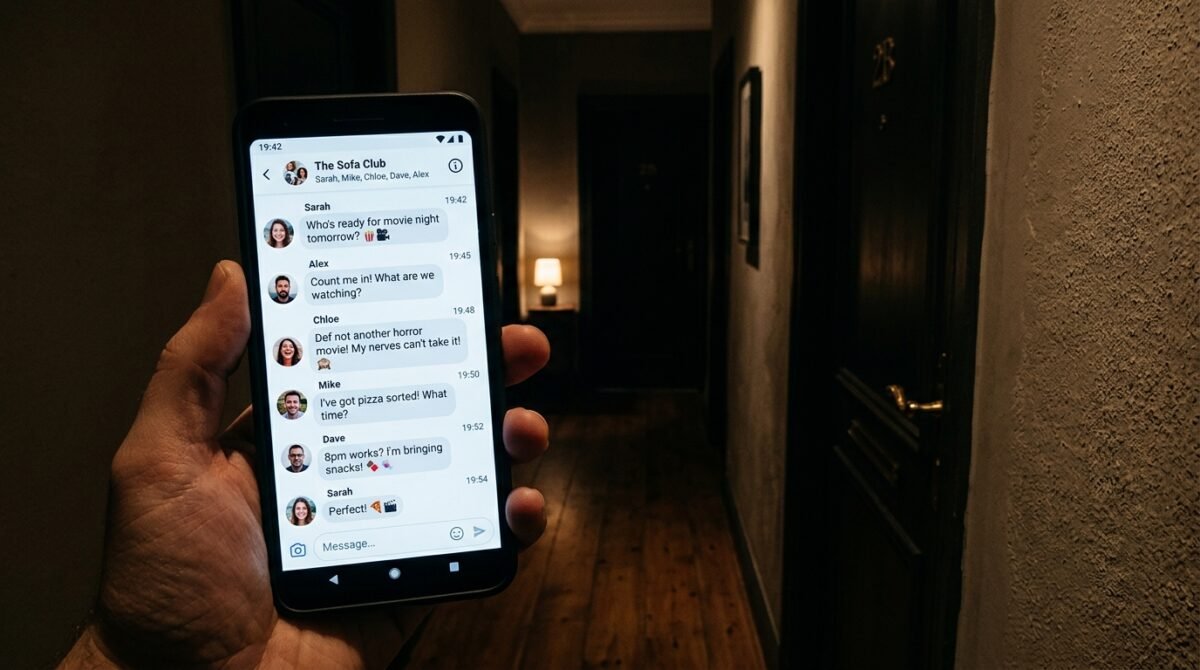
The tipping point came when I was accidentally added to a WhatsApp group called ‘The Sofa Club.’ It was clearly meant for the bouncers, but Marcus had accidentally added me instead of his friend. My phone started vibrating non-stop with messages about availability, pricing, and specific requests for ‘early check-in’ and ‘late check-out.’ It was an entire reservation system I hadn’t known existed.
“Hey, any chance I can swing by at 3 AM? My shift ends late tonight and I really don’t want to drive home. Also, is the couch taken on Friday? My cousin is visiting.”
— Message in the ‘Sofa Club’ group chat
I sat there, scrolling through months of messages, my jaw hitting the floor. These people weren’t just Marcus’s friends; some of them were guys he barely knew, friends of friends, people he was vetting through a quick text. They were discussing our apartment as if it were a public hostel. One guy even asked if there was a key under the mat, and Marcus replied, ‘Yeah, just don’t let the other roommate see you.’ My heart sank. He was actively hiding me from them.
I didn’t leave the group immediately. I took screenshots of everything—every conversation, every booking, every mention of the ‘secret’ entry method. It was undeniable proof of his breach of contract and his complete disregard for my safety. I felt a cold, hard resolve settle in my stomach. I wasn’t just going to have an argument; I was going to terminate this entire arrangement. I needed to act fast before I woke up to something even worse.
I waited until Marcus came home that evening. He looked tired, likely after a long shift at the club. I didn’t even give him a chance to say hello. I just handed him my phone, open to the chat history. His face went pale. He tried to grab the phone, but I pulled it back. He started stammering, trying to make excuses, but the evidence was too overwhelming to spin. He looked like a cornered animal, realizing that his little business venture had just imploded.
He told me I was ‘snooping’ and that it was a ‘privacy violation’ to look at his phone. I laughed in his face. I told him that the only privacy violation here was the one he committed against me by inviting strangers into our shared home. The tension was so thick I could barely breathe. He realized that this wasn’t just a roommate spat anymore; he had crossed a legal and personal line that couldn’t be uncrossed.
I told him he had 48 hours to vacate or I would be contacting our landlord and the local authorities. He scoffed, thinking I wouldn’t actually do it because it would mean I’d have to move out too. He didn’t understand that at this point, I would rather live in a tent than spend another night in a house that felt more like a public train station than a home. His arrogance was his undoing, and I was watching it happen in real-time.
The Confrontation of a Lifetime
The next day was the longest of my life. Marcus tried to play it cool, acting like nothing had happened, but the silence in the apartment was deafening. Every time I saw him, he looked at me with a mix of fear and resentment. He tried to strike up a conversation a couple of times, asking if I was ‘really going to be that dramatic,’ but I ignored him entirely. I had reached a state of cold, clinical detachment. I was already mentally packed.
Around noon, the doorbell rang. I opened it to find one of the bouncers, a guy named Dave, looking confused. ‘Hey, Marcus said I could crash here for a nap before my night shift?’ he asked, completely oblivious to the fact that I was already in the process of dismantling the operation. I looked him straight in the eye and said, ‘There is no more crashing here. Marcus is being evicted, and you should probably find somewhere else to nap.’ He looked stunned, muttered an apology, and left.
“I am not doing this, Marcus. I am calling the landlord in one hour. If you want to avoid a legal mess, you will start packing your things now. You have turned our home into a business without my consent, and you have put us both in danger.”
— OP to Marcus
Marcus came sprinting out of his room, furious. He started shouting, calling me names, and telling me I was ruining his life. He accused me of being a ‘narc’ and said he was just trying to pay his share of the bills. It was the classic ‘victim’ act. He tried to pivot the conversation to how I wasn’t ‘supportive’ of his financial goals. I didn’t even flinch. I just stood there, looking at him with utter indifference, which clearly infuriated him even more.
He tried to threaten me, saying he wouldn’t pay his half of the rent for the final month if I told the landlord. I told him that if he didn’t pay, I would take him to small claims court and present the ledger I found. That shut him up pretty quickly. He knew that the ledger was evidence of taxable income he likely hadn’t reported, and the last thing he wanted was the government looking into his ‘side business.’ He realized he had no leverage, and for the first time, he looked genuinely terrified.
The rest of the afternoon was spent in a flurry of activity. He started shoving his clothes into suitcases. I helped him by holding the door open. There was no conversation, no closure, just the sound of a zipper closing and the thud of heavy boxes being moved. I felt a weight lifting off my shoulders with every box he took out of the apartment. It was the most satisfying thing I had ever experienced.
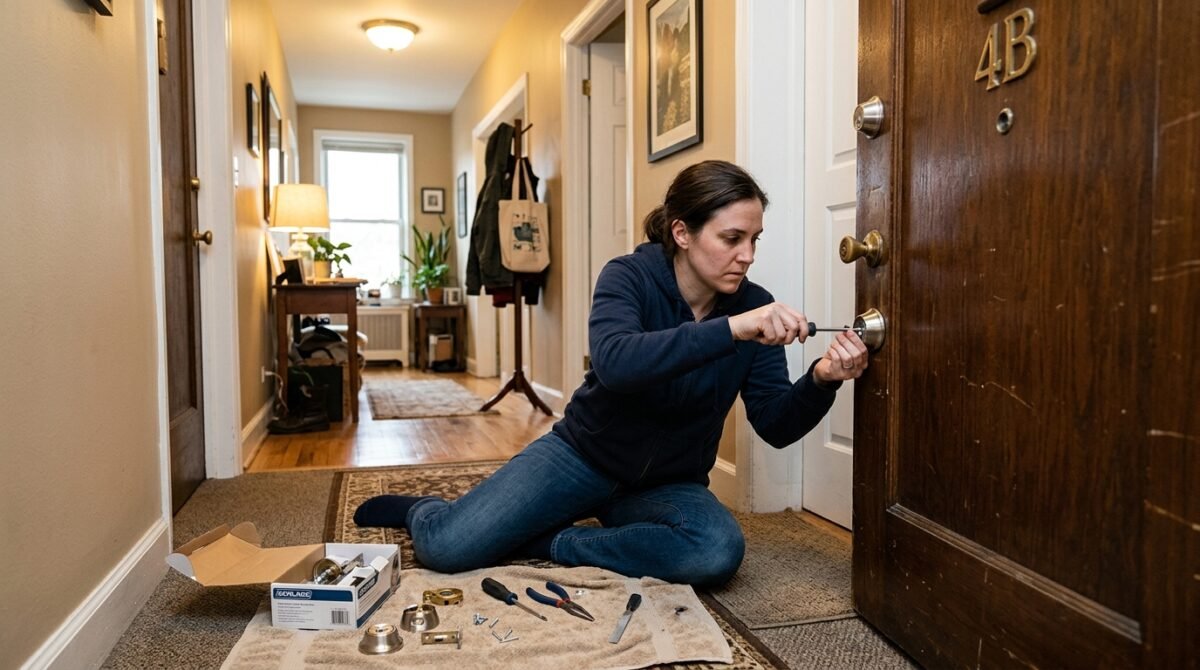
By evening, the apartment was empty, except for my own things. The place felt clean, quiet, and most importantly, safe. I spent the night changing the locks, feeling a profound sense of relief. I had won, but I was also exhausted. I realized how much energy I had spent just maintaining my own sanity while living with someone who had zero respect for boundaries. It was a lesson I wouldn’t soon forget.
The Aftermath and the Landlord’s Reaction
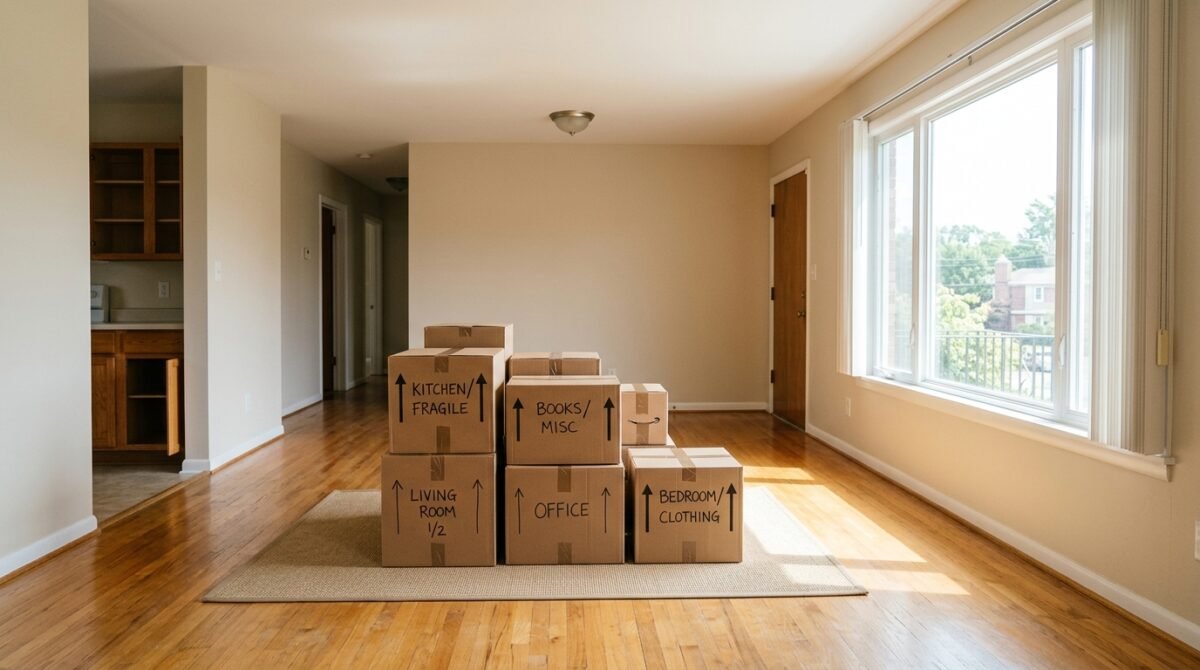
The following morning, I called our landlord. I was terrified of how he would react—after all, I was technically living in a unit that had been used as a short-term rental. I braced myself for an eviction notice. I explained everything clearly: the bouncers, the secret booking system, the potential liability issues, and the fact that Marcus had been running this operation without consent. I even sent him the screenshots I had taken from the WhatsApp group as evidence.
The landlord’s reaction was surprisingly calm, though clearly furious at the situation. He told me he was glad I had come forward before something worse happened. He said that insurance would have been voided if something had happened to one of those men in the apartment. He thanked me for my honesty and agreed to let me break the lease early without any penalties, provided I helped him document the damage to the living room and the kitchen.
“I appreciate you coming forward. This is a severe breach of the lease, and frankly, a liability nightmare. You’re free to go, and I will be pursuing Marcus for the damages to the unit. You handled this very professionally.”
— Landlord’s email response
It felt like a huge burden had been lifted. The landlord came by a few days later, and we did a walkthrough. He was shocked at the state of the living room. There were deep gouges in the hardwood floors where the bouncers had dragged their heavy gear, and the couch was essentially ruined from the constant use. He told me that Marcus was going to have a very difficult time finding another place to rent in this city after this.
I felt a strange mix of emotions. I was happy to be leaving, but I was also saddened by how quickly a friendship—or at least a civil living arrangement—had disintegrated. I realized that I didn’t really know Marcus at all. He had been a stranger to me even before he started renting out the couch. The experience taught me that being ‘roommates’ is about more than just splitting the bills; it’s about shared values and mutual respect.
I spent the next two weeks moving out. It was a cathartic process. I left behind the furniture that Marcus had brought in, and I took everything that was mine. I made sure the place was spotless when I handed over the keys. I wanted to leave on good terms with the landlord, and I felt like I had done the right thing. The silence in the empty apartment was the most beautiful thing I had ever heard.
I never heard from Marcus again. I heard through mutual acquaintances that he had moved back in with his parents and was still working at the nightclub. I didn’t feel the need to reach out or to check on him. He had made his choice, and he had to live with the consequences. My life was moving in a different direction, and I was ready to start over in a place where I was the only person in control of the living room sofa.
Internet Verdict: The Reddit Community Weighs In

When I finally posted my story on a popular forum, I didn’t expect the response I got. Within hours, the thread had thousands of comments, with people from all over the world weighing in on the insanity of my living situation. Most of the community was horrified, with many people sharing their own stories of nightmare roommates. It was validating to know that I wasn’t the only one who had dealt with such a blatant disregard for personal boundaries.
“This isn’t just a bad roommate; this is a safety hazard. Renting your home out to strangers, especially nightclub bouncers? That’s a liability lawsuit waiting to happen. You absolutely did the right thing by calling the landlord. NTA (Not The Asshole).”
— u/HousingExpert (Top Comment, 32.1k upvotes)
There were also some people who tried to play devil’s advocate, suggesting I could have tried to ‘talk it out’ more before going to the landlord. But those comments were quickly buried by others who pointed out that Marcus had crossed a line that made ‘talking it out’ impossible. You can’t negotiate with someone who doesn’t respect your basic right to safety. The consensus was clear: I had protected myself and done the right thing.
“The gaslighting is the worst part. He made you feel like you were the problem for wanting a normal home. That’s a classic manipulator move. Glad you got out of there safely.”
— u/PsychologyBuff (12.4k upvotes)
Reading through the comments, I realized that I had become a sort of cautionary tale for others. People were asking about how to spot red flags in potential roommates and what to include in a roommate agreement. It made me feel like I had turned a negative experience into something helpful for others. The power of community support was something I hadn’t expected, but it was incredibly healing.
There were even some legal professionals who chimed in, explaining the nuances of subletting laws and why what Marcus did was not just unethical, but potentially criminal in some jurisdictions. It added a layer of complexity to the situation that I hadn’t even considered. I was just focused on getting out, but the community pointed out that I had essentially dodged a massive legal bullet.
In the end, the Reddit thread served as a final closure. It allowed me to look at the situation from an outside perspective, to see that my frustration was justified and my actions were measured. It was a digital stamp of approval on my decision to walk away, and it helped me move on with confidence. I wasn’t just a person who had a bad roommate; I was a survivor of a bizarre, high-stakes housing drama.
Reflecting on the Red Flags I Missed

Looking back, I can clearly see the red flags that I ignored in the beginning. Marcus was always a bit too casual about rules, always looking for a shortcut, and he had a history of ‘side hustles’ that never seemed to quite work out. I had brushed those things off, thinking they were just quirks, but they were actually indicators of a fundamental lack of respect for systems, rules, and the people around him.
He was charming, yes, but it was a shallow charm. He could talk his way into anything, and that was exactly how he managed to convince his friends that our apartment was a valid place to crash. He was a master of self-justification, always framing his actions as necessary or helpful, even when they were clearly self-serving. I had been seduced by the convenience of having someone to help with the rent, and I had ignored the person behind the checkbook.
I also realized that I had been too passive in the early days. I didn’t set hard boundaries because I wanted to be the ‘cool roommate.’ I didn’t want to be the one complaining about small things, and that gave him the space to push the boundaries further and further. By the time I realized what was happening, the situation had escalated to a level where it was almost impossible to manage without a complete blowout.
This experience changed how I approach relationships, not just with roommates, but with everyone. I learned to look for patterns of behavior rather than just listening to words. I learned that someone’s character is revealed in how they treat people when they think no one is watching, and how they react when they are called out on their behavior. I also learned that it’s okay to be the ‘difficult’ one if it means protecting my peace and my space.
I am now living in a studio apartment, and while it’s smaller, it’s the most peaceful place I have ever lived. I don’t have to share a kitchen, I don’t have to worry about who is on my couch, and I don’t have to wonder if my roommate is running a secret business in my living room. The freedom and the security are worth every penny of the extra rent I pay. It was a hard lesson, but it was one that I’m glad I learned.
Why We Need to Talk About Boundary Violations

The core of this story isn’t just about a sofa or a roommate; it’s about the pervasive culture of boundary violation that we often see in modern life. We are taught to be ‘chill,’ to be ‘flexible,’ and to ‘go with the flow.’ But those things shouldn’t come at the cost of our safety or our right to a private life. We need to be able to say ‘no’ without feeling like we’re being mean, and we need to be able to set hard limits, especially in our own homes.
In the digital age, we’re constantly connected, and it’s easy to forget that the physical world still has rules and boundaries. When we invite people into our homes, we are making a choice to share our space, and that choice should be made consciously and consensually. When someone decides to monetize that space without our knowledge, they are not just breaking a contract; they are breaking our trust, which is something that can never be fully repaired.
I hope my story encourages others to be more assertive about their living situations. If you see something that makes you uncomfortable, speak up. If you have a roommate who is pushing your boundaries, address it early, before it becomes a pattern. And if you find yourself in a situation where you feel unsafe or disrespected, don’t be afraid to walk away. Your home should be your sanctuary, not a source of stress and danger.
We also need to hold people accountable. It’s easy to let things slide because we don’t want to cause conflict, but conflict is sometimes necessary to prevent worse outcomes. If I hadn’t stood up to Marcus, who knows how long that would have gone on or what could have happened? I had to be the one to end it, and that was the hardest, but most important, thing I’ve ever done.
At the end of the day, we are the only ones who can protect our boundaries. Nobody else is going to do it for us. It’s a lesson that I’ve taken to heart, and it’s one that I hope others will learn without having to go through a nightmare experience like mine. Choose your roommates carefully, communicate your boundaries clearly, and never, ever compromise on your right to feel safe in your own home.
Lessons Learned: How to Vet Your Next Roommate
If you’re ever in a position to look for a new roommate, don’t just check their credit score. Check their character. Ask them about their boundaries, their social life, and how they handle shared living spaces. Ask them about their past roommate experiences—what went wrong, and what they learned from it? Their answers will tell you a lot about how they would treat you and your home.
Don’t be afraid to ask for references. Contact their previous landlords, and if possible, their previous roommates. Ask if they were reliable, if they respected the space, and if they were honest. It might feel a bit intrusive, but when you’re entering into a legal and financial contract with someone, you have every right to know who you’re dealing with. It could save you from years of stress and heartache.
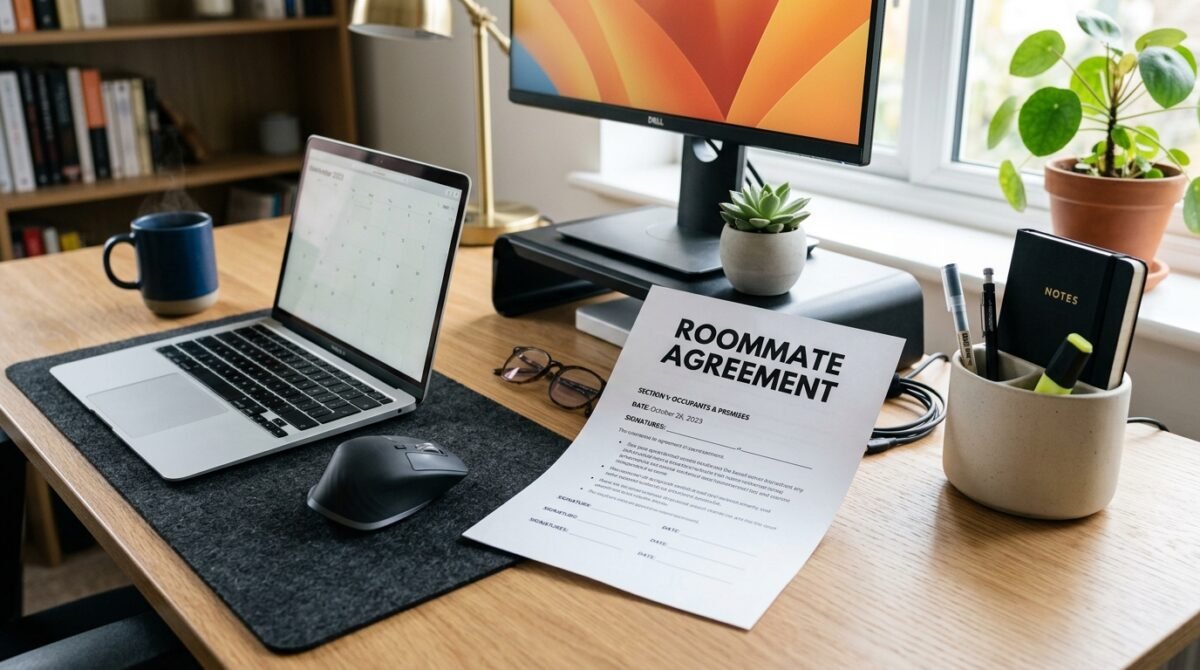
Consider a formal roommate agreement, even if you’re just friends. It might seem like overkill, but it sets clear expectations for everything from cleaning schedules to guests and noise levels. When everything is written down, it’s easier to point to it when someone is pushing the boundaries. It takes the emotion out of the conversation and keeps the focus on the agreement that you both signed.
Also, trust your gut. If something feels off, it probably is. If you find yourself constantly making excuses for your roommate’s behavior, stop and ask yourself why. Are you really okay with what they’re doing, or are you just trying to avoid a confrontation? If it’s the latter, you’re not doing yourself any favors. Listen to your intuition—it’s usually right.
Finally, remember that you are not responsible for your roommate’s happiness or their financial success. You are only responsible for your own safety and your own peace of mind. Don’t let someone else’s problems become your own. If they are making choices that are negatively impacting your life, it’s time to set a hard boundary, or if necessary, to leave. You deserve to live in a home that makes you feel happy and secure, and don’t let anyone convince you otherwise.
Moving Forward: Reclaiming My Peace

It has been a year since I moved out of that apartment, and my life has never been better. I’ve focused on my own growth, my own career, and my own hobbies. I’ve surrounded myself with people who respect my boundaries and who value me as a person, not as a means to an end. The nightmare of the ‘bouncer couch’ is a memory now, a bizarre and slightly humorous story I tell at parties, but it no longer has any power over me.
I’ve also become a lot more intentional about where I live and who I share that space with. I don’t take for granted the peace and quiet of my home. Every evening, when I walk through the door and see that the living room is exactly how I left it, I feel a sense of gratitude that I didn’t have before. It’s the small things that matter—the cleanliness, the solitude, the feeling of ownership over my own space.
I’ve also learned to be more compassionate with myself. I don’t beat myself up for being naive or for not seeing the signs sooner. I was young, I was trusting, and I was looking for a solution to a problem that I didn’t fully understand. I made a mistake, I learned from it, and I grew. That’s all anyone can ask for. The experience made me stronger, more resilient, and more confident in my ability to handle whatever life throws at me.
I still think about the bouncers sometimes—I wonder if they ever found another place to crash, or if they’re still out there, looking for the next ‘Sofa Club.’ It’s a reminder of how strange and unpredictable life can be, and how important it is to keep your guard up, even in the most seemingly normal situations. But I don’t let those thoughts consume me. My focus is on the present, and the present is pretty good.
If you’re going through a tough time with a roommate, just know that it doesn’t last forever. You have the power to change your situation, to set your boundaries, and to reclaim your life. Don’t be afraid to take the steps you need to take to be happy. You deserve a home that feels like a home, and you deserve to live with people who respect you. Stay strong, trust yourself, and never settle for anything less than what you deserve.
Conclusion
This saga of the ‘Bouncer Bed & Breakfast’ wasn’t just a lesson in lease agreements; it was a masterclass in the necessity of self-preservation. When we allow others to erode our boundaries in the name of convenience or misplaced kindness, we forfeit our right to the safety and sanctity of our own homes. My experience with Marcus taught me that character is rarely static—it is revealed through the consistent, quiet actions we take when we think nobody is watching. By documenting the abuse, standing my ground, and eventually removing myself from the toxic environment, I reclaimed more than just my security deposit; I reclaimed my autonomy.
As I reflect on this journey, I am struck by how quickly the internet community rallied behind the simple truth that your home is your castle. Whether you are dealing with a roommate, a family member, or a partner, the fundamental right to say ‘this is my space’ is absolute. I am now in a place of peace, and I carry the lessons of that chaotic apartment with me, ensuring that I will never again ignore the red flags that my intuition highlights so clearly.
I want to hear from you: Have you ever had a roommate who crossed a line so bizarre or egregious that you couldn’t believe it was happening in real life? Did you handle it with a direct confrontation, or did you have to take legal action to get your peace of mind back? Share your stories below—let’s discuss what boundaries are truly non-negotiable in your own homes.
What's your verdict on this dilemma?
Vote below to contribute to the official community consensus.

Have a Dilemma Keeping You Up at Night?
Share your real-life feud, wedding chaos, or relationship crossroads anonymously with our editorial team.
What do you think ?
0 Comments🛡️ Comments are moderated to protect community integrity. Your comment will appear once approved by the editorial team.