

I have always been a firm believer that the kitchen is a sanctuary, not a laboratory for culinary atrocities. I invested heavily in my morning ritual: a top-of-the-line, Italian-made espresso machine that cost me $1,200. It wasn’t just an appliance; it was my primary connection to sanity before heading to a high-stress corporate job. I kept it polished, descaled it religiously, and viewed anyone who touched it with anything other than water or high-quality beans as an existential threat to my lifestyle.
My roommate, let’s call him Kevin, was a different breed of human. He lived in a perpetual state of ‘I’ll just wing it,’ which usually manifested in him trying to cook frozen pizza in the toaster or using my expensive chef’s knives to pry open paint cans. I had warned him repeatedly about my boundaries, specifically regarding the espresso machine. I told him it was a complex piece of precision engineering, not a toy, and that if he wanted coffee, he could use the $20 drip machine I’d generously provided for his side of the counter.
The morning of the incident began with the typical hum of the city, but it was quickly replaced by a sound that felt like a dying animal. I walked into the kitchen to find my machine wheezing, its high-pressure pump struggling to push a viscous, brown liquid through the group head. The smell hit me first—an overwhelming, artificial odor of dehydrated onions and beef bouillon. It wasn’t coffee. It was soup. My roommate was standing there, holding a Lipton onion soup packet, looking confused as to why the machine wasn’t dispensing the broth fast enough.
The moral dilemma here wasn’t just about the machine; it was about the fundamental disrespect for shared property and personal boundaries. Kevin didn’t see an espresso machine; he saw a high-pressure water heater that he thought he could use to ‘save time’ on his lunch prep. The resulting carnage left me questioning how anyone could reach adulthood without understanding the basic concept of keeping solid food particles out of a pressurized pump system. This was the moment that turned our living arrangement from a casual inconvenience into an all-out war of attrition.
The Morning the Kitchen Smelled Like a Deli

The scene I walked into was nothing short of surreal. There was a fine mist of brown, salty water splattered across the backsplash, and my beautiful, brushed-steel machine was weeping thick, viscous sludge. Kevin stood there, pressing the ‘double shot’ button repeatedly, his brow furrowed in genuine frustration. He looked up at me as I entered, his eyes wide with a mix of confusion and annoyance.
I felt a cold sensation wash over me, a mixture of rage and sheer disbelief. I stepped closer, my fingers trembling as I reached for the power switch to kill the machine’s pump before it burnt out completely. The smell was suffocating—concentrated, salty, artificial onion aroma hanging in the air like a heavy curtain. It was a sensory assault that made me want to gag.
“What in the absolute hell are you doing to my machine, Kevin? Is that… is that soup? Are you brewing broth in a professional espresso maker?”
Kevin didn’t look remorseful. Instead, he shrugged, gesturing to the open soup packet on the counter. He genuinely believed that because the machine had a ‘hot water’ setting, it was essentially a high-pressure electric kettle. He hadn’t bothered to read the manual, nor had he considered the physical state of the onion flakes inside the packet.
The silence in the kitchen was heavy, broken only by the rhythmic dripping of the soup-sludge onto the drip tray. I realized then that my roommate lived in a completely different reality than the rest of us. He didn’t see boundaries; he saw utility. I walked to the sink and grabbed a damp towel, watching as the machine continued to groan, likely pushing debris deep into the internal solenoid valves. My heart sank as I realized the internal cleaning would likely cost more than the machine itself.
We stood there for a long moment, the air thick with the scent of cheap bouillon. I was no longer just annoyed; I was terrified for the longevity of my expensive investment. I had spent months saving up for that machine, and in less than five minutes of ‘convenience,’ Kevin had turned it into a piece of decorative, onion-scented metal.
The Audacity of the Financial Defense

The confrontation spilled into the living room, where Kevin sat on the couch, still holding his half-empty mug of salty sludge as if it were a perfectly acceptable beverage. When I demanded he pay for the professional repair, he laughed it off, suggesting that I was overreacting to a ‘simple cleaning job.’ He argued that since the machine still turned on, it couldn’t possibly be broken, and my request for a $200 diagnostic fee was ‘extortionate.’
I pulled out my phone and quickly searched the cost of replacing the group head and internal gaskets, showing him the results. The price of the specialized descaling solution and the labor of a technician specializing in Italian espresso machines were not cheap. He barely glanced at the screen, waving his hand as if he were batting away a fly. He insisted that he had done me a favor by ‘testing the machine’s versatility,’ a comment that nearly caused me to lose my composure completely.
“You think this is a joke? That pump is ruined. You’ve pushed onion bits into the delicate internal workings. This isn’t a coffee maker anymore; it’s a glorified trash can.”
He countered that he shouldn’t have to pay for ‘luxury’ repairs on a machine that was ‘overpriced to begin with.’ He claimed that because he paid half the rent, he had an implicit right to use any appliance in the common area, regardless of its original cost or specific function. This was the moment I realized the issue wasn’t just about the soup; it was a fundamental clash of values regarding property, respect, and the meaning of ‘shared’ space.
I kept my voice calm, but my blood was boiling. I explained that in a shared living situation, you don’t use someone’s high-end property without asking, and you certainly don’t use it in ways that fundamentally alter its ability to function. Kevin’s response was to suggest that I move out if I wanted a ‘museum’ instead of a living space. He was digging in his heels, and it was clear he had no intention of taking responsibility for the destruction of my property.
I realized then that this wasn’t going to be resolved with a simple conversation. He felt entitled, not just to the space, but to the lifestyle I had worked hard to build for myself. I walked out of the room, leaving him to finish his soup, knowing that I needed to document everything before I took any further action. The divide between us was now a chasm, and there was no going back.
The Group Chat Exposure

I didn’t wait long to vent. I took a photo of the machine, the soup packet, and the mess on the counter, and posted it to our mutual friends’ group chat. The caption was simple: ‘Kevin decided to make soup in my $1,200 espresso machine. Any advice on how to get the smell of onion out of a pressurized pump?’ The reaction was immediate and, frankly, quite satisfying. Even our mutual friends, who usually tried to stay out of our drama, were appalled.
Within minutes, the chat was blowing up with shock and disbelief. My phone vibrated incessantly as the messages rolled in. People were posting memes, asking if he was sane, and expressing sympathy for the state of my machine. Kevin tried to defend himself in the chat, claiming that I was ‘dramatizing a minor spill,’ but he was quickly shut down by everyone, including his own best friend.
“Wait, you actually put an onion soup mix in an espresso machine? Do you have any idea how much a pump repair costs? That’s not a spill, that’s a hate crime against coffee.”
— Sent by our mutual friend, Alex
Kevin’s defensiveness in the chat only served to highlight how disconnected from reality he was. He kept doubling down, saying that if the machine couldn’t handle soup, it wasn’t a ‘good’ machine. The absurdity of his logic was laid bare for all to see. He tried to frame me as the ‘snob’ who cared more about appliances than friendship, but the consensus was clearly against him. The public shaming, even if it was just in our group chat, seemed to rattle him, even if he didn’t admit it.
I watched as the messages piled up, feeling a strange sense of vindication. I hadn’t been imagining it; his actions were objectively ridiculous. Seeing everyone else confirm my feelings made it easier for me to stand my ground. I wasn’t just a roommate being ‘difficult’; I was a person dealing with a clear boundary violation. The group chat served as an informal jury, and the verdict was unanimous: Kevin was absolutely in the wrong.
Still, despite the digital support, the reality in the apartment remained unchanged. I still had an onion-scented espresso machine, and I still had a roommate who refused to pay for the damage. The group chat was a validation, but it wasn’t a resolution. I needed to move to the next level of accountability, whether Kevin liked it or not.
The Certified Letter Ultimatum
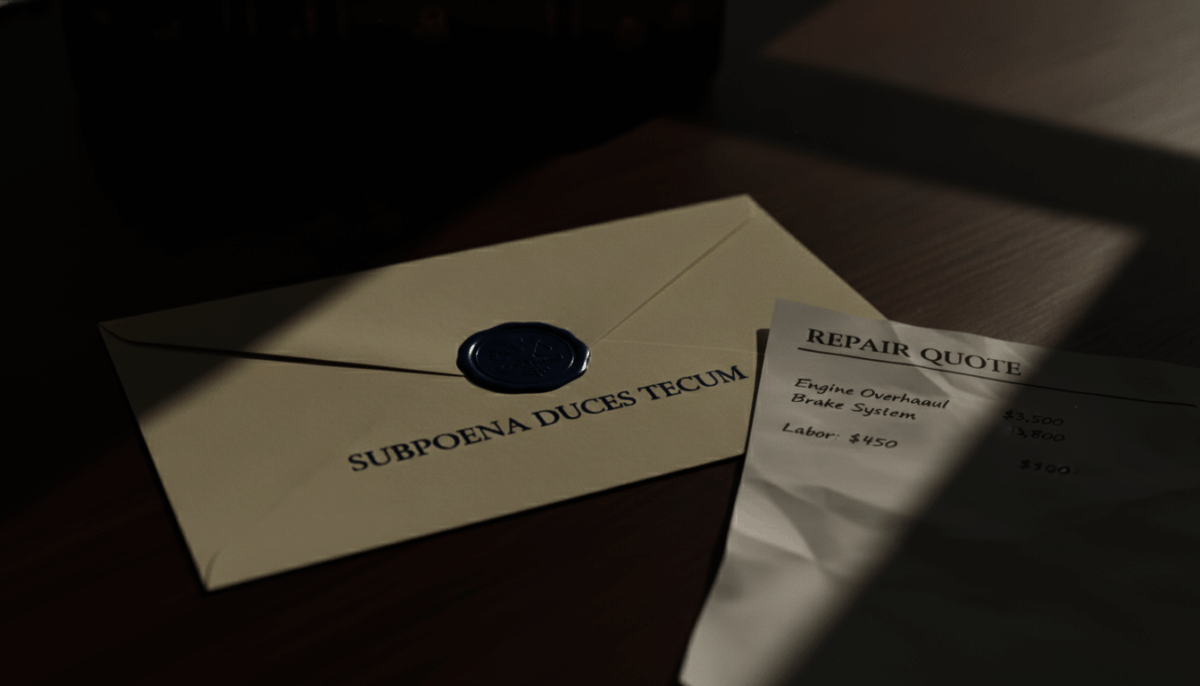
When the polite requests and the group chat shaming failed to produce a cent, I decided to go formal. I spent the afternoon at a local repair shop, getting a formal quote for the damage. The technician, who looked at the machine with genuine sadness in his eyes, confirmed my worst fears: the debris had indeed compromised the internal seals, and the heat had baked the onion residue into the heating element. It wasn’t just a cleaning; it was a total overhaul.
I drafted a formal letter, detailing the itemized costs of the repair, the date of the incident, and a clear request for reimbursement. I printed it out, signed it, and sent it via certified mail to Kevin—even though we were living in the same apartment. It was a petty move, I knew, but it was also about creating a paper trail. I wanted him to see that I was serious and that this wasn’t just about a roommate disagreement anymore.
“I am providing you with this formal notice of repair costs due to your misuse of my property. Failure to reimburse these costs within seven business days will result in further action, including potential small claims proceedings.”
When he received the letter, the atmosphere in the apartment changed instantly. He stopped acting like it was a minor incident and started pacing the hallway, clearly realizing that I was moving toward legal territory. He tried to corner me in the kitchen, but I simply pointed to the letter and told him that all communication from this point forward should be in writing to ensure clarity. The power dynamic had shifted; he was no longer the one dismissing my concerns.
He tried to argue that the ‘threat’ of small claims was uncalled for, but I reminded him that the law doesn’t care about our living arrangement; it cares about property destruction. He looked genuinely shaken for the first time. The reality of the $1,200 price tag was finally setting in. He had assumed I would just absorb the cost and grumble about it, not that I would treat it like a civil liability case.
It was a difficult week. The tension in the apartment was thick enough to cut with a knife. We walked past each other in silence, our interactions reduced to brief, cold nods. But I stayed firm. Every time I looked at the machine, still sitting on the counter like a silent monument to his stupidity, my resolve hardened. I was not going to let this slide.
The Reddit Jury Delivers Their Verdict

I decided to take the story to Reddit, specifically r/AmItheAsshole, to see if I was truly the villain in this situation. I laid out the facts, the cost, the soup disaster, and his refusal to pay. I didn’t hold back on the details. I wanted to see if the internet would validate my approach, or if they would point out something I had missed in my anger.
The response was overwhelming. Within hours, the post hit the front page. Hundreds of comments flooded in, ranging from outrage to comedic disbelief. The community was unanimous: I was not the asshole. The support was almost therapeutic, especially after Kevin’s gaslighting about the ‘versatility’ of the machine.
“NTA. Your roommate sounds like he has the maturity of a toddler. An espresso machine is a precision tool, not a kitchen-sink soup pot. Make him pay every single penny of that repair bill.”
— u/CoffeeLover99 (Top Comment, 18.2k upvotes)
“The fact that he thinks a $1,200 machine is for soup is just… wow. I’d be billing him for the labor and the stress. Don’t back down on the small claims threat.”
— u/LegalEagle88 (5.4k upvotes)
Reading these comments, I felt a weight lift off my shoulders. It wasn’t just my perspective; it was a universal standard of behavior. The community offered advice on how to handle the small claims process and how to protect my property in the future. Some even shared their own horror stories of roommates misusing expensive equipment, which made me feel slightly less alone in my frustration.
The comments also gave me the confidence to stick to my plan. The suggestion to change the locks on my room and the kitchen cabinets was a recurring theme. It was clear that the consensus was that I needed to protect my space, and that the relationship had likely run its course. I wasn’t just fighting for the repair money; I was fighting to establish my own boundaries.
I kept checking the thread, reading the stories of people who had dealt with similar roommates. It was a masterclass in human behavior, showing me that I wasn’t being ‘uptight’ or ‘snobby’—I was being reasonable. The validation from the internet was the last piece of the puzzle I needed to finalize my decision on how to handle the remainder of our lease.
The Final Kitchen Confrontation

The seven-day deadline arrived, and I found an envelope sitting on my bedroom door. Inside was a check, but it was for exactly half of the total repair cost. There was no note, just the check. I walked into the kitchen, where Kevin was making a sandwich. I placed the check on the counter and looked at him. He knew exactly what I was going to say.
I didn’t yell. I didn’t get angry. I simply told him that this wasn’t what I had asked for and that it wouldn’t cover the full cost of the repair. He immediately went on the defensive, saying that he shouldn’t have to pay for the ‘upgrade’ of the internal components and that this was his final offer. He tried to use the ‘we’re roommates’ card again, but I stopped him right there.
“Kevin, this isn’t a negotiation. You broke it, you pay for it. The check is for half, which tells me you acknowledge fault. I’m not paying for your mistake.”
He argued that he couldn’t afford the full amount, which I found hard to believe given his recent purchases of expensive gaming gear. The hypocrisy was staggering. We stood there, staring each other down, the tension reaching a breaking point. I realized then that he was banking on me getting tired of the conflict and just accepting the partial payment. He was testing my resolve to the very end.
I took the check and put it back on the counter. I told him that I would be filing the small claims paperwork the following morning if the full amount wasn’t in my account by the end of the day. His expression shifted from annoyance to genuine panic. He knew that a court summons would be a massive headache and could potentially affect his rental history. He finally realized that I wasn’t bluffing.
He didn’t say anything, just turned away and started eating his sandwich. I walked out of the kitchen, feeling a sense of cold calm. The emotional turmoil of the previous week had hardened into a resolve to finish this, one way or another. I had done my part; the rest was up to him.
The Bitter Taste of Victory

By the next morning, the full amount had been transferred to my account. Kevin had relented, but the atmosphere in the apartment had become glacial. We moved past each other like ghosts, avoiding eye contact at all costs. The victory felt hollow; I had my money, but I had lost the trust and the peace of mind that I valued so much in my home. The espresso machine was eventually repaired, but every time I used it, I still had a lingering fear of what might happen next.
I spent the next few weeks looking for a new place. I couldn’t stay in an apartment where every interaction was a battle of wills. I realized that my home was no longer a sanctuary; it was a front line. The incident with the espresso machine had just been the catalyst that exposed the cracks that were already there. Living with Kevin was no longer an option, not because of the machine, but because of the lack of respect that it represented.
“I don’t think I can do this anymore, Kevin. It’s not just about the machine. It’s about the fact that we can’t coexist in a way that’s respectful.”
He didn’t argue. He probably felt the same way. He was tired of my ‘rules’ and my ‘snobbery,’ and I was tired of his carelessness and entitlement. We agreed to part ways when the lease ended, which was only two months away. It was a relief, knowing that there was an end date in sight. The final two months were a strange, quiet period of packing and moving boxes, with very little conversation.
When I finally moved out, I didn’t look back. I packed my machine with extra care, wrapping it in layers of bubble wrap like a precious artifact. It was clean, it was working, and it was mine. I had learned a valuable lesson about setting boundaries early, vetting roommates more thoroughly, and never, ever assuming that common sense was actually common.
The victory was real, but it came with a price. I had realized that some people are simply not compatible as roommates, and that no amount of communication or legal threats could change someone who didn’t want to change. I moved into a new place, alone, and the first thing I did was make a perfect, onion-free shot of espresso. It tasted like freedom.
Reflecting on the Mess

Looking back at the whole ordeal, it seems almost comedic in its absurdity. A thousand-dollar machine destroyed by a fifty-cent packet of dried onions. It’s the kind of thing you’d see in a sitcom, but living through it was anything but funny. It forced me to examine my own reactions—was I too harsh? Was I too quick to jump to legal threats? But then I remember the smug look on his face, the refusal to take responsibility, and I know I did what I had to do.
The incident taught me a lot about the importance of clear, written agreements even for minor appliances in a shared space. It also made me realize that I have a very low tolerance for disregard for my personal property. Some people might call that ‘uptight,’ but I prefer to call it ‘self-respect.’ I worked hard for the things I have, and I don’t apologize for expecting others to treat them with care.
“Sometimes you learn who someone really is not by how they treat you during the good times, but by how they handle the messes they make in your home.”
The experience has definitely made me more selective about who I live with. I’ve become much more direct about my expectations and my boundaries from day one. I no longer assume that everyone shares my values when it comes to kitchen etiquette or property management. It’s a sadder way to view the world, perhaps, but it’s certainly a more protected one.
I still occasionally see Kevin on social media. He seems to be doing his own thing, still living that ‘wing it’ lifestyle. I don’t harbor any ill will, but I also don’t have any interest in being part of his life. We were a mismatch from the start, and the espresso machine was just the final, salty, onion-scented nail in the coffin of our roommate arrangement.
Ultimately, I think the story resonates because everyone has had that one roommate or friend who just doesn’t get it. Everyone has had that experience of feeling like their boundaries are being crossed and having to fight to reclaim their peace. My story just happened to involve a very expensive Italian appliance and a very cheap soup mix, but the core of it—the fight for respect—is universal.
Lessons Learned in the Kitchen

If I could go back and change anything, I might have been more vocal earlier about my boundaries before the disaster happened. I think I assumed that people would naturally understand the value of things, but that was a naive assumption. I’ve learned that in any shared living arrangement, you have to be explicit, even if it feels awkward. It’s better to have an uncomfortable conversation about ground rules than to deal with a broken espresso machine and a ruined living situation.
I’ve also learned the value of documentation. Sending that certified letter might have seemed excessive to some, but it was the catalyst that made Kevin take the situation seriously. It showed him that I wasn’t just a roommate who would let things slide, but someone who was prepared to take the necessary steps to defend my property. It was the most effective communication tool I had.
“Boundaries aren’t meant to be mean; they’re meant to be the guardrails that keep a relationship from going off the tracks. Without them, you’re just waiting for the next disaster.”
I also learned that validation is important. Reaching out to the Reddit community helped me regain my perspective when I was starting to doubt whether I was overreacting. Sometimes, when you’re in the middle of a conflict, it’s easy to lose sight of the objective truth. Getting an outside, unbiased opinion—even from anonymous strangers on the internet—was incredibly helpful.
I’ve kept the espresso machine, and it’s still working perfectly. Every time I use it, I remember the onion soup incident, but it no longer makes me angry. It’s just a reminder of a lesson learned. It’s a part of the machine’s history now, a scar that healed. I’ve moved on, and I’m much happier for it.
The final lesson is perhaps the most important: don’t let anyone make you feel bad for wanting to take care of your stuff. Whether it’s a car, a laptop, or a $1,200 espresso machine, it’s an extension of your hard work and your personal space. You have every right to expect it to be respected, and you have every right to hold people accountable when they don’t.
The Final Word: Where Are They Now?

It’s been over a year since the soup incident, and I’ve successfully moved into a studio apartment of my own. I have no roommates, no shared appliances, and no drama. I wake up every morning and make my coffee in total silence, with the only smell in the kitchen being the rich, dark roast of freshly ground beans. It’s the peace I was looking for, and it was well worth the cost of the move.
Kevin, as far as I know, is still living with other roommates, likely continuing his adventures in questionable kitchen improvisations. We haven’t spoken since I moved out, and that’s perfectly fine with me. I don’t need closure beyond what I’ve already found; I don’t need an apology that would be half-hearted at best. The resolution was the peace of mind I have now.
“Sometimes the best resolution isn’t an apology or a reconciliation, but simply moving on to a place where that kind of conflict can’t happen again.”
I still see similar stories popping up on my feed, and I always feel a twinge of empathy for the OPs. I know what it’s like to feel frustrated, misunderstood, and disrespected in your own home. It’s a heavy feeling, and I hope they find the same resolution I did. It’s never easy to stand up for yourself, especially against someone you live with, but it’s always worth it.
If there’s any takeaway for the readers of this story, it’s this: don’t be afraid to set your boundaries early and clearly. And if you have a roommate who doesn’t respect them, don’t waste your time trying to change them. Protect yourself, protect your property, and when the time is right, move on. You deserve a space where you feel respected and at peace.
Thanks for reading my story, and for all the support I received along the way. It’s been a wild journey from soup-stained counters to the peace of my own studio, but I wouldn’t change a thing. Well, maybe I’d change the fact that I ever bought that soup mix in the first place, but life is all about the unexpected, right?
Conclusion
The story of the onion soup disaster is more than just a tale of a ruined appliance; it is a reflection on the fragile nature of living arrangements and the importance of personal boundaries. When we share our homes, we are sharing our lives, and that requires a level of mutual respect that cannot be taken for granted. Whether it’s a $1,200 espresso machine or a communal kitchen space, the rules of engagement should always be clear.
I hope this narrative serves as a cautionary tale for anyone currently navigating a difficult roommate situation. Remember that your home is your sanctuary, and you have every right to protect it. Don’t let entitlement or carelessness make you feel like you’re the one in the wrong. Stand your ground, document your reality, and never be afraid to seek support from those around you.
Now, I want to hear from you. Have you ever had a roommate who committed a kitchen crime that you still can’t believe? Or perhaps you’ve been the one to accidentally cross a boundary you didn’t even know existed? Share your own stories in the comments below—the best, the worst, and the most absurd kitchen disasters you’ve ever lived through.
What's your verdict on this dilemma?
Vote below to contribute to the official community consensus.

Have a Dilemma Keeping You Up at Night?
Share your real-life feud, wedding chaos, or relationship crossroads anonymously with our editorial team.
What do you think ?
0 Comments🛡️ Comments are moderated to protect community integrity. Your comment will appear once approved by the editorial team.