
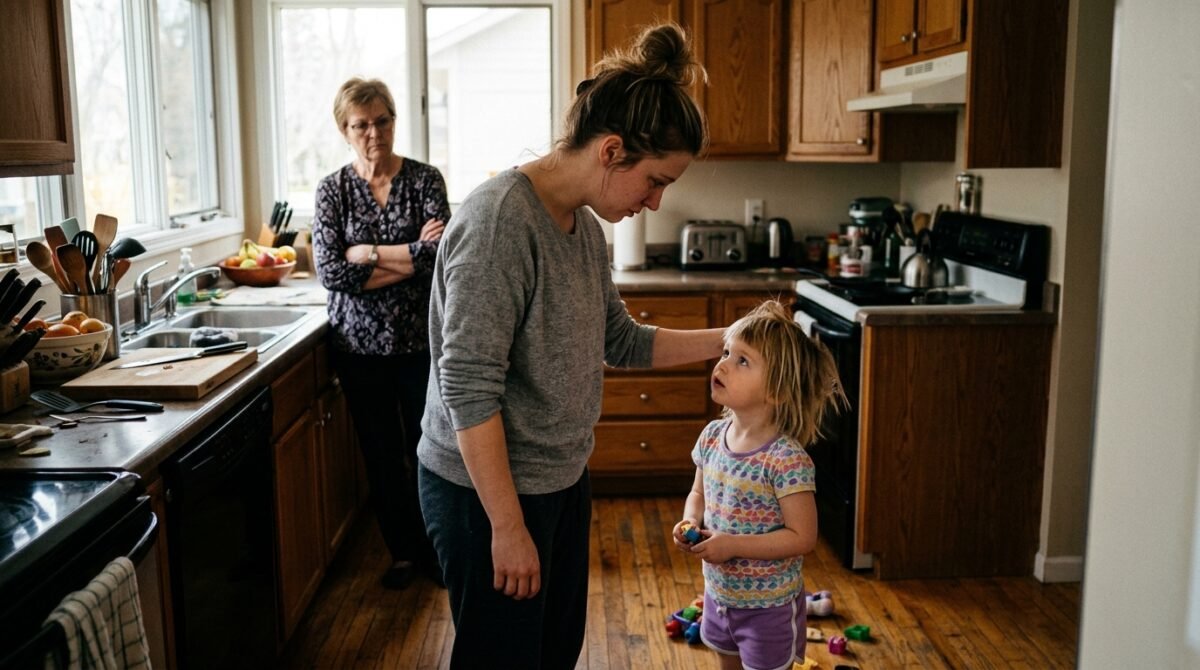
Motherhood is a landscape mapped by milestones—the first step, the first word, the first time you brush those soft, unruly curls that seem to have a personality of their own. For three years, I had carefully cultivated my daughter Lily’s hair, using the finest curl-defining creams and protecting those ringlets from the harsh summer sun. They were her crown, her identity, and to me, they were a beautiful piece of her heritage that I cherished every single morning during our routine.
My mother-in-law, Brenda, had never been a fan of the ‘messy’ look. She was a woman of rigid aesthetics—everything in her house was perfectly manicured, color-coded, and sterile. She viewed nature, including hair, as something that needed to be tamed, clipped, and brought into submission. I had dismissed her offhanded comments about Lily needing a ‘proper bob’ for years, assuming they were just the rambling of a grandmother from a different generation who didn’t understand the beauty of natural texture.
I never imagined that her distaste for my daughter’s curls would transcend mere insults. I thought the boundaries I had set—explicitly stating that no one, not even family, was to cut, style, or manipulate Lily’s hair without my express permission—were understood, even if they weren’t respected. I was wrong. The violation occurred on a Tuesday afternoon, a day I thought would be entirely mundane.
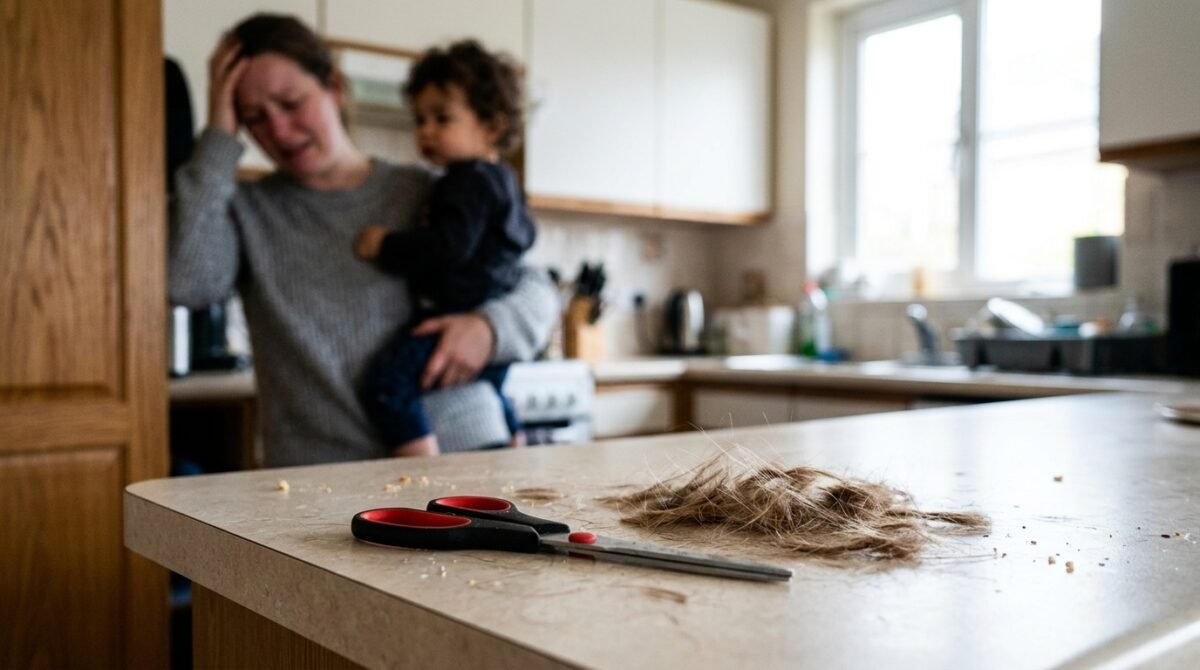
When I returned home to find my daughter sitting on the kitchen counter with uneven, jagged clumps of hair missing and a pair of sewing scissors discarded on the cutting board, the air left my lungs. The silence that followed was heavy, punctuated only by the sound of my daughter playing with her blocks, completely unaware that she had been transformed into a project for a woman who felt she had the right to own her appearance. This wasn’t just a haircut; it was an act of complete erasure.
The following pages detail the explosive confrontation, the gaslighting attempts that followed, and the definitive decision I made to exclude Brenda from the milestones of my daughter’s life. This is not just a story about hair; it is a story about the ownership of a child and the ultimate cost of violating a parent’s trust.
The Tuesday Kitchen Massacre
I had dropped Lily off at Brenda’s for what I thought would be a few hours of supervised play while I attended an urgent work meeting. Brenda had been ‘begging’ for time with her granddaughter, promising that they would bake cookies and read books. The house was calm when I arrived, and I assumed the dynamic was normal. Little did I know, the preparations for the disaster had been brewing in Brenda’s mind for weeks.
When I walked through the door, the first thing I noticed was a strange, sharp smell—the scent of hair clippings—hovering in the kitchen air. Then, I saw Lily. She wasn’t playing with blocks anymore. She was wearing an apron, and her head looked like it had been attacked by a weed whacker. The signature curls were gone, replaced by a jagged, uneven mess that couldn’t possibly have been the work of a professional.
Brenda emerged from the pantry, clutching a towel as if she had just cleaned up a spill. She didn’t look remorseful; she looked satisfied, as if she had accomplished a chore that had been long overdue. She didn’t even give me a chance to speak before she started her defense, her voice dripping with that patronizing tone that makes my blood boil.
“Don’t get all dramatic, dear. It was getting so wild and unmanageable. I just did her a favor. She looks much more like a proper little lady now, don’t you think?”
I didn’t answer. I couldn’t. I walked over to my daughter, my hands shaking as I touched the stiff, hacked-off ends of her hair. My heart was pounding against my ribs like a trapped bird. The sheer audacity required to take a pair of scissors to a toddler’s head without a parent’s consent is staggering. It wasn’t just that she cut the hair; it was that she felt she had the authority to decide that her grandson’s natural state was wrong.
I looked at the counter. A small pile of brown, curly hair sat there like a trophy. I felt sick. I scooped up my daughter, grabbed her coat, and didn’t even bother to pack her toys. My exit was swift, silent, and final. I knew that if I stayed, I would say something I couldn’t take back, or I would lose control entirely. As I walked to the car, Brenda shouted from the porch, ‘You’re overreacting, it’s just hair, it’ll grow back!’
Those words—’it’s just hair’—were the spark that lit the fuse. To her, it was an aesthetic choice. To me, it was a fundamental betrayal of my role as her mother. The trust was not just damaged; it was incinerated in that single afternoon. The ride home was filled with my daughter asking why her head felt ‘bumpy,’ a question that broke my heart all over again.
The ‘Just a Trim’ Gaslighting Campaign
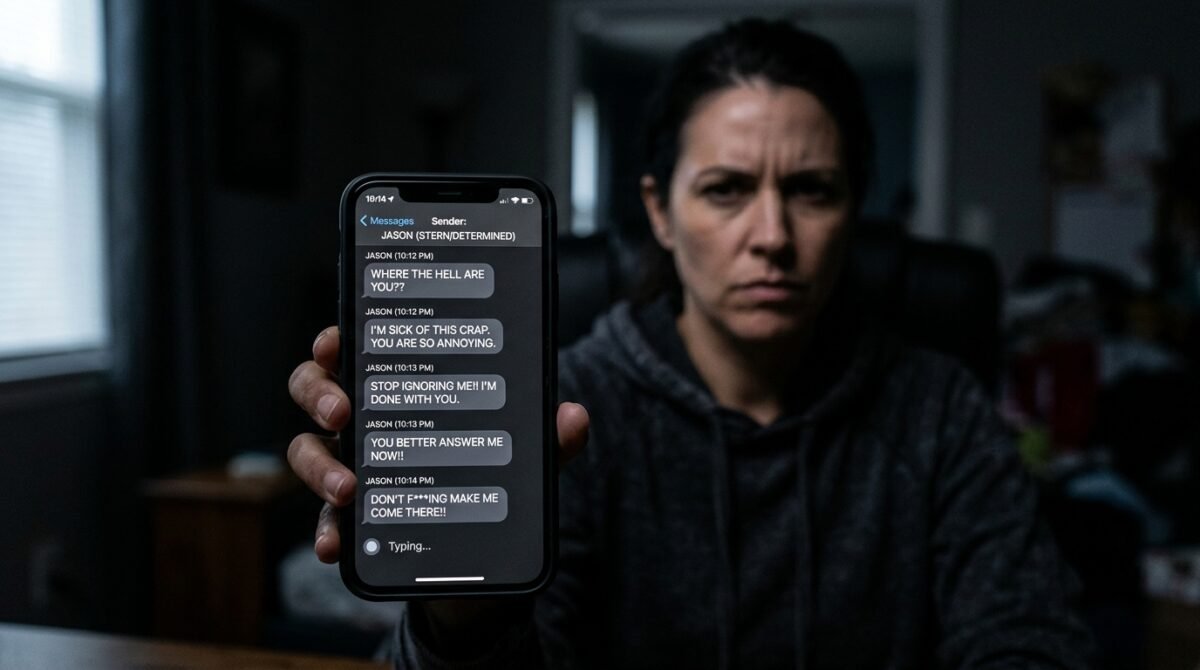
The fallout didn’t begin with an apology. It began with an orchestrated campaign of gaslighting that started the moment I got home. My phone began buzzing almost immediately, with messages from Brenda and her ‘flying monkeys’—her sisters and a few distant cousins who all felt that my reaction was ‘a bit much.’ The narrative they were spinning was that I was being hysterical, that Brenda was just being a ‘helpful grandmother,’ and that I was ungrateful for the ‘free childcare’ she had provided.
I sat on my sofa, staring at the screen as the notifications piled up. The audacity was almost impressive. Brenda had even managed to get her version of events to my husband before I had a chance to process my own feelings. She painted herself as the victim of a daughter-in-law who hated her and didn’t want her to have a bond with her grandchild. It was classic DARVO—Deny, Attack, and Reverse Victim and Offender.
“I just wanted to make it easier for you! You’re always complaining about how long it takes to brush her hair in the morning. I was trying to give you an extra ten minutes of sleep. Why are you punishing me for trying to help?”
— Text message from Brenda
I realized then that this wasn’t about the hair at all. It was about control. Brenda had been testing boundaries for years, and because I had been polite and accommodating, she assumed she had a blank check to dictate how my daughter lived, looked, and behaved. She didn’t see me as a partner in raising Lily; she saw me as a temporary custodian who was doing a poor job.
My husband, usually a man who avoids conflict, was caught in the middle, but he knew exactly what had happened. He had seen the photos I sent him, the jagged mess that required a professional stylist to fix, and he was livid. But the pressure from his family was immense. They were calling, texting, and showing up at our door, demanding that I ‘let it go’ for the sake of family harmony.
I felt isolated, but I also felt a strange sense of clarity. For the first time, I didn’t care about being the ‘nice’ daughter-in-law. I didn’t care about the family peace. I cared about the safety and bodily autonomy of my child. If Brenda thought she could treat my daughter like a doll to be styled to her specifications, she was about to learn that the consequences were going to be far more permanent than a few inches of hair.
I blocked the extended family members who were harassing me and set a boundary with my husband: he could maintain a relationship with his mother, but as far as Lily and I were concerned, the relationship was undergoing a forced hiatus. The ‘just a trim’ excuse was a bridge to nowhere, and I wasn’t going to cross it.
The Financial Burden of the Correction

The next morning, I took Lily to a high-end salon that specialized in children’s natural hair. I didn’t want her to feel like a victim of a bad haircut; I wanted her to feel like she was getting a special pampering session. The stylist was horrified when she saw the work Brenda had done. She pointed out that the scissors had likely been dull, causing damage to the hair follicles and creating split ends that traveled up the hair shaft.
The cost was significant. Beyond the actual haircut, we needed specialized treatments to repair the damage, detangling sprays that weren’t cheap, and a consultation on how to manage the hair while it grew back into a cohesive shape. When I tallied up the bill—the initial consultation, the corrective cut, the products, and the emergency appointment fee—it was well over $300. It wasn’t about the money, but I decided to send the bill to Brenda as a matter of principle.
I included a short, cold note: ‘Since you felt entitled to perform a professional service on my daughter, here is the cost for the professional correction. Please refrain from attempting any further services.’ I knew she wouldn’t pay it, and I didn’t care. I wanted her to see the tangible cost of her interference. It was a message that her actions had consequences that couldn’t be dismissed with a wave of her hand.
The response was predictable. She didn’t pay, but she did send a long, rambling email about how I was ‘extorting’ her and how I was teaching my daughter to be ‘entitled’ by making a big deal out of nothing. It was a masterclass in deflection. She refused to acknowledge that she had violated my daughter’s bodily autonomy. To her, the entire situation was an attack on her personhood, not a reaction to her trespass.
“I am not a salon, and I will not be treated like one. You are being petty and vindictive by sending me a bill for something you should have done yourself months ago. This is why you struggle with your daughter—you have no sense of perspective.”
— Email from Brenda
I read the email once, printed it out for my records, and then deleted it. I didn’t reply. I had realized that arguing with Brenda was like trying to fill a bucket with a hole in the bottom—it was a waste of energy that I needed to direct toward my child. The bill wasn’t about the money; it was about the line in the sand.
My husband finally stood up to his mother, telling her in no uncertain terms that if she wanted to be in our lives, she had to follow our rules. She didn’t like that. She told him that he was ‘henpecked’ and that I was ‘alienating’ her from her grandchild. The drama was reaching a fever pitch, but for the first time, I felt like we were a united front. The cost of the haircut was a small price to pay for the clarity it brought to our family dynamic.
The First Milestone Missed

The real test came a month later: Lily’s birthday party. We had planned a small, intimate gathering at a local park. It was supposed to be a celebration of her progress, her growth, and the joy she brought to our lives. Brenda had been asking about the plans for weeks, assuming, of course, that she would be the guest of honor. She had even bought a dress for Lily—a stiff, itchy lace thing that looked like it belonged in a museum.
When I told her she wasn’t invited, the reaction was explosive. She showed up at our house unannounced, screaming that I was ‘erasing’ her. The scene was traumatic for my daughter, who started crying because her grandmother was shouting at her mother. I had to physically block the doorway, my heart hammering against my chest as I stood my ground. It was the hardest thing I’ve ever had to do, but I knew I couldn’t let her back into our space.
I told her clearly: ‘You violated my trust when you cut her hair. You have shown that you do not respect my role as her mother. Until you can demonstrate that you understand boundaries, you are not welcome at our milestones.’ She didn’t hear a word of it. She only heard the word ‘no,’ and to her, that was an act of war. She left, but not before promising that she would ‘talk to the family’ about how I was keeping her granddaughter away.
“You are making a huge mistake. I am her grandmother. You cannot just ban me from my own granddaughter’s life because of a haircut! This will not end well for you.”
I watched her car pull away, and for the first time in years, I felt a sense of relief. The house felt lighter. My daughter, after a few minutes of comfort, went back to her toys. We had the birthday party, and it was beautiful. She wore a soft cotton dress, her hair was starting to grow back in, and she was surrounded by people who loved and respected her.
The fallout from the family was immediate. I received dozens of messages from aunts, cousins, and friends of Brenda’s, all telling me that I was being ‘cruel’ and that ‘forgiveness is a virtue.’ I ignored them all. I wasn’t being cruel; I was being protective. There is a fundamental difference between forgiveness and enabling, and I was done enabling a woman who felt she had the right to own my child.
The missed birthday was the first of many. I had made a pact with myself: if she couldn’t respect the small things, she wouldn’t be part of the big things. No graduations, no holidays, no special events. The line was drawn, and I was going to hold it, no matter how much pressure the family put on me. My daughter’s wellbeing was the only thing that mattered.
The Internet Weighs In: Reddit’s Verdict

I eventually took to Reddit to vent, not for validation, but because I needed to know if I was truly the villain in this story. I posted in a popular parenting advice sub, detailing the events, the haircut, the gaslighting, and the decision to ban her from milestones. The response was overwhelming. Within hours, the thread had thousands of comments, and it became clear that I wasn’t the one who had lost their mind.
The consensus was loud and clear: I was not the asshole. The commenters were horrified by the idea of someone cutting a child’s hair without parental consent. Many shared their own stories of ‘just a trim’ disasters, and it became clear that this was a common tactic used by controlling grandparents to assert dominance over the parents.
“This is not just about hair. This is about physical boundaries. If she can cut her hair without asking, what else will she do when you aren’t looking? You are 100% right to go NC or LC until she apologizes—and not just a ‘sorry you felt that way’ apology.”
— u/MamaBearBoundaries (Top Comment, 32.1k upvotes)
Another user highlighted the psychological impact of the grandmother’s behavior, noting that if the child learned that Grandma could do whatever she wanted to her body, she might struggle to set boundaries with other adults later in life. It was a perspective I hadn’t fully considered, and it solidified my decision to keep the ban in place.
There were a few contrarian voices, of course, mostly from people who believed that ‘grandparents know best’ and that I should just ‘get over it’ for the sake of family history. But they were heavily downvoted. The majority of the community understood the gravity of the violation. It wasn’t about the hair; it was about the authority and the respect that was owed to a mother.
“As someone who was forced to have a ‘proper’ haircut by my grandmother against my mother’s wishes, I can tell you that it left a lasting mark on my relationship with both of them. You are protecting your daughter from years of this kind of manipulation.”
— u/CurlyHairWarrior (15.2k upvotes)
Reading the comments was therapeutic. It reminded me that I wasn’t crazy and that my instincts as a mother were right. The internet can be a harsh place, but in this instance, it provided the validation I needed to stay the course. I stopped checking the thread after a while, but the support I received stayed with me.
I realized that the ‘family drama’ I was afraid of was just noise. The real issue was the health and autonomy of my child, and I was willing to sacrifice every ‘proper’ family holiday to ensure that she grew up knowing that her body was her own, and that no one—not even Grandma—had the right to change it without her (and my) permission.
The Certified Letter of ‘Forgiveness’

Months later, I received a certified letter from Brenda. I hesitated before opening it, expecting another round of insults or demands. Instead, it was a ‘formal apology,’ typed up in a font that looked like it came from a legal document. She spent three pages listing all the things she had done for me and my daughter, ending with a paragraph that supposedly addressed the haircut. It was the most insincere document I have ever read.
She wrote, ‘I am sorry that you were hurt by my decision to trim Lily’s hair, but I stand by my intention, which was to help you. I hope that you can move past this petty grievance and allow me to see my granddaughter again.’ It wasn’t an apology for the act; it was an apology for my reaction. It was the classic ‘I’m sorry you feel that way’ maneuver wrapped in legal-sounding language.
I didn’t even show it to my husband. I knew it would just make him angry or sad, and he didn’t need that. I put the letter in a file folder with the original bill and the email. This was documentation. If she ever tried to claim that I was ‘keeping her away’ without reason, I had the evidence of her refusal to take accountability. It was a paper trail of her lack of remorse.
“This is not an apology. This is a justification. She is still trying to control the narrative and refuse to acknowledge the boundary she crossed. Do not respond to this.”
— Advice from my therapist
My therapist was right. Responding to the letter would only invite more conflict. I had already made my position clear. The ball was in her court, and her choice to send a passive-aggressive letter instead of a heartfelt, change-oriented apology told me everything I needed to know. She wasn’t ready to change, and I wasn’t ready to let her back in.
The silence that followed the letter was heavy. I knew she was waiting for a reaction, for me to call or text her in a rage. By not doing so, I had taken away her power. I wasn’t playing the game anymore. I had moved on to a stage of life where I prioritized my inner peace and my daughter’s happiness over the expectations of a toxic relative.
It was liberating. For the first time, I wasn’t walking on eggshells, worried about what Brenda would say or do next. I was living my life, raising my daughter, and setting the boundaries that I should have set years ago. The letter stayed in the folder, a silent witness to a relationship that had finally, mercifully, reached its natural, necessary end.
The Quiet Empowerment of Boundaries

Life without Brenda in the immediate circle has been surprisingly peaceful. There are no more ‘suggestions’ on how to dress my daughter, no more unannounced visits to check if the house is clean enough, and no more comments about how my parenting is ‘lacking.’ My daughter is thriving. Her hair has grown back, and she loves her curls now, thanks in part to the way we’ve turned our morning routine into a celebration of her unique beauty.
I’ve learned that setting boundaries is not an act of aggression; it is an act of self-preservation. When you allow someone to continuously violate your trust, you are essentially telling them that your needs and your child’s needs do not matter. By standing up for ourselves, we weren’t just protecting our peace—we were modeling for Lily how to stand up for herself in the future.
I often think about what would have happened if I had just ‘let it go’ and allowed the ‘just a trim’ excuse to stand. I would have spent years apologizing for my daughter’s appearance, constantly trying to fix things to suit Brenda’s rigid aesthetic. I would have taught my daughter that her body was subject to the opinions and whims of others. I dodged a bullet, and I’m proud of that.
“Boundaries are the distance at which I can love you and me simultaneously. If you cannot respect them, the distance must increase until you can.”
This quote, which I found during my research on family dynamics, has become my mantra. It’s not that I don’t care about Brenda; it’s that I can’t care for her at the expense of my child. The distance I’ve created is a form of love—it protects our relationship from the resentment that would surely have built up if I had continued to let her cross those lines.
My husband has come to terms with the arrangement, and our marriage is actually stronger for it. We are no longer living under the shadow of his mother’s judgment. We are making our own traditions, setting our own rules, and building a life that feels authentic to us. The milestones we celebrate now are ours, free from the pressure to perform for someone who doesn’t respect us.
I’m not saying it’s easy. There are still days when I feel the weight of the family expectations, or when I see other kids with their grandparents and feel a twinge of sadness. But then I remember the sight of my daughter’s hacked-off hair, the look of satisfaction on Brenda’s face, and the feeling of violation that stayed with me for weeks. And in those moments, I know I made the right choice.
The Ripple Effects of a ‘No’

The decision to ban Brenda didn’t just affect her; it sent ripples through the entire extended family. Some of my husband’s cousins, who had previously been afraid to speak up, started reaching out to tell me that they, too, had struggled with Brenda’s controlling nature. It turned out that I wasn’t the only one who had been subjected to her ‘helpful’ interventions. By standing my ground, I had inadvertently given them permission to voice their own frustrations.
One cousin, who had been dealing with Brenda’s ‘advice’ on her own children’s diets, shared how my story had helped her realize she didn’t have to accept the constant criticism. It was a powerful reminder that our actions have far-reaching consequences, and that standing up for ourselves can empower others to do the same. We formed a small, supportive group, sharing stories and tips on how to handle difficult family members.
It wasn’t all positive, of course. Some family members doubled down, accusing us of ‘splitting the family’ and ‘poisoning the well.’ But their words had less and less power. When you know you are doing the right thing for your child, the noise of people who don’t have to live with the consequences of your choices becomes much easier to ignore.
“I just wanted to thank you for standing up to her. I’ve been too scared to do it for years, but seeing you set that boundary gave me the courage to tell her no when she tried to take my kids on a trip I didn’t approve of.”
— Message from a cousin
This kind of feedback was unexpected, but it made me realize that our struggle was part of a larger, necessary shift in how our family interacted. We were no longer living in a system where the elders could do whatever they wanted. We were creating a new culture of mutual respect, even if it meant being the ‘bad guys’ for a while.
The family gatherings we do attend are now more authentic. We don’t spend the whole time worrying about Brenda’s reaction to every little thing. We engage with the family members who treat us with kindness and respect, and we leave the ones who don’t. It’s a much more balanced way to live, and it has made us much happier.
Looking back, I don’t regret a single day of the ‘ban.’ It was a difficult path, but it was the only one that led to the health of our family. I’ve learned that sometimes, you have to be the one to break the cycle, even if it means enduring the temporary discomfort of being the person who said ‘no’ when everyone expected a ‘yes.’
Reflecting on the Mother-Daughter Bond

Throughout this entire ordeal, the most important relationship has been the one between me and my daughter. Our bond has grown stronger, not because of the drama, but because we’ve had the space to be ourselves without the interference of outside agendas. We spend our weekends exploring, learning, and just being, and those moments are precious to me. I’ve learned to listen to her, to respect her feelings, and to trust that she knows what’s best for her own body.
She doesn’t talk about her hair much anymore. She loves the curls, and she loves the clips and headbands we use to style them. She knows that she has a say in her appearance, and that’s a lesson that I hope will stay with her for the rest of her life. I’ve empowered her in a small way, and I know that will help her as she faces the challenges of growing up.
I’ve also learned to be kinder to myself. Motherhood is hard enough without the pressure to be perfect or the pressure to appease everyone else. I’ve let go of the need for Brenda’s approval, and that has been the most transformative part of this journey. I no longer feel the need to justify my parenting, and I no longer feel the need to explain my choices to people who don’t support me.
“The most important thing I can teach my daughter is that she is the authority over her own life. And I can only teach that by modeling it in my own.”
This is the philosophy I carry forward. I am a mother, but I am also an individual with my own set of values, and I refuse to compromise those for the sake of an antiquated family structure. My daughter is watching me, and I want her to see someone who is strong, resilient, and unapologetic about her boundaries.
We are a work in progress, but we are a happy one. We have our ups and downs, but we face them together, and that’s all that matters. The haircut was just a catalyst for a much bigger, much better change in our lives. I’m proud of who we are, and I’m proud of the family we’re building.
If you’re out there and you’re struggling with a similar situation, know that you are not alone. It’s scary to set boundaries, especially with family, but it’s worth it. You are the parent, you are the protector, and your child’s wellbeing is the only thing that matters. Don’t let anyone convince you otherwise.
Looking to the Future with Clarity

Looking forward, I have no illusions that things will return to ‘normal,’ and honestly, I don’t want them to. ‘Normal’ was a facade that allowed for the violation of my child’s autonomy. I prefer this new reality, where we define our own terms and our own boundaries. I’m not holding my breath for a genuine, transformative apology from Brenda, and I’ve made my peace with that.
My husband and I have had many conversations about what our future looks like. We’ve agreed that while we don’t hold ill will toward his mother, we will continue to prioritize our family unit above all else. If she ever reaches a point where she can truly respect our boundaries, we might consider a low-contact relationship, but that is a decision for the future, and it will be made on our terms, not hers.
For now, we are focused on the here and now. We’re planning a trip, we’re looking at schools, and we’re building a community of friends who love and support us. We are living our lives, and it’s a beautiful thing. The drama of the past is just that—the past. We’ve learned our lessons, we’ve grown, and we’re moving forward with a renewed sense of purpose.
“Life is too short to live it according to someone else’s rules, especially when those rules are used to justify the violation of your child.”
I’ve learned that the most important thing you can do for your children is to show them that you are their advocate. When they see you standing up for yourself, they learn that they have the right to do the same. It’s the greatest gift I could give my daughter, and it’s a gift that I’ll keep giving as she grows.
As for the curls? They’re beautiful, they’re messy, and they’re perfectly, uniquely hers. Every morning, I brush them, and I’m reminded of how much we’ve been through and how far we’ve come. And every time I do, I’m thankful for the strength I found when it mattered most. We are stronger together, and we are exactly where we need to be.
I want to thank everyone who read this, commented, and shared their own stories. You all helped me see that my experience was valid and that I wasn’t alone. It’s been a long journey, but it’s one I’d take again if it meant keeping my daughter safe and secure. Here’s to setting boundaries, here’s to protecting our children, and here’s to living life on our own terms.
Conclusion
The saga of the ‘unruly curls’ has finally settled into a quiet, protective normalcy. What began as a violation of physical boundaries became a defining moment in how we navigate our family life. The lesson here is not about hair, nor is it about a spiteful grandmother—it is about the courage to say no when the very essence of your role as a parent is being undermined.
We are no longer defined by the expectations of others, but by the safety and respect we foster within our own home. The boundaries I set were not a punishment for my mother-in-law, but a safeguard for my daughter. I hope this story serves as a reminder to anyone struggling with similar boundary-pushing family members: you are the primary advocate for your child. Their autonomy starts with you.
What would you have done? If a family member bypassed your parenting decisions so flagrantly, would you have instituted a permanent ban, or would you have attempted a more measured approach? Share your thoughts in the comments below—let’s discuss the complexities of setting family boundaries in a world that often demands blind compliance.
What's your verdict on this dilemma?
Vote below to contribute to the official community consensus.

Have a Dilemma Keeping You Up at Night?
Share your real-life feud, wedding chaos, or relationship crossroads anonymously with our editorial team.
What do you think ?
0 Comments🛡️ Comments are moderated to protect community integrity. Your comment will appear once approved by the editorial team.