
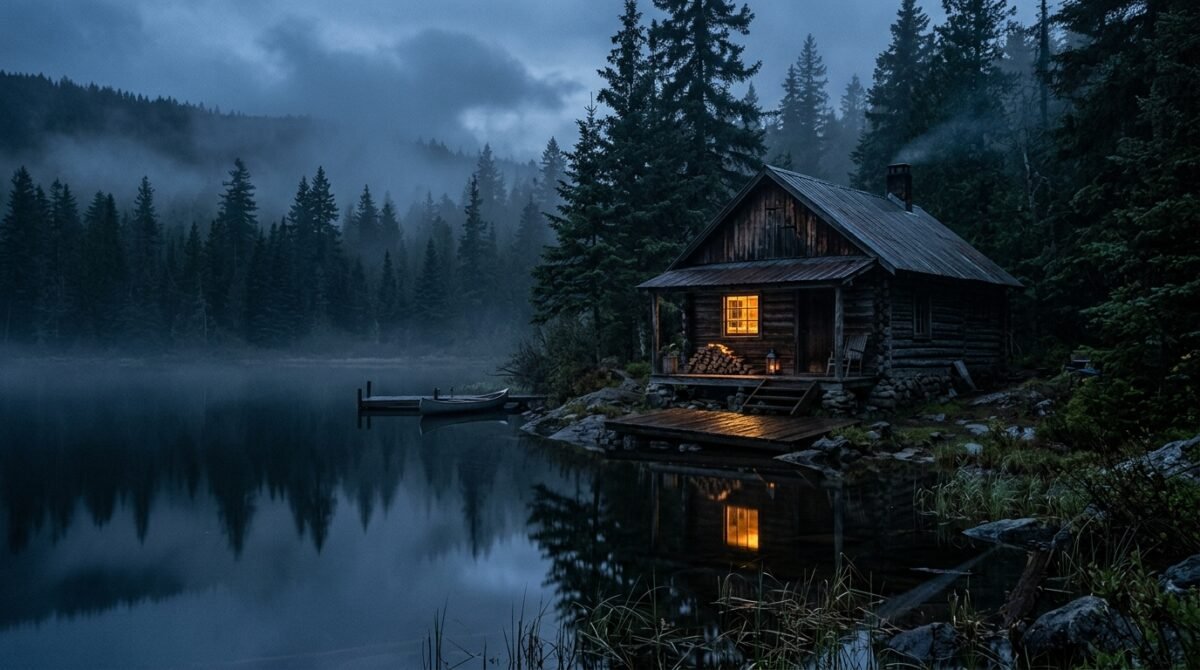
Growing up, the lakeside cabin was our family’s sanctuary. It was where my grandfather taught me how to fish, how to fix a leaky pipe, and how to appreciate the silence of the woods. It wasn’t a mansion, and it certainly wasn’t a vacation home for the elite—it was a labor of love that he built with his own two hands. My cousins, however, viewed it as a playground. They showed up for the summer parties, the loud music, and the beer-soaked weekends, while I was the one clearing brush, staining the deck, and helping Grandfather winterize the pipes every single November.
When the news broke that the cabin had been willed solely to me, the atmosphere in the family shifted from mourning to predatory silence. I expected some grumbling; I expected jealousy. What I did not expect was a certified letter from an attorney representing my two cousins, claiming that the inheritance was ‘fundamentally unfair’ due to their ‘historical occupancy’ of the property. They argued that because they had spent more weekends there over the last decade than I had, they held a de facto right to ownership.
The audacity was staggering, but the legal maneuver was calculated. They weren’t just asking for a share; they were trying to invalidate the will entirely, claiming my grandfather had been ‘unduly influenced’ by me in his final years. It turned a quiet period of grief into a high-stakes courtroom drama, pitting blood against blood over a piece of land that held so much more than just monetary value.
This isn’t just about a house. It is about the entitlement of relatives who show up for the harvest but never plant the seeds. It is about the line where family loyalty ends and legal warfare begins. As I prepare for the next round of depositions, I find myself looking at the dusty photos on the wall, wondering how things went so wrong, and whether the memories of a man I loved are worth the price of the battle I am currently fighting.
The Reading of the Will and the First Crack in the Facade
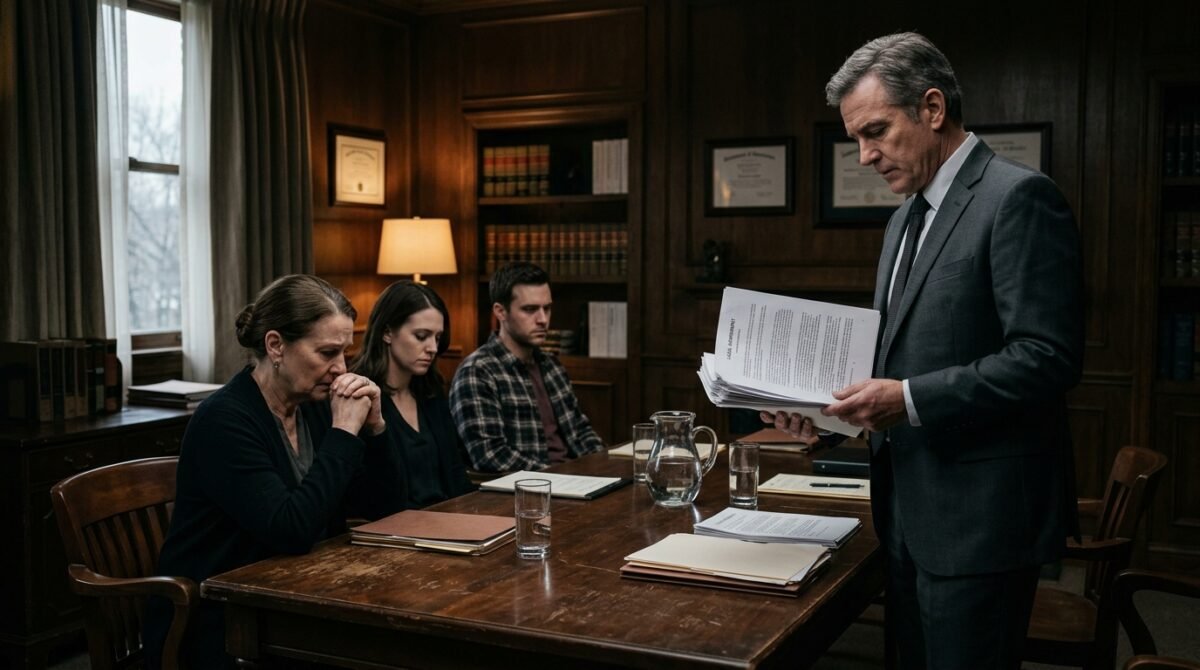
The reading of the will was held in a sterile, beige conference room that felt miles away from the smell of pine and lake water that defined my grandfather’s life. My aunt, my cousins Sarah and Mark, and I sat in silence as the lawyer read through the final wishes. When he reached the section regarding the lakeside property, the air in the room felt as though it had been sucked out. ‘To my grandson, who stood by me when the others were too busy to help, I leave the cabin on Blackwood Lake,’ the executor read in a monotone voice.
I remember looking over at Sarah. Her face, which had been composed moments earlier, suddenly twisted into a mask of pure, unadulterated rage. She didn’t cry. She didn’t look at me. She just stood up, grabbed her purse, and walked out of the room. Mark stayed, his jaw clenched, staring at the lawyer with a look of disbelief that bordered on violent. I felt a cold knot tighten in my stomach, sensing that this was not the end of the conversation.
“You know this isn’t over. You manipulated him, and everyone here knows it. That cabin belongs to the whole family, not just the favorite grandson who ran errands for a pat on the head.”
— Mark, in the office parking lot
I tried to remain calm. I told him that Grandfather had made his own decisions, and that he had spent years talking about how he wanted the place to be cared for by someone who actually understood its maintenance. Mark scoffed, turned on his heel, and walked to his car. That was the last time we spoke as family members. Within forty-eight hours, the first email from a law firm arrived in my inbox, formalizing the threat they had made in the parking lot.
The days that followed were a blur of panic and research. I wasn’t wealthy. I couldn’t afford a high-priced legal team, and the threat of a long, drawn-out court battle seemed designed to bleed me dry until I had no choice but to sell the property just to pay for my defense. It was a classic scorched-earth tactic, meant to make the cabin a liability rather than an asset.
I spent my nights pouring over old receipts, bank statements, and photos that documented my years of labor at the lake. I had bills for roofing materials, professional plumbing repairs, and property taxes that I had paid out of my own savings to prevent the county from putting a lien on the place. These weren’t just memories; they were the evidence I needed to prove that my relationship with the cabin was rooted in responsibility, not just convenience.
The Cease and Desist That Wasn’t Really a Request
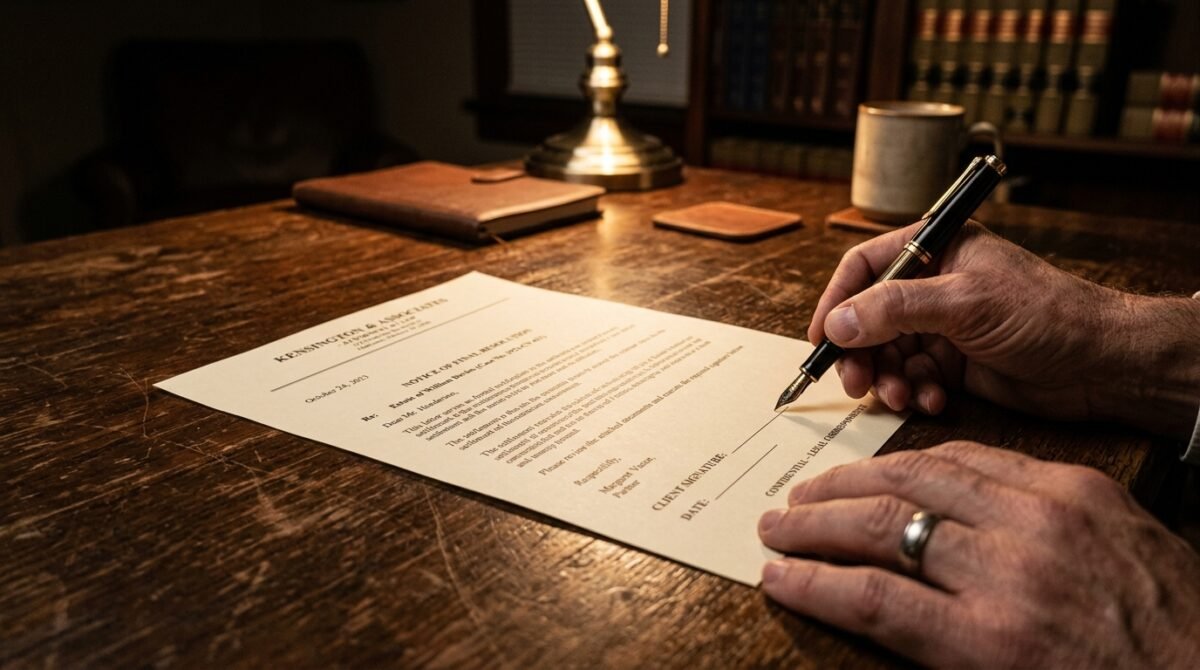
The formal letter arrived on a Tuesday. It was printed on heavy, cream-colored cardstock, the kind of paper that feels expensive and intentional. It outlined their claim: that they had ‘invested’ time and effort into the cabin and that my grandfather had been in a ‘diminished state of mind’ when he drafted the final version of his will. They wanted me to sign over a 50% ownership stake to them, or face a lawsuit that would tie up the probate process for years.
I sat on my porch, reading the document over and over until the words blurred. The sheer arrogance of it was breath-taking. They claimed that their ‘consistent use’ of the property meant they had acquired an equitable interest in it. They even went so far as to include a list of dates they had visited, as if showing up for a weekend of drinking on the dock somehow constituted property management or equity building.
I called my lawyer—a family friend who specialized in estate law—and he laughed when I read the contents to him. ‘It’s a bluff,’ he said. ‘They’re trying to scare you into a settlement because they know they have no actual legal ground to stand on. But they are counting on your exhaustion. They think if they make this loud enough and expensive enough, you’ll just give in.’ That didn’t make me feel better, though. It just made me realize how much they were willing to tear the family apart for a piece of property they had never once bothered to clean.
“We aren’t asking you to sell. We are just asking for our fair share. You spent time there, sure, but we made memories there. Memories have value, and we deserve to be part of that legacy, whether you like it or not.”
— A follow-up text message from Sarah
I didn’t respond to the text. I knew that anything I said could be used against me, twisted, or screenshotted for their friends and family to see. I had to remain the picture of stoic indifference, even while I felt like I was unraveling. The psychological toll of the silence was worse than any argument. I found myself wondering if I was the villain, even for a split second, before remembering the state of the cabin when I first took it over—the broken windows, the rotting wood, the unpaid taxes.
I began to document everything. I created a spreadsheet, a meticulous ledger of every dollar spent and every hour worked on the cabin over the last five years. I wanted to see if I could prove that not only was I the rightful owner, but that I was the only person who had treated the property with anything resembling respect. The ledger was my weapon, and it was becoming my obsession.
The Secret Group Chat and the Leaked Screenshots

It wasn’t long before the ‘family’ group chat turned into a war zone. My uncle, who had stayed mostly neutral, accidentally added me to a thread that was clearly meant for everyone *except* me. The messages were flowing fast, a stream of vitriol that left me breathless. They weren’t just talking about the cabin anymore; they were dissecting my character, calling me names, and even mocking the way I had cared for my grandfather in his final months.
They were planning their legal strategy in real-time, sharing tips on how to ‘make me look like a manipulator’ in front of the judge. One of my aunts suggested that they contact local media, framing the story as ‘Grandson Steals Grandfather’s Legacy.’ It was a coordinated smear campaign, and they were having a laugh while doing it. I took screenshots of every single message before they realized their mistake and kicked me out of the group.
“If we can just get the neighbors to testify that he was never around during the holidays, we can paint him as a stranger who swooped in at the end. The judge won’t know the difference.”
— Leaked message from the family group chat
Seeing those words in black and white changed everything. Any lingering guilt I had about fighting back evaporated. These weren’t people who were hurt and wanted to reconcile; these were opportunists who saw me as an obstacle to their own benefit. The betrayal stung, but it also clarified my path forward. I didn’t owe them anything—not an explanation, not a compromise, and certainly not the cabin.
I took the screenshots to my lawyer. He looked at them, shook his head, and told me that this could be a turning point. If we could prove that they were acting in bad faith, it could significantly weaken their claims in court. The mood in my house changed from defensive to offensive. I stopped checking my phone for their messages and started focusing on the legal filings, determined to expose their behavior for what it was.
The social isolation was intense. I found myself avoiding family gatherings, skipping birthday parties, and ignoring phone calls from relatives who just wanted to ‘get my side of the story.’ I knew that any information I shared would inevitably leak back to the ringleaders. I was effectively excommunicated for the crime of being the recipient of a gift, and the loneliness was a heavy price to pay for a house by a lake.
The Kitchen Confrontation: A Thanksgiving They Won’t Forget
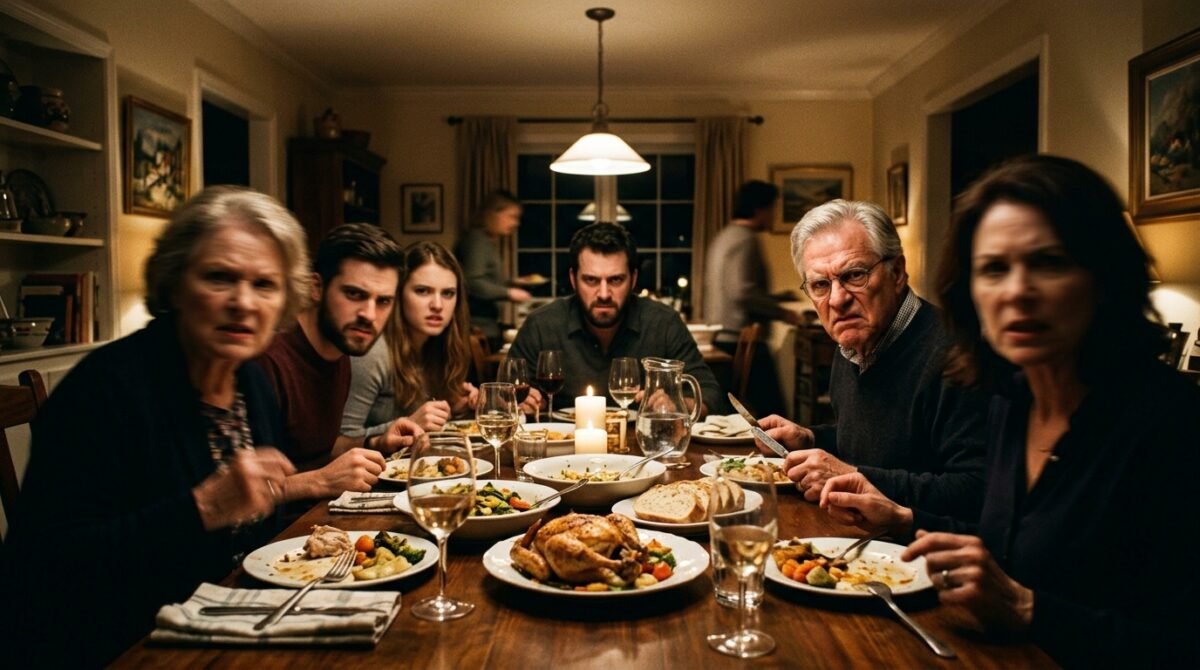
The inevitable showdown happened at Thanksgiving. My grandmother—who had stayed out of the conflict—insisted that we all come together, hoping that a shared meal would foster some kind of truce. It was a naive hope. From the moment I walked through the door, the tension was palpable. My cousins were already there, and they didn’t even bother to acknowledge my presence as I hung up my coat.
The dinner itself was a disaster of forced pleasantries and sharp-edged glares. The moment the turkey was carved, Sarah started in. She brought up the cabin in front of everyone, her voice dripping with artificial sweetness. She talked about how ‘Grandfather would have wanted the family to share the space’ and how ‘some people just don’t understand the meaning of family legacy.’ She was baiting me, trying to get a reaction that she could record or use to paint me as the aggressor.
“I think it’s very sad that you are keeping that house for yourself. It was built for all of us. You’re holding it hostage, and you’re tearing this family apart over a few square feet of wood and dirt.”
— Sarah, at the Thanksgiving dinner table
I put my fork down and looked her directly in the eye. I didn’t shout. I didn’t even raise my voice. I just stated the facts. I told them about the roof I’d repaired, the taxes I’d paid, and the hours I had spent at the cabin while they were out on vacations. I told them that the cabin wasn’t a family heirloom that they had earned; it was a property that I had kept alive when they had abandoned it. The table went dead silent.
My uncle tried to intervene, telling me to calm down, but I was done. I stood up, thanked my grandmother for the meal, and told everyone at the table that I would be speaking to my lawyers about their harassment. The look on their faces—a mix of shock, anger, and genuine fear—was the first bit of satisfaction I had felt in months. I walked out of that house and didn’t look back.
That was the last time I sat at a family table with them. I realized that my desire for ‘family harmony’ was what they were using to keep me passive. Once I broke that cycle, once I stopped caring about their approval, the power dynamic shifted. They weren’t fighting for a cabin anymore; they were fighting to maintain control over a person they thought they could manipulate.
The Legal Ledger: Proving My Investment

Following the Thanksgiving incident, we prepared for the formal court hearing. My lawyer suggested we put together a comprehensive ‘Financial and Sweat Equity Ledger’ to present to the judge. This was the ultimate proof that my claim to the cabin wasn’t just a result of a will; it was a result of my dedication and investment. We categorized everything: physical maintenance, financial contributions, and documented support for my grandfather.
I spent weeks going through old bank statements, finding cancelled checks from ten years ago for hardware store runs, and digitizing photos of the cabin in various states of disrepair that I had personally renovated. I wanted to show that the cabin I inherited was not the same cabin they remembered from their childhoods. It was a structure that I had fought to keep standing, often against the odds and with little to no help from the people now clamoring for their share.
| Category | My Contribution | Their Contribution |
|---|---|---|
| Roof Repair (2018) | $4,200 | $0 |
| Property Taxes (2015-2023) | $12,500 | $0 |
| General Maintenance (Hours) | 450+ Hours | 0 Hours |
| Grandfather’s Care (Daily) | 2+ Years | Occasional visits |
When we presented this to the court, the effect was immediate. The judge, an older man who clearly had little patience for family squabbles over property, looked at the document with a serious expression. He wasn’t interested in their ‘memories’ or their ‘feelings.’ He was interested in the facts. My cousins’ lawyers tried to argue that these expenses were ‘voluntary,’ but the judge cut them off, asking if they had any evidence of their own contributions to the property.
They had nothing. No receipts, no photos of them doing work, no evidence of anything other than their presence during holiday weekends. It was a crushing blow to their case. The narrative they had carefully constructed—that they were the ones who truly loved the cabin—was falling apart, replaced by the cold, hard reality of who had actually done the work.
This was the moment I knew I was going to win. It wasn’t about who had the best story or the most tears; it was about the work. I had invested my life, my money, and my time into that place, and the law was finally catching up to that reality. The relief was overwhelming, but it was coupled with a deep, lingering sadness that it had to come to this.
The Reddit Verdict: Community Perspectives

I decided to share my story on a popular legal and relationship advice forum. I didn’t use real names, and I kept the location vague, but the details were specific enough that the community was able to weigh in with brutal honesty. The response was overwhelming. I received thousands of comments, and they weren’t just sympathetic; they were fierce in their defense of my position. It was validating to see that I wasn’t the ‘crazy one,’ as my cousins had tried to make me feel.
“This is the classic ‘entitlement of the non-participating relative.’ They show up for the fun, they stay away for the chores, and then they expect a prize when the dust settles. You are NTA. Keep the cabin, keep the records, and keep the distance.”
— u/PropertyLawPro (Top Comment, 32.1k upvotes)
“The fact that they sued you instead of talking to you is all you need to know. You don’t have cousins anymore; you have litigious strangers. Don’t let their ‘memories’ gaslight you into giving up your property. Stay firm.”
— u/FamilyDramaExpert (15.2k upvotes)
Reading these comments helped me realize that this is a systemic issue for many families. The ‘fairness’ argument is the ultimate weapon of the entitled. People who do nothing to help while a relative is alive or when a property is crumbling often feel the most entitled to the rewards when that relative passes away. It’s a psychological defense mechanism, a way for them to avoid feeling guilty for their own lack of effort.
There were a few comments that suggested I offer them a compromise, just to ‘make the peace,’ but the community largely shouted those down. They pointed out that with people like my cousins, a compromise would never be enough. It would be a weakness they would exploit to push for more later. The consensus was clear: maintain the boundary, win the legal battle, and walk away from the toxicity.
The community support gave me the strength to stop apologizing. For months, I had been feeling like I needed to justify my ownership. The Reddit thread showed me that ownership of property is not something I need to justify to those who did nothing to earn it. The cabin is mine, and I have nothing to be ashamed of.
The Final Deposition: Breaking Their Narrative

The deposition was the most stressful part of the entire ordeal. Sitting in a small room with my cousins and their team of lawyers was a nightmare. They tried every trick in the book: trying to catch me in lies about my grandfather’s mental state, questioning my finances, and even suggesting that I had coerced my grandfather into changing his will. It was relentless, but I had prepared for this.
Every time they asked a leading question, I referred back to my notes. I didn’t speculate, I didn’t get emotional, and I didn’t offer any extra information. I was a robot, a wall of facts that they couldn’t break through. When they asked about my grandfather’s final days, I told them exactly what happened: he had asked me to help him, I had done it, and he had thanked me by leaving me the cabin. That was the story, and it was the truth.
“Did you or did you not intentionally alienate your cousins from your grandfather during his final months of life? Answer yes or no.”
— Opposing Counsel during deposition
I looked at the lawyer, then at my cousins, and simply said, ‘No. I didn’t alienate them. They were the ones who stopped coming.’ The lawyer tried to push, but the facts didn’t support their narrative. The evidence I had presented earlier—the lack of visits, the lack of communication—was too strong to ignore. They weren’t fighting me anymore; they were fighting the reality of their own actions.
By the end of the day, they looked exhausted. The fire in their eyes had faded, replaced by the realization that this was not going to be the easy win they had anticipated. They had spent thousands of dollars on lawyers to try and win a house, and they were finding that the cost of their entitlement was far higher than they had ever imagined.
Walking out of that building, I felt a weight lift off my shoulders. I knew the legal process still had to play out, but I also knew that they had failed to break me. I had held my ground, kept my cool, and stood by the truth. It was a victory, even if it was a small one in the grand scheme of the legal process.
The Settlement Proposal and My Final Answer

A few weeks after the deposition, we received a settlement offer. They were willing to drop the lawsuit if I agreed to pay them a ‘buyout’ of $50,000 for their alleged interest in the property. It was laughable. They were still trying to treat me like a bank, assuming that I would pay them just to make the lawsuit go away. My lawyer and I didn’t even have to discuss it. The answer was a hard ‘No.’
We sent a counter-offer: they drop the lawsuit, walk away, and we pay nothing. If they wanted to continue the fight, we would move to a full trial, where we would not only defend the will but also sue for the legal fees I had incurred defending my property against their frivolous claims. The look on their faces when they received that news must have been incredible. The power dynamic had completely inverted.
They were no longer the aggressors; they were the ones now facing the prospect of losing money, not just on lawyers, but on the potential for a countersuit. The thought of losing their own assets to pay for my defense was a reality they hadn’t considered. They were bullies who had never expected their target to fight back, and now they were trapped in the very mess they had created.
“This is the last chance for a reasonable resolution. If you proceed to trial, we will seek full recovery of all legal costs and damages associated with this frivolous lawsuit. We have the evidence, and we are ready to use it.”
— Letter sent by my attorney to the cousins’ legal team
I didn’t hear from them for three weeks. Those were the quietest three weeks of my life. I spent time at the cabin, fixing the dock, watching the sun set over the lake, and finally, for the first time in a year, I felt like the owner. The property was mine, not just on paper, but in spirit. I was there, I was working, and I was at peace.
When the response finally came, it was exactly what I expected. They were dropping the lawsuit. No money, no apologies, just a formal withdrawal of the claim. It was an anti-climactic end to a long, painful chapter, but it was exactly the ending I had been fighting for. The war was over, and I had won.
The Aftermath: Rebuilding Life Without Them
Winning the case didn’t magically fix my family. It actually solidified the divide. I don’t talk to my cousins anymore, and honestly, I’m okay with that. The lawsuit showed me that their relationship with me was based on what they could get from me, not on any real familial bond. I’ve realized that life is too short to surround myself with people who view me as a target to be exploited.
I have moved on to other parts of my life, but I still carry the lessons of that year with me. I’m more cautious about who I let into my life, more protective of my boundaries, and much more cynical about the concept of ‘family loyalty’ when it’s used as a weapon to demand sacrifice. I’ve found new friends, built new connections, and learned that family is often who you choose to be with, not just who you happen to share blood with.
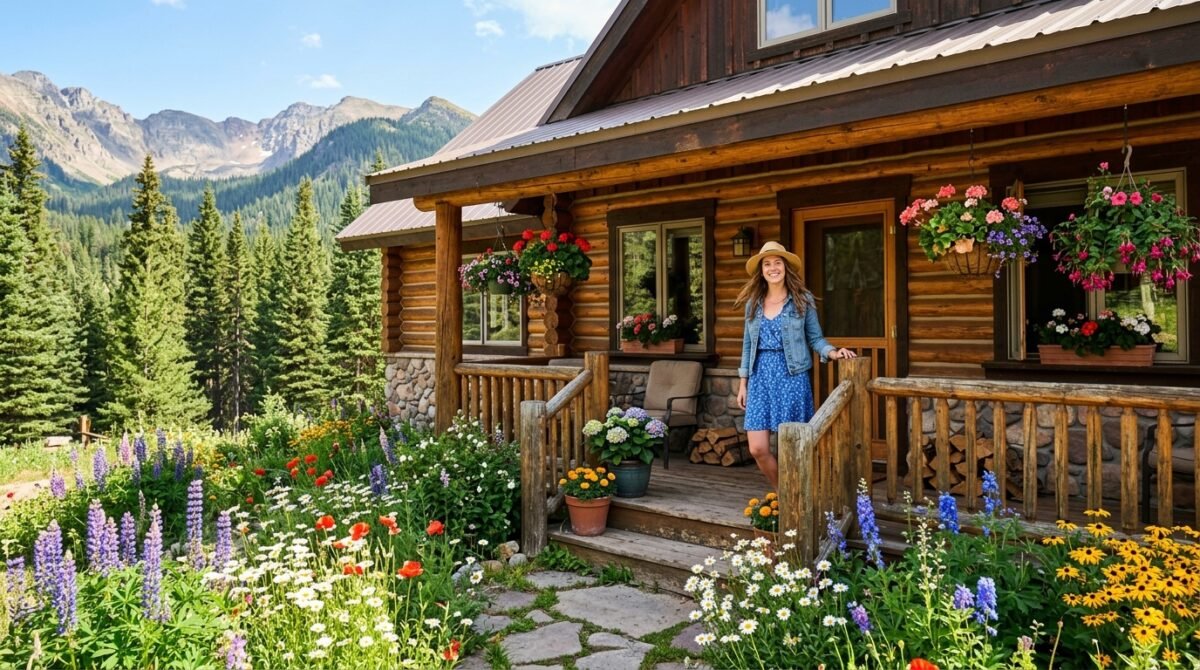
The cabin is doing great. I’ve kept up with the maintenance, planted a garden that my grandfather would have loved, and started hosting friends who actually appreciate the work it takes to keep a place like that running. They help me with the chores, they respect the space, and most importantly, they don’t treat it like a rental property. It’s a home, and it’s finally filled with the right kind of energy.
“You don’t need to be blood to be family. And sometimes, those who share your blood are the furthest things from family you’ll ever know. Keep the cabin, keep your peace, and keep walking forward.”
— Advice from a close friend
I still think about my grandfather every time I walk through the door. I know he would be proud that I stood my ground. He didn’t build that cabin for his legacy to be dismantled by greed; he built it for it to be protected by the one person he knew would care for it. I am the steward of his dream, and that is a responsibility I take very seriously.
Life continues to evolve. The lawsuit is a memory now, a dark smudge on the history of the cabin that is slowly being buried under layers of new, happy memories. I’ve learned that the hardest decisions often lead to the best outcomes, and that standing up for yourself is not a sign of aggression—it’s a sign of self-respect.
Reflecting on the Price of Inheritance
Looking back, the price of the inheritance was much higher than just the legal fees. It cost me my connection to a part of my family, it cost me a year of intense emotional stress, and it forced me to grow up in ways I wasn’t prepared for. But would I do it again? Absolutely. Not just for the property, but for the principle of the thing. I refused to let them dictate the terms of my life or my grandfather’s legacy.
The lesson here is simple: never let the fear of ‘what others will think’ keep you from defending your rights. Whether it’s an inheritance, a relationship, or a boundary at work, you have the right to stand your ground. People will try to use your empathy against you, they will try to make you feel like the villain, but you have to keep your eye on the truth. The truth is your greatest asset.
I hope that anyone else going through a similar situation finds the strength to do the same. Don’t let the noise of the entitled drown out your own sense of what’s right. Document everything, stay calm, and don’t be afraid to walk away from people who aren’t worthy of your time or your space. The peace you find on the other side is worth every penny and every minute of the struggle.
“The hardest part of winning is realizing that the prize is just the beginning. You have to be strong enough to keep what you’ve earned, and brave enough to walk away from everything else.”
— My personal mantra
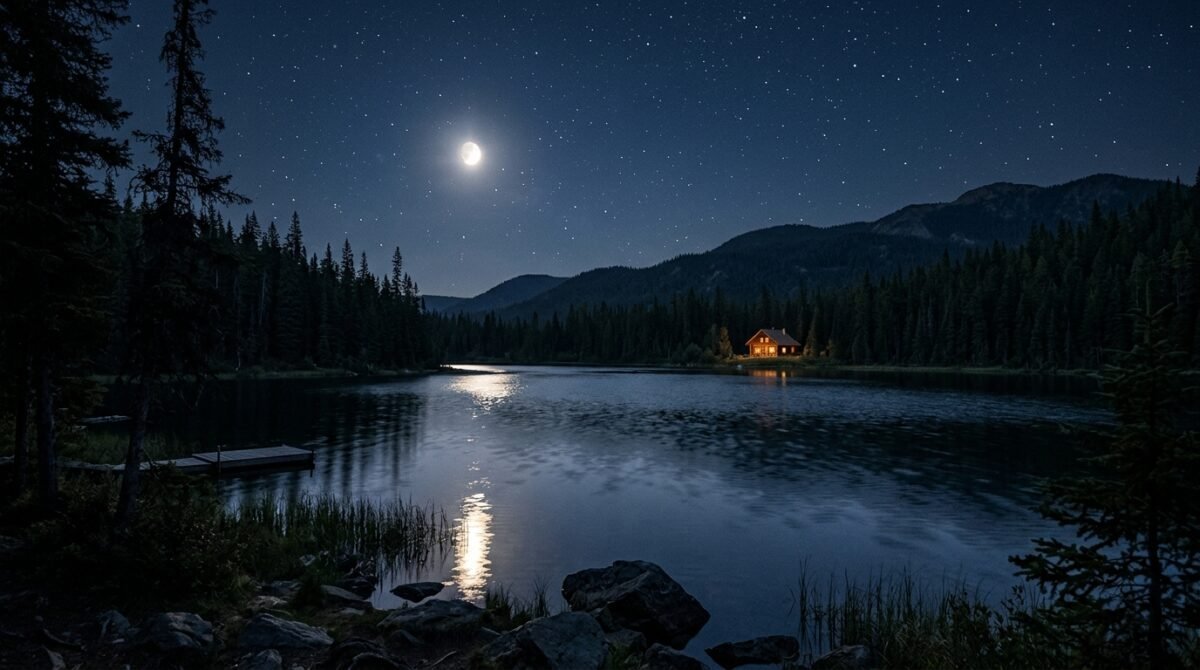
So, here I am, sitting by the lake, watching the water ripple under the moonlight. The cabin is quiet, the air is cool, and the ghosts of the past are finally at rest. I have the life I wanted, and I have the peace I worked so hard to find. It hasn’t been easy, but it has been worth it. And for that, I am truly grateful.
Conclusion
In the end, the cabin became more than just a piece of property; it became a symbol of resilience. The attempt to strip me of my inheritance failed because it was based on nothing more than convenience and greed. By standing my ground, documenting my contributions, and refusing to let my family members weaponize their ‘memories’ against me, I was able to secure what was rightfully mine.
The ordeal has taught me that true ownership is not just about the deed; it’s about the care, the work, and the responsibility you put into something. My cousins viewed the cabin as an asset they were entitled to, while I viewed it as a responsibility that I was honored to hold. That fundamental difference in philosophy was the key to my victory.
I want to hear from you, the readers. Have you ever had to draw a hard line with family over an inheritance or a shared asset? Was it worth the fallout, or do you look back on it with regret? Share your stories in the comments below—I’m curious to see how many of you have faced similar battles and how you managed to come out the other side with your sanity intact.
What's your verdict on this dilemma?
Vote below to contribute to the official community consensus.

Have a Dilemma Keeping You Up at Night?
Share your real-life feud, wedding chaos, or relationship crossroads anonymously with our editorial team.
What do you think ?
0 Comments🛡️ Comments are moderated to protect community integrity. Your comment will appear once approved by the editorial team.