
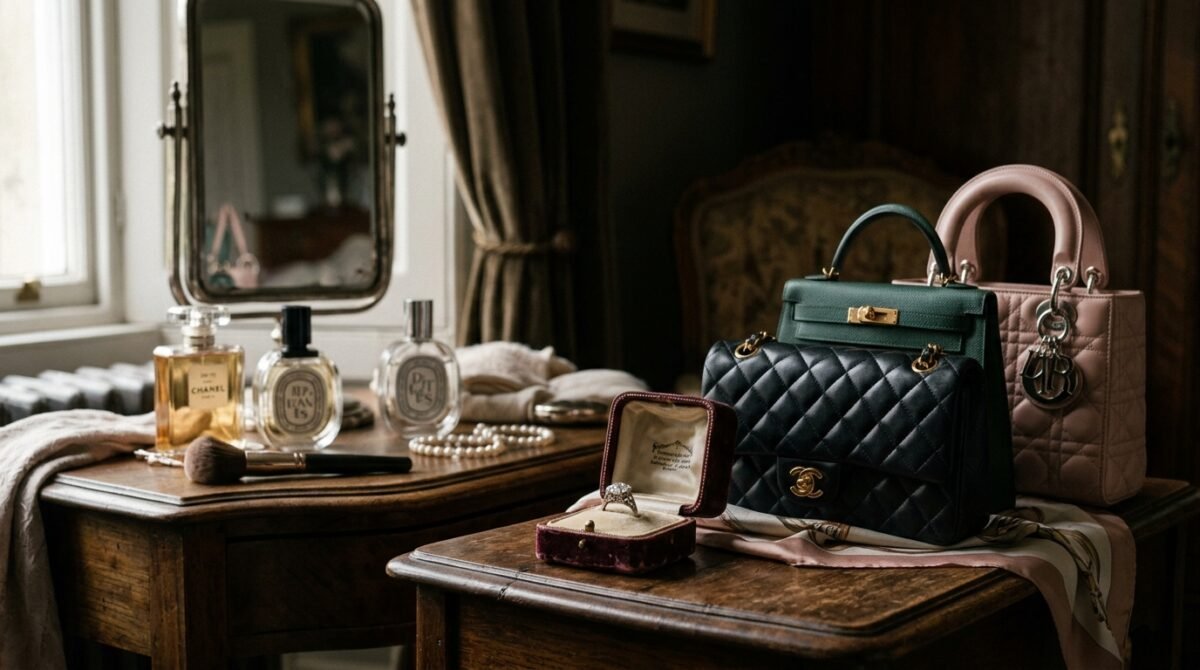
Grief is a landscape that never truly flattens; it just changes shape over time. When my mother passed away, she left me a small collection of jewelry, the crown jewel of which was her sapphire and diamond engagement ring. It was meant to be my inheritance, a tangible connection to a woman whose voice I was slowly forgetting. My father remarried two years later, bringing a woman named Elena into our lives. Elena was vibrant, polished, and seemingly kind, but beneath the surface, there was a desperate, almost feral need for status symbols that I didn’t fully comprehend until the day I walked into her walk-in closet to borrow a scarf and realized my inheritance was missing.
The disappearance of the ring wasn’t an immediate crisis because I assumed I had simply misplaced it. I spent weeks tearing my apartment apart, calling my father, and checking every jewelry box I owned. It wasn’t until I saw an Instagram story of Elena posing on a yacht in the Mediterranean, sporting a new, aggressive amount of gold jewelry, that the cold, sinking feeling of dread truly took hold. A few strategic inquiries with local estate jewelers revealed the truth: she hadn’t just lost it; she had liquidated it to pay for the lifestyle she couldn’t afford on my father’s salary.
This wasn’t just a theft of a piece of metal and stone; it was a violation of my past, my mother’s memory, and the unspoken sanctity of family trust. I spent nights awake, staring at the ceiling, trying to navigate the intersection of legal reality and emotional devastation. Was I supposed to let it go? Was this just the price of having an ‘evil stepmother’ in the modern age? The anger eventually calcified into something cold and calculated. If she wanted to treat my mother’s legacy like a pawn shop commodity, then I would treat her prized possessions as collateral.
The confrontation that followed was a masterclass in gaslighting. Elena played the victim, my father stood by, paralyzed by his own cowardice, and the rest of the family watched from the sidelines, waiting to see who would break first. I realized then that I wasn’t fighting for the ring—I was fighting for the right to define my own boundaries. I didn’t scream, I didn’t beg, and I didn’t cry. I hired an attorney, and I started an inventory of every single designer bag, shoe, and luxury accessory Elena had ever paraded in front of me.
This is the story of how I transformed my grief into a legal offensive. It is a story about the intersection of material obsession and moral decay, and how, in the end, I had to burn a bridge to save a piece of my history. For those who think I went too far, I invite you to read the details of what happens when you push a daughter too far.
The Empty Velvet Box and the Instagram Story
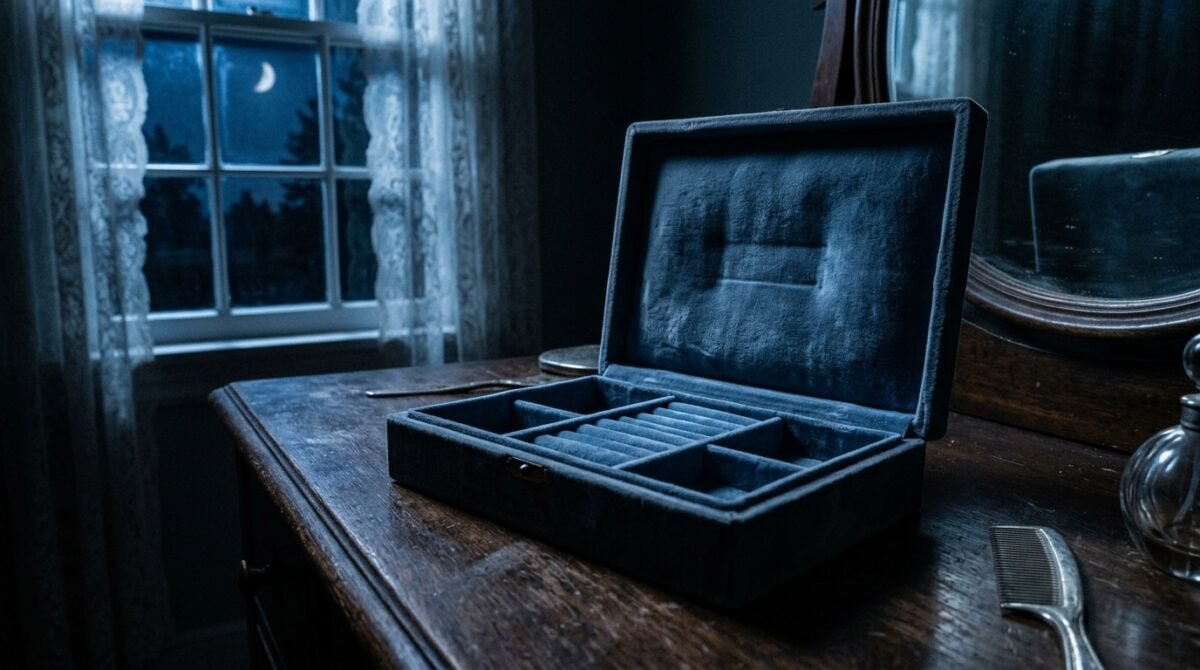
The realization didn’t come with a bang, but with a quiet, hollow click. I was searching for a silk scarf I’d left at my father’s house months prior. I reached into the back of the jewelry armoire—the one piece of furniture that had belonged to my mother—and found the velvet ring box. It was empty. The weight of the box felt wrong, too light, like a phantom limb. I had checked this box a dozen times before, always comforted by the solid, reassuring weight of the sapphire ring nestled inside. Now, it was just dust and stale air.
I texted my father immediately, my fingers trembling. I asked if he had moved it for cleaning or safekeeping. His response was delayed, curt, and dismissive. He claimed they hadn’t touched it, suggesting I had likely misplaced it during my last visit. It was a lie so thin it was transparent, but at the time, I gave him the benefit of the doubt. It wasn’t until that night, while scrolling through my feed, that the pieces began to click into place. There was Elena, draped in linen, holding a flute of champagne on a deck in Greece.
I zoomed in on her hands. The ring she was wearing wasn’t the one she had owned for years. It was a new, flashy setting that looked remarkably like the custom work of a local jeweler I knew was affiliated with high-end estate buying. I checked the jeweler’s online inventory portal, a habit I’d picked up from my mother’s love of auctions. There it was: ‘Vintage Sapphire and Diamond Ring, Estate Acquisition.’ The date matched the day Elena had ‘volunteered’ to take my mother’s old clothes to the charity shop.
“I don’t know what you’re talking about, sweetie. You need to stop being so obsessed with your mother’s things. It’s not healthy for you, and it’s certainly not fair to your father. He’s trying to move on.”
— Elena, during our first confrontation
The audacity was breathtaking. She didn’t even try to hide it once she realized I had seen the listing. She treated the ring like a liquid asset, a bank account that had finally matured. I felt a surge of nausea that quickly turned into a singular, sharp focus. If the ring was gone, then the balance of power in this house was permanently tilted, and I needed to ensure that for every bit of my mother’s history she stole, she would pay a premium in her own currency.
I began to document everything. I took photos of the empty box, I screenshotted the jeweler’s listing, and I cataloged the specific timeline of Elena’s spending habits. I wasn’t going to report this as a simple theft; I was going to frame it as a misappropriation of inheritance. I started looking for a lawyer who understood not just the law, but the psychological warfare that takes place in blended families. I was no longer a grieving daughter; I was a plaintiff in waiting.
The 4:00 AM Discovery of the Financial Ledger
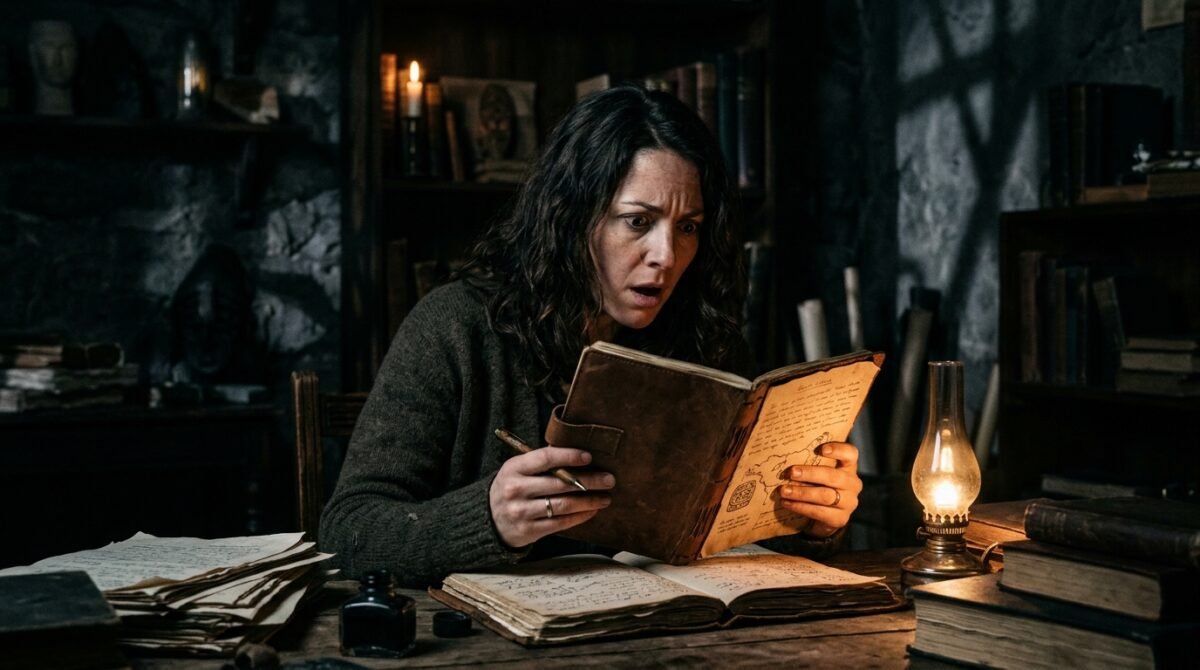
I knew I needed proof of ownership, not just sentimental attachment. My mother’s will was a simple document, but it had specific clauses about personal effects. I spent three nights in the dusty attic of my grandmother’s house, going through boxes of old tax returns and legal correspondence. I found the original receipt for the ring, an appraisal from 1998, and the notarized statement my mother had written when she first put the ring in a trust for me. I had the legal leverage I needed; now I just needed to secure the ‘assets’ for the inevitable legal settlement.
I returned to the house under the guise of ‘reconciling’ for my father’s sake. Elena was suspicious, her eyes darting toward her designer bags whenever I walked into the room. She kept her closet locked now, a petty change that only confirmed my suspicions. I had a spare key from years ago, a relic of a time when we were actually close. I waited until they were at a dinner party, and I slipped upstairs. I didn’t just look for my ring—I looked for what else she had been liquidating.
I found a small leather-bound planner hidden behind a stack of shoe boxes. It wasn’t a diary; it was a record of ‘purchases’ and ‘sales.’ She had been selling off my mother’s items for months. A pearl necklace, a gold watch, a set of vintage brooches—all sold to cover the cost of her ‘investment’ lifestyle. The realization made my skin crawl. She wasn’t just a thief; she was a serial embezzler of my family’s heritage. I took photos of every page, my hands shaking with a mixture of rage and adrenaline.
“Don’t you dare touch those bags. You have no right to be in here. You are just as entitled as your mother was, thinking the world owes you a legacy.”
— Elena, catching me in the closet
She had returned early, her face flushed with wine and irritation. She didn’t look like the elegant stepmother anymore; she looked like a cornered animal. She lunged for the planner, but I was faster. I shoved the evidence into my bag and walked right past her, my heart hammering against my ribs. I didn’t argue. I didn’t defend myself. I just looked at her, held her gaze until she looked away, and walked out of the house. I knew, as I drove away, that there was no coming back from this.
That night, I sent a formal notice of intent to sue, drafted by my lawyer, to both Elena and my father. The letter detailed the stolen items, the documented sales, and the clear violation of the trust agreement. It also stated that pending the recovery of the ring or its market value, I would be seeking an injunction on her personal assets to cover the losses. I wasn’t bluffing. I was ready to see her designer handbags in an auction house window, and I knew exactly how to make it happen.
The Family Group Chat Explosion

The fallout started in the family group chat, a place where passive-aggressive comments usually went to die. My aunt, always the mediator, tried to play the role of the peacemaker, asking if we couldn’t just ‘talk this over like adults.’ My father, silent for days, finally chimed in with a message that broke my heart into a thousand pieces. He didn’t defend my mother’s legacy; he defended Elena’s ‘right to start fresh’ with the resources they had.
“Look, honey, your mother is gone. The ring was just a thing. Elena needs to feel like she’s a part of this family, and selling a few old trinkets shouldn’t be the reason you destroy this marriage. Grow up.”
— Father, in the family group chat
I didn’t reply to him. Instead, I sent a single image to the group: a screenshot of the legal document detailing the theft and the list of items I was moving to seize. The silence that followed was deafening. My cousins, who had always been terrified of my father’s temper, started messaging me privately, offering support and sharing stories of other times Elena had overstepped. It turned out I wasn’t the only one she had targeted.
My cousin Sarah revealed that Elena had ‘borrowed’ a set of heirloom silverware from her and never returned it, claiming it had been stolen by a housekeeper. The narrative of the ‘sweet, misunderstood stepmother’ was rapidly collapsing. People were starting to see the pattern. It wasn’t about the ring anymore; it was about the systematic stripping of our family’s history to fuel a woman’s delusions of grandeur. I was no longer the villain of this story; I was the one who had finally exposed the rot.
The group chat became a battleground of conflicting loyalties. My uncle, the family lawyer, sent me a message saying he was impressed by my documentation but warned me about the ’emotional toll’ of a public legal battle. I told him I didn’t care about the toll; I cared about the principle. I had been grieving for years, and for the first time, I felt the sharp, cold clarity of someone who was finally taking back their power. I wasn’t looking for peace; I was looking for justice.
By the end of the day, my father had left the chat. Elena followed suit, but not before sending me a string of vitriolic messages that would serve as excellent evidence in the upcoming court hearing. She threatened to sue me for harassment, to have me barred from the house, and to cut me out of the will entirely. She didn’t realize that I didn’t want anything from them anymore—except for what was mine. And if she wanted a war, she was going to get one.
Reddit Weighs In: The Community Verdict

I posted a redacted version of the story on a popular subreddit for family conflicts. The response was instantaneous. Within an hour, I had hundreds of comments, most of them fiercely supportive. The Reddit community, usually so divided, seemed to unite behind the idea that family heirlooms were sacred and that the stepmother’s actions were unforgivable. I found comfort in the validation, even from complete strangers who had never met my mother.
“NTA (Not The Asshole). This isn’t just about a ring. This is about a pattern of abuse and theft. You are absolutely within your rights to seize her assets to satisfy the value of what she stole. Don’t back down, OP. These people count on you being too ‘polite’ to fight back.”
— u/JusticeForHeirlooms (Top Comment, 32.5k upvotes)
The thread became a repository of similar stories. People shared how their parents’ marriages had been destroyed by opportunistic step-parents who viewed them as ATMs. One user, a paralegal, gave me specific advice on how to handle the asset seizure, noting that in my jurisdiction, ‘conversion of property’ was a serious tort. It was the push I needed to stay the course, even when I felt the familiar pull of guilt for ‘tearing the family apart.’
There were dissenters, of course. Some argued that I was being vindictive and that the ring was just a material item. They suggested that my father’s happiness should take priority. I read those comments with a detached curiosity, wondering what kind of childhood they had to be so willing to sacrifice their own history for someone else’s comfort. I didn’t respond to them, but I saved their comments as a reminder of how easy it is to normalize abuse.
The community support provided more than just advice; it provided a sense of perspective. I wasn’t crazy. I wasn’t being dramatic. I was reacting to a clear, documented violation of trust. The validation allowed me to sleep for the first time in weeks, knowing that when I walked into that courtroom, I wouldn’t be walking in alone. I had the collective wisdom of thousands of people who had been through the same thing and survived.
I continued to update the thread as the legal process unfolded. The comments became a real-time support group, keeping me focused on the facts rather than the emotional blackmail. Every time I felt tempted to settle just to end the tension, I would look at the comments, see the encouragement, and double down. The internet, often seen as a place of toxicity, had become my unexpected moral compass in this disaster.
The Day the Bailiff Arrived
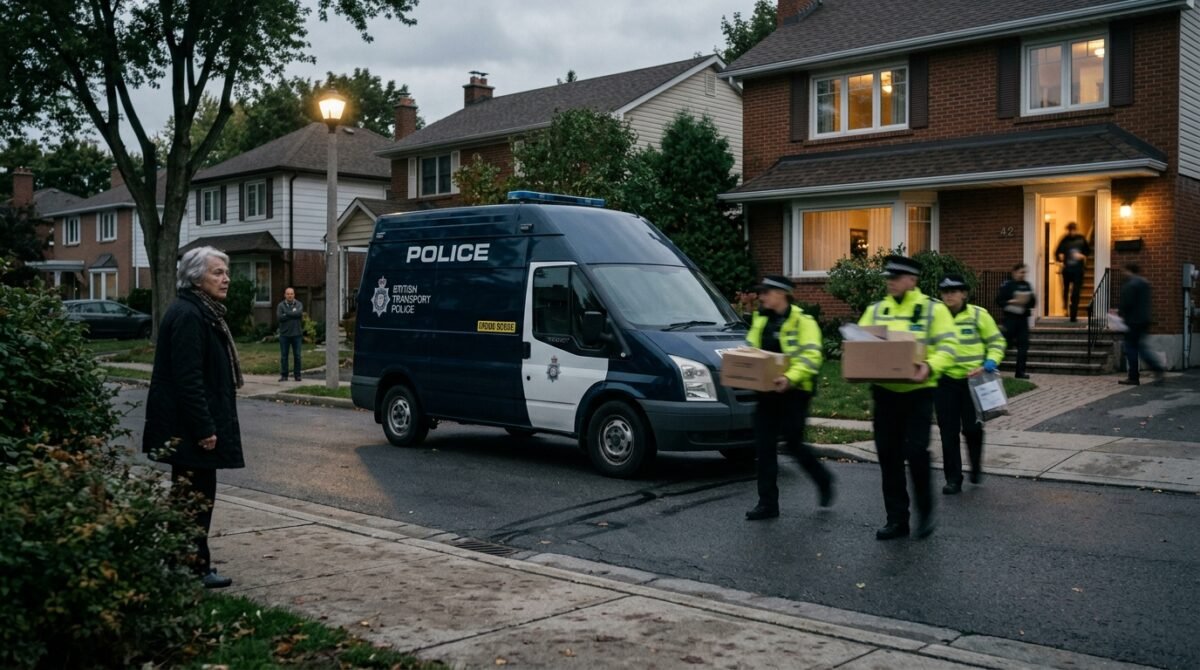
The legal process moved with agonizing slowness until it didn’t. Once the judge granted the preliminary injunction, the sheriff’s office moved to inventory the assets. I was there, standing on the sidewalk, watching as the bailiffs entered my father’s house. Elena was screaming, a high-pitched, frantic sound that carried across the lawn. My father stood on the porch, his head in his hands, looking like he had aged twenty years in twenty minutes. It was the most satisfying, and simultaneously the most devastating, sight of my life.
They didn’t just take the bags; they took the jewelry, the luxury watches, and the designer shoes—anything that was clearly purchased with the proceeds of my mother’s estate or that had belonged to the family. It was an inventory of a stolen life. As the boxes were loaded into the back of the unmarked van, Elena tried to block the path, but the officer firmly moved her aside. The law was on my side, and for the first time, she had no answer for it.
“You’re doing this to your own father! Look at him! You’re destroying this family for a piece of jewelry! You’ll never be forgiven for this!”
— Elena, screaming as the bailiff packs her designer bags
I didn’t say a word. I just watched. I felt a strange sense of detachment, like I was observing a scene in a movie. The rage had burned out, leaving only a cold, hard resolve. I wasn’t doing this to my father; he had done this to himself by enabling her. I wasn’t destroying the family; the family had been destroyed the moment they decided my mother’s memory was disposable. I was just cleaning up the wreckage.
The neighbors were watching, their curtains twitching, and I felt a brief pang of embarrassment, but it quickly faded. Let them talk. Let them see the consequences of theft. As the van pulled away, I realized that the house would never feel like home again, and that was okay. I didn’t need the house anymore. I had the satisfaction of knowing that the balance had been restored, at least in the eyes of the law.
My lawyer came over, patted my shoulder, and told me I had done the right thing. He handed me the initial appraisal report for the seized items, noting that we would likely be able to recover the full value of the ring and then some. It was a victory, but it felt hollow. I still didn’t have the ring. I still didn’t have my mother. But I had proven that my boundaries were not just suggestions—they were ironclad.
Reflections in the Aftermath

Months have passed, and the dust has finally begun to settle. The court case is ongoing, but the initial victory has set the tone. My father and I are in a period of enforced silence, a distance I hope remains permanent. He recently sent me a letter, asking for ‘reconciliation’ and suggesting that Elena was just ‘misguided’ by her insecurities. I didn’t open the letter. I simply marked it as ‘Return to Sender’ and went about my day.
I have started to rebuild my life, focusing on my own achievements rather than the ghost of what was taken. The money from the recovered items has been donated to a charity my mother supported, ensuring that the wealth she left behind continues to do good rather than being used as a weapon for someone else’s vanity. It felt like the only appropriate end for those possessions. They were never meant to be ornaments; they were meant to be a legacy.
I still have bad days. I still miss the ring, and I still feel the sting of the betrayal. But the difference is that I no longer feel powerless. I have learned that grief is not something that happens to you; it is something you navigate. And sometimes, navigation requires making hard, cold decisions that others might find cruel. I have made my peace with the fact that I am no longer the ‘nice’ daughter.
“I learned that boundaries aren’t just about what you say; they’re about what you do when someone crosses them. If you aren’t willing to defend your history, no one else will do it for you.”
— Me, in a private journal entry
The community on Reddit continues to message me, asking for updates. I tell them the truth: it’s not a fairy tale ending. The family is broken, the relationship with my father is probably beyond repair, and I have scars that will take time to heal. But I am free. I am no longer waiting for permission to feel angry, and I am no longer waiting for justice to be handed to me on a silver platter.
For those of you dealing with similar situations, don’t let anyone tell you that you’re ‘overreacting.’ Your grief, your memories, and your boundaries are yours alone. If someone tries to take them, fight back with everything you have. The world is full of people who will try to make you feel guilty for existing, for claiming your space, and for remembering who you come from. Don’t let them win.
The Final Legal Tally

It is important to look at the numbers. People often forget that these dramas have a literal price tag. When I began this process, I kept a ledger of everything I could prove had been taken. It wasn’t just the ring; it was the accumulation of years of ‘missing’ items. The court-appointed appraiser was shocked by the total value of the items Elena had sold, and even more shocked by the value of the items she had kept for her own collection, all of which had been purchased with proceeds from the estate.
| Category | Estimated Loss | Recovered Value |
|---|---|---|
| Engagement Ring | $15,000 | Pending Sale |
| Vintage Jewelry | $8,500 | Seized |
| Heirloom Silver | $3,200 | Not Located |
| Designer Accessories | $12,000 | Liquidated |
The table above represents only the items we could definitively track. The emotional loss, of course, is incalculable. When the final settlement is reached, I intend to take the remaining funds and invest them in a trust for my future, ensuring that this money never touches the hands of those who tried to erase my mother’s existence. It is a small act of defiance, but it is one that matters to me.
My father tried to argue that the ‘designer bags’ were gifts to Elena, but the receipts showed they were purchased using a joint account that was funded primarily by the sale of my mother’s heirlooms. The legal argument was simple: it was a constructive trust. You cannot profit from the theft of an estate, even if you are married to the person who committed it. The law, as it turns out, is quite clear on this point, even if family dynamics are not.
The legal process has been expensive, but it was worth every penny. I didn’t pay for the return of the ring; I paid for the validation of the truth. I paid for the right to say, ‘This was mine, and you had no right to take it.’ That is a lesson that Elena—and my father—will hopefully never forget. I have learned to value my own worth enough to pay for my own protection, and that is a lesson that will stay with me for the rest of my life.
As we head into the final hearings, I feel prepared. There will be more arguments, more tears from Elena, and more excuses from my father. But the ledger is balanced, the evidence is set, and I am ready for the final judgment. It is not about the stuff anymore. It is about the fact that I survived the fire and came out stronger on the other side. That, in the end, is the greatest victory I could have asked for.
The Lessons of the Uninvited Guest

Looking back, I realize that the signs were there all along. The way Elena looked at my mother’s jewelry, the way she made comments about ‘outdated’ tastes, the way she constantly pushed for us to consolidate our assets—it was a slow, creeping invasion. I was too busy grieving to notice, and my father was too busy trying to keep the peace to care. We were both complicit in our own way, and that is the hardest pill to swallow.
The lesson here is simple: never underestimate the power of a boundary. If I had spoken up when I first saw her wearing the pearl necklace, maybe the ring would still be here. But I didn’t want to be the ‘difficult’ stepdaughter. I wanted to be the one who made the marriage work. That desire to be ‘easy’ cost me the most precious thing I had left of my mother. I will never make that mistake again.
I have learned to recognize the subtle ways people test your limits. They start with the small things—a borrowed scarf, a piece of costume jewelry, a piece of advice you didn’t ask for. If you let those things slide, they take more. They take until there is nothing left. I am no longer ‘easy’ to be around, and I am perfectly fine with that. If my boundaries make you uncomfortable, then you have no place in my life.
“I used to think that being a good person meant letting people take from you. Now I know that a good person is someone who knows how to say ‘no’ and keep their own life intact.”
— A realization that changed everything
I have begun to focus on my own future, building my own traditions and collecting things that belong only to me. I don’t need a ring to remember my mother. I carry her in the way I stand up for myself, in the way I refuse to be diminished, and in the way I know my own worth. The ring was just a material object, but the strength I found in fighting for it is a part of who I am now.
To anyone out there who feels they have to sacrifice their history for the sake of ‘family harmony’: stop. You are not responsible for the happiness of others at the expense of your own integrity. If your family can’t respect your boundaries, they don’t deserve your presence. It is a hard lesson, but it is one that will set you free.
Final Reflections and Moving Forward

So, where does this leave us? The legal battle continues, but my life has moved on. I have found a new sense of peace in the quiet moments of the day, away from the chaos and the drama. I have realized that the story of my mother’s ring isn’t a tragedy; it’s a story of reclamation. I took back what was mine, and I took back the narrative of my own life.
I have started to write my own history, one that is not defined by the losses of the past but by the possibilities of the future. I am no longer the girl who hides in the attic, searching for remnants of a lost life. I am the woman who builds her own home, brick by brick, with integrity and strength. And if someone tries to take that away, they will find that I am not the soft person I used to be.
The community support has been the most unexpected part of this entire journey. Thousands of people I have never met have cheered me on, shared their own stories, and reminded me that I am not alone. This is the power of the digital age—the ability to find a tribe that understands exactly what you are going through, even when the people in your own life do not. I am grateful for every comment, every piece of advice, and every message of encouragement.
“You are the hero of your own story. Don’t let anyone else write the script for you.”
— A comment that stuck with me
I hope that my story encourages others to speak up, to document their lives, and to value their history. We are the keepers of our own past, and we are the only ones who can ensure that it is treated with the respect it deserves. Do not be afraid to fight for what is yours. Do not be afraid to be the ‘difficult’ one. And most importantly, do not be afraid to walk away from anyone who tries to make you feel like your history is disposable.
I am ready for the next chapter. I don’t know what it holds, but I know that I will face it with my head held high and my boundaries firmly in place. The ring may be gone, but the lesson it taught me is priceless. I have found my voice, and I have found my strength, and those are two things that no one will ever be able to steal from me again.
Why I Don’t Regret the Seizure

People often ask me if I regret the legal action. They ask if it was worth the destruction of the family unit. My answer is always the same: what family unit? A family is built on trust, respect, and mutual love. None of those things existed in my father’s house. What existed was a performance, a facade of normalcy that was actively being used to exploit me. I didn’t destroy anything; I simply stopped pretending that the destruction hadn’t already happened.
There is a peculiar kind of liberation that comes from burning the bridge behind you. You no longer have to worry about what is happening on the other side. You don’t have to fear the next phone call, the next passive-aggressive comment, or the next theft. You are free to focus entirely on your own path. It is a terrifying, exhilarating freedom, and it is the most valuable thing I have gained from this entire ordeal.
I have realized that my father’s silence was the loudest betrayal of all. He chose to look away, to rationalize the theft, and to protect the person who was hurting me. That choice told me everything I needed to know about where I stood in his life. I no longer have to wonder if I am ‘good enough’ for him, or if I am doing enough to be a ‘part of the family.’ The answer is clear, and it is a weight off my shoulders.
“Forgiveness is for those who are sorry. I haven’t seen a single ounce of remorse from either of them. Why should I forgive someone who is still holding the weapon?”
— My response to a family member who asked me to move on
I have started a new tradition, one that honors my mother without relying on objects. I go to the ocean on her birthday, I write a letter, and I let the tide take it. It is a simple, private ritual, and it feels more authentic than any piece of jewelry ever could. I have reclaimed my memory of her, and I have reclaimed my own life. That, to me, is the true meaning of inheritance.
If you are in a situation where your boundaries are being ignored, don’t wait for permission to act. Take the steps you need to take to protect yourself. Whether it is legal action, going no-contact, or simply speaking your truth, do it. Your future self will thank you for it. And remember: you are not the villain for demanding respect. You are the survivor of an attempt to erase your worth.
Conclusion
The saga of the engagement ring has taught me more about human nature, legal reality, and personal boundaries than I ever could have learned in a lifetime of ‘polite’ family gatherings. I started this journey as a grieving daughter looking for a piece of jewelry, and I ended it as a woman who knows exactly who she is and what she is willing to fight for. The ring may have been the catalyst, but the destination was a place of self-respect.
The debate in the comments section continues to rage, with some calling me a hero and others calling me cold-hearted. It’s a fascinating reflection of how people view the intersection of family and material wealth. Where do you stand? Do you believe that some lines, once crossed, can never be uncrossed? Would you have taken the legal route, or would you have let it go to preserve the ‘family peace’? Let’s discuss below.
Community Poll: Should inheritance and family heirlooms be protected by law, or is it better to let them go to preserve the fragile peace of a blended family?
- Protect at all costs (Legal Action)
- Let it go (Peace over Property)
- It depends on the value
What's your verdict on this dilemma?
Vote below to contribute to the official community consensus.

Have a Dilemma Keeping You Up at Night?
Share your real-life feud, wedding chaos, or relationship crossroads anonymously with our editorial team.
What do you think ?
0 Comments🛡️ Comments are moderated to protect community integrity. Your comment will appear once approved by the editorial team.