
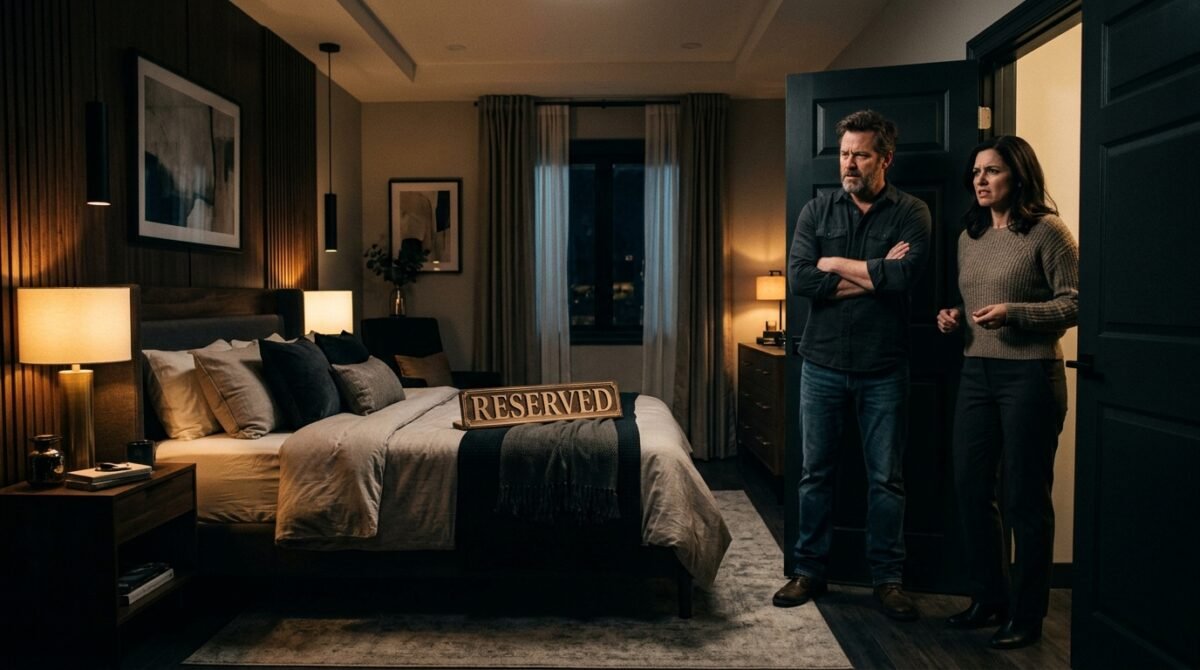
We all have that one family member who treats our home like a luxury hotel, but my in-laws, Brenda and Arthur, took it to an entirely different level of entitlement. They didn’t just ask to visit; they informed me—via a group text sent to my husband—that they would be staying in our home for six weeks during the winter holidays. The kicker? They explicitly demanded our master bedroom because, according to Brenda, ‘a guest of their stature shouldn’t be relegated to a drafty guest room with a twin bed.’
My husband, Mark, has always been conflict-averse, often defaulting to ‘let’s just keep the peace’ whenever his parents steamrolled over our boundaries. For years, I had tolerated the unsolicited decorating advice, the criticism of my cooking, and the casual comments about how my career was ‘distracting me from being a proper housewife.’ But this was my personal space, my sanctuary, and my sanity at stake. Taking my master bedroom meant pushing me into a makeshift office space with an air mattress, and frankly, I had hit my breaking point.
The dilemma wasn’t just about the room; it was about the fundamental erosion of my autonomy in the house I paid for, maintained, and curated. I tried to reason with them, but my words were dismissed as ‘un-family-oriented’ and ‘ungrateful.’ The tension reached a boiling point when they started sending me lists of ‘required upgrades’ to the room, including new Egyptian cotton linens and a specific brand of hypoallergenic pillows. They were planning a takeover, not a visit, and I decided that if they wanted to treat my life like a commercial transaction, I would provide them exactly that.
I chose a path that many would call scorched earth. With Mark paralyzed by his own upbringing and unable to defend our territory, I took matters into my own hands. I didn’t cancel their trip; instead, I listed our entire house on a short-term rental platform for those exact six weeks. I found a lovely, high-paying corporate family looking for a home away from home, and I signed the lease before my in-laws even finished picking out the curtains they wanted me to buy.
What followed was a masterclass in unintentional consequences, a family meltdown of epic proportions, and a realization that sometimes, the only way to establish boundaries is to make the cost of crossing them prohibitively high. This is the blow-by-blow account of the Great In-Law Displacement, the fallout of the group chat, and how I reclaimed my master bedroom—and my power—in the process.
The Group Chat Declaration of War
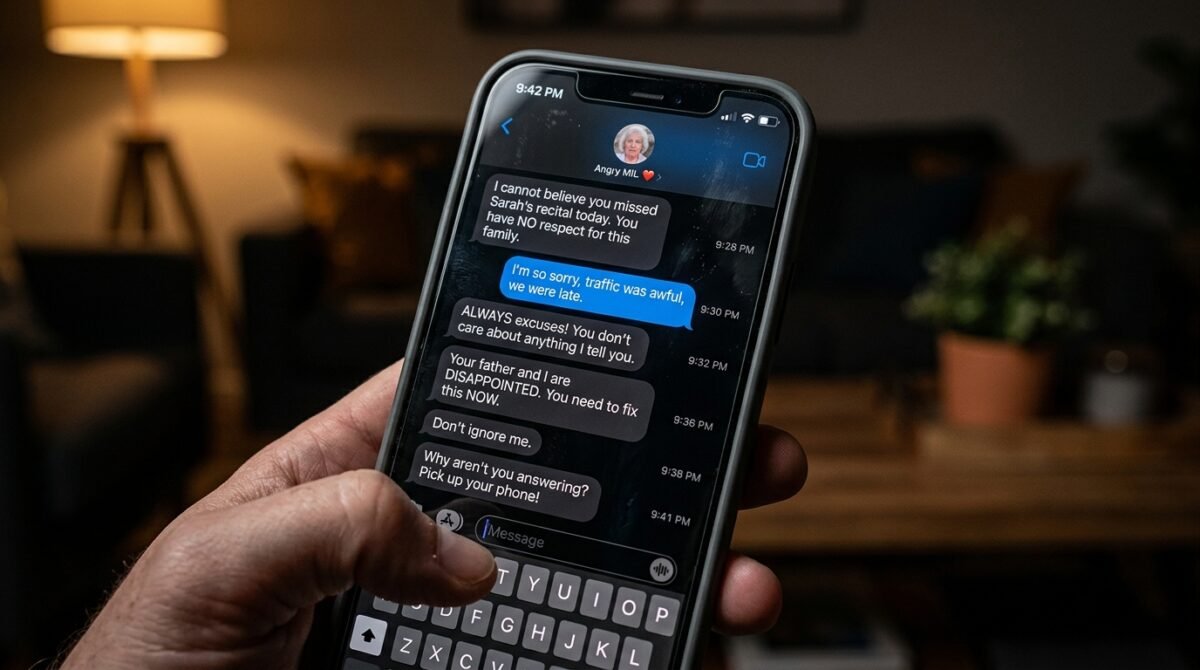
It started on a Tuesday afternoon, while I was buried in a pile of spreadsheets at work. My phone vibrated incessantly, signaling a flurry of activity in the ‘Family Holiday Logistics’ chat. I scrolled up to find a long, condescending message from Brenda, acting as if our home were a public utility she had just claimed.
“Mark and OP, we have finalized our travel arrangements for December 1st through January 15th. We have decided that since we are hosting the holiday dinner, we require the master suite for the duration of our stay. The guest room is far too small for our luggage. Please ensure the walk-in closet is cleared out by November 30th so we can unpack properly.”
— Brenda, via Family Group Chat
My heart rate spiked. I stared at the screen, waiting for Mark to chime in with a ‘let’s discuss this,’ but he remained silent. When I called him, he sounded exhausted before the conversation even began, telling me that his mother had ‘already set her heart on it’ and that it would be ‘too much drama’ to tell her no.
The audacity was staggering. They weren’t asking; they were declaring a hostile takeover of my personal space. I felt like a stranger in my own marriage, a guest whose comfort was being bargained away by a spouse who feared his mother more than he respected my boundaries. I realized then that if I fought this through verbal arguments, I would lose. They would just wear me down until I surrendered to keep the peace.
That evening, I didn’t yell. I didn’t even argue. I calmly closed my laptop, walked into my closet, and took a long look at the space they thought they were entitled to. I started calculating the potential revenue of a six-week rental in our prime neighborhood. I had an account on a rental site from when I used to travel for business, and I realized with a jolt of excitement that I could easily secure a renter for those dates.
I spent the rest of the night setting up the listing, carefully curating photos of the house that made it look pristine, inviting, and—most importantly—occupied. By midnight, the listing was live, and I had already received two inquiries. I wasn’t just planning to move out; I was planning to profit from their entitlement while ensuring they had nowhere to land in my house.
The Price of Entitlement

Within forty-eight hours, I had a signed contract with a professional couple from out of state. They were willing to pay a premium for a furnished home during the holidays, and the deposit hit my account the next morning. It was a substantial sum, enough to cover my own vacation to a tropical resort for the exact same six-week period. I felt a sense of relief wash over me that I hadn’t felt in years.
When I told Mark, he was horrified. He couldn’t understand how I could prioritize ‘strangers’ over his own mother. He kept pacing the living room, running his hands through his hair, repeating that I was going to ruin his relationship with his parents forever. I just looked at him and asked a simple question: ‘Why does your mother’s comfort outweigh my need to feel secure in my own home?’
“You are being completely irrational! It is six weeks. Can’t you just sleep on the pull-out sofa for a month and a half? My parents have done so much for us, this is a small sacrifice to make. You’re choosing a vacation over family harmony.”
— Mark, during the heated confrontation
I pointed out that their ‘sacrifices’ usually involved emotional manipulation and unsolicited advice. I wasn’t choosing a vacation; I was choosing to remove myself from a situation where I was being treated as a second-class citizen in my own life. If the house was for rent, it was for rent to the highest bidder, and that bidder happened to be a lovely family who wasn’t demanding my closet space.
The logistics were handled with cold efficiency. I moved my personal items into a storage unit and cleared the master bedroom. I even hired a professional cleaner to make sure the place was immaculate for the new tenants. I was essentially turning our home into a professional hospitality space, which meant the ‘in-law’ problem solved itself. They couldn’t stay in a house that was legally occupied by someone else.
When I finally dropped the news to Brenda, I didn’t apologize. I simply stated that we had a prior commitment for those dates and that our home was unavailable. Her reaction was explosive, but it was muffled by the fact that I was already halfway through packing my bags for a beach getaway. The power dynamic had shifted entirely, and for the first time, I felt like the adult in the room.
The Unannounced 6:00 AM Kitchen Intrusion

A few weeks before the scheduled dates, Brenda and Arthur decided they would ‘swing by’ to drop off some holiday decorations. It was 6:00 AM on a Saturday. I was still in bed, and the sound of a key turning in the lock sent a jolt of adrenaline through my system. I realized then that my decision to vacate had been the only possible choice; these people didn’t believe in privacy at all.
I stormed downstairs to find them in the kitchen, already opening my cabinets to look for mugs. The look on their faces when they saw me in my robe—furious and completely unfazed by their presence—was priceless. I told them they were trespassing and that if they wanted to visit, they needed to respect that this was a private home, not a free-for-all.
“I thought we were family! Why are you acting like a security guard in your own home? We just wanted to see if the kitchen was stocked for when we arrive. Honestly, your attitude is exactly why you struggle to fit in with our side of the family.”
— Brenda, while holding one of my favorite mugs
I didn’t take the bait. I simply stood by the door and waited for them to leave. Arthur looked uncomfortable, but he didn’t stop Brenda from her verbal assault. It was the final straw. I knew that even if I hadn’t rented the house, this kind of behavior would have made my life a living hell. The rental wasn’t just a business move; it was a survival strategy.
They left, fuming, and spent the next hour calling Mark to complain about my ‘hostility.’ Mark tried to play the mediator, but I told him that if he wanted to live with his parents, he was welcome to go stay at their hotel when they arrived, but that our home was off-limits. The reality of the situation was starting to sink in for everyone involved.
I spent the rest of the day finalizing the move-out schedule. I felt a strange sense of liberation. I wasn’t just defending a bedroom; I was reclaiming my life from years of low-level emotional abuse. Every box I packed felt like a weight being lifted off my shoulders. I was done being the accommodating daughter-in-law who stayed quiet to keep the peace.
The Day the Truth Came Out

The moment of truth arrived when Brenda called me, demanding to know where she should pick up the spare key for our house. I didn’t beat around the bush. I told her that the house would be occupied by other guests who were paying for the privilege of staying there, and that her plans to move in were, effectively, cancelled.
The silence on the other end of the line was deafening. Then came the screaming. She accused me of being a malicious, greedy person who put money above family. She threatened to never speak to us again, as if that were a punishment rather than a blessing. I just listened, waiting for her to run out of breath, and then told her to have a wonderful holiday.
“You are an absolute monster! You’re renting out our family home to strangers while we are left to find a hotel? Your father is fuming! Don’t expect us to invite you to anything ever again. You have burned this bridge to the ground!”
— Brenda, mid-meltdown over the phone
I hung up and felt… nothing. No guilt, no regret. Just a profound sense of clarity. The bridge wasn’t burned; it was dismantled because the foundation was rotten. I realized that my in-laws were never interested in ‘family time’; they were interested in control, and once that control was taken away, they had no interest in maintaining a relationship.
Mark was, predictably, a mess. He spent the entire day fielding calls from his parents and his siblings, who were all horrified by my ‘betrayal.’ I sat him down and explained that he could choose to support me, or he could choose to be a pawn in his parents’ game. I told him he had to choose, and for the first time, he didn’t have an answer.
The house was prepared for the new tenants. The master bedroom, the very space they coveted, was stripped of all my personal belongings, ready to be occupied by people who would pay for the privilege and treat the space with respect. I was leaving the next morning, and I didn’t care where my in-laws stayed. They were adults; they could figure out their own logistics.
The Fallout in the Family Group Chat

The next day, the family group chat exploded. My sister-in-law, who rarely participated, chimed in to tell me how ‘disappointed’ she was. My father-in-law sent a link to a local hotel, insinuating that I should have paid for it. It was a circus of entitlement, and I had a front-row seat to the dysfunction.
I didn’t defend myself. I didn’t apologize. I simply left the group chat. It was the digital equivalent of dropping a mic. The notification ‘OP left the group’ seemed to cause even more chaos, as if my silence was somehow more insulting than any argument I could have made.
“I cannot believe you just left! We are your family! This is how you treat us after all the support we’ve given you over the years? You’re going to regret this when you realize how lonely you’ll be without us.”
— Brenda, in a final desperate text message
The irony of her talking about support was not lost on me. Support, to them, meant compliance. It meant shrinking myself to fit their narrative of what a daughter-in-law should be. By refusing to comply, I had become an enemy, but it was an enemy I was more than happy to be. The relief of not having to check that chat anymore was immeasurable.
Mark finally stopped trying to justify his parents’ actions. He saw the sheer vitriol they were capable of when they didn’t get their way, and it finally seemed to penetrate his denial. He looked at the messages, looked at me, and asked, ‘Are they always like this?’ I just nodded. It had taken a house rental to make him see the truth.
We packed the last of our things. The house was sparkling, the key was in the lockbox for the new tenants, and we were heading to the airport. The weight of the world felt like it had been lifted. The in-laws were still frantically trying to find a place to stay, but that was no longer my concern. My concern was the boarding pass in my hand and the vacation I had earned.
The Corporate Tenants: A Quiet Victory

The tenants arrived while we were already on our way to the airport. They sent me a polite text saying the house was ‘absolutely stunning’ and that they were looking forward to a quiet, peaceful holiday. It was exactly what I wanted for my home. It was being used for its intended purpose: to provide comfort to people who appreciated it.
I kept the lines of communication open just in case of an emergency, but they were the perfect tenants. They followed every house rule, kept the place clean, and never once asked for anything unreasonable. It was a stark contrast to the demands of my in-laws, who seemed to view my home as a resource to be exploited.
“Thank you so much for the welcome basket! We’ve already made ourselves at home in the master suite. It’s exactly the sanctuary we were hoping for. Happy Holidays!”
— Tenant, via text message
It was a quiet, satisfying victory. I had successfully protected my space and turned a potential nightmare into a productive, stress-free experience. I didn’t need to be there to prove a point; the point was proven by the fact that the house was thriving without me, and most importantly, without the toxicity of my in-laws.
I spent the next month in paradise, completely disconnected from the drama back home. I didn’t check social media, I didn’t answer unknown numbers, and I certainly didn’t talk to Brenda. Mark and I had a week of awkward silence, followed by some of the most honest conversations we’ve ever had. We talked about boundaries, his parents’ behavior, and what our future looked like.
It was the reset we both needed. We realized that our relationship had been suffocating under the weight of external expectations. By removing the biggest source of that pressure, we were able to breathe again. We were closer than ever, and for the first time, I felt like we were a team, rather than two individuals caught in the crossfire of his family’s demands.
The Reddit Community Weighs In
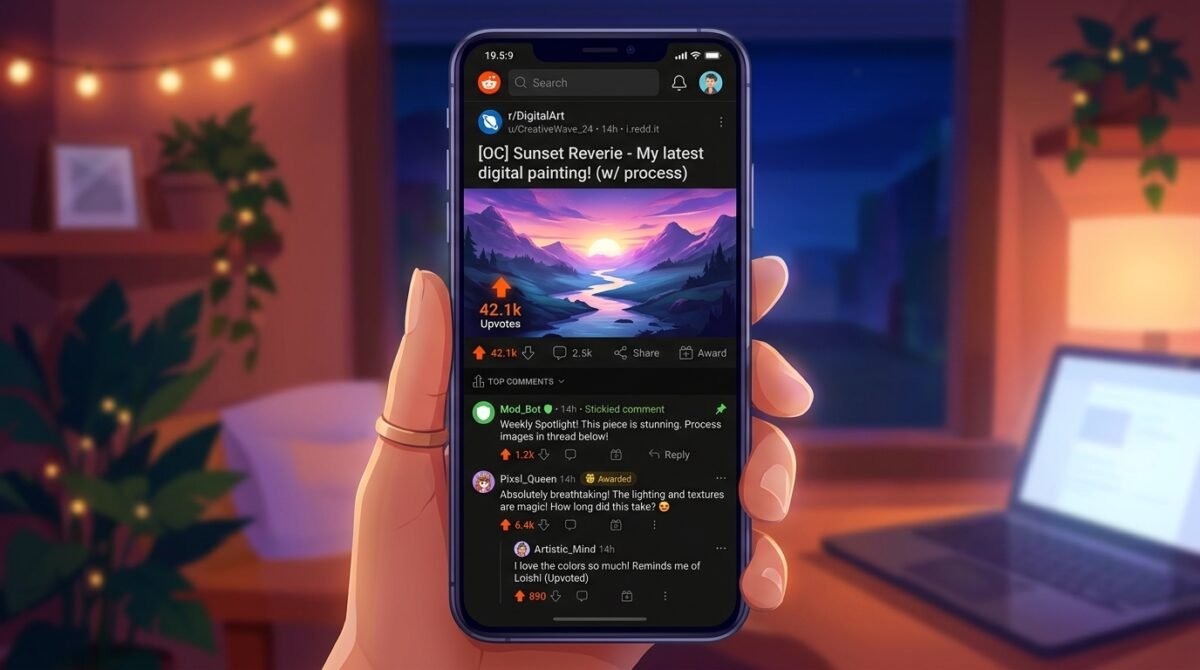
When I finally posted a summary of the situation on a popular subreddit, I wasn’t prepared for the sheer volume of support. People from all over the world shared their own stories of boundary-breaking in-laws, and the consensus was overwhelmingly in my favor. It was validating to know that I wasn’t being ‘selfish’ or ‘malicious’; I was simply protecting my peace.
“NTA (Not The Asshole). Your house, your rules. The fact that they think they can just demand your master bedroom is insane. The sublet is genius-level petty, and I am here for it. You didn’t just save your holiday; you saved your marriage.”
— u/BoundariesAreKey, 14.2k upvotes
“I love that you didn’t just say no, you made it impossible for them to be there. That’s not being rude, that’s being a strategic genius. Don’t let them guilt you for the rest of your life. You did the right thing.”
— u/ReclaimYourSpace, 8.5k upvotes
There were, of course, a few dissenting voices who argued that I should have been ‘the bigger person,’ but they were quickly drowned out by the majority. The Reddit community, for all its cynicism, has a very clear moral compass when it comes to home invasion and parental entitlement. It felt good to be understood by strangers who had no stake in the outcome.
The discussion threads became a place for people to share tips on how to handle difficult family members, and I found myself reading through them, learning new ways to set boundaries without feeling guilty. It was a support group of sorts, and it helped me prepare for the inevitable confrontation that would happen when we returned home.
I realized that my experience wasn’t unique; it was part of a larger conversation about the changing dynamics of family and the importance of self-care. We are no longer living in a time where we have to sacrifice our own well-being to appease family members who don’t respect us. The ‘blood is thicker than water’ argument is rapidly losing its power in the face of modern boundary-setting.
The Return to Reality

When we finally returned home in mid-January, the house was spotless. The tenants had left a lovely note and a small gift for us. The master bedroom was exactly as I had left it—pristine, quiet, and mine. As I walked into the room, I felt a deep sense of ownership that I hadn’t felt in months.
The inevitable happened the following weekend. Brenda and Arthur showed up at our door, unannounced, expecting an apology. I opened the door, stood in the frame, and told them that they were not welcome unless they were invited, and that for the foreseeable future, they would not be receiving any invitations. They were shocked, expecting me to be submissive after our time away.
“Are you kidding me? You’re going to lock us out after everything we’ve done for you? We are your parents! This is absolutely disrespectful!”
— Arthur, in a rare moment of aggression
I looked at them both and said, ‘Respect is a two-way street, and you haven’t been on it for a long time.’ I closed the door and locked it. I didn’t wait for them to leave; I just went back to my life. I knew they would eventually stop coming, and I knew that Mark was finally on the same page. He didn’t even go to the door.
It was the quietest, most peaceful weekend we’ve had in years. We ordered takeout, watched movies, and finally started making the house feel like *our* home, not a showroom for his parents’ approval. We were building something new, something that didn’t depend on outside validation.
The fallout continued for a few more weeks—angry emails, passive-aggressive Facebook posts—but we ignored it all. The more we ignored it, the less power it had. We weren’t just protecting our bedroom; we were protecting our future together from the cycle of toxicity that had defined Mark’s upbringing.
Lessons in Radical Self-Preservation

Looking back, I realize that the entire ordeal was a necessary catalyst. I wouldn’t have chosen this route if I didn’t feel like I had absolutely no other choice, but the outcome was better than I could have imagined. I learned that my boundaries are not negotiable and that I am the only person responsible for my own happiness.
I also learned that family is what you make it. We’ve since focused on building relationships with people who respect us and our boundaries, and it’s been transformative. We’ve found a chosen family that supports our growth rather than trying to stunt it. It’s a completely different way of living, and I wouldn’t trade it for anything.
“You have to be willing to lose people to save yourself. Sometimes, the most important boundary you ever set is the one that forces everyone else to see you as an adult. Never apologize for protecting your sanity.”
— Anonymous, from a self-help blog comment
I don’t think my in-laws will ever change, and that’s okay. I no longer need them to change. I’ve accepted that their behavior is a reflection of their own issues, not mine. I’ve stopped trying to convince them of my worth, and in doing so, I’ve found it for myself.
Mark is a different man now, too. He’s more confident, more decisive, and much more protective of our relationship. We’re finally at a place where we can talk about anything, and we’re no longer afraid of the ‘what ifs’ that used to keep us up at night. We’ve created a safe harbor in our home, and it’s a space that we’re very careful about who we invite into.
I’m grateful for the master bedroom, not just for the comfort it provides, but for what it represents: a space that is mine, protected, and respected. It’s a symbol of my autonomy, and every night when I close that door, I’m reminded of how far I’ve come and how much I’ve gained by choosing myself.
The New Normal
Today, our home is a sanctuary. We have a clear policy on visitors: everyone is welcome, but no one is entitled. We’ve established a calendar for guests, and we’ve made it clear that our master suite is off-limits to everyone. It’s a simple rule, but it’s one that we enforce without hesitation.
My in-laws have slowly started to reach out, testing the waters to see if things have gone back to ‘normal.’ We respond with polite, distant messages, but we don’t engage in any deep conversations. We’ve kept them at arm’s length, and for now, that’s exactly where they belong. The peace is worth more than any ‘holiday dinner’ they could ever host.
“It’s strange, isn’t it? How much we let people take from us just because they’re family. I feel like I’ve been asleep for years, and I’m finally awake.”
— Mark, during a quiet dinner at home
We’re planning our own holidays now, creating traditions that are meaningful to us. We’re finally doing the things we always wanted to do, and we’re not asking for permission from anyone. The weight of the past has been lifted, and we’re free to build the life we want to live.
I’ve learned that the most important thing you can do for your family is to set boundaries. It’s not about being ‘mean’ or ‘selfish’; it’s about being healthy. When you take care of yourself, you’re in a much better position to take care of the people you love. It’s a lesson that took me a long time to learn, but it’s one I’ll carry with me for the rest of my life.
If you find yourself in a similar situation, remember that you are the architect of your own life. You don’t have to tolerate behavior that makes you feel small or unimportant. You have the power to change your circumstances, and sometimes, that means making a bold, decisive move. Trust your gut, set your boundaries, and never be afraid to put yourself first.
Conclusion
My experience proves that when boundaries are systematically ignored, radical action becomes the only path to resolution. By prioritizing my autonomy over the misplaced expectations of my in-laws, I didn’t just save my holiday; I reclaimed my self-respect and strengthened my marriage in ways I never thought possible. Sometimes, to maintain the sanctuary of your home, you have to be willing to burn the bridge that leads to it.
This journey from conflict-averse victim to boundary-setting homeowner wasn’t easy, but the peace of mind I enjoy now is worth every moment of the fallout. I encourage anyone reading this to take a long, hard look at their own relationships and ask: am I sacrificing my identity for someone else’s comfort? If the answer is yes, it’s time to reclaim your space.
What about you? Have you ever had to take drastic measures to protect your home from entitled family members? Let us know in the comments below: Is there a situation in your life where you wish you had stood your ground sooner? Join the debate, share your stories, and let’s support each other in reclaiming our peace.
What's your verdict on this dilemma?
Vote below to contribute to the official community consensus.

Have a Dilemma Keeping You Up at Night?
Share your real-life feud, wedding chaos, or relationship crossroads anonymously with our editorial team.
What do you think ?
0 Comments🛡️ Comments are moderated to protect community integrity. Your comment will appear once approved by the editorial team.