

Medical school is not just a degree; it is a crucible. For four years, I existed in a state of perpetual exhaustion, living on caffeine, library silence, and the singular, burning ambition of walking across that stage to receive my doctorate. My family knew this. They knew the missed birthdays, the holidays spent in the anatomy lab, and the crushing financial strain of tuition that had me working three part-time jobs during my first two years. I had sacrificed everything for this singular moment of validation.
My sister, Sarah, has always been the sun around which our family orbit revolves. She is vibrant, impulsive, and deeply accustomed to being the center of attention. I never minded it much growing up; she had a flair for the dramatic that often kept life interesting. But there is a line between being charismatic and being a thief of moments. I didn’t realize until that afternoon that she had been practicing a form of emotional larceny for years, one that would culminate in the most public and painful betrayal of my adult life.
The graduation walk is a sacred tradition in our family—a symbolic path from the lecture hall to the reception, accompanied by those who supported your journey. It is meant to be a quiet, reflective moment of pride. Or so I thought. When Sarah started whispering to her girlfriend, Chloe, just as I reached the courtyard, I assumed it was simple excitement. I had no idea that a carefully orchestrated performance was about to hijack the most significant day of my professional existence.
As I stood there, cap in hand, expecting a hug or a handshake, the world shifted. The camera crews were distracted, the guests were turning their backs on the new doctor to watch an engagement unfold. My heart sank, not because I was against love, but because I realized with agonizing clarity that to my sister, my accomplishments were merely background scenery for her life’s stage. The moral dilemma wasn’t about whether she could propose; it was about the crushing realization that I had never truly been an equal participant in my own family’s narrative.
The Anatomy of a Four-Year Sacrifice

The road to medical school was paved with more than just good grades. It was paved with missed milestones. I remember sitting in the ICU during my rotation, staring at my phone as my mother sent me photos of a family vacation I couldn’t afford to take, both in terms of money and time. I spent my twenty-fifth birthday in a call room, eating a lukewarm vending machine sandwich. Every time I felt the crushing weight of burnout, I looked toward this graduation day as the light at the end of the tunnel.
My parents often spoke about my graduation as if it were a family triumph, but there was always an undercurrent of comparison. ‘Your sister is doing so well in marketing, she just landed a huge promotion,’ my mother would say during our brief Sunday check-ins. I would smile and nod, keeping the stress of my clinical exams to myself. I wanted them to be proud of me, but I also wanted them to acknowledge the sheer, grueling effort it took to survive this program.
Three weeks before graduation, I explicitly stated that I wanted a low-key day. I had invited a small group of friends and my immediate family. I told my mother, ‘I just want to walk across the stage, take some photos, and have a quiet dinner. I’m exhausted. I don’t want a spectacle.’ My mother seemed to agree, but Sarah was noticeably silent during that conversation, staring at her phone with a tight, unreadable expression.
“I know you’ve worked hard, but don’t be such a stick-in-the-mud about the celebration. You’re finally becoming a doctor, you need to let us celebrate you properly!”
— Sarah, two weeks before the ceremony
Looking back, that comment was the first red flag. She wasn’t talking about celebrating me; she was talking about the event itself. I dismissed it as her usual high-energy personality. I didn’t see the planning happening behind the scenes, the subtle maneuvering to ensure that the guest list was expanded, or the way she was coordinating with my parents to ‘surprise’ me with extra guests I hadn’t requested. I was too buried in my thesis to suspect that the trap was already being set.
The Hijacking of the Graduation Walk

The morning of the ceremony was a blur of adrenaline. The air was crisp, and the atmosphere in the stadium was electric. When my name was called, the surge of pride was overwhelming. I had done it. I was a doctor. As I walked down the aisle, the tradition was for the graduate to walk to the designated meeting spot where the family awaited. I saw my parents, my sister, and her girlfriend, Chloe, standing near the decorative archway we had planned to meet at.
As I approached, I saw Sarah pull Chloe aside. I thought maybe they were fixing her hair for a photo. Then, the music that was playing over the stadium speakers seemed to fade into the background as Sarah dropped to one knee. The crowd around us, including my own classmates and professors, stopped dead in their tracks. A collective ‘aww’ rippled through the air. My sister, the woman who knew exactly how much I had fought for this day, was proposing at the exact moment I reached my family.
I stood there, feeling like an intruder at my own graduation. People were cheering, cameras were flashing, and the attention had completely shifted away from the ceremony that was currently concluding behind us. My parents were crying tears of joy, completely oblivious to the fact that their son was standing two feet away, feeling completely invisible. I waited for a beat, thinking she would do it quickly, but she began a long, elaborate speech about how this day was ‘the perfect backdrop’ for their union.
“I couldn’t imagine a better place to start our lives together than on the day my sibling finally achieves their dream. It’s like a sign, right?”
— Sarah, speaking to the crowd while on one knee
My stomach twisted. She wasn’t just stealing the moment; she was using my hard-earned achievement as a convenient stage prop. I felt a cold, sharp anger rise in my chest, a sensation I hadn’t allowed myself to feel in years. I didn’t say a word. I didn’t applaud. I simply turned around and walked toward the exit, ignoring the confused looks from my professors. I was done.
The Empty Chair at the Reservation

The dinner was meant to be at a high-end restaurant I had saved for months to afford. I had booked a private room, thinking it would be a sanctuary for my family to reflect on the journey. I arrived twenty minutes early, alone. I sat at the head of the table, staring at the white tablecloth, listening to the clinking of silverware and the low murmur of other families. I was a doctor, and I was sitting in a restaurant waiting for people who had already forgotten I existed.
When they finally arrived, the energy was chaotic. My mother was beaming, Sarah was showing off the ring to every waiter who passed, and my father was already ordering champagne to toast the ‘newly engaged couple.’ They didn’t even notice I was sitting at the head of the table until they were halfway through their own celebratory chatter. My mother finally looked at me and asked, ‘Oh, did you leave the ceremony early? We lost you in the crowd, but we were so busy with the engagement!’
I stared at them, the silence at the table becoming deafening. The waiter approached to take our order, and Sarah immediately launched into a story about how she had planned the proposal for weeks, coordinating with the stadium staff to get the timing right during the graduate procession. She had literally planned to upstage me on my graduation day, and my parents were proud of her for the ‘surprise.’
“Can we just talk about the fact that this dinner was supposed to be about me, or are we going to spend the whole night discussing the ring?”
— My voice, trembling with suppressed rage
My father looked at me, annoyed. ‘Don’t be jealous, it’s a big day for everyone. Can’t you just be happy for your sister? It’s not like the graduation wasn’t already over by the time we got to the car.’ The dismissal was so casual, so routine, that it made me realize there was no point in arguing. The entitlement was baked into their DNA.
The Quiet Exit

I stood up. I didn’t cause a scene; I didn’t flip the table. I simply stood up, placed my napkin on the seat, and looked at each of them. My mother’s smile faltered. ‘Where are you going? The appetizers are coming out.’ I looked at my sister, who was still busy adjusting her ring under the low light, her eyes flicking to me for a brief, dismissive second before returning to her phone to post the announcement on social media.
‘I’m leaving,’ I said, my voice eerily calm. ‘You two have your engagement to celebrate, and I don’t want to be the background character in your photo op.’ I walked out of the restaurant and into the cool evening air. My heart was pounding, a mixture of terror and liberation. I had spent four years afraid of being alone, but as I walked down the street, I realized I had been alone in that relationship for much longer.
My phone began buzzing incessantly. Messages from my mother, then my father, then Sarah. I didn’t look at them. I walked three blocks until I found a small, hole-in-the-wall diner. I ordered a burger and a soda, sat in a booth, and finally, for the first time in four years, I let myself cry. Not because I was sad about the graduation, but because I was finally mourning the family I had spent my life trying to impress.
“Where are you? Everyone is asking where the doctor went. You’re making us look bad. Come back right now.”
— Message from Mother
The messages continued for hours. I muted the notifications and turned off my phone. I went back to my apartment, which was filled with unpacked boxes and medical textbooks, and for the first time, I felt like the space was actually mine. The silence wasn’t lonely; it was peaceful. I had survived medical school, and tonight, I had survived my family.
The Digital Backlash
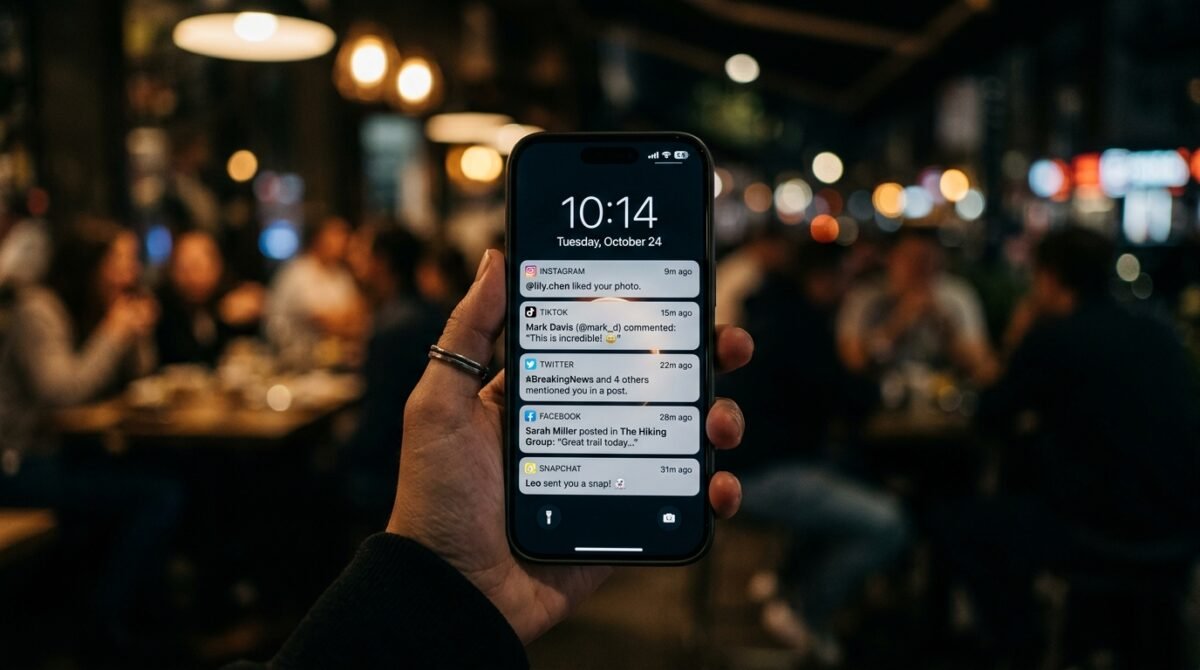
By the next morning, my social media was a war zone. Sarah had posted a curated, glowing caption about her engagement, featuring a video of the proposal. If you looked closely at the edges of the frame, you could see my back as I walked away. The comments were filled with praise for her, but there were also a few pointed questions from our extended family. ‘Wait, wasn’t this [OP’s] graduation? Why are you guys proposing there?’
Sarah was quick to shut those down. She painted me as the ‘stressed, overworked medical student’ who ‘didn’t know how to handle social situations.’ She made it sound like I had a breakdown and stormed out because I couldn’t handle the joy of others. It was a masterful piece of gaslighting. My relatives began messaging me, asking if I was ‘okay’ and if I needed to talk to someone about my ‘mental health.’ It was infuriating.
I decided to write one post, not a defense, but a statement of fact. I didn’t name Sarah, but I posted a photo of my degree and a caption that simply stated: ‘Graduation is the celebration of a journey, not a prop for other people’s life events. I choose to celebrate my own milestones with those who respect the effort required to reach them.’ It was enough to stop the chatter, but it created a clear divide in the family.
“You are being so selfish. It was just a proposal. You could have just let it go for ten minutes. You’re ruining the most important day of her life!”
— Aunt Susan
The backlash from the older generation was predictable, but the support from my younger cousins and friends was overwhelming. They had seen the dynamic for years. They knew that Sarah was always the priority, and they were glad I had finally stood up for myself. I wasn’t just a medical student anymore; I was a person with boundaries, and that was a version of me my family wasn’t prepared to handle.
The Interrogation at the Doorstep
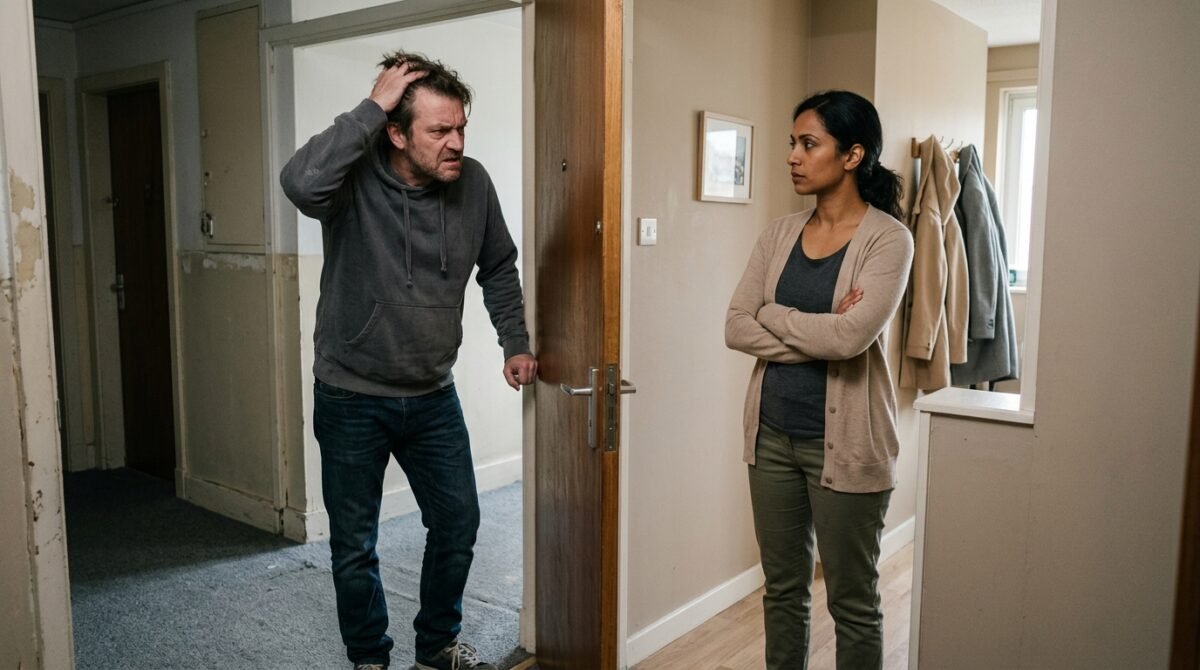
Two days later, my father showed up at my apartment. He didn’t call; he just knocked on the door repeatedly until I opened it. He looked tired, but also deeply annoyed. He didn’t offer a congratulations on the degree. He jumped straight into the issue of the ‘scene’ I had caused. He wanted me to apologize to Sarah so we could ‘move past this before the wedding planning really gets started.’
‘Dad, I’m not apologizing for leaving my own dinner,’ I said, leaning against the doorframe. ‘I’m an adult. I’m a doctor. I don’t have to sit there and be disrespected because Sarah needs to be the star of every show.’ He tried to use his ‘voice of reason,’ telling me that families have to make sacrifices and that I was being ‘immature’ about the whole thing.
I asked him a simple question: ‘If I had proposed to someone at Sarah’s college graduation, would you be here telling her to get over it, or would you be telling me I was a jerk?’ He didn’t answer. He just sighed and told me I was ‘different’ and that I had ‘always been sensitive.’ That was the moment I realized he would never, ever see my perspective. He was trapped in the same cycle of enabling as my mother.
“You’re a professional now. Start acting like one. This grudge is beneath you. Your sister is family, and family comes first.”
— Father
I closed the door gently. I didn’t slam it. I just closed it. I told him I needed space and that I wouldn’t be attending any ‘family events’ until I felt respected. He left, muttering about how I would ‘grow up’ eventually. I didn’t feel like I was acting like a child; I felt like I was finally acting like the adult I had been forced to become years ago.
The Reddit Trial

I posted my story to the AITA (Am I The Asshole) subreddit that night. I didn’t expect much, maybe a few comments of support. By the time I woke up the next morning, the post had 40,000 upvotes and thousands of comments. The community was split, but the overwhelming majority was on my side. It was validating to see strangers understand the pain I had been carrying for years.
The thread became a repository for people who had experienced similar ‘main character’ syndrome in their families. They shared stories of siblings who stole birthdays, who announced pregnancies at funerals, who had to be the center of every graduation, baptism, and wedding. It was a massive, collective catharsis. For the first time, I didn’t feel like I was ‘sensitive’; I felt like I was observant.
There were, of course, the contrarians. The ones who said, ‘Family is everything, you shouldn’t have left,’ or ‘It’s just a proposal, get over it.’ But even they were being drowned out by the sheer volume of people who understood that respect is a two-way street. The community analysis of my situation was far more insightful than anything my own family had offered.
“NTA. This isn’t just about the proposal. It’s about the years of being a secondary character in your own life. You didn’t leave a dinner; you left a role you were never meant to play.”
— u/PsychDocInTraining (Top Comment, 32.5k upvotes)
Reading those comments helped me realize that my reaction wasn’t an isolated incident; it was a breaking point. The pressure had been building, and the proposal was just the final drop that caused the cup to spill over. I wasn’t the asshole for wanting my moment. I was just the first person to finally say ‘no’ to the performance.
The Financial Breakdown of the Engagement

As the wedding planning began, the audacity continued. My mother called to inform me that I would be expected to help pay for the wedding, as I was now a doctor and ‘making the big money.’ I was still paying off my student loans, living on a resident’s salary, which is barely enough to cover rent and groceries. The expectation that I would fund their ‘special day’ after they had actively erased mine was the final absurdity.
I drafted a spreadsheet to show them my actual financial situation. It wasn’t to argue; it was to show them the reality. My loans, my rent, my living expenses—the numbers were clear. I sent it to the family group chat, which had been silent since the graduation incident. The response was silence, followed by an immediate pivot to the wedding budget.
| Category | Annual Salary (Resident) | Living Expenses | Loan Repayments |
|---|---|---|---|
| Net Income | $55,000 | $32,000 | $18,000 |
| Remaining | – | – | $5,000 |
| Expected Contribution | – | – | $10,000 |
“We know you’re a doctor now. You should be able to chip in at least ten grand to help your sister. It’s only fair.”
— Mother, in the group chat
I didn’t even respond to the request for money. I just left the group chat. The silence that followed was heavy, but it was also incredibly liberating. I wasn’t their ATM, and I wasn’t their supporting actor. I was a person with my own life, and that life did not include financing a spectacle that had been built on my own misfortune.
The Wedding Invitation Ultimatum
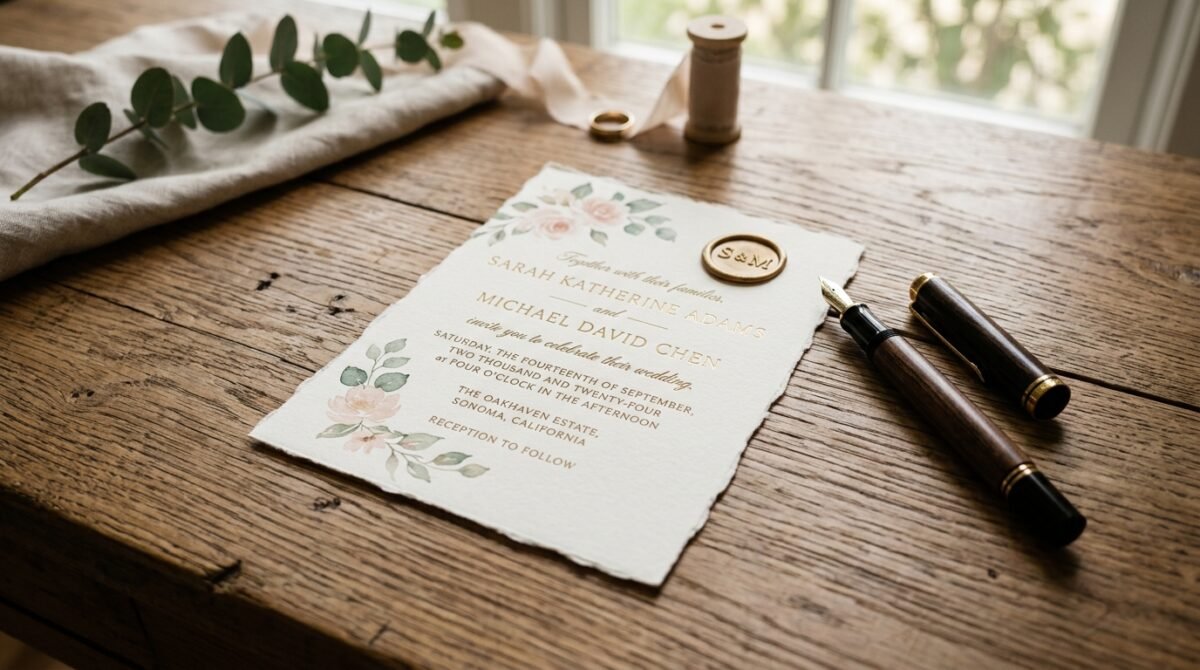
A month later, the physical wedding invitation arrived. It was elaborate, expensive, and completely ignored the fact that we were currently in a state of ‘low contact.’ The invite included a plus-one, but also a note from my mother: ‘We hope you’ll be there to support your sister and let go of the past. It would look very bad if you didn’t show up.’ It was another attempt to leverage my sense of duty to force me into compliance.
I sat with the invitation on my kitchen table for three days. I thought about the pressure to conform, the desire to be ‘the bigger person,’ and the fear of being the ‘black sheep’ of the family. Then I thought about the graduation walk. I thought about the look on Sarah’s face when she realized I had walked away. I realized that my presence at the wedding would be a tacit endorsement of the behavior I had been fighting against for years.
I sent back a simple note. I wasn’t going to the wedding. I told them that I wished them the best, but that I needed to focus on my residency and my own path. I didn’t offer an excuse. I didn’t apologize for my absence. I simply stated my boundaries. The reaction was immediate and explosive, but for the first time, it didn’t touch me.
“If you don’t show up, you are officially dead to this family. Do you really want to throw away your relationship with your parents over a graduation dinner?”
— Sarah
I read the message and deleted it. I felt a profound sense of sadness, not because I was losing my family, but because I realized they never really cared about me—they only cared about the role I played in their lives. By refusing to play that role, I had become a problem to be solved rather than a person to be loved. And that was the most painful, yet necessary, truth of all.
Finding the New Support System

Residency is difficult, but it’s easier when you aren’t carrying the emotional weight of a family that doesn’t respect you. I started leaning into my colleagues. We bonded over the shared trauma of the work, the long hours, and the weird, dark humor that only medical professionals understand. I found that my true family was the one I was building for myself—people who celebrated my small wins as loudly as my big ones.
When I got my first ‘Attending’ status as a resident, my colleagues threw me a dinner. It wasn’t fancy. We ordered pizza, sat in the breakroom, and toasted with plastic cups of soda. But when I told them about my day, they listened. They didn’t interrupt. They didn’t try to make it about themselves. They just listened. It was everything I had ever wanted, and it was better than any expensive restaurant dinner could have been.
I realized that I hadn’t lost a family; I had shed a skin that didn’t fit anymore. I was becoming the person I had always wanted to be—someone who was secure, respected, and capable of choosing their own happiness. I still think about the graduation sometimes, but now, the memory doesn’t sting. It’s just a reminder of the day I stopped being a prop and started being a person.
“You know, you’re the most grounded doctor I’ve ever worked with. You always make sure everyone else is heard before you speak.”
— My Chief Resident
That comment meant more to me than any award. I was becoming the kind of person who listened, who respected, and who knew the value of a moment because I had been denied so many of my own. I was healing, and for the first time in my life, I was genuinely, profoundly proud of who I was.
Conclusion
Looking back, the proposal was never about love; it was about power. It was about the need to control the narrative, to ensure that the spotlight never left my sister, even for a moment. But in her attempt to control me, she lost the one thing that actually mattered: my presence in her life. I am no longer the ‘stressed medical student’ she can rely on for a convenient storyline. I am a doctor who sets boundaries, who demands respect, and who knows exactly what I am worth.
The fallout was intense, but the peace that followed was worth every bridge burned. I have learned that family is not just about blood; it is about the people who show up for you, who cheer for your successes, and who respect the hard-won battles of your life. I have found my own path, and while it doesn’t involve the approval of my family, it is a path that I walk with pride and, finally, entirely on my own terms.
What about you? Have you ever had a milestone hijacked by someone else’s need for attention? How did you set your boundaries, and how did your family react? Let’s talk about it in the comments below.
What's your verdict on this dilemma?
Vote below to contribute to the official community consensus.

Have a Dilemma Keeping You Up at Night?
Share your real-life feud, wedding chaos, or relationship crossroads anonymously with our editorial team.
What do you think ?
0 Comments🛡️ Comments are moderated to protect community integrity. Your comment will appear once approved by the editorial team.