

Becoming a parent is meant to be a time of celebration and shared joy, but for many, it quickly turns into a battlefield of clashing expectations. My daughter’s first birthday was supposed to be a simple milestone, a quiet afternoon of cake and laughter in our backyard. Instead, it became the epicenter of a power struggle that defined the very nature of my relationship with my mother-in-law, Linda.
Linda has always viewed our family unit as an extension of her own. From the moment we announced the pregnancy, she insisted on being present for every ultrasound, every doctor’s appointment, and eventually, every waking moment of our child’s life. I, perhaps foolishly, allowed it for far too long, believing that peace was better than conflict. I was wrong.
The trouble began when I started planning for the first birthday party. It was meant to be a joint affair with both sets of grandparents present. My parents have always been respectful of our boundaries, providing support without interference. Linda, however, has always viewed them as competitors for time and attention. The ultimatum she dropped on me three weeks before the big day felt like a cold splash of water, shattering the illusion that we could ever coexist peacefully under her terms.
She didn’t just ask me to prioritize her; she demanded I uninvite my parents. She claimed that having two sets of grandparents present would be ‘too confusing’ for the baby, and that my parents were ‘stressful’ for her to be around. It was a manipulative, transparent attempt to claim total ownership over my daughter’s milestone. I didn’t argue. I didn’t bargain. I simply made a decision that would change the trajectory of our family dynamic forever.
This is the story of how I canceled the party, ignored the fallout, and took my baby on the trip of a lifetime, leaving my mother-in-law to deal with her own manufactured disaster.
The Tuesday Afternoon Ultimatum
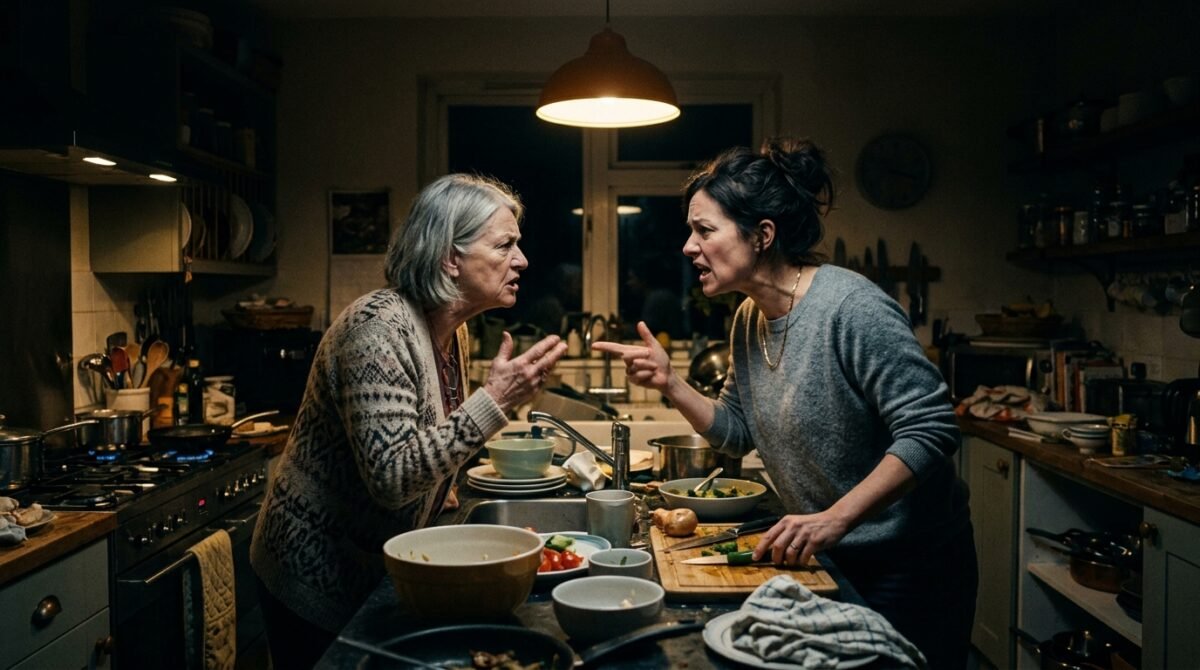
It was a Tuesday afternoon, and the house was quiet. I was folding laundry when Linda stopped by unannounced, as she often did, bringing with her a sense of lingering tension. She sat at our kitchen island, sipping tea and surveying the decorations I had laid out for the party invitations. Her eyes narrowed as she noticed the names of my parents listed as co-hosts.
She didn’t beat around the bush. She placed her cup down with a sharp click that resonated through the room. She looked at me with a practiced, wounded expression, as if I had personally offended her by existing. She began to lecture me on the ‘proper’ way to conduct a first birthday, emphasizing that the focus should be on the ‘paternal bloodline’ and the comfort of the primary grandparents.
I listened, stunned by the sheer audacity of her request. She argued that my parents were outsiders who didn’t understand the ‘traditions’ of her family. She suggested that if I wanted a peaceful day, I should tell them there had been a change in plans, perhaps a ‘small family emergency’ that forced us to downsize the guest list.
“You need to understand, dear, that this is about the baby’s stability. Having your parents here is just too much noise. They are guests, but I am family. They should be uninvited for the sake of the environment.”
— Linda, during her unannounced visit
I felt my blood run cold. My parents were the ones who had traveled across the country to help me through the newborn phase when Linda was ‘too busy with her garden club.’ They were the ones who bought the crib and the clothes. To hear her dismiss them as ‘noise’ felt like a betrayal of every sacrifice they had made for our family.
I didn’t lose my temper immediately. I felt a strange sense of detachment, as if I were observing a stranger trying to set fire to my house. I realized in that moment that she would never respect my authority as a mother as long as she felt she could leverage her status as the paternal grandmother. The ultimatum wasn’t a request; it was a test of my spine.
I stood up, gathered the invitations, and looked her in the eye. I told her that I would consider her input, but in my head, the party was already dead. I needed to escape the suffocating weight of her expectations before I did something I would regret. The decision to cancel wasn’t born out of anger, but out of a sudden, crystal-clear realization that I owed her absolutely nothing.
The Digital Paper Trail of Manipulation
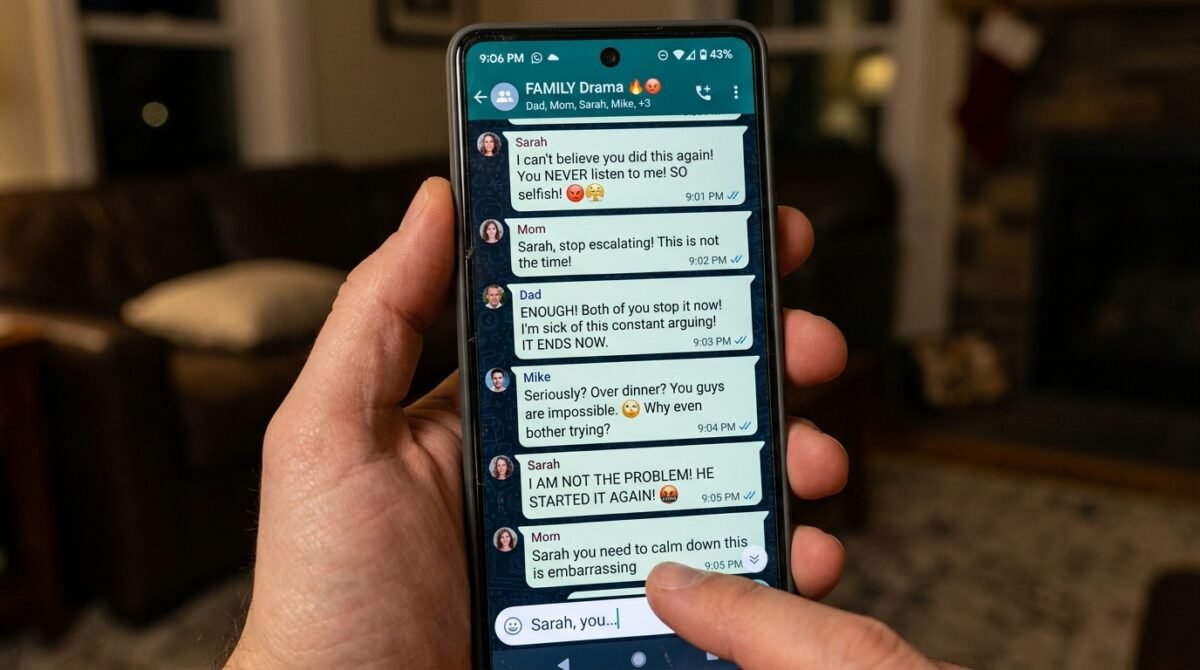
After she left, the notifications started pouring in. She didn’t just stop with the verbal ultimatum; she took to the family group chat to sow seeds of discord, hoping to garner support from my husband, Mark. She painted me as an irrational, difficult daughter-in-law who was forcing ‘stress’ upon the baby. She even went as far as to tag Mark, demanding he step in to ‘manage the situation’ before it became a disaster.
I watched as the messages scrolled by. Mark was at work, and I could tell he was trying to mediate from a distance, feeling the familiar squeeze of being caught in the middle. But this time, I wasn’t going to let him carry the burden for me. I started taking screenshots, documenting every manipulative word she typed, every guilt-trip she laid out for him.
“Mark, you need to tell your wife that this is not acceptable. My granddaughter deserves a calm birthday without the confusion of outsiders. If she refuses to uninvite her parents, then perhaps it is best if I don’t attend at all. You wouldn’t want me to be heartbroken on her big day, would you?”
— Leaked text from Linda in the family group chat
The audacity was staggering. She was threatening to skip the party as a way to force my hand, assuming that her absence would be the ultimate punishment for me. She was so convinced of her own importance that she couldn’t imagine me being anything other than devastated by the prospect of her missing the event. She was right about one thing: it was a disaster, but not the one she had planned.
I realized then that if I canceled the party, I wouldn’t just be avoiding her presence; I would be reclaiming the sanctity of my daughter’s birthday. I began to look at flight prices and hotel deals. If the party in our backyard was going to be a battleground, then the backyard was no longer a place for a first birthday. We were going to go somewhere else, somewhere where the only thing that mattered was our daughter’s smile.
By the time Mark got home, I had already finalized the plans. I had the confirmation emails open on my laptop. I wasn’t asking for his permission; I was informing him of the new reality. He looked at the screen, then at me, and finally saw the look in my eyes—a look that said there was no room for negotiation. He sighed, looked at the texts from his mother, and then hit the ‘mute’ button on the group chat.
The Great Backyard Deception

The days leading up to the scheduled party were filled with a delicious, secret anticipation. I kept up the ruse that the party was still happening, confirming the caterer and the cake order, while Linda continued to press me for a commitment regarding my parents. I played the part of the stressed, indecisive mother, feeding her exactly what she wanted to hear to keep her off my trail.
I told her, ‘I am still thinking about it, Linda. It’s such a hard decision.’ She took this as a sign that she was winning. She started telling her friends about how she had ‘helped’ me refine the guest list, making herself look like the wise matriarch guiding a clueless young mother. She was so busy preening that she didn’t notice I wasn’t actually finalizing anything.
On the morning of the day before the party, I sent out a final email to the few friends we had invited, telling them the party was canceled due to an ‘unforeseen family issue.’ I didn’t give specifics. I didn’t explain the drama. I just cleared the slate. I then made the call to the rental company to cancel the chairs and the tent. The backyard went from a potential event space back to a quiet patch of grass.
“I just wanted to let everyone know that we’ve decided to cancel the backyard party for the baby’s first birthday. We’ve had a change of heart and will be spending the time as a small, immediate family unit. Thank you for understanding and for all the love you’ve sent.”
— The mass email sent to guests
The look on Linda’s face when she drove by later that afternoon and saw the empty lawn was something I wish I could have captured on camera. She pulled into the driveway, got out of her car, and walked toward the back, expecting to see balloons and banners. Instead, she found nothing but the quiet hum of the afternoon breeze and me, calmly packing a suitcase in the living room.
She demanded to know where the decorations were, where the catering was, and why I hadn’t confirmed that my parents were banned. I told her simply, ‘The party is canceled, Linda. We decided it wasn’t the right environment for us. We’re heading out of town tonight.’ Her mouth dropped open, and for the first time in our relationship, she was completely speechless.
She didn’t ask where we were going. She was too busy processing the fact that her influence had been completely nullified. I walked past her, suitcase in hand, feeling lighter than I had in months. The power dynamic had shifted, and there was no going back. I was no longer the daughter-in-law who walked on eggshells; I was the mother who protected her peace.
Magic at the Gates: The Disneyland Escape

When we arrived at the gates of Disneyland, the air felt different—thinner, filled with the smell of popcorn and the distant sound of parade music. My parents were there waiting for us, surprised and overjoyed. I hadn’t told them the full extent of the drama, only that we wanted to do something special and needed their help. The look of pure, unadulterated happiness on their faces when they saw their granddaughter was the only validation I needed.
We spent the next three days in a whirlwind of magic. We took pictures in front of the castle, rode the gentle carousel, and watched in awe as our daughter marveled at the lights and the sounds. There were no ultimatums, no demands, and no passive-aggressive comments about ‘family traditions.’ It was just us, focused on the joy of the present moment.
My husband, who had been so tense about the conflict, finally relaxed. He watched our daughter laugh and realized that he hadn’t seen her this happy in months. He admitted later that he had been so focused on trying to appease his mother that he had forgotten how to just enjoy being a parent. The escape had done more than just save the birthday; it had saved our perspective.
“I’m so sorry I put you through all of that. Watching you with your parents and our daughter right now… I see how wrong I was to even entertain the idea of cutting them out. This is what a family birthday should feel like.”
— My husband, Mark, during our first night at the hotel
Every moment we spent there felt like an act of rebellion. We posted photos to social media—not to spite Linda, but to celebrate our joy. We shared the memories of the day, the laughter, and the cake. It was a digital archive of a boundary successfully enforced. We were creating new traditions, ones that didn’t include the weight of someone else’s ego.
I realized that the ‘family environment’ Linda was so concerned about was actually the one we were creating right there. It was one of love, respect, and mutual support. It was the antithesis of the toxic atmosphere she had tried to impose on us. We were no longer characters in her play; we were the authors of our own story.
As we prepared to leave, I felt a sense of profound peace. I knew that the return home would likely be messy, and that there would be more confrontations waiting for us. But I also knew that I had the strength to handle it. I had proven to myself that I could set a boundary, hold it, and thrive on the other side of it.
The Post-Trip Reckoning
When we returned home, the silence was deafening. My phone had been blowing up with missed calls and angry messages while we were away, mostly from Linda, but I hadn’t listened to a single one. I knew what they would be—a mixture of outrage, victimhood, and demands for an explanation. I didn’t owe her one. I had already made my position clear by our absence.
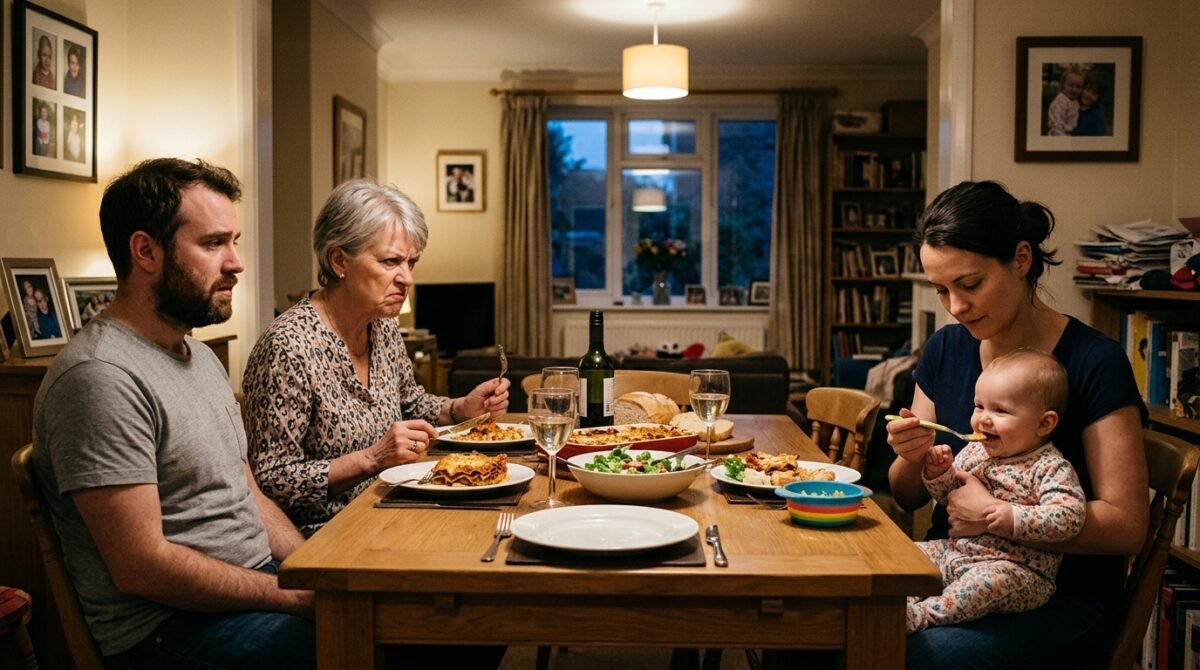
The first time I saw her after the trip was at a mandatory family lunch a week later. She sat at the head of the table, her face a mask of cold fury. She didn’t speak to me, and she barely acknowledged the baby. She spent the entire lunch directing her attention to Mark, trying to guilt him into acknowledging that we had acted ‘cruelly’ by excluding her from the birthday celebration.
I kept my cool. I played with the baby, laughed at her stories, and remained unfazed by the icy glares thrown in my direction. When she finally cornered me in the kitchen, demanding to know how we ‘dared’ to take the baby to Disneyland without informing her, I didn’t raise my voice. I looked her in the eye and stated the facts clearly.
“You gave me an ultimatum, Linda. You tried to dictate who was allowed to be a part of our daughter’s milestone. I chose to prioritize the people who respect us. If you want to be part of our lives, you need to learn that you don’t control the guest list.”
— My response to Linda in the kitchen
She sputtered, trying to find words to justify her behavior, but there were none. She had been caught in the act of being manipulative, and she couldn’t spin her way out of it. She tried to pivot, claiming she was ‘only thinking of the baby,’ but I cut her off. I told her that if she ever tried to dictate our family relationships again, there would be consequences.
The tension in the room was palpable. My husband watched from the doorway, his support for me finally firm and unwavering. He had seen the joy of our trip, and he had seen the toxicity of his mother’s reaction. He wasn’t going to let her continue to bully us. The dynamic had shifted permanently, and for the first time, I felt like I was in the driver’s seat of my own life.
That day marked the beginning of a new chapter of low-contact living. We stopped sharing every detail of our lives with her, stopped feeling the need to explain our decisions, and started prioritizing our own well-being. It wasn’t easy, and there were many moments of doubt, but it was necessary. I had saved my family, one boundary at a time.
The Reddit Trial: NTA or Overreaction?

I knew the internet would have opinions, so I posted the story to a popular sub-reddit dedicated to family conflicts. I wanted to see if I had been too harsh, if my decision to cancel the party and take the trip was truly justified, or if I had overstepped my bounds as a daughter-in-law. The response was immediate and overwhelming.
Thousands of people weighed in, most of them firmly on my side. They called out Linda’s behavior for exactly what it was: controlling, manipulative, and deeply entitled. They validated my decision to prioritize my parents and my own peace, pointing out that toxic grandmothers often use these milestones to test their influence over new parents.
“NTA. You didn’t just cancel a party; you cut the strings. The fact that she tried to ban your parents from your own child’s birthday is a huge red flag. Going to Disneyland was the ultimate power move, and honestly? You earned it.”
— u/FamilyDramaExpert, 32.4k upvotes
There were, of course, those who argued that I should have tried to ‘keep the peace’ and that canceling the party was ‘passive-aggressive.’ But for every comment like that, there were ten others explaining why ‘keeping the peace’ is just another way of saying ‘letting yourself be bullied.’ The Reddit community helped me see that I wasn’t just defending a birthday party; I was defending the health of my family unit.
The most insightful comments came from people who had been in similar situations, sharing their own stories of grandmothers who tried to control everything. They warned me that Linda wouldn’t stop here, that she would likely find new ways to test our boundaries. Their advice was consistent: keep the distance, hold the line, and never apologize for protecting your peace.
Reading those comments helped me process the guilt I had been harboring. I had felt like I was being ‘mean’ by excluding her, but the community reminded me that I wasn’t the one who initiated the conflict. She had forced my hand with an impossible ultimatum, and I had simply chosen the path that led to joy instead of resentment.
I felt a sense of camaraderie with the thousands of people who were cheering me on. It reminded me that I wasn’t alone, that this was a common struggle, and that there was a collective wisdom I could tap into when things got tough. The internet, for once, felt like a supportive, validating space.
The Financial Breakdown: The True Cost of Control

When the dust settled, I decided to lay out exactly what this whole drama cost us, both in dollars and in emotional energy. It was a useful exercise, not just for the sake of clarity, but to see how much we had ‘wasted’ on a potential disaster that we avoided. The table below outlines the comparison between the planned backyard party and our spontaneous Disney escape.
| Expense | Backyard Party (Planned) | Disney Trip (Actual) |
|---|---|---|
| Catering/Food | $850 | $600 (Parks/Snacks) |
| Decorations | $300 | $0 |
| Rental/Equipment | $400 | $0 |
| Emotional Toll | High | Low |
| Outcome | Resentment | Joy |
The financial difference was negligible, but the emotional return on investment was astronomical. By spending money on a trip that was actually enjoyable, we traded a stressful, ego-driven event for a core memory that will last a lifetime. The money I ‘saved’ by canceling the party was, in reality, the price of our freedom.
I realized that Linda’s ‘contribution’ to the party—her pressure, her demands, her constant oversight—was essentially a hidden tax on our happiness. Every dollar we spent on that backyard event would have been accompanied by a side order of stress. By choosing the Disney trip, we were effectively investing in our own mental health.
It was a lesson in values. I had been raised to think that family events were about duty, about hosting, and about making sure everyone was ‘happy.’ But Linda had taught me that those things are secondary to the primary goal of the day: celebrating our child. If the party didn’t support that goal, it wasn’t worth having.
We decided moving forward that any family event we host will be on our terms. If someone can’t handle those terms, they are free to opt out. We aren’t in the business of hosting people who make us feel small, and we aren’t in the business of compromising our values for the sake of keeping someone else’s ego inflated. The financial ledger is simple now: we spend our money where we get the most joy.
The Subtle Unraveling of the Grandparent Myth
As the months went on, the fallout from our ‘Disney departure’ continued to manifest in subtle, annoying ways. Linda stopped asking for our input on big decisions, not because she had learned her lesson, but because she was sulking. She started to treat us like we were ‘unreliable,’ telling other family members that we were ‘forgetful’ or ‘unpredictable.’ It was a transparent attempt to control the narrative.
We didn’t fight back. We didn’t try to correct the record with every distant relative. We just lived our lives. If they asked us, we told them the truth: we were busy, we were happy, and we were doing our own thing. The more we detached, the more we realized how much of our lives had been consumed by the effort of maintaining a facade for her benefit.
There were moments when I felt the old pull of guilt. I would see a cute outfit and think about sending a picture, but then I would remember the ultimatum, the group chat, and the cold silence at the lunch table. I realized that the picture wouldn’t be received with warmth; it would be scrutinized, commented on, and used as ammunition for the next power struggle. So, I kept the picture to myself.
“You know, Linda, if you spent as much time trying to be a good grandmother as you do trying to be the gatekeeper of this family, you wouldn’t be so lonely.”
— My husband’s sister, finally speaking up at a family gathering
It was a turning point when Mark’s sister finally called Linda out. She had watched the whole saga unfold, and she was done with the games. She told Linda that the rest of the family was tired of the constant tension, the favoritism, and the entitlement. It was a massive validation for me to know that I wasn’t the only one who saw the problem.
The myth of the ‘perfect grandmother’ was crumbling, not because of what we did, but because of what she had revealed herself to be. She had pushed too hard, reached for too much, and in the process, she had alienated the very people she claimed to be acting for. We were finally free to build our own version of family, one that didn’t rely on the toxic foundations of the past.
I learned that you don’t have to win the argument to win the war. Sometimes, you just have to walk away and let the other person realize that they no longer have the power to affect your peace. We were winning by simply choosing to be happy, regardless of her presence or approval. It was the ultimate victory.
Reflecting on the Boundary Line

Looking back, I realize that the birthday party was never really about the party. It was a catalyst for a much-needed realignment of our values. The boundary I drew by canceling the event became the foundation for all the boundaries I would set in the future. I learned that saying ‘no’ is an act of love—love for my child, love for my husband, and love for myself.
I’ve developed a mantra: ‘My daughter’s happiness is the primary focus; everyone else is a supporting character.’ It’s simple, but it’s powerful. It helps me filter through the requests, the demands, and the unsolicited advice that inevitably come our way. If something doesn’t contribute to our joy or our stability, it doesn’t get a seat at our table.
The relationship with Linda is currently in a state of ‘civil distance.’ We see her on major holidays, we are polite, and we keep the conversation surface-level. We don’t share our deeper struggles, our dreams, or our plans. We have learned that intimacy requires trust, and she has proven that she isn’t a safe place for our vulnerability. It’s a sad reality, but it’s a reality nonetheless.
I’ve found peace in this distance. I no longer feel the need to win her approval, and I no longer feel the sting of her disapproval. I’ve realized that her perception of me is a reflection of her own issues, not a reflection of my character. I am a good mother, a supportive partner, and a person who values integrity above control. That is enough.
If you find yourself in a similar situation, know this: you are allowed to choose your own joy. You are allowed to take the trip, cancel the party, and set the boundary. You don’t owe anyone a performance of happiness at the expense of your own peace. Your family is your own to build, and you have every right to protect it from those who would seek to tear it down for their own selfish ends.
The Community Verdict: Lessons Learned

Months later, the story of our birthday escape still resonates. The Reddit thread has become a hub for people sharing their own stories of standing up to toxic in-laws. It’s become more than just a place to vent; it’s a community of people learning how to navigate the complex, often painful, terrain of family dynamics. We’ve learned that the most important lesson is that we are not alone.
The collective wisdom of the group has been invaluable. We’ve talked about the importance of pre-emptive boundaries—telling people in advance what the expectations are, and being prepared to enforce them. We’ve discussed the ‘gray rock’ method for dealing with toxic people, and the importance of having a partner who is on the same page.
“The best thing about your story is that you didn’t just walk away; you created something beautiful in its place. You showed your daughter that her mother is a protector. That’s a lesson she will carry with her for the rest of her life.”
— u/GracefulBoundaries, 15.2k upvotes
I’ve realized that my daughter is watching. She’s learning how to treat people, how to ask for what she needs, and how to stand up for herself. By choosing to prioritize our peace, I’m giving her the gift of a childhood free from the weight of adult drama. That is the greatest legacy I can leave her.
I’ve also learned that forgiveness doesn’t mean allowing someone back into the inner circle. I can forgive Linda for being who she is, without letting her continue to influence who we are. I’ve let go of the anger, and in its place, I have a quiet, steady resolve. I know where the line is, and I know I have the strength to hold it.
I am grateful for the journey. It hasn’t been easy, but it has been worth every moment of struggle. I am a stronger woman, a more confident mother, and a happier person than I was before the ultimatum. I’ve learned that the most important thing you can ever build is a home where everyone feels safe, loved, and respected. And sometimes, that means building it yourself, far away from those who don’t understand the assignment.
Conclusion
The story of our baby’s first birthday is a reminder that we are the final arbiters of our own joy. When Linda tried to ban my parents, she thought she was wielding power; instead, she was illuminating the path toward the boundaries we desperately needed to set. The decision to trade a backyard barbecue for a magical escape to Disneyland was not just about a party—it was a definitive declaration that our family’s happiness is not for sale.
We have learned that protecting your peace often requires making the difficult choice, the unpopular decision, and the one that leaves others questioning your motives. But in the end, when you are surrounded by the people who truly love and support you, none of that matters. We chose our own adventure, and in doing so, we found the strength to build a future defined by our terms, not by someone else’s expectations.
Have you ever had to choose between keeping the peace and protecting your own boundaries during a major family event? Did you walk away, or did you try to compromise? Share your stories in the comments below—let’s talk about how we can all learn to put our own happiness first.
What's your verdict on this dilemma?
Vote below to contribute to the official community consensus.

Have a Dilemma Keeping You Up at Night?
Share your real-life feud, wedding chaos, or relationship crossroads anonymously with our editorial team.
What do you think ?
0 Comments🛡️ Comments are moderated to protect community integrity. Your comment will appear once approved by the editorial team.