
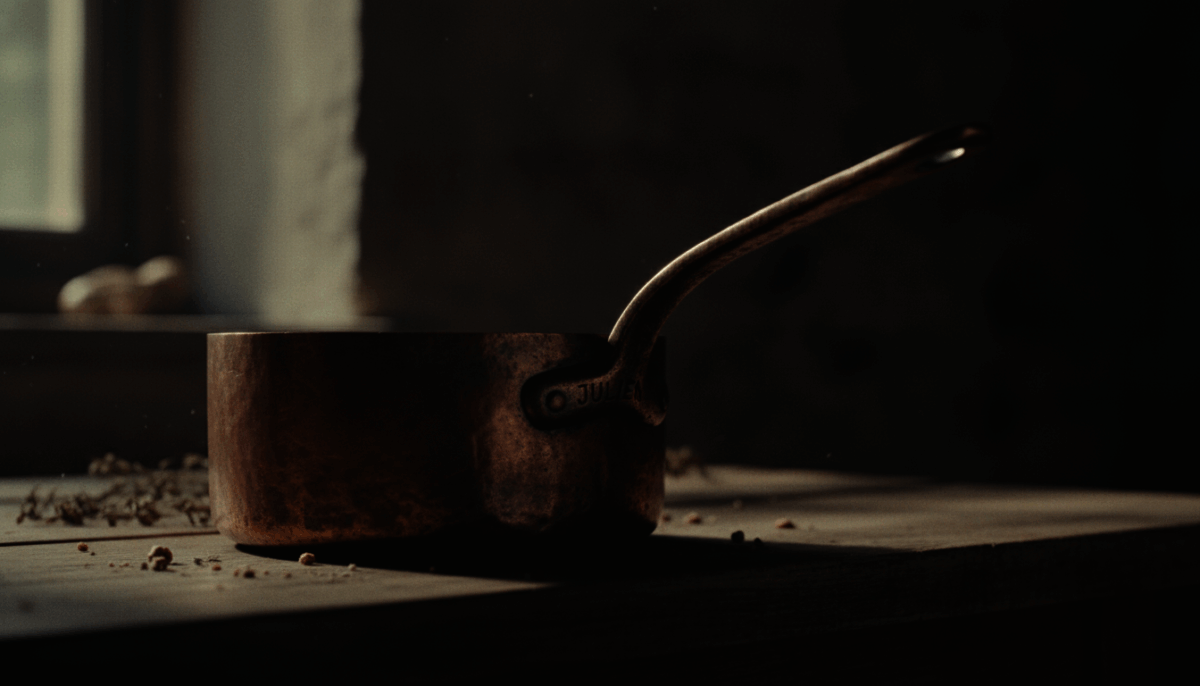
Grief is a silent, heavy coat that you wear long after the funeral flowers have withered. For me, that grief was anchored in tangible objects—the scent of my mother’s kitchen, the clatter of her heavy, hand-hammered Mauviel copper pots, and the way she’d hum jazz while reducing a demi-glace. When she passed away five years ago, those pots were the only physical remnants of her vibrant, culinary soul that I was allowed to keep. They represented Sunday mornings, family holidays, and a legacy of love that she painstakingly built, pan by copper pan, over three decades of her life.
My stepmother, Clara, entered our lives shortly after, a woman who preferred sleek, modern stainless steel and viewed my mother’s ‘vintage clutter’ with a thin-lipped disdain. I had stored the cookware at my father’s house in a specialized climate-controlled chest, intending to take them when I finally moved into my own permanent home. I was told they were safe, tucked away in the pantry, waiting for me like faithful sentinels of my past. I never imagined that someone would look at a set of professional-grade, heirloom French cookware and see nothing more than ‘junk to be cleared.’
The realization didn’t come with a phone call or an apology. It came on a humid Saturday morning, while I was walking through the local community flea market, looking for vintage books. I turned a corner, and there they were—shining, tarnished, and unmistakably mine. Stained with the memories of my mother’s cooking, sitting on a folding plastic table with a handwritten ‘$20’ sticker slapped crudely across the lid of a heavy stockpot. My heart stopped. The world narrowed down to that display.
This wasn’t just about kitchen equipment. It was a calculated erasure of my mother’s existence from the home she built. Clara hadn’t just ‘cleaned out the pantry’—she had disposed of a piece of my history to make space for her own narrative. The confrontation that followed wasn’t just a disagreement; it was a battle for the right to remember. I didn’t scream. I didn’t cry. Instead, I did something my father and Clara never expected: I treated it like a business transaction, and I made sure every single piece came home with me, legally and permanently.
The $20 Sticker of Betrayal

Standing in front of that folding table, the heat of the summer morning suddenly felt like a freezing blizzard. I stared at the copper saute pan, seeing the distinct, deep scratch on the base where my mother had once dropped it on the tile floor in 1998. It was a mark of imperfection that I had once found endearing, now a painful confirmation that this was, beyond any doubt, the collection I had entrusted to my father’s care.
I looked at the vendor, a man who seemed entirely unaware of the provenance of his goods. I asked him, my voice trembling slightly, where he had acquired the set. He pointed to an older woman in a wide-brimmed hat chatting nearby. It was Clara. She was laughing, holding a glass of iced tea, seemingly pleased with the ‘extra cash’ she had generated from her morning of spring cleaning. The sheer audacity of it hit me with the force of a physical blow.
I didn’t immediately reveal myself. I took photos of everything—the tags, the arrangement, Clara standing next to the table, and the specific engravings on the handles. I needed evidence. I knew that if I approached her in the heat of the moment, she would lie, deflect, and potentially move the items before I could establish a claim. I walked away, my hands shaking so violently I had to tuck them into my pockets, and made a single phone call to a friend who specialized in property law.
“Are you sure these are the ones, OP? These look like high-end professional grade. If these are genuine vintage French copper, you’re talking about thousands of dollars, not twenty-dollar flea market finds.”
— My friend, over the phone
I confirmed everything. The inventory list I had made years ago was still on my phone. Every piece was accounted for. Clara wasn’t just being negligent; she was liquidating assets that didn’t belong to her. My mother’s will had been clear about her personal effects, and while the house was my father’s, the contents were legally protected for me. I felt a cold, hard resolve settle into my chest. This wasn’t about the money; it was about the line that had been crossed.
The Confrontation at the Patio Table
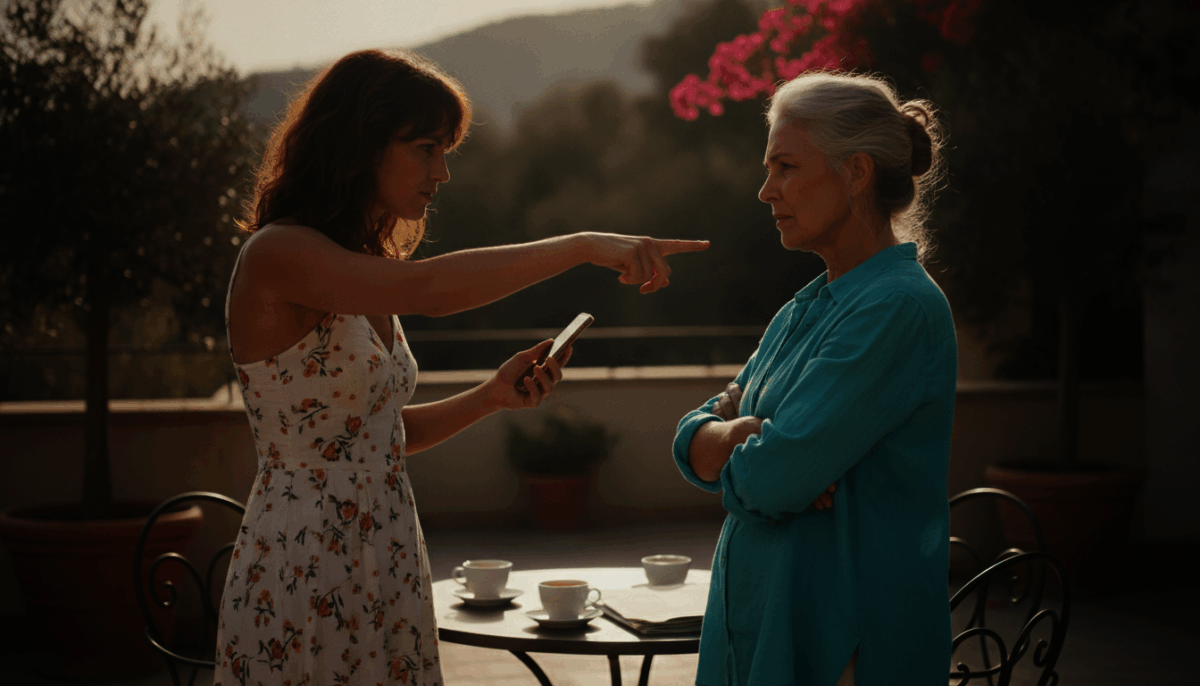
I didn’t wait for the flea market to end. I went directly to my father’s house. I found Clara lounging on the back patio, reading a magazine. My father was inside, likely oblivious to the morning’s ‘profit.’ I didn’t mince words. I placed my phone on the table, showing her the photos I had taken, and waited for her to look up. The color drained from her face as she realized I had caught her in the act.
She tried to spin it, of course. She claimed they were ‘taking up space’ and that they were ‘dirty and old.’ She used that condescending tone she had perfected over the years, the one that made me feel like an ungrateful child for clinging to the past. She insisted that as the current ‘lady of the house,’ she had the authority to curate the kitchen to her aesthetic standards. She seemed genuinely baffled that I would care about a ‘bunch of old metal.’
“Clara, those are not your items to discard. They were specifically listed in my mother’s estate documentation as items to be held in trust for me. You just attempted to sell my inheritance for a pittance at a public market.”
“Oh, don’t be so dramatic. They were sitting in a dusty box for years. I’m doing you a favor by getting rid of the clutter. You should be thanking me for the extra space in the pantry.”
— Clara, during our confrontation
I felt a strange sense of detachment. The anger I expected was replaced by a sharp, clinical focus. I told her exactly what the legal implications were. I informed her that I had already spoken to a lawyer and that those pots were considered protected property. If they weren’t back in my possession by the end of the day, I would be filing a police report for theft. The mention of the police caused her to finally sit up. The mask of the ‘kind stepmother’ had officially dissolved.
My father walked out onto the patio, sensing the tension. He looked between us, confused and hesitant. Clara immediately turned to him, teary-eyed and playing the victim, claiming I was harassing her over ‘some old kitchen trash.’ I didn’t let her control the narrative. I laid out the facts for my father, showing him the photos. He had always been a man who preferred peace over justice, but even he couldn’t deny the reality of the situation when presented with the photographic evidence of his wife selling my mother’s property.
The Legal Ultimatum and the Return of the Goods
The next few hours were a blur of cold, calculated movement. I didn’t just wait for them to bring the items back; I insisted on accompanying my father back to the flea market vendor. It was humiliating for Clara, having to ask for the items back, but I made sure every single piece was accounted for. The vendor was confused, but once he saw the look on my father’s face, he handed them over without an argument.
We loaded the heavy boxes into my car. Every clatter of copper against copper sounded like a victory note. I checked each one against my mother’s list. There was one missing—the large roasting pan. I turned to Clara, who was standing by the car, looking miserable. I asked where the roasting pan was. She mumbled something about a woman having already bought it early that morning. I didn’t stop to argue. I made my father pay the market value of the pan immediately, and I spent the next four hours driving to the address the vendor provided for the purchaser.
The woman who bought it was lovely. When I explained the situation—that it was my late mother’s pan and that it had been taken without my permission—she was horrified. She refused to take the money my father had given me to buy it back. She insisted I take it for free, saying she didn’t want ‘stolen goods’ in her kitchen. I was moved to tears by her kindness. It was a stark contrast to the coldness I had experienced in my own home.
“I am so sorry you had to go through this. I’m a mother, too. I would be devastated if someone threw out my things. Please, take it. It belongs with you.”
— The kind stranger who bought the roasting pan
By the time I returned home, the entire collection was sitting on my kitchen counter. They were dirty, some were slightly damaged from the handling at the flea market, but they were mine. I felt a profound sense of closure, not because the drama was over, but because I had protected what mattered most. I sent an email to my father and Clara that evening, formally outlining the boundaries regarding my mother’s estate. I made it clear that any further interference would result in legal action without notice.
The Aftermath: Family Group Chat Explosion
The fallout in the family was immediate and explosive. My father’s siblings, who had previously been neutral in the ‘stepmom vs. stepdaughter’ dynamic, suddenly had a lot to say. A family group chat, which had been dormant for months, suddenly lit up with notifications. My aunt, always the mediator, tried to suggest that I was being ‘unnecessarily harsh’ and that I should just ‘let go of the past.’ I didn’t hold back in my response.
I shared the full story in the group chat. I didn’t sugarcoat the ‘flea market’ incident or the fact that it was an attempt to erase my mother. The responses were mixed, but for the first time, I felt like the family was seeing the reality of the dynamic. Some people were horrified that Clara would try to sell my property, while others tried to play the ‘peacekeeper’ card. I muted the chat after my final message, done with the cycle of explaining my boundaries to people who didn’t respect them.
“I am not the one who created this drama. The person who decided to sell my deceased mother’s property at a flea market created this situation. I simply recovered what is rightfully mine. If you think that makes me the villain, then you are part of the problem.”
— My response in the family group chat
I realized then that my father’s family had been enabling Clara for years by constantly asking me to be the ‘bigger person.’ But why should I be the bigger person when my mother’s legacy was on the line? I stopped attending the Sunday dinners. I stopped calling. For the first time, I felt like I was breathing real air instead of the stifled, polite oxygen of the family dynamic. It was lonely, yes, but it was an honest loneliness.
The silence from my father was the hardest part. He didn’t defend me, but he also didn’t apologize to me. He simply tried to act as if it were a misunderstanding. That was the moment I realized that he wasn’t just passive; he was complicit. He had allowed this to happen because he didn’t want to deal with the friction in his marriage. I had to make a choice—keep the peace and lose my self-respect, or stand my ground and lose the family illusion.
Reddit Weighs In: The Community Verdict
I posted about the situation on a popular subreddit, seeking advice on how to handle the family fallout. I expected some backlash, but the response was overwhelmingly supportive. People shared their own stories of step-parents overstepping boundaries, and it was a comfort to know I wasn’t alone. The community analysis was sharp, and it gave me the validation I needed to stop feeling guilty about my firm stance.
“OP, you are NTA. This isn’t just about kitchenware; this is about your stepmother trying to erase your mother’s presence from your father’s home. The fact that she tried to sell it at a flea market for $20 is a power move. She wanted to prove that she had the power to dispose of your memories. You reclaiming them was the ultimate power move back. Keep those boundaries firm.”
— u/KitchenConfidentialFan (Top Comment, 32.5k upvotes)
“My step-dad did the same thing with my childhood photo albums. I never got them back. Please, for the love of all that is holy, make sure you have everything else of your mother’s removed from that house. If she’s capable of this, she’s capable of ‘accidentally’ losing anything else she deems ‘clutter’.”
— u/MemoryKeeper88 (14.2k upvotes)
The community’s advice was consistent: get everything else out. I spent the next two weekends with a professional organizer friend, going through the attic and the remaining boxes at my father’s house. I didn’t tell Clara. I just showed up with my father’s permission and took everything that belonged to my mother. Every photo, every book, every knick-knack—it all went into a storage unit I rented. I wasn’t going to give her another chance to ‘clean up’ my past.
The reaction from Clara when she realized the house was being cleared was one of pure, unadulterated fury. She tried to stop us, but my father, for once, stood his ground. He knew that if she intervened, I would go full-nuclear with the legal threats. It was a victory, but a hollow one. The house felt empty, and the relationship with my father was permanently altered. I had won the battle, but I had essentially lost the home I grew up in.
The Legal Reality: Understanding Property Rights
I consulted with an attorney to ensure I was on solid ground, and the results were eye-opening. Many people don’t realize that in cases of inheritance, the ‘spouse’ doesn’t automatically have the right to dispose of personal property that was designated for a child, especially if it was a pre-existing asset. My lawyer explained that Clara’s actions could have potentially been charged as theft or conversion of property. It wasn’t just bad manners; it was a legal violation.
Understanding the law gave me a layer of armor. When my aunt called to tell me I was ‘ruining the family harmony,’ I could calmly explain that I was simply asserting property rights. It shifted the conversation from an emotional one to a factual one. People find it much harder to argue with the law than with ‘feelings.’ It was a lesson I wish I had learned much earlier in life.
| Action | Clara’s Perspective | The Legal Reality |
|---|---|---|
| Donating/Selling Items | “Cleaning up, it’s my house” | Conversion of property/Theft |
| Inventory Disputes | “It’s just old junk” | Violation of estate instructions |
| Family Intervention | “OP is being dramatic” | Legally protected inheritance |
I learned that boundaries are only as strong as your willingness to enforce them. If I had just complained to my father, nothing would have happened. By taking immediate, decisive, and legal action, I made it clear that I was not a person to be trifled with. It was an empowering transition from a grieving child to an adult who owned their history. I felt a new sense of maturity that I hadn’t possessed before the incident.
The legal perspective also made me realize how much of our family ‘peace’ was built on the suppression of my rights. I had been taught to ‘be nice’ at the expense of my own property and memories. That lesson ended the day I found those pots at the flea market. I stopped apologizing for existing and started demanding respect for the things that made me who I am.
The Culinary Ritual: Healing Through Cooking
After the chaos, I finally had the pots back in my own kitchen. I spent a whole weekend scrubbing them, restoring the copper to its former glory. It was a meditative process. As I polished the metal, I remembered my mother’s voice teaching me how to properly sear a steak and how to avoid burning the butter. It was a way of reclaiming the joy associated with the pots, overriding the pain of the flea market incident.
I cooked a full, multi-course meal using the pots. The first dish was a simple French onion soup, a classic recipe my mother had mastered. As the smell filled my apartment, I felt a wave of peace. The pots weren’t just metal; they were a vessel for the love she had for me. They were a conduit to her memory, and they were finally safe, tucked away in my own pantry, where they would never be sold or discarded.
I invited a few close friends over, the ones who had listened to my rants and supported me through the legal nightmare. We ate, we laughed, and I told them the story of the pots. Sharing the experience helped me process it further. I realized that while the drama had been traumatic, it had also led to a deeper appreciation for these objects. I wasn’t just using them to cook; I was using them to celebrate my mother’s life.
“You know, every time I use these, I’m going to think about how you fought for them. They’re like a badge of honor now. They represent your resilience.”
— My best friend, during dinner
The healing was slow, but it was steady. I stopped checking the family group chat. I stopped waiting for an apology that would never come. I realized that my mother’s legacy wasn’t in the house where she died or in the people who had forgotten her; it was in the values she instilled in me. And one of those values was the courage to stand up for yourself when someone tries to take what belongs to you.
Reframing the Narrative: Why We Hold Onto Objects
Why do we hold onto objects? Is it just materialism, or is there something deeper? The flea market incident forced me to confront this question. For me, the copper pots were a physical anchor to a time when I felt safe and loved. When they were threatened, I felt my sense of security being threatened as well. It wasn’t about the monetary value, although the collection was expensive; it was about the identity those objects held.
Clara saw them as ‘clutter’ because she had no connection to the woman who used them. To her, they were just tools. To me, they were the tools of a mother’s love. The disconnect between our perspectives was total. Understanding that she literally could not see the value I saw helped me let go of the anger. She wasn’t just malicious; she was fundamentally incapable of understanding my grief. That realization was liberating.
I started reading books on the psychology of memory and objects. I learned that we often project our sense of self onto the things we own, especially when those things are tied to people we’ve lost. The pots were my ‘transitional objects,’ a way to keep my mother close even in death. Recognizing this helped me understand why the incident felt so personal and why I had reacted with such intensity. It wasn’t an overreaction; it was a protective response to an attack on my identity.
I also realized that I needed to build my own legacy. I couldn’t spend my life just clinging to the past. The pots are part of my future, too—I’ll pass them on to my own children, and I’ll tell them the story of their grandmother and the woman who tried to sell them. They will become a part of our family history, a cautionary tale about boundaries and a testament to the importance of memory.
The New Boundary: Low Contact as Self-Care
I made the decision to go low-contact with my father and Clara. It wasn’t an easy decision, but it was a necessary one. I realized that every interaction with them was a potential battlefield, and I was tired of fighting. I needed space to heal, and I needed to surround myself with people who respected my boundaries. The distance has been a gift. It has allowed me to redefine my relationship with my family on my own terms.
My father still reaches out, usually with vague requests for me to ‘come over for dinner’ or ‘let bygones be bygones.’ I always decline, politely but firmly. I’ve made it clear that until there is a genuine acknowledgment of what happened and a mutual respect for my boundaries, I will not be visiting. It’s not about punishment; it’s about protection. I’m protecting the progress I’ve made in my own life.
The low-contact arrangement has also forced my father to deal with the consequences of his passivity. He’s now the one who has to manage the fallout of his wife’s behavior without me acting as the buffer. It’s been hard for him, I’m sure, but it’s not my responsibility to solve his problems. I’ve spent enough of my life being the one who cleans up the messes. Now, I’m the one who decides who gets access to my life.
“I love you, Dad, but I won’t be coming over. I’ve realized that I need to keep some distance to maintain my own peace. Let’s talk in a few months, and see where we are then.”
— My text to my father, sent last month
It’s a work in progress. Some days I miss the idea of a normal family, but then I remember the flea market and the cold, hard reality of the situation. I realize that the ‘normal family’ I was missing was a fantasy. My reality is different, but it’s real, and it’s mine. And for now, that’s enough.
The Final Verdict: Lessons Learned
Looking back, the flea market incident was a crucible. It burned away the illusions and left behind the truth. I learned that I am stronger than I thought, that I can handle complex legal and social challenges, and that I don’t need to apologize for my boundaries. I also learned the true value of my inheritance—not just in the copper, but in the lessons I learned about resilience and self-advocacy.
I hope that if anyone is reading this and finds themselves in a similar situation, they know they aren’t alone. You have the right to your history. You have the right to protect your memories. And you don’t need to accept ‘peace’ that comes at the cost of your self-respect. Whether it’s heirloom cookware, photos, or simply your time and energy, you are allowed to say ‘no.’ You are allowed to draw a line.
The copper pots are sitting in my kitchen today, gleaming under the lights. They look beautiful. They have a history, and now, they have a story. I’m proud of that story. I’m proud of the woman who stood up at that flea market and said, ‘This is mine, and it stays with me.’ I’m proud of the woman who didn’t back down. I’m proud of the woman who chose her own path.
In the end, that’s what this was all about. It wasn’t about the pots. It was about the transition from the child who was told what to do to the adult who decides what to keep. I’ve kept the pots, and I’ve kept my dignity. And honestly? That’s the best heirloom I could have ever asked for. The kitchen is quiet now, but it’s a peaceful quiet, one filled with the promise of future meals and the comfort of knowing that what I hold dear is finally, permanently, home.
Conclusion
My journey from that dusty flea market table to the peace of my own kitchen has been a long and winding road. I’ve learned that the objects we cherish are often the final threads connecting us to the people we’ve lost, and that those threads are worth protecting with everything we have. The legal battle, the family fallout, and the ultimate decision to establish clear, firm boundaries were all part of a larger process of reclaiming my identity.
I am no longer the person who allows others to dictate the value of my past. I am the steward of my mother’s legacy, and I am the architect of my own future. If this story has taught me anything, it is that your boundaries are your most valuable asset—don’t let anyone sell them for a bargain.
What about you? Have you ever had to fight to keep a precious family heirloom or set a difficult boundary with a family member who just didn’t ‘get it’? Share your stories below—the community support can be the most surprising part of the healing process.
What's your verdict on this dilemma?
Vote below to contribute to the official community consensus.

Have a Dilemma Keeping You Up at Night?
Share your real-life feud, wedding chaos, or relationship crossroads anonymously with our editorial team.
What do you think ?
0 Comments🛡️ Comments are moderated to protect community integrity. Your comment will appear once approved by the editorial team.