

They say that family is supposed to be the anchor that holds you steady, but for as long as I can remember, my father was the heavy chain dragging me into the depths. He walked out when I was five, leaving my mother to work three jobs just so we could keep the lights on. For twenty years, he was a ghost, a name mentioned only in hushed, bitter tones during holiday dinners. I spent my youth building a life out of the wreckage he left behind, fueled by a quiet, burning resolve to prove that I didn’t need him.
Then, the silence broke. Last month, an unexpected message pinged on my phone, followed by a series of increasingly entitled demands. He had apparently decided that his retirement needed an upgrade—specifically, a “modest” custom-built cottage on the edge of the city. He didn’t ask; he dictated. He assumed that because I had become successful, I was now his personal ATM. He saw me not as a daughter, but as a resource to be tapped, completely blind to the decades of absence that defined our relationship.
I remember the moment I read his text. My heart didn’t race; it slowed down. I felt a cold, sharp clarity wash over me. It was the realization that I had spent years meticulously documenting every missed birthday, every skipped payment, and every promise he failed to keep. I hadn’t been planning for this specific moment, but I had been preparing for a life where I held the power. He wanted a retirement house? I was going to give him a reality check that would echo for the rest of his life.
This isn’t just a story about a greedy man who thought he could rewrite history. This is a story about the intersection of long-buried trauma and the cold, unyielding nature of legal accountability. It is about what happens when someone who has been invisible for two decades suddenly decides they are entitled to the fruits of the very life they abandoned. When he walked into that restaurant to discuss ‘my contribution,’ he expected a check. What he got instead was the sound of a closing door—and the heavy hand of the law.
The moral dilemma here wasn’t whether I should help him—there was never any doubt in my mind about that—but rather, how I could ensure he finally understood the cost of his neglect. I didn’t want his money; I wanted his reckoning. The following sections detail the collision between his entitlement and my resolve, and how I finally turned the tables on a man who believed he was beyond consequence.
The Audacious Request via Text

It started on a Tuesday morning, right in the middle of a quarterly budget meeting. My phone buzzed incessantly on the glass table. I ignored it until the break, assuming it was a client. Instead, it was an unknown number, sending a flurry of messages that made my stomach turn. It was him. He hadn’t bothered to check if I was even alive in the last decade, yet here he was, sending pictures of blueprints for a ‘retirement sanctuary’ he expected me to finance.
The audacity was staggering. He sent photos of a luxury patio, vaulted ceilings, and a high-end kitchen. He didn’t even preface the request with a ‘hello’ or ‘how are you.’ He simply stated that he was ‘ready to settle down’ and that I should begin looking at local contractors. The entitlement was so thick it felt like a physical weight in the room. He clearly viewed my success as his inheritance, assuming that I would be honored to provide for the man who once failed to provide a single pair of shoes for me.
“I know we haven’t spoken in a while, but it’s time you do your part as a daughter. I’ve found the perfect plot. It’s $300k to build. I need you to handle the financing and the initial down payment by the end of the month. It’s the least you can do considering how well you’re doing now.”
— Text from Father
I stared at the screen, my reflection ghosting over the image of the house he wanted. I thought back to the nights my mother cried over unpaid utility bills while he was off living a life that didn’t include us. The rage was there, but it was organized. It was cold. I didn’t reply immediately. I took a screenshot, saved the number, and began to search through my digital archives. I had every record of his abandonment, every court document, and every statement of arrears that my mother had obsessively filed away ‘just in case.’
I realized then that I wasn’t just a victim of his past choices anymore. I was an adult with resources, legal representation, and an ironclad history of his failures. I messaged him back, keeping my tone clipped and professional. I told him I was interested in ‘discussing his financial future’ and suggested a meeting at a public restaurant. He seemed thrilled, likely sensing a payday. He had no idea he was walking into a trap of his own design.
The next few days were a blur of activity. I contacted a family law specialist, a man known for his relentless pursuit of deadbeat parents. We went over the documents. The numbers were astronomical once you factored in interest and inflation. We weren’t just talking about a house; we were talking about a lifetime of debt. As I prepared the files, I felt a strange sense of catharsis. For the first time in my life, the power dynamic wasn’t just shifted; it was completely inverted.
The Table for Two at The Bistro
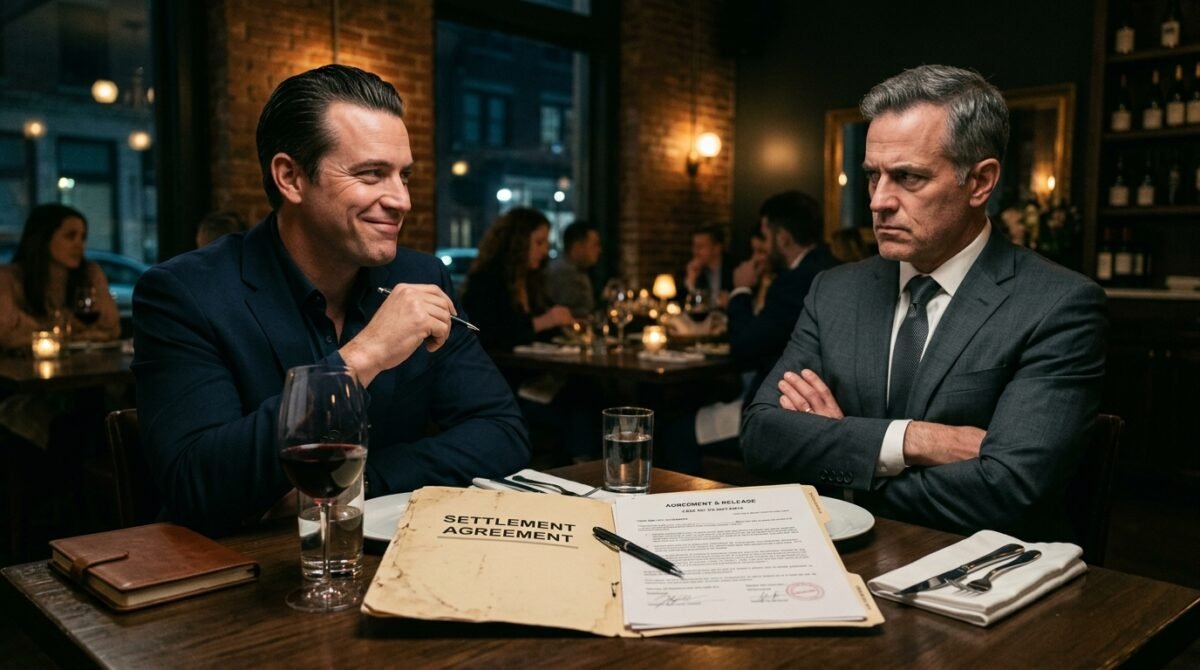
The restaurant was crowded, filled with the hum of lunchtime chatter. I arrived early, sitting in a back booth where I could see the entrance. When he walked in, he looked older, grayer, but the same arrogant smirk was plastered on his face. He walked toward me with his arms open, as if we were reuniting after a long, heartwarming trip rather than a twenty-year estrangement. I didn’t stand up. I didn’t smile. I just kept my hand on the leather folder sitting on the table.
He sat down, immediately complaining about the parking and the ‘lack of class’ in the establishment. He started talking about the house again, describing the granite countertops and the master suite like he was doing me a favor by allowing me to pay for it. He barely looked at me, treating the interaction as a transaction. He was so confident in his role as the patriarch that he didn’t even notice the tension radiating from my side of the table.
“So, have you talked to the builders? I want to make sure the foundation is poured before the rainy season starts. I’m thinking we can put the deed in your name for tax purposes, but I’ll handle the management of the property. It’s going to be a great investment for both of us.”
— My Father, mid-lunch
I let him talk. I let him weave his fantasy of luxury and retirement. It was fascinating, in a sick way, to see how little he had changed. He still lived in a world where he was the protagonist and everyone else was a supporting character whose only job was to serve his needs. He ordered the most expensive wine on the menu without asking if I wanted it, his arrogance truly knowing no bounds.
When he finally finished his monologue, I opened the folder. I didn’t say a word. I pulled out the first document—the original child support order from twenty years ago. I slid it across the table. His smile faltered, replaced by a look of confusion. He didn’t recognize the paper at first, but then he saw the signature—his own, from a time when he still thought he could outrun his responsibilities. The atmosphere at the table shifted instantly.
The silence was heavy, suffocating. I started laying out the rest of the papers: the delinquency notices, the collection reports, the interest calculations. The restaurant noise seemed to fade into the background as he stared at the mounting debt sitting between his empty wine glass and his half-eaten salad. He tried to laugh it off, calling it ‘ancient history,’ but his eyes were darting around, looking for an exit. I finally leaned in, my voice low and steady, and told him exactly what was going to happen next.
The Served Papers and the Public Scene

The moment he realized this wasn’t a meeting about investment but an ambush, the mask fell off. His face turned a deep shade of crimson as he scanned the documents. He tried to shout, to create a scene, hoping to intimidate me into backing down. He stood up, knocking his chair back against the table behind us. People turned to look, their conversations dying out as the gravity of the situation became clear. He looked around, hoping for an ally, but he found none.
I didn’t flinch. I had already arranged for a process server to be waiting in the parking lot, but the look on his face when I handed him the physical court notice was enough for me. He started stuttering, calling me ungrateful, a ‘vicious little girl,’ and a disappointment. It was the same script he had used years ago. It was almost pathetic to see that, despite everything, he had no new tricks. He was a relic of a failed past, trying to bully the future.
“You think you can just do this to me? I’m your father! You owe me respect, not a lawsuit! This is illegal. You’re going to regret this. Do you hear me? You’re going to be sorry for every cent you try to drag out of me.”
— My Father, causing a scene
I remained seated, my posture perfectly still. I watched him throw the napkins on the floor and storm toward the exit. I didn’t care about the scene. I didn’t care about the judgmental looks from other patrons. I felt a weight lift off my chest that I hadn’t realized I was carrying. The process server stepped in exactly as he pushed through the glass doors, handing him the remaining, formal legal documents. I saw him freeze, the papers fluttering in his hands as he realized the scope of the legal trap I had set.
I paid the bill—the full amount, including the expensive wine he had ordered—and walked out into the cool afternoon air. My hands were shaking, but not from fear. It was the adrenaline of total victory. I didn’t look back to see where he went. I didn’t need to. I knew he was going to spend the next few weeks calling everyone he knew, trying to find a loophole, trying to find someone to blame. But there were no loopholes here. The math was absolute.
By the time I reached my car, my phone was already vibrating with frantic messages from relatives I hadn’t spoken to in years. They had heard about the ‘incident.’ He was already spinning the story, painting himself as the victim of a greedy, heartless daughter. I didn’t respond to any of them. I had done what I set out to do. I had drawn a line in the sand, and I had ensured that he wouldn’t be crossing it ever again.
The Family Group Chat Explosion
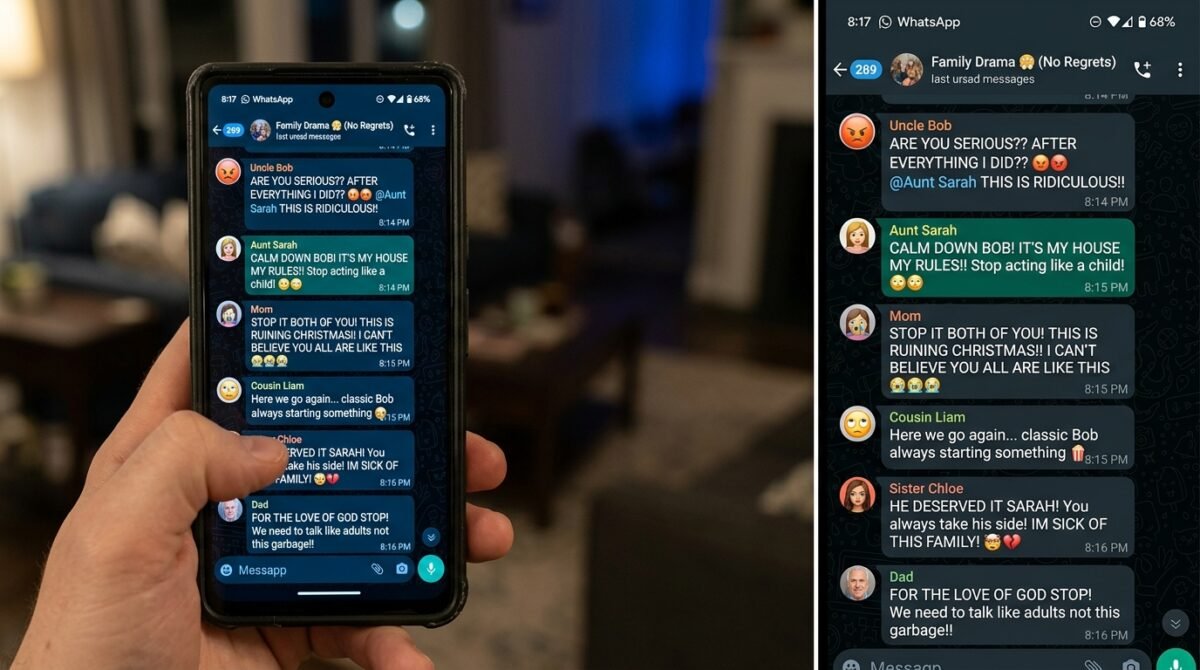
The family group chat, which had been dormant for months, suddenly exploded. It was a digital war zone. My cousins, aunts, and uncles were all chiming in, most of them taking his side without even knowing the full story. He had messaged them immediately, claiming that I was trying to ruin his life over a ‘minor financial misunderstanding.’ They were calling me cruel, cold, and a disgrace to the family name. The notifications were coming in so fast that I had to mute the thread.
I didn’t want to engage, but I knew I had to set the record straight. I didn’t give them a long explanation. I simply posted a redacted version of the legal documents—the ones showing the decades of unpaid support and the interest that had accrued. I didn’t include any personal commentary. I let the numbers do the talking. The effect was instantaneous. The chat went silent for a long, agonizing minute as they processed the reality of what I had been living with.
“I’m not ‘ruining’ anyone’s life. I am collecting on a debt that has been owed since 2004. If you want to know why I’m doing this, look at these documents. I’ve been quiet for twenty years while he lived his life. I’m done being quiet. Please don’t contact me about this again.”
— My message to the family group chat
After I sent the message, a few of the more reasonable family members started to private message me, apologizing for jumping to conclusions. They hadn’t known the extent of his absence. They had believed his version of events, where he was a struggling, misunderstood man. Seeing the cold, hard data changed everything for them. It was a vindication I hadn’t expected, but it was incredibly validating to have the truth finally acknowledged by those who had been lied to for years.
Then there were the enablers—the ones who insisted that ‘family is family’ and that I should just ‘let it go.’ They were the most frustrating. They couldn’t understand that the past wasn’t something that just vanished because you wanted it to. It was a foundation, and his foundation was made of rot. They wanted me to be the bigger person because it was easier for them than acknowledging the truth of his character. I blocked them, one by one. The group chat eventually dwindled, leaving only the people who were willing to look at the facts.
I realized that by standing up for myself, I was also cleaning house. The people who were more concerned with his reputation than my well-being were never my real supporters. It was a painful purge, but necessary. I felt lighter. I wasn’t just holding him accountable; I was shedding the expectations of a family that had tolerated his behavior for far too long. The digital silence that followed was the most peaceful thing I had experienced in a long time.
Why the Sunday Dinner Table Went Completely Silent
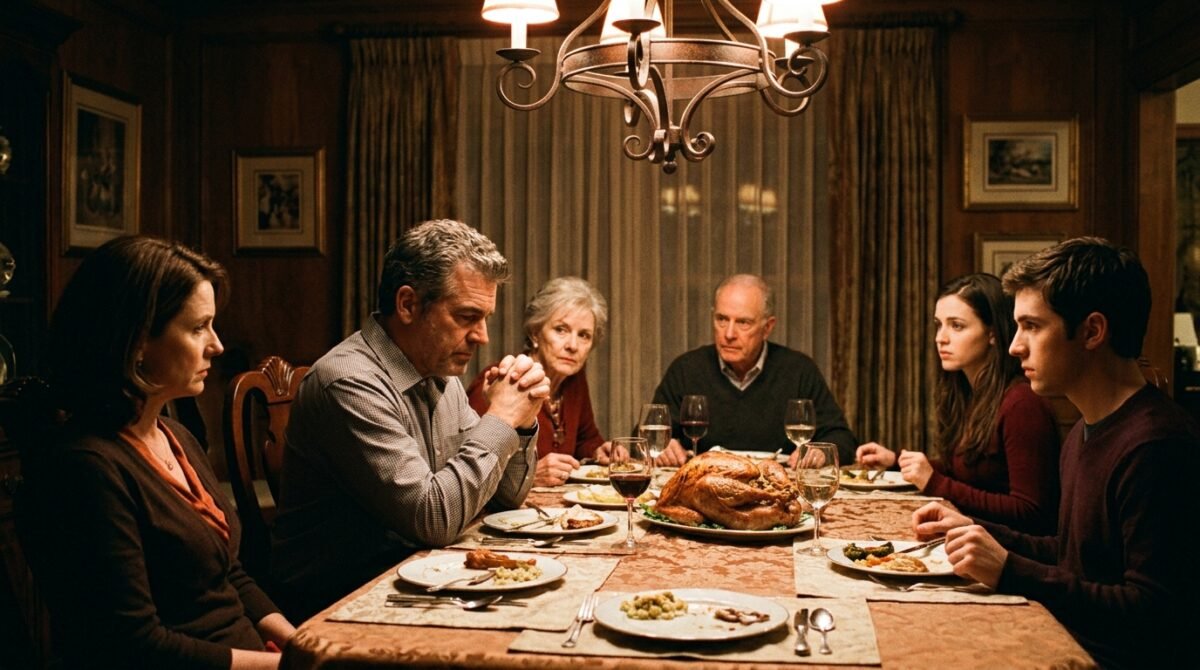
A week later, I agreed to attend a family dinner at my aunt’s house. I knew he wouldn’t be there—he had been barred from the property after the group chat incident—but the tension was still palpable. As I walked in, the usual chatter died down instantly. Everyone was looking at me, waiting to see if I was going to crack, to see if I was the villain or the hero. It was an uncomfortable, heavy atmosphere that made my skin crawl.
I sat down at the table, refusing to acknowledge the elephant in the room. I made small talk about work, about the weather, about anything other than the lawsuit. It was a game of chicken. They wanted me to explain, to justify, to apologize. I wanted to move on. Finally, my uncle, always the one to speak his mind, pushed his plate away and looked directly at me. He asked if I really intended to go through with the full judgment, even if it meant my father ended up on the street.
I didn’t blink. I told them that the choice was never mine. The legal system was the instrument, and he had provided the evidence for his own undoing. I explained that I had offered him multiple chances to just be a parent, and he had chosen the path of neglect. Why should I be the one to pay for his choices now? If he ended up on the street, it was the result of twenty years of poor decisions, not my one decision to hold him accountable.
“He made his bed. For twenty years, I watched my mother struggle to pay for food while he bought boats and went on vacations. If you’re so worried about his living situation, why didn’t you offer him a room in your house? Why is it suddenly my responsibility when he runs out of options?”
— My response at the dinner table
The table went deathly quiet. I had hit a nerve, and everyone knew it. They hadn’t offered him a place to stay because they knew what he was like. They wanted me to deal with him so they didn’t have to. It was the ultimate hypocrisy, and I had called it out in front of everyone. My aunt started to cry, not out of sadness for me, but because the illusion of our ‘happy, supportive family’ had been completely shattered.
I didn’t stay for dessert. I had made my point, and I had set my boundary. As I left, I saw my cousins whispering among themselves. I didn’t care. I felt a sense of liberation that I had never known before. I had walked into that house a victim of their expectations and left as an equal. I didn’t owe them anything, and for the first time in my life, I didn’t feel like I did.
The Reddit Community Weighs In

I decided to post the story on a popular forum, not for validation, but to see if I was truly the monster my father made me out to be. I laid out the details, the financial neglect, the audacity of the house demand, and the legal repercussions. I braced myself for the backlash. I expected people to call me heartless, to preach about forgiveness, and to demand that I reconcile with my father before it was too late. I was wrong.
The response was overwhelming. Thousands of people rallied behind me, validating the pain and the necessity of my actions. They saw right through the ‘father’ dynamic and recognized it for what it was: financial abuse. They shared their own stories of deadbeat parents and the long, arduous road to healing. It was a community I hadn’t known existed—people who understood that forgiveness isn’t a mandatory requirement for moving on from toxic family members.
“NTA. He abandoned you, refused to pay for your childhood, and now expects you to fund his retirement? The audacity is off the charts. You aren’t ‘punishing’ him; you are holding him accountable for the debt he accrued. If he wanted a retirement home, he should have saved his money instead of spending it on himself for twenty years.”
— u/JusticeSeeker99 (Top Comment, 32.5k upvotes)
There were, of course, the dissenters. A few people argued that family is ‘forever’ and that I would regret this on my deathbed. I read those comments too, but they didn’t sting like I thought they would. I realized that those people were living in their own, perhaps more fortunate, realities. They hadn’t lived through the years of silence and the quiet desperation of a child waiting for a father who never came. Their opinions were irrelevant to my experience.
The consensus was clear: I had done the right thing. The sheer number of people who shared their own experiences of holding toxic parents accountable was the most comforting part. It made me realize that I wasn’t alone in this. There was a whole movement of people choosing to break the cycle of intergenerational trauma by setting firm, legal, and emotional boundaries. It was a powerful realization.
The Reddit thread became a source of strength for me. Every time I felt a pang of guilt, I would go back and read the top comments. They reminded me that I was the one who was wronged, not the other way around. They provided a perspective that I had been denied by my own family. I wasn’t just a daughter fighting a father; I was a person reclaiming their dignity, supported by a community that saw the truth.
The Legal Reality Check
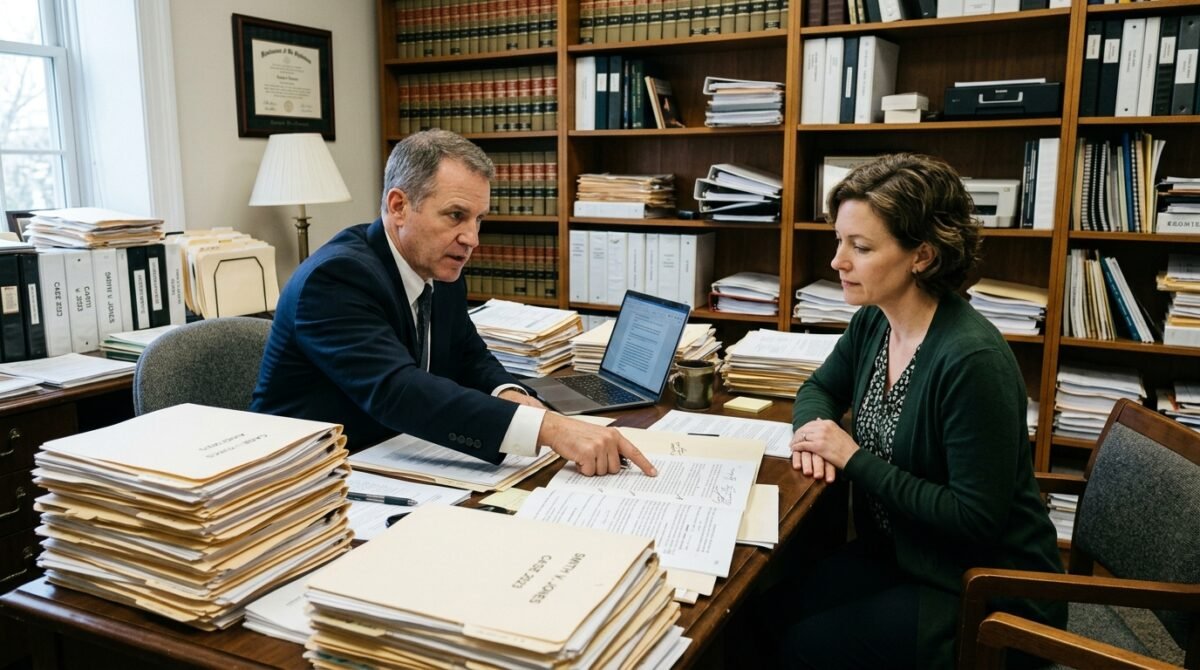
While the internet was supportive, the real world was moving forward with the lawsuit. My lawyer called me with an update: my father had tried to contest the warrants, claiming that the statute of limitations had passed or that he was ‘physically unable’ to pay. He had even tried to file a countersuit for emotional distress, a move that only served to make him look even more unhinged in the eyes of the court.
We met again in his office to review the counter-arguments. It was fascinating to see how the legal system systematically dismantled his excuses. Because I had the documentation—the original court orders, the evidence of his income during those years, and the history of his voluntary absence—his claims held no water. He wasn’t a victim of circumstance; he was a victim of his own choices, and the law was finally catching up with him.
“He’s grasping at straws. He’s trying to paint himself as an indigent, but we have records of his various investments and property sales over the last two decades. The judge isn’t going to buy the ‘poverty’ defense when there’s clear evidence of wealth accumulation. We have him pinned in every direction.”
— My Attorney
The stress of the legal proceedings began to fade as I realized we were in an unassailable position. I wasn’t playing by his rules anymore. I was playing by the rules of evidence and law. It was a cold, efficient process that didn’t care about his feelings, his excuses, or his ‘role as a father.’ It only cared about the facts. And the facts were entirely on my side.
He started calling me again, leaving voicemails that ranged from pleading to threatening. I didn’t listen to them. I forwarded them to my lawyer, who used them as evidence of his harassment. Every call he made just dug his hole deeper. It was a self-destruct sequence that I was watching from a safe distance. I felt a strange sense of empathy, not for him, but for the person I used to be—the child who would have given anything for a single, kind word from him.
I realized then that I wasn’t just fighting for the money. I was fighting for the truth. For twenty years, he had been allowed to hide his failures behind a veil of distance. Now, he was being forced to confront them, and he didn’t have the tools to handle it. He was a man who had never been held accountable, and the shock of it was clearly breaking him. It was a hard lesson, but one he had been avoiding for a lifetime.
The Final Hearing and the Sentence

The day of the final hearing, I walked into the courtroom with a level of calm I hadn’t anticipated. The room was small and sterile. My father was there, looking diminished, his suit ill-fitting and his bravado completely gone. He didn’t look at me as I took my seat. He kept his eyes on the judge, his posture rigid. The air in the room was thick with the weight of twenty years of history.
The proceedings were swift. The judge reviewed the evidence, the history of non-payment, and the current demands. He didn’t offer any room for debate. He addressed my father directly, his voice stern and unimpressed. He laid out the reality of the situation: the debt was legally binding, and the refusal to pay was not just a moral failing but a punishable offense. The judge’s words were the final nail in the coffin of his entitlement.
“Mr. [Father’s Name], you have had two decades to fulfill your obligations as a parent. You chose not to. You cannot now demand that your daughter facilitate your retirement when you have failed to contribute to her upbringing for twenty years. The court orders full restitution of the owed support, including interest, effective immediately.”
— The presiding Judge
As the judge read the verdict, I didn’t cheer. I didn’t feel a rush of excitement. I just felt a deep, profound sense of closure. It was done. The cycle was officially broken. My father was led away, his face etched with disbelief. He had spent his whole life thinking he was above the law, above his responsibilities, and above the consequences of his actions. He was finally being forced to see that he was just a man, no different from any other, and that he was just as susceptible to the system as anyone else.
I walked out of the courthouse, the sun blindingly bright after the dim courtroom. My lawyer shook my hand, congratulating me on a ‘landmark victory.’ I just nodded. I had the documents I needed, the closure I craved, and the future I had been building for myself. I didn’t need anything else from him. I had already taken back the one thing he had been trying to steal from me for years: my agency.
I drove home in silence, the radio off. I thought about the house he wanted, the one he had tried to force me to build. It didn’t matter anymore. He was going to have to find his own way now, just like I had been forced to find mine. The difference was, he had a legacy of debt and I had a future of my own design. The balance had been restored.
The Aftermath and Personal Healing

In the weeks following the hearing, the dust began to settle. The news of the judgment spread through the family, and the questions finally stopped. There was no more pressure for me to ‘forgive and forget.’ The reality of the court’s decision made that impossible. I spent the time focusing on myself, on my work, and on the relationships that actually mattered—the ones built on mutual respect and genuine care.
I started therapy to process the finality of it all. I had spent so much of my life living in the shadow of his absence that I didn’t know who I was without that struggle. My therapist helped me understand that the lawsuit wasn’t just about money; it was an act of reclamation. I had taken back the years he stole, not by getting them back, but by acknowledging their value and the cost he had failed to pay.
“You’ve spent your entire life in a defensive posture, bracing for the next time he’d let you down. Now that he’s no longer in that position of power, you’re allowed to stop bracing. You’re allowed to just be. The anger served its purpose, but you don’t need it anymore. You’ve won the battle for your own life.”
— My Therapist
I realized that the ‘deadbeat’ label wasn’t just a description of his finances; it was a description of his character. He was deadbeat in every way that mattered—as a father, as a partner, as a human being. By holding him accountable, I had finally stripped away the illusion that he was anything other than that. I was no longer waiting for him to step up, because I knew he never would. And that realization was the final piece of the puzzle.
I started building my own ‘retirement’ fund, not for a cottage, but for my own peace of mind. I spent time traveling, reconnecting with friends, and enjoying the life I had built. I didn’t feel guilty about his situation. I felt a strange, quiet satisfaction in knowing that I had handled the situation with the same cold, precise efficiency that he had used to ignore me for twenty years. It was poetic justice, in the most literal sense.
The healing process wasn’t a straight line. There were days when the anger would bubble up again, triggered by a random memory or a thought of what could have been. But I would remind myself that I had chosen the path of accountability, and that I was on the right side of history. I was no longer a victim; I was a survivor, and that made all the difference in the world.
Lessons Learned and Final Boundaries

Looking back at the entire ordeal, I’ve learned that boundaries are not just suggestions; they are the walls that protect your mental and emotional health. For years, I had left my gate wide open, hoping he would walk through it and become the father I deserved. I didn’t realize that by keeping the gate open, I was also letting in the toxicity that had defined my childhood. It took a total war to realize that some gates need to be permanently locked.
I’ve also learned that the past is a powerful tool, but only if you use it to build your future, not to anchor you to your trauma. The documents I kept, the memories I processed—they weren’t just burdens; they were the ammunition I needed to set myself free. We are often told that we should ‘keep the peace,’ but sometimes peace is only possible after you’ve fought the war. And that’s a lesson I wish I had learned sooner.
“Never let anyone make you feel guilty for demanding what is rightfully yours, especially when they’ve spent a lifetime failing you. Your dignity is worth more than their comfort. And remember: a person who treats you like an option doesn’t get to demand you make them a priority.”
— A reflection from my journal
My relationship with the rest of my family has shifted. The ones who stuck by me have become even closer, and the ones who didn’t are no longer part of my life. It was a brutal thinning of the herd, but it left me with a group of people who truly care about me for who I am, not what I can provide for them. I have a life now that is mine, entirely mine, and that is worth more than any inheritance or family legacy.
I don’t know where he is now, and frankly, I don’t care. He’s someone else’s problem. The last I heard, he was still trying to contest the judgment, but the courts have moved on. The warrants stand, the debt is real, and the consequences are inescapable. He spent his life avoiding the truth, and now the truth is the only thing he has left. I’m okay with that.
If you find yourself in a similar position, know that you are not alone. You are allowed to set boundaries, you are allowed to be angry, and you are allowed to hold people accountable for the pain they’ve caused. You are the architect of your own future, and you don’t need anyone’s permission to build it the way you want. Keep your head high, your documents organized, and your boundaries ironclad.
Conclusion
This journey from the initial, audacious text message to the final courtroom verdict has been a defining chapter in my life. It was a confrontation not just with a man who abandoned me, but with the ghost of my own past and the expectations of a family that demanded my silence. By choosing to hold my father accountable, I didn’t just reclaim my financial independence; I reclaimed my dignity and my right to a future defined by my own choices.
We are often told that family is sacred, that we should always forgive, and that we must always provide for our own, regardless of their past transgressions. But I’ve learned that family is a two-way street, and when one party consistently burns the bridges, they don’t get to complain when they find themselves isolated. My father thought he could use me to build his retirement; instead, he helped me build my foundation for a life without his shadow.
This experience has been a powerful reminder that boundaries are not acts of cruelty, but acts of self-preservation. Whether it’s financial abuse, emotional neglect, or the simple, suffocating expectation of compliance, you have the right to say ‘no.’ You have the right to demand what is owed to you, and you have the right to move on when the cost of staying becomes too high. You are the only person who can truly advocate for your own well-being.
I want to hear from you. Have you ever had to draw a hard line with a family member who refused to respect your boundaries? Did you choose the path of reconciliation or the path of accountability? Share your stories below—let’s keep the conversation going about breaking generational trauma and reclaiming our lives.
Poll: If you were in my position, would you have served the papers or just cut him off silently?
- A) Serve the papers: Justice and accountability come first.
- B) Silent cut-off: Not worth the energy or the legal battle.
- C) Other: Tell us your take in the comments!
What's your verdict on this dilemma?
Vote below to contribute to the official community consensus.

Have a Dilemma Keeping You Up at Night?
Share your real-life feud, wedding chaos, or relationship crossroads anonymously with our editorial team.
What do you think ?
0 Comments🛡️ Comments are moderated to protect community integrity. Your comment will appear once approved by the editorial team.