
Growing up, there was always a clear divide in the Miller household. My older brother, Kevin, was the sun around which my parents orbited. Every achievement of his, no matter how small, was celebrated with fanfare, while my own accomplishments were met with a polite, distracted nod. It was a dynamic I grew accustomed to, a background radiation of feeling perpetually secondary. However, things shifted dramatically when my grandmother passed away and left me, specifically, ten acres of prime land located just outside the city limits.
The land was my grandmother’s pride and joy. She knew my parents would likely squander it or, worse, hand it over to Kevin to fuel his latest ‘business venture.’ She took the legal precautions necessary to ensure it went directly to me upon my twenty-fifth birthday. When the news broke during a family dinner, the atmosphere in the room changed instantly. The air grew thick with unspoken resentment, and my father’s face hardened in a way I had never seen before.
For the first two years, I kept the land as a quiet retreat, a place to escape the suffocating expectations of my family. I did nothing but mow the grass and pay the taxes. But the silence didn’t last. The ‘Golden Child’ narrative, which had been dormant, began to rear its head as Kevin’s latest scheme—a failed boutique brewery—left him penniless and desperate for a new start.
The moral dilemma began not with a request, but with an assumption. My parents started treating the land as if it were community property, a safety net that belonged to the family, not to me. They began dropping hints, then making suggestions, and finally, issuing demands that I facilitate Kevin’s ‘fresh start.’ They didn’t see a woman protecting her inheritance; they saw an obstacle preventing their son from achieving his supposed potential.
What followed was a slow, painful unraveling of my relationship with them. It was a collision between the sanctity of private ownership and the entitlement of a family that refused to acknowledge my autonomy. This is the story of how I stopped being the quiet, overlooked sibling and drew the hardest line of my life.
The Sunday Dinner Where Everything Changed
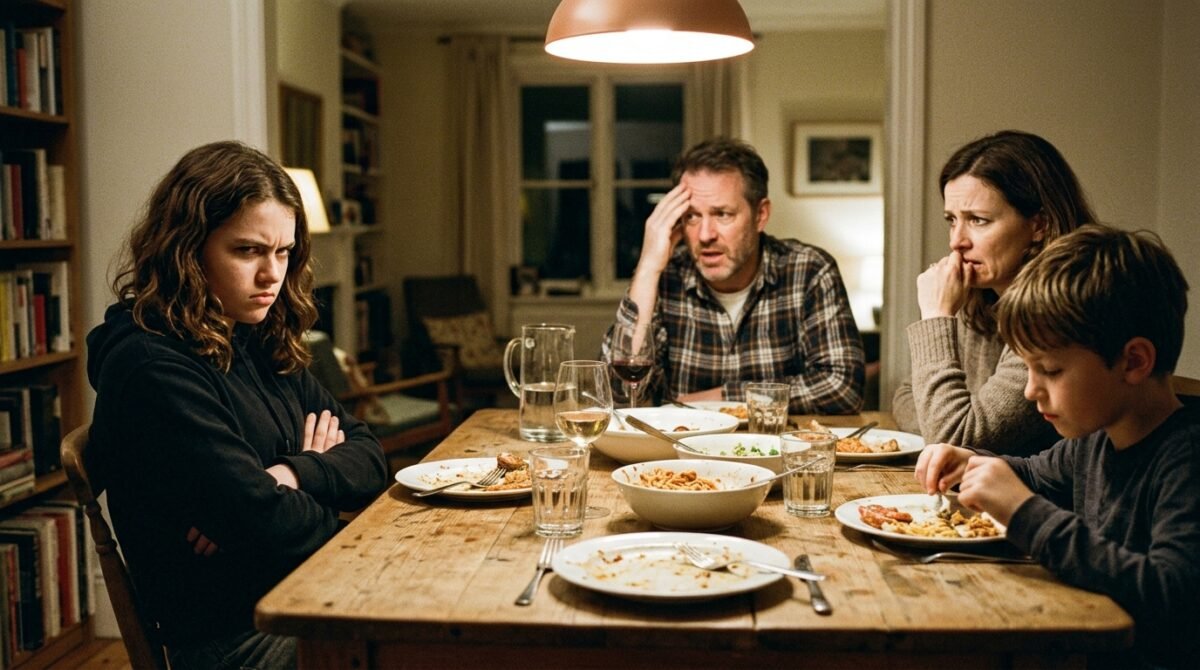
The dinner started like any other: strained small talk, the clinking of silverware, and the heavy weight of my mother’s critical gaze. Kevin was there, looking uncharacteristically somber, his usual bravado replaced by a performative vulnerability that my parents seemed to eat up. My father cleared his throat, a sound that usually preceded a lecture, and I felt my stomach drop. I knew what was coming before he even spoke, a sinking realization that had been building for weeks.
He didn’t beat around the bush. He launched directly into a monologue about the importance of ‘family unity’ and ‘helping those we love during tough times.’ He spoke about how the ten acres were currently just ‘sitting there,’ gathering dust while Kevin was struggling to find a place to park his vintage trailers and start his new venture. I watched my mother nod in agreement, her eyes pleading with me to just be the good girl I had always been.
“It is simply the right thing to do, Sarah. Kevin has the vision to turn that land into something that benefits all of us. You’re young, you have your career. Why keep such a massive asset locked away when your brother is literally living in his car?”
— My Father, mid-dinner
I felt a flash of anger so hot it was almost cold. I set my fork down, the sound echoing in the quiet dining room. The audacity was staggering. They weren’t asking; they were informing me of their plan. I looked at Kevin, who was staring intently at his plate, avoiding my eyes. He knew exactly what was happening and he was letting our parents do the dirty work for him.
“It’s not ‘locked away’, Dad,” I replied, my voice steady despite the tremor in my hands. “It’s mine. Grandmother left it to me because she knew I would take care of it. Kevin has no business plan, no experience with property management, and quite frankly, no respect for the land. I am not signing over a single square inch of that property to him or anyone else.”
The silence that followed was suffocating. My mother looked horrified, as if I had just slapped her. Kevin looked up then, a flicker of genuine irritation crossing his face. He didn’t care about the land; he cared about the status it represented and the ease of having a free place to live and operate. The dinner ended shortly after, with my mother refusing to meet my eyes as I gathered my coat.
The Late Night Text Campaign
The fallout didn’t stop at the door. Within twenty-four hours, my phone became a battleground. It started with subtle guilt-tripping messages from my mother, framing my refusal as a personal attack on their parenting. Then came the ‘helpful’ suggestions from my father about legal ways they could ‘help’ me manage the land, which were thinly veiled threats regarding my ability to actually hold onto the property.
Then, the messages from Kevin started. They were a mix of condescending advice and outright manipulation. He tried to frame himself as the victim of my ‘selfishness,’ completely ignoring the fact that he was asking me to give away a significant portion of my financial future to bail him out of his own poor decisions. I read through the messages late at night, the blue light of the phone screen illuminating my bedroom as the anger shifted into cold, strategic resolve.
“Look, sis, I’m not saying you’re a bad person. But you’re being incredibly naive. This land could be an empire for us. Don’t hold onto this grudge just because you’re jealous of my drive. Just sign the transfer papers and I’ll handle the rest. I’ll even let you visit on the weekends.”
— Kevin, via text message
I didn’t respond for hours. I took screenshots of every single message. I knew that in a family like mine, the narrative was everything. If I didn’t keep a record, they would rewrite the history of this argument to make me the villain. I reached out to a lawyer friend the next morning, just to be sure of my footing. The advice was simple: keep them off the property, and do not entertain any ‘joint management’ proposals.
The next few days were a blur of work and anxiety. Every time my phone buzzed, I felt a spike of adrenaline. It wasn’t just about the land anymore; it was about whether I would finally stand my ground or revert to the role they had spent twenty-five years carving out for me. I chose the former, and it felt both terrifying and empowering.
The Unannounced 6:00 AM Intrusion
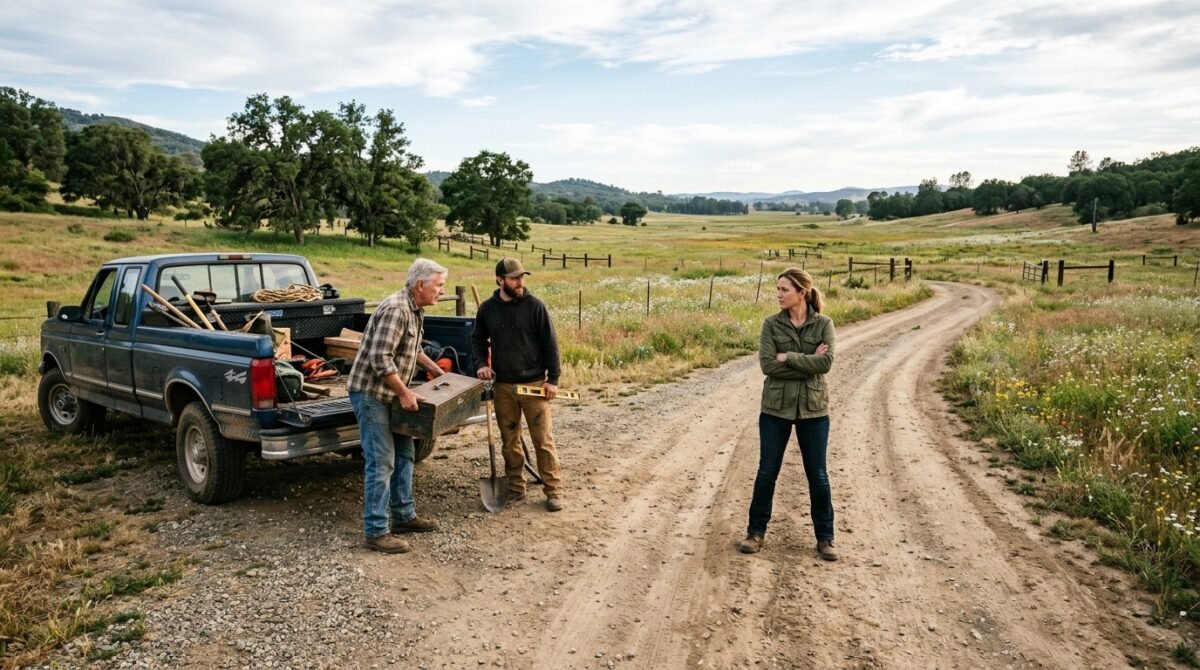
The climax of the initial phase happened on a Saturday morning. I had gone to the land to do some clearing and maintenance, enjoying the quiet of the early morning sun filtering through the trees. I was in the middle of hauling some brush when I heard the distinct sound of a truck engine idling at the gate. I walked back toward the entrance, my heart sinking as I saw my father’s pickup truck and Kevin’s beat-up trailer parked right on my property line.
They weren’t just visiting. They had brought tools, wood, and a sense of entitlement that was truly breathtaking. My father was already out of the truck, measuring the ground, while Kevin was busy unloading boxes. I stood there for a moment, just watching them, disbelief warring with a rising sense of indignation. They had literally moved in without a single word of permission.
“What on earth are you doing? Get off this land right now. You are trespassing, and I mean it. I have the keys to this gate, and you have exactly ten minutes to pack up and leave before I call the sheriff.”
— Me, confronting my father and brother
My father didn’t even look up from his tape measure. He acted as if I were a background noise, a minor annoyance to be dealt with once he finished his work. “Sarah, don’t be dramatic. We’re just setting up a temporary base of operations. You’re being hysterical over nothing. We’re family. This is how families work. We help each other build things.”
The Day I Put Up the Signs
I didn’t call the sheriff immediately, but I did something just as effective. I made it clear that their presence was no longer a negotiation. I stood my ground, my voice calm but hard as steel. I told them that if they didn’t leave, I would have their vehicles towed and file a formal trespassing charge. The look on my father’s face—a mixture of shock and genuine confusion—was the most satisfying thing I had ever seen. He couldn’t comprehend that I was no longer the little girl who followed his rules.
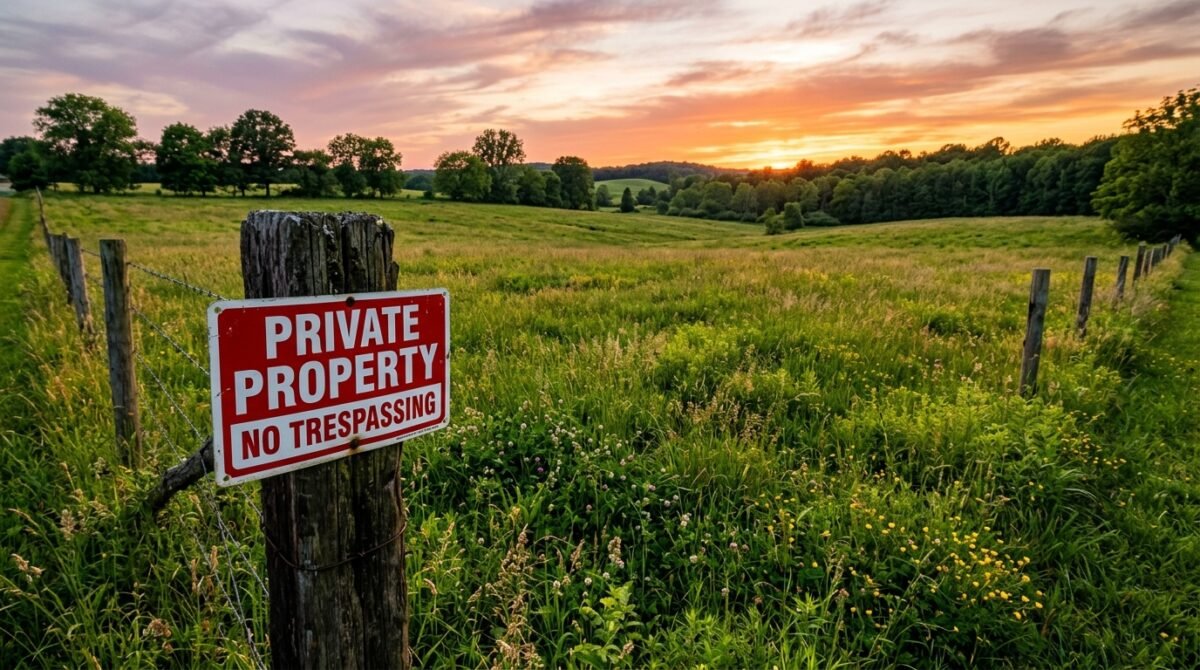
After they finally begrudgingly left, cursing under their breath about my ‘ingratitude,’ I went to the hardware store. I bought every ‘Private Property’ and ‘No Trespassing’ sign they had in stock. I spent the rest of the day nailing them to every fence post and clearing a path along the boundary. It was a physical manifestation of the boundary I had been failing to set for years. Every hammer swing felt like a release of years of built-up frustration.
By the time I finished, the property looked like a fortress. It wasn’t just about keeping them out; it was about showing them that I was serious. When my mother called later that evening, screaming about how I had ‘humiliated’ my father and ‘broken the family’s spirit,’ I didn’t apologize. I simply told her that if they wanted a relationship with me, it would have to be on my terms, and those terms did not include my property.
The fallout was instantaneous. My extended family started calling, taking sides, and demanding that I be the ‘bigger person.’ It was a masterclass in gaslighting. They made it sound as if I were the one causing the division, conveniently forgetting that they were the ones who tried to annex my inheritance. I started blocking phone numbers, one by one, until the noise finally died down.
The Reddit Verdict: Who Is the Real Villain?
I eventually decided to share my story on a popular subreddit to see if I was truly losing my mind. I laid out the timeline, the texts, and the confrontation at the gate. I expected a mix of responses, but the overwhelming support from the community was something I hadn’t prepared for. It was a validation that I was not the villain in this story, and that my reaction was a rational response to an irrational demand.
“NTA. Your parents are essentially trying to steal your property to give to their failed son. Do not feel guilty. Putting up those signs was the smartest thing you could have done. Keep records of everything. If they return, have them trespassed. Do not let them guilt you into submission.”
— u/PropertyRightsAdvocate (Top Comment, 32.1k upvotes)
The comments were a mix of personal anecdotes from people who had been through similar family struggles and legal advice on how to protect my assets. It was comforting to know that I wasn’t alone in this. The ‘Golden Child’ dynamic was a recurring theme in many of the responses, and reading about how others had successfully set boundaries helped me feel more confident in my decision to go low-contact with my parents.
There were some voices of dissent, mostly people who believed that ‘family comes first’ no matter what. But those comments were quickly buried under a mountain of support for my position. The community reaction helped me realize that the guilt I felt was programmed, not earned. It was a byproduct of a lifetime of conditioning, and it was time to break that cycle, one boundary at a time.
The Financial Breakdown of Entitlement
It was important to keep track of the numbers, to prove to myself that this wasn’t just about emotion. I created a simple ledger to illustrate the reality of the situation versus the narrative my parents were trying to push. It clearly showed the lack of contribution from Kevin and the sheer weight of the burden they were asking me to shoulder for his ‘venture.’
| Party | Contribution/Demand | The Reality |
|---|---|---|
| Me (OP) | Taxes, Maintenance, Upkeep | Responsible for 100% of costs |
| Kevin | Demand: Free use of 10 acres | Contributed $0, proposed no business plan |
| Parents | Demand: Forced ‘Family Unity’ | Seeking to offload financial burden of brother |
Looking at the table, the absurdity was laid bare. My parents weren’t looking out for the ‘family;’ they were looking out for Kevin. They wanted me to provide the infrastructure for his failure, with no plan for repayment or sustainability. It was a parasitic demand, and looking at the numbers in black and white made it impossible to see it as anything else.
I realized that if I had given in, I wouldn’t just be losing the land; I would be losing my independence. I would be trapped in a cycle of bailing out my brother, with my parents hovering over me to ensure I didn’t complain. The financial reality was the final nail in the coffin of my guilt. I was protecting my future, and I had every right to do so.
Why the Sunday Dinner Table Went Silent
A month after the gate incident, I was invited to another dinner. I agreed, mostly because I wanted to see if they would acknowledge what had happened. I walked in, and the atmosphere was even more tense than before. My mother looked exhausted, and my father wouldn’t even look at me. Kevin was absent, which I interpreted as a good sign—perhaps he had finally moved on to someone else’s property to exploit.
I sat down and started eating. Nobody spoke. The silence was heavy, filled with the ghosts of the arguments we hadn’t had and the ones we had. Finally, I decided to break it. I told them that I had seen a lawyer and that any further attempts to trespass on my land would be met with legal action. I didn’t say it with anger; I said it with the quiet authority of someone who had nothing left to lose.
“I love you both, but this ends now. The land is mine. I will not discuss it again. If you continue to try to force this, I will have no choice but to go no-contact. I deserve respect, and I am done being the one who makes all the sacrifices for this family.”
— Me, at the final dinner
My father looked up then, his face reddening. He opened his mouth to shout, but my mother placed a hand on his arm. She whispered something to him, and he sank back into his chair. It was a small victory, but it felt like a seismic shift. For the first time in my life, they realized that I wasn’t bluffing. The era of the Golden Child being prioritized over my needs was officially over.
The Aftermath: Rebuilding My Life
In the months that followed, I focused on myself. I took up gardening on the plot, turning a small corner of the land into a beautiful wildflower meadow. I started going there every weekend, not to ‘manage’ it, but to enjoy the peace. It became a sanctuary, a place where I could breathe without the weight of expectations. I also started therapy to deal with the lingering trauma of my family dynamic.
The low-contact arrangement has been a blessing. I still talk to my parents occasionally, but the conversations are short, superficial, and strictly monitored. If they start bringing up Kevin or the land, I hang up. It’s a simple boundary, but it’s been incredibly effective. They know that I have the power to cut them off entirely, and that knowledge has kept them in check, at least for now.
Kevin has, predictably, moved on to other schemes. I hear bits and pieces from distant relatives, but I don’t ask for updates. I have let go of the need to be the ‘good daughter’ in their eyes. I realized that their perception of me was never about who I actually was, but about who they needed me to be to serve their own interests.
I feel lighter. The anger has faded into a quiet, steady resolve. I am the owner of my own life, and the ten acres are a testament to that. They stand as a symbol of the line I drew in the sand, a reminder that I am capable of standing up for myself, even when the world—and my own family—expects me to fold.
Lessons Learned in the Dust
If there is one thing I’ve learned, it’s that boundaries are not acts of aggression; they are acts of self-preservation. I spent so much time worrying about being ‘mean’ that I neglected to realize that the people I was protecting from my ‘meanness’ were the same ones trying to diminish my existence. It’s a hard lesson, but one that I am grateful I learned before it was too late.
I’ve also learned that ‘family’ is not a blank check. Just because you share DNA doesn’t mean you owe them your future or your security. Healthy relationships are built on mutual respect, not on one person sacrificing their autonomy to keep the peace. I am happy to report that I am finally building those kinds of relationships elsewhere, with friends and partners who see me for who I am.
The land is more than just property; it is the foundation of my independence. Every time I visit, I feel a sense of pride that has nothing to do with the monetary value of the acreage. It’s about the struggle I went through to keep it and the strength I found in the process. It’s a piece of earth that is truly, entirely, and wonderfully mine.
Looking back, I wouldn’t change a thing. The confrontations, the tears, the sleepless nights—they were the price of my freedom. And honestly? It was the best bargain I ever made. I am no longer the secondary character in my parents’ drama; I am the protagonist of my own, and it is a much better story.
A Message to Anyone Facing Similar Pressure
To anyone out there who is being pressured by family to give up their inheritance or their hard-earned assets for a ‘Golden Child’ sibling, know this: you are not alone, and you are not wrong for protecting yourself. The guilt you feel is a tool used by those who want to control you. Do not let it dictate your actions. Document everything, set your boundaries clearly, and do not be afraid to walk away if they refuse to respect them.
The fear of losing your family is a powerful motivator, but what are you really losing? If they are willing to treat you as a disposable asset, they are not a family; they are a burden. You deserve to be surrounded by people who celebrate your success and support your independence, not people who look to you as a safety net for their failures.
Stand your ground. It will be painful in the short term, but the long-term peace of mind is worth every single drop of discomfort. You are the architect of your own life, and you have every right to decide who gets to occupy the space you’ve built for yourself. Trust your instincts, value your worth, and never, ever let them make you feel like you owe them your future.
Thank you for letting me share my story. It’s been a journey, and I’m just happy to be on the other side of it, standing tall on my own ten acres, with a clear conscience and a firm hold on my own life.
Conclusion
The story of my ten acres is, at its heart, the story of reclaiming my voice. It wasn’t an easy transition, and the repercussions of that fateful Sunday dinner continue to ripple through my family, but the clarity I have gained is worth more than any plot of land. I have moved from a place of subservience to a place of agency, and I hope my experience serves as a reminder to others that you are allowed to say ‘no’ to your family when they cross your lines.
I am curious, though. Have you ever had to draw a similar line with your own family, or have you witnessed someone else go through the ‘Golden Child’ dynamic? What are your thoughts on the concept of ‘family duty’ versus individual autonomy? Let’s keep the conversation going in the comments below.
Poll: If you were in my position, would you have cut off the family entirely, or kept trying to fix the relationship?
What's your verdict on this dilemma?
Vote below to contribute to the official community consensus.

Have a Dilemma Keeping You Up at Night?
Share your real-life feud, wedding chaos, or relationship crossroads anonymously with our editorial team.
What do you think ?
0 Comments🛡️ Comments are moderated to protect community integrity. Your comment will appear once approved by the editorial team.