
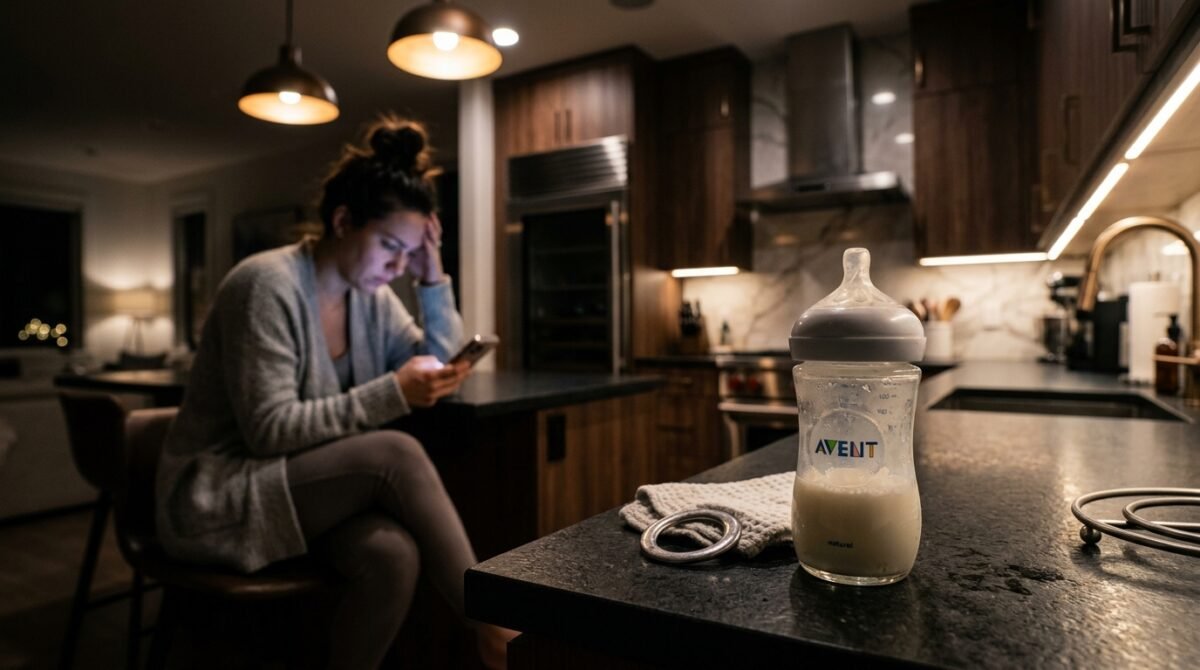
Motherhood is supposed to be a journey of trust, but for me, it transformed into a high-stakes investigation of betrayal. When my mother-in-law, Susan, started making comments about my decision to use specialized hypoallergenic formula for my four-month-old, Leo, I dismissed them as typical generational friction. She was a woman of the ‘old school’—a firm believer that nature always knows best and that modern medicine was merely a crutch for the weak.
The tension began to bubble over during our weekly Sunday visits. Susan would often make disparaging remarks about the ‘chemical sludge’ I was feeding my son, insisting that his occasional spitting up was just his body rejecting the ‘fake’ nourishment. I stood my ground, citing our pediatrician’s strict orders regarding his sensitive digestive system, but I had no idea that Susan’s obsession with her own archaic health philosophies would cross the line from annoying to life-threatening.
It wasn’t until I noticed the discrepancy in the powder levels in the formula container that the floor dropped out from under me. The texture of the liquid in the bottle seemed off—too thick, slightly yellowish, and lacking the distinct scent I had grown accustomed to. When I confronted her, her casual admission sent my heart into a flatline. She hadn’t just added a splash of something; she had replaced the formula with raw, unpasteurized milk, believing she was gifting him a ‘stronger immune system’ while putting his life in grave danger.
The following weeks turned my home into a war zone, marked by tear-filled confrontations, defensive family politics, and the crushing realization that I could never trust my child’s grandmother again. This is the story of how one woman’s arrogance almost cost my son his health, and why I chose to sever the tether of unsupervised contact, regardless of the fallout that tore my husband’s family apart.
The Subtle Infiltration of the Pantry
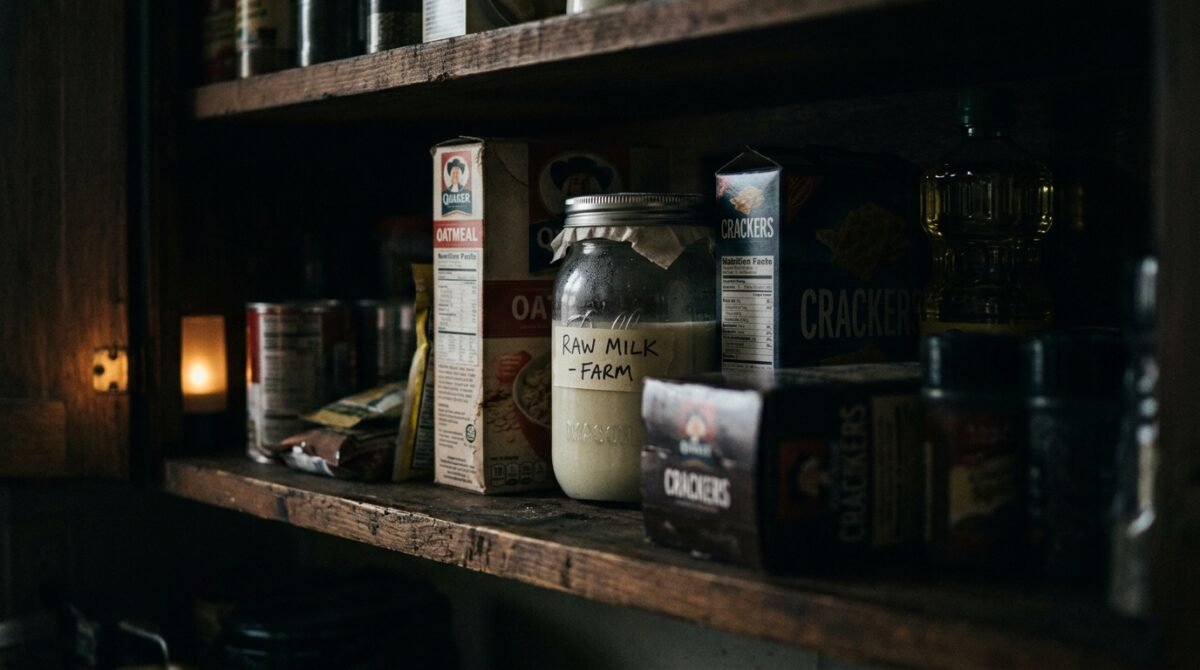
It started with small, almost imperceptible signs. I would come home from work, and the kitchen would seem rearranged. Susan, who had a spare key ‘for emergencies’, would often drop by to ‘help’ while I was at the office. Initially, I was grateful for the extra hands, as the transition to working motherhood had been grueling. However, the gratitude soon soured when I noticed the kitchen cupboards weren’t just organized—they were being audited.
The formula canisters, specifically the expensive, medical-grade powder prescribed by our gastroenterologist, were being moved to the back of the pantry. Susan would leave little sticky notes on them with phrases like ‘Try goat milk?’ or ‘Nature provides better!’ written in her looping, aggressive script. I ignored them at first, thinking it was just a quirky personality trait. I should have known better than to let a boundary slide, even a small one.
Then, I found the first remnants. A small glass jar of liquid tucked behind the flour bin—raw milk from a local farm Susan swore by. My stomach churned. I immediately called her, my voice trembling with controlled rage. I told her in no uncertain terms that the raw milk had no place in our house and was never to be used for Leo.
“Susan, I found the jar. I am not playing games with Leo’s diet. He has a condition, and he requires specific nutrients. If you bring unpasteurized products into this home again, I will have to rethink the spare key situation.”
— Me, during the first confrontation
She played the victim, of course. She claimed she was just ‘holding it for a friend’ or that she ‘forgot’ it was in the cabinet. I felt like I was losing my mind, caught between my desire to be a polite daughter-in-law and the primal instinct to protect my son. I should have changed the locks that very afternoon, but I was naive, believing that a stern conversation was enough to deter a woman who believed her intuition outweighed medical science.
I kept a closer watch after that. I started marking the formula containers with invisible ink pens and checking the levels daily. It felt like I was living in an espionage thriller, but the stakes were real. Every morning, I would check the bottle, and every morning, it seemed exactly as I left it. I started to believe she had backed off. I was wrong. She had just become more careful.
The Morning Routine Nightmare
The day the illusion shattered started like any other frantic Tuesday. I was rushing to get out the door, the baby was crying in his bouncer, and I had a meeting in thirty minutes. I grabbed the pre-made bottle Susan had prepared ‘to save me time’—a gesture I usually appreciated—and handed it to Leo. He drank it, but he seemed restless, agitated in a way he hadn’t been in weeks.
By the time I reached the office, my phone was buzzing with frantic messages from the nanny, who had arrived early. She told me the baby was having severe stomach cramps and that his stool appeared different. Panic, cold and sharp, flooded my veins. I rushed home, my mind racing through every possible scenario, from food poisoning to something much worse.
When I arrived, the smell hit me before I even entered the nursery. It was distinct—the sour, heavy scent of raw milk that had gone slightly warm. I snatched the bottle from the counter and sniffed it. There was no mistaking it. She hadn’t just added a little; she had swapped the entire contents of the bottle. My hands shook so violently I dropped the bottle, watching as the milky liquid pooled on the pristine tiles.
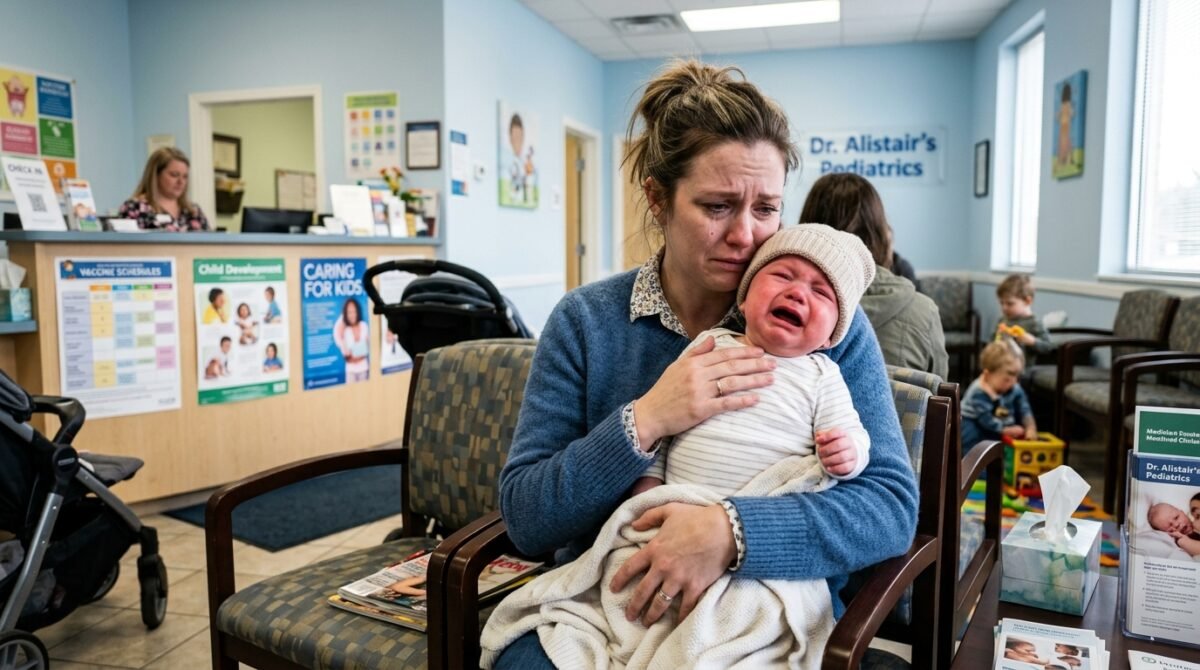
I called my husband, Mark, screaming into the phone. He didn’t understand the gravity of it at first. He thought I was overreacting, perhaps misinterpreting the smell. But when he saw the look on my face—the sheer terror of a mother who realized her child had been poisoned—he finally woke up. We drove to the pediatrician, the baby crying in the backseat, his little face flushed with discomfort.
“She did what? Why would she think that’s okay? We need to go, now. I’m pulling the car around. Don’t talk to her until I get there.”
— Mark, over the phone
The pediatrician confirmed my worst fears: the raw milk had introduced bacteria his immature digestive system couldn’t handle. We were lucky it wasn’t a full-blown infection, but the risk had been grave. As we sat in the sterile exam room, I didn’t feel relief; I felt a cold, hard resolve. The grandmother who claimed to love him had almost broken him in the name of her own misguided ‘health’ crusade. My forgiveness was gone.
The Confrontation in the Living Room
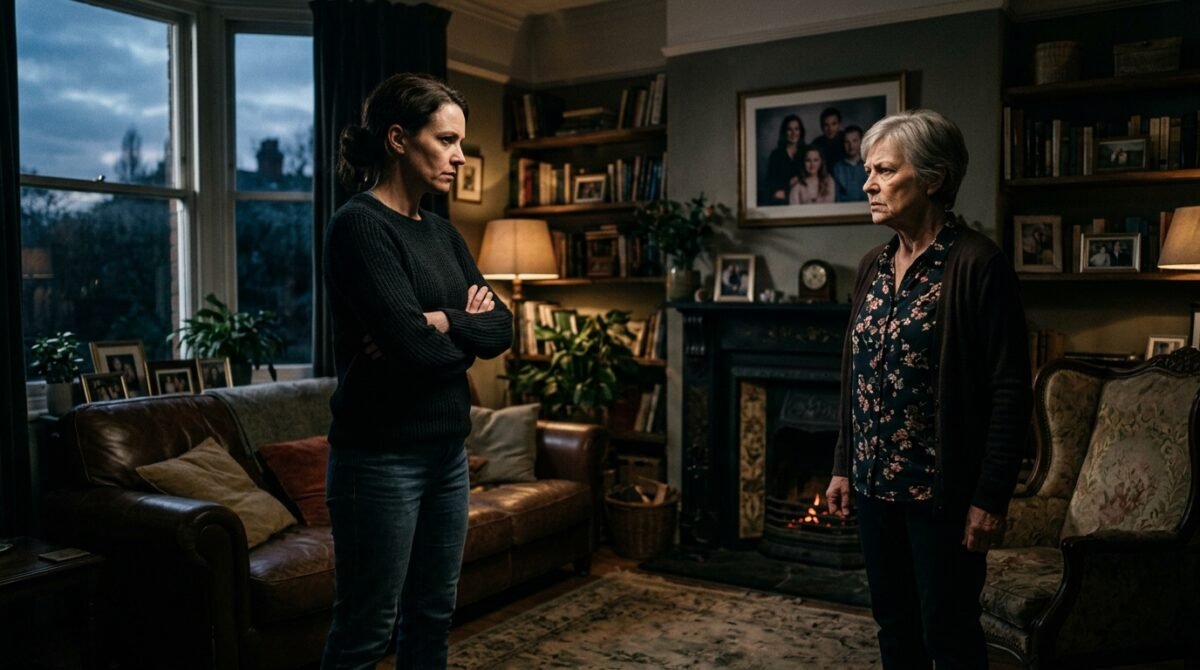
When we got back from the clinic, Susan was sitting in our living room, sipping tea as if she were waiting for a casual afternoon chat. She didn’t look worried; she looked expectant, almost proud. The moment she saw our faces, her expression shifted into that practiced, patronizing sympathy she reserved for when she thought I was being ‘hysterical.’
Mark was furious. He started listing the medical consequences, his voice rising with every sentence. I stood back, observing her. She wasn’t listening to the facts. She was already formulating her defense, her eyes scanning the room as if looking for an exit or an ally. When Mark finally asked her point-blank why she thought she had the right to alter our son’s diet, she didn’t apologize.
Instead, she launched into a tirade about how ‘modern parents are too soft’ and how ‘children used to be made of tougher stuff.’ She talked about her own children, how she raised them on ‘what the earth gave us,’ and how my fear was ‘stunting’ Leo’s development. She treated the near-poisoning of my child as a minor inconvenience, a necessary hurdle in his path to becoming a ‘real’ human being.
“I was trying to help him! You spend all this money on lab-grown sludge, and you wonder why he’s always sick. I wanted to give him a fighting chance, something real. You should be thanking me for looking out for his long-term health.”
— Susan, during the confrontation
I couldn’t take it anymore. I stepped forward, my voice low and steady, which seemed to surprise her more than yelling would have. I told her that she was no longer allowed in our house, that the spare key was being reclaimed, and that any contact with Leo would be strictly supervised by me or Mark in a neutral, public place—and even that was a temporary measure.
Her face drained of color. She looked to Mark, expecting him to overrule me, to take her side. For the first time in our marriage, Mark didn’t flinch. He told her that my word was final, that his priority was his son’s safety, and that if she couldn’t respect our parenting, she had no place in our lives. The silence that followed was heavy, suffocating, and final. She left without a word, but the war had just begun.
The Digital Campaign of Defamation
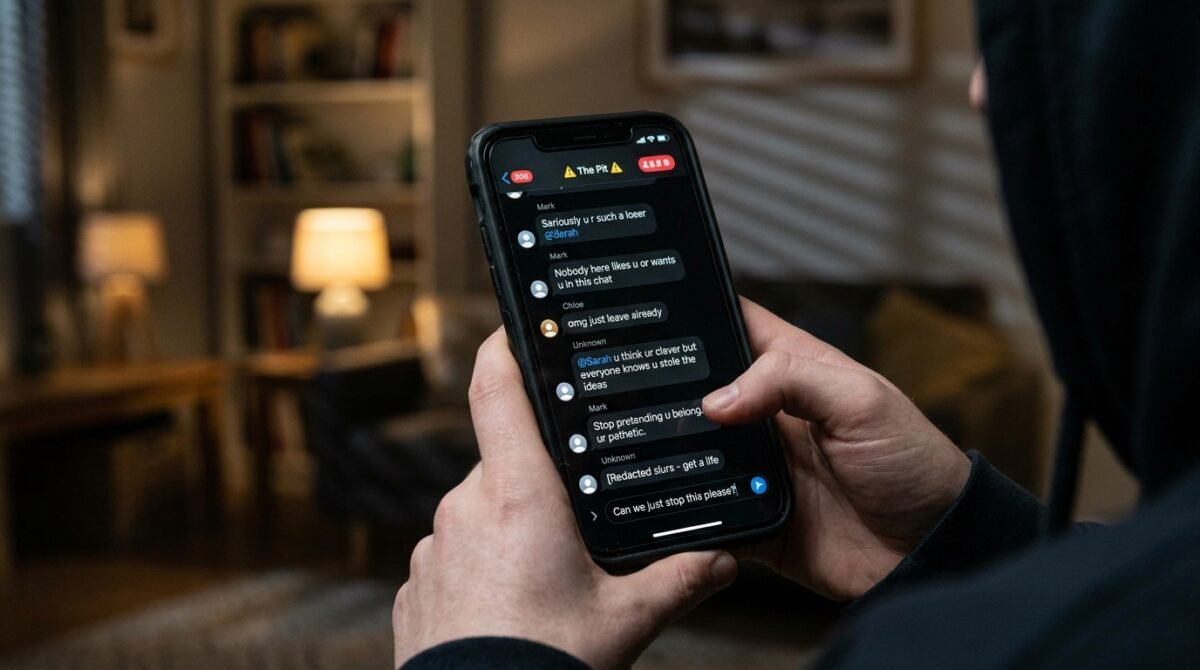
Within forty-eight hours, the rumors started. Susan wasn’t just going to accept the boundary; she was going to frame herself as the persecuted martyr. I started receiving texts from extended family members, asking why I was being so ‘cruel’ and ‘keeping a grandmother from her grandson.’ It was clear she had been busy painting a narrative where I was the villain, a controlling woman who was ‘brainwashing’ her son and ‘denying’ the baby a natural life.
The family group chat, which had once been a space for sharing photos and planning holidays, turned into a minefield. She had screenshots of my texts where I told her she wasn’t allowed over, conveniently cropping out the part where I explicitly stated it was because she endangered the baby’s life. It was calculated, malicious, and devastatingly effective.
“I just don’t understand why she’s so afraid of nature. I wanted to do one good thing for my grandson, and now I’m banned from his life. Is that what we want for our children, to be controlled by such coldness?”
— Susan in the family group chat
I felt the urge to respond, to post the medical bills and the pediatrician’s notes, but Mark stopped me. He told me that engaging with her trolls would only give them more fuel. He took control of the narrative, posting a concise, factual summary in the group chat, stating that Susan had endangered the baby’s health with unpasteurized products and that our boundaries were a matter of medical safety, not personal vendetta.
The group chat went silent. Some family members reached out privately to apologize, realizing they had been fed a lie. Others stayed quiet, either out of discomfort or because they still believed Susan’s version of the truth. The divide was clear, and it was painful to see who would stand by us and who would choose to believe the gossip over the safety of an infant.
I realized then that this wasn’t just about milk. It was about power. Susan had been used to having her way, to being the authority figure in the family. By asserting our boundaries, we had challenged her entire existence, and she was willing to burn the family down to reclaim her status. The digital war was a symptom of a much deeper rot that had been festering for years.
The Saturday Afternoon Ambush
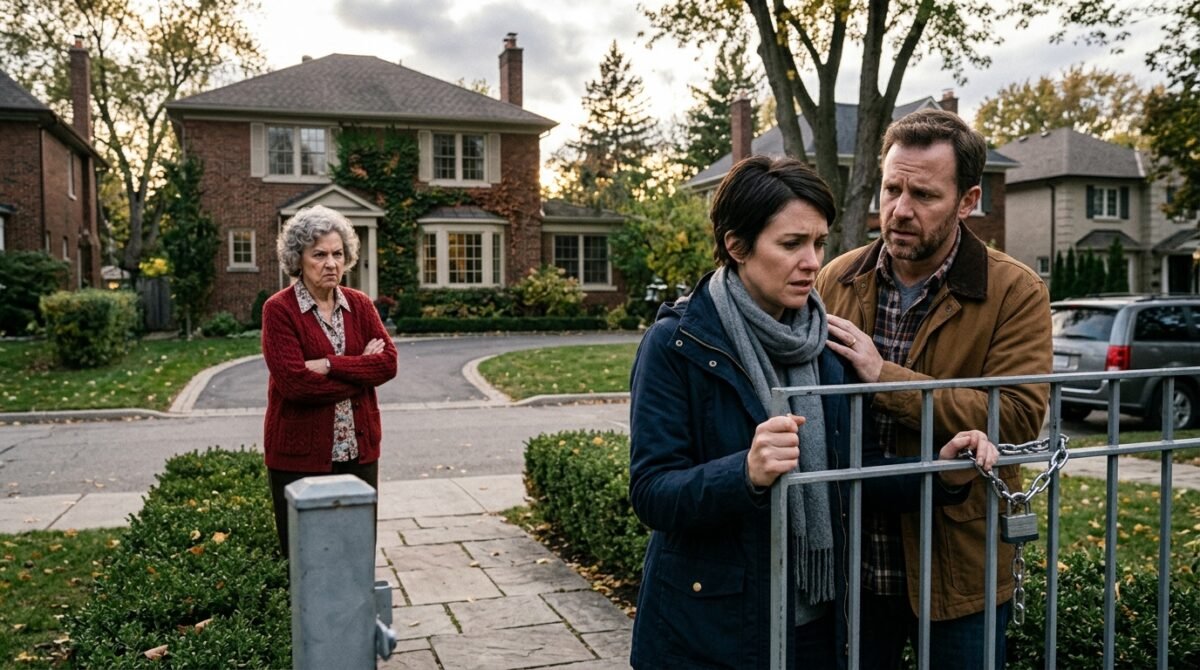
I thought the ban would keep her away for a while, but I underestimated her persistence. One Saturday afternoon, while we were in the backyard, I saw her car pull into the driveway. She didn’t call, didn’t text; she just walked right up to the gate, holding a basket of ‘organic’ produce as if it were a peace offering. I felt my blood pressure skyrocket.
I walked to the gate, keeping it locked. Leo was in the playpen nearby, oblivious to the drama. Susan smiled, a tight, artificial expression that didn’t reach her eyes. She started talking about how she ‘just happened to be in the area’ and wanted to bring some fresh fruit. She didn’t mention the milk incident, didn’t apologize, and didn’t acknowledge the boundary we had set.
I told her to leave. I told her that we weren’t interested in her gifts and that she needed to respect our time as a family. She tried to push past me, claiming she had a right to see her grandson, that he needed his grandmother. It was a terrifying moment, realizing she felt so entitled to my son that she would physically try to force her way into our space.
“I’m not leaving until I see him. You don’t have the right to keep him from his own blood. Do you know how many people would love to be in my position? I am trying to love him, and you are standing in my way!”
— Susan, standing at the gate
Mark came out, his jaw set in a line of pure frustration. He didn’t even say hello. He told her if she didn’t leave immediately, he would be calling the police to report a trespassing incident. The look of shock on her face was almost satisfying. She had spent her whole life believing she was untouchable, that her status as a mother and grandmother gave her immunity to the rules that applied to everyone else.
She eventually backed off, screaming accusations as she retreated to her car. She called me a ‘monster’ and told Mark he was a ‘disappointment.’ Watching her drive away, I felt a mix of relief and profound sadness. This was the woman who was supposed to be a pillar of support, reduced to a trespasser trying to manipulate her way into our lives. I knew then that the relationship was likely broken beyond repair.
The Legal Threat That Backfired

The next escalation came in the form of a formal letter. Not a lawsuit, but a letter from a ‘family mediator’ that Susan had hired, essentially demanding visitation rights and implying that our refusal to allow her access was a form of child abuse. It was absurd, a desperate grab for control that showcased just how far removed from reality she had become. The audacity of it, to threaten us with legal action because we protected our son from her negligence, was staggering.
We met with a family lawyer, who laughed when we showed him the letter. He explained that grandparents’ rights are very limited and almost never supersede the rights of fit parents. The fact that we had documented the medical incident and our subsequent attempts to communicate our boundaries worked heavily in our favor. We were the victims here, not the perpetrators.
We sent a response through our lawyer, clearly stating that any further attempts to harass us or threaten legal action would be met with a restraining order. It was a harsh move, but it was necessary. Susan was trying to weaponize the legal system against us, and we had to show her that we were not afraid to fight back. The silence that followed the lawyer’s letter was the first time in months we felt a sense of peace.
“Your client’s actions, including the endangerment of a minor, have made unsupervised contact impossible. Any further communication will be directed to this office. Continued harassment will result in a formal request for a protection order.”
— Our lawyer, in the formal response to Susan
The letter seemed to finally break her spirit, or at least, her belief that she could bully us into submission. She stopped calling, she stopped sending letters, and for a while, the chaos subsided. But the damage had been done. Our marriage had been tested, our family dynamic had been irrevocably altered, and the trust that once existed between us and Susan was gone, replaced by a cold, hard boundary.
I found myself wondering if she truly understood what she had lost. Did she realize that her need to control, her need to be the ‘expert,’ had cost her a relationship with her grandson? Or was she still sitting in her house, convinced that she was the victim, that the world was just too sensitive to appreciate her ‘wisdom’? It didn’t matter anymore. My priority was Leo, and he was safe.
The Reddit Trial: Community Verdict
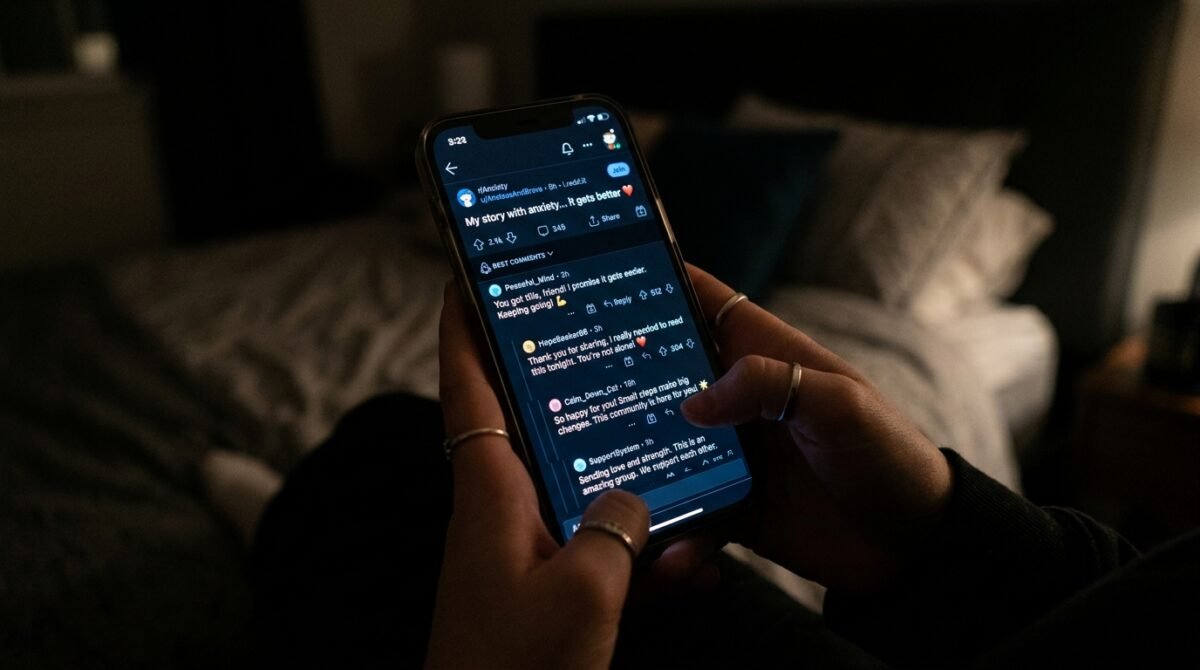
I finally decided to post about the ordeal on a popular parenting subreddit, needing to know if I was truly the villain she made me out to be. I laid out the facts, the milk incident, the boundary setting, and the subsequent harassment. I expected a mix of opinions, perhaps even some people telling me to be more forgiving, but the response was overwhelmingly unanimous.
The community didn’t just support my decision; they were outraged on my behalf. They pointed out that raw milk is incredibly dangerous for an infant and that Susan’s actions were not just misguided, they were negligent. The Reddit community, often known for its brutal honesty, was a sounding board that validated my internal struggle and gave me the confidence to stand firm.
“This isn’t about ‘old school parenting’; this is about basic medical safety. She knowingly fed your baby something that could have caused him severe illness. You aren’t just NTA (Not The Asshole), you are a hero for protecting your kid. Do not ever let her back in without strict conditions.”
— u/MamaBearDefender (Top Comment, 32.1k upvotes)
Others shared their own horror stories, which helped me realize that I wasn’t alone. Grandparents overstepping boundaries, specifically regarding diet and medical care, was a disturbingly common theme. It made me feel less isolated, less like the ‘cold, unfeeling’ daughter-in-law Susan portrayed me to be. The validation from thousands of strangers was more comforting than I ever expected.
However, there were also comments about the long-term impact. Some users warned that Susan might try to ‘get’ to the child in other ways, like through other family members or by showing up at daycare. It was a chilling thought, but a necessary one. I took their advice and updated the staff at Leo’s daycare with a picture of Susan and clear instructions that she was not to be allowed access under any circumstances.
The Reddit thread became a source of strength, a digital archive of the incident that I could refer back to whenever I felt guilty or weak. It reminded me that my primary obligation was to my son, not to a grandmother who couldn’t respect the most basic rules of his care. The verdict was in: I was doing the right thing, and the guilt I felt was just a byproduct of being a decent person dealing with an unreasonable one.
The Silent Holidays
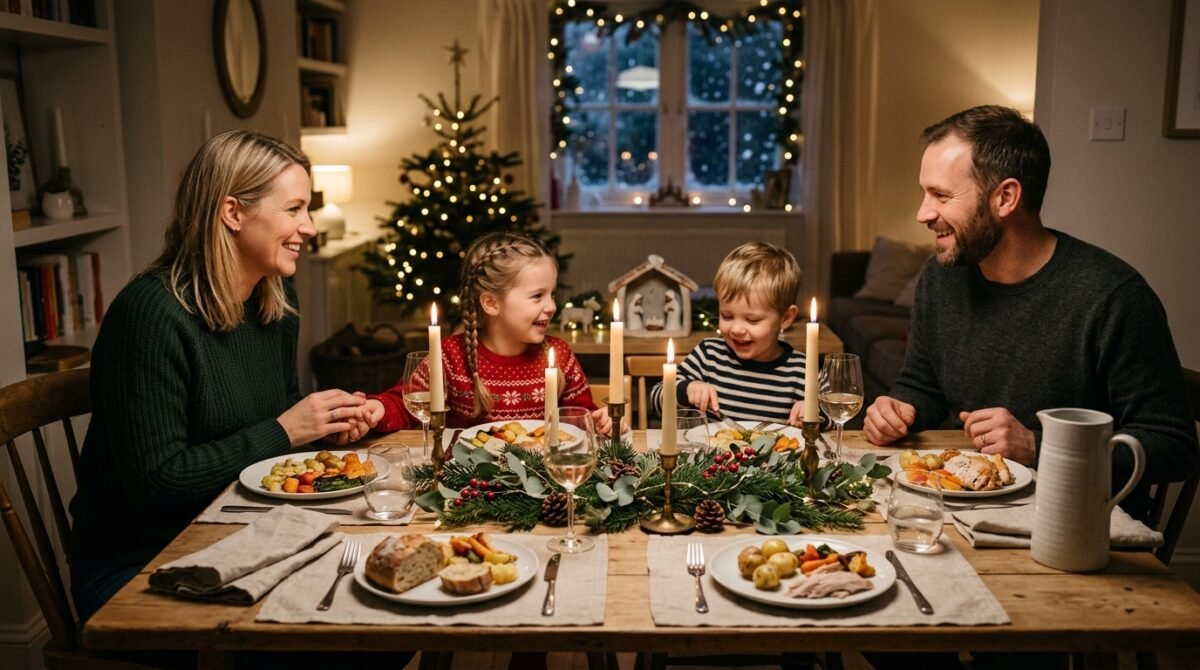
The first holiday season without her was strange. For years, Susan had been the center of our Thanksgiving and Christmas gatherings, the one who orchestrated the meals and set the tone. This year, we decided to do things differently. We spent the holidays with my family, in a quiet, peaceful environment where boundaries were respected and the focus was entirely on Leo.
It was bittersweet. I missed the idea of what a family should be, but I felt a profound sense of relief. There was no walking on eggshells, no waiting for the next passive-aggressive comment, no fear that someone was going to ‘improve’ our child’s diet behind our backs. We were free to create our own traditions, our own rules, and our own version of family.
Mark struggled more than I did. It was his mother, after all, and the grief of losing the mother he thought he had was real. We spent hours talking about it, acknowledging the pain and the necessity of the distance. He had to mourn the relationship he wanted, while dealing with the reality of the one he actually had. It was a difficult process, but it brought us closer together, strengthening our resolve to protect our unit.
“I know she loves us in her own way, but she doesn’t love us enough to respect us. This is the hardest thing I’ve ever had to do, but I’m doing it for him, and I’m doing it for us. We are the priority now.”
— Mark, during a quiet evening reflection
We received a card from her around Christmas, a simple, generic greeting that didn’t acknowledge the conflict. We didn’t respond. It was a step too far for her to act as if nothing had happened, and we weren’t going to play along. The silence was the only response that felt honest. We were moving forward, and she was, for now, in the past.
The holidays taught me that you don’t need blood to define family. You need respect, trust, and a shared commitment to the safety and well-being of the people you love. We had that with each other, and for the first time, I felt like we were truly building a home on our own terms, without the shadow of someone else’s ego hanging over us.
The Long-Term Boundaries

As Leo gets older, the challenge of maintaining boundaries is changing. He is starting to eat solid foods, and the anxiety of ‘what if’ still lingers. We are extremely cautious about who we leave him with and what he is fed. We have become the parents who ask questions, who double-check labels, and who aren’t afraid to say ‘no’ to family members who think they know better.
Susan has made a few attempts to reach out, mostly through mutual friends or by sending gifts that we don’t open. It’s a game of attrition. She is waiting for us to fold, to get tired, to give in. But we aren’t going to. We have realized that the cost of her ‘involvement’ is too high. The safety and psychological health of our son are not worth the price of keeping the peace with a toxic family member.
We have also begun to teach Leo about boundaries. It’s a long process, but it’s essential. We want him to grow up knowing that his body is his own, that his health is non-negotiable, and that he has the right to say no, even to people who are supposed to be authority figures. We are breaking the cycle of unquestioning obedience that led to this situation in the first place.
“We aren’t punishing her for being a grandmother; we are protecting our son from a person who refuses to respect his needs. There is a fundamental difference, and we won’t let anyone convince us otherwise.”
— Me, reflecting on our parenting philosophy
The situation has made us more resilient, more confident as a couple, and more certain of our values. We don’t worry as much about what people think anymore. We know the truth, we know the stakes, and we know we made the right decision. The path we’re on isn’t easy, but it’s ours, and it’s a path that leads to a safer, healthier future for our child.
We don’t know if Susan will ever change. Maybe one day she will apologize, maybe she will acknowledge the harm she caused, or maybe she will continue to live in her own reality. It doesn’t matter as much as it used to. We have found our own stability, and that is a victory that no amount of meddling can take away from us.
Reflecting on the Fracture

Looking back at the last year, the most surprising thing is how little I actually miss the ‘family unity’ that I used to think was so important. I realized that the unity was superficial, built on the assumption that everyone would just fall in line and do what Susan wanted. When we stopped doing that, the unity shattered, revealing the fragility of the foundations.
I’ve learned that family is not just about shared DNA; it’s about shared values. If those values don’t include respect for one another’s decisions and, more importantly, respect for the safety of our children, then the family connection is effectively broken. I am no longer interested in maintaining a facade of happiness for the sake of appearances.
The incident with the milk was the catalyst, but the issues had been there all along. The lack of boundaries, the entitlement, the disregard for our autonomy—it was all there, hidden behind the guise of ‘help’ and ‘tradition.’ The milk incident just brought it all to the surface, making it impossible to ignore anymore. I am actually grateful that it happened, in a way, because it forced us to confront the reality before it could do even more damage.
“If the price of having her in our lives is the sacrifice of our son’s safety, then the price is far too high. We didn’t break this family; we just refused to be the ones who kept holding it together for the wrong reasons.”
— Mark, discussing our journey
I am at peace with the decision we made. We have protected our son, we have stood our ground, and we have built a life that is truly our own. The fallout has been difficult, but it has also been cleansing. We know who our real friends are, we know who respects us, and we know that we are capable of making the hard choices that protect our loved ones.
If you find yourself in a similar situation, know that you are not alone. You have the right to protect your children, regardless of who it offends. You have the right to set boundaries, and you have the right to stand by them. Don’t let anyone make you feel guilty for being a good parent. Your primary duty is to your child, and that is a duty that never needs an apology.
Conclusion
My journey from a naive, people-pleasing daughter-in-law to a fiercely protective mother has been one of the most transformative experiences of my life. The trauma of the milk incident left scars, but it also forged a strength I didn’t know I possessed. I’ve learned that boundaries are not just suggestions; they are the walls that protect our most precious assets from those who would otherwise trample them in the name of their own ego.
We are currently living in a state of low-contact with Susan. It’s a delicate balance, one that requires constant vigilance, but it’s the best we can do. We are focusing on our growth as a family and ensuring that our son grows up in an environment of safety, respect, and unconditional love. We don’t regret the choices we made, and we stand by them fully, even when the pressure to change them is high.
What about you? Have you ever had to draw a hard line with a family member, even when it cost you the relationship? Do you believe that blood is thicker than water when it comes to the safety of a child, or is that just an excuse for toxic behavior? I’d love to hear your stories and your thoughts on this delicate balance between family expectation and personal autonomy.
Community Poll: Do you believe total no-contact is the only way forward after a safety violation like this, or is there room for a supervised path to redemption? Share your take in the comments below.
What's your verdict on this dilemma?
Vote below to contribute to the official community consensus.

Have a Dilemma Keeping You Up at Night?
Share your real-life feud, wedding chaos, or relationship crossroads anonymously with our editorial team.
What do you think ?
0 Comments🛡️ Comments are moderated to protect community integrity. Your comment will appear once approved by the editorial team.