
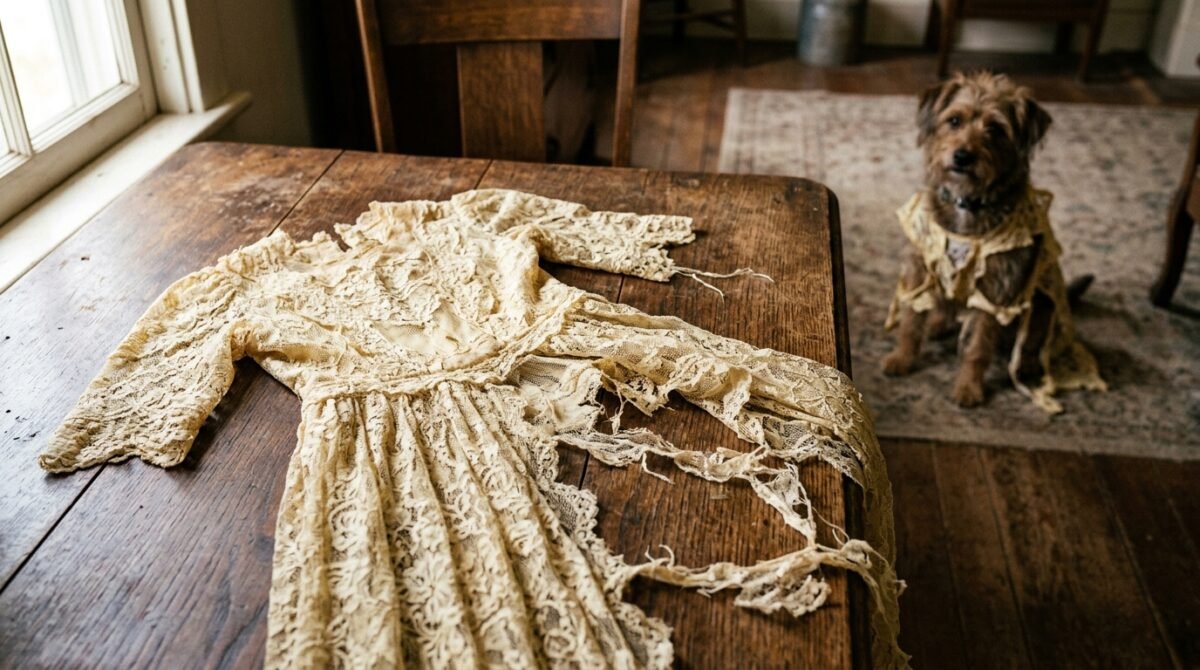
Family heirlooms are not just objects; they are vessels for history, memory, and identity. For generations, the lace baptism gown in my family had survived wars, migrations, and the passage of time. It was a tangible connection to my great-grandmother, worn by every child in our lineage, including myself. It was the one thing I kept tucked away in a climate-controlled cedar chest, waiting for the day I would have my own child to carry on the tradition.
My mother-in-law, Linda, had always been a woman of performative charm. To outsiders, she was the quintessential grandmother-to-be, all smiles and nursery rhymes. But behind closed doors, she operated on a philosophy of entitlement that often bordered on the pathological. She didn’t just want to be part of our lives; she wanted to curate them, treating our home and our possessions as extensions of her own vanity.
The tension had been building for months. From rearranging my spice rack to insisting on choosing the color scheme for a nursery I hadn’t even started yet, Linda treated boundaries like suggestions. I had tried to be polite. I had tried to be the bigger person for the sake of my husband, Mark. But when the dust settled on the most devastating weekend of my life, I realized that some bridges aren’t meant to be crossed—they are meant to be burned.
This story is not just about a piece of fabric. It is about the slow, agonizing erosion of respect in a relationship that was supposed to be built on trust. It is about the moment I realized that silence in the face of boundary-crossing is merely an invitation for more destruction. And, ultimately, it is about the hardest decision I have ever had to make: choosing my own peace over the comfort of a toxic family dynamic.
The Cedar Chest Intrusion
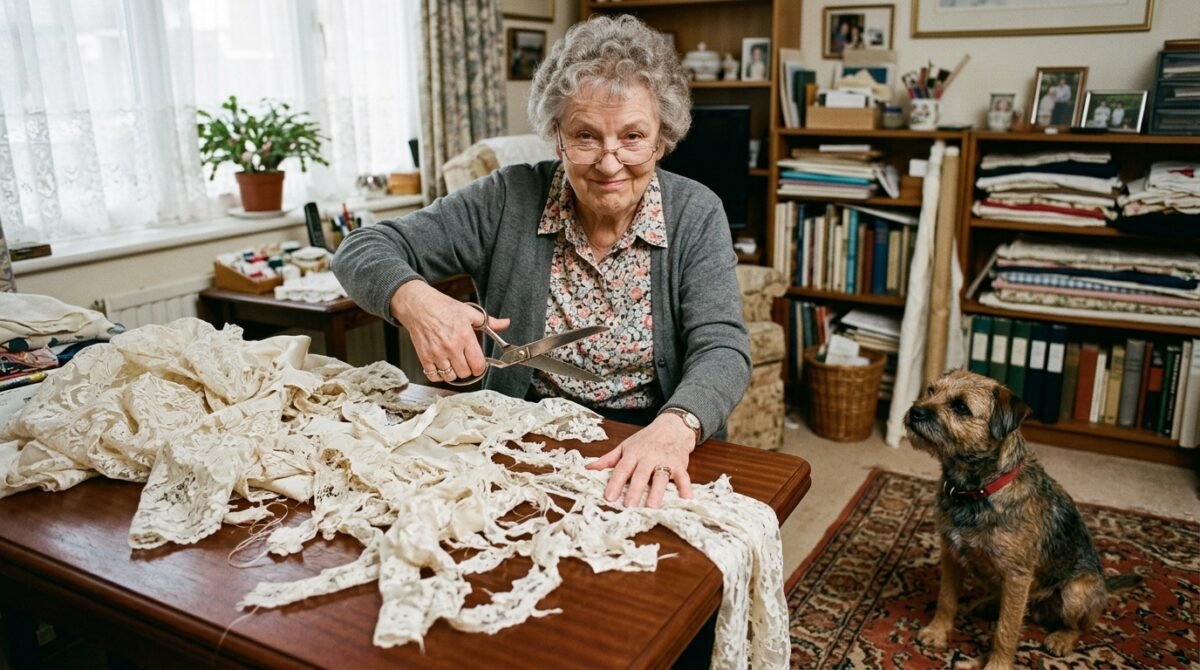
It began on a Tuesday, a day that felt unremarkable until I returned home from work to find the front door unlocked. My heart sank. Mark was at the office, and I lived in a quiet neighborhood where such things just didn’t happen. As I stepped into the living room, I heard the faint, rhythmic sound of scissors snipping, coming from the sewing room.
I walked in, expecting to find perhaps a tailor I’d hired for some alterations. Instead, I found Linda sitting on the floor, surrounded by piles of delicate, cream-colored lace. My stomach turned instantly. She was holding a pair of heavy-duty fabric shears in one hand and my great-grandmother’s baptism gown in the other. She looked up at me with a smile that didn’t reach her eyes.
“Oh, you’re home early,” she chirped, oblivious to the fact that she was currently holding my heritage in tatters. She gestured to the pile of lace. “This old thing was just sitting in a box, wasting away. I decided it needed a second life. Look, I’m making a little jacket for Bella. She’s been shivering in this weather.”
“Linda, what have you done? That is a hundred-year-old heirloom. Put the scissors down. Right now.”
The air in the room grew heavy. Linda didn’t stop. She looked down at the dog—a small, pampered terrier—and then back at me, her expression shifting from casual to indignant. She acted as though I were the one being unreasonable, as if the gown was simply scrap fabric she had rescued from a landfill. The disregard for my history was palpable, a cold, sharp reminder that in Linda’s world, only her desires held any weight.
I felt a physical sensation of dread wash over me. I reached out to grab the gown, but she pulled it away, almost instinctively. “It’s just lace, dear. You’re being dramatic. It’s not like it was doing any good buried in that chest. At least now, it’s useful. Bella looks absolutely stunning in it.” My hands were shaking. I wasn’t just angry; I was grieving. I was watching someone intentionally dismantle a piece of my soul to dress a pet.
The Confrontation in the Kitchen
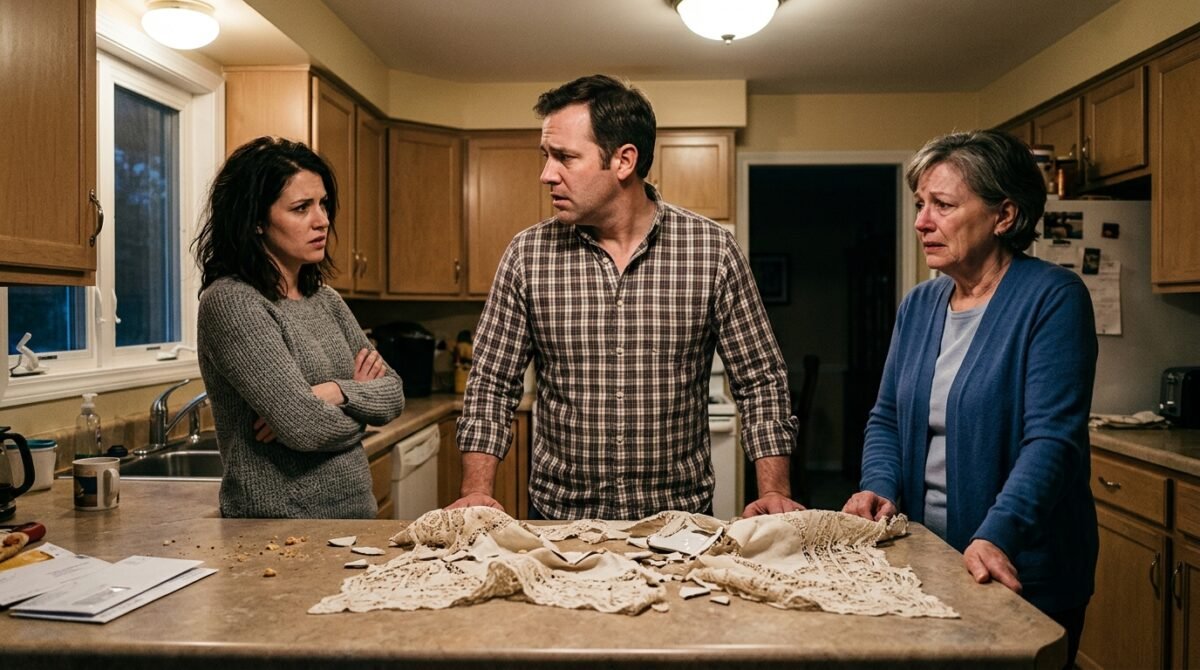
The walk from the sewing room to the kitchen felt like a mile. I was in a state of shock, trying to process the magnitude of what had been destroyed. I needed Mark to see this. I needed him to understand that this wasn’t just a quirky boundary-crossing; it was an act of profound disrespect. Linda followed me, still holding the mangled remnants of the silk ribbons that had been attached to the hem.
When Mark walked through the door five minutes later, he found me standing in the kitchen, trembling, with the shredded pieces of the gown laid out on the counter. Linda was pouring herself a glass of wine, her face set in a mask of wounded martyrdom. She didn’t wait for me to speak. She immediately launched into a rehearsed defense, painting herself as a crafty, misunderstood grandmother-to-be.
“Mark, you need to talk to your wife. She is being incredibly hostile over a piece of old rag I was trying to upcycle for the dog. I only wanted the baby to have a matching set when the time comes!”
Mark looked from the gown to his mother, his expression unreadable. For a moment, I feared he would side with her, blinded by the years of manipulation and guilt-tripping she had perfected. I felt a surge of panic. If he didn’t stand up for me now, I knew our relationship would never recover. The power dynamic in the room felt incredibly fragile, balanced on the edge of a knife.
“Mom,” Mark finally said, his voice quiet but steady. “That wasn’t a ‘rag.’ That was the only thing I had from my wife’s side of the family that survived the war. Do you have any idea what you’ve done?” Linda rolled her eyes, scoffing as if he had just complained about a lost pair of socks. “You’re both being ridiculous. It’s an object. I am family. Why are you choosing that dusty old thing over me?”
That question—the ultimate manipulation—hung in the air, acidic and sharp. She wasn’t asking for forgiveness; she was demanding compliance. She was reframing the destruction of my property as a test of loyalty. I saw the desperation in her eyes, not for the gown, but for the validation that she could destroy anything she wanted and still command our affection.
The Group Chat Exposure

The following morning, the reality of the situation escalated further. My phone buzzed incessantly. It was the family group chat, a digital tether I had been trying to distance myself from for months. Linda had sent photos—not of the destroyed gown, but of the dog, Bella, wearing the ‘custom’ outfit. The caption read: ‘Giving new life to old traditions. So happy to share my creativity with the family.’
The responses from Linda’s sisters and cousins were sickening. They were praising her, calling her ‘ingenious’ and ‘so thoughtful.’ They had no idea what the fabric was, of course. To them, it was just a cute picture of a dog in a lace outfit. I felt a wave of nausea. She had not only destroyed the gown but was now parading its corpse in front of the people who were supposed to cherish the memory of my great-grandmother.
“Aunt Linda, that lace looks so familiar! Is that the vintage material you found in the attic last year? Simply stunning!”
— Cousin Sarah, Family Group Chat
I didn’t respond. I couldn’t. Instead, I took a screenshot of the photos and the thread, then sent them to my own mother, who had been the one to entrust me with the gown in the first place. The response from her was immediate and heartbreaking. She didn’t yell; she didn’t demand I do anything. She just sent a voice note, her voice shaking with unshed tears. She told me that the gown was meant to be the start of a new chapter, not the end of a legacy.
I realized then that Linda hadn’t destroyed it by accident. She had done it because she couldn’t stand the thought of me having something that connected me to my family in a way she couldn’t control. She wanted to prove that she could take anything I loved and turn it into something that belonged to her. The realization was cold and clinical. It was an act of dominance, plain and simple.
The Sunday Dinner Silence
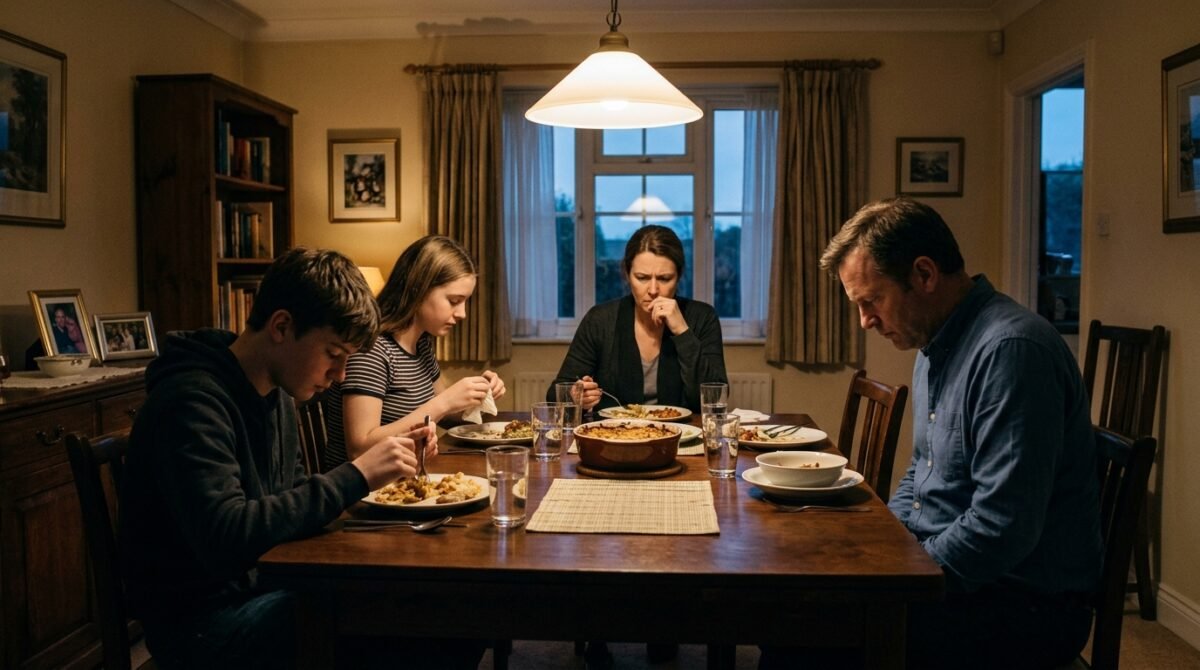
Against my better judgment, we attended the scheduled Sunday dinner at Linda’s house. I wanted to see if she would have the gall to address the incident in person. The house was decorated in its usual immaculate fashion, but the atmosphere felt stifling. Linda greeted us with a performative hug, acting as if the previous night’s explosion hadn’t occurred. She was wearing a new brooch, one I hadn’t seen before, made of lace scraps.
The table was set for six. Throughout the meal, Linda steered the conversation toward ‘new beginnings’ and ‘shedding the past.’ She kept glancing at me, waiting for me to break, to start an argument, to be the ‘difficult daughter-in-law’ she had clearly painted me as to the rest of the family. I kept my mouth shut, focusing on my plate, feeling the weight of the silence like a physical burden.
“I hope you’ve had time to cool off, dear. It really is for the best that we move on. Life is too short to be precious about things that aren’t here anymore.”
Her words were a provocation. She wanted a scene. She wanted to play the victim in front of the others. I looked at Mark, and for the first time, I saw a flicker of genuine anger in his eyes. He wasn’t looking at me; he was looking at his mother, really looking at her, for what seemed like the first time in his life. He pushed his chair back, the sound of wood scraping against the floor echoing through the room.
“Mom,” he said, his voice flat and devoid of the warmth he usually tried to maintain. “The gown wasn’t ‘just things.’ It was my wife’s history. You didn’t give it a new life; you killed a piece of our future. And if you think we’re going to just move on, you’re mistaken.” The silence that followed was deafening. The other family members looked down at their plates, the tension becoming too heavy to ignore.
The Legal and Emotional Toll
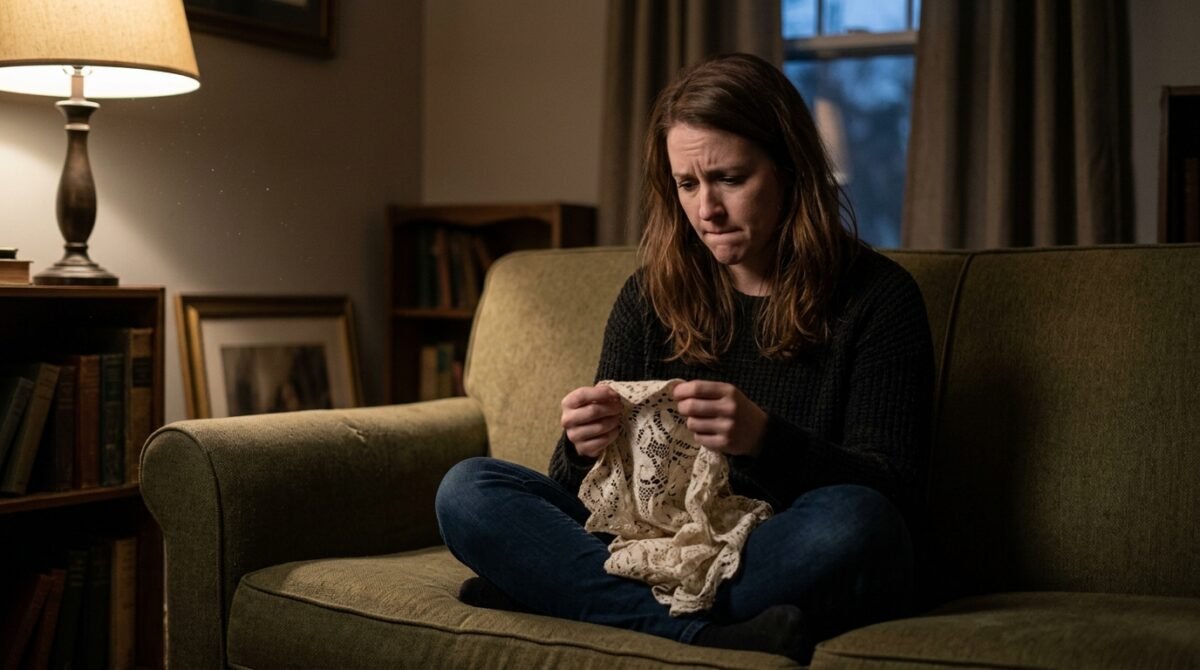
In the days that followed, the reality of the loss truly set in. I spent hours trying to find a textile conservator, hoping, perhaps naively, that some of the gown could be salvaged. The answer I received was a crushing blow. The cuts were made with such disregard for the grain of the fabric that the structure was completely compromised. It was, for all intents and purposes, destroyed.
I began to experience a profound sense of grief. It sounds silly to some, I know—it’s ‘just cloth’—but it represented a connection to women I would never meet, a history of survival. Linda had wiped that out in a moment of boredom. I started having nightmares about her coming into my home and shredding everything I held dear—photographs, letters, memories. The violation of my space had left me feeling unsafe in my own home.
“I just can’t look at her, Mark. Every time I think of her, I see her holding those scissors, smiling at the dog. I can’t let her back into our space. I can’t do it.”
Mark was struggling as well. He was caught in the middle of a war between his loyalty to his wife and his ingrained, lifelong habit of placating his mother. We spent hours talking, not about the gown, but about what it meant to have boundaries in a family. He realized that if he didn’t support my decision to cut her off, he would be complicit in her continued behavior. The guilt he felt was heavy, but the clarity of our shared position was stronger.
We decided to seek therapy. We needed a professional to help us navigate the fallout and to help Mark untangle the web of emotional manipulation his mother had woven over the decades. It was a difficult process, but it was necessary. We needed to be a united front, and for that to happen, we had to be honest about the damage that had been done—not just to the gown, but to us.
The Certified Letter of No-Contact
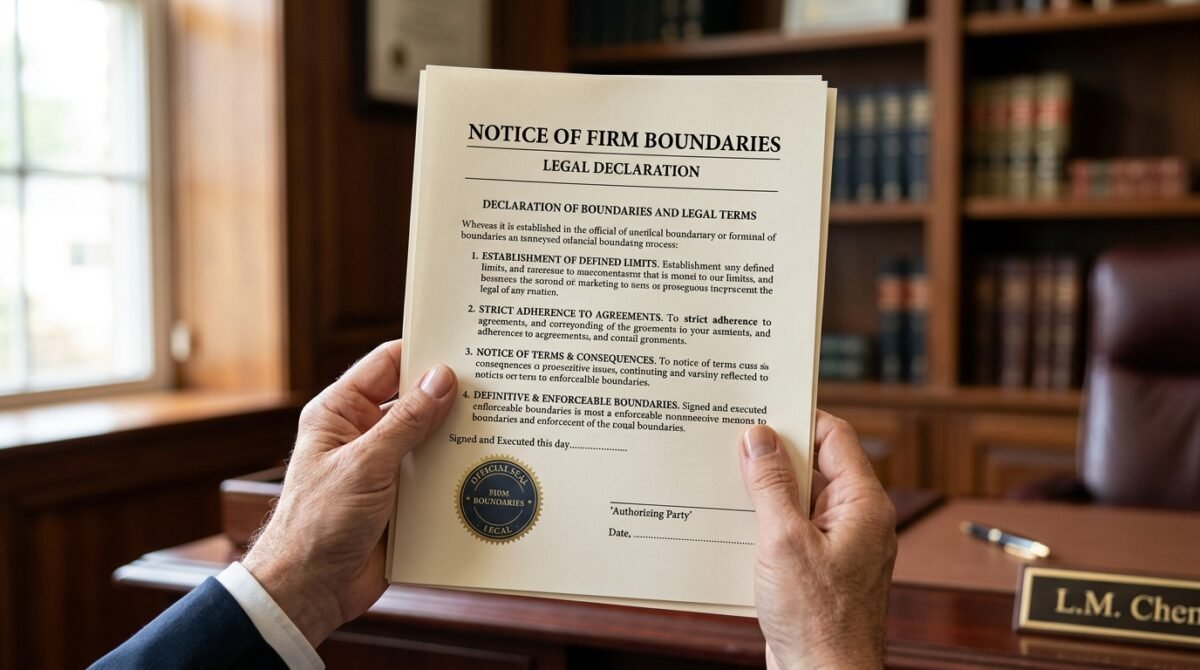
The decision to send a certified letter was mine alone, though Mark supported it fully. We knew that a simple text message or a phone call would just result in Linda gaslighting us, claiming we were being ‘dramatic’ or ‘unreasonable.’ We needed something permanent, something that established the boundary in a way that couldn’t be ignored or twisted. The letter was short, direct, and final.
We detailed the destruction of the gown, the violation of our home, and the continued refusal to acknowledge the harm she had caused. We clearly stated that, for the sake of our own mental health and our future, we were moving to a period of indefinite no-contact. No dinners, no drop-ins, no phone calls, no social media access. We were closing the door, and we were locking it.
“We are not interested in an apology. We are interested in peace. Your actions have demonstrated that you do not respect us, and we are no longer willing to expose ourselves to your disrespect.”
Sending that letter was the most empowering moment of my life. For years, I had walked on eggshells, trying to maintain the peace, trying to keep the family dynamic intact. But the peace was a lie; it was a state of submission. By sending that letter, I was taking back my agency. I was saying that my boundaries mattered, that my feelings mattered, and that I was the guardian of my own life.
When the confirmation of delivery arrived, I felt a weight lift off my shoulders. It wasn’t immediate—there was still the anxiety of the fallout—but it was there. I knew that the worst was over. We had drawn the line, and we were ready to stand behind it, no matter what storm she tried to whip up in response.
The Internet’s Verdict

I decided to share the story on a popular forum, needing to know if I was indeed the ‘dramatic’ person my mother-in-law had claimed. The response was overwhelming. Thousands of people reached out, sharing their own stories of boundary-violating in-laws and the difficulty of standing up to toxic family members. The validation was immense.
“This isn’t about the dress. It’s about power. She destroyed the dress to see if she could make you bow to her will. By cutting her off, you’re not being petty—you’re protecting your future kids from this kind of narcissism. NTA all the way.”
— u/FamilyFirstOnly (Top Comment, 32.5k upvotes)
“I am absolutely fuming for you. That gown was a historical item. Does she have any idea the value—sentimental and literal—she just trashed? Do not let her back in. She’s proven she has no respect for your property or your history.”
— u/HistoryBuff99 (15.2k upvotes)
The community reaction was a mixture of outrage, empathy, and practical advice. Many people urged me to look into whether the gown had any legal value, although I knew that wouldn’t fix the emotional damage. The overwhelming consensus was clear: I was not the villain. I was a survivor of a toxic situation, and my response was not only justified but necessary for my own well-being.
Reading the comments helped me realize that my experience was not unique, which was both comforting and terrifying. There are so many people out there who have been made to feel like they are the problem when, in reality, they are dealing with someone who has no respect for boundaries. The community support was a reminder that I was not alone, and that choosing myself was the right thing to do.
The Aftermath: Learning to Rebuild

The weeks following the letter were quiet, which was exactly what I needed. Linda didn’t take it well, of course. There were frantic calls to Mark, attempts to guilt-trip us through other family members, and even an attempt to show up at our house. We stayed firm. We didn’t answer the door. We didn’t answer the phone. We held the line.
Slowly, the anxiety began to dissipate. I started to feel comfortable in my home again. I stopped looking over my shoulder, wondering if she was lurking in the shadows of my life. I started to focus on the things that brought me joy, rather than the things that were being taken away from me. It was a process of rediscovery, learning who I was without the shadow of my mother-in-law hanging over me.
“We have to learn to be happy with the life we are building, not the one she was trying to force upon us. It’s a clean slate, and we own it.”
Mark and I grew closer during this time. We learned to communicate in a way we never had before. We learned to advocate for each other, and we learned that our relationship was the priority. We weren’t just a couple; we were a team, and that team was strong enough to weather any storm. The tragedy of the gown had, in a strange way, been the catalyst for our growth.
I still think about the gown sometimes. I think about the lace, the history, the love that was poured into it. It hurts, and it probably always will. But I don’t see it as a loss anymore. I see it as a sacrifice that had to be made for us to find our freedom. It was the price of our autonomy, and in the end, it was worth it.
The Hardest Lesson Learned

Looking back, the hardest lesson I learned was that you cannot reason with someone who does not believe they are wrong. For years, I had tried to explain, to compromise, to offer olive branches. I had assumed that if I just explained my perspective clearly enough, Linda would eventually understand. I was wrong. She didn’t want to understand; she wanted to win.
The destruction of the gown was the final straw, but it was really just the culmination of a pattern of behavior that I had been enabling by trying to keep the peace. I had let her believe that her desires were more important than my boundaries. I had let her believe that she could act with impunity. And by doing so, I had lost my own voice.
“Boundaries aren’t about being mean. They’re about protecting your own peace. And sometimes, the only way to protect that peace is to walk away from the people who keep shattering it.”
I’ve realized that setting a boundary is not an act of hostility; it’s an act of self-preservation. It’s a way of saying, ‘This is who I am, and this is what I will and will not accept.’ And if someone cannot respect that, then they do not deserve a place in your life. It’s a simple concept, but it’s one that took me years to truly understand and even longer to implement.
I am a different person now than I was when I first found my mother-in-law in that sewing room. I am stronger, more confident, and more intentional about the life I am building. I don’t look for validation from people who don’t deserve it. I look for it within myself. And that is the greatest gift that this experience has given me.
Moving Forward with Purpose

Today, my life is peaceful. We haven’t spoken to Linda in over a year, and the silence has been a blessing. We have focused on cultivating our own traditions, our own family, and our own space. We don’t worry about what she thinks, what she says, or what she might do. We are the masters of our own destiny, and it is a wonderful feeling.
We are expecting our first child, and I have found a new, beautiful baptism gown. It isn’t a family heirloom, and it doesn’t have the history of the one that was lost. But it is special because it will be the start of our own history. It will be the gown that our child wears, and it will be the start of a new tradition, one built on love, respect, and clear, firm boundaries.
“Our child will grow up knowing that their history starts with us—with the values we choose to model and the respect we have for each other and for our family.”
I have forgiven Linda, not because she deserved it, but because I didn’t want to carry the anger anymore. Forgiveness isn’t about letting her back into my life; it’s about letting go of the bitterness. It’s about reclaiming my energy and focusing on the future. And that is exactly what I am doing.
I am not looking back. I am looking forward to the life we have created, a life that is ours, and ours alone. I am grateful for the lessons I learned, even the painful ones. They have made me who I am today, and I am proud of the woman I have become. I am ready for whatever the future holds, and I know that whatever happens, we will handle it together.
Conclusion
The loss of an heirloom is a tragedy, but the gain of one’s own sovereignty is a triumph. This journey has been one of the most challenging, yet rewarding, experiences of my life. I’ve learned that the people who demand the most of your time and energy are often the ones who respect your boundaries the least.
If you find yourself in a similar position, know that you are not alone. Your pain is valid, your history matters, and your boundaries are worth protecting. Don’t let someone else define your worth or your history. Take control, stand firm, and choose the life that brings you peace.
What about you? Have you ever had to draw a hard line with a family member who refused to respect your boundaries? How did you navigate the fallout, and what has your life looked like since? Share your experiences in the comments below—the community is here for you.
What's your verdict on this dilemma?
Vote below to contribute to the official community consensus.

Have a Dilemma Keeping You Up at Night?
Share your real-life feud, wedding chaos, or relationship crossroads anonymously with our editorial team.
What do you think ?
0 Comments🛡️ Comments are moderated to protect community integrity. Your comment will appear once approved by the editorial team.