

For as long as I can remember, my sister, Chloe, was the sun around which our entire family orbited. As the ‘golden child,’ she could do no wrong. If she broke a window, it was an accident; if I forgot to take the trash out, it was a character flaw. Our mother, a gifted classical musician, poured her heart into both of us, but her violin—a 1920s German masterpiece—became the symbol of a legacy she intended to pass down to me, the daughter who actually inherited her love for music.
When Mom passed away six months ago, the grief was a physical weight, a suffocating blanket that left me unable to breathe. I inherited the house and the violin, while Chloe inherited a generous trust fund and a sense of entitlement that seemingly had no ceiling. I thought the dust had settled. I thought we were all moving toward some version of a new normal, but I underestimated the sheer audacity of someone who has been told ‘yes’ their entire life.
It started as a casual text—an innocent-sounding inquiry about ‘liquidating assets’ to support her ‘brand.’ It ended with a screaming match in my living room that left me shivering in the dark, clutching that violin case as if it were a shield. I realized in that moment that some blood ties are just chains, and I was finally ready to reach for the bolt cutters.
This isn’t just about a musical instrument. It is about the years of being second-best, the silent sacrifices, and the final, breaking point of a sister who thought she could auction off my mother’s soul to fund her Instagram aesthetic. I didn’t just walk away; I slammed the door so hard the foundations of our family are still shaking.
The Morning Text That Changed Everything

It was a Tuesday, the kind of mundane, gray morning where the only thing on my mind was getting through the workday without spiraling into a grief-induced depression. My phone buzzed on the kitchen island, a sharp, dissonant sound against the silence of the house. It was Chloe, sending a link to a high-end, all-inclusive ‘Influencer Wellness & Branding Retreat’ in Bali. The price tag alone made my stomach turn: $12,000.
I barely had time to process the link before a second text followed. It wasn’t a request; it was a demand, phrased with the chilling casualness of someone who has never heard the word ‘no.’ She suggested that since the violin was ‘just sitting there’ gathering dust, it would be the perfect time to sell it to an appraiser she knew. She had already calculated the value, claiming it would cover her retreat and ‘launch her career to the next level.’
“Hey! I found the perfect way to get my business off the ground. The Bali retreat is a total game-changer. I know you’re not using Mom’s violin, and it’s honestly a waste just sitting in that case. Let’s list it on Tuesday. I’ve already messaged the guy!”
— Chloe, Text Message
I stared at the screen, my thumb hovering over the reply button. The sheer audacity paralyzed me. My mother’s violin wasn’t an asset to be liquidated; it was the only piece of her voice I had left. I felt a cold, hard knot of anger tighten in my chest—a feeling I had suppressed for decades. I didn’t respond immediately. I couldn’t.
Instead, I walked over to the closet and pulled out the case. I opened the latches, the metallic click echoing in the quiet room. The scent of aged wood and rosin hit me, instantly transporting me back to my childhood, sitting at Mom’s feet while she practiced. The thought of Chloe selling this for a yoga retreat in Bali felt like a physical violation.
By the time I sat down to type a reply, my hands were shaking. I wasn’t going to be the nice, accommodating sister anymore. I wasn’t going to justify why I deserved to keep my own property. I realized that the ‘golden child’ narrative was built entirely on the backs of those she took for granted, and I was done being the foundation for her pedestal.
The Confrontation in the Living Room
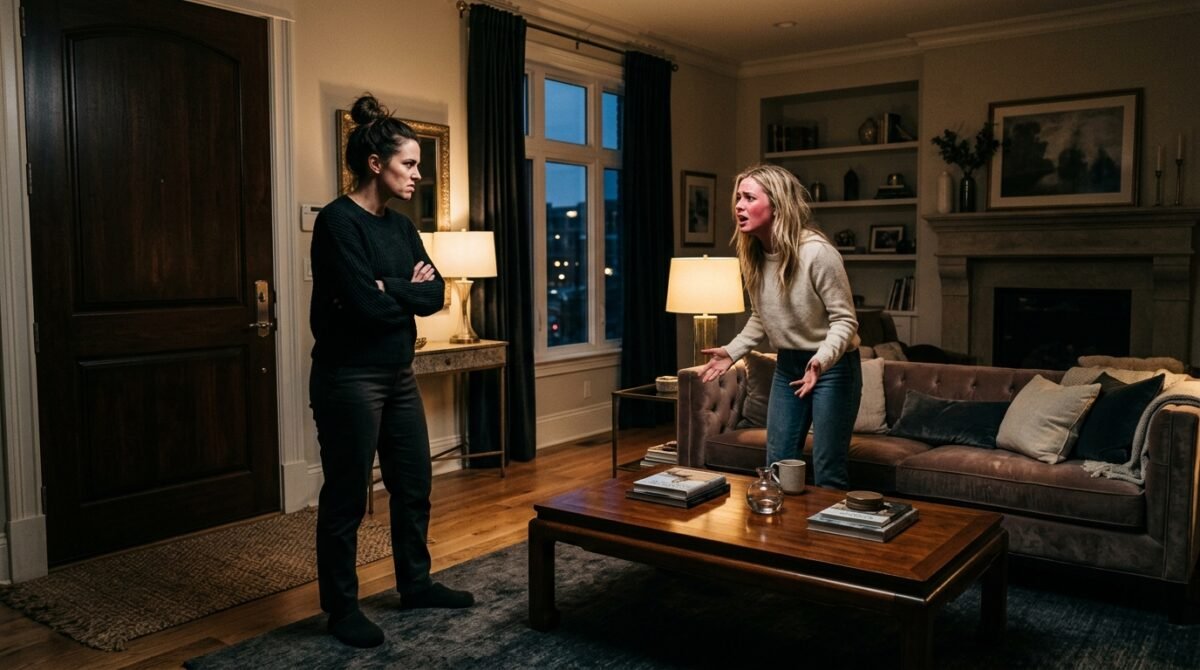
Chloe didn’t wait for my approval. By that evening, she had shown up at my doorstep, keys in hand, letting herself in with the spare set she’d insisted on keeping ‘in case of an emergency.’ She walked into the living room as if she owned the place, her eyes scanning the room, landing immediately on the violin case I had moved to the coffee table.
She didn’t even say hello. She walked straight to the table, her designer handbag swinging from her shoulder, and reached for the latch. I stood up, my pulse thudding in my ears. I didn’t shout, but my voice was sharp, a weapon I hadn’t known I possessed. I told her to step away, my eyes locked onto hers with a ferocity that made her pause, her hand frozen mid-air.
“Are you kidding me? This is mine, Chloe. It was left to me in the will, and it is absolutely not for sale. Get out of my house.”
“Don’t be dramatic! You don’t even play the damn thing anymore. Mom would want me to be successful, wouldn’t she? You’re just being selfish because you’re jealous that I’m actually doing something with my life.”
— Confrontation between OP and Chloe
The accusation of jealousy was her go-to move. Whenever she felt challenged, she defaulted to the idea that everyone was just bitter about her brilliance. It was a manipulative tactic that had worked for twenty years, but the power dynamic had shifted. I wasn’t a child anymore, and I didn’t need her validation.
She looked around the room, her expression shifting from irritation to a smug, calculated pity. She started listing all the things she ‘deserved’ because she had been Mom’s favorite. She spoke about the funeral costs, the legal fees, and her own ’emotional toll’ as if she were a martyr. I felt like I was watching a stranger, someone so detached from reality that they couldn’t see how grotesque they were being.
I walked to the door and held it open. The silence between us was heavy, filled with the ghosts of every argument we had ever had. I told her that if she didn’t leave, I would call the police. The look of genuine shock on her face was almost satisfying—she had never actually been forced to face a consequence before.
The Fallout in the Family Group Chat
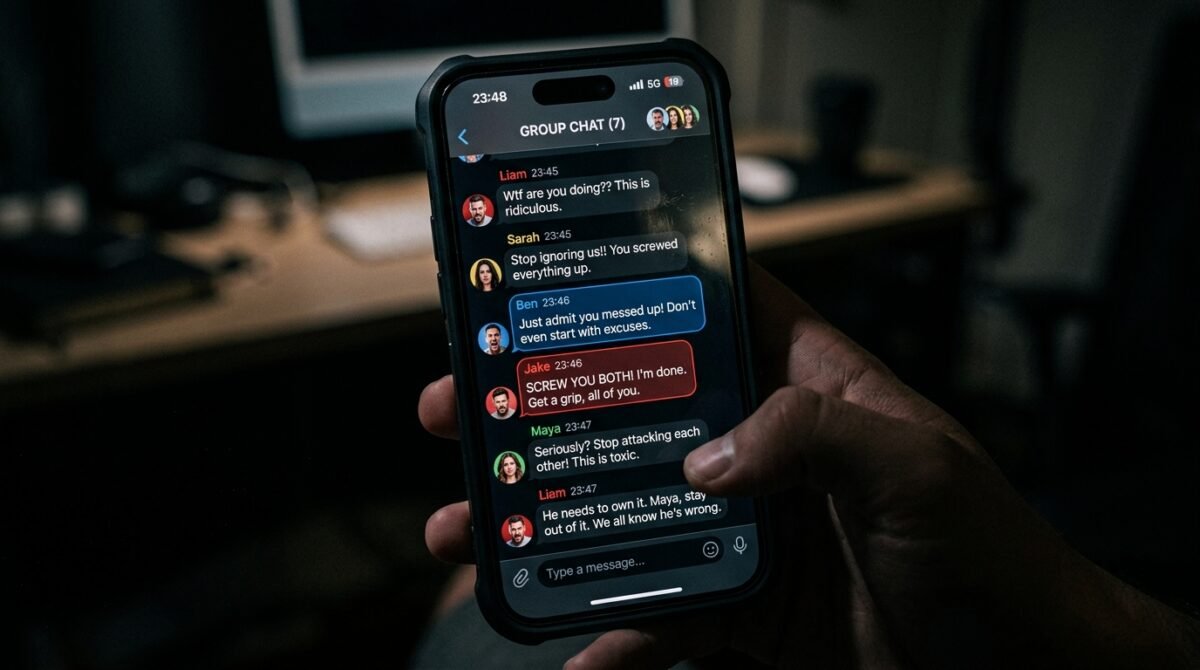
Within an hour of leaving my house, the family group chat—which included my aunts, my cousins, and my father’s side of the family—lit up. Chloe had spun a narrative so far from the truth it was practically creative fiction. She claimed I was ‘hoarding’ family heirlooms and refusing to help a sibling in need, framing her request as a ‘simple loan’ that I had rejected with ‘cruelty.’
My aunt, usually the mediator, sent a message asking if we could ‘just talk this out’ and suggesting that perhaps ‘sharing the proceeds’ would be the Christian thing to do. The enabling was instant and infuriating. They didn’t care about the violin, or Mom’s wishes, or my boundaries. They just wanted the peace restored so they wouldn’t have to deal with Chloe’s inevitable, high-decibel breakdown.
“I cannot believe you are doing this to your sister. She is trying to build a future, and you are being so incredibly petty over an object. Please, just listen to reason and call her back.”
— Aunt Sarah, Family Group Chat
I read the messages and felt a wave of cold detachment. For years, I had tried to explain my side, to present evidence, to defend myself against Chloe’s constant stream of misinformation. But today, I did something different. I typed a single, final response, clearly outlining the facts of the will and the legal ownership of the violin. I then stated that I would not be discussing this further and that anyone who continued to harass me about it would be removed from the chat.
The silence that followed was deafening. I didn’t wait for them to argue. I removed myself from the group entirely. It was a simple action, a few taps on a screen, but it felt like cutting a parasite loose. My phone stopped buzzing, the notifications ceased, and for the first time in months, the house felt truly quiet.
I knew what would come next. There would be phone calls, maybe even more unannounced visits. But I had the security of my own home and a boundary that was now set in stone. The realization that I didn’t need their approval to live my life was the most liberating feeling I had ever experienced.
The Internet Weighs In: The Reddit Verdict
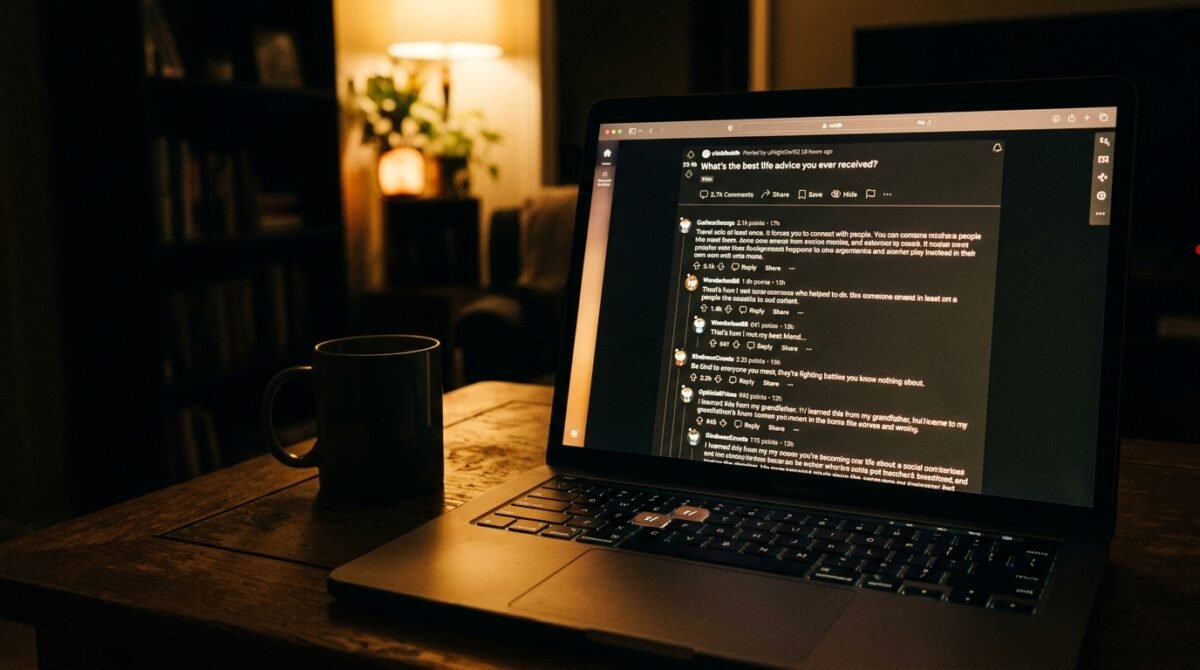
I turned to the internet, not for validation, but for perspective. I posted my story on a popular forum, keeping the details anonymous but the stakes clear. I needed to know if I was the villain here. I needed to know if, in some twisted world, I was the one being unreasonable. The response was immediate and overwhelming, a tidal wave of support that I hadn’t expected.
“NTA. Your sister is a classic narcissist who has been enabled her entire life. That violin isn’t just an object; it’s your inheritance and your mother’s legacy. She has zero right to demand you sell it for her ‘influencer’ dreams. Do not back down. Block her and everyone who sides with her.”
— u/JusticeForOP, 45.2k upvotes
The sheer number of people who had dealt with similar ‘golden child’ dynamics was staggering. They shared their own stories of manipulation, gaslighting, and the slow, painful process of finally walking away. It was a community of people who had been forced to become their own families, and their words were a lifeline. They warned me about the ‘extinction burst’—the moment when a toxic person realizes they’ve lost control and escalate their behavior to get it back.
I read through comments about legal protections, changing locks, and the importance of documenting everything. It felt like I was reading a battle plan. I realized that my sister’s behavior wasn’t a quirk; it was a pattern, and it would never change unless I made it impossible for her to interact with me on her own terms.
One comment in particular stood out, highlighting the financial absurdity of her request. ‘If she wants an influencer retreat, she should take out a loan or get a job, not try to pawn her family’s history.’ It was simple, blunt, and exactly what I needed to hear. The absurdity of the situation became clear—my sister wasn’t just entitled; she was living in a delusional bubble where she felt entitled to my life’s assets.
The Attempted Raid on My Security
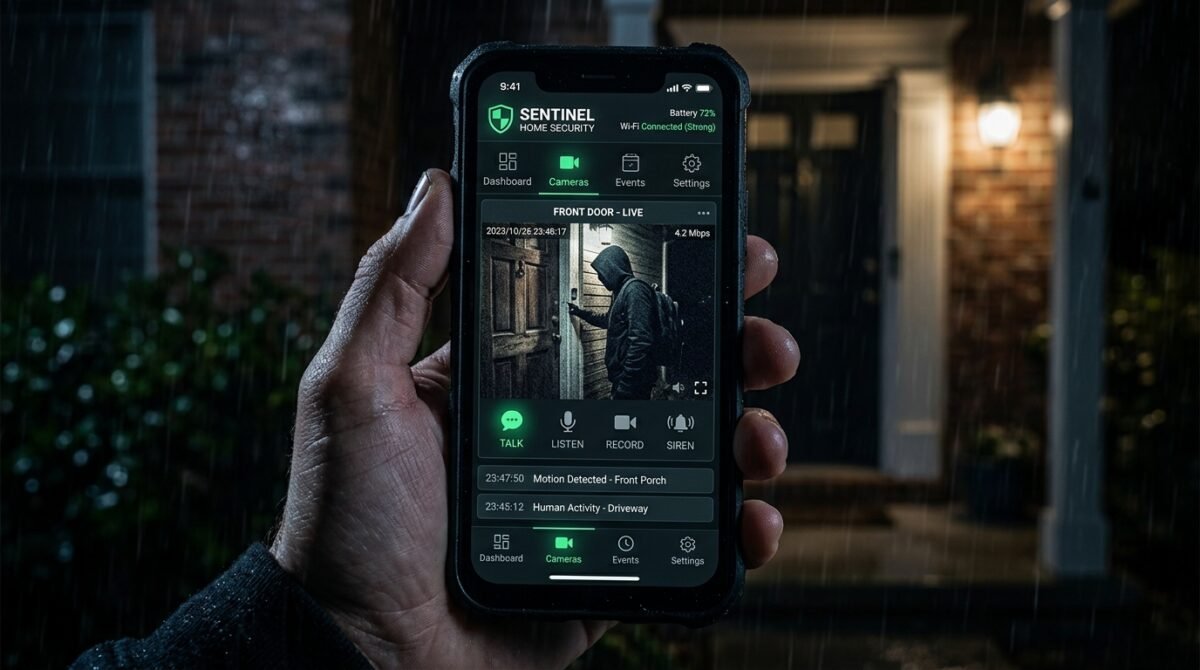
Three days after the blowout, I came home from work to find my front door unlocked. A chill went down my spine that had nothing to do with the weather. I stepped inside, my heart hammering, and saw the living room in disarray. Cushions were thrown on the floor, bookshelves had been rifled through, and the coffee table—where the violin case had been—was empty.
I felt a flash of pure, unadulterated rage. She hadn’t just tried to ask; she had broken in. I ran to the bedroom, my mind racing. Had she taken it? Was it already gone? I pushed open the closet door, and there it was, tucked behind a stack of blankets. I had hidden it the night before, a precaution that had now saved everything. I sat on the floor, clutching the case, shaking with a mixture of relief and fury.
“I know you were here, Chloe. I have cameras. I am calling the police. Do not ever, ever step foot on this property again. This isn’t a game.”
— Text sent to Chloe after discovering the break-in
I didn’t call the police, not yet. I wanted to see if she would admit it. She replied within seconds, her tone shifting from entitlement to a bizarre, faux-apologetic ‘I was just trying to help you organize.’ It was the most pathetic attempt at gaslighting I had ever witnessed. She actually thought she could lie her way out of a home invasion.
I spent the next two hours installing a new security system, one that pinged my phone the second anyone touched a handle. I changed the locks and blocked her number on every platform. The feeling of violation was profound, but it was also the final piece of evidence I needed. She was dangerous, or at the very least, she was so far gone that she was a liability to my peace.
That night, I didn’t sleep. I sat in the living room, the violin case within arm’s reach, listening to the silence of the house. I realized that the ‘sisterly bond’ I had been trying to preserve was dead. It had been sacrificed on the altar of her ego, and there was no coming back from this. I was finally, truly alone, and for the first time, it felt like a choice.
The Legal Ultimatum and the Cease and Desist
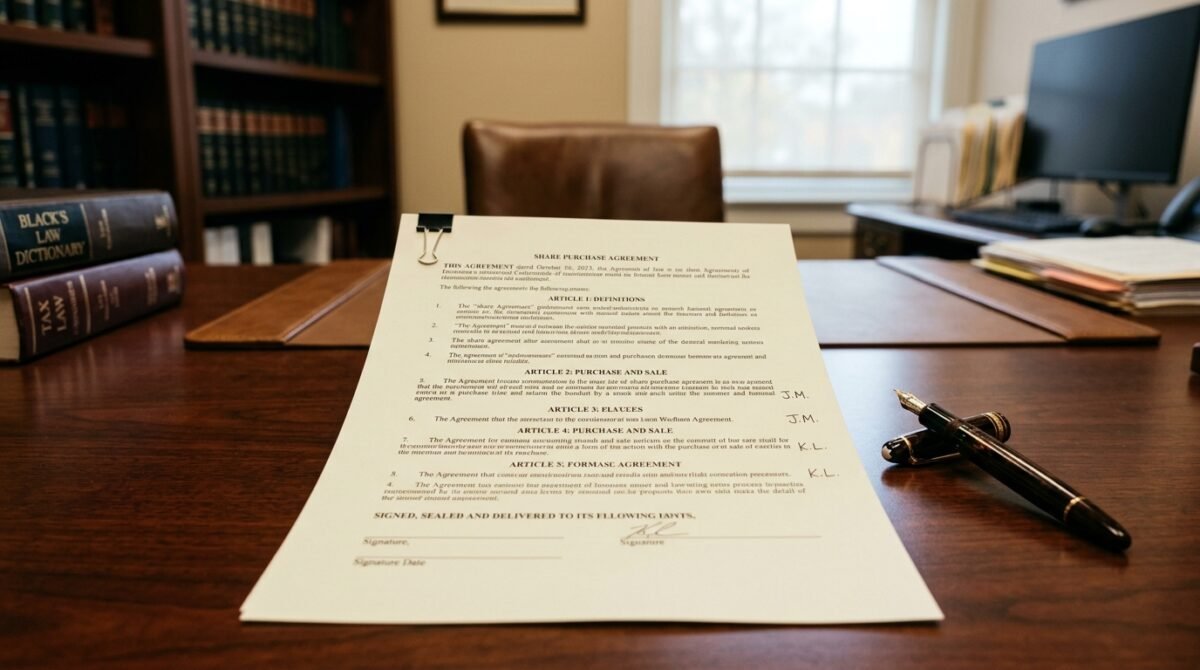
I knew I couldn’t just rely on locks and blocks. I needed to make it official. I reached out to a family law attorney, someone who had helped with the estate, and told them everything. The look on the attorney’s face—a mix of professional concern and utter disbelief—confirmed that I wasn’t being dramatic. The break-in was the turning point; it wasn’t just a family argument anymore. It was criminal.
We drafted a formal cease-and-desist letter. It was cold, legal, and absolute. It detailed the trespassing, the intimidation, and the clear instruction that she was to have no contact with me or my property. Sending it was the hardest thing I had ever done, but it was also the most effective. It wasn’t just a letter; it was the final nail in the coffin of our relationship.
“This notice serves as a formal demand for you to cease all communication and attempts to access the property of [My Name]. Further attempts to enter the premises will be treated as trespassing and will result in immediate legal action, including police involvement.”
— Excerpt from the Cease and Desist letter
A few days later, I received a letter in the mail from her. It wasn’t an apology. It was a long, rambling screed about how I was ‘destroying the family’ and how she was the ‘real victim’ of my sudden transformation. She claimed I was suffering from a mental breakdown and that she was ‘concerned for my well-being.’ The irony was so thick it was suffocating.
I didn’t read past the second paragraph. I handed it directly to my lawyer, who filed it as evidence. The process was sterile, professional, and entirely devoid of the emotional chaos she tried to inject into every interaction. It was the first time I felt like I was winning, not by fighting, but by refusing to play the game at all.
The relief was palpable. I started to sleep through the night again. I started to play the violin, just for myself, in the evenings. The music, which had been a point of contention for so long, became my sanctuary. Each note was a reminder that I was the owner of my life, and no one—not even the golden child—could take that away from me.
The Enabling Extended Family Steps In

The cease-and-desist didn’t stop the flying monkeys. My extended family, still clinging to their version of the ‘happy family’ fairy tale, started calling. At first, I was polite, explaining that this was a private legal matter. But when they started demanding I ‘be the bigger person’ and ‘forgive my sister,’ the politeness evaporated.
They didn’t understand that being the bigger person in this family meant being the floor. It meant taking the kicks and the insults so that someone else didn’t have to face the consequences of their actions. I told them, one by one, that if they wanted to talk about Chloe, they could speak to my lawyer. It shut them up instantly.
“You’re being so cold. She’s your sister! Don’t you think you’re overreacting? You don’t have to be friends, but you can’t just cut her out like she’s a stranger.”
“She broke into my house, Aunt Linda. She tried to steal my property. She is a stranger to me now. If you want to support her, go ahead. But don’t expect to have a relationship with me while you do.”
— Phone call transcript with Aunt Linda
It was painful, losing those connections. I had grown up with these people; they had been at every holiday, every birthday, every milestone. But I realized that their love was conditional, tied to my ability to play the role of the quiet, compliant sibling. When I refused to play that role, I became an outcast. It was a small price to pay for my own sanity.
I started noticing how much energy I had wasted trying to please people who didn’t respect me. I had spent years walking on eggshells, tailoring my words and actions to avoid triggering Chloe or disappointing the family. Now, the space where that anxiety used to live was empty. I felt lighter, more focused, more like myself.
The family began to fracture. Some cousins reached out privately, offering support and admitting that they were tired of Chloe’s behavior too. It was a small comfort, but it was enough to show me that I wasn’t the problem. The system was the problem, and I had simply chosen to step out of it.
The Influencer’s Public Smear Campaign

When she realized she couldn’t get to me through the family or the law, Chloe took the fight to the internet. She posted a series of ‘crying in the car’ videos, painting a picture of a sister who had ‘abandoned’ her in a time of need. She didn’t name me directly, but the context was clear enough for anyone who knew us. She talked about ‘toxic family members’ and ‘holding onto objects instead of people.’
She framed it as a journey of ‘healing from betrayal.’ The comments were filled with people offering sympathy, telling her to ‘cut out the negativity’ and ‘keep shining.’ I watched from a distance, feeling a strange mix of pity and disgust. She was so desperate for validation that she was willing to lie to strangers on the internet about her own sister.
“It’s so hard when the people you love the most turn against you for no reason. I just wanted to move forward, and I was met with such coldness. Remember to choose yourself, guys. Always.”
— Chloe’s Instagram Story
I didn’t respond. I didn’t post my own side. I didn’t need to. The truth wasn’t a PR campaign; it was a fact. Her followers would eventually see the pattern, or they wouldn’t. It didn’t matter to me anymore. I realized that responding would only give her the attention she was craving. I was effectively starving her of the one thing she wanted most: a reaction.
The smear campaign lasted about two weeks before she moved on to her next ‘tragedy.’ It was like watching a child lose interest in a toy. She didn’t actually care about the violin or the money—she cared about the narrative. Once the narrative stopped generating engagement, she lost interest. It was a powerful lesson in the vanity of it all.
I found myself laughing at the absurdity of it. Here was my sister, a grown woman, playing out a reality show drama with an audience of thousands, while I was sitting in my living room, drinking tea and reading a book. The contrast was stark. I had chosen a quiet, real life, while she was trapped in a digital performance that was rotting from the inside out.
Finding Harmony in the Silence

Months have passed now. The chaos has died down, replaced by a steady, comfortable rhythm. I still have the violin. Some days, I practice for hours, the music filling the house, a testament to the legacy my mother intended for me. It’s not just about the skill; it’s about the memory, the connection, the love that was poured into that instrument long before Chloe decided it was a commodity.
I’ve built a new life, one defined by the boundaries I set. I have friends who respect my space, a job that challenges me, and a home that feels like a sanctuary, not a battleground. I’ve learned that saying ‘no’ is not an act of cruelty, but an act of self-preservation. I’ve learned that family is not just blood; it is the people who stand by you when the world gets loud.
“I used to think that keeping the peace was the most important thing. Now I realize that peace is only valuable if it is genuine. I’m finally at peace with my choice, and I’ve never been happier.”
— OP, Personal Journal Entry
I still get occasional updates about Chloe from mutual acquaintances. She’s on to the next ‘big thing,’ still searching for the validation she thinks is waiting for her in the next retreat, the next post, the next sponsorship. I hope she finds it, but I’ve stopped caring if she does. My story is no longer tethered to hers.
The violin sits in the corner, a beautiful, polished piece of art. It’s a reminder of where I came from, but it’s also a symbol of where I’m going. I’m not the victim of my sister’s story anymore. I’m the author of my own. And that, I’ve realized, is the greatest inheritance of all.
I look back at the beginning of this journey, at that morning text and the panic that followed, and I barely recognize the person who wrote it. That version of me was terrified of losing a relationship that was already gone. This version of me knows that the most important relationship is the one I have with myself.
Reflecting on the Golden Child Myth

The ‘golden child’ syndrome is a poison that affects the entire family, not just the one being idolized. It stunts emotional growth, fosters entitlement, and creates a distorted reality where one person’s needs always outweigh everyone else’s. My sister was the victim of that environment, yes, but she was also the architect of her own current isolation.
I see now that the family members who pressured me to ‘forgive’ were just trying to maintain the status quo. They weren’t interested in justice or healing; they were interested in comfort. They wanted me to be the bigger person so they didn’t have to face the uncomfortable truth that our family dynamic was profoundly broken. I had to forgive them for their ignorance, but I didn’t have to invite them back into my life.
“When you cut off a toxic person, you’re not just removing them from your life; you’re removing the weight they’ve placed on your shoulders. It’s not an act of revenge; it’s an act of reclamation.”
— Reader Comment, Reddit
The journey of cutting off a sibling is never easy. It is filled with guilt, doubt, and the fear of the unknown. But it is also a journey toward authenticity. When you remove the people who drain your energy and disrespect your boundaries, you finally have the space to figure out who you really are, outside of the roles you were assigned in childhood.
I have no regrets about the choices I made. The pain of the separation was real, but it was a temporary, sharp pain, like a splinter being pulled from a wound. What remained was the ability to grow, to heal, and to live a life that is entirely my own. I hope that by sharing my story, others will see that they don’t have to tolerate the intolerable.
You are allowed to have boundaries, even with family. You are allowed to protect your inheritance, your home, and your mental health. You are allowed to say ‘no.’ And most importantly, you are allowed to build a life that you actually enjoy living, regardless of what the ‘golden child’ of your family thinks about it.
Conclusion
My life today is quiet, and in that quiet, I have found a profound sense of self-respect. Protecting my mother’s legacy wasn’t just about the object; it was about the principles I live by. I chose to value my integrity over the approval of a family that had forgotten how to see me as anything other than a supporting character in Chloe’s story.
If you find yourself in a situation where your boundaries are being trampled, remember that it is not your job to fix someone else’s entitlement. It is your job to protect your peace. The guilt you feel is just the echo of a system that relied on your silence. Once you realize that, the guilt begins to fade, replaced by a clarity that is worth more than any inheritance.
What about you? Have you ever had to draw a hard line in the sand with a family member who felt entitled to your property or your life choices? How did you handle the backlash? Let’s talk about it in the comments below.
What's your verdict on this dilemma?
Vote below to contribute to the official community consensus.

Have a Dilemma Keeping You Up at Night?
Share your real-life feud, wedding chaos, or relationship crossroads anonymously with our editorial team.
What do you think ?
0 Comments🛡️ Comments are moderated to protect community integrity. Your comment will appear once approved by the editorial team.