
Becoming a new mother is an experience defined by a cocktail of overwhelming love, sleep deprivation, and a heightened, almost primal sense of protection. When my son, Leo, was born, I felt like I had been granted the most precious responsibility of my life. My husband, Mark, was supportive, but his sister, Sarah, had always been a complicated presence in our lives. She was charismatic, overly involved, and possessed a persistent, boundary-crossing personality that I had learned to navigate with polite, practiced distance.
Sarah had struggled with infertility for years, a tragedy that the entire family sympathized with. However, that empathy began to shift into unease as my pregnancy progressed. She would touch my stomach without asking, make unsolicited comments about ‘our baby,’ and insist on being present for every major milestone. I attributed it to her grief, hoping that once Leo arrived, she would find her own path to fulfillment. I was deeply, dangerously wrong.
The boundary violations escalated from constant unannounced visits to subtle, invasive comments about breastfeeding. She would watch me feed Leo with an intensity that made my skin crawl. She would whisper about how ‘natural’ and ‘spiritual’ the bond was, often suggesting that she felt a ‘maternal pull’ that she couldn’t explain. I dismissed it as her living vicariously through me, not realizing that her obsession had crossed a line into dangerous, delusional territory.
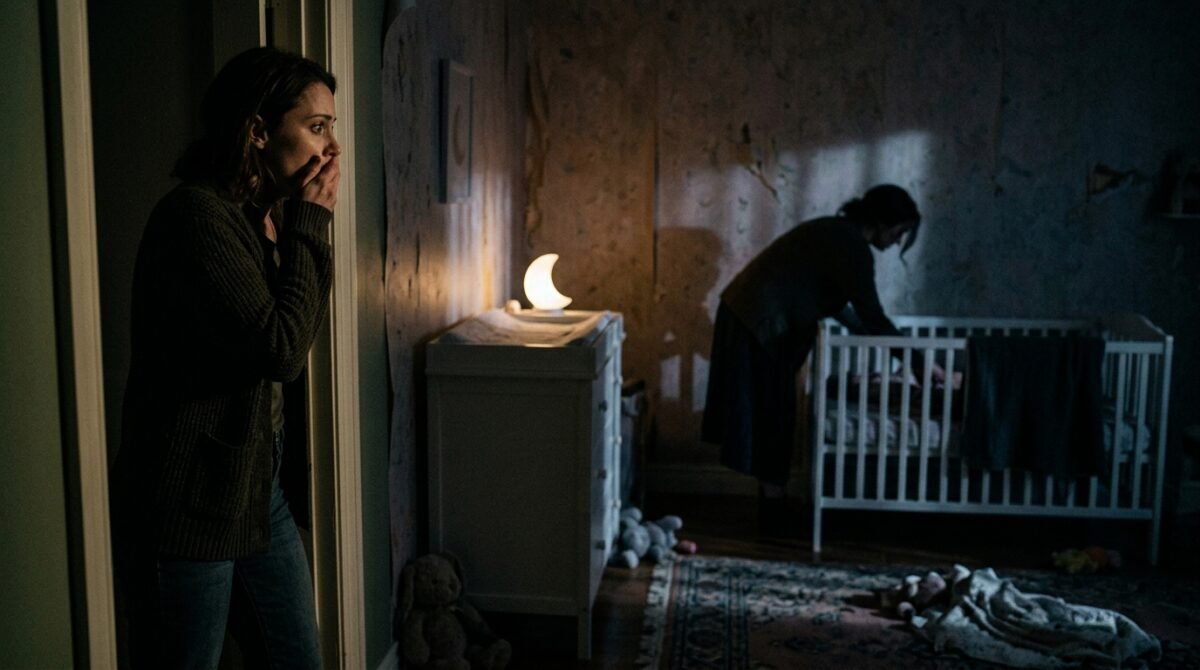
The night that changed everything was a blur of exhaustion and terror. I had been struggling with a bout of postpartum insomnia, and the house was silent save for the hum of the baby monitor. When I walked into the nursery to check on Leo, I saw something that shattered my reality. Sarah was there, in my home, in the dark, performing an act that felt like a violation of every sanctity I held dear. The aftermath was swift, brutal, and permanent.
This is the story of how a family’s silence enabled a predator, how I reclaimed my role as a mother, and why I eventually had to burn the bridge entirely to ensure the safety of my son. It is a cautionary tale about what happens when ‘family’ is used as a weapon to bypass basic human consent.
The Escalating Obsession Before the Incident
In the months leading up to the incident, Sarah’s behavior became increasingly erratic. She started showing up at our front door at odd hours, claiming she just ‘felt like she needed to be close to the baby.’ Mark, caught in the middle of his sister’s desperation and my mounting discomfort, often tried to downplay it. He kept telling me, ‘She just wants to be an aunt. She’s struggling, and we are the only family she has close by.’
I began to keep a log of her transgressions. There were the unwanted nursery decorations, the constant ‘gifts’ that were clearly for her own gratification, and the way she would snatch Leo from my arms the moment I sat down to rest. It wasn’t just physical; it was psychological. She would make comments like, ‘I feel like he knows I’m his mother in spirit,’ which made me shudder every single time.
“You just don’t understand the level of connection I have with him. It’s like we have an invisible tether that pulls me toward his crib every single night. You’re lucky you have that luxury, but I’m his true guardian.”
— Sarah, during a heated argument two weeks before the incident.
I tried to set hard boundaries. I told her that she was no longer allowed to visit without calling at least 24 hours in advance. I told her that she needed to respect my space as a parent. But she would just laugh it off, claiming I was being ‘hormonal’ and ‘over-protective.’ It was gaslighting of the highest order, meant to make me feel like I was the one with the problem.
Mark eventually agreed to limit her access, but his follow-through was pathetic. He would leave the back door unlocked because he ‘didn’t want to make her feel unwelcome.’ That single, negligent act was the catalyst for what would eventually occur. My home, my sanctuary, was no longer secure.
Looking back, I see the warning signs so clearly now. The way she stared, the way she would linger in the nursery when she thought I wasn’t looking, and the strange, sickly-sweet perfume she started wearing—the same one she insisted I use for the baby. It was all part of a grooming process, not for the child, but for her own twisted sense of entitlement.
The Midnight Intrusion in the Nursery
It was 2:15 AM when I woke up with a start. The house felt unnervingly still. I reached for the baby monitor, but it was static, humming with a low-frequency interference that seemed out of place. My mother’s intuition—a force I hadn’t realized was so powerful—kicked in. I stood up, my heart pounding against my ribs, and walked down the hallway to the nursery.
I didn’t turn on the lights. I saw a faint glow from the hallway light leaking into the room, silhouetting a figure hunched over the crib. At first, I thought it was Mark, but the stature was wrong. It was slender, familiar, and the posture was agonizingly intimate. My breath hitched as I realized it was Sarah. She had let herself in with the spare key we had stupidly left in the lockbox.
I stepped into the room, my voice trembling with a mix of rage and pure terror. ‘Sarah? What the hell are you doing here?’ The figure jumped, spinning around. I saw her shirt was unbuttoned, and she was leaning over Leo, who was crying softly. The realization hit me like a physical blow to the stomach. She was attempting to nurse him. She wasn’t just holding him; she was trying to force a physical, biological bond that was entirely nonexistent.
“I just wanted to calm him down! You’re always so tired, I thought I could help. He knows me, he needs me. Why are you making this about something dirty when it’s purely about love?”
— Sarah, caught in the act.
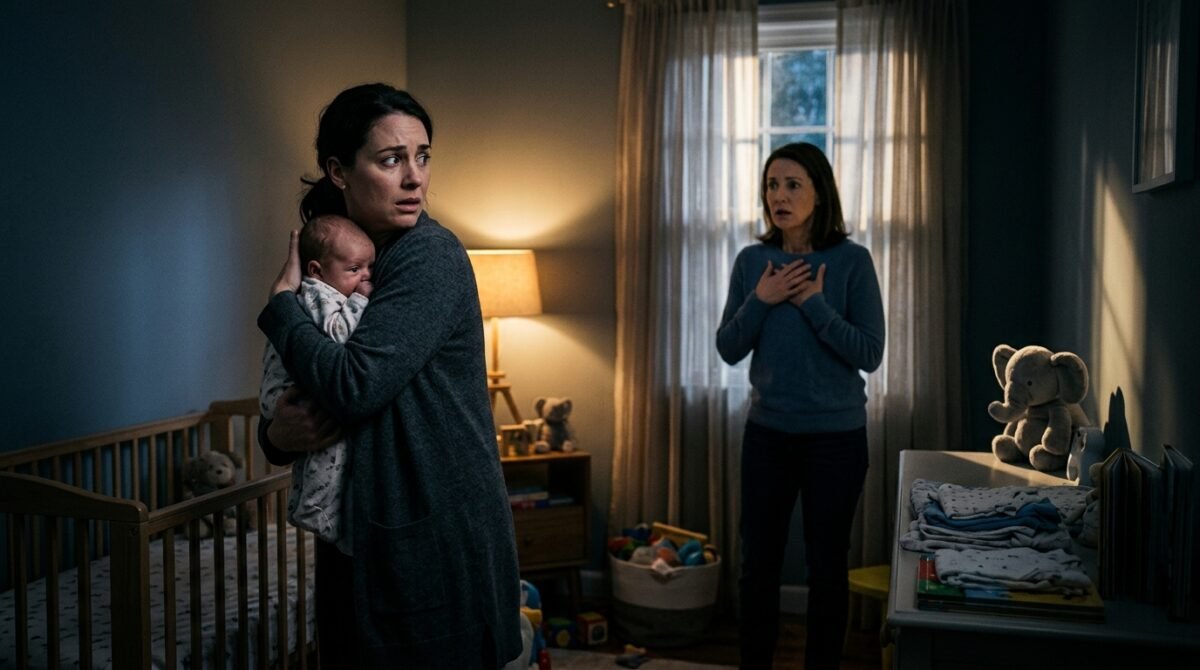
I lunged forward, grabbing Leo from the crib and cradling him against my chest. My hands were shaking so hard I could barely hold him. Sarah stood there, breathless and defiant, her face twisted into a mask of indignation as if I were the one who had committed a crime. The room felt suffocating, filled with the stench of her betrayal.
I shouted for Mark, my voice echoing through the silent house. He came running, still half-asleep, looking bewildered until he saw his sister standing there, exposed and caught in the act. The color drained from his face. The reality of his enabling, of his refusal to see his sister for who she truly was, crumbled right in front of him.
The Immediate Fallout and the Confrontation
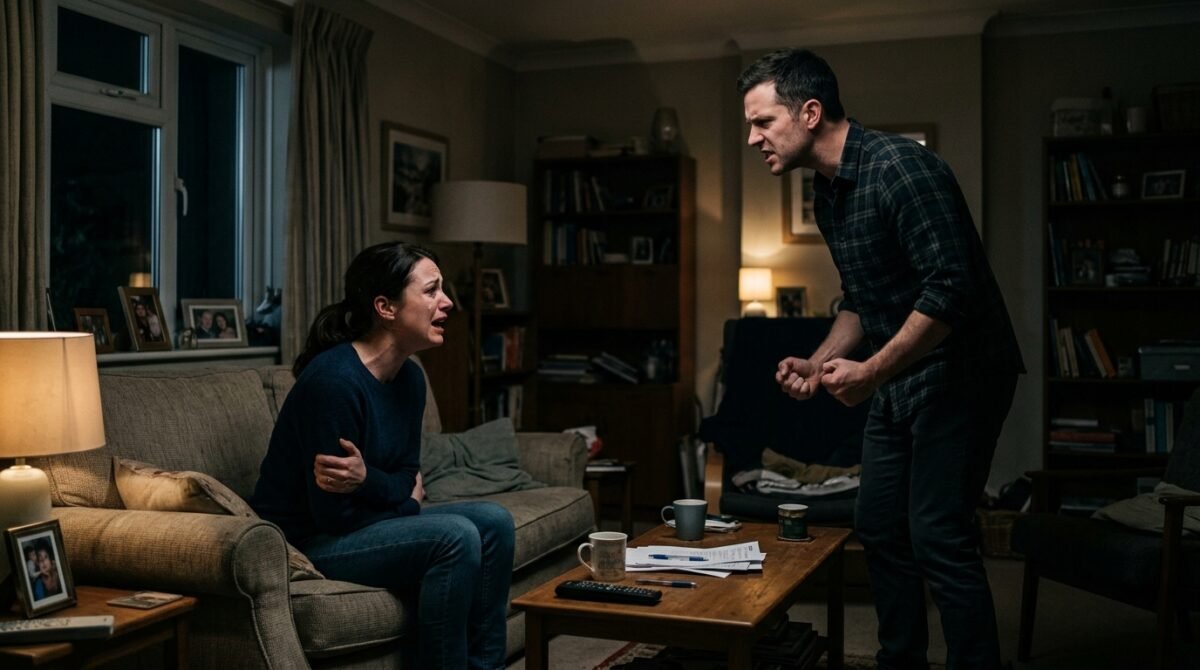
The next ten minutes were a blur of screaming and accusations. Mark finally snapped out of his stupor, his voice dropping to a low, dangerous growl as he demanded his sister leave. Sarah continued to insist that she was ‘helping,’ that I was being hysterical, and that I was ‘denying her the right to be a mother.’ She didn’t see the wrong in it. That was the most terrifying part.
She didn’t just walk out; she had to be physically escorted by Mark. I stayed in the nursery, pacing, my skin crawling, feeling like I needed to scrub the room with disinfectant. Leo, thankfully, was just confused and hungry, but the violation of his space and mine was permanent. I couldn’t unsee what I had seen.
When Mark returned, he was shaking. He tried to apologize, but I wouldn’t hear it. The trust had been eroded long before this, but this was the final wall. I made it clear: Sarah was not to set foot on our property ever again. If she appeared, I would call the police. If she tried to contact me, I would block her. There was no room for negotiation.
“This is not up for discussion, Mark. She crossed a line that no amount of therapy or family history can justify. She is a danger to my child, and if you can’t see that, you’re just as much of a problem as she is.”
— Me, to my husband after the incident.
Mark eventually agreed, but the tension in our marriage was palpable. He was grieving the loss of his sister, even though she had brought this entirely on herself. He struggled to accept the finality of my decision, often bringing up ‘family unity’ and ‘forgiveness.’ I had to explain, over and over, that forgiveness does not mean allowing a person to repeat their abuse.
That night, I didn’t sleep. I sat in the rocker with Leo, watching the door, terrified that she would try to come back. The sense of safety I had built for my child was gone, and I realized that my circle of trust was now effectively just me and my son. Everyone else was on probation, and Sarah was permanently exiled.
The Social Media Smear Campaign Begins
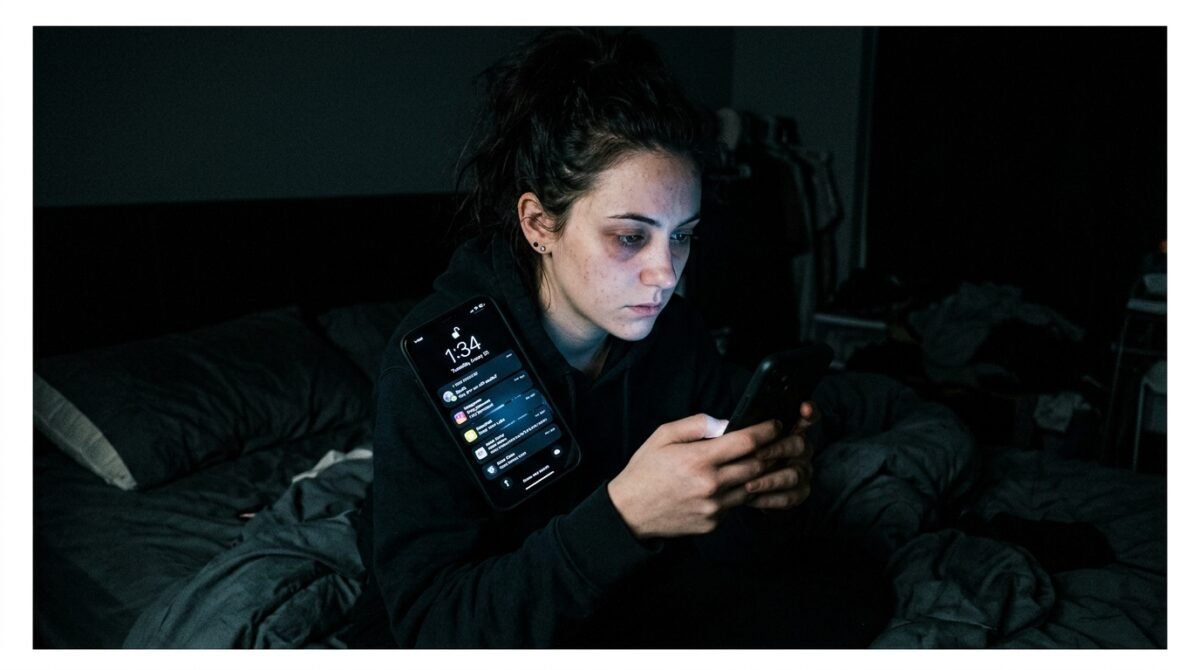
Within 48 hours, the fallout moved to the digital realm. Sarah, realizing she had lost her access to my home, decided to take the narrative public, or at least public enough to garner sympathy from our shared social circle. She posted cryptic statuses about ‘being rejected by toxic family members’ and ‘being denied the right to love a child.’
It was a calculated move. She painted herself as the victim, the ‘loving aunt’ who was cast out by a cold, jealous mother. I received dozens of messages from distant relatives and acquaintances, all asking what happened, all suggesting that I should ‘be the bigger person.’ It was infuriating. They didn’t know the truth, and I wasn’t going to give them the gory details if I didn’t have to.
“Hey, I heard about the fallout with Sarah. I know you’re the mother, but she’s really going through a lot. Can’t you just let her visit for an hour? It would mean the world to her.”
— A message from a well-meaning but ill-informed cousin.
I refused to engage. I kept my social media private and ignored the messages. Mark, however, had a harder time. He felt the need to defend me, which led to arguments with his extended family. He was constantly on his phone, trying to shut down the rumors, which only seemed to fuel the fire. Sarah had mastered the art of the half-truth.
She eventually went too far. She posted a photo of Leo—one she had taken without permission months ago—with a caption about ‘the child I helped raise.’ That was the final straw. I finally reached out to her, not with kindness, but with a Cease and Desist letter from a lawyer. It was the only language she seemed to understand.
The shift in her tone was immediate. The public posts stopped, replaced by a wall of silence. But the damage had been done. I had lost the ‘peaceful’ life I had envisioned. Now, it was a war, and I was on the front lines, fighting for the privacy and sanctity of my family.
The Reddit Verdict: Community Reactions

I finally broke down and posted the story to a throwaway account on a popular relationship advice subreddit. I needed to know if I was losing my mind, if I was truly ‘the villain’ as Sarah claimed. The response was overwhelming. Thousands of people commented, and the general consensus was not just supportive—it was protective.
“This is not just a boundary violation; this is severe psychological abuse and predatory behavior. You are not just right to cut her off; you are failing your child if you don’t. This woman is delusional and dangerous. Please, for the love of all that is holy, get a restraining order.”
— u/MamaBearDefender (Top Comment, 32.4k upvotes)
The community echoed my fears. Many commenters pointed out that Sarah’s actions were indicative of ‘fetishizing’ motherhood or a complete break from reality. They warned me that people like her don’t just stop; they escalate. They advised me to document everything, to keep the lawyer on speed-dial, and to never, ever let my guard down.
“NTA. The fact that she tried to breastfeed your baby is the most horrifying thing I’ve read on this sub in years. This isn’t ‘bonding,’ this is a biological theft. Keep her away. Keep him safe. Your husband needs to step up or he’s next on the chopping block.”
— u/TruthSeeker88 (15.2k upvotes)
It was validating to see that I wasn’t being ‘hormonal’ or ‘jealous.’ The objective observers saw the situation for what it was: a dangerous woman violating a child’s bodily autonomy. It gave me the strength to double down on my boundaries. I printed out the best advice and kept it in a folder, a reminder that I was doing the right thing.
I also saw comments from people who had dealt with similar ‘narcissistic’ in-laws. Their stories were chillingly similar. It wasn’t just about the baby; it was about the power dynamic. Sarah wanted to control my child because she couldn’t control her own life, and she didn’t care who she hurt in the process.
The Failed Intervention by the Family
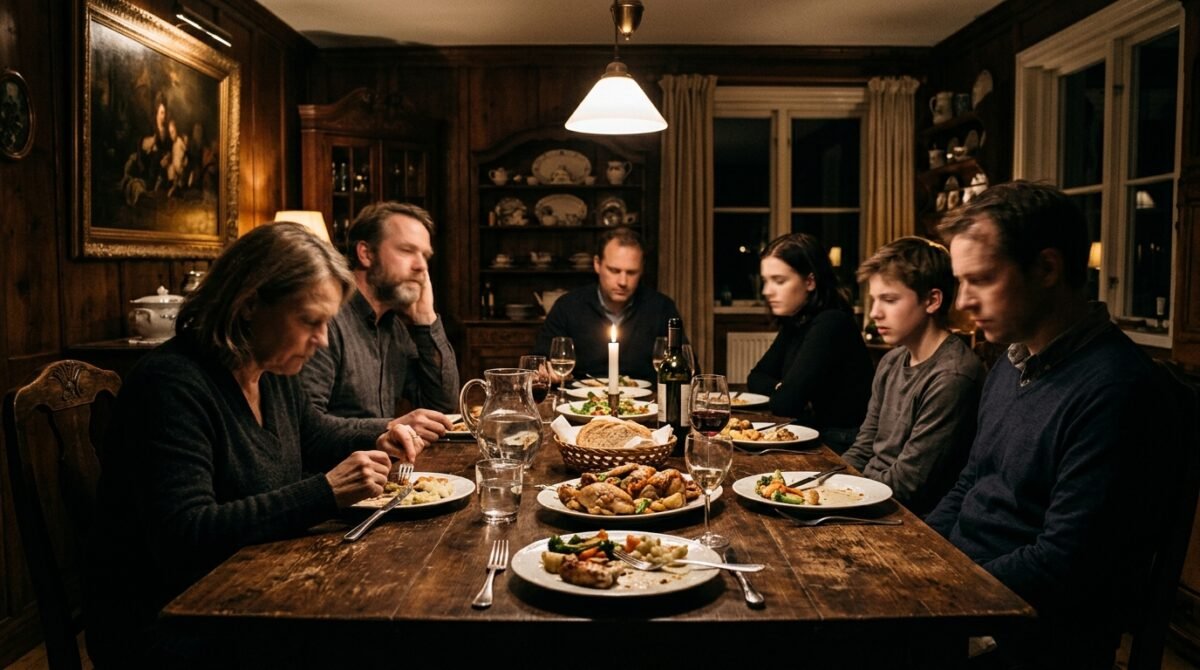
Despite the silence from Sarah, the rest of the family decided to intervene. They planned a ‘family dinner’ where they hoped we could ‘hash things out.’ I was against it from the start, but Mark insisted. He thought that if his parents talked to Sarah, they could get through to her. He was being naive, and I knew it.
The dinner was a disaster. Sarah showed up looking like a martyr, playing the victim card with every breath. My parents-in-law tried to be neutral, but it was obvious they had been swayed by Sarah’s version of events. They kept saying things like, ‘We all make mistakes,’ and ‘Family is the most important thing.’
“I just don’t see why you’re so angry. I made a mistake, I admit it. But you’re acting like I’m a criminal. He’s my nephew! Don’t I have any rights as his aunt?”
— Sarah, at the family dinner.
I stood my ground. I calmly explained that her ‘mistake’ involved touching my son’s body in a way that no one should ever do. I pointed out that she had abused my trust, broken into my home, and refused to apologize for the core of the issue. I told them that if they continued to push for contact, they would be choosing between Sarah and me.
The table went silent. My mother-in-law started crying, and my father-in-law looked at his plate. It was a pathetic display of cowardice. Nobody wanted to address the elephant in the room: Sarah was fundamentally broken, and they were enabling her to maintain their own sense of comfort.
We left before the main course was served. I didn’t say goodbye to anyone except Mark. That night marked the end of my relationship with his parents. They had shown their hand, and it wasn’t one of support for my child. They were willing to sacrifice my son’s safety for the sake of ‘keeping the peace.’
The Legal Reality: Securing the Future

After the failed dinner, I realized that I couldn’t rely on the family to protect us. I had to take legal action. I hired a family lawyer who specialized in boundary enforcement and harassment. We filed for a formal restraining order against Sarah, using the evidence of the text messages, the incident report from that night, and the testimony of my husband.
The process was grueling. Sarah fought it, of course. She hired a lawyer of her own and tried to claim that I was ‘alienating’ her from the family. But when the judge saw the evidence, the tone shifted. The judge was appalled by the details of the ‘nursing’ incident, and the protective order was granted without much fuss.
It felt like a weight had been lifted off my shoulders. I finally had a piece of paper that backed me up. If she came near us again, it wouldn’t just be a moral issue; it would be a criminal one. I felt a sense of relief that I hadn’t felt since before I was pregnant.
“You have a right to protect your child from anyone who compromises his safety. The law is very clear on this. You are not a villain for setting a boundary; you are a parent doing your job.”
— My lawyer, during our final meeting.
I also started therapy to deal with the trauma of the event. I had been carrying so much guilt and fear, and it was starting to affect my relationship with Leo. I was constantly checking the locks, constantly watching the monitors, and living in a state of high-alert. Therapy helped me realize that I was a survivor, not a victim.
I also worked on my marriage. Mark had a lot of growing up to do. He had to learn that his loyalty belonged to his new family, not his family of origin. We spent weeks talking, crying, and eventually building a foundation of trust that didn’t include his sister. It was the hardest thing we had ever done, but it saved our marriage.
The Aftermath: Life in Total Isolation

Life now is very different. We moved to a new neighborhood, one where no one knows us and no one knows Sarah. We changed our numbers, our social media handles, and our entire routine. It feels like we are living in a new world, one where the only thing that matters is our happiness and the safety of our son.
We don’t hear from the extended family much anymore. Some of them reached out, asking if we could ‘reconsider,’ but I stayed firm. If they couldn’t respect the boundary we set, they didn’t deserve to be part of our lives. It’s lonely at times, but it’s a healthy kind of lonely. It’s the silence of peace, not the silence of tension.
“I miss having a big family, but I don’t miss the feeling of being violated in my own home. I’d choose this life a thousand times over.”
— Me, reflecting on my current life.
Leo is thriving. He’s happy, he’s healthy, and he has no idea what happened. That’s the greatest reward. He doesn’t know that his aunt tried to do something that would have scarred him for life. He doesn’t know about the fighting, the lawyers, or the distance. He just knows that he is safe and loved.
I’ve learned that family isn’t just about blood. It’s about respect, safety, and mutual support. If someone, no matter who they are, violates those basic principles, they don’t deserve a place in your life. I’ve become much more assertive, and I’ve learned to trust my gut. My intuition is my best friend now.
I look back at the photos of myself before all of this, and I see a different person—someone who was willing to let people walk all over her for the sake of ‘being nice.’ I’m not that person anymore. I’m a mother, and I’m a protector. And that is enough.
Reflecting on the ‘Motherly Bond’ Myth

One of the things that haunted me for a long time was the idea of the ‘maternal bond.’ Sarah used it as a weapon, claiming that her ‘natural instinct’ gave her a right to my son. But I’ve realized that the maternal bond isn’t something that can be manufactured or forced. It’s built through care, consistency, and time—things that Sarah was entirely incapable of providing.
She wanted the reward of motherhood without the work, without the sacrifice, and without the respect for the child’s actual parent. She wanted a doll, not a human being. And that is why she was so dangerous. She viewed Leo as an extension of herself, a way to fill the void she felt in her own heart.
“Love without consent is just possession. She didn’t love my son; she loved the idea of him. And that is the most selfish, dangerous kind of love there is.”
— Me, during a therapy session.
I’ve spoken to other mothers who have dealt with similar issues. It’s a recurring theme in many families—the aunt or grandmother who feels they have a ‘special’ claim to the baby. It’s a power trip, plain and simple. They want to prove that they are more ‘maternal’ than the actual mother, often by criticizing her techniques or taking over the child’s care.
It’s important to identify this behavior early. It starts with small things—unsolicited advice, overstepping boundaries, making jokes about ‘stealing’ the baby. If you see it, don’t ignore it. Set the boundary immediately. It’s not about being mean; it’s about protecting your child and your role as a parent.
The ‘maternal bond’ is sacred, and it belongs to the parent. No one else has the right to infringe upon it. I hope my story serves as a reminder that if your gut is telling you something is wrong, listen to it. Don’t worry about being polite. Don’t worry about hurting feelings. Your child’s safety is the only thing that matters.
Lessons Learned: How to Protect Your Peace

If I could go back, I would have set the boundaries much earlier. I would have said ‘no’ the first time she touched my stomach without asking. I would have stopped the visits the moment they started to feel intrusive. I learned that you teach people how to treat you, and by allowing Sarah to push the boundaries, I was effectively telling her that they were negotiable.
I’ve also learned that you can’t save everyone. You can’t make people understand their own toxicity. Sarah had to face the consequences of her actions, and she chose to double down instead of changing. That was her decision, not mine. I had to let go of the idea that I could ‘fix’ the family dynamic.
“You are not the keeper of anyone else’s emotional well-being. If someone is toxic, you have the right to remove them from your life. It’s not your job to be their therapist or their savior.”
— A piece of advice from my therapist that changed my life.
The most important lesson is that you are the expert on your child. You know what they need, you know how to protect them, and you have the authority to decide who gets access to them. Don’t let anyone—family or otherwise—make you feel like your parental authority is up for debate. It is not.
If you’re in a situation like this, document everything. Keep a journal of dates, times, and specific incidents. It might feel overkill, but if you ever need to involve the law, it will be your lifeline. You don’t want to be in a position where it’s your word against theirs.
Finally, find your support system. Whether it’s other moms, a therapist, or a trusted friend, make sure you have people who will validate your feelings and support your decisions. You don’t have to do it alone. And you certainly don’t have to tolerate abuse in the name of family.
Conclusion
My journey has been one of extreme highs and lows. I went from the joy of motherhood to the darkest corners of family betrayal, and I came out the other side stronger, more resilient, and more protective than I ever thought possible. The decision to ban my sister-in-law was not one I made lightly, but it was the only one that allowed me to keep my son safe and my own sanity intact.
I hope that by sharing my story, I can encourage others to trust their instincts and to never apologize for setting boundaries. The safety and well-being of your child are worth any amount of ‘family drama.’ Do not let the pressure to ‘keep the peace’ compromise the sanctity of your home or the health of your family.
What about you? Have you ever had to cut a toxic family member out of your life to protect your child or your mental health? How did you handle the backlash from the rest of the family? Share your experiences and thoughts in the comments below. Let’s support each other in the difficult, necessary work of protecting our peace.
What's your verdict on this dilemma?
Vote below to contribute to the official community consensus.

Have a Dilemma Keeping You Up at Night?
Share your real-life feud, wedding chaos, or relationship crossroads anonymously with our editorial team.
What do you think ?
0 Comments🛡️ Comments are moderated to protect community integrity. Your comment will appear once approved by the editorial team.