
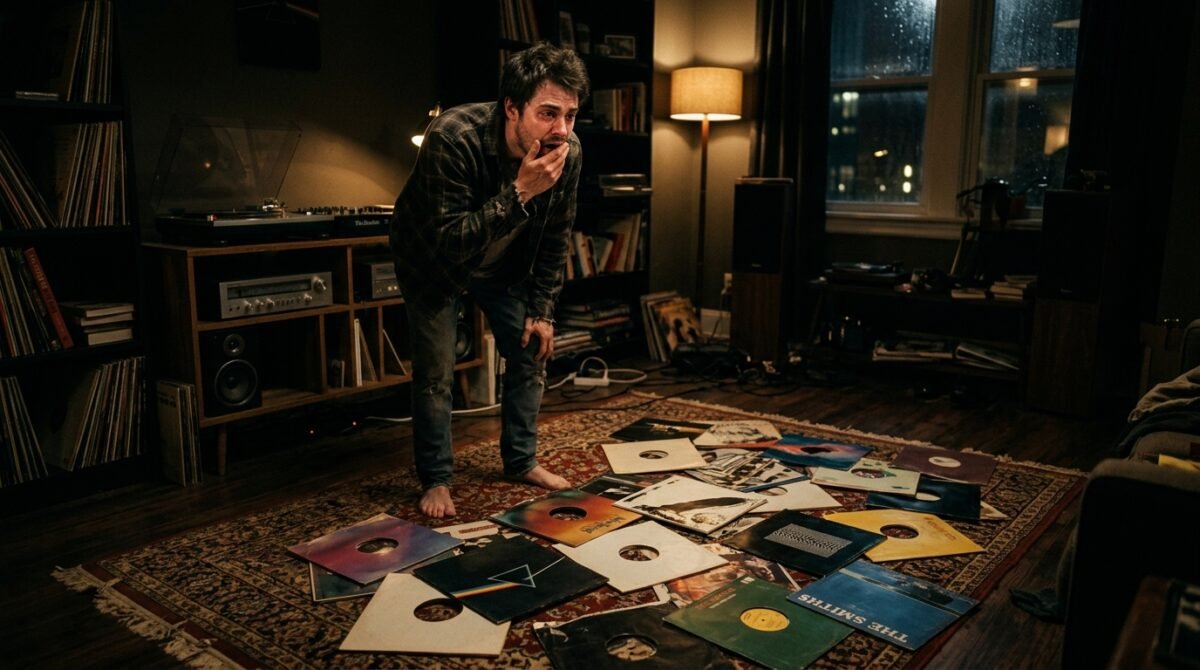
They say you never truly know someone until you live with them. For Sarah and I, that saying was always just a cliché—a warning we laughed about over brunch or during late-night wine sessions. We had been inseparable since kindergarten, surviving everything from awkward middle school haircuts to the crushing heartbreak of our early twenties. When she came to me asking for a place to stay after her apartment lease ended abruptly, I didn’t hesitate. I had a spare room, a stable life, and, most importantly, a collection of vintage vinyl records that I had spent nearly a decade curating with obsessive precision.
My collection wasn’t just a pile of plastic discs; it was a museum of my life’s soundtrack. Some were inherited from my grandfather, others were hunted down in dusty record shops across the country, and several were rare imports that cost more than my monthly car payment. They were tucked away in custom-built mahogany shelves, organized alphabetically and by genre. It was my pride, my investment, and my sanctuary. I trusted Sarah with a key to my house, a spare bedroom, and by extension, my entire world. I never imagined that my sanctuary would become her storefront.
The first sign that something was wrong wasn’t a missing record; it was a shift in energy. Sarah started acting twitchy, spending hours on her laptop in the living room, always clicking away whenever I entered the space. She became overly interested in my collection, asking questions about the value of certain pressings and where I had purchased them. At the time, I attributed her curiosity to her wanting to learn more about my hobbies. I was naive. I was blind to the fact that while I was at work, my best friend was systematically cataloging my assets, preparing to liquidate my history for a quick payout.
This isn’t just a story about a bad roommate. It is a story about the boundaries we draw and the people who cross them, thinking we will never notice. It is a story about the moment you realize that the person who knows your deepest secrets is the same person who would trade your most prized possessions for a few hundred dollars on an internet marketplace. This is what happened when I came home early, expecting a quiet evening, and found my life being auctioned off to the highest bidder.
The Mysterious Digital Storefront

It started with a push notification. I was sitting at my desk at the office, scrolling through a popular collector’s forum that I frequent to keep an eye on market trends. I was looking for a specific 1968 pressing of a jazz album I had been tracking for months. As I refreshed the page, a new listing appeared in the ‘Rare Finds’ section of a popular online auction site. The photo looked eerily familiar. It was a picture of a record sleeve I recognized instantly—not just because I owned the record, but because I knew the specific scratch on the bottom right corner of the jacket.
My heart hammered against my ribs. I clicked on the seller’s profile, ‘VinylSeeker88.’ The bio was generic, but the inventory was a terrifying list of my own collection. There was the first pressing of the Beatles’ White Album I’d bought in London, the limited-edition Bowie box set, and my pristine Miles Davis records. Every single one of them was listed at a ‘Buy It Now’ price that was insultingly low. It was as if she didn’t even know their true value, or perhaps she just wanted them gone as fast as possible to avoid detection.
I felt a cold sweat break out across my forehead. I immediately checked my home security app, the one I used to monitor my cat while I was away. The living room camera showed the storage area, but the angle was blocked by a stack of boxes Sarah had moved earlier that morning. She had claimed she was reorganizing, but now I knew the truth. She was clearing space to photograph my inventory without me catching her in the act. I didn’t even pack my things; I just grabbed my keys and left the office, driving like a maniac toward home.
“I don’t care how you spin this, Sarah. I saw the listing. I saw the photos. I know you’re selling my things behind my back.”
— A text message I sent before arriving home.
The drive home felt like it took an eternity. My mind was racing, cycling through every shared memory, every time I had defended her, and every time she had promised to be there for me. Was the friendship real, or was I just a resource she was waiting to exploit? The betrayal felt physical—a sharp, dull ache in my chest that made it hard to breathe. By the time I pulled into my driveway, my hands were shaking so hard I could barely turn the ignition off.
I walked into the house, fully expecting a confrontation. I found her sitting on my couch, laptop open, scrolling through her account. When she looked up and saw me, the color drained from her face. She didn’t try to hide the screen. She didn’t apologize. She just stared at me, eyes wide with the realization that she had been caught red-handed. The silence in the room was heavy, suffocating, and punctuated only by the sound of my own erratic breathing.
The Excuse of Financial Desperation
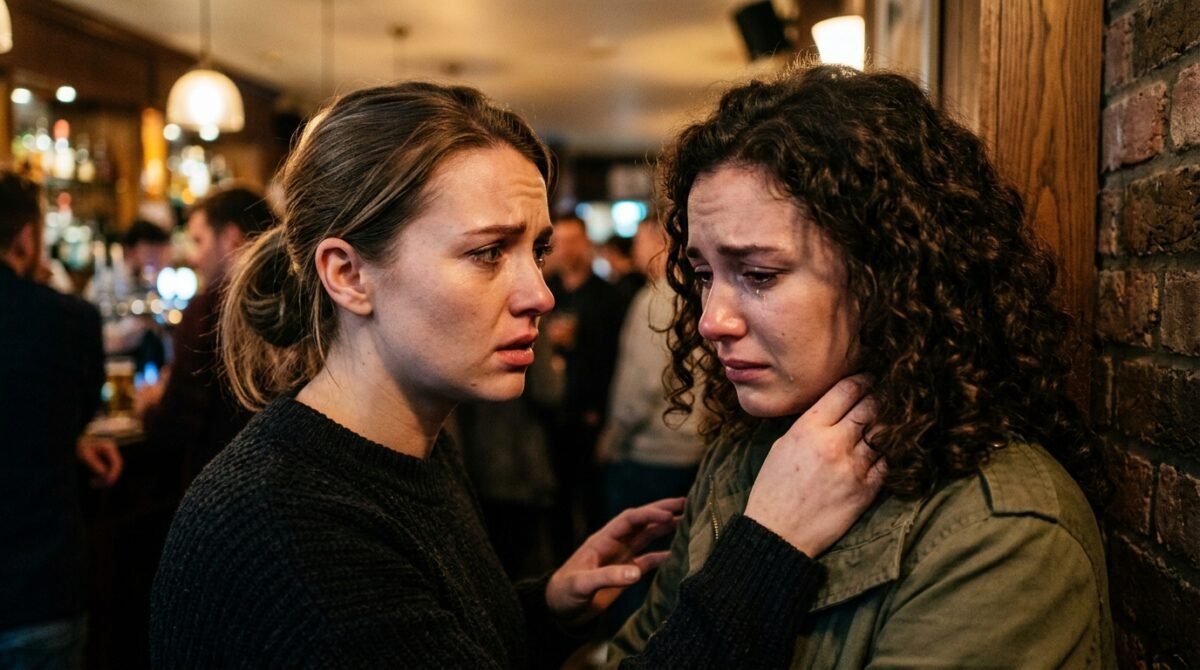
Sarah didn’t deny it. She didn’t even try to lie. She closed the laptop with a snap and looked at me, her expression shifting from panic to a sort of defensive defiance. ‘I needed the money, okay?’ she snapped, as if that simple sentence erased the violation of trust. ‘I’m behind on my credit card payments, and you have so many of these things. You don’t even listen to all of them. I thought you wouldn’t notice if I just took a few.’
Conclusion
The fallout from that day was swift and brutal. I gave Sarah 48 hours to vacate, despite her pleading that she had nowhere else to go. I realized then that my house wasn’t a charity and my collection wasn’t a pawn shop. Setting that boundary was the hardest thing I had ever done, but it was necessary for my own peace of mind.
The Reddit community was split, though the majority stood firmly on my side. Some argued that I should have reported her to the police, while others empathized with the heartbreak of losing a lifelong friend to greed. It served as a stark reminder that even our closest relationships can harbor hidden resentments.
How would you have handled the discovery? Would you have allowed for an explanation, or was the breach of trust too significant to repair? Let us know in the comments below.
What's your verdict on this dilemma?
Vote below to contribute to the official community consensus.

Have a Dilemma Keeping You Up at Night?
Share your real-life feud, wedding chaos, or relationship crossroads anonymously with our editorial team.
What do you think ?
0 Comments🛡️ Comments are moderated to protect community integrity. Your comment will appear once approved by the editorial team.