

We have all been there: the dreaded ‘let’s just split the bill evenly’ moment that occurs at the end of a group dinner. Usually, it is a minor annoyance—an extra five or ten dollars for someone else’s appetizer or a glass of wine you didn’t have. But for me, the incident that occurred last Friday night wasn’t just a minor annoyance. It was a calculated financial ambush that turned a casual birthday celebration into a lesson in setting hard, non-negotiable boundaries.
My friend group, if I can even call them that anymore, has been slowly drifting toward a ‘luxury-at-others-expense’ mentality for months. It started small—suggesting the more expensive brunch spot, ordering the extra round of drinks without asking—but it culminated in a night that left me furious, humiliated, and ultimately, walking out the door with nothing but my integrity and my $18 pasta bill accounted for.
The dilemma isn’t just about the money; it is about the blatant disrespect for personal autonomy and the expectation that my wallet exists to subsidize other people’s ‘main character’ energy. When the server placed that astronomical bill on the table, I knew the trap had been set. The silence that followed when I stood up was deafening, and the aftermath has been nothing short of a social media war.
In this article, I will take you through the anatomy of this disaster—from the initial planning stages in the group chat to the moment the $800 tequila tab was dropped in front of me. This is not just a story about a bad dinner; it is a case study in why you should never, ever feel pressured to pay for a lifestyle you didn’t choose.
The Illusion of a Humble Birthday Celebration

The night began with an invitation in our long-standing group chat, sent by my friend ‘Sarah,’ who was celebrating her 27th birthday. The prompt seemed innocent enough: a casual dinner at a local Italian trattoria known for its affordable pasta and relaxed atmosphere. I checked the menu beforehand, calculated my budget, and prepared for a low-key, fun evening.
I had been saving up for a trip and was strictly sticking to my ‘no-frills’ budget. When I arrived, the atmosphere was already buzzing, but it wasn’t the cozy, quiet vibe I had anticipated. Sarah had invited a ‘plus-one’ I had never met, along with two other friends who were notorious for having champagne tastes on beer budgets. The table, which was originally set for four, had been expanded to accommodate eight people without any prior notice.
As we sat down, the server approached, and before I could even open my menu, Sarah’s new friend was already loudly ordering top-shelf tequila shots for the entire table. The menu prices for these particular spirits were astronomical—easily triple what I would spend on a full dinner. I felt a knot of dread tighten in my stomach, knowing exactly where this was headed.
“Let’s just get a couple of bottles of the premium stuff to start the night right! Don’t worry about the cost, we’re all friends here, right?”
— Sarah’s friend, loudly signaling the start of the spending spree
I tried to interject, suggesting we stick to the house wine or beer, but my comments were drowned out by the excitement of the group. It was clear that the evening had shifted from a casual birthday dinner to an expensive, uncontrolled indulgence. I sat there, nursing my water, feeling like an outsider in my own social circle.
The irony of the situation was that they were all talking about being ‘broke’ just a week prior in the chat. Now, suddenly, money was no object. I watched as three bottles of high-end tequila were ordered, poured, and consumed within the first forty-five minutes of the night. I didn’t touch a single drop.
The Strategic Ordering of the $800 Tequila Tab
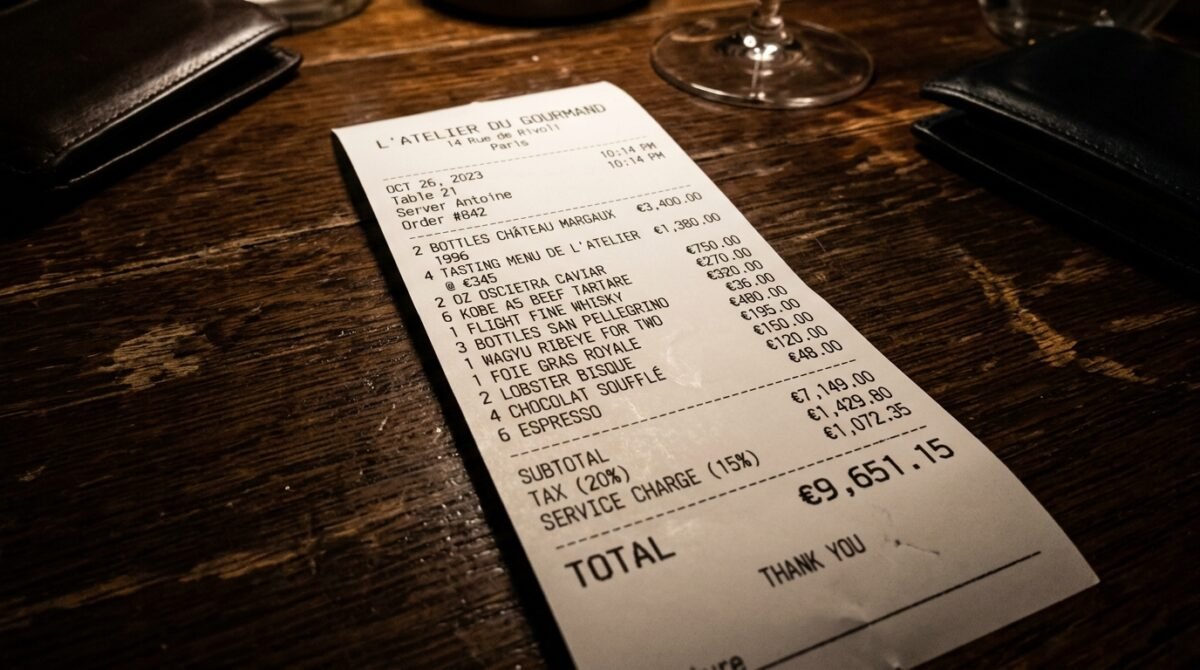
As the night progressed, the reckless spending only intensified. It wasn’t just the tequila; it was the ordering of multiple rounds of appetizers, high-end steaks, and desserts that nobody seemed to be eating. I kept my order simple: a single plate of pasta for $18 and a soda. I watched, horrified, as the bill continued to climb into the stratosphere.
I kept a mental tally on my phone, keeping track of exactly what I had ordered. I knew that when the bill arrived, there would be an expectation for an even split, but I was determined to resist. I had worked too hard that month to subsidize someone else’s ego-driven birthday celebration. I made a point of documenting my own items, checking them off one by one, and preparing my mental script for the inevitable confrontation.
The server, clearly sensing the tension, seemed to be rushing the process. They were brought bottle after bottle, and by the time the main courses were finished, the table looked like a war zone of empty glasses and discarded napkins. The atmosphere had turned from jovial to frantic as everyone began to realize the bill was going to be massive.
“Hey, can we get another round of the Patron? And maybe a few more appetizers? Sarah, you’re the birthday girl, you shouldn’t have to worry about the cost!”
— The group, ignoring the mounting total on the check
I leaned over to Sarah and whispered, ‘I’m only paying for my meal, just so you know.’ She looked at me, confused, and then scoffed, ‘Don’t be that person. We always split everything down the middle. It’s just easier that way.’ That was the moment I knew the conflict was unavoidable. The stage was set for a public confrontation that I was not going to win by being polite.
I spent the rest of the meal in a state of hyper-vigilance, my internal monologue oscillating between wanting to leave early and wanting to stay and hold my ground. The tension at the table was palpable, but I refused to let it influence my decision. My financial boundaries were non-negotiable.
The Moment the Bill Hit the Table

When the server finally dropped the check, the silence at the table was sudden and absolute. The total was over $1,100, largely driven by the excessive alcohol consumption. I watched as people started to look away, suddenly intensely interested in their phones or the decor of the restaurant. The ‘let’s split it evenly’ chorus began immediately.
I waited for the right moment, keeping my composure, and reached into my wallet. I pulled out a twenty-dollar bill and a five-dollar bill for the tip. I placed it firmly on the table, right next to the check. Everyone looked at me, their eyes wide with disbelief. The air in the room seemed to go cold as the realization hit them that I wasn’t playing by their rules.
“What is this?” Sarah asked, her voice tight with suppressed anger. “This is for my pasta and a tip,” I said calmly. “I didn’t order the tequila or the extra appetizers, so I’m not paying for them. There is $25 here, which covers my meal and a generous tip. The rest of you can handle the remainder.”
“You are honestly going to do this? On my birthday? We always split the bill evenly. You’re being incredibly selfish and ruining the mood.”
— Sarah, responding to my refusal to pay the split
The rest of the group started chiming in, calling me ‘cheap’ and ’embarrassing.’ I didn’t flinch. I had done the math, I knew what I owed, and I had no interest in being a martyr for someone else’s financial irresponsibility. I stood up, gathered my jacket, and looked at them one by one.
“This isn’t about being cheap,” I said, my voice steady. “This is about not being expected to pay for things I didn’t consume. If you wanted a group-funded party, you should have communicated that beforehand. I’m going home.” I turned and walked out the door, leaving the cash on the table and the rest of them scrambling to figure out how to cover the massive balance.
The Digital Fallout and the Group Chat Explosion

I had barely made it to my car when my phone started buzzing incessantly. The group chat was already blowing up with insults, accusations, and screenshots of the bill. They were painting me as the villain of the story, the person who ‘abandoned’ their friends on a birthday. I didn’t open the messages immediately; I knew exactly what they would say.
When I finally sat down to read through them, I was struck by the level of entitlement. They weren’t angry that they had to pay more; they were angry that they couldn’t force me to pay for their lifestyle. They were using phrases like ‘we’re a family’ and ‘you’re supposed to support your friends,’ which were just masks for financial coercion.
“I can’t believe you actually walked out. You left us with an $800 tab because of your ‘principles.’ You are dead to this group.”
— A text from the group chat, sent by one of the attendees
I responded once, clearly and concisely, stating my position. I didn’t get into an argument; I didn’t try to defend myself. I just laid out the facts: I didn’t order the alcohol, I didn’t agree to a split, and I paid for what I consumed. After that, I muted the chat and put my phone on Do Not Disturb for the rest of the night.
The fallout was intense. By the next morning, I had been removed from the group, and several people had blocked me on social media. It was strange—the loss of the friendships was painful, but the sense of relief was even stronger. I realized that these weren’t people who valued me; they were people who valued what they could get from me.
The Reddit Trial: How the Community Reacted
I decided to share my story on Reddit, under a throwaway account, just to see if I was actually the one in the wrong. I wasn’t prepared for the sheer volume of support I received. Thousands of people commented, many sharing their own stories of being trapped in similar ‘bill-splitting’ situations.
The consensus was overwhelming: I was in the right. People pointed out that the ‘even split’ is a social construct that is often used to exploit those who are more conscientious about their spending. The Reddit community didn’t hold back in their assessment of my ‘friends,’ calling them manipulative and parasitic.
“NTA. The ‘even split’ rule is only for when everyone orders roughly the same amount. If someone wants to order $800 worth of tequila, they need to pay for it themselves. You handled this exactly right.”
— u/BudgetWarrior, Top Comment (24.3k upvotes)
There were some dissenting voices, of course. Some argued that I should have stayed to resolve the issue, or that I was being ‘confrontational’ by walking out. But even those comments were quickly refuted by others who pointed out that the confrontation began when they decided to force me to pay for their bill.
The discussion turned into a broader conversation about setting boundaries in friendships and how to handle money conversations early. It was incredibly validating to see that I wasn’t just being ‘difficult’—I was standing up for my own financial autonomy in a way that many people wish they had the courage to do.
Analyzing the Financial Anatomy of the Disaster

To better understand why the situation escalated, I broke down the costs. It wasn’t just about the money; it was about the lack of communication. If there had been a conversation about a group dinner with a set budget, I would have opted out or prepared accordingly. But by keeping the financial expectations hidden, they created a trap.
| Item | Individual Cost | The ‘Even Split’ Demand |
|---|---|---|
| Pasta | $18 | $140+ |
| Soda | $4 | $140+ |
| Tequila/Appetizers | $0 | $140+ |
| Total | $22 | $140+ |
The table above illustrates the stark contrast between what I owed and what I was expected to pay. The ‘even split’ would have resulted in me paying nearly seven times the cost of my actual order. This is a classic example of financial exploitation disguised as ‘friendship’ and ‘fun.’
The group was operating under the assumption that I would just accept the burden without question. When I challenged that, the entire house of cards collapsed. They weren’t prepared for a reality check; they were only prepared for me to be an enabler of their behavior.
The Aftermath: Why I Don’t Regret Leaving

It has been a month since that night. I have blocked the core group of people from that dinner, and I have had to distance myself from others who were friends with them. It has been a difficult, lonely month, but it has also been incredibly clarifying. I have realized how much of my energy was going toward maintaining relationships that were essentially one-sided.
I have started doing things I enjoy on my own—going to dinner by myself, spending time with friends who actually respect my financial boundaries, and focusing on my personal growth. I don’t miss the stress of wondering if I am going to be forced to pay for someone else’s lifestyle. I feel lighter, more in control of my own life.
The irony is that I have heard rumors that the friendship group is already starting to fracture. Without me there to blame or to act as the ‘easy’ target, they are turning on each other, arguing over who owes what for the last few outings. It seems that when you don’t have a reliable person to exploit, you have to face the reality of your own spending.
“If they were your friends, they would have respected your budget. If they only value you for your wallet, they weren’t your friends to begin with.”
— A supportive comment from a close friend I reconnected with
Walking out that night was one of the hardest things I have ever done. It felt like I was destroying a part of my social life. But in retrospect, I wasn’t destroying a social life; I was removing a toxic weight that was holding me back from living the life I wanted to live.
Lessons Learned: How to Protect Your Wallet

If there is one thing I have learned from this experience, it is that you have to be upfront and clear about your boundaries from the very beginning. Don’t wait until the bill comes to set a boundary; do it when the plans are being made. If people get upset because you have a budget, that is their problem, not yours.
I have also learned the importance of saying ‘no’ without feeling the need to apologize or explain. You don’t owe anyone a detailed breakdown of your finances or a justification for why you can’t afford an $800 tequila night. ‘That’s outside of my budget’ is a complete sentence.
Moving forward, I am much more careful about who I spend my time with and what kind of activities we engage in. I look for friends who respect my choices and who are willing to have honest, adult conversations about money. I no longer feel the need to conform to group pressure, and I am much happier for it.
For anyone else finding themselves in a similar situation, remember that your money is yours. You earned it, you decide how to spend it, and you should never be ashamed of protecting your financial independence. If someone makes you feel guilty for being responsible, they are not your friend.
The Psychological Burden of Forced Generosity

There is a unique kind of pressure that comes with being the ‘responsible one’ in a group of spenders. It’s not just about the money; it’s about the constant, underlying anxiety that you might be judged or excluded if you don’t play along. This type of social conditioning is incredibly effective at keeping people silent and compliant.
I spent years feeling like I had to ‘keep up’ with the group to be accepted. It was exhausting. I was constantly worried about how much things would cost, whether I could afford them, and how I would navigate the inevitable bill-splitting argument at the end of the night. That kind of stress is not worth it.
When I finally broke the cycle, it felt like a dam had burst. The anger I felt wasn’t just about that one night; it was the accumulation of months of frustration and feeling unheard. I realize now that my friends weren’t just bad with money; they were indifferent to my needs and my perspective.
“You are not responsible for their bad decisions. Stop carrying the weight of their expectations on your shoulders.”
— Advice from a therapist I started seeing after the incident
This experience taught me that I deserve better friends—people who value me for who I am, not what I can contribute to their lifestyle. I have learned to prioritize my own happiness and well-being over the approval of others. And honestly, it is the best decision I have ever made.
Moving Forward: Why Boundaries are Essential

As I look back on the events of that night, I don’t see a failure. I see a pivotal moment of self-empowerment. I set a boundary, I defended it, and I followed through with consequences. It wasn’t easy, and it certainly wasn’t comfortable, but it was necessary.
I am now in a much better place, surrounded by people who respect my boundaries and who would never dream of putting me in a position like that. I am more confident in myself and in my ability to handle difficult social situations. I know that I can stand my ground, and that is a powerful feeling.
I encourage everyone who reads this to take a hard look at their own friendships. Are there people in your life who make you feel guilty for being responsible? Are there situations where you feel pressured to spend money you don’t have? If so, don’t wait for a disaster to change things. Set your boundaries now, communicate them clearly, and don’t be afraid to walk away if they aren’t respected.
Your value is not determined by how much you spend or how much you ‘contribute’ to a group. It is determined by your character, your integrity, and the way you treat yourself and others. Protect your peace, protect your money, and never, ever let anyone make you feel like your needs are less important than their desire to live beyond their means.
Conclusion
The saga of the $800 tequila tab has officially come to an end, and while the friendships didn’t survive, my peace of mind has flourished. This story is a testament to the fact that ‘no’ is a powerful tool. By refusing to participate in a system that valued indulgence over accountability, I reclaimed my autonomy.
It is easy to get caught up in the social pressure of group dynamics, but at the end of the day, you are the only one who has to live with the consequences of your financial decisions. I walked out of that restaurant and into a new chapter of my life where I am the author of my own boundaries.
I want to hear from you: Have you ever been trapped in a situation where you felt pressured to split a bill that was largely out of your control? How did you handle it? Did you stand your ground, or did you give in to the pressure? Let me know in the comments below—I am curious to see how many others have had to navigate these same tricky waters.
What's your verdict on this dilemma?
Vote below to contribute to the official community consensus.

Have a Dilemma Keeping You Up at Night?
Share your real-life feud, wedding chaos, or relationship crossroads anonymously with our editorial team.
What do you think ?
0 Comments🛡️ Comments are moderated to protect community integrity. Your comment will appear once approved by the editorial team.