
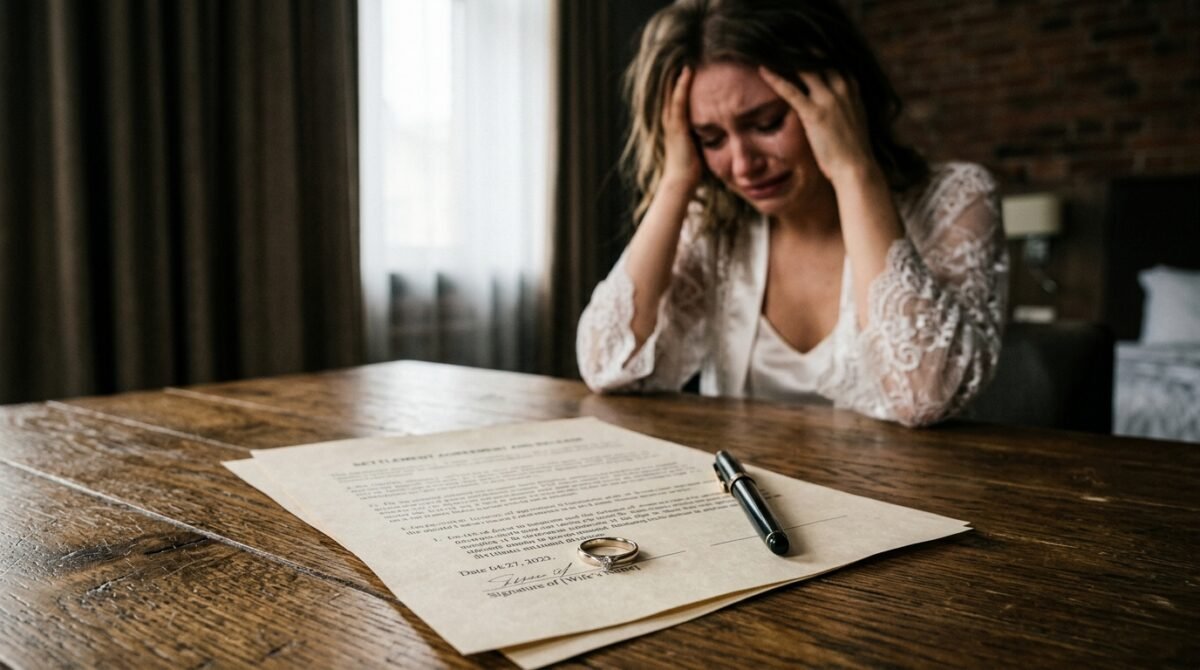
When I inherited my childhood home from my grandmother, I thought I had been handed the greatest gift of security a person could ask for. It was a sturdy, three-bedroom Victorian that had seen three generations grow up within its walls. There was no mortgage, no debt, and no strings attached. I met Mark three years later, and for a long time, he seemed like the partner I had always dreamed of—grounded, ambitious, and seemingly supportive of the life I had built for myself.
The trouble began subtly. It started with comments about how ‘we’ should renovate the kitchen, or how ‘our’ future would look better if the property were held under a joint trust. I brushed it off as him wanting to feel like he was contributing to a household that wasn’t legally his. I was wrong. The narrative shifted from helpful suggestions to cold, hard demands as our wedding date approached.
Two weeks before the ceremony, the conversation stopped being about paint swatches and catering menus. It became a standoff. Mark told me, with a straight face, that he wouldn’t sign the marriage license or walk down the aisle unless I added his name to the deed of my house. He called it ‘an act of faith.’ I called it financial coercion. The wedding was supposed to be a celebration of love, but it quickly devolved into a high-stakes negotiation where my family legacy was the primary bargaining chip.
This story isn’t just about a house. It is about the moment I realized the man I was going to marry didn’t value me—he valued the equity sitting in my living room. As I sat at my kitchen table, staring at a stack of legal forms he had printed off the internet, I realized the man I had been sleeping next to was a stranger. The foundation of our relationship, which I believed was built on mutual respect, was actually built on a ticking clock of entitlement.
In the following sections, I will break down how this ultimatum unfolded, the way it shattered my family’s trust, and the gut-wrenching decision I had to make in the final hours before the guests were scheduled to arrive. This is not just a personal struggle; it is a warning about the hidden agendas that can exist in even the most ‘perfect’ relationships.
The Tuesday Night Kitchen Table Ambush
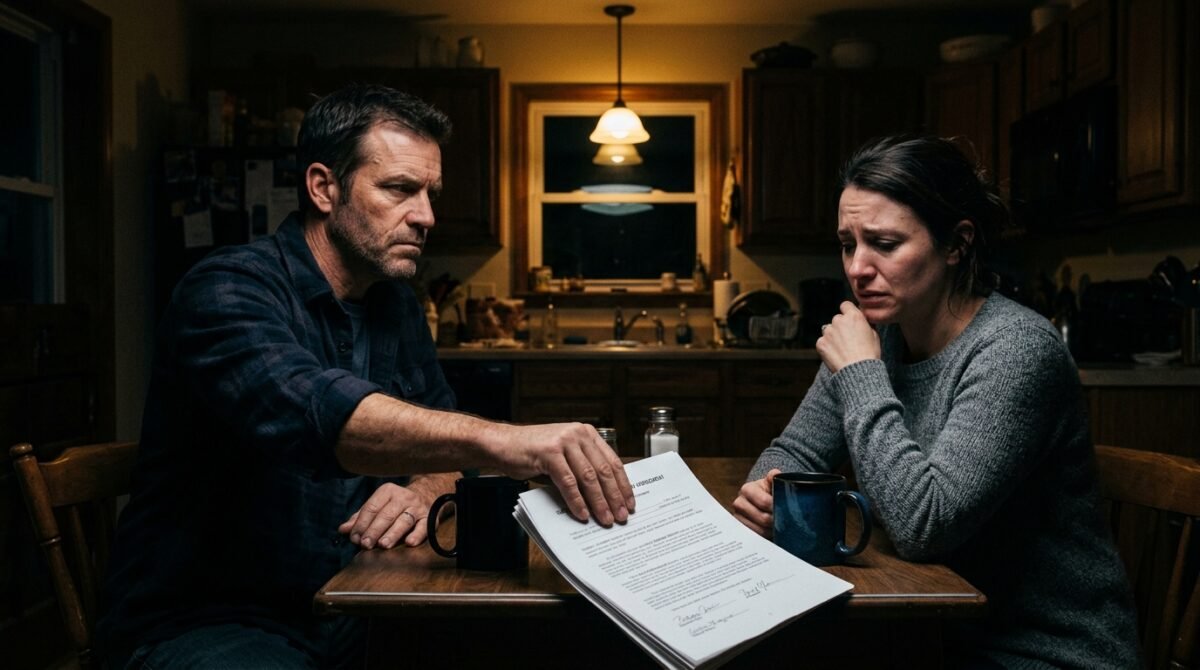
It started on a rainy Tuesday. I came home from work expecting a quiet dinner, only to find Mark sitting at the kitchen table with a glass of scotch and a manila folder. He didn’t look up when I walked in. He just pushed the folder across the table toward me. It was a Quitclaim Deed. I remember the sound of the rain hitting the window—it felt deafeningly loud in the silence he had created.
I asked him what it was, already having a sick feeling in my stomach. He didn’t blink. He told me that if we were going to build a life together, we needed to be ‘equal partners in every sense.’ He claimed that he felt like a guest in my home, despite the fact that he hadn’t paid a dime toward the property tax or upkeep in the two years he had lived there. The logic was so twisted I almost laughed.
“If you truly trust me and see us as a unit, why is this house still solely in your name? It feels like you’re waiting for me to fail. If we are getting married, this is our home, not yours. Put my name on the deed, or don’t expect me to be there on Saturday.”
— Mark, during the ultimatum
I told him that the house was a family heirloom, left to me by my grandmother to ensure I would always have a roof over my head. I explained that it had nothing to do with him and everything to do with my history. He dismissed my emotional connection to the property as ‘sentimental clutter’ and insisted that in a marriage, everything must be consolidated.
I felt a cold chill run down my spine. The way he spoke about the home—as if it were just an asset to be liquidated or leveraged—showed me a side of him I hadn’t seen before. He wasn’t talking about building a life; he was talking about securing an exit strategy. The power dynamic shifted in that moment from partnership to something much more predatory.
I spent the rest of the night in the guest room, listening to the house settle, wondering if the walls I loved were suddenly becoming a cage. I had put so much work into the renovations, paying for them with my own savings, and now it was being treated like a spoils of war. I realized then that the man sitting in my kitchen wasn’t looking for a wife; he was looking for a co-signer.
The Group Chat Exposure
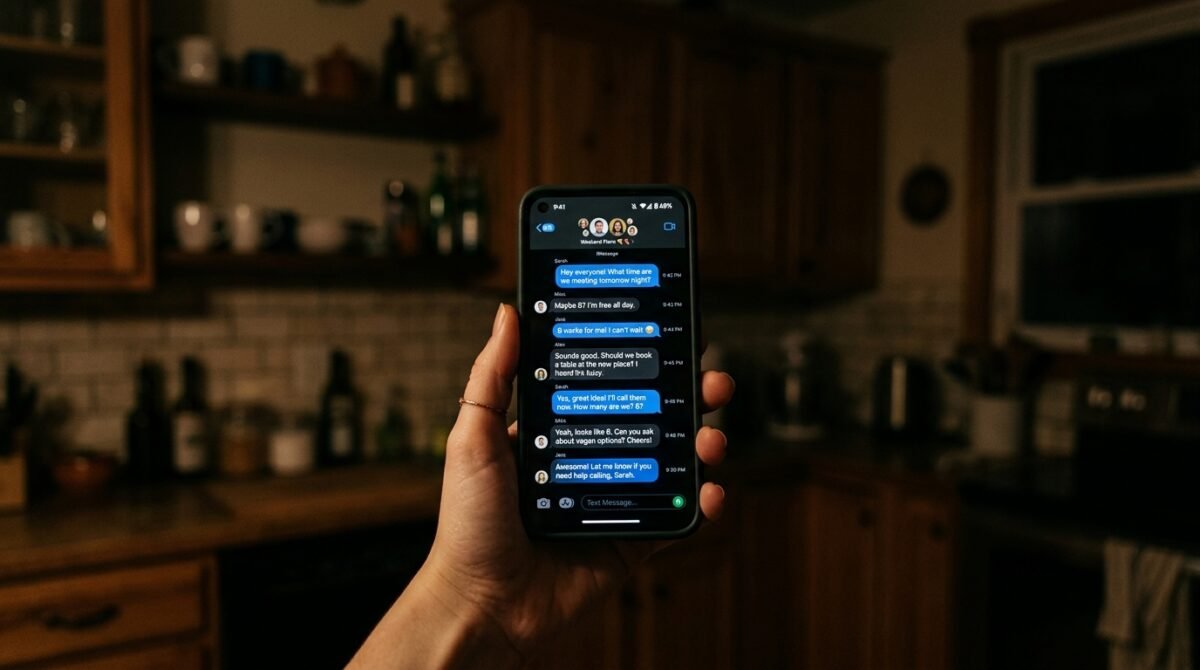
The next morning, I made a mistake—or perhaps, it was the best mistake I ever made. Mark left his phone on the charger in the kitchen while he went for a run. I heard a notification, then another, then a barrage. It was a group chat titled ‘The Big Score.’ I knew I shouldn’t have looked, but my intuition screamed at me. I opened it.
The participants were Mark and his two best friends. They were discussing the ‘house situation’ with a level of detachment that made me physically ill. They were betting on whether or not I would cave. One of his friends had suggested that if I refused, he should just marry me anyway and file for a partition action later. They were calculating the equity of my home like vultures circling a carcass.
“Just play the long game. Once that ring is on her finger, it’s community property in the eyes of the law anyway. She’s too soft to fight it. You’ll be living in a half-million-dollar house for free by next year.”
— ‘Steve’ via Group Chat
I felt the color drain from my face. The betrayal was so visceral that I had to sit down on the floor to keep from fainting. Every memory of our ‘loving’ moments over the last two years was being recontextualized. Was he ever really in love, or was he just waiting for the right moment to secure his financial future at my expense?
I took screenshots of the entire thread. My hands were shaking so badly I could barely hold the phone. I knew I couldn’t confront him yet. I needed to see how far this went. I realized that the man I was supposed to marry in four days was a calculated manipulator who had been playing me for a fool the entire time.
The realization was a turning point. The sadness I had felt the night before was replaced by a cold, hard clarity. I wasn’t losing a husband; I was dodging a bullet. But I still had to figure out how to navigate the next few days without him knowing I had seen his true face. I needed to protect my home, my peace, and my future.
The Sunday Dinner Silence
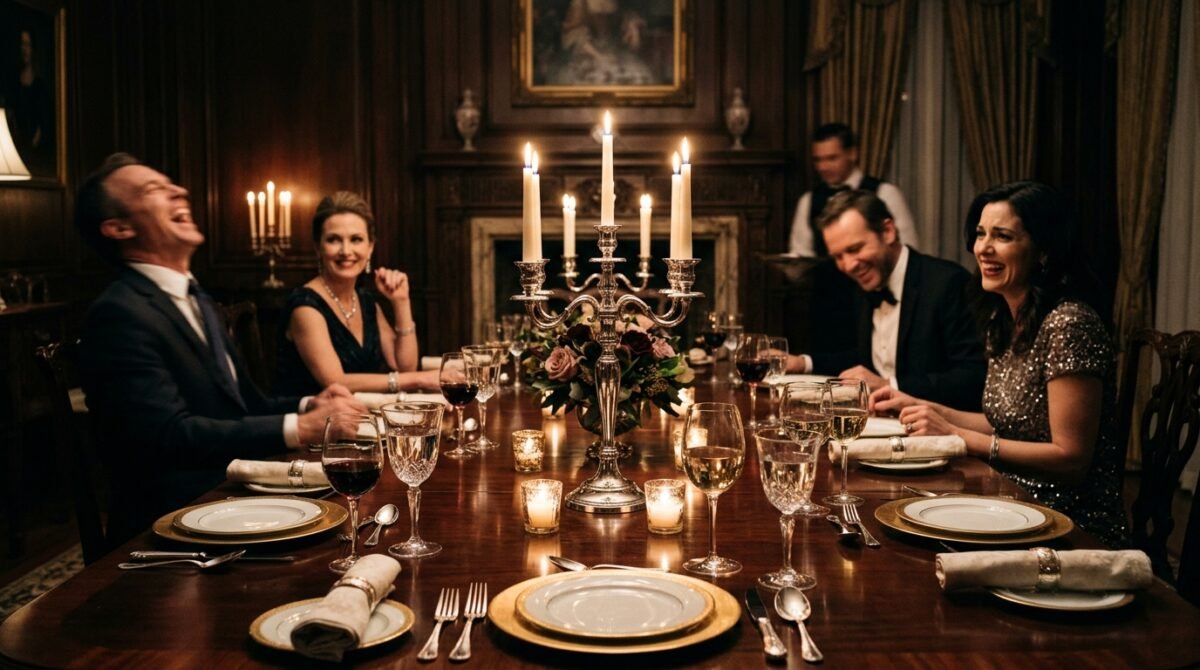
My mother hosted a pre-wedding dinner that Sunday, and the tension in the room was palpable. I didn’t say a word about the deed, but I watched Mark closely. He was charming, laughing with my father, and acting like the perfect future son-in-law. It was a performance that would have won an Oscar. Every time he touched my arm, I felt like my skin was crawling.
My mother pulled me into the kitchen to check on the roast. She asked me if everything was okay, noting that I looked ‘distracted.’ I wanted to tell her everything, but I couldn’t bring myself to ruin her mood before the wedding. I just told her I was stressed about the last-minute details. She hugged me, unaware that the person sitting in the living room was actively plotting to take the very roof over her head.
“You two look so happy. I’m just so glad you found someone who appreciates you as much as Mark does. He’s a good man, honey. Treasure him.”
— My mother, at the dinner table
Hearing my mother speak those words felt like a knife in my side. She had no idea that ‘good man’ was planning to take everything she had helped me maintain. I realized that my silence was becoming a burden. I was protecting his reputation at the cost of my own sanity. I decided then and there that the wedding was not happening.
I watched Mark help my father pour wine, and I wondered if he felt any guilt at all. Probably not. To him, this was just business. The irony wasn’t lost on me; he wanted to be ‘equal’ in the marriage, yet he was keeping secrets that would have ended the relationship before it even began. I stood in the kitchen and listened to the laughter in the other room, realizing how quickly things were about to change.
That night, I started moving my important documents into a fireproof safe at a friend’s house. I was already preparing for the fallout. I knew that once I pulled the plug, the mask would drop, and the man I once loved would turn into someone else entirely. I had to be ready for the storm.
The Breaking Point at 2:00 AM
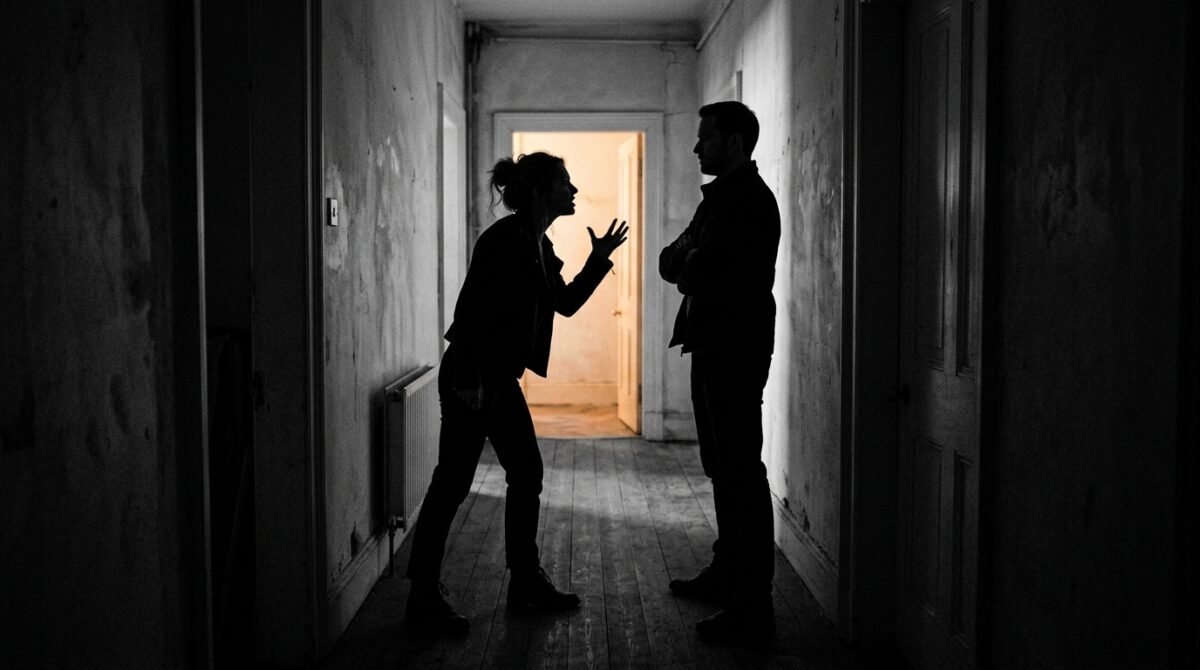
I woke up at 2:00 AM to find the bedroom empty. Mark wasn’t in bed. I walked out into the living room and found him on the phone, his voice hushed but agitated. He was talking to his brother about the ‘investment.’ He was already planning what he would do with the money if he could convince me to sell the house in a few years. My heart didn’t even race anymore; it was just cold.
I walked into the room, and he hung up abruptly. He didn’t even look guilty. He just looked annoyed that I had caught him. He asked me if I had thought about the deed. He wanted an answer, and he wanted it right then. He told me that he needed ‘security’ to feel like he was fully committed to the marriage.
“I just need to know that if we build a life here, I’m not going to be kicked to the curb. Is that really too much to ask? Put my name on the deed, and we can go back to being happy. This is the only thing standing between us and the rest of our lives.”
— Mark, during the 2:00 AM confrontation
I looked at him and finally saw him for what he was: a man who saw marriage as a transaction. I told him, as calmly as I could, that he was right—there was a barrier between us. But it wasn’t the house. It was the fact that he didn’t trust me, and I certainly didn’t trust him. I told him he would never be on the deed, not now, and not ever.
The air in the room shifted. His face turned dark, a look of pure, unadulterated entitlement washing over him. He started yelling, his voice echoing off the walls of the house he was so desperate to own. He accused me of being selfish, of holding ‘my’ money and ‘my’ property over his head. He tried to gaslight me, telling me that I was the one who was being unreasonable.
I didn’t argue back. I just listened to him spew his vitriol, realizing that the more he spoke, the more I was relieved. Each word he shouted was another reason to call off the wedding. By the time he stopped, he was breathless, waiting for me to apologize. I didn’t. I just told him to sleep on the couch and that we would talk about the wedding in the morning.
The Morning of the Cancellation

The morning of the wedding arrived with a bright, mocking sun. I didn’t sleep a wink. I had already made my calls. I had notified the venue, the caterer, and the florist. The hardest call was to my mother, but I knew she would understand once she knew the truth. When I told her about the deed and the group chat, her reaction wasn’t shock—it was protective rage.
Mark came into the room, dressed in his pajamas, looking like he expected me to have changed my mind. He asked me if I had called the officiant to confirm. I looked at him and told him that there wouldn’t be an officiant. There wouldn’t be a wedding. There wouldn’t even be a ‘us’ anymore. He stood there, stunned, for a full minute before he started laughing—a dry, humorless sound.
“You’re really going to throw away three years because of a piece of paper? You’re acting like a child. You’ll regret this. You’ll be alone in this big, empty house, and you’ll realize that your pride was worth nothing.”
— Mark, during our final argument
I didn’t flinch. I told him to pack his bags and get out by noon. He tried to argue, claiming he had ‘rights’ because he lived here, but I had already consulted with a lawyer friend who assured me that without a lease or any financial contribution, he was essentially a guest. I had the locks changed while he was out ‘clearing his head’ an hour later.
The physical act of watching him pack was strange. He took the things he had bought—the blender, the coffee maker—but he lingered by the fireplace, touching the mantle, looking at the house as if he could still possess it by force of will. He didn’t even look at me when he walked out the door. He just slammed it hard enough to rattle the pictures on the wall.
I stood in the center of my living room after he left, surrounded by the silence. It wasn’t the lonely silence I feared. It was the silence of freedom. I had saved my home, my peace, and my future. I knew there would be fallout, and I knew there would be questions, but for the first time in years, the house felt like mine again. Every room was suddenly filled with air.
Reddit Weighs In: The Community Verdict
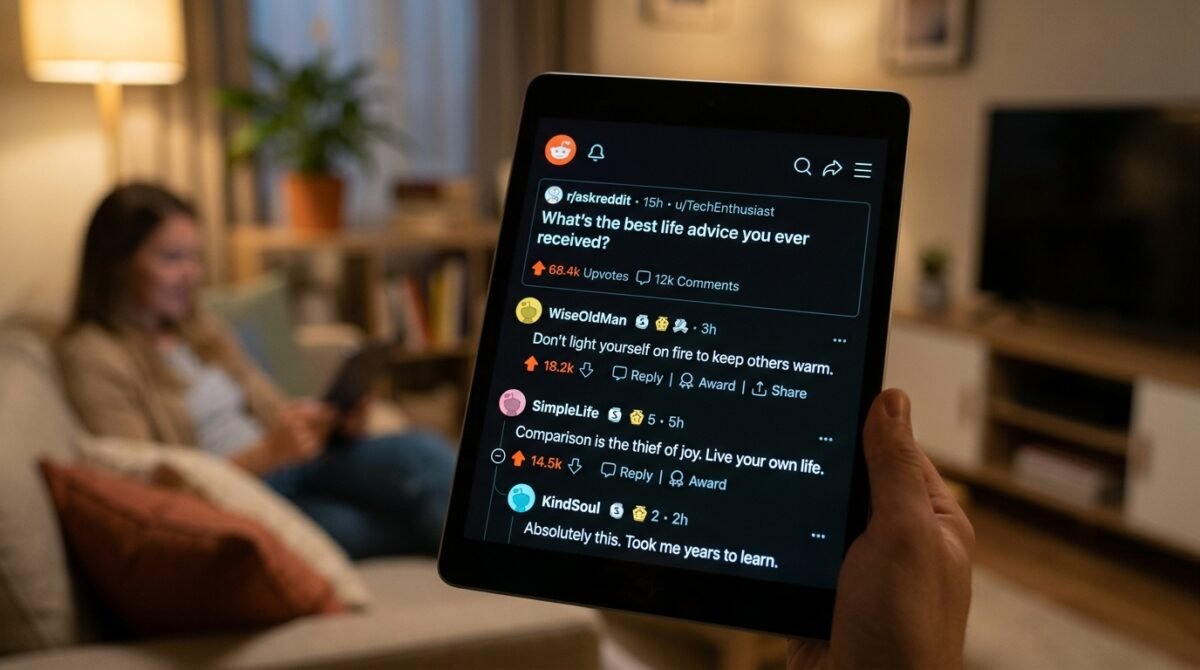
I decided to share my story anonymously on a popular subreddit shortly after the breakup, needing to know if I was actually the villain in this story, as Mark had tried to convince me. The response was immediate and overwhelming. Thousands of people reached out, sharing similar stories of financial abuse and gaslighting, and the validation was something I hadn’t expected.
“OP, you dodged a bullet the size of a cannonball. A man who demands half your inheritance before the ring is even fully settled is not looking for a life partner, he’s looking for a retirement plan. You did the right thing. Don’t look back.”
— u/RelationshipGuru (45.2k upvotes)
“The group chat is the smoking gun here. He didn’t just want ‘security,’ he wanted to strip-mine your life. That he had his friends in on it proves it wasn’t just a moment of stupidity; it was a planned strategy. Block him, delete him, and never speak to him again.”
— u/LegalEagle99 (32.1k upvotes)
Reading these comments helped me process the trauma. It wasn’t just ‘me’ being difficult. There were clear red flags that I had ignored because I was blinded by the idea of ‘happily ever after.’ The community analysis made me realize that financial abuse is a real, often invisible, form of control. People pointed out that had I given in, I would have lost not just half the house, but my autonomy over my own life.
The thread became a rallying point for others who had been in similar situations, with people sharing advice on how to protect assets, the importance of prenuptial agreements, and the necessity of keeping finances separate until trust is truly earned. It turned into a resource for others to identify the subtle signs of manipulation before it reached the level of ultimatums.
Some commenters were even skeptical, asking if I had been too harsh, but those voices were quickly drowned out by others who had lived through the fallout of giving in to such demands. It made me realize that my story, while painful, had become a cautionary tale that helped others realize they deserved to feel safe in their own homes.
The Aftermath and Legal Reality
The weeks following the breakup were not easy. Mark tried to reach out multiple times, alternating between apologies and threats. He tried to claim he was owed money for ‘renovations’ he had done, but I had receipts for everything—every contractor, every material, every cent. When I sent him a breakdown of the costs compared to the ‘rent’ he hadn’t paid, the legal threats dried up pretty quickly.
I also had to deal with our mutual friends. Some took his side, buying into his version of the story where I was the ‘cold-hearted property hoarder.’ I let those people go. If they couldn’t see the toxicity of his demand, they weren’t people I wanted in my life anyway. I found out later that he was trying to spin the story to make himself look like the victim of an ‘irrational bride,’ but the truth has a way of surfacing.
I invested in a security system and a lawyer, just in case. My lawyer was incredible, helping me understand that my grandmother’s house was protected by a trust, and that no amount of ‘marriage’ would have automatically transferred ownership unless I had explicitly signed it over. I felt so foolish for having been scared, but I also felt empowered by the knowledge I gained.
My father came over one afternoon, and we sat on the porch. He told me he was proud of me. He said he had always been worried about Mark, but he didn’t want to overstep. He told me that my grandmother would have been furious if I had given that house away to a man who didn’t respect the history behind it. That brought me more peace than anything else.
I started focusing on myself. I took up gardening, filling the backyard with the flowers my grandmother loved. I realized that for years, I had been living for someone else’s expectations. Now, I was living for my own. The house started to feel like a home again, not a battlefield.
Reflecting on the Red Flags
Looking back, I see the red flags so clearly now. It wasn’t just the house. It was the way he would get angry if I spent money on myself, even though it was my money. It was the way he tried to isolate me from my family under the guise of ‘us-time.’ It was the way he made me feel guilty for having success while he struggled with his own career.
He was a master of the ‘slow fade,’ gradually wearing down my boundaries until I was so exhausted that I would agree to things I never would have considered before. The ultimatum about the house was the final step in a long process of erosion. He didn’t just want my house; he wanted my identity.
“The most dangerous people are the ones who make you feel like you owe them something for existing in your life. If they can’t be happy for your success, they are waiting for you to fail so they can take over.”
— My therapist, during our follow-up session
I learned that boundaries are not meant to keep people out—they are meant to keep the right things in. My home was a boundary. My financial independence was a boundary. By defending them, I wasn’t being ‘difficult’ or ‘selfish’; I was being a guardian of my own future. I learned to trust my gut again, and to never apologize for having things that are rightfully mine.
I also realized that love is not a negotiation. You shouldn’t have to trade pieces of your life, your legacy, or your security to prove you are committed to someone. True partnership is about building together, not taking apart what someone else has built. I now know that if someone is asking for a ‘sacrifice’ that feels like a violation, it probably is.
The experience changed me, but not for the worse. I am more guarded, sure, but I am also more authentic. I don’t feel the need to please people at the expense of my own comfort. I have reclaimed my space, and I have reclaimed my voice. I am no longer waiting for permission to be myself.
The Value of Inheritance and Legacy
My grandmother’s house was more than just wood and stone. It was a testament to her life, her struggles, and her sacrifices. She worked two jobs for twenty years to pay off that mortgage. She taught me the value of work, and she taught me that when you have something of your own, you hold onto it with both hands.
Giving that up for a man I had known for only a few years would have been a betrayal of her memory. I see now that Mark’s disdain for my attachment to the house was actually a disdain for the history I shared with my family. He wanted me to be a blank slate, someone he could mold and control. He didn’t want to be a part of my family; he wanted to replace it.
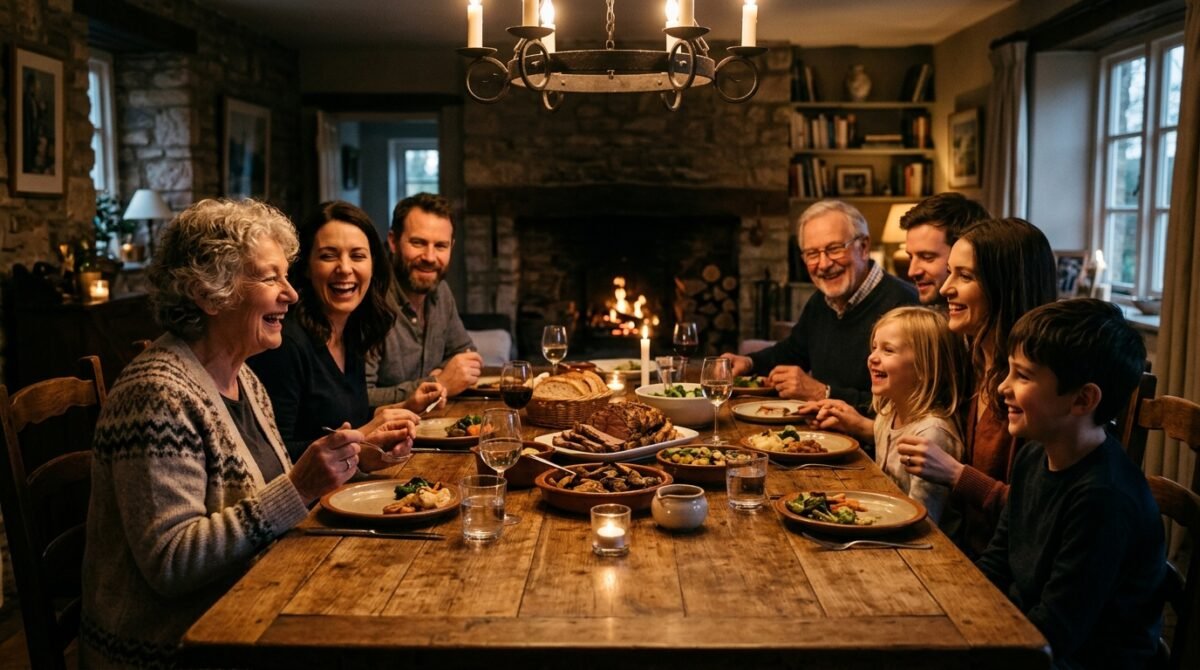
I’ve started a tradition of my own now. Once a month, I have my family over for Sunday dinner. We use the same table my grandmother used. We talk, we laugh, and we enjoy the space she left for us. It’s a way of honoring her, and a way of reminding myself that the house belongs to us—my family, my heritage, and my history.
The house is full again, but it’s full of love, not expectations. I don’t worry about who is paying for the groceries or who is taking out the trash. We do it because we want to, because we care about each other. It’s a simple life, but it’s a life I earned. It’s a life I own.
I have also started looking into putting the house into a family trust, ensuring that it stays in the family for the next generation. It’s my way of making sure that no matter what happens in my life, the house will remain a sanctuary. It’s a small step, but it’s an important one. I’m securing my future, and I’m honoring my past.
Lessons Learned in the Fire

I think often about what would have happened if I had just signed the papers. I would be living in a marriage where I felt constantly under pressure, where my assets were being drained, and where I would always be wondering if he was waiting for the next ‘opportunity’ to take more. I would have lost my peace, my sleep, and my sense of self.
The fire of this experience burned away a lot of the insecurities I had. I don’t fear being alone anymore. I realized that being alone is infinitely better than being with someone who makes you feel like you have to defend your existence. I’ve learned to appreciate the quiet moments, the ones where I can sit in my living room and breathe without feeling like I’m being watched or measured.
I also learned the importance of talking about finances early. It’s not ‘unromantic.’ It’s essential. If you can’t talk about money with your partner, you aren’t ready to build a life with them. It’s the foundation of everything. I will never be ashamed of having a conversation about assets again. It’s not about greed; it’s about clarity.
I hope that if anyone is reading this and finds themselves in a similar situation, they know they have options. You don’t have to settle for someone who doesn’t respect your boundaries. You don’t have to give up your life to make someone else happy. You are worth more than any house, any ring, or any wedding. You are a person, not a property.
I’m finally at a place where I can look back on the whole saga with a sense of perspective. It wasn’t a tragedy; it was a transition. It was the moment I stopped being a victim and started being the owner of my own life. And honestly? I wouldn’t trade that feeling for anything in the world.
Conclusion
Looking back, the entire experience feels like a surreal dream—a nightmare from which I finally woke up. The house remains standing, exactly where it was, but it feels lighter, filled with a new sense of purpose and genuine joy. I learned that the most important commitment you can make is not to a partner, but to yourself. If you cannot stand on your own two feet, you can never truly stand with someone else.
I’ve walked away with my home, my pride, and a newfound clarity about what love should actually look like. It isn’t a power struggle. It isn’t a series of ultimatums. It’s mutual respect, shared values, and a genuine desire to see the other person flourish without taking anything from them. If you’re currently facing a situation where your boundaries are being tested by someone who claims to love you, listen to that voice inside you. It’s the most honest friend you will ever have.
I am curious to hear your thoughts on this. Have you ever had to walk away from someone because your values—or your assets—were being compromised? How did you handle the pressure, and what advice would you give to someone just starting their journey toward independence? Let’s talk about it in the comments below.
What's your verdict on this dilemma?
Vote below to contribute to the official community consensus.

Have a Dilemma Keeping You Up at Night?
Share your real-life feud, wedding chaos, or relationship crossroads anonymously with our editorial team.
What do you think ?
0 Comments🛡️ Comments are moderated to protect community integrity. Your comment will appear once approved by the editorial team.