
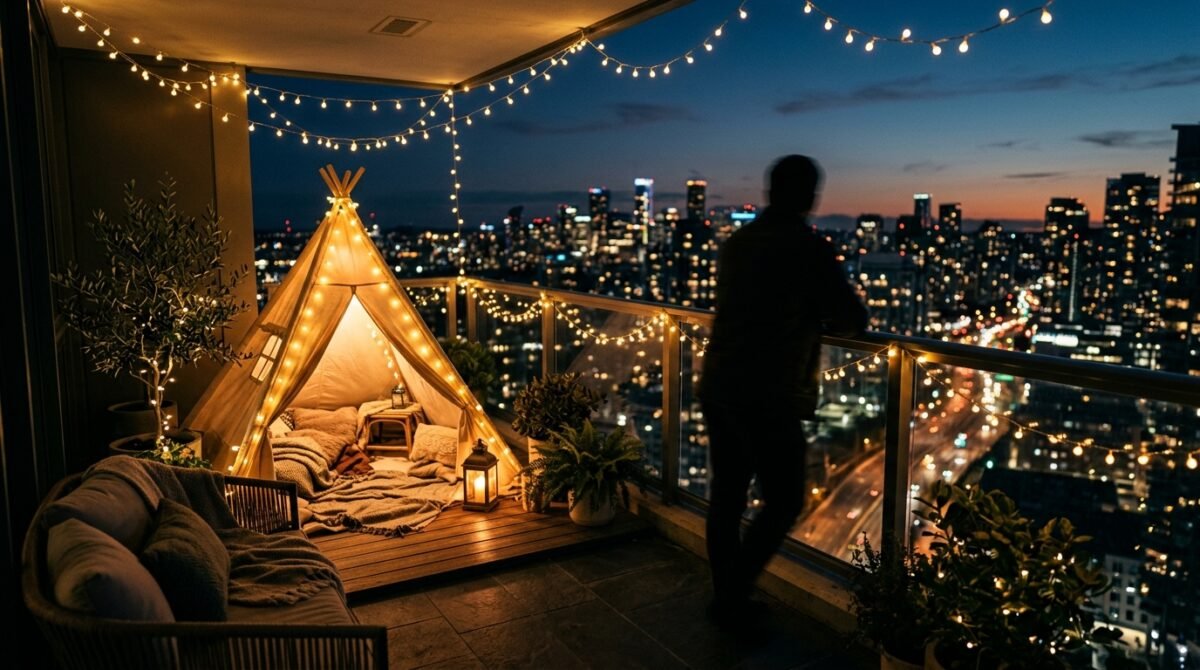
Living in the heart of the city, space is a commodity more precious than gold. When I signed the lease on my two-bedroom loft with Mark, I thought I had struck the perfect balance. We were both professionals, we kept to ourselves, and the balcony—a sprawling, sunset-facing sanctuary—was the crown jewel of our unit. It was the place where I had my morning coffee and where we occasionally hosted quiet drinks. Or, so I thought.
For five months, I lived in a state of mild confusion. I kept finding strange water bottles left on the outdoor table, or the distinct scent of a different brand of incense lingering in the air when I returned from work. I blamed the wind, or perhaps the neighbors, or even my own lapse in memory. Mark was always so accommodating, always insisting that he had just ‘been out there reading’ or ‘had a friend over for a quick beer.’ I trusted him. That was my first mistake.
The realization didn’t come with a bang, but with a notification. A friend of mine, browsing Airbnb for a last-minute city getaway, sent me a link to a ‘Hidden Gem Urban Glamping Spot’ that looked suspiciously like my own living room window. When I clicked the link, my heart stopped. There, in high-definition photos, was my balcony—decked out with a pop-up tent, fairy lights, and a plush rug I had never seen before—being rented out for $150 a night.
The audacity wasn’t just in the money he was making; it was the violation of my home, my security, and my privacy. He had been letting strangers into our secure building, giving them keys to our shared space, and profiting off the lease I was technically the primary signer for. What followed was a whirlwind of legal filings, a complete collapse of our friendship, and a lesson in why you should never, under any circumstances, ignore the strange smells in your own home.
The Five-Star Review That Blew His Cover
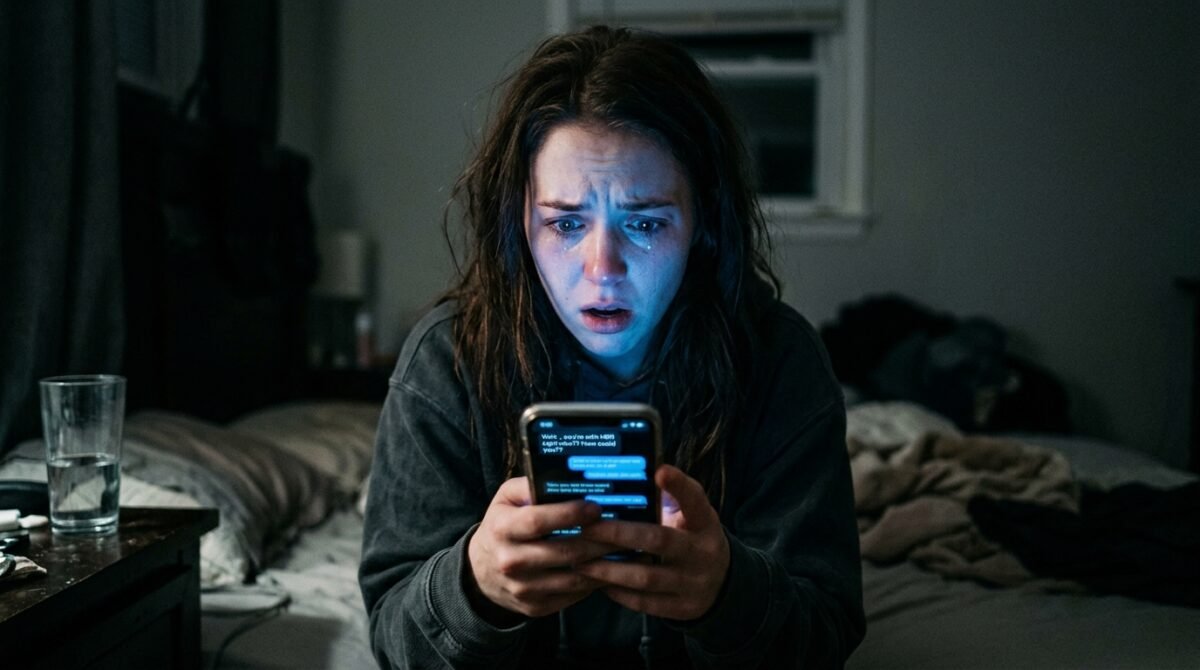
It started as a typical Tuesday evening. I was scrolling through my phone while waiting for my dinner delivery, idly chatting with Sarah, a friend who was planning a weekend trip to the city. She sent me a link to a listing she found on Airbnb, joking that the photos looked surprisingly like my building. I opened the link, expecting to see a standard apartment, but what I saw nearly sent me into a full-blown panic attack.
The listing was titled ‘Luxury Urban Oasis with Skyline View.’ The lead photo was a wide shot of my balcony, but it had been transformed. There was a luxury canvas tent, a selection of artisanal throw pillows, and a small cafe table that definitely didn’t belong to me. As I scrolled through the photos, I saw pictures of the ‘shared’ living room, with a note about ‘friendly, quiet roommates’ who were rarely home. I felt a cold wave of nausea wash over me.
I immediately called Mark, but he didn’t pick up. I then checked his social media, only to find a suspiciously long ‘work trip’ that had been keeping him away from home for exactly the duration of the listing’s activity. He hadn’t been on a business trip at all. He had been off-site, likely at his girlfriend’s place, while strangers occupied our home.
“Hey, I just saw your Airbnb listing. You have exactly one hour to explain why you are subletting our balcony and my living room to strangers before I call the landlord and the police. Do not lie to me.”
— Sent via iMessage, 7:14 PM
The silence that followed that text was deafening. My hands were shaking so hard I could barely type. I took screenshots of every single review, every calendar booking, and every photo of our personal belongings being used as props. The host profile, under the alias ‘Marcus M,’ had been active for five months. He had hosted over 40 guests. The sheer scale of it was staggering.
When he finally replied, the gaslighting began instantly. He acted like I was overreacting, claiming it was just a ‘side hustle’ to help with the rising cost of utilities. He didn’t seem to grasp—or didn’t care—that he had put me in legal jeopardy with our landlord, violated our lease agreement, and compromised our physical security. His nonchalance was the final straw in a friendship that had already been fraying at the edges.
The Confrontation in the Living Room
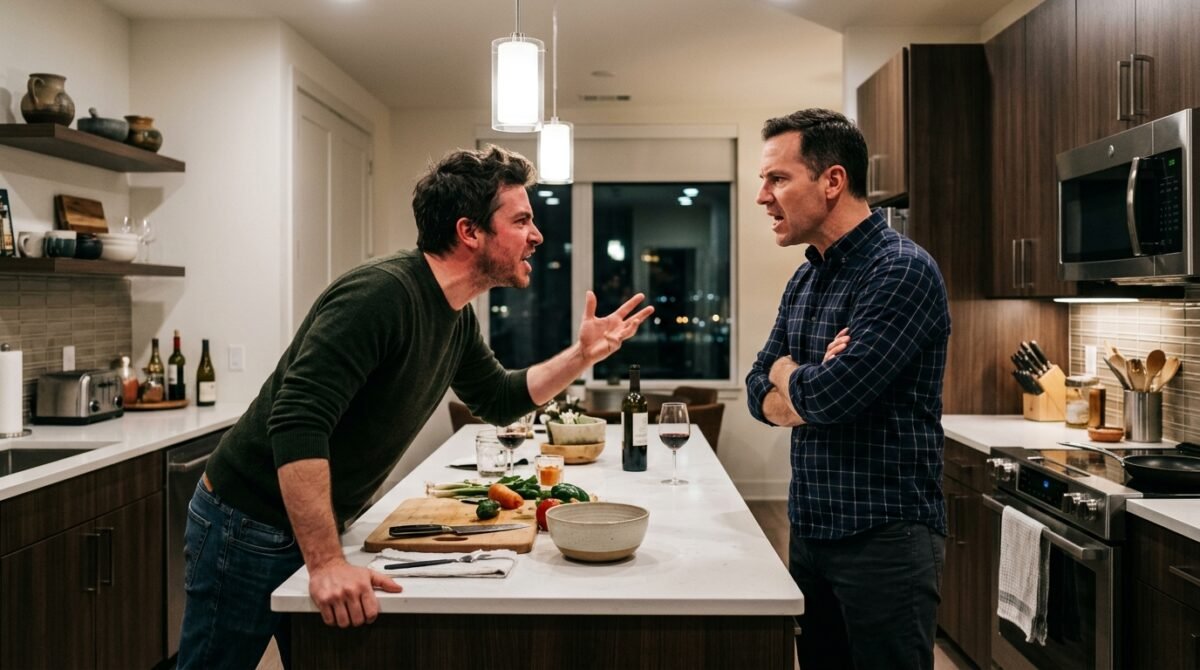
When Mark finally walked through the front door, he didn’t look remorseful. He looked annoyed. He dropped his keys on the counter with a clatter that echoed in the quiet apartment. I was sitting at the kitchen island with my laptop open, the Airbnb page still loaded on the screen. He didn’t even look at me at first, just headed straight for the fridge to grab a soda.
“You’re really going to make a scene about this, aren’t you?” he asked, his voice dripping with condescension. “It’s a balcony, man. It’s not like they were sleeping in my bed. I was making an extra two grand a month, which helped pay the internet and the cleaning service. Why are you acting like I committed a crime?”
I stood up, my voice surprisingly steady given the adrenaline coursing through my veins. “You didn’t ask. You didn’t tell me. You gave strangers access to our secure building. You lied to my face every time I asked why there were people in the hallway or why the house smelled like someone else’s perfume. You used our home for profit without my consent. That isn’t a side hustle; that’s exploitation.”
“You think this is just about the money? You violated the trust of this household. You put my name on a lease that could be terminated today because of your greed. Pack your stuff. You’re done here.”
— My response during the argument
He laughed, a sharp, bitter sound. “You think you can just kick me out? I’m on the lease, too. If you want me gone, you’re going to have to do a lot more than just shout at me. Besides, where would I even go on this short notice? You’re being incredibly selfish.”
The argument escalated quickly. I pointed out that the lease had a strict ‘no subletting’ clause and that any damage caused by his ‘guests’ would fall on both of us. He countered by saying he had ‘vetted’ everyone personally, as if that somehow mitigated the fact that he was breaking the law. It became clear that he didn’t see me as a partner or a friend anymore; he saw me as an obstacle to his income stream.
The Landlord’s Unexpected Visit
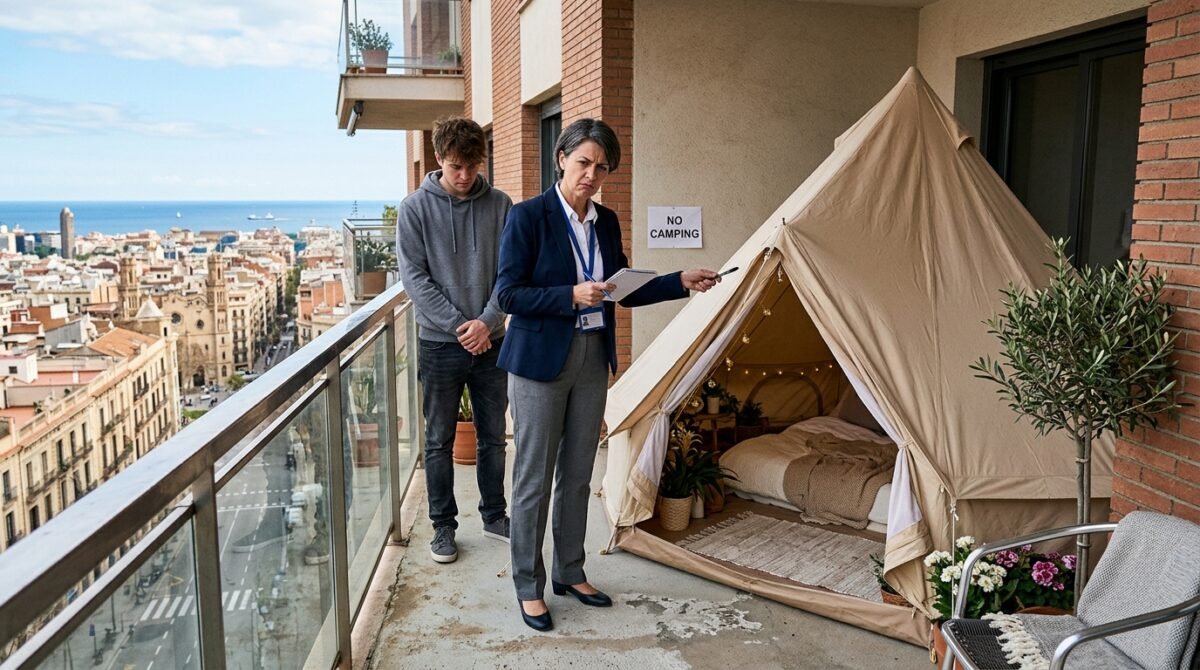
I didn’t wait for Mark to pack. The next morning, I sent an email to our landlord, attaching the screenshots of the Airbnb listing and the reviews. I felt a momentary pang of guilt—knowing this could result in an eviction for both of us—but the alternative was living in a den of strangers that I hadn’t signed up for. Within an hour, our property manager, Mrs. Gable, was at the door.
Mrs. Gable was not a woman to be trifled with. She had a reputation for being strict about building rules, and she didn’t take kindly to unauthorized guests. She walked into the apartment, looked at the living room, and then at the balcony, her eyes narrowing as she saw the ‘glamping’ setup that Mark hadn’t had time to clear away yet.
“So, this is the ‘Urban Oasis’ I’ve been hearing about?” she asked, her voice dangerously calm. She walked out onto the balcony, inspecting the tent with the same scrutiny a forensic investigator might apply to a crime scene. She turned to Mark, who had emerged from his room looking disheveled and frantic. “I assume you have the proper insurance for running a hotel in a residential building? And the proper permits?”
“Mr. Miller, your lease explicitly prohibits subletting, short-term rentals, and the use of common areas for business. You are in breach of contract. I want this cleared out by the end of the day, and I am reviewing your lease status immediately.”
— Mrs. Gable, Property Manager
The look on Mark’s face was priceless. All his bravado evaporated. He tried to stammer out an explanation, something about it being a ‘friends and family’ arrangement, but Mrs. Gable wasn’t having it. She left us with a formal notice to vacate for breach of contract, though she offered me a separate lease if I could show I wasn’t part of the scheme.
That afternoon, the real work began. I had to prove that I had no knowledge of his activities. I spent hours printing out bank statements, showing that I paid my half of the rent through my own account and had never received any ‘kickbacks’ from his illicit business. It was a nightmare of bureaucracy, but I was determined to clear my name and stay in the apartment I loved.
The Legal Tangle and The Lawsuit
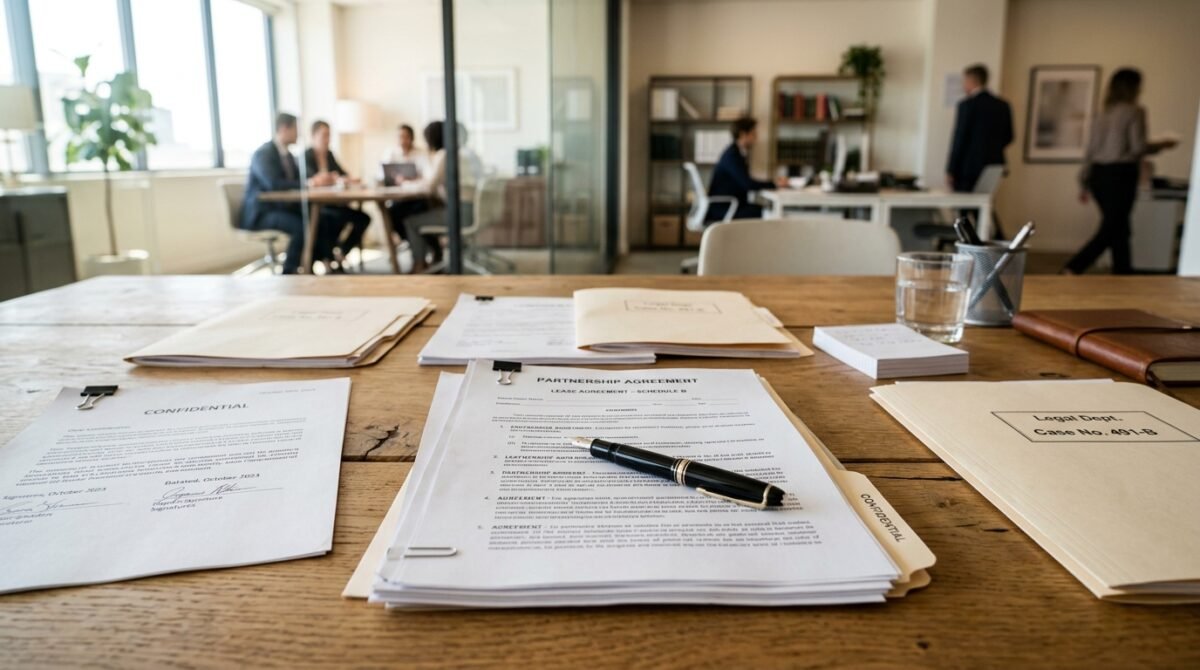
The eviction notice was just the beginning. Once Mark was forced to move out, he decided that the best way to handle the situation was to blame me for his lost income. He tried to sue me for ‘unjust enrichment’ and ’emotional distress,’ claiming that I had benefited from the utilities he paid for with his Airbnb earnings. It was absurd, but I had to take it seriously.
I retained a lawyer to handle the civil suit. The legal fees were mounting, and my stress levels were through the roof. I had to document every interaction, every text message, and every moment of his activity. My lawyer suggested that I also file a countersuit for the unauthorized use of my shared space and the potential liability he exposed me to. It was a scorched-earth policy, but he had left me no choice.
The process of discovery was eye-opening. We subpoenaed his Airbnb records. I found out he had been doing this for even longer than I thought, with some guests staying for weeks at a time. He had been charging a cleaning fee, which he kept entirely for himself, while I was the one who had been picking up the actual mess left behind by his ‘glampers.’
“He thought he could monetize our friendship and our home. He didn’t just break a lease; he broke the law. I’m not just seeking damages; I’m making sure he never does this to anyone else again.”
— My statement to my attorney
The stress began to take a toll on my health. I wasn’t sleeping, I was constantly checking the locks, and I felt like a stranger in my own home. My friends were supportive, but none of them could truly understand the level of violation I was feeling. Every time I looked at the balcony, I didn’t see a relaxing space anymore; I saw a business transaction I never authorized.
We spent months in mediation. Mark was desperate, trying to save face and keep his reputation clean, but the evidence was overwhelming. We had screenshots, bank statements, guest testimonials, and the property manager’s report. He was backed into a corner, and for the first time, he started to realize that his ‘side hustle’ had cost him more than just his apartment.
Reddit Weighs In: The Verdict of the Internet
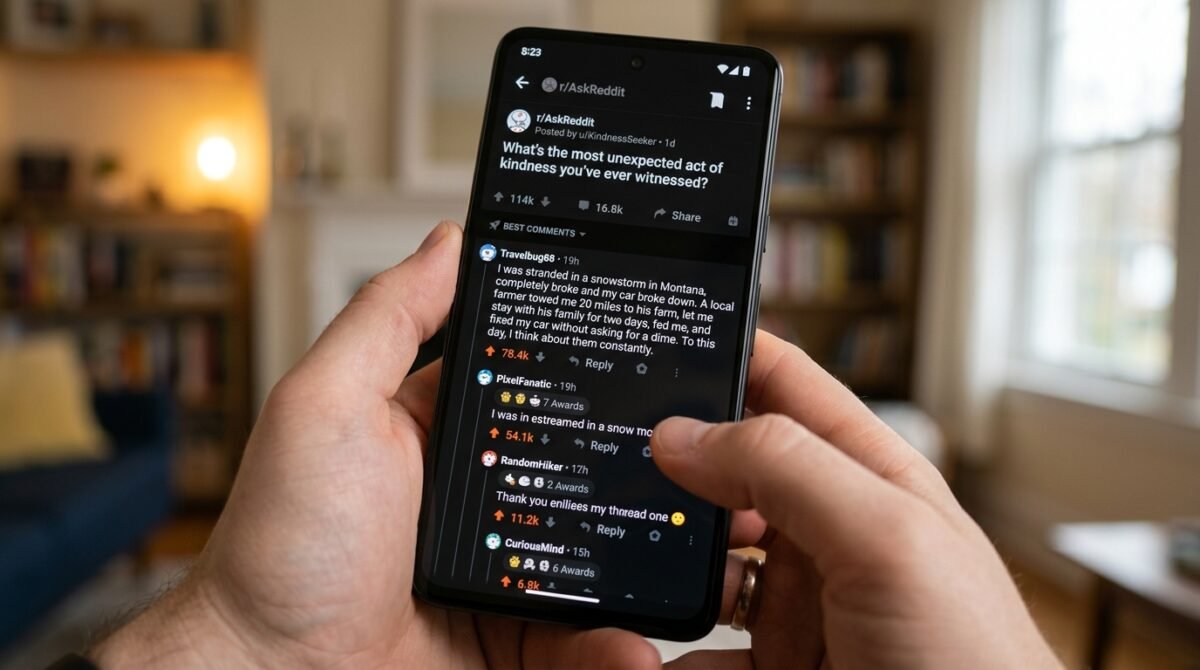
I finally broke down and posted about the entire situation on a popular subreddit. I kept it objective, focusing on the timeline and the breach of contract. I expected a mix of responses, but the sheer volume of support—and some very blunt, harsh reality checks—was overwhelming. The internet, for all its flaws, really knows how to dissect a train wreck.
People were shocked by the audacity. Many commenters were lawyers or property managers who confirmed that what Mark did was not only a lease violation but, in some jurisdictions, a potential criminal offense regarding zoning and tax evasion. The term ‘Airbnb parasite’ was thrown around a lot, which felt surprisingly vindicating.
“NTA. Your ex-roommate is a walking red flag. He essentially turned your home into a hotel without your permission. You are well within your rights to sue him for damages. He’s lucky you didn’t have him charged for trespassing on behalf of the landlord.”
— u/LegalEagle88 (Top Comment, 18.2k upvotes)
Others shared their own horror stories. It seemed I wasn’t the only one who had dealt with ‘side hustlers’ who viewed their roommates as collateral damage. The community was unanimous: I had been too patient. Some suggested I should have alerted the authorities the second I found the listing, rather than trying to confront him directly. Reading the comments made me realize that I hadn’t been ‘too mean,’ I had been too kind.
“The gaslighting is the worst part. He really tried to frame this as him ‘helping’ with the utilities? That’s predatory. Don’t feel guilty about the lawsuit. He put your housing security at risk for his own wallet. He deserves the financial hit.”
— u/RoommateTruthTeller (4.5k upvotes)
The validation from strangers was exactly what I needed. It helped me stop questioning if I had overreacted. It confirmed that the boundary I set—the insistence on honesty and mutual respect—was the bare minimum for living with someone. It was a turning point in my recovery from the stress of the whole situation.
The Final Settlement

After six months of legal posturing, we finally reached a settlement. Mark agreed to pay a significant portion of the legal fees I had accrued and a settlement amount to compensate for the invasion of privacy and the misuse of the apartment. He also had to write a formal apology, though I knew it was more for the court than for me. The ‘apology’ was as empty as his excuses had been.
Watching him sign the papers was anti-climactic. I expected a sense of overwhelming triumph, but mostly, I just felt exhausted. The ordeal had drained me of energy, time, and, for a while, my faith in people. But at least it was over. I was able to keep my apartment, and I finally had the space to myself—or at least, I had the freedom to choose who I invited over.
The apartment felt different now. I spent a weekend redecorating the balcony, getting rid of the ‘glamping’ aesthetic and replacing it with my own vision. I bought new plants, a different set of chairs, and made sure it felt like a home, not a product. It was a symbolic reclamation of my space, a way to wash away the memory of the strangers who had been there.
“I don’t need your money to feel like I won. I just needed you to acknowledge that you were wrong. You treated me like a landlord, not a flatmate, and you paid the price for it.”
— My final message to Mark
I didn’t keep the money for myself. I donated a portion of it to a local housing advocacy group, a final jab at the person who had tried to monetize my shelter. It felt right. The situation had been about power and exploitation, and by giving the money away, I felt like I was reclaiming my own moral standing.
Cleaning Up the Mess
Even after he moved out, the ‘mess’ remained in ways that weren’t immediately visible. There were the small things—a missing towel, a damaged rug, a mysterious stain on the hardwood floor near the balcony door. I had to pay for a deep cleaning service to make sure the place was truly mine again. Every time I found a small item that wasn’t mine, it was a reminder of the violation.
I also had to deal with the occasional stray email or package meant for his ‘guests.’ It was a strange, haunting reminder of the life he had built inside my home. I eventually had to block his number and move on completely. The silence in the apartment, which I had once worried about, became my favorite thing. It was quiet, peaceful, and entirely mine.
My friends started coming over again, and we reclaimed the balcony for what it was supposed to be: a place for us to hang out, drink wine, and watch the sunset. We joked about the ‘glamping’ era, turning the traumatic experience into something we could laugh about. It was a way to strip him of the power he had once held over my happiness.
“I still find random things in the back of the pantry that aren’t mine. It’s like finding a ghost in the house. But at least I know the door is locked, and no one is coming back.”
— My reflection to a friend over dinner
I learned to be more selective about who I live with. I realized that the ‘chill’ roommate who never causes trouble is sometimes the one who is causing the most trouble in secret. It was a hard lesson to learn, but it changed the way I look at boundaries. I am no longer afraid to ask the hard questions or to enforce the rules that protect my peace.
The Lessons in Boundaries
Reflecting back, the most painful part wasn’t the lawsuit or the move; it was the realization that I had enabled him by being too trusting. I had treated our living arrangement as a communal space where we didn’t need to check up on each other. I thought I was being ‘easy-going,’ but I was actually being naive. The world isn’t always kind, and your home is your sanctuary—not a hotel for strangers.
I started attending therapy to process the sense of betrayal. It wasn’t just about the money; it was about the way he had looked me in the eye every day and lied. It made me question my judgment of character. I had to learn that it’s okay to have rigid boundaries in a shared living situation. It’s not about being a bad roommate; it’s about being a responsible one.
I also learned the importance of documentation. If I hadn’t kept those text messages, if I hadn’t kept the photos, I would have been in much worse shape. Now, I keep a digital record of all major house decisions, just in case. It sounds paranoid, but it’s a necessary precaution in a world where people are always looking for an angle.
“Trust is the foundation of any living situation, but verification is the roof. Don’t sacrifice your security for the sake of being ‘the cool roommate.’ Your peace of mind is worth more than a ‘low-drama’ house.”
— A piece of advice I now give to everyone I know
The whole experience changed me. I am more guarded, sure, but I am also more confident. I know who I am and what I will tolerate. I don’t apologize for my boundaries anymore. If someone doesn’t like them, they don’t belong in my life, and they certainly don’t belong in my home.
Life After the Lawsuit
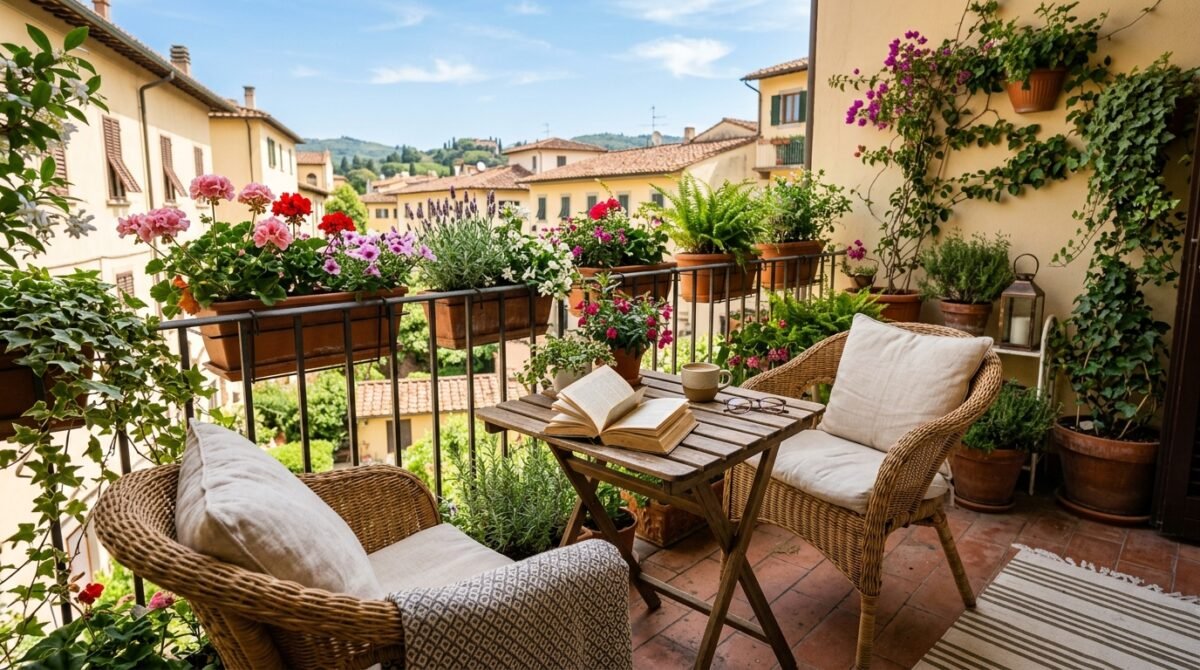
Today, I’m in a better place. The apartment is quiet, I have a new roommate who actually respects my space, and the ‘glamping’ era is nothing more than a bizarre, viral-worthy story I tell at parties. I’ve learned to appreciate the little things—the silence of a Tuesday night, the freedom to leave my stuff on the balcony, and the comfort of knowing that I am the only one with a key to my front door.
I still occasionally see Mark’s name pop up in local business news or social media, but it doesn’t affect me the way it used to. He is a part of my past that I have processed and moved beyond. The lawsuit was the final chapter in our story, and I am proud of the way I handled it. I stood my ground, I protected my home, and I didn’t let him walk all over me.
If you find yourself in a similar situation, don’t wait. Don’t be ‘polite’ at the expense of your own security. Check your lease, check your local laws, and don’t be afraid to act. People will try to gaslight you, they will try to guilt-trip you, but at the end of the day, you have to look out for yourself. You are your own best advocate.
“I learned that it’s okay to be the ‘difficult’ one if it means I’m the ‘safe’ one. I’m proud of the person I am today—stronger, wiser, and definitely more careful about who I share my life with.”
— My concluding thought on the ordeal
I’m finally able to enjoy my home again. The balcony is my favorite spot, and I spend hours out there with a book and a coffee, completely at peace. No tent, no tourists, no secrets. Just the city skyline and the quiet satisfaction of knowing that I did the right thing.
A Final Note to the Community
I wanted to share this story because I know I’m not the only one who has dealt with this kind of betrayal. We often talk about ‘roommate horror stories’ like they’re just funny anecdotes, but they can be genuinely damaging. My hope is that my experience serves as a warning to both tenants and landlords alike. Your home is your safety, and it should never be compromised for the sake of someone else’s profit.
To those who have supported me through this journey—thank you. The Reddit community’s feedback was, and still is, a source of strength. It reminded me that I wasn’t crazy for being upset, and that my desire for privacy and security was valid. We are all just trying to live our lives, and we deserve to do so without someone else undermining our security for a few extra dollars.
If you have a story like this, share it. Don’t let these people hide in the shadows of ‘side hustles’ and ‘business opportunities.’ Accountability is the only way to ensure that our homes remain our own. We have the power to change the narrative, one story at a time.
“Don’t let anyone make you feel small for demanding the respect you deserve. Your home is your castle, and you are the queen or king of it. Never let anyone devalue your sanctuary.”
— A final message to my fellow renters
Thank you for listening. It’s been a long road, but I wouldn’t change a thing. Every step, every argument, and every legal filing brought me to where I am today—a place of peace and security. And honestly? That’s worth more than any Airbnb revenue could ever buy.
Conclusion
This story is a stark reminder of the complexities of modern living. As the ‘gig economy’ bleeds into our personal lives, the lines between communal space and commercial property are becoming increasingly blurred. My experience wasn’t just about a balcony or a tent; it was about the fundamental right to control one’s own environment and the betrayal of a trust that should have been sacred.
I chose to fight back because I refused to be a bystander in my own life. I learned that boundaries are not just suggestions; they are the bedrock of a healthy, functioning home. If this story has resonated with you, I encourage you to reflect on your own living situations. Are your boundaries clear? Do you feel safe in your own home? Never underestimate the power of your own voice, and never, ever feel guilty for protecting your peace.
What would you have done? If you found out your roommate was secretly running a business out of your shared space, would you have confronted them, or would you have gone straight to the landlord? Share your thoughts below, and let’s discuss the realities of modern cohabitation.
What's your verdict on this dilemma?
Vote below to contribute to the official community consensus.

Have a Dilemma Keeping You Up at Night?
Share your real-life feud, wedding chaos, or relationship crossroads anonymously with our editorial team.
What do you think ?
0 Comments🛡️ Comments are moderated to protect community integrity. Your comment will appear once approved by the editorial team.