

When I first decided to renovate my garage into a personal sanctuary, the goal was simple: peace, health, and a dedicated space for my recovery after long shifts. I spent nearly fifteen thousand dollars on infrared sauna equipment, soundproofing, and professional-grade flooring. My roommate, Greg, had been living with me for nearly eighteen months, and at the time, I truly believed our living arrangement was built on mutual respect and shared bills. I never imagined that my private wellness retreat would eventually become the epicenter of a clandestine business operation.
It started with little things—unexplained towels in the laundry, the smell of eucalyptus oil on a Tuesday afternoon when I knew Greg should have been at his office, and the occasional mysterious figure walking through the side gate. I dismissed my growing unease as paranoia. After all, I had given him the gate code for convenience, and we had always maintained a ‘what’s mine is yours’ policy regarding common household goods. But when the boundaries of that agreement began to look more like a exploitation, the house started to feel less like a home and more like a hotel I was accidentally paying for.
The moral dilemma here wasn’t just about the electricity bill or the wear and tear on the sauna. It was about the fundamental violation of trust. I am a private person, and the idea of strangers—people I didn’t know and hadn’t vetted—sweating in a space I had curated for my own mental health was deeply unsettling. The realization that my own roommate was actively monetizing my property behind my back transformed my frustration into a cold, hard resolve. I wasn’t just losing money; I was losing my sanctuary.
This story isn’t just about an eviction; it is a breakdown of how small, ‘harmless’ boundary crossings can metastasize into full-blown betrayal. As I sat in my living room one Friday night, listening to the muffled sounds of laughter and slamming locker doors coming from my garage, I knew the time for passive-aggressive notes was over. It was time for a confrontation that would irrevocably change our living situation and test the limits of what a roommate is legally allowed to do with your private belongings.
The Mysterious Eucalyptus Trail
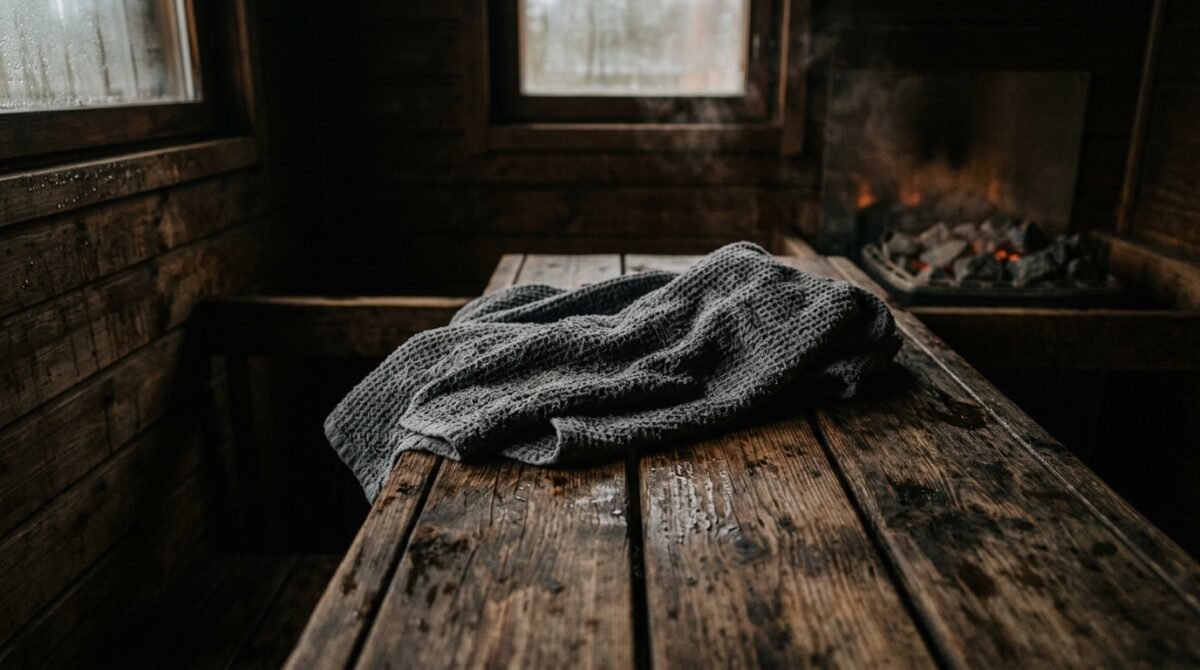
The first sign that something was amiss was the erratic state of the sauna. I would come home from a grueling ten-hour shift, looking forward to twenty minutes of heat therapy, only to find the unit still warm, the towels damp, and the air thick with an artificial scent of eucalyptus that I hadn’t purchased. I confronted Greg about it, assuming he had simply started using it more often, but his excuses were thin and always delivered with a deflective smile.
He would say things like, ‘Oh, I had a rough week at the firm, needed to steam out the stress,’ or ‘I thought you wouldn’t mind since it’s just sitting there.’ At the time, I let it go. Being a non-confrontational person, I figured it was a small price to pay for a roommate who was otherwise reliable with the rent. I didn’t realize that my silence was being interpreted as an invitation to treat the gym as a commercial asset.
The frequency increased. By the third month, the gym was being used at least four nights a week. I started noticing that the water cooler was empty almost every other day, and the cost of electricity had spiked by nearly two hundred dollars. When I brought up the utility bills, Greg suggested we ‘start paying for the gym maintenance’ as a split expense, which I thought was a fair and responsible suggestion, completely unaware that he was already collecting fees from others.
“You’re really going to sweat the small stuff? I thought you were a generous person, man. The sauna is just sitting there doing nothing half the time.”
— Greg, during a tense kitchen conversation.
I felt gaslit. I began to wonder if I was being stingy, even though I was the one paying the mortgage and the insurance on the equipment. I started keeping a log of the hours the sauna was active, and the data was alarming. It was running for nearly twenty hours a week. Who spends twenty hours a week in a sauna? The numbers simply didn’t add up for a single person’s recovery routine.
I began to check the security camera I had installed over the driveway, mostly for package theft protection. That was when I saw it—people I didn’t recognize, carrying gym bags and walking through the side gate in pairs, arriving at scheduled intervals on Saturday mornings. They weren’t friends of ours. They were strangers, and they looked like they were paying for a service.
Caught on the Backyard Camera

I spent three hours on a Sunday morning reviewing the footage. The clips were incriminating. I saw Greg waiting at the gate, checking his phone, and then ushering in a group of three men in business-casual attire. They walked with the familiarity of people who were expecting a premium experience. After they entered the garage, I watched Greg hold out his hand—not for a handshake, but for a transaction. He was collecting cash.
My heart was pounding in my chest. I felt a mixture of rage and profound sadness. This wasn’t just a roommate overstepping; this was a calculated exploitation of my private home. I felt like a stranger in my own life, watching my property being used as a backdrop for someone else’s hustle. I needed proof that was undeniable before I could confront him, so I kept watching, documenting every arrival and departure.
I saw one of the guests hand him a stack of bills. I saw Greg showing them where the fresh towels were located and how to operate the sauna’s temperature control panel. He was acting like the owner of the facility. He even had the audacity to provide them with water bottles from my pantry. The level of comfort he had with this illicit business was staggering.
“Look, I just want to make sure we are clear on the rules. You bring the cash, I provide the access. No cameras inside the sauna, obviously. Just keep it quiet so my roommate doesn’t get suspicious.”
— The audio from the outdoor security microphone, capturing Greg speaking to a client.
The realization that he had told them to avoid me—to keep things quiet to prevent ‘my roommate from getting suspicious’—was the final straw. He knew exactly what he was doing was wrong. He wasn’t just ‘using the gym’; he was running a private, membership-only sauna club inside the walls of my home. My home.
I didn’t storm out immediately. I sat there in the dark, watching the playback over and over. I had to be smart about this. If I reacted with raw emotion, I might give him the upper hand in the inevitable legal battle that would follow regarding his lease. I started printing screenshots and saving the video files to an external drive. I was building a case for a formal eviction.
The Confrontation in the Kitchen
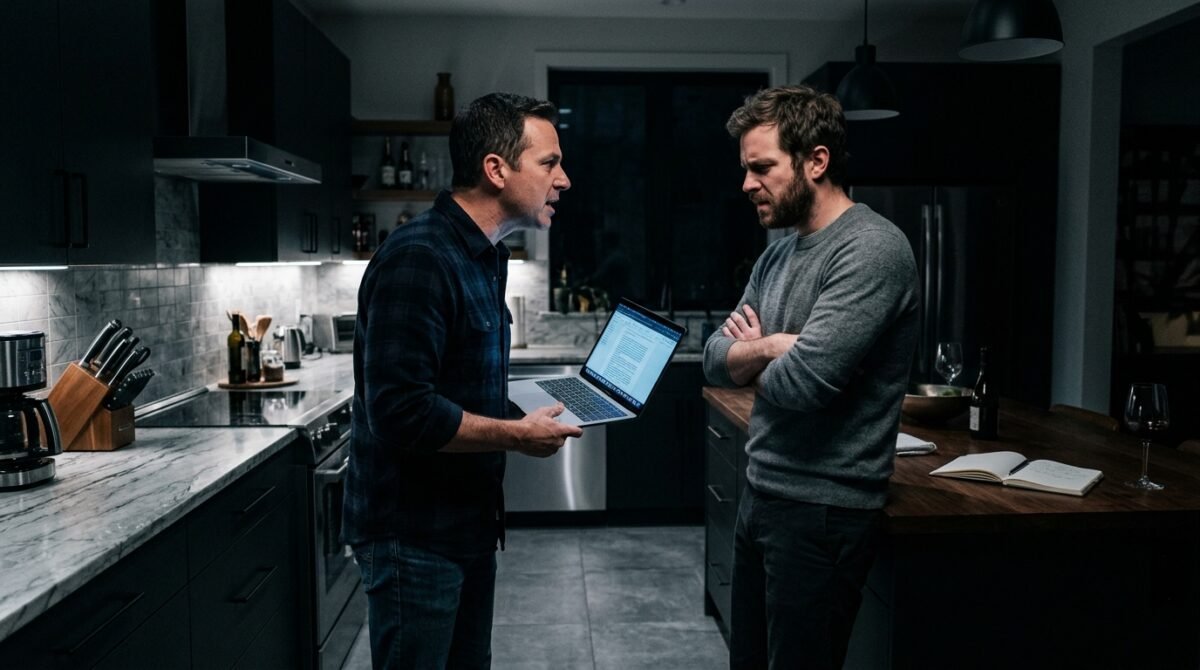
I waited for the perfect moment. It was a Tuesday evening, and Greg was in the kitchen, casually scrolling through his phone with a glass of wine, looking entirely too comfortable for someone who had just spent the weekend turning my house into a business. I stood in the doorway, my laptop in my hand, my pulse steady for the first time in days. I didn’t shout. I didn’t throw anything. I simply set the laptop on the island and turned the screen toward him.
He didn’t notice at first. Then, as the video began to play—the clear shot of him taking cash from a stranger—the color drained from his face. He tried to laugh it off, a nervous, high-pitched sound that died in his throat as I scrolled through the folder of evidence. The silence in the kitchen was heavy, punctuated only by the hum of the refrigerator.
I told him exactly what I had seen. I laid out the dates, the times, and the amounts of money I suspected he had been raking in. I didn’t ask for an explanation; I asked for his keys. His defense was pathetic. He tried to claim he was ‘just helping his friends’ and that the money was for ‘cleaning services,’ as if that made turning my home into a public gym acceptable.
“You’re overreacting. It’s just a sauna, man. I was helping out some of the guys from the office who couldn’t afford gym memberships. It’s not like I was selling drugs or something. Don’t be so dramatic.”
— Greg, attempting to minimize the betrayal.
I looked at him and realized I didn’t even recognize the person standing across from me. This wasn’t a misunderstanding; it was a character flaw. He had no respect for my property, my privacy, or our legal agreement. I told him he had thirty days to vacate, and that if I saw another ‘client’ on my property, I would involve the police for trespassing and illegal business activities.
He tried to argue that he had rights as a tenant, which he did, but he also had obligations. I pointed out that running an unauthorized commercial operation in a residential lease was a clear violation of our agreement. The look in his eyes shifted from defensive to panicked. He knew he didn’t have a leg to stand on, but he wasn’t going to go down without making my life miserable for the next month.
The Sabotage Campaign

The next three weeks were a psychological war. Greg didn’t leave quietly. He started ‘accidentally’ breaking things. A glass bowl in the dishwasher, a scratch on the hardwood floor, the thermostat constantly being set to eighty degrees. He was trying to push me to break the lease early, to get me to throw him out sooner so he could claim I was the one in breach of contract. I refused to take the bait.
I kept a meticulous log of every petty act of destruction. I moved my valuables into my room and installed a smart lock on my door. I stopped speaking to him entirely, communicating only via email to keep a paper trail. The house felt toxic. Every time I walked into the kitchen, I felt the residual energy of the conflict, a heavy, suffocating pressure that made it hard to breathe.
He tried to have guests over again, despite my warning. I didn’t confront them; I simply called the police and informed them that there were unauthorized individuals on the property who were refusing to leave. The embarrassment of having the police show up at the door while he was trying to entertain his ‘clients’ finally stopped the traffic, but the damage to our relationship was total.
“I hope you’re happy. You’re destroying a friendship over a stupid sauna. You know, you’ve always been a control freak. This is exactly why you don’t have a girlfriend.”
— A text message from Greg during the final week of his stay.
I ignored the personal attacks. They were just his way of trying to make me feel small, to make me doubt the moral high ground I was standing on. I knew that if I engaged, I would lose. I kept my focus on the exit date, counting down the days until I could change the locks and reclaim my space. The level of vitriol he directed at me was proof that I was doing the right thing.
The neighbors started asking questions too. Apparently, the noise of the ‘clients’ leaving late at night had been bothering them. I felt a wave of embarrassment, realizing that my home had become a neighborhood nuisance because of someone else’s greed. It was a humbling lesson in how quickly things can spiral when you don’t enforce boundaries early and firmly.
The Final Walkthrough
When the day finally arrived, I wasn’t excited. I was exhausted. I stood by the door while Greg loaded his last box into his truck. He didn’t look at me, and he didn’t say goodbye. He just dropped the key on the entryway table and muttered a curse under his breath before pulling away. I closed the door, locked it, and leaned my back against the wood, letting out a long, shuddering breath.
I didn’t head to the gym immediately. I waited until the next morning. I walked into the garage, expecting to see the place trashed, but it was surprisingly clean. He must have done a deep scrub in his final hours, perhaps hoping I wouldn’t notice the lingering signs of his business. I looked at the sauna, my beautiful, expensive piece of equipment, and felt nothing but resentment.
I spent the entire day cleaning it again. I scrubbed every surface with industrial-grade disinfectant. I replaced the towels. I changed the air filters. I wanted every trace of the strangers—every scent, every skin cell, every memory of his betrayal—gone. I felt like I was performing a ritual, exorcising the ghost of a friendship that had been dead long before I realized it.
I checked the financial damage. The increased utility bills, the cost of the cleaning supplies, the potential legal fees if he had tried to contest the eviction. It was thousands of dollars in hidden costs. I realized then that I had been subsidizing his life in more ways than just the sauna. I had been paying for his comfort, his social life, and his lack of respect, all while he treated me like an obstacle to his profit.
“It’s over now. The house is quiet, the sauna is mine, and I’m finally at peace. It cost me thousands, but the sanity is worth it.”
— My journal entry on the day he moved out.
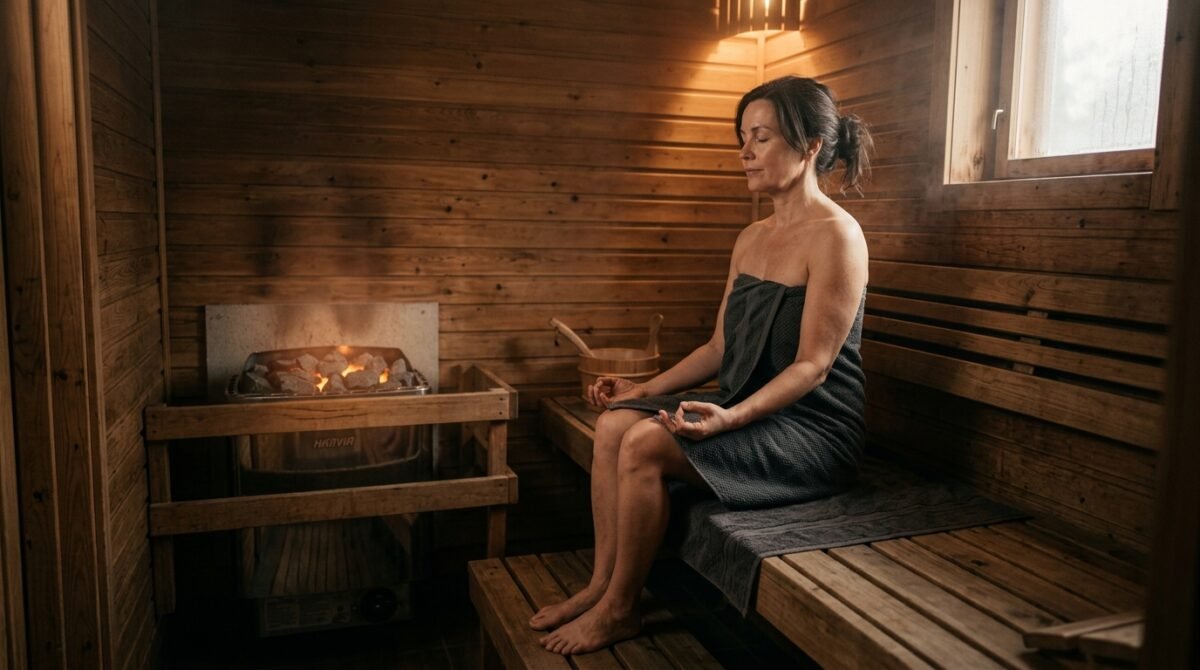
I realized I hadn’t just evicted a roommate; I had evicted a parasite. The space felt different now. It felt like mine again. I turned on the sauna and let it heat up to its maximum capacity. I sat inside, closed my eyes, and for the first time in months, I didn’t think about Greg. I just thought about the quiet, the heat, and the freedom of having a home that belonged only to me.
The Reddit Fallout
I posted about the situation on a popular subreddit shortly after he left, mostly to vent and get some validation that I wasn’t crazy for the way I handled the situation. I expected a few supportive comments, but the thread exploded. Within hours, there were thousands of responses, and the divide in the comments was fascinating. Some people called me a hero, others called me a landlord from hell.
The sheer volume of people who had similar stories about ‘roommates from hell’ was staggering. It made me realize that I wasn’t alone in this. There are thousands of people out there who have had their property, their trust, and their privacy violated by someone they lived with. It was a strange kind of comfort to know that my experience, while traumatic, was part of a larger, global conversation about boundaries.
The top comment was from a user who pointed out that my roommate had technically committed a form of fraud by misrepresenting his authority to charge for the facility. They suggested I look into the legal implications of what he did, which made me think twice about just letting it go. But ultimately, I decided that the emotional energy required to sue him wasn’t worth the satisfaction of winning.
“NTA. Your home is not a public gym. He was profiting off your investment and your liability. You should have evicted him the second you found out about the money. Don’t feel guilty for protecting your property.”
— u/PropertyRightsAdvocate (Top Comment, 32.5k upvotes)
Then there were the ‘You’re the A-hole’ commenters who argued that if I had been more communicative in the beginning, we could have negotiated a profit-sharing agreement. They argued that my failure to establish clear rules was the real problem. While I disagreed with them, it was a perspective I hadn’t considered. Maybe I was too passive, but that doesn’t excuse his lack of honesty.
It was a lesson in how the internet views conflict. People are quick to judge, quick to take sides, and even quicker to project their own experiences onto a situation. I read every comment, and while some were painful, they gave me a clearer perspective on the situation. I had been a pushover, and I had paid for it. The internet didn’t just validate my actions; it forced me to confront my own role in the mess.
Financial Reckoning: The Ledger

I decided to put together a final ledger of what the ‘sauna business’ actually cost me. I didn’t want to just move on without understanding the full financial impact. I tracked the utilities, the wear and tear, and the cleaning costs. When I saw the numbers laid out in a table, the reality hit me like a physical blow. I had been losing money every single month he was in the house.
The utilities alone were a massive drain. Because the sauna was running during peak hours, I was being charged higher rates. I hadn’t realized how much of an impact that had until I compared the bills from the year before he moved in with the bills from the year he was there. It was a difference of nearly four thousand dollars over the course of his stay.
Then there was the depreciation of the equipment. Saunas are built to last, but they aren’t meant for heavy, daily commercial use by people who don’t know how to maintain them. The wood was showing signs of wear that it shouldn’t have shown for years. I had to pay for a professional refinishing service to get it back to its original condition. The whole ordeal was a masterclass in why you never mix business and pleasure with roommates.
| Expense Category | Estimated Cost | The Reality |
|---|---|---|
| Utility Overages | $2,400 | Significant spike in electricity |
| Equipment Wear | $1,500 | Refinishing and maintenance |
| Cleaning Services | $600 | Professional deep clean required |
| Legal Consult | $300 | Initial advice on lease |
When you add it all up, he had essentially stolen thousands of dollars from me, not to mention the value of the privacy I had lost. I had been paying for his lifestyle. I was the one working hard, the one paying the mortgage, the one maintaining the home, while he was treating it like a startup business. It was infuriating, but at least now I had the numbers to back up my anger.
I sent him a final invoice. I didn’t expect to get a dime, and I didn’t. But sending it felt like a final act of closure. I wanted him to see, in black and white, exactly how much his ‘side hustle’ had cost the person whose life he was living in. It was a statement of fact, not an invitation to negotiate. I walked away from the money, but I kept the record.
The Aftermath of Trust

Since the eviction, I’ve found it difficult to trust people who want to move in. I’ve had offers from friends of friends, but I’ve turned them all down. For now, I’m living alone, and honestly, the silence is a luxury I didn’t know I needed. My home is a sanctuary again, and I guard that feeling with everything I have. I’m no longer the ‘generous’ roommate; I’m the one who sets boundaries and expects them to be respected.
I’ve realized that being a good roommate isn’t about letting people walk all over you. It’s about clear expectations, written agreements, and the courage to say ‘no.’ I’ve started a new rule for myself: no one gets a key to the garage unless they are on the lease, and even then, the sauna is off-limits. It sounds extreme to some, but after what I’ve been through, it feels like common sense.
My friends have noticed the change in me. They say I’m more guarded, more serious. I tell them it’s just maturity. I’ve learned that when you invite someone into your home, you aren’t just sharing space; you’re sharing your life. And some people aren’t worthy of that investment. I’ve stopped trying to make everyone happy and started focusing on my own well-being.
“You’ve changed, man. You’re not as laid back as you used to be.” — “I’m not laid back anymore. I’m protected. There’s a difference.”
— A conversation between me and my friend, Mark.
I still use the sauna every weekend, but now, it’s a moment of reflection. I think about the lessons I’ve learned—about greed, about betrayal, and about the importance of standing up for yourself. The experience was painful, but it forced me to grow in ways I never would have if everything had gone smoothly. I am more confident, more decisive, and much more aware of the people I let into my space.
The house is finally mine again, and that is a feeling that no amount of money can buy. I’ve stopped worrying about the cost of the past and started investing in the value of my future. I’ve learned that a boundary isn’t a wall to keep people out; it’s a gate that ensures that only the right people are allowed in.
Reflecting on the Moral Crossroads
Looking back, the moral dilemma wasn’t really about the sauna at all. It was about the power dynamic in our relationship. I had allowed myself to be a ‘nice guy’ who was easily taken advantage of, and Greg was the kind of person who saw that as a weakness to be exploited. We were two very different people, and our values were never compatible. I was focused on building a home; he was focused on building a bank account.
The confrontation that night in the kitchen was the turning point. It wasn’t just about the money; it was about the moment I decided that my self-respect was worth more than the comfort of avoiding a conflict. I had spent so long worrying about what he thought of me, what the neighbors thought, what it would look like if I was the ‘mean’ roommate, that I had forgotten to think about what I deserved.
The internet debate was a mirror. It showed me that people are often taught to be ‘polite’ at the expense of their own dignity. We are conditioned to avoid conflict, to compromise, to ‘keep the peace.’ But sometimes, peace is just a word for silence in the face of injustice. My home was being violated, and I had a moral obligation to protect it, regardless of how it looked to anyone else.
“Being ‘nice’ is often just a mask for being scared. Once you take the mask off, you realize that people only respect you when you demand it.”
— My closing thoughts on the matter.
I’ve learned that true kindness doesn’t mean being a doormat. It means having clear standards and treating others with respect, while expecting the same in return. When that standard is violated, the kindest thing you can do for yourself is to walk away or remove the person who is violating it. It’s a hard lesson, but it’s one I’m glad I learned before things got even worse.
I’m not angry anymore. I’m just grateful. Grateful that I had the resources to handle it, grateful that I had the camera footage to prove it, and grateful that I finally learned the value of my own space. The sauna is just a wooden room with some heaters in it, but for me, it’s a symbol of my autonomy. And that is something I will never let anyone take from me again.
Lessons for the Future Roommate

If I could go back and talk to my past self, I would tell him to set boundaries the moment the first sign of disrespect appeared. I would tell him that being a landlord, even for a roommate, is a business, and it should be treated with the same level of professionalism as any other. I would tell him to never, ever give someone a key to a private space without a very clear, written agreement about what that space is for.
I’ve started drafting a roommate contract for any future arrangements. It includes specific sections on common areas, guest policies, and a strict ‘no-business’ clause. It might seem like overkill to some, but it’s the only way to ensure that we are both on the same page from day one. I’ve realized that clear communication is the best way to prevent the kind of resentment that builds up over time.
I also want to tell others in similar situations: you aren’t crazy. You aren’t being petty. Your home is your foundation, and you have every right to feel safe and respected within its walls. Don’t let someone else’s lack of character make you feel like you’re the problem. Trust your gut. If something feels off, it usually is. And don’t be afraid to take action.
“Boundaries aren’t mean. They are the scaffolding upon which healthy relationships are built. Without them, everything eventually collapses under the weight of entitlement.”
— A piece of advice I now share with anyone struggling with boundaries.
The experience has made me a better person in many ways. I’m more aware of my own worth, more decisive in my relationships, and more protective of my energy. I’ve stopped trying to please everyone and started living a life that aligns with my values. I’m not saying it was an easy journey, but it was a necessary one.
So, here I am, living alone, sauna-ing in peace, and finally content. The drama is behind me, the lessons are learned, and the future feels brighter than it ever has. I’ve reclaimed my home, and in the process, I’ve reclaimed a part of myself that I didn’t even realize I had lost. And for that, I’d go through it all over again.
Conclusion
My journey from a passive, ‘easy-going’ homeowner to an empowered person who values their boundaries was not easy, but it was a crucial step in my personal development. This story is a testament to the fact that personal space, mental health, and property rights are not things to be negotiated away for the sake of ‘keeping the peace.’ When you find yourself in a situation where your boundaries are being consistently violated, it is not your responsibility to fix the other person’s behavior; it is your responsibility to remove yourself or them from that toxic dynamic.
As I sit here today, the silence in my home is a reminder that peace is something you cultivate for yourself. The betrayal I experienced taught me that I am capable of standing up for myself even when it is uncomfortable. I hope this story serves as a reminder to anyone struggling with a similar situation: you have the power to define the terms of your own life. Don’t let anyone—friend, partner, or roommate—make you feel otherwise.
Now, I turn it over to you. Have you ever had a roommate or a friend who treated your space like a public playground? How did you handle it? Did you set boundaries, or did you wait until the breaking point? Let’s talk about it in the comments below, and maybe we can learn from each other’s experiences.
What's your verdict on this dilemma?
Vote below to contribute to the official community consensus.

Have a Dilemma Keeping You Up at Night?
Share your real-life feud, wedding chaos, or relationship crossroads anonymously with our editorial team.
What do you think ?
0 Comments🛡️ Comments are moderated to protect community integrity. Your comment will appear once approved by the editorial team.