
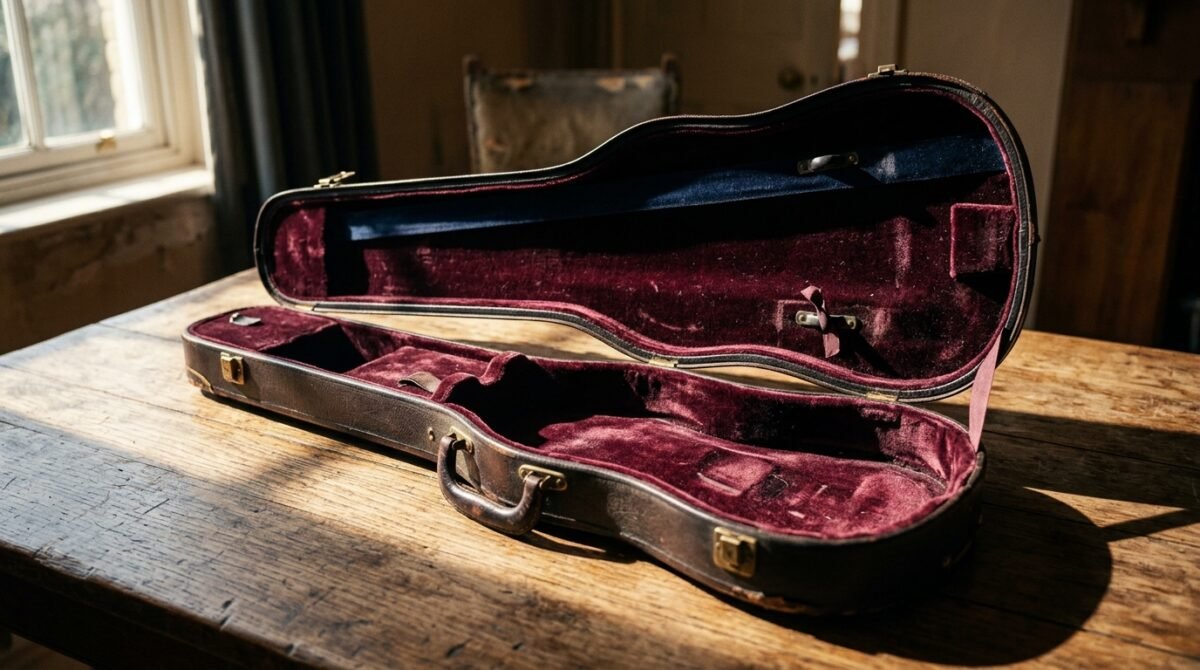
They say that marriage is built on trust, but sometimes, that foundation is nothing more than a thin veneer covering deep-seated entitlement. My grandfather wasn’t a world-famous virtuoso, but to him, his 1950s professional-grade violin was the literal heartbeat of his existence. When he passed away, leaving the instrument to me in his will, he didn’t just leave me a musical tool; he left me a piece of his soul. It was my most prized possession, kept in a climate-controlled case, polished and played on Sunday afternoons.
My husband, Mark, never truly understood the sentimentality. To him, life was a series of transactions and social climbing steps. He viewed the violin as ‘dead weight’—an asset gathering dust that could be monetized if the right opportunity arose. I never imagined that ‘opportunity’ would involve him sneaking it out of our house while I was at work, only to use the proceeds to fund his entry into the Oakwood Country Club, a place he believed would ‘elevate our social standing.’
The discovery was not dramatic at first. It was a slow, agonizing realization. I walked into the study to practice, expecting to see the familiar velvet-lined case, only to find the shelf empty. When I confronted Mark, he didn’t look remorseful. He looked like a man who had made a savvy business decision. He told me it was ‘just a piece of wood’ and that his membership would ‘benefit us both in the long run.’ That was the moment I realized I was married to a stranger.
This isn’t just about a musical instrument. It’s about the total disregard for my history, my boundaries, and my grief. It’s about the way my husband prioritized his vanity over my emotional heritage. As I sit here writing this, I am preparing to walk out of our home, not knowing if I can ever forgive a betrayal of this magnitude. This is the story of how a private country club initiation fee cost me my marriage.
The Quiet Disappearance of a Family Legacy
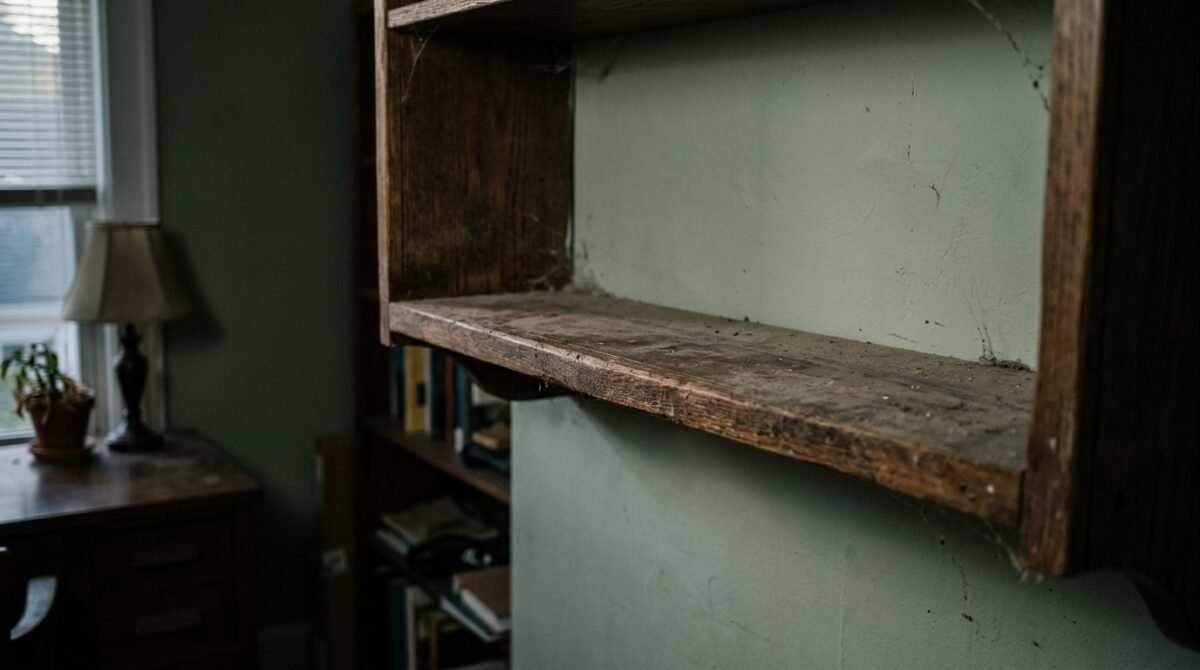
It started on a rainy Tuesday. I had been planning to play for a few hours to clear my head after a stressful week at the office. My grandfather taught me that music was a form of prayer, and lately, I needed that connection more than ever. When I pushed open the door to the study, I immediately noticed the silence. The case wasn’t there. I checked the closet, thinking maybe Mark had moved it to vacuum, but the closet was empty too.
Panic, cold and sharp, set in immediately. I called Mark, but he didn’t pick up. I sent a quick, casual text, assuming there was a logical, if slightly annoying, explanation. ‘Hey, did you move the violin case? I can’t find it.’ An hour passed. Then two. When he finally replied, the message was cold and dismissive.
“I took care of that old thing today. Don’t worry, it’s gone to someone who will actually use it. We needed the cash for the club fees.”
— Mark (Text Message)
I felt the breath leave my body. The ‘club fees’ he was referring to were for the Oakwood Country Club, a place he had been obsessed with joining for over a year. I had told him repeatedly that we couldn’t afford it, that we had other financial priorities, like our mortgage and retirement savings. He hadn’t just ignored me; he had gone behind my back to steal from me to pay for his ego.
I remember collapsing onto the chair, the room spinning. That violin was worth thousands, not just in market value, but in memories. My grandfather played it at my parents’ wedding. He played it when I was a child to lull me to sleep. Selling it wasn’t just a financial act; it was an act of erasure. My husband had erased a part of my family’s history to buy his way into a group of people who would likely never even know his name.
By the time Mark walked through the door that evening, I was shaking. He walked in with a smirk, his blazer draped over his arm, looking like he’d just closed a million-dollar deal. He saw my face and his expression shifted, not to guilt, but to defensive annoyance. He knew exactly why I was upset, and he had already decided that he was the victim of my ‘unreasonable sentimentality.’ It was the start of a long, dark night of confrontation.
The Justification of a Self-Proclaimed Visionary
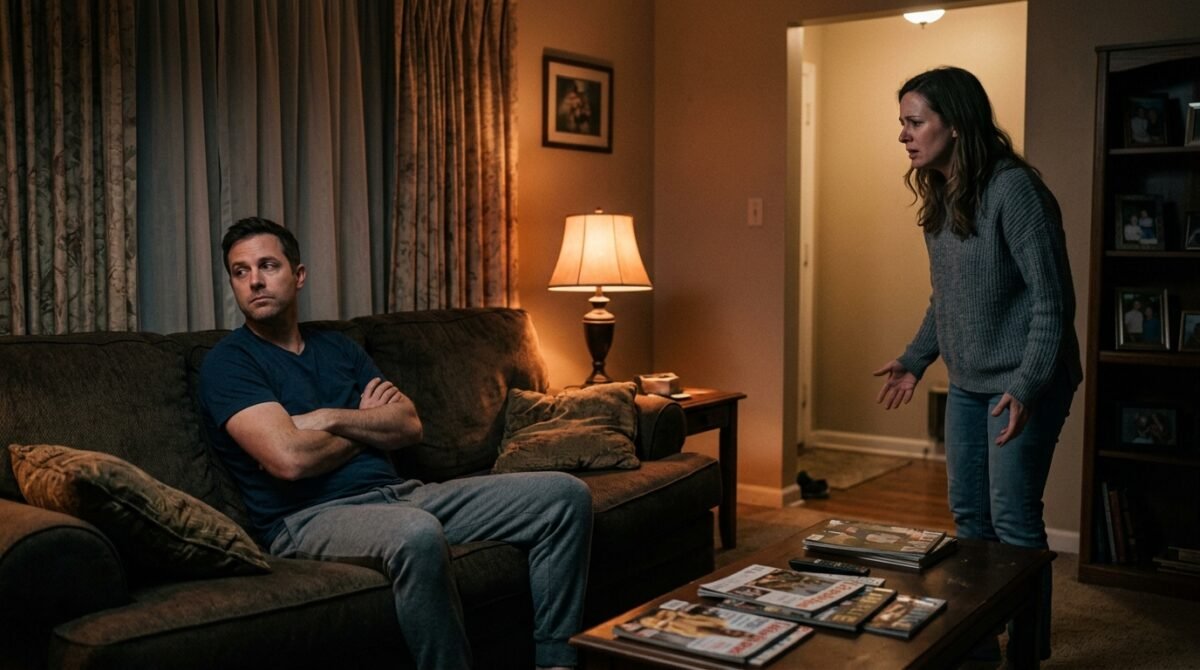
When Mark finally spoke, he didn’t apologize. He sat down, opened a beer, and looked at me as if I were a child failing to understand a complex adult concept. He started his lecture about ‘long-term investment’ and ‘social capital.’ He truly believed that his membership at the country club would open doors to promotions and networking opportunities that would ‘pay for the violin ten times over.’ The audacity was breathtaking.
“You’re looking at this through a lens of sentimentality, and that’s why you’re staying small. That violin was a depreciating asset. My membership is an investment in our future. You should be thanking me for having the vision to make the hard choice.”
— Mark
I couldn’t believe what I was hearing. He spoke about my grandfather’s legacy as if it were a faulty toaster he’d traded in for an upgrade. I tried to explain that the value of the violin wasn’t measured in dollars, but in the hours spent mastering it and the memories attached to every scratch on the varnish. To Mark, everything in our life had a price tag, and evidently, my heritage was on sale for the right price.
He continued to gaslight me, suggesting that I was overreacting because I was ’emotional’ and ‘not business-minded.’ He claimed that he had done this for ‘us.’ He said, ‘When we are at that club, sitting on the terrace drinking cocktails, you won’t care about some dusty old instrument.’ The sheer arrogance of his assumption that I would even want to be a part of that world made my blood boil.
I realized then that this wasn’t just about the violin. It was about his inability to respect my autonomy. He viewed our marriage as a corporation where he was the CEO and I was an employee who needed to be managed. If he decided an asset needed to be liquidated, he didn’t need to consult the board—he just sold it. I looked at him, truly looked at him, and realized I didn’t recognize the man sitting in front of me.
The argument lasted until three in the morning. I didn’t yell; I was too exhausted for that. I simply laid out exactly what he had taken. I told him about the history of the violin, the provenance, the specific moments in my life that were tied to its sound. He listened with glazed eyes, occasionally checking his watch, clearly waiting for me to stop talking so he could go to bed. He didn’t care about the loss. He only cared that I was making a scene.
The Secret Group Chat and the Enabling In-Laws

The next morning, I found my tablet open to our shared family iCloud, and a notification popped up from a group chat I wasn’t supposed to see. It was Mark and his parents. They were discussing the ‘investment’ he had made. The things they said made me feel like I was going to be physically ill. They weren’t just enabling his behavior; they were cheering him on.
“Mark, you did the right thing. That girl is too attached to the past. The club will be great for the family image. Maybe now she’ll stop playing that racket and focus on something productive.”
— Mark’s Mother
I felt a cold shiver run down my spine. The betrayal was multi-layered. It wasn’t just my husband; it was his entire family viewing me as someone who needed to be ‘corrected’ or ‘molded’ into their version of a successful wife. Reading those texts, I realized that I had been fighting a war I didn’t even know I was in. They saw my grief as a weakness and my family history as a burden.
I took screenshots of everything. I didn’t know why at the time, but some instinct told me that these would be important later. I sat in the kitchen, scrolling through months of messages. They had been talking about my ‘hobbies’ and my ‘lack of ambition’ for ages. It was a systematic deconstruction of my identity. I had been living in a house full of people who were actively rooting for me to abandon everything that made me who I am.
When Mark came into the kitchen, I didn’t say a word. I just set my tablet down, showing the conversation with his mother. His face went pale. He didn’t try to explain; he just lunged for the tablet, but I was faster. I grabbed it and walked out of the room. He followed me, shouting, but I was already heading toward the guest room. I locked the door and for the first time in our marriage, I felt truly, terrifyingly alone.
The realization that my in-laws were complicit in this changed everything. It meant that Mark wasn’t just a rogue actor; he was acting on a foundation of entitlement that his family had cultivated. I wasn’t just fighting to get my violin back; I was fighting for my dignity against a family that viewed me as a disposable accessory to their social climbing.
The Search for the Stolen Heirloom
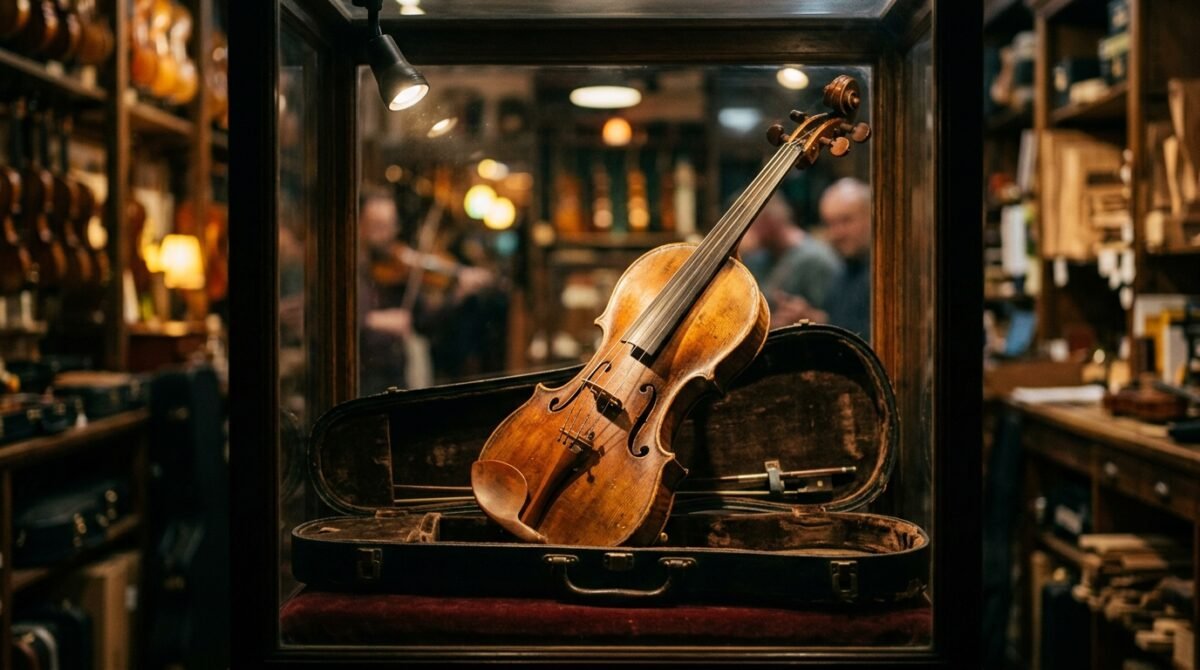
I knew I couldn’t get the violin back by asking Mark. I had to find out where he sold it. I started by checking his bank statements, which were accessible through our joint account. There was a large deposit from a local high-end pawn and instrument shop, ‘The Golden String.’ I didn’t wait. I drove there the next morning, my heart pounding in my throat, praying that it hadn’t been sold yet.
The shop was quiet, smelling of rosin and aged wood. I approached the counter and described the violin. When the owner brought it out, I felt like I was going to collapse. It was sitting there, under the harsh fluorescent lights, looking vulnerable and exposed. It was my grandfather’s instrument. I touched the scroll, the wood still warm from the shop’s environment. The owner told me it had been purchased for a fraction of its value, which made me realize just how desperate Mark was to get that initiation fee.
I explained the situation to the owner. I told him it was stolen property. He was hesitant, worried about his legal standing, but I showed him my marriage certificate and the bill of sale I had found in our home office that listed the violin as a gift to me, personally. He was a decent man, and he seemed disturbed by the story. He agreed to hold it for me while I sought legal advice, but he couldn’t just give it to me without a fight.
This was where the nightmare really began. To get the violin back, I had to prove it was mine, which would mean filing a police report against my own husband. It felt like the final nail in the coffin of our marriage. I sat in my car outside the shop, crying for the first time in days. I realized that if I did this, there was no turning back. Our marriage would be over.
But then I remembered my grandfather. He would have wanted me to fight for it. He would have been horrified to see his legacy used as a bargaining chip in a petty social game. I looked at the shop one last time and made the decision. I would file the report. I would do whatever it took to reclaim what was mine, even if it cost me everything else.
The Day the Truth Came Out at Dinner
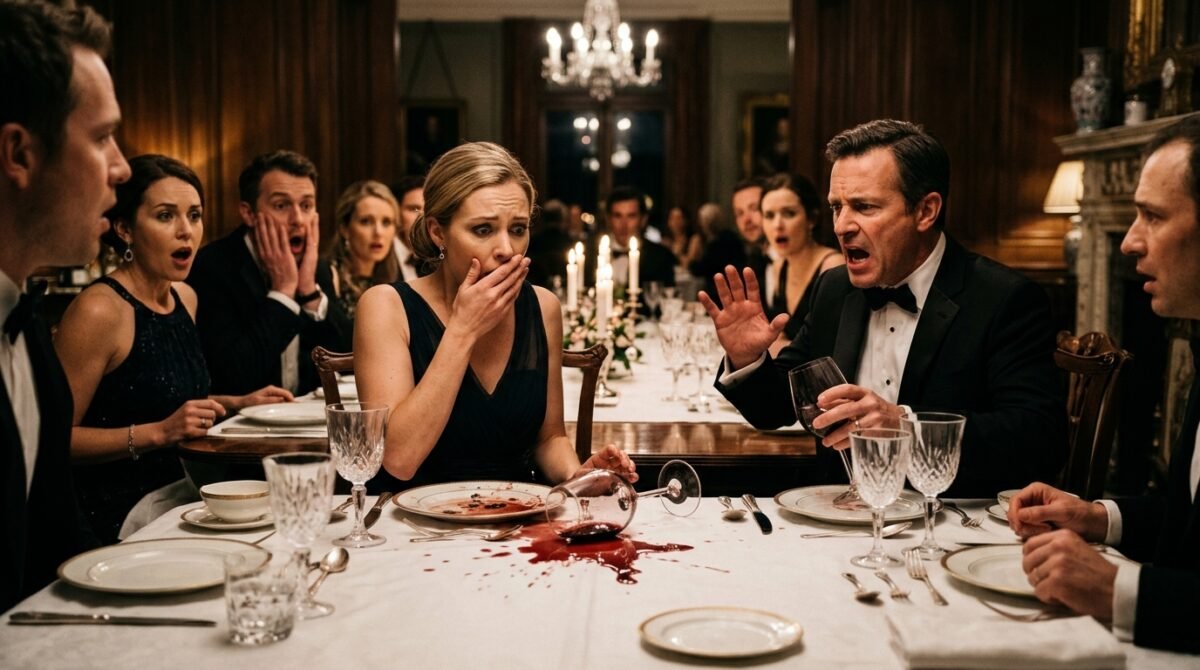
Mark’s parents came over for a ‘reconciliation dinner’ that Mark had orchestrated, hoping to sweep everything under the rug. He thought if we all sat down and had a nice meal, I would calm down and accept his apology. He had no idea I had been to the shop. He had no idea I had spoken to the police. He was sitting at the head of the table, acting like the gracious host, while I felt like a ticking time bomb.
The dinner started with polite small talk about the country club’s upcoming events. Mark’s mother was beaming, talking about how ‘exclusive’ the club was and how she couldn’t wait to see us at the summer gala. I let them talk. I listened to their delusions and watched their smug expressions, waiting for the perfect moment to shatter their little fantasy. When the wine was poured, I stood up.
“I hope you enjoyed the dinner, Mark. It’s a shame it’s going to be the last one we share. I’ve filed a report for the theft of my grandfather’s violin, and I’ve already secured its return from The Golden String.”
— Me
The silence that followed was deafening. Mark’s face turned a shade of purple I didn’t know existed. His mother dropped her fork, the clatter echoing in the room. They looked at me as if I had just declared war. Mark started stuttering, trying to explain it away, but there was no explaining this. The reality had caught up to him, and there was nowhere left to hide.
His father, usually a quiet man, started shouting. He called me irrational, hysterical, and ungrateful. He said I was sabotaging my husband’s future over an ‘old piece of junk.’ I didn’t back down. I told them exactly what I thought of their ‘family values’ and their obsession with status. I told them that a family is built on respect, not on what country club you belong to.
I walked out of the house while they were still arguing. I didn’t pack anything except my essentials, which I had already moved to my car earlier that day. I drove to a hotel, feeling a strange sense of liberation. The fight was public, it was messy, and it was entirely necessary. For the first time in years, I felt like I was back in control of my own life.
The Fallout: Legal Battles and Broken Trust

The weeks that followed were a blur of lawyers and cold, clinical conversations. Mark tried everything to convince me to drop the charges. He threatened me, saying that he would ruin my reputation, that he would tell everyone I was the one who was unstable. He even sent me long, rambling emails about how much he loved me and how this was just a ‘misunderstanding.’ It was pathetic.
My lawyer was steady and firm. She told me that the case against him for the theft of personal property was strong, especially with the evidence I had collected—the text messages, the bank records, and the testimony from the pawn shop owner. The police were taking it seriously because the value of the instrument, both historical and financial, was significant. Mark was realizing that his actions had real-world consequences.
His parents, realizing the legal threat, went quiet. They stopped calling, stopped sending emails. It was amazing how quickly they backed away once they realized they could be implicated in the theft or at least seen as accomplices. The ‘family’ I thought I had was nothing more than a group of people who only cared about me as long as I was useful and compliant. Once I became a problem, I was discarded.
I spent my days at the local library, reading up on property rights and divorce law. I felt like I was learning a new language. The stress was immense, and I struggled to sleep, but every time I thought about giving up, I remembered the sight of my violin in that pawn shop. I wasn’t just fighting for the instrument; I was fighting for the version of myself that existed before Mark decided he owned me.
The financial toll was heavy. We had to untangle our finances, which were a mess of shared accounts and joint debts. I discovered that Mark had been taking money out for ‘club expenses’ for months, small amounts that I had missed in the general chaos of our lives. It was like peeling back the layers of an onion, each one more rotten than the last. I was broke, exhausted, and heartbroken, but I was also free.
Reddit’s Verdict: Harsh Truths and Supportive Strangers

I turned to the internet for advice, posting my story on a popular forum. I needed to know if I was crazy, if I was indeed being ‘too sensitive’ like Mark claimed. The response was overwhelming. Thousands of people reached out, sharing their own stories of financial abuse and betrayal. The support was a lifeline that I didn’t know I needed.
“NTA. This isn’t just about a violin. This is financial abuse, plain and simple. He stole from you to fund a lifestyle that you didn’t agree to. The fact that his parents are involved makes it even worse. Get out and stay out.”
— u/JusticeForHeirlooms (Top Comment, 32.4k upvotes)
The community support provided me with a sense of perspective. It wasn’t just me. There were so many others who had been in similar situations, manipulated by partners who viewed them as property. The comments were filled with practical advice, legal resources, and reminders that I was worth more than the status symbols my husband craved. It helped me realize that I wasn’t alone, and that there was a path forward.
Some people, of course, played devil’s advocate, suggesting that maybe I should have communicated more, or that ‘things are just things.’ But the overwhelming consensus was that the act of betrayal—the secret, the theft, the gaslighting—was the real issue. It wasn’t about the wood and strings; it was about the fundamental breach of trust that happens when someone you love treats you with complete contempt.
I spent hours reading the comments, some of them making me cry, some making me laugh at the absurdity of my situation. It was a strange, digital therapy. I felt like the world was giving me permission to be angry, to demand justice, and to move on. It validated the pain I had been trying to suppress for so long, and it made the decision to divorce feel like the only logical step.
One comment in particular stuck with me. A user who had gone through a similar divorce wrote: ‘You will realize that the empty space in your house is actually a space for your own peace. Don’t fill it with his chaos again.’ That stayed with me every time I had to meet with lawyers or deal with the emotional fallout of the split. It was the best advice I had ever received.
The Final Confrontation: Walking Away for Good

The final meeting to divide our remaining assets was the hardest thing I’ve ever done. We met at a neutral location, a lawyer’s office. Mark looked defeated, his suit rumpled, his usual arrogance replaced by a hollowed-out version of himself. He tried to apologize, but it was too little, too late. The words felt empty, echoing in the sterile room. I didn’t want his apology; I wanted my life back.
We signed the papers in silence. The division of property was quick and brutal. I left him with the debts he had accrued for his club, and I took back what was rightfully mine. The house, which had been a battleground for so long, was to be sold. I felt a sense of relief wash over me as I signed away the last of my ties to the life we had built together.
When I stood up to leave, Mark looked at me and asked, ‘Are you really going to walk away from everything?’ I looked him in the eye and said, ‘I’m walking away from you, Mark. Everything else is just furniture.’ It was the most powerful thing I had ever said to him. I walked out of that office and into the cool air of the afternoon, feeling like I could finally breathe again.
I drove back to my new apartment, a small place I had rented on the other side of the city. It was empty, save for a few boxes and my violin, which I had retrieved from the shop a few days earlier. I opened the case, took out the violin, and tuned it. The sound was rich and resonant, filling the small space with life. It sounded like home.
I sat on the floor, playing for hours. There were no judgments, no expectations, no demands. Just the music. For the first time in my marriage, I didn’t feel like I had to apologize for existing or for enjoying the things that made me happy. I was alone, and it was the most beautiful feeling in the world.
Reflections on Greed and Human Worth

Looking back at the entire saga, I’m struck by how quickly a life can unravel. It wasn’t one big, dramatic explosion that ended my marriage; it was a thousand small erosions of trust, culminating in the sale of my grandfather’s violin. I see now that Mark was always driven by a need for external validation, and I was just a part of the architecture he was building for himself.
Greed is a corrosive force. It doesn’t just destroy finances; it destroys relationships, history, and the very essence of who we are. Mark was so blinded by the prospect of ‘status’ that he couldn’t see the value of what he already had. He traded love, loyalty, and a family heirloom for a membership at a club where, I suspect, he would have never been truly happy anyway.
I’ve learned that I am not a supporting character in someone else’s success story. I am the protagonist of my own. I have learned to stand up for myself, to set boundaries, and to prioritize my own emotional well-being over the comfort of others. It was a painful lesson, but it was one that I desperately needed to learn.
Today, I am starting fresh. My life is simpler, quieter, and infinitely more authentic. I have my grandfather’s violin, and I have my peace. I don’t know what the future holds, but I know that I will never again let someone decide the value of my soul or my history. I am free, and that is a price that no country club could ever afford.
Lessons Learned: Reclaiming My Future

If there is one thing I want others to take away from this, it is that you should never, ever let someone else control your assets or your sense of self-worth. If your partner is making decisions that ignore your history, your values, or your boundaries, pay attention. The violin was just the tip of the iceberg, but it was a clear signal that the underlying structure of the relationship was built on a foundation of sand.
I have spent the last few months working on myself, rediscovering the parts of me that I had tucked away to make room for Mark’s ego. I’ve started playing in a local orchestra, meeting new people, and building a life that is entirely my own. It hasn’t been easy, but it has been incredibly rewarding. I’ve realized that I am capable of so much more than I ever believed when I was trapped in that marriage.
I still think about my grandfather every time I pick up the violin. I play his favorite pieces, and in those moments, I feel a connection that transcends the material world. He would be proud of me, I think. He would be proud that I didn’t let his legacy be stolen, and that I found the strength to walk away from a situation that was slowly destroying me.
To anyone out there who feels like they are losing themselves in their relationship: please, listen to that internal warning. Don’t wait until something precious is taken from you to realize that you deserve better. You are the architect of your own life, and you have the power to draw the boundaries that protect your peace. It is worth it, every single bit of it.
Conclusion
My marriage did not end because of a violin. It ended because the violin was the symbol of everything Mark didn’t respect about me: my past, my heart, and my independence. When he sold it, he wasn’t just liquidating an asset; he was attempting to liquidate my connection to my own history. Walking away was the most difficult, yet most essential, act of self-preservation I have ever performed.
Today, I am in a place of healing. The legal battles are mostly behind me, and while the sting of the betrayal remains, it is no longer the defining feature of my life. I have reclaimed my instrument, my home, and my dignity. I have learned that the people who truly love you will never ask you to sacrifice the things that define you for their own gain.
This story has sparked a lot of conversation among my friends and online. Some think I should have been more forgiving, others think I should have left years ago. I’ve come to realize that everyone’s boundaries are different, and there is no ‘right’ way to handle betrayal—only the way that allows you to eventually look at yourself in the mirror with pride. I chose to fight for my history, and I would make that same choice a thousand times over.
What about you? Have you ever had to choose between a person you loved and an item or value that meant everything to you? Would you have stayed to try and fix it, or would you have walked away the moment the line was crossed? Let’s talk about it in the comments below.
What's your verdict on this dilemma?
Vote below to contribute to the official community consensus.

Have a Dilemma Keeping You Up at Night?
Share your real-life feud, wedding chaos, or relationship crossroads anonymously with our editorial team.
What do you think ?
0 Comments🛡️ Comments are moderated to protect community integrity. Your comment will appear once approved by the editorial team.