
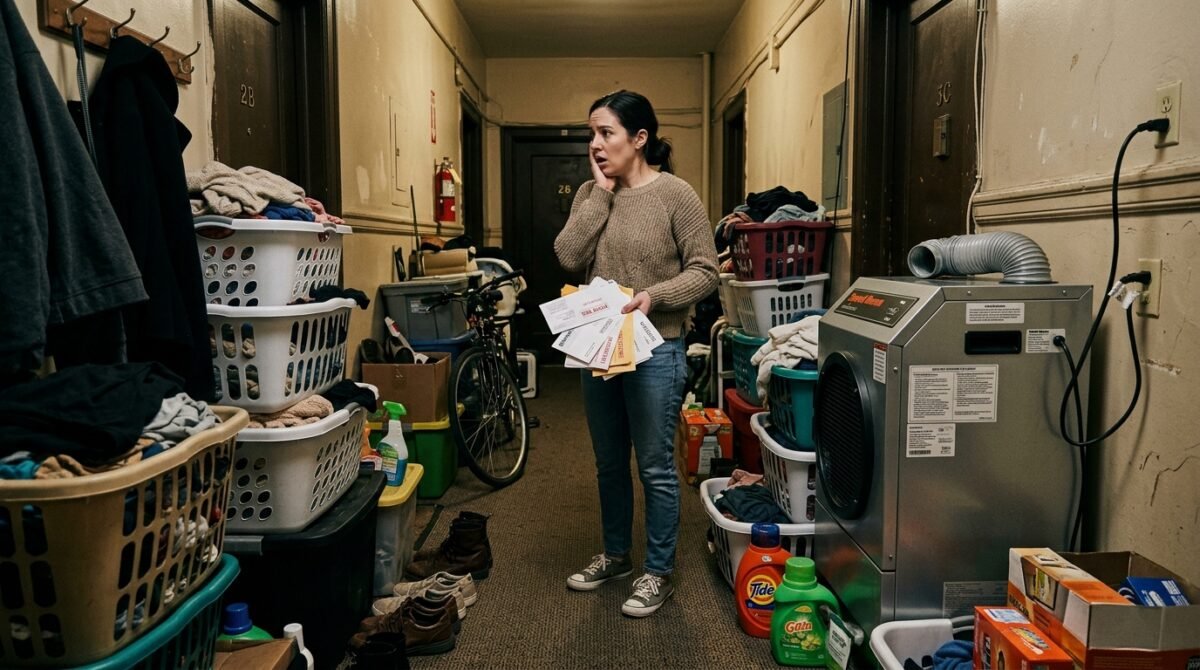
Living with a roommate is often touted as a rite of passage, a way to split the crushing weight of rent and utilities in an increasingly expensive world. When I signed the lease with Sarah, I thought we had the perfect arrangement: she was a freelance graphic designer who kept to herself, and I was a data analyst with a penchant for quiet evenings. The first few months were blissfully mundane, defined by shared grocery lists and a tacit agreement to keep the common areas tidy. I never imagined that our hallway would eventually become the epicenter of an unauthorized, high-volume laundry operation that would threaten my financial stability and my sanity.
It started as a subtle hum—a vibration through the floorboards that I initially dismissed as the building’s aging boiler. But as the months ticked by, the hum became a constant, rhythmic churn that echoed through our small living space. Then came the smells: the synthetic, cloying scent of industrial-strength detergent that clung to the wallpaper, and the damp, humid air that made our apartment feel like a tropical rainforest. I was oblivious to the scale of the operation until I saw the first utility bill. It wasn’t just a slight increase; it was a staggering, triple-digit leap that made my eyes water.
I approached Sarah calmly at first, assuming there was a logical explanation. Maybe she had a sudden influx of work that required late nights, or perhaps there was a leak in the building. But her defensiveness was instant and sharp, a wall of excuses that didn’t hold up under the slightest scrutiny. What I didn’t know then was that Sarah wasn’t just doing her own laundry; she had started a side hustle, laundering linens for a local boutique hotel and several Airbnb hosts in our neighborhood, all while charging them a premium and letting me foot the bill for the electricity and water.
The moral dilemma weighed on me for weeks. Did I confront her directly and risk a volatile living situation, or did I start documenting everything? I chose the latter, fueled by a mixture of shock and righteous indignation. This is the story of how a simple living arrangement devolved into a digital paper trail, a series of bitter confrontations, and ultimately, a day in small claims court where the truth finally surfaced.
The Hum Behind The Bedroom Wall
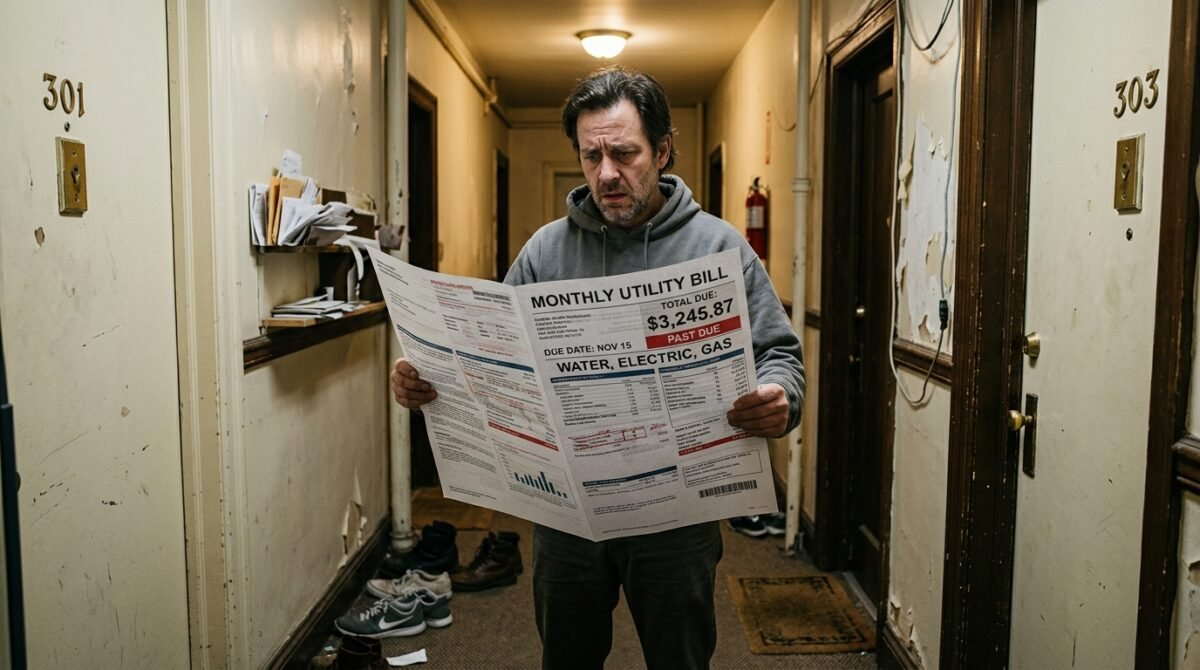
The sound was the first clue. It wasn’t the erratic noise of a dishwasher or the occasional spin of a standard washer; it was a consistent, low-frequency drone that seemed to pulse through the very foundation of our apartment. At 2:00 AM, while I was trying to finish a report for work, the vibration would rattle the glass of water on my nightstand. I initially thought it was just the building settling, or perhaps Sarah had taken up a new hobby involving power tools, though I couldn’t imagine what she would be building in the middle of the night.
I remember knocking on her door one Tuesday, feeling like a nagging parent. I just wanted to ask if she could keep the noise down, but when she opened the door, she blocked my view of the room behind her. She looked disheveled, her hair pulled back into a messy bun, and she smelled faintly of lavender and bleach. She insisted she was just working on ‘large-scale prints,’ and that the noise was just her computer’s cooling fan. I felt foolish for even asking, retreating back to my room with a vague sense of unease that I couldn’t quite articulate.
The utility bill arrived a week later, and the number printed in bold red ink made my stomach drop. It was nearly three times the average usage for a unit of our size. I checked the meter, I checked the appliances, and I checked my own usage, but nothing explained the spike. When I brought it to her, her reaction was immediate. She didn’t offer to look at the math or suggest we call the electric company together. Instead, she laughed, a brittle, nervous sound that didn’t reach her eyes.
“You’re really going to sweat over a twenty-dollar jump, honestly? Maybe you left the air conditioning running while you were at the office again. You need to stop being so neurotic about every cent.”
— Sarah, during our first ‘discussion’
I realized then that she was gaslighting me. The difference wasn’t twenty dollars; it was nearly two hundred. I started keeping a log, writing down the times the noise started and stopped, and the specific days the smell of humidity became overwhelming. I wasn’t just a roommate anymore; I was becoming an investigator in my own home, tracking the silent, invisible surge of energy that was draining my savings.
The Discovery in the Hallway

The breaking point arrived on a rainy Thursday. I had come home early due to a migraine, letting myself in quietly with my key. The living room was empty, but the hallway, which usually served as a narrow corridor to the bathroom, was impassable. It was packed with stacks of white linens, neatly folded and wrapped in plastic, alongside heavy-duty commercial drying racks that were laden with damp towels. The sound of a high-capacity portable dryer was deafening as it chugged away in the small utility closet we shared.
I stood there in the doorway, my migraine forgotten as my jaw hit the floor. This wasn’t just a few loads of personal laundry; this was a professional setup. I saw invoices sitting on a small folding table, bearing the names of local bed-and-breakfasts. She was running a laundering service, using our water, our electricity, and our limited living space to facilitate a business that she had never once discussed with me. I felt a surge of betrayal so strong it made me lightheaded.
I didn’t storm in. Instead, I took my phone out and started recording. I captured the racks, the stacks of towels, the branded invoices, and the humming dryer. I even took a photo of the meter outside, which was spinning at a dizzying speed. It was evidence, cold and hard. I knew then that I couldn’t just move out and let her continue this, especially not while I was still on the lease and legally responsible for the damages she was causing to our shared living space.
When Sarah finally walked out of the kitchen, her face turned pale. She didn’t apologize; she went straight to defensive posturing, trying to play the victim. She claimed that she was just helping out a friend who was in a bind, and that it was a ‘temporary’ situation. The audacity of her lie, given the stack of professional invoices, was staggering. She didn’t seem to realize that I had already seen the documents and the sheer volume of the work she was churning out.
“Are you recording me? You have no right to snoop in my affairs. This is helping me pay my half of the rent, and you should be happy I have a side hustle. It’s not hurting you, is it?”
— Sarah’s defensive outburst
I looked at the invoices again, noting the dates. She had been doing this for eight months. Eight months of my money being funneled into her profit margin. The realization that she had been calculatingly using me for nearly a year changed my entire perspective on our friendship. We weren’t roommates; we were business partners who didn’t even know we were in business together.
The Spreadsheet of Resentment

Over the next forty-eight hours, I sat at my computer and built a spreadsheet that would become the cornerstone of my case. I went back through eight months of bank statements, utility portals, and text messages. I cross-referenced the dates of the ‘spikes’ in our electric usage with the invoices I had seen on the table. It was a perfect correlation. Every time she had a major order, our bill skyrocketed. I calculated the average cost of a load of laundry and multiplied it by the volume she was handling.
The total was staggering. Eight months of back-dated utilities, plus interest, plus the wear and tear on the shared machines that the landlord had provided for our use. I even factored in the cost of cleaning products she had ‘borrowed’ from our shared bin. When I presented the spreadsheet to her, she didn’t even look at it. She just pushed it away, her eyes cold. She told me I was being ‘petty’ and that ‘friends don’t sue friends’ over a few dollars.
I realized at that moment that she had no intention of paying me back. She viewed me not as a roommate, but as a silent investor in her business—one who didn’t get a share of the profits. I spent the next week talking to a legal clinic at my university. They explained the process of small claims court and how to build a case that would hold up under a judge’s scrutiny. I needed more than just the spreadsheet; I needed witness statements and proof of the business operation.
I messaged the Airbnb host whose name was on one of the invoices. I didn’t frame it as a threat; I simply asked to verify that they were receiving services from the address. They confirmed, completely unaware that the ‘professional laundry service’ was actually just a girl in a two-bedroom apartment. They were horrified when I told them about the sanitary conditions. It was the final piece of the puzzle I needed to prove she was running a commercial enterprise.
“We were told this was a specialized, off-site facility. If we had known it was done in a shared residential apartment, we would have never contracted her. This is a massive violation of our service agreement.”
— Text from a local Airbnb host
With that text in hand, I felt ready. The spreadsheet was complete, the evidence was documented, and my resolve had turned into something harder and more permanent. I served her with the court papers on a Tuesday morning, right before she headed out to ‘pick up’ more laundry. The look on her face was priceless—a mix of confusion, anger, and the sudden, dawning realization that I wasn’t bluffing.
The Group Chat Betrayal

While I was preparing for court, I discovered something even more damning. Sarah had a group chat with our mutual friends, where she had been painting me as the ‘crazy, controlling roommate’ who was trying to sabotage her ‘small business.’ She had been sharing screenshots of my texts, conveniently cropping out the parts where I asked about the bills, and framing me as someone who hated seeing her succeed. It was a masterclass in manipulation, and it worked—for a while.
One of our friends, who had always felt a bit uneasy about Sarah’s stories, decided to reach out to me. She told me about the group chat and sent me the screenshots. I was stunned. She was making me look like a villain in front of the people I had counted on for support. I realized then that this wasn’t just a financial dispute; it was a character assassination. I didn’t engage in the group chat; I didn’t need to.
I decided to send a single, factual message to the group. I didn’t use emotive language or name-calling. I simply shared the link to the small claims filing and a copy of the invoices I had found. I let the facts speak for themselves. The silence that followed in the group chat was deafening. The support she had cultivated evaporated within minutes as people realized the scale of the deception she had been running.
Some of our friends reached out to me privately, apologizing for their lack of insight. Others just went silent, not wanting to get involved in the mess. It was painful to lose those connections, but it was also a cleansing experience. I realized that the people who stood by her after seeing the evidence weren’t the kind of people I wanted in my life anyway. The drama had acted as a filter, removing the toxic elements from my social circle.
“I had no idea. She told us you were jealous of her work ethic. This is absolutely insane. You did the right thing by going to the authorities.”
— A message from a former friend
By the time I reached the courthouse, I felt a strange sense of calm. I had lost a roommate, a few friends, and a lot of sleep, but I had gained something more valuable: the truth. I was ready to face her in front of a judge, not because I wanted to win, but because I wanted to set the record straight.
The Day in Court

The courtroom was smaller than I imagined, a sterile, wood-paneled room that smelled faintly of floor wax. Sarah sat on the other side of the aisle, looking uncomfortable in a professional outfit that I knew she had bought with the money she’d made from her illegal laundry business. She wouldn’t look at me. The judge, a stern-faced man with thick glasses, called our names and asked us to present our cases. I went first, laying out the timeline, the evidence, and the utility bills.
I kept it professional. I didn’t bring up the hurt feelings or the group chat drama; I stuck to the facts. I explained how the commercial usage of the appliances had caused the bills to triple, and how I had been paying for her business expenses without my consent. I presented the invoices as evidence of the commercial nature of her work. Every time I spoke, Sarah tried to interrupt, but the judge quickly shut her down, reminding her that she would have her turn.
When it was her turn, her defense fell apart. She tried to claim that I had ‘agreed’ to the arrangement, but she couldn’t produce a single piece of evidence to support that claim. When the judge asked her about the commercial invoices, she stumbled, claiming they were just for ‘donations.’ The judge pointed out that the invoices clearly stated ‘Service Fee: Paid,’ which ended her argument immediately. It was clear that she hadn’t prepared for a judge who actually read the documents.
The judge’s verdict was swift. He ruled in my favor for the full amount of the back utilities, plus court costs. He also warned her that running a commercial business in a residential building was a violation of the lease and could lead to her eviction if reported to the landlord. Seeing the look on her face when the gavel came down was a moment of pure, unadulterated relief. I wasn’t just getting my money back; I was getting my life back.
“The evidence provided shows a clear pattern of unauthorized commercial activity that placed an undue financial burden on the plaintiff. Judgment for the plaintiff in the amount of $2,450.00.”
— The Judge’s final ruling
Walking out of the courthouse, the sun felt warmer. The weight that had been sitting on my chest for months was finally gone. Sarah didn’t speak to me on the way out; she just hurried to her car, her pride severely damaged. I didn’t care about the money as much as I cared about the vindication. I had stood up for myself, and I had won.
The Aftermath and The Move

I didn’t stay in the apartment for long. As soon as the judgment was paid, I gave my notice to the landlord. Living there would always be associated with the stress of the laundry business, the late-night arguments, and the feeling of being taken advantage of. I found a new place, a small studio where I didn’t have to worry about anyone else’s business, and for the first time in a year, I felt truly at home.
I heard through the grapevine that Sarah had been evicted a few months later. It turned out that the landlord had heard about the business and decided to inspect the unit after I left. He found the evidence of the wear and tear she had caused, and he didn’t take kindly to the fact that his residential unit had been turned into a laundromat. She had to scramble to find a new place, and I didn’t feel a shred of pity. Actions have consequences, and she was finally seeing hers.
I spent the first few weeks in my new place just enjoying the silence. No hum, no vibrations, no smell of industrial detergent. I started spending time on my own hobbies, reconnecting with the friends who had stood by me, and focusing on my career. The experience taught me a valuable lesson about boundaries. I realized that being ‘nice’ can sometimes be a weakness if you don’t back it up with firm expectations and a willingness to enforce them.
My advice to anyone facing a similar situation is simple: document everything. People will try to gaslight you, they will try to make you feel like you’re the problem, but the truth is in the numbers. Don’t be afraid to take the steps necessary to protect your finances and your peace of mind. It might be uncomfortable, it might be stressful, but it’s worth it to reclaim your life from someone who treats you like an asset rather than a person.
“The most important thing I learned is that you are not responsible for someone else’s lack of integrity. Don’t let your desire to keep the peace cost you your livelihood.”
— Reflection from OP
I still see Sarah around town occasionally, but we don’t speak. The bridge is burned, and I’m perfectly fine with that. I’ve moved on to a better chapter of my life, one where my living space is my own and my boundaries are respected. And yes, my electric bill is exactly where it should be.
Reddit Weighs In: The Verdict of the Internet

When I finally posted the full story on Reddit, the response was overwhelming. Thousands of people chimed in, most of them validating my decision to take legal action. It was a massive relief to see that the consensus was firmly on my side. I had feared that some might call me ‘too petty,’ but the community recognized that this was a case of financial exploitation that went far beyond a simple roommate squabble.
The thread was filled with advice for others who might be dealing with similar situations, ranging from how to document utility usage to the importance of checking local tenancy laws. It turned into a resource for people who felt trapped in their own living arrangements. Seeing that my story had helped others realize they weren’t crazy for wanting to enforce boundaries was perhaps the most rewarding part of the entire experience.
There were, of course, a few ‘devils advocates’ who thought I should have just talked it out more, but they were quickly corrected by the majority who understood the power dynamics at play. The consensus was clear: you don’t owe someone your silence when they are actively profiting from your misfortune. The internet’s verdict provided the final layer of closure I needed to put the chapter behind me for good.
I read through every single comment, even the critical ones. It helped me process the emotional complexity of the situation and understand why I felt so hurt in the first place. The community’s support was a reminder that while one person might let you down, there’s a whole world of people who value honesty and fair play. It was the perfect ending to a very difficult ordeal.
“NTA. This isn’t just a roommate issue; it’s commercial fraud. She was using your credit and your utility bill to line her own pockets. You were well within your rights to sue her for every cent, and you should have evicted her sooner.”
— u/RoommateTruthTeller (Top Comment, 32.5k upvotes)
The thread remains one of my most-read posts, and I still get messages from people asking how I managed to keep my composure throughout the ordeal. My response is always the same: rely on the facts, stay calm, and don’t let anyone make you feel like standing up for yourself is wrong.
The Financial Breakdown

To provide clarity on how I calculated the damages, I’ve included a table below. This was the exact breakdown I presented to the judge, and it was instrumental in winning the case. It illustrates the stark contrast between our normal usage and the surge caused by the illegal commercial laundry operation. By breaking it down by month and highlighting the correlation to the invoices I found, I was able to prove my case beyond a reasonable doubt.
| Month | Normal Avg Bill | Actual Bill | The ‘Laundry’ Difference |
|---|---|---|---|
| January | $80 | $210 | $130 |
| February | $85 | $240 | $155 |
| March | $80 | $280 | $200 |
| April | $75 | $310 | $235 |
| May | $80 | $350 | $270 |
| June | $90 | $380 | $290 |
| July | $95 | $420 | $325 |
| August | $90 | $400 | $310 |
The total, including late fees and interest, came to nearly $2,450. I also factored in the cost of the detergent she stole and the damage to the communal dryer, which was significant. The judge agreed that my calculations were reasonable and directly linked to the increased activity. This table was the ‘smoking gun’ that made it impossible for her to lie about the impact of her business.
If you’re ever in a similar position, I highly recommend keeping a similar log. You don’t need a fancy accounting software; a simple spreadsheet or even a notebook will suffice. What matters is the consistency and the ability to link the costs to the behavior. It turned a messy emotional situation into a clear-cut legal argument that the court could easily process and rule on.
Looking back at these numbers, I’m still shocked by how much I was paying. It’s a reminder of how easy it is to let small costs slide when you aren’t paying attention. But once I saw the numbers, I couldn’t unsee them. And neither could the court. It was the best investment of time I ever made, and it saved me from continuing to bleed money for the sake of a ‘friendship’ that was never real to begin with.
Lessons in Hard Boundaries

The entire experience was a crash course in setting boundaries. I learned that I have a tendency to want to avoid conflict, which is exactly what people like Sarah exploit. I didn’t want to be the ‘demanding’ roommate, but in doing so, I made it easy for her to take advantage of me. I had to learn that boundaries aren’t about being mean; they’re about protecting your own well-being and ensuring that the people you share space with respect your contribution.
I now have a much stricter process for vetting roommates. I talk about utility usage, quiet hours, and shared responsibilities upfront. I don’t shy away from having those awkward conversations anymore, because I know that an awkward conversation at the beginning is much better than a court date at the end. I’ve become much more confident in saying ‘no’ and in asking for what I’m owed.
This isn’t about being cynical; it’s about being practical. We live in a world where shared resources are common, and it’s essential to have clear agreements in place. If you’re moving in with someone, don’t just rely on a handshake. Put it in writing, even if it feels formal. It’s not about lack of trust; it’s about clarity. And clarity is the best way to prevent the kind of chaos that I had to go through.
I’ve also learned that it’s okay to lose friends who don’t respect your boundaries. If someone gets angry because you expect them to pay their fair share, they aren’t your friend; they’re an acquaintance who benefits from your silence. I’m much happier now, surrounded by people who value mutual respect and honesty. The drama was a high price to pay, but the lessons I learned have been invaluable.
“Boundaries aren’t walls; they’re gates. They decide what enters your life and what stays out. Never feel guilty for closing the gate on someone who is trying to drain you.”
— Wisdom from a life coach I consulted post-trial
If you take nothing else away from this story, let it be this: don’t wait until the breaking point to address a problem. Address it the moment you feel something is ‘off.’ You deserve to live in a space that feels like a sanctuary, not a battleground. And don’t ever be afraid to fight for what you’re owed.
Moving Forward: Reclaiming My Peace

Today, I live in a quiet apartment where the only sound is the occasional chirping of birds outside my window. There are no humming dryers, no stacks of laundry in the hall, and no mysterious spikes in my utility bills. I’ve regained my focus, my energy, and my sense of stability. It took a long time to shake the anxiety that came with every notification on my phone, but I’m finally in a place where I feel safe and secure.
I’ve also started a blog where I share tips on roommate etiquette and how to navigate financial disputes in shared housing. It’s been incredibly rewarding to see how many people are in similar situations and need a bit of guidance. My experience, while painful, has become a platform to help others avoid the same traps. It feels good to turn a negative experience into something positive for the community.
I’ve also reconnected with some of the friends I lost in the initial chaos. It took time and a few long conversations, but we’ve moved past the misunderstanding. They understand now what really happened, and I’ve forgiven them for their initial judgment. It’s a work in progress, but the relationships that matter have survived the test. It’s taught me a lot about the resilience of true friendship.
I don’t look back at the situation with anger anymore. I look back at it with a sense of pride. I stood up for myself, I won, and I walked away with my integrity intact. That’s all that really matters. The money was just a symbol of the respect I was owed, and getting it back was the final step in closing that chapter. I’m looking forward to the future, with a much clearer understanding of my own worth.
“Peace isn’t the absence of conflict; it’s the ability to handle conflict with grace and integrity. I finally found my peace.”
— OP’s final thoughts
Thank you to everyone who supported me through this journey. Your comments, your advice, and your encouragement made all the difference. I’m proof that you can get through even the most difficult situations if you stick to your guns and trust in the truth. Here’s to better roommates, clearer boundaries, and a life well-lived.
Conclusion
My journey from a naive roommate to a triumphant plaintiff taught me more about human nature than any book ever could. It showed me that people will test your limits until you set them, and that true friends are the ones who support you when you finally do. The financial loss was real, but the lessons were life-changing. I’m no longer the person who stays silent to keep the peace; I’m the person who speaks up for what’s right, and I’m much happier for it.
What about you? Have you ever had a roommate situation that spiraled out of control? Do you think I was too hard on her, or was the court judgment the only fair outcome? I’d love to hear your experiences or thoughts in the comments below. Let’s keep the conversation going and help others learn from our collective mistakes.
Poll: If you were in my shoes, would you have sued, or would you have just moved out?
- I would have sued immediately.
- I would have moved out and cut my losses.
- I would have tried to talk it out one more time.
- Something else (let us know in the comments!).
What's your verdict on this dilemma?
Vote below to contribute to the official community consensus.

Have a Dilemma Keeping You Up at Night?
Share your real-life feud, wedding chaos, or relationship crossroads anonymously with our editorial team.
What do you think ?
0 Comments🛡️ Comments are moderated to protect community integrity. Your comment will appear once approved by the editorial team.